

Journalist

CGTN
-
 Shinhwa’s Jun Jin Marks Group’s 28th Anniversary, Thanks Fans and Members Shinhwa marked the 28th anniversary of its debut. Member Jun Jin wrote on social media on the 24th, "It’s already been 28 years since that day filled with orange light," adding that both Park Choong-jae in his rookie days and Jun Jin onstage "could exist only because you were by our side." He also thanked his bandmates, saying, "To our members, thank you for quietly holding your places for 28 years — sometimes like brothers, sometimes like friends." He added, "The road we’ve walked together became someone’s dream, and for us it became life itself. Let’s keep going, healthy and as ourselves." Addressing the group’s fan club, Shinhwa Changjo, he wrote, "My vitamins, Shinhwa Changjo! Thank you and I love you for staying right there without change for nearly the time it takes mountains and rivers to change three times." He said fans’ cheers are "the biggest driving force that makes my heart beat," and added, "Let’s welcome our 28th anniversary happily together." He closed with, "As always, we are Shinhwa." Shinhwa debuted on March 24, 1998, and was widely loved for songs including "Eusha Eusha," "Perfect Man" and "Hey, Come On." * This article has been translated by AI. 2026-03-24 08:51:14
 -
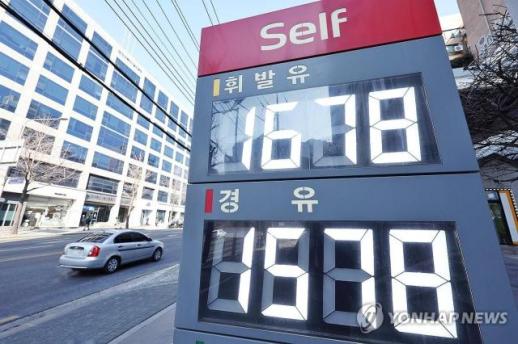 Korea's PPI extends gains for sixth month in Feb; war-driven pressure yet to hit SEOUL, March 24 (AJP) — South Korea’s producer prices rose for a sixth straight month in February, as higher energy and commodity costs lifted input prices across the board, pointing to building import-driven inflation pressure even before the full impact of war-related shocks. The producer price index (PPI) stood at 121.36 (2020=100) in February, up 0.6 percent from a month earlier, according to preliminary data released by the Bank of Korea (BOK) on Tuesday. On a year-on-year basis, the index rose 2.4 percent, the fastest pace since a 2.6 percent gain in July 2024. The increase was led by industrial goods, which rose 0.6 percent on-month. Coal and petroleum products surged 4.0 percent, exerting strong upward pressure on the overall index. Prices climbed sharply for diesel (7.4 percent), naphtha (8.7 percent) and gasoline (5.3 percent), reflecting higher global oil benchmarks. Dubai crude, for instance, rose 3.6 percent in February amid heightened Middle East tensions. Utility costs also picked up. Gas prices for industrial use rose 1.8 percent from a month earlier, pushing up the broader category of electricity, gas and water. A persistently weak won added to cost pressures, lifting import prices even before disruptions to the Strait of Hormuz following attacks on Iran. The domestic supply price index, which tracks inflation in the production pipeline, rose 0.5 percent on-month. Raw material prices increased 0.7 percent, reversing a 0.9 percent drop in January, while intermediate input costs rose 0.6 percent, contributing 0.2 percentage points to final goods prices. Yet the February data likely understate the scale of inflationary pressure ahead. The won-dollar exchange rate closed February at 1,438.4. By Monday, it had surged 5.5 percent to 1,517.6 won, while global oil prices have jumped roughly 50 percent from late February levels, suggesting the bulk of war-driven cost pressure has yet to feed through into producer prices. 2026-03-24 08:49:17
 -
 SEVENTEEN’s THE 8 to headline China’s Midou Music Festival in Nanjing SEVENTEEN member THE 8 will close out a major music festival in China with a solo set, his agency said. PLEDIS Entertainment, a HYBE Music Group label, said on Monday that THE 8 will appear as a headliner at the MIDOU MUSIC FESTIVAL, scheduled for May 1-2 in Nanjing, Jiangsu province. Now in its 15th edition, the festival has grown into a large-scale event since launching in 2014, drawing crowds that also boost local tourism. Organizers held two editions last year, in June and October, attracting more than 80,000 and more than 60,000 attendees, respectively, according to the agency. THE 8 has previously headlined in China. At the YJ music festival in Beijing in September last year, he performed vocals and choreography and added a DJ set, drawing strong audience response, the agency said. Fans lined up from the night before, and he trended on Weibo immediately after the show. His recent releases have also performed strongly, the agency said. His 2025 single “Star Crossing Night” topped major Chinese music charts, and his Chinese EP “STARDUST,” on which he participated in writing and composing every track, was also well received. Beyond music, THE 8 has expanded into broader art projects. In December, he released an art film featuring a remix version of “Skyfall” as part of “THE 8 Contemporary ART,” a project reflecting his emotions and perspective. The agency said attention is focused on what he will bring to the Midou festival stage.* This article has been translated by AI. 2026-03-24 08:27:16
 -
 OPINION: BTS concert proves live stage power in AI age Last weekend’s BTS live show swept South Korea into a rare, collective high. Staged in central Seoul’s Gwanghwamun and livestreamed globally on Netflix, the concert reached 300 million viewers across the world — a simultaneous celebration of BTS and a showcase of Seoul itself. Beyond the spectacle, the group’s first full reunion performance in nearly four years underscored a deeper shift: live events are emerging as K-pop’s most powerful growth engine. Even as artificial intelligence and digital technologies disrupt industries and displace jobs, live performance has proved strikingly resilient. The reason is straightforward. Virtual experiences, however sophisticated, still cannot replicate the immediacy, immersion and shared energy of being there. The global music industry offers a clear benchmark. Taylor Swift’s Eras Tour, spanning 51 cities, generated roughly $2.5 billion in ticket and merchandise sales — a reminder that touring remains the industry’s most dependable revenue driver. K-pop is following the same trajectory, but at a faster pace. Since the pandemic, live music has become the sector’s fastest-growing revenue stream. As streaming expands and physical album sales soften, income from concerts, tours and merchandise has surged. Billboard data show that major agencies — HYBE, SM Entertainment and JYP Entertainment — sold 1.6 million tickets across 78 shows in the first half of last year alone, generating $228 million in tour revenue, up 79 percent on-year. Those figures capture only part of the market. HYBE by itself staged 213 concerts last year, drawing 3.3 million fans. Tour revenue reached $537 million, accounting for roughly 30 percent of total sales, up from 12 percent just two years earlier. It now rivals the company’s music revenue — albums and streaming combined — and is poised to surpass it. Momentum is building. Following the Seoul comeback, BTS is preparing its first world tour since completing military service. The “BTS World Tour Arirang,” scheduled for 79 shows across 34 cities, is expected to generate at least $1 billion from tickets, merchandise, VIP packages and livestream sales. Some industry observers say it could even challenge Swift’s touring record. Other top-tier acts — Blackpink, Twice, Stray Kids and Seventeen — are also sustaining year-round global tours. Their impact extends well beyond ticket revenue. Promoters monetize fan events and merchandise, while host cities benefit from hotel bookings, flights and wider tourism spending. The Seoul concert offered a vivid example. Hotels in the capital filled quickly, nearby businesses saw a surge in sales, and even regional cities reported an uptick in foreign visitors drawn by BTS. Industry forecasts reflect this trajectory. Global K-pop concert revenue is projected to rise from $14 billion in 2024 to $22 billion by 2030. Yet the business is not without risks. Live events remain vulnerable to geopolitical shocks and environmental disruptions. The pandemic froze the sector for years, while China’s ban on K-pop performances following South Korea’s THAAD deployment in the mid-2010s remains in place. Looking further ahead, artificial intelligence may present a new kind of competition. Concerts featuring AI-generated music and virtual performers — such as Hatsune Miku — have already built sizable fan bases, filling large venues with hologram-driven shows. Still, technology has limits. AI can simulate sound and spectacle, but it struggles to reproduce the emotional immediacy and collective energy of a live crowd. That distinction is becoming more valuable, not less. This is the logic of the “experience economy,” a concept advanced by U.S. consultants Joseph Pine and James Gilmore. As economies evolve from goods to services to experiences, and as digital technology makes content infinitely replicable, authentic human experiences grow scarcer — and more valuable. In music, buying a CD belongs to the product economy, streaming to the service economy, and attending a concert to the experience economy. For BTS fans, the shift is tangible. They sustained the group through military service by streaming songs and buying albums. Now, gathered again in physical space, they reaffirm not only BTS’s status but also the power of shared experience itself. Judging by the faces on screen in the heart of Seoul, the surge of joy and emotion was unmistakable — and, for now at least, beyond the reach of any algorithm. *The author is a visiting professor at Ewha Womans University’s Graduate School of International Studies. About the author ▷Former CNN Seoul bureau chief ▷Former ambassador for cultural cooperation at the Foreign Ministry ▷President of the Korea International Broadcasting Exchange Foundation (Arirang TV) ▷Former overseas publicity secretary at the presidential office ▷Former president of the Seoul Foreign Correspondents’ Club ▷Former New York Times reporter ▷Visiting professor at Ewha Womans University’s Graduate School of International Studies 2026-03-24 07:22:24
 -
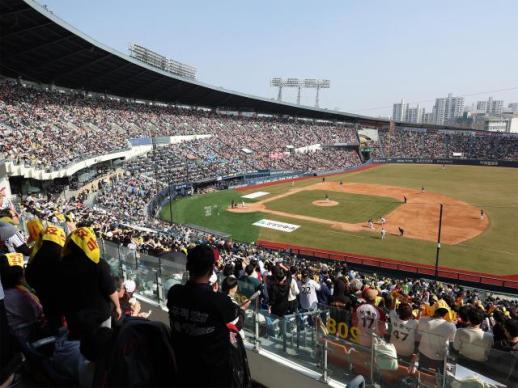 Jamsil Baseball Stadium to Be Demolished After 2026 Season; Farewell Legends Game Planned Jamsil Baseball Stadium will be demolished after the 2026 season. The Ilgu Association said Monday it is planning a farewell “Legends Game” to honor the stadium’s historical significance ahead of its scheduled demolition at the end of the 2026 season. Organizers plan to hold the game in October or November, shortly after the Korean Series ends. The roster and detailed schedule will be announced later after discussions by the Legends Game organizing committee. “Jamsil Baseball Stadium is a symbol of Korean professional baseball and a sacred place that has produced countless classic games and legends,” the association said, adding that the event is meant to mark the stadium’s final chapter and thank fans for their unwavering support. Kim Kwang-su, head of the Ilgu Association, said the game will be “a final moment for players and fans who have shared Jamsil Baseball Stadium for a long time to come together as one,” adding that he hopes to create meaningful time with everyone who loves baseball.* This article has been translated by AI. 2026-03-23 20:33:00
 -
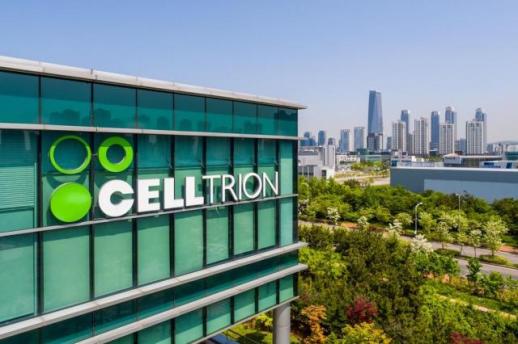 Celltrion Pledges Full Cooperation After Contractor Worker’s Fatal Fall Celltrion said March 23 it is cooperating with authorities investigating the death of a contractor worker who fell while working at the company’s headquarters a day earlier, and vowed to strengthen safety measures to prevent a repeat. In a statement posted on its website, the company offered condolences, saying it mourns the contractor worker who died in what it called a tragic accident during work at its Songdo campus, and expressed deep sympathy to the bereaved family. Celltrion said it will provide all possible support during the response process and share the family’s grief, regardless of what investigators later determine about the cause or findings. The company said it has confirmed that required safety procedures and equipment checks had been completed before the accident, but that the specific circumstances are still being verified. It said it will recheck safety management systems at all worksites from the ground up and conduct a comprehensive inspection of potential hazards across the campus. Police and fire officials said the incident occurred at about 11:04 a.m. the previous day at a building on the second floor of a Celltrion factory in Songdo-dong, Incheon. The worker, a man in his 20s identified only as A, fell about 3 to 5 meters (10 to 16 feet) and died.* This article has been translated by AI. 2026-03-23 19:15:00
 -
 Joo Hyung-hwan Publishes Book on 700 Days of Population Policy Shift, Offers Low Birthrate Plan Joo Hyung-hwan, who served as vice chair of the Presidential Committee on Ageing Society and Population Policy, has published a new book detailing 700 days of policy work during his tenure, titled “A 700-Day Record of a Major Population Policy Shift: From Freefall to Rebound.” The book chronicles a shift from narrow low-birthrate measures to a broader population strategy spanning the full life cycle. With pessimism growing that “nothing works” despite years of policies and budget spending that failed to deliver results, Joo diagnoses the limits of past approaches and lays out alternative solutions. When Joo took office in February 2024, the total fertility rate stood at 0.72, the lowest on record. Projections that it could fall to 0.65 this year heightened the sense of a national population crisis. Arguing that the moment required a policy paradigm shift, he pushed to reorganize priorities around three pillars: work, caregiving and housing. For an ultra-aged society, he also called for moving beyond a welfare-centered approach and stressed innovation from an industrial perspective, pointing to areas such as age tech and a dementia-related asset market. A central theme is a move away from short-term fixes toward structural responses. He writes that the government pursued mid- to long-term tasks in parallel, including easing the burden of private education costs, reducing overconcentration in the Seoul metropolitan area and introducing inclusive immigration policies. “The population crisis is not an impossible problem; it is a task we can reverse if we bring together society’s capabilities,” Joo said. He said the book aims to present the process and results of the policy shift, along with remaining challenges. “A 700-Day Record of a Major Population Policy Shift: From Freefall to Rebound” runs 412 pages and was published by 21st Century Books. It is priced at 24,000 won. The publication date is 2026년 3월 20일.* This article has been translated by AI. 2026-03-23 19:06:31
 -
 K Bank Posts 112.6 Billion Won Net Profit in 2025, Targets 18 Million Customers K Bank said in a regulatory filing on the 23rd that it posted 112.6 billion won ($112.6 billion won) in net profit last year. The figure was down 12% from a year earlier, but the bank recorded net profit above 100 billion won for a second straight year. The bank said it added 2.78 million new customers last year, bringing its total to 15.53 million. As of the end of last year, K Bank’s deposit balance stood at 28.43 trillion won. Crypto-asset deposits fell amid a weaker asset market, while retail deposits rose 2.42 trillion won from a year earlier. Growth was led by its “Plus Box” parking account, which was revamped in September 2024, including applying interest rates to amounts above 50 million won. Retail demand deposits increased 2.83 trillion won last year, lifting the share of demand deposits in retail funding to 65.8% at year-end from 59.5% at the end of 2024. Loans totaled 18.38 trillion won at the end of last year, up 13% from 16.27 trillion won at the end of 2024. Lending to sole proprietors drove the increase, with the balance rising to 2.31 trillion won from 1.15 trillion won. Loans backed by real estate for sole proprietors jumped to 560 billion won from 70 billion won. Net interest income fell 7.8% to 444.2 billion won from 481.5 billion won a year earlier. The bank said interest revenue improved as loans and earning assets grew, but funding costs rose, including due to higher fee rates tied to crypto-asset deposits. Noninterest income rose about 40% to 113.3 billion won from 80.9 billion won, helped by gains on bond sales, higher investment returns including from money market funds, and the start of platform advertising revenue. Asset quality also improved, the bank said. Its delinquency rate fell to 0.60% at year-end from 0.90% at the end of 2024, while the ratio of substandard or lower loans eased to 0.57% from 0.82%. The annual credit cost ratio improved to 1.22% from 1.59% a year earlier. K Bank said it aims to expand its customer base to 18 million this year and focus on what it called three future growth engines: its platform business, expanded corporate lending, and areas including artificial intelligence and digital assets. Chief Executive Choi Woo-hyung said, “This year will be a turning point for K Bank to take another step forward,” adding that the bank will seek to grow into a leading financial platform for more customers, provide more opportunities and benefits to sole proprietor clients, and lead innovation in AI and digital assets.* This article has been translated by AI. 2026-03-23 18:36:00
 -
 KDB Names Lee Bong-hee Senior Executive Vice President Korea Development Bank said Monday it has appointed Lee Bong-hee, head of its corporate finance division, as executive director and senior executive vice president. Lee joined the bank in 1993 and has handled key functions for about 30 years, including strategy and planning, organizational management, corporate finance, restructuring, international finance and dealing, the bank said. Since being named head of corporate finance in 2024, he has strengthened KDB’s role as a core policy lender by providing tailored support to semiconductors and other advanced strategic industries aimed at securing future growth engines. KDB said Lee also led major restructuring issues, including final approval of the Korean Air-Asiana Airlines business combination, efforts to boost HMM’s corporate value, and a preemptive workout for Taeyoung Construction. Separately, KDB appointed Vice President Yoon Tae-jung to lead its innovation growth division. Yoon has served in the human resources department since 2016 and later worked in the indirect investment finance office, as head of the Jongno branch and as head of the New York branch, the bank said. Vice President Kim Chun-ho was appointed to lead the corporate finance division. Born in 1971, he is regarded as an expert in corporate restructuring and corporate finance, KDB said. * This article has been translated by AI. 2026-03-23 18:27:00
 -
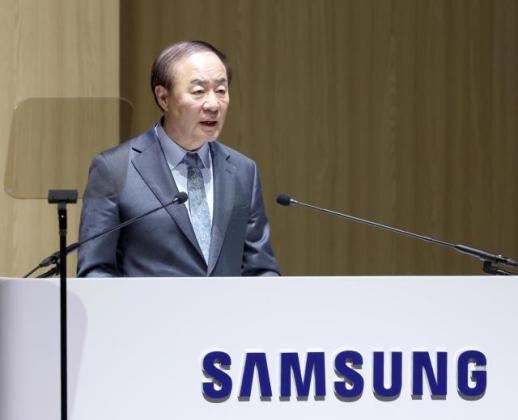 Samsung Electronics and union reopen talks, strike risk lingers SEOUL, March 23 (AJP)-Management at Samsung Electronics and its labor union held an unexpected executive-level meeting Monday, signaling a possible thaw in tensions after the union abruptly canceled a planned rally outside Chairman Lee Jae-yong’s residence. Vice Chairman Jun Young-hyun, who leads the critical Device Solutions (DS) division, met a four-member delegation from a joint protest committee that includes representatives of the National Samsung Electronics Union (NSEU). During the 90-minute meeting, Jun acknowledged employee grievances and proposed resuming formal negotiations, according to a union statement. “I am aware of the employees’ complaints, and we have arranged this meeting with the labor union to resolve them,” Jun said, adding the company is prepared to discuss key demands at the bargaining table. The union reiterated its preconditions for talks: scrapping the 50 percent cap on the Overall Performance Incentive (OPI) and overhauling the bonus system to improve transparency. It has strongly opposed the current use of Economic Value Added (EVA) as a benchmark, calling instead for metrics tied to operating profit. Jun signaled openness to reviewing the demands but cautioned that bonus allocation across semiconductor business units requires careful consideration. He also proposed a follow-up meeting in the near term. The dialogue came just hours after the union called off a press conference and rally planned outside Lee’s home in Seoul, citing “internal reasons,” in a move widely seen as lowering immediate tensions. Still, the risk of industrial action remains. The union recently secured legal strike rights after 73.5 percent of its roughly 90,000 members backed a walkout. It has threatened an 18-day general strike from May 21 to June 7 if negotiations fail. A mass rally involving about 9,300 members is scheduled for April 23 in Pyeongtaek, home to Samsung’s flagship chip plants. A strike would mark only the second in the company’s history, following a walkout in July 2024. Industry observers warn that any prolonged disruption could weigh on semiconductor output at a pivotal moment, as Samsung races to capture surging global demand for AI memory chips. 2026-03-23 18:10:00