

Journalist

CGTN
-
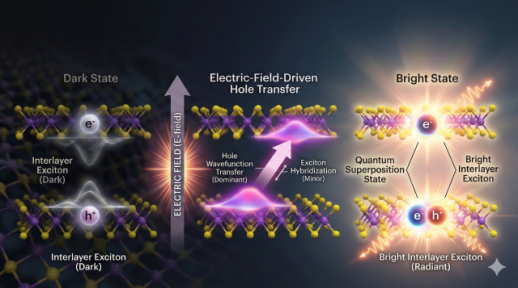 Sookmyung University researchers identify mechanism for observing interlayer excitons SEOUL, March 20 (AJP) - A research team at Sookmyung Women's University in South Korea has uncovered a new physical mechanism that allows scientists to observe "interlayer excitons" in two-dimensional semiconductors using electric fields. Led by School of Intelligent Electronic Systems Professor Cha Soon-young, the study provides a theoretical framework for a phenomenon that had previously been difficult to explain. Two-dimensional semiconductors are key materials for the development of next-generation optoelectronic devices and quantum information technology. In a two-layer structure, an interlayer exciton forms when an electron and a hole—a quasiparticle representing the absence of an electron—are located in different layers. While these excitons have long lifespans and energy levels that can be controlled by external fields, they are notoriously difficult to observe. Because the electron and hole are physically separated, their interaction with light is extremely weak, often leaving them in an invisible "dark" state. The researchers applied electric fields to bilayer tungsten diselenide (WSe2) and precisely measured its optical spectrum. They discovered that as the electric field increased, the normally undetectable interlayer exciton signals grew progressively stronger. Earlier studies attributed this brightness to "exciton hybridization," a process where different exciton states mix together. However, Professor Cha's team determined that hybridization alone could not account for their experimental data. Using an analysis that combined density functional theory (DFT) calculations with exciton modeling, the team proposed a "hole transfer" mechanism. When an electric field is applied, the wave function of the hole in one layer moves partially to the other, creating a quantum superposition state. This process amplifies the exciton's interaction with light, essentially turning the dark state into a "bright" state. The team's calculations confirmed that this hole transfer mechanism is the primary reason for the increased signal strength, while the contribution from hybridization is significantly smaller. "This research shows that the optical properties of interlayer excitons are determined by the quantum superposition of charge wave functions rather than simple state mixing," Cha Soon-young said. "These findings provide a critical foundation for future research into quantum physics and the design of 2D semiconductor-based devices." The study was a collaborative effort with researchers from the University of California, Riverside, Carnegie Mellon University, Nanjing University, National Cheng Kung University, and the National Institute for Materials Science (NIMS) in Japan. The findings were published on March 6, 2026, in Physical Review Letters, a journal ranked in the top 7.5 percent of the physics field. (Reference Information) Journal/Source: Physical Review Letters Title: Brightening interlayer excitons by electric-field-driven hole transfer in bilayer WSe2 Link 2026-03-20 11:24:32
 -
 Hyundai Motor CEO Jose Munoz: 20 New Models in China, Full Electrified Lineup in Europe by 2027 Hyundai Motor said it will step up its push in global markets this year with an aggressive rollout of new vehicles, while strengthening so-called “physical AI” capabilities in areas such as autonomous driving and robotics to compete in future mobility. Jose Munoz, Hyundai Motor’s CEO, said in a CEO shareholder letter released on the 20th that the company will “aggressively launch global new models tailored to customer expectations.” For China, Munoz said Hyundai will follow a “in China, for China, and for the world” strategy, launching 20 new models over the next five years and targeting annual sales of 500,000 vehicles. In South Korea, he said Hyundai plans to release new versions of the Tucson and Avante this year. In North America, Munoz said Hyundai will introduce extended-range electric vehicles starting in 2027 with a driving range of more than 600 miles (about 965 kilometers) per charge. He also said the company plans to launch its first body-on-frame midsize pickup truck before 2030. In Europe, Munoz said Hyundai will unveil five new models over the next 18 months, including the Ioniq 3, which he said will be shown to the world for the first time at Milan Design Week in April. He added that by 2027 Hyundai will have an electrified model lineup for every vehicle it sells in Europe. For India, Munoz said Hyundai will invest $5 billion through 2030 and launch a total of 26 new models. He said the company will introduce its first locally strategic electric SUV in India by 2027, planned, designed and produced locally. Hyundai also said it will accelerate its physical AI strategy, including autonomous driving and robotics. Munoz said the group’s technology platform, Pleos, will be a key element in speeding up autonomous driving development. He said Hyundai plans to equip Ioniq 5 vehicles produced at Hyundai Motor Group Metaplant America with specifications optimized for autonomous driving and supply them to Google’s Waymo. He also called Boston Dynamics’ Atlas “one of the world’s most advanced humanoid robots,” and said Hyundai aims to develop intelligence that goes beyond building cars to changing how vehicles are made and operated. On the fast-changing international environment, Munoz said the global trade landscape remains uncertain due to tariff pressure, currency swings and geopolitical tensions. He said Hyundai will carry forward the spirit of founder Chung Ju-yung, who expanded the business by turning uncertainty into opportunity. * This article has been translated by AI. 2026-03-20 11:21:56
 -
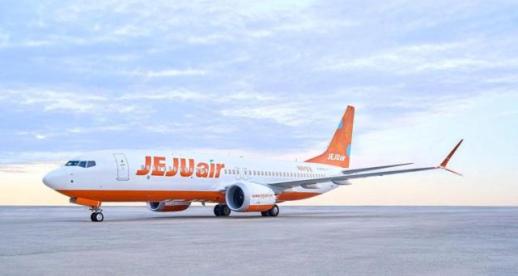 Jeju Air tops 60 million passengers as it marks 17 years of international flights SEOUL, March 20 (AJP) - Short-haul carrier Jeju Air said Friday it has carried over 60 million passengers as it marks the 17th anniversary of launching international routes. Jeju Air became the first South Korean budget carrier to launch international services, with flights between Incheon and Osaka in March 2009. Starting with about 159,000 passengers in its first year, Jeju Air continued to expand, reaching a milestone of serving over 1 million passengers in 2012. By offering more diverse routes to neighboring Japan, China, and Southeast Asian countries in later years, the airline's cumulative international passengers surpassed 10 million in 2016 and topped 50 million in 2024. As of the end of February this year, its cumulative international passengers stood at about 62.86 million, showing an average annual growth of 27.5 percent. Jeju Air currently operates some 58 international routes, with destinations in China, Indonesia, Japan, Laos, Malaysia, Mongolia, the Philippines, Singapore, Thailand, and Viet Nam. Notably, what started as one daily flight between Incheon and Osaka now operates seven times a day, making Jeju Air the most frequent carrier on the route. The number of passengers has grown nearly eightfold, from 73,000 in 2009 to 574,000 in 2025. "We have helped make air travel more accessible and affordable for passengers over the past 17 years," a Jeju Air staffer said, adding that the airline will continue to promote "healthy competition" in South Korea's aviation industry. 2026-03-20 11:19:31
 -
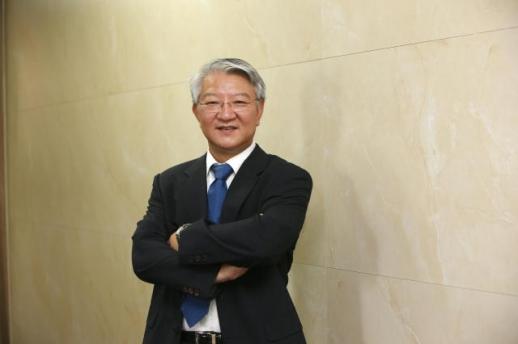 KAIST professor Lee Sang-yup becomes first Asian fellow of European Academy of Microbiology SEOUL, March 20 (AJP) - South Korea has produced its first fellow of the European Academy of Microbiology (EAM) with the induction of Korea Advanced Institute of Science and Technology's Distinguished Professor Lee Sang-yup. The prominent research institute said Friday that Lee was officially elected to the academy on March 19, making him the first researcher from an Asian institution to join the prestigious body. The EAM serves as the leadership tier of the Federation of European Microbiological Societies (FEMS), a network representing 30,000 scientists across 38 nations. Founded in 2009, the academy acts as a primary advisory body for European science policy and international research cooperation. Membership is restricted to scholars who have demonstrated significant impact on the field of microbiology through high-level research and academic leadership. Selection for the fellowship is a closed process where candidates are nominated and vetted by existing members without their knowledge. In the 2026 cohort of 95 new fellows, the vast majority were based in Europe. Outside of the continent, the academy selected 16 researchers from the United States and three from Australia, with Lee standing as the sole representative from Asia. Professor Lee is widely regarded as a pioneer in the fields of systems metabolic engineering and synthetic biology. His work focuses on re-engineering microorganisms to serve as microscopic factories. These microbes are programmed to convert renewable biomass into useful chemicals, fuels, and materials, offering a sustainable alternative to traditional petroleum-based manufacturing. "I find this election to the European Academy of Microbiology very meaningful," Lee Sang-yup said. "I will continue to contribute to solving environmental and energy challenges facing humanity through microbial-based sustainable production technologies, while actively participating in international research and academic exchange." His research at KAIST over the last 31 years has led to several industrial breakthroughs, including the development of biodegradable polymers, high-efficiency succinic acid production, and spider silk that is stronger than steel. To date, he has published 796 journal papers and registered or applied for more than 860 patents. Lee's career has been defined by a series of international firsts. He remains the only scientist in the world to be elected to the National Academy of Engineering (NAE), the National Academy of Sciences (NAS), the Royal Society, and the Chinese Academy of Engineering. He has also been named a Highly Cited Researcher by Clarivate for nine consecutive years, placing him in the top 1 percent of his field globally. 2026-03-20 11:01:27
 -
 Kia CEO Song Ho-sung: EV2 to Debut This Year; 13 EV Models Planned by 2030 Kia said it will step up its push into the global auto market this year with a strategy aimed at making electric vehicles more widely adopted. The automaker made the remarks at its 82nd annual shareholders meeting held Friday morning at its headquarters in Seocho-gu, Seoul. In opening comments, Kia President Song Ho-sung said, "We will strengthen our leadership in the EV market by launching the EV2 this year." The EV2, unveiled in January at the Brussels Motor Show, is Kia’s compact electrified model designed for city driving, with interior space and convenience features that exceed expectations for its class. Kia said it is expanding its EV lineup by adding the EV2 this year, following the launch of the EV3 in 2024 and the EV4 and EV5 last year. The company plans to roll out a total of 13 EV models by 2030 to broaden consumer choice, while moving step by step to improve products, boost accessibility and strengthen its supply chain. Kia’s purpose-built vehicle (PBV) program calls for the PV7 next year and the PV9 in 2029. Song said Kia will optimize its EV supply chain by diversifying production bases by region, centered on domestic plants and expanding across Europe, the United States and emerging markets. Kia said it completed the Hwaseong EVO Plant EAST last year and plans to complete the WEST facility by next year to produce the PV7. By 2027, the company plans to introduce a next-generation software-defined vehicle (SDV) combining AI-based user experience and connectivity. It said it will secure autonomous driving technology in stages through cooperation with Motional and 42dot. In the U.S. market, Kia said it will strengthen a strategy centered on hybrids and sport utility vehicles. It plans to expand sales by launching new versions of the Telluride and Seltos and adding to its hybrid lineup. Song said cost burdens are rising due to the impact of U.S. tariffs and intensifying global competition. Still, he said Kia will bolster product competitiveness with hybrids in the United States and EVs in Europe, while expanding its portfolio for broader EV adoption. At the meeting, Kia put forward proposed amendments to its articles of incorporation, including adopting electronic shareholders meetings, introducing cumulative voting, expanding directors’ duty of loyalty, strengthening the audit committee’s composition and renaming outside directors as independent directors. The company also reappointed Chief Financial Officer Kim Seung-jun as an inside director. It reappointed Jun Chan-hyuk, chairman of Cesco, as an outside director, and reappointed Shin Jae-yong, a professor of business administration at Seoul National University, as an outside director serving on the audit committee. 2026-03-20 10:45:21
 -
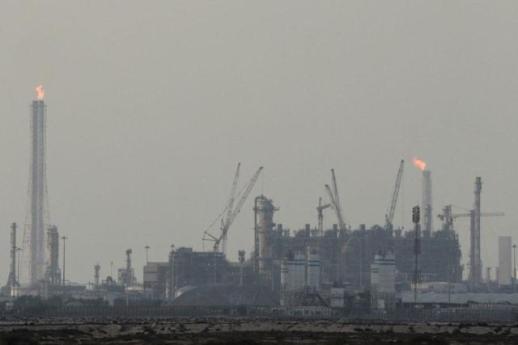 South Korea braces for supply disruptions after Iran's attack on Qatari energy complex SEOUL, March 20 (AJP) - The government is reviewing additional measures to cope with supply chain disruptions as the prolonged conflict in the Middle East affects supplies of naphtha and other petrochemical products, Cheong Wa Dae said on Friday. The remarks came after Iran's attack on Qatar's Ras Laffan Industrial City, the world's largest liquefied natural gas (LNG) complex, which accounts for about 20 percent of global supply. According to a senior Cheong Wa Dae official, South Korea is unlikely to face supply disruptions as it has alternative sources of gas. He added, "When it comes to liquefied natural gas supplies from Qatar, there is no problem with supply, as Qatar accounts for just 14 percent of imports this year and alternative sources are available." But the government is keeping a close watch on naphtha supply and prices to prepare for any potential disruptions. It also plans to implement measures to minimize overseas outflows of naphtha. QatarEnergy, Qatar's state-run petroleum company, said the previous day it may have to declare force majeure due to the attack on its LNG facilities earlier in the week, affecting long-term supply contracts with South Korea and other countries for up to five years. Force majeure is a measure taken to avoid liability when fulfilling a contract becomes difficult due to war, natural disasters, or other events. 2026-03-20 10:38:55
 -
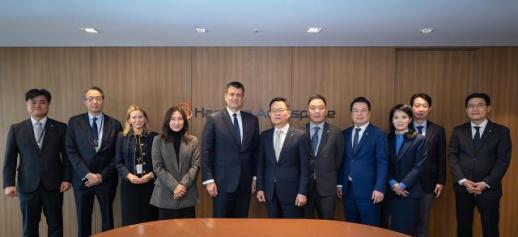 Hanwha Aerospace Hosts IISS Global Security Strategy Roundtable in Seoul Hanwha Aerospace said Thursday it held a “Global Security Strategy Roundtable” with the International Institute for Strategic Studies, a global think tank, to discuss key international issues. The event was held Wednesday at Hanwha Building in Janggyo-dong, Seoul. Attendees included Hanwha Aerospace CEO Son Jae-il and senior executives from Hanwha Systems and Hanwha Ocean, the group’s three defense companies. The IISS delegation included Director-General Bastian Giegerich; Senior Adviser Lee Jung-min; Rami Kim, the institute’s Korea Chair; and Rosamund de Sibel, head of advisory services, Hanwha Aerospace said. It was the first visit by IISS leadership to Hanwha headquarters since the Korea Chair was established at IISS last year, the company said. The two sides exchanged views on the rapidly changing security environment and global defense industry trends. Hanwha executives outlined their global business vision, while IISS shared its research and advisory work and plans for the Korea Chair, the company said. Discussions also covered major security issues including rising defense demand in Europe and the need to strengthen air defense capabilities in the Gulf region, it said. Founded in the United Kingdom in 1958, IISS is a leading defense and security think tank. It hosts the Shangri-La Dialogue, Asia’s largest security forum, and publishes The Military Balance, a widely used annual assessment of global military capabilities. The Korea Chair is a permanent research post jointly sponsored by Hanwha and the Korea Foundation for International Cultural Exchange (KF). Hanwha said it is the first Korea-focused position established at a major European security think tank. The inaugural chair, Dr. Rami Kim, is based at IISS headquarters in London and leads research on advanced technology and defense and security issues, the company said. “Hanwha aims to be a ‘trusted industrial partner’ that grows with partner countries through technology transfer, joint investment and local production, not simply a defense exporter,” Son said. “Strategic cooperation with IISS will be an important foundation for realizing that vision.” * This article has been translated by AI. 2026-03-20 10:27:24
 -
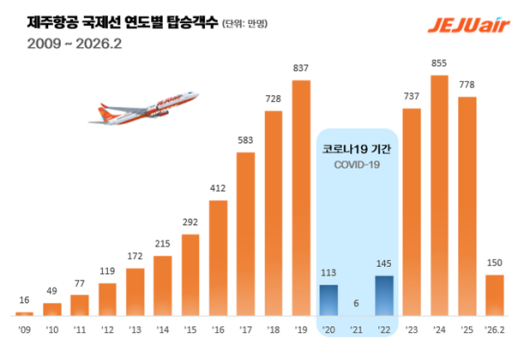 Jeju Air Marks 17 Years of International Flights, Averaging 27.5% Annual Growth Jeju Air said Thursday it has marked the 17th anniversary of its international service, reporting 62.85 million cumulative international passengers and average annual growth of 27.5%. The airline began scheduled international flights on March 20, 2009, launching the Incheon-Osaka route as South Korea’s first low-cost carrier to operate a regular international service. After about 159,000 passengers in its first year, Jeju Air expanded steadily. In 2012, it carried about 1.19 million international passengers, ushering in what it called the “1 million annual international passengers” era. As it added routes to Japan, Southeast Asia and greater China, the airline’s cumulative international passenger total surpassed 10 million in 2016 and topped 50 million in 2024. As of the end of February this year, cumulative international passengers stood at about 62.858 million, maintaining average annual growth of 27.5% since 2009, the company said. Jeju Air also increased its network from seven weekly flights on the Incheon-Osaka route in 2009 to 58 international routes now, serving destinations including Japan, the Philippines, Thailand, Vietnam, Malaysia, Singapore, Indonesia, Laos, Mongolia and greater China. Japan routes carried more than 4 million passengers last year, the company said, its best result on record. Southeast Asia routes also posted their strongest performance since the COVID-19 pandemic, with 360,000 foreign tourists using the services. The Incheon-Osaka route, Jeju Air’s first international service, has grown from one daily flight at launch to seven a day. The company said that is the highest frequency among airlines operating Korea-Japan routes. Passenger traffic on the route rose from about 73,000 in 2009 to about 574,000 in 2025. A Jeju Air official said the carrier has helped shift the market toward consumers and broaden access to air travel over the past 17 years, adding that it aims to strengthen South Korea’s aviation competitiveness through “healthy competition.”* This article has been translated by AI. 2026-03-20 10:12:09
 -
 Toss Bank Launches Companywide Hiring Push to Boost Data, Tech Capabilities Toss Bank said on the 20th it will carry out a large-scale hiring drive this year across all job groups. Openings span product planning and design, business, engineering, data, security and corporate support, with plans to recruit talent for more than 60 positions across the company. The bank will also operate a “special recruitment talent pool for veterans” to expand career opportunities for people eligible for veterans benefits who have served the country. The hiring process will proceed from document screening to a job interview, a culture-fit interview and reference checks. Toss Bank said the recruitment is aimed at improving customers’ financial experience while strengthening data- and technology-based competitiveness and further advancing security, risk and compliance capabilities. A Toss Bank official said the hiring is intended to sustain service innovation while raising the bank’s core stability and trust. The official added the company hopes many applicants will bring their expertise, see problems through to the end and help build a better financial experience.* This article has been translated by AI. 2026-03-20 10:06:00
 -
 Mercedes-Benz Korea Expands Airport Vehicle Care Service to Gimpo International Airport Mercedes-Benz Korea said on the 20th it is expanding its premium vehicle storage and care program, “Mercedes-Benz Airport Service,” from Incheon International Airport to Gimpo International Airport for customers traveling by air. Under the program, customers drop off their vehicles at a designated location before departure. The company stores the vehicles in an indoor parking facility and, if requested, provides inspection and care services. Vehicles are returned to customers according to their arrival schedule. The expansion to Gimpo is aimed at easing inconvenience from parking congestion and wait times as airport traffic increases, the company said. The service is offered up to three times during the free service period to customers who bought a new Mercedes-Benz vehicle on or after Nov. 1, 2023. Customers who bought a fully electric vehicle during the same period can use it without a limit on the number of times. Customers must book in advance through the customer contact center and hand over the vehicle at the designated location. Vehicles are stored indoors to avoid exposure to fine dust and heavy rain. By request, customers can also receive maintenance services such as regular inspections and replacement of consumable parts. “Airport Service is a premium vehicle care program that goes beyond simple storage, keeping customers’ vehicles in top condition while they travel,” said Tolsten Schtrein, executive vice president and head of customer service. “We will continue to expand differentiated premium service experiences tailored to customers’ lifestyles.” The service operates year-round from 4 a.m. to midnight. Vehicle cleaning and EV charging are available only at Incheon International Airport. * This article has been translated by AI. 2026-03-20 09:54:16