

Journalist

CGTN
-
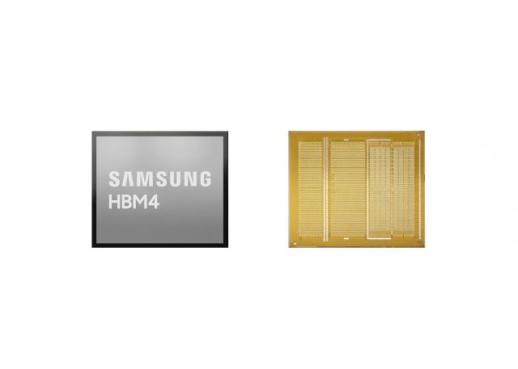 Samsung challenges SK hynix HBM dominance with HBM4E debut via NVIDIA alliance SEOUL, March 17 (AJP) - Samsung Electronics Co., Ltd. announced on Tuesday at NVIDIA GTC 2026 the first public showcase of its next-generation High Bandwidth Memory 4E (HBM4E) and its role as a provider of a comprehensive memory and storage total solution for NVIDIA’s Vera Rubin platform. The South Korean chip giant presented physical HBM4E chips and core die wafers, detailing a product that supports speeds of 16 gigabits-per-second per pin and a total bandwidth of 4.0 terabytes-per-second. Samsung confirmed it aims to complete sample shipments of HBM4E within the year to align with customer production schedules. Leveraging its position as an integrated device manufacturer, Samsung highlighted its ability to integrate its sixth-generation 10-nanometer-class (1c) DRAM process, 4-nanometer foundry logic dies, and advanced packaging technologies. This vertical integration allows the company to supply a full suite of memory and storage required for NVIDIA’s next-generation Vera Rubin AI superchip platform, including HBM4 memory, which is currently in mass production with speeds up to 13 gigabits-per-second. The company also displayed its SOCAMM2, an industry-first server memory module based on low-power LPDDR5X, and the PM1763 enterprise SSD utilizing the PCIe 6.0 interface. These solutions were demonstrated through NVIDIA SCADA workloads to showcase their performance in AI infrastructure. During the event, Samsung introduced its Hybrid Copper Bonding (HCB) technology, which the company claims improves thermal resistance by more than 20 percent compared to traditional thermal compression bonding. This technology is intended to enable the vertical stacking of 16 or more layers for future HBM generations, with implementation expected to begin with 16-layer HBM4E products. Samsung is also collaborating with NVIDIA to implement accelerated computing and Omniverse libraries to create digital twins of its manufacturing facilities. Samsung executives stated that HBM revenue in 2026 is projected to more than triple compared to 2025 levels as the company expands production capacity to meet global demand for AI infrastructure. 2026-03-17 05:45:27
 -
 Some South Korea Highway Gas Stations Cap Fuel Purchases Amid Supply Strain Middle East war fallout is deepening concerns about South Korea’s supply of petroleum products, with some gas stations now limiting how much customers can buy. The restrictions follow refiners’ cuts to fuel deliveries to discount stations in cities and at highway rest stops. Industry officials said Sunday that many EX-OIL discount stations on expressways, operated by the Korea Expressway Corp., have begun posting notices capping purchases at 30,000 won per person for gasoline and 100,000 won per person for diesel. A government price cap introduced March 13 has pushed down the national average price at gas stations, but customers are increasingly unable to buy as much fuel as they want. The Korea Expressway Corp. said March 12 it would work with joint-purchasing refiners such as SK Energy and GS Caltex to ensure stable supply. On the ground, however, EX-OIL stations say shortages are worsening. An EX-OIL station official said stations had been receiving contracted joint-purchase volumes from SK Energy and GS Caltex and, when short, signed separate deals with other refiners such as HD Hyundai Oilbank and S-Oil for additional supply. That extra supply has recently been cut off, officials said. Another station official said, “As it has become harder to secure volumes, we can’t sell as much fuel as customers want,” adding that “it’s not easy to keep operating.” The official said one refiner that had provided additional supply sent an email notice saying it “cannot supply oil this month.” Some in the industry say the government’s price cap may have affected the supply structure for highway stations. With profitability squeezed by price controls, refiners may have less incentive to provide volumes beyond joint-purchase contracts, reducing supply to highway stations. If disruption tied to a blockade of the Strait of Hormuz drags on, the purchase limits now seen at some stations could spread across highway stations. Similar limits could also appear at discount stations in cities, not just those tied to major refiner brands. Because it typically takes about a month to ship crude from the Middle East to South Korea, industry officials warned a gap could emerge in Middle Eastern crude arriving from late March or early April. As a result, consumers may be unable to buy as much gasoline and diesel as they want regardless of the price cap. A refining industry official said refiners are struggling to secure supply even for their own branded stations and are therefore reducing volumes sold into the spot market, including to discount stations. The Korea Expressway Corp. said it is discussing with the government and refiners ways to secure additional joint-purchase volumes to stabilize supply. 2026-03-17 05:03:00
 -
 Kakao Mobility Launches Late-Night Self-Driving Taxi Service in Seoul’s Gangnam Self-driving late-night taxis have begun service in Seoul’s Gangnam area, widening the rollout of autonomous mobility services beyond buses. As commercialization advances mainly through public transportation, Hyundai Motor Co., which has said it will develop independent autonomous driving technology next year, is increasingly seen as facing a major test this year. According to industry officials on the 16th, Kakao Mobility began operating a self-driving taxi service in parts of Gangnam starting that day. The late-night service uses Kia EV6 vehicles, but the autonomous driving system is Kakao Mobility’s in-house “AI Planner.” The company said it has built end-to-end (E2E) autonomous driving technology that allows AI to perceive and make decisions, based on complex urban driving data collected in areas such as Pangyo and Gangnam. The taxis operate in a designated autonomous driving pilot zone on weekdays from 10 p.m. to 5 a.m. the next day. In South Korea, autonomous driving is expanding largely through public transportation. Companies such as Autonomous A2Z and RideFlux have worked with local governments in Seoul, Busan and Daegu to deploy autonomous solutions and build real-world testing experience. Hyundai Motor was selected for the Ministry of Land, Infrastructure and Transport’s “K-Autonomous Driving Cooperation Model” project and plans to deploy 200 Ioniq 5-based self-driving vehicles in phases in Gwangju starting in the second half of this year. Motional, Hyundai Motor’s autonomous driving joint venture, is pushing to fully commercialize unmanned robotaxis in Las Vegas by year’s end. Interest is also growing in autonomous features for privately owned vehicles. A survey last month by Chabot Mobility of 450 prospective new-car buyers found 76.5% were interested in subscribing to autonomous driving functions. Tesla and General Motors have introduced autonomous driving features in South Korea, but broader adoption remains limited. Hyundai Motor last year said it would use its autonomous driving technology “Atria AI” to deliver Level 2+ capabilities comparable to Tesla’s FSD (Full Self-Driving) by 2027. Hyundai Motor autonomous driving affiliate 42dot has been developing an E2E model based on cameras and radar and began large-scale hiring in January. Still, profitability remains uncertain given heavy investment. 42dot posted an operating loss of 349.7 billion won last year, about doubling the size of its loss from a year earlier. Motional, which is responsible for the robotaxi business, also faces continued large investment burdens until commercialization. Attention is focused on whether Park Min-woo, recently appointed CEO of 42dot and head of Hyundai Motor’s Advanced Vehicle Platform (AVP) division, can shift the momentum. A Hyundai Motor official said, “The direction of the autonomous driving business could be flexible depending on the new CEO’s perspective,” adding, “There is a possibility that a concrete plan related to autonomous driving will be presented at this year’s investor day.” 2026-03-16 18:21:20
 -
 BYD Rises From China’s Auto Backwater to Global EV Leader, Expands in South Korea BYD has become a symbol of China’s rapid rise in electric vehicles. The company sold about 4.55 million vehicles globally last year, taking roughly 20% of the overall EV market and ranking No. 1. China, once a minor player in autos through the late 1990s, has moved to the front of the global EV race in about three decades, controlling more than 70% of the global EV market. Dozens of EV brands launch in China each year, and more than 80% eventually disappear. BYD has survived that shakeout and, in 26 years, climbed to the top. ◆ 6.4% share in February; reaches top tier in a year According to the Korea Automobile Importers & Distributors Association on the 13th, BYD sold 957 vehicles last month, ranking seventh behind Tesla (7,868), BMW (6,313), Mercedes-Benz (5,322), Lexus (1,113), Volvo (1,095) and Audi (991). Its cumulative sales for January and February totaled 1,347, giving it a 6.43% share and placing it in the top five by market share. The result is notable for a brand that launched in March last year. BYD’s best-known model is the compact electric SUV Atto 3, credited by some with ushering in a “20 million won EV” era. It has sold 753 units this year. Other models include the compact hatchback Dolphin (81), the midsize SUV Sealion 7 (1,277) and the Seal (193). The company’s appeal is pricing relative to performance: its lineup is priced from 25 million won to 46.9 million won, excluding subsidies. Battery technology remains central to EV competitiveness. BYD uses its proprietary lithium iron phosphate (LFP) Blade Battery, which it says improves safety and charging convenience. It has also unveiled a second-generation Blade Battery and FLASH charging technology aimed at addressing charging-speed limits and cold-weather performance drops. After six years of development, the second-generation battery can charge from 10% to 70% state of charge in five minutes and to 97% in nine minutes, the company says. A Denza Z9GT equipped with the battery has a driving range of 1,036 kilometers per charge. BYD is expected to reach cumulative sales of 10,000 units in South Korea within the first quarter. That would be the fastest pace among imported-car brands entering the Korean market, the article said. BMW Korea, which entered in 1995, took seven years to reach 10,000; Mercedes-Benz took three years; Tesla took four. ◆ Learning by rebuilding cars; from an auto backwater to No. 1 BYD stands for “Build Your Dreams,” a slogan tied to the entrepreneurial story of founder and Chairman Wang Chuanfu. Wang, who worked as a nickel-cadmium battery researcher at a Chinese government-affiliated institute, argued that batteries — not engines — would define the future of cars, and that whoever led battery technology would become a key player in the EV era. He started the company in Shenzhen in 1995 with 2.5 million yuan (540 million won). The article describes his approach as buying premium products, taking them apart and reassembling them — a method applied to EVs to accelerate learning. A widely cited anecdote says he bought one of the first 10 Teslas imported into China by Elon Musk, dismantled it and rebuilt it to study EV design. The article says he continued to buy competitors’ vehicles in bulk, disassemble and reassemble them, and build design know-how that helped propel BYD to the top. The company’s success has also been attributed to vertical integration — producing batteries, semiconductors and vehicles in-house — which supports price competitiveness and faster production. Investor Charlie Munger once described Wang as someone with “Thomas Edison’s ability to invent and Jack Welch’s ability to manage.” BYD ranks third in market capitalization among global automakers, behind Tesla in the United States and Toyota in Japan. BYD’s expansion continues. Beyond battery-electric vehicles, it has built out plug-in hybrid lineups and launched premium brands including Denza, Yangwang and Fangchengbao. Yangwang, launched in 2023 and positioned around ultra-high-end hypercar concepts, has been dubbed a “Chinese Rolls-Royce,” the article said, and showcases technologies such as the U8 luxury off-road SUV and the U9 electric supercar. The U8 features amphibious technology that can float for about 30 minutes and a “tank turn” enabled by four independent electric motors controlling each wheel. The U9 is known for movements likened to jumping in place. The company is increasingly viewed as a global technology player for the EV era, and Wang’s story has become an inspiration for young Chinese entrepreneurs. Still, controversies remain, including allegations of design copying and battery patent infringement. The article says early BYD models resembled key products from Toyota and Mercedes-Benz, prompting complaints. Tesla CEO Elon Musk also mocked BYD in an interview when asked whether he saw it as a competitor, saying, “I’ve never seen their cars.” An industry official said BYD built its formula by “copying, revising and developing independently” competitors’ products hundreds of times, but added that to fulfill its “Build Your Dreams” philosophy, it now needs a success story based on originality rather than imitation. * This article has been translated by AI. 2026-03-16 18:15:26
 -
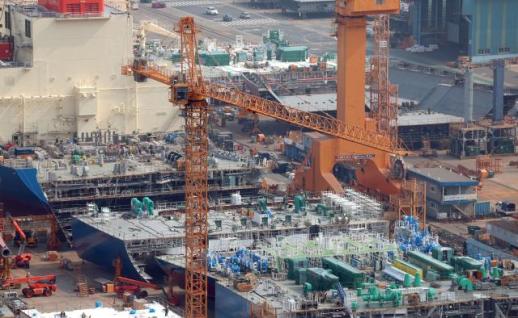 Korean Shipbuilders Warn Ethylene Shortage Could Disrupt Production if It Lasts Past March The war in the Middle East and the closure of the Strait of Hormuz are jolting South Korea’s shipbuilding industry, which has been running at near full capacity on a recent boom in orders. The immediate concern is an unstable supply of ethylene, an essential gas used in ship construction, raising the risk of production disruptions if the shortage persists. Multiple shipbuilding industry officials told Aju Business on the 16th that yards are holding out on inventories for now, but prolonged supply problems could first hit steel-cutting operations. “This month is the deadline,” they said. Officials pointed to the biggest pressure point: most shipyards are in a “full capacity” situation with docks filled by increased orders. With schedules tightly packed, any disruption in raw materials could delay processes and ripple through overall build timelines. At shipyards, ethylene is used to cut steel plates. Because shipbuilding steel is typically thick and difficult to process with standard cutting methods, builders use ethylene to raise flame temperatures from about 1,000 degrees to as high as 1,500 degrees before cutting plates to drawings. Since cutting steel to specification is a basic step in ship construction, ethylene is considered indispensable. The supply instability stems from the Middle East conflict, which has shaken feedstock flows. South Korea relies heavily on imports for ethylene, and more than half of those imports pass through the Strait of Hormuz. The industry also warns that if the situation drags on, it could affect “Masga,” a South Korea-U.S. shipbuilding cooperation project that includes ship construction and maintenance, repair and overhaul work. One industry official said most yards are already operating at full tilt, so a prolonged raw-materials problem could weigh on major project schedules. “How long the supply instability lasts is the key,” the official said. The government is monitoring the situation and has begun responding. The Ministry of Trade, Industry and Energy is checking supply conditions after receiving a request from the Korea Offshore & Shipbuilding Association to urgently secure ethylene volumes needed for shipbuilding cutting work. Baek Jeom-gi, a professor of naval architecture and ocean engineering at Pusan National University, said stockpiles are helping for now, but there is little cushion. With shipbuilding increasingly viewed as a strategic cooperation industry with the United States, he said, raw-material supply issues also require a national-level response. Industry officials also say a prolonged ethylene shortage could spread beyond shipbuilding to other manufacturing. Ethylene is a key basic feedstock used to produce plastics and synthetic resins and is widely used in products ranging from automobiles and construction materials to home appliances, smartphones, food, detergents and cosmetics.* This article has been translated by AI. 2026-03-16 18:03:18
 -
 Over 200 South Koreans return home on military aircraft from Middle East SEOUL, March 16 (AJP) - Some 204 South Korean nationals residing in Saudi Arabia and other Middle Eastern countries returned home on a military transport aircraft on Sunday. Amid the prolonged Middle East conflict, which began with U.S.-led airstrikes on Iran late last month, the South Korean government launched an evacuation mission, dubbed "Operation Desert Shine," to ensure the safe return of its nationals. A multipurpose transport aircraft flew to Saudi Arabia to evacuate citizens from the region, 142 from Saudi Arabia, 24 from Bahrain, 14 from Kuwait, and 28 from Lebanon. The plane took off from Riyadh, the Saudi capital, the previous day carrying a total of 211 people, including 204 South Korean nationals, five of their foreign family members, and two Japanese nationals. They arrived at a military air base in Seongnam, Gyeonggi Province, around 6 p.m. 2026-03-16 18:01:22
 -
 Son Heung-min, Lee Kang-in and Kim Min-jae named to South Korea squad for March friendlies South Korea will take a full-strength squad on a European trip for two March A-match friendlies, its final tune-up ahead of the 2026 FIFA World Cup in North and Central America. Coach Hong Myung-bo announced the call-ups on March 16 at Korea Football Park in Cheonan, South Chungcheong Province. No. 22 South Korea will play No. 37 Ivory Coast at 11 p.m. March 28 (Korea time) at Stadium MK in Milton Keynes, England. It will then face No. 24 Austria at 3:45 a.m. April 1 at Ernst Happel Stadium in Vienna. Ivory Coast was selected as preparation for South Africa, South Korea’s third group-stage opponent in Group A. Austria is positioned as a stand-in for the winner of UEFA playoff Group D, which includes Denmark, North Macedonia, the Czech Republic and Ireland. The team that will join Group A will be decided through the European playoffs later this month. With the trip serving as the last rehearsal before the World Cup begins in June, Hong called in his key overseas-based players, including captain Son Heung-min (Los Angeles FC), Lee Kang-in (Paris Saint-Germain), Kim Min-jae (Bayern Munich), Lee Jae-sung (Mainz) and Hwang Hee-chan (Wolverhampton Wanderers). Hong also selected striker Oh Hyeon-gyu (Besiktas), winger Yang Hyeon-jun (Celtic) and central defender Lee Han-beom (Midtjylland), citing their steady club minutes and form. Midfielder Hwang In-beom (Feyenoord), who was injured in a club match earlier March 16, was included for now. The national team said it will assess his condition before making a final decision on his call-up.* This article has been translated by AI. 2026-03-16 18:00:00
 -
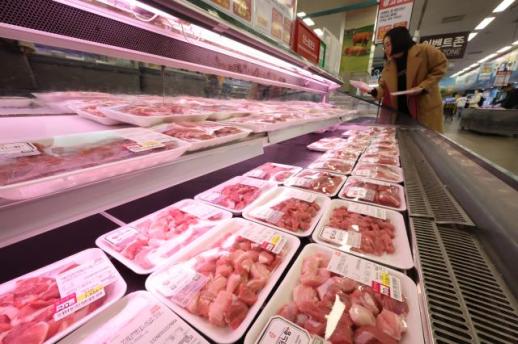 Rice, beans, eggs among items under price control watch SEOUL, March 16 (AJP) -Rice, beans and eggs are among 13 fresh food and grocery items authorities will keep a close eye on amid signs of price increases linked to a prolonged cold spell. In total, 23 items were selected during a government meeting on consumer prices. Of these, 13 items — including rice, beans, garlic, imported fruits, eggs, pork, frozen meat, flour, starch sugar, cooking oil, mackerel, dried seaweed and processed foods — were classified as essential consumer food items. Officials said rice and beans will receive particular attention, with the government ready to release stockpiles to stabilize supply and prices if needed. Authorities will also monitor market conditions and sales when the reserves are supplied. 2026-03-16 17:48:56
 -
 Hanwha Group Buys Additional 4.99% Stake in Korea Aerospace Industries Hanwha Group has increased its stake in rival Korea Aerospace Industries (KAI). Hanwha Aerospace said in an audit report on the 16th that it bought 4,864,000 KAI common shares, equal to 4.99%. The company purchased 3,236,635 shares last year and added 1,627,365 shares in the first quarter this year. Hanwha Systems previously said in a business report filed on the 13th that it bought 566,635 KAI common shares — 0.58% of the company’s total shares — for 59.9 billion won in November last year. Hanwha framed the additional purchase as aimed at potential synergy between the companies. Hanwha and KAI work together on programs including South Korea’s KF-21 fighter project: KAI builds the aircraft and Hanwha Aerospace produces the engines used in the jets. The companies also compete in bidding for a space project involving a small-satellite system. A Hanwha Aerospace official said the company expects to expand “mutual synergy” tied to defense exports and said it also expects the move to contribute to cooperation with partner firms and job creation in South Gyeongsang Province, where both companies have bases.* This article has been translated by AI. 2026-03-16 17:48:05
 -
 South Korea finishes Winter Paralympics with best-ever medal haul SEOUL, March 16 (AJP) - This year's Winter Paralympics concluded their 10-day competitions in Milan and Cortina d'Ampezzo, Italy, with a closing ceremony held last Sunday. With two gold, four silver, and one bronze medals, South Korea ranked 13th overall in the gold-medal count, the country's best-ever performance in Winter Paralympics history, surpassing its previous record set at the Pyeongchang Games in 2018 when the country secured one gold and two bronze medals. 2026-03-16 17:47:56