

Journalist

CGTN
-
 Hit song from K-pop anime to be performed live at Oscar night this weekend SEOUL, March 11 (AJP) - "Golden," a song from the soundtrack of Netflix's hit animated film "K-Pop Demon Hunters," will be featured at this year's Academy Awards scheduled to be held in California this weekend. According to the Academy of Motion Picture Arts and Sciences (AMPAS), Audrey Nuna, EJAE and Rei Ami, the voices behind the film's fictional girl group "Huntrix" will perform their song at the 98th Academy Awards at the Dolby Theatre in Hollywood on Sunday. They are expected to captivate audiences with a performance blending traditional Korean dance and live instruments, presenting one of the most striking and memorable moments of Oscar night. The trio also performed live earlier at Britain's annual EE BAFTA Film Awards in London late last month. The 95-minute film, which tells the story of fictional K-pop superstars who possess secret powers to protect their fans from supernatural threats, is competing for the Best Animated Feature Film award, along with five other nominees, "Arco," "Elio," "Little Amélie or the Character of Rain," and "Zootopia 2." "Golden" is also up for Best Original Song. "K-Pop Demon Hunters" won Best Animated Feature at the Golden Globe Awards in January, while its theme song "Golden" won Best Song Written for Visual Media at last month's Grammy Awards, further boosting its Oscar prospects. Adding to this anticipation, the AMPAS posted a message on social media, "HUNTR/X fans, it's time to get your light sticks out!" 2026-03-11 16:27:51
 -
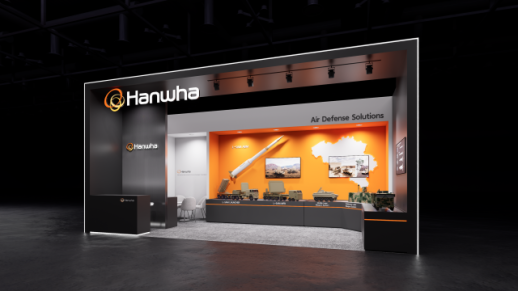 Hanwha showcases 'Korean THAAD' L-SAM at Belgium defense expo SEOUL, March 11 (AJP) - Hanwha is set to showcase its long-range surface-to-air missile interceptor, known as the “Korean THAAD,” at the BEDEX defense exhibition in Belgium as it seeks to expand its presence in the European defense market. Hanwha Aerospace and Hanwha Systems said Tuesday they are participating in BEDEX, a defense exhibition taking place in Brussels from March 12 to 14, marking the first time a South Korean company has taken part in the event. The exhibition, being held in Belgium for the first time, brings together major global defense companies including Rheinmetall, KNDS and Raytheon, alongside other European and international defense firms. Hanwha said its early participation in the exhibition — held in a country that hosts the headquarters of NATO — is part of a broader strategy to accelerate its push into the Western European defense market. Belgium is currently prioritizing the development of a multilayered air defense system as a key national defense objective. In response, Hanwha Aerospace is displaying its long-range surface-to-air missile (L-SAM) interceptor and launcher, while Hanwha Systems is presenting its multifunction radar (MFR), the laser-based air defense weapon system Cheongwang, and a laser-equipped armored vehicle currently under development. The L-SAM, often referred to as the Korean version of the Terminal High Altitude Area Defense (THAAD) system, is designed to intercept ballistic missiles at altitudes above 40 kilometers using a hit-to-kill method. The system completed development in 2024 and entered mass production last year. Because it can intercept fast-falling medium-range ballistic missiles from high altitudes, the system enables rapid responses to incoming threats. Hanwha also plans to emphasize that it can support swift deployment tailored to European requirements, as countries across the region accelerate efforts to strengthen their air defense networks. “Belgium is a key hub for European security, hosting NATO headquarters and major institutions of the European Union,” a Hanwha official said. “Building on our status as a strategic partner to NATO established through exports such as the K9 self-propelled howitzer, we aim to promote Hanwha’s air defense and ground firepower capabilities in the European market and explore cooperation opportunities to help strengthen the defense capabilities of NATO member states.” 2026-03-11 16:24:16
 -
 Korea Pharma and Health Brief: MFDS, Chong Kun Dang, Celltrion, SK Chemical, SNUH, CHA Hospital MFDS expands free pickup delivery for food foreign-object reports to meat and imports South Korea’s Ministry of Food and Drug Safety and the Korea Food Safety Information Service said on March 11 they will expand a free pickup delivery service for consumers reporting foreign objects found in food, extending it this year to livestock products and imported foods. The service began last year to eliminate the need for complainants to bring evidence to investigators in person or mail it themselves. After a consumer files a report, the integrated reporting center for illegal and substandard foods at the Korea Food Safety Information Service arranges the pickup. The complainant packs the foreign object and related evidence, such as product packaging, and leaves it at a chosen location for a courier to collect. The free pickup service, which can be requested at the time of reporting, was selected as an exemplary proactive administrative case by the Office for Government Policy Coordination last year. A total of 1,602 cases were handled from March 17 to Nov. 30 last year. Chong Kun Dang wins MFDS approval for type 2 diabetes drug Duvie-M Pol SR Chong Kun Dang said in a March 11 filing that it received MFDS approval for its type 2 diabetes treatment Duvie-M Pol SR, about a year after applying in April last year. The drug is intended for adults with type 2 diabetes for whom combination therapy with lobeglitazone, empagliflozin and metformin is appropriate. The company said it plans to launch the product in South Korea within the year. Celltrion launches Europe rollout of Remsima liquid IV formulation Celltrion said it has begun a full-scale European launch of its liquid formulation of infliximab for autoimmune diseases, sold as Remsima, which it described as the only such liquid formulation available worldwide. Celltrion’s Nordic unit said March 11 it won national tenders in Denmark and Norway for the intravenous liquid formulation of Remsima. In Norway, sales began immediately after the award, and the company will supply the product through January 2028. Celltrion said it expects to secure about 35% of the local infliximab IV market. Celltrion said it is the only company globally to hold and have registered patents related to a liquid infliximab formulation. Compared with a lyophilized formulation, the liquid version cuts preparation time by about 50% and reduces labor and consumables costs during dosing preparation by about 20%, the company said. Celltrion said it plans to expand the rollout across Europe this year, starting with the Nordics and extending to France, the Netherlands and the Czech Republic. SK Chemical launches 300 mg high-dose Joins F for osteoarthritis SK Chemical said March 11 it launched Joins F tablets (JoinsF) 300 mg, a higher-strength version of its osteoarthritis drug Joins. JoinsF increases the active ingredient from 200 mg to 300 mg, or 1.5 times the earlier dose. With a typical daily dose of 600 mg, the new product is designed for twice-daily dosing, compared with three times a day for the 200 mg tablets. Because osteoarthritis is commonly associated with aging and often requires long-term medication, the company said reducing dosing frequency should ease the burden on patients. SK Chemical also said patient costs are expected to fall. The reimbursement-listed ceiling price for JoinsF 300 mg, listed on March 1, is 488 won per tablet. Based on the recommended regimen, the daily cost is 976 won, about 16% lower than the 1,170 won daily cost for Joins 200 mg. The company said the tablet is only about 5% to 10% larger than before despite the higher content, and its thickness was reduced to minimize discomfort when swallowing. Park Hyun-sun, head of business at SK Chemical, said, "Osteoarthritis is an area where professional treatment is essential to relieve symptoms," adding, "We will continue efforts to improve convenience by listening closely to patients and actively reflecting feedback from the field." Seoul National University Hospital develops pre-chemotherapy model to flag high-risk VOD in pediatric transplants Researchers at Seoul National University Hospital said they developed a machine-learning prediction model to identify, before transplant, pediatric patients at high risk of veno-occlusive disease (VOD), a potentially fatal complication. The hospital said March 11 that a team led by professors Hong Kyung-taek and Kang Hyung-jin of pediatrics and Han Do-hyun of translational medicine analyzed 720 types of blood proteins in 51 pediatric patients who received high-intensity preconditioning chemotherapy ahead of hematopoietic stem cell transplantation. In the analysis, 25 patients who did not develop VOD had higher levels of GCLC, a liver detoxification enzyme, even before chemotherapy. By contrast, 26 patients who developed the disease had lower levels of the enzyme, and significantly lower expression of FBP1, a protein involved in maintaining liver function, indicating greater vulnerability to liver toxicity. High-intensity chemotherapy used in stem cell transplants for children with serious illnesses such as leukemia can damage small liver blood vessels and trigger VOD. The condition occurs in about 15% to 30% of patients, and when severe, the mortality rate can reach as high as 80%, the hospital said. Hong said, "Patients with veno-occlusive disease showed distinctly different blood proteome patterns even before chemotherapy," adding that the identified patterns could help clinicians screen high-risk patients early, develop prevention strategies and carry out safer transplant treatment. Bundang CHA Hospital team finds real-world benefit of nivolumab-ipilimumab combo in advanced liver cancer Researchers at CHA University’s Bundang CHA Hospital said they confirmed real-world clinical effectiveness of combination immunotherapy with nivolumab and ipilimumab in patients with advanced hepatocellular carcinoma. The hospital said March 11 that a team led by oncology professors Jeon Hong-jae and Kim Jung-sun analyzed 116 patients treated with the nivolumab-ipilimumab combination at six medical institutions in four Asian locations: South Korea, Hong Kong, Taiwan and Singapore. About half of the patients had previously been treated with atezolizumab and bevacizumab, while the rest had no prior immunotherapy. The team compared treatment response, survival outcomes and immune-related adverse events based on prior immunotherapy exposure. Across all patients, the objective response rate was about 31%, the researchers said. The response rate was about 42% among patients without prior immunotherapy and about 20% among those previously treated with atezolizumab and bevacizumab. Among responders, the median duration of response was about 24 months. Patients who experienced immune-related adverse events, including thyroid dysfunction, had longer progression-free survival and overall survival than those who did not, the team said, suggesting such events may serve as a clinical indicator for predicting response. Jeon said the findings could provide important evidence for developing patient-tailored treatment strategies and sequential immunotherapy approaches.* This article has been translated by AI. 2026-03-11 16:15:00
 -
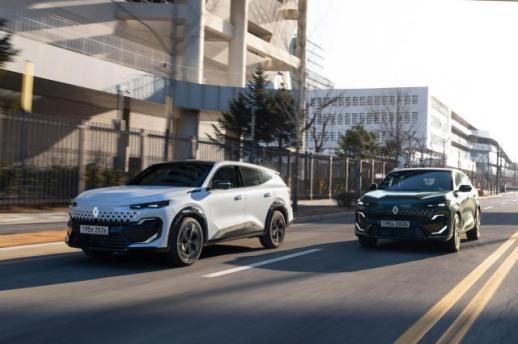 Renault unveils 'futuREady' strategy, plans 36 new models by 2030 SEOUL, March 11 (AJP) - Renault Group unveiled its new mid-to-long-term strategic plan dubbed "futuREady," charting an aggressive course to roll out 36 new models by 2030 as the French automaker seeks to cement its position as Europe's benchmark carmaker amid intensifying global competition. The plan revealed Tuesday (local time), succeeding the Renaulution turnaround strategy launched in 2021, sets a target of more than 2 million annual vehicle sales by 2030, with half generated outside Europe. The group also aims to maintain an operating margin of 5 to 7 percent of revenue and sustain annual free cash flow of about 1.5 billion euros ($1.74 billion). The Renault brand will spearhead the offensive with 12 new models in Europe and 14 for international markets, while pursuing 100 percent electrified sales across the continent and a 50 percent electrified mix outside Europe by the end of the decade. The company also confirmed that its full hybrid E-Tech powertrain would remain in the European lineup beyond 2030. At the heart of the electrification push is the new RGEV medium 2.0 platform, a modular 800-volt architecture spanning the B+ to D segments. The platform promises up to 750 kilometers of range for battery-electric models and 1,400 kilometers with a range extender, underscoring Renault's bid to close the gap with Chinese rivals on cost and technology. "At Renault Group, we know where we come from. Today, we know where we want to go, how and who with. And all of this in pursuit of one goal: to better serve our customers, ultimately delivering clean, affordable mobility tailored to their needs, based on the strength of our brands and vehicles," said Francois Provost, CEO of Renault Group. The company will lean on five international hubs — South Korea, Morocco, Turkiye, Latin America, and India — to fuel its overseas expansion. 2026-03-11 16:13:18
 -
 Yuhan Unveils 100th Anniversary Slogan and Emblem: 'A Century of Trust, A Century of Promise' Yuhan on Tuesday unveiled its 100th anniversary slogan and emblem at the 55th memorial ceremony for the late Dr. Yu Il-han, held at Yuhan University in Bucheon, Gyeonggi Province. The slogan, “A Century of Trust, A Century of Promise,” reflects the company’s pledge to build on the trust it has earned since its founding and to remain committed to human health in the next 100 years. The emblem, released the same day, uses three core colors to express Yuhan’s identity and direction: carrying forward the Yuhan spirit, completing a century of innovation, and opening a new era in human health through new drug development. “Yuhan Green” symbolizes the company’s founding spirit sustained over 100 years. “Progress Blue” represents its DNA of continuous innovation. “Future Orange” points to a future of improved human health through new drug development and incorporates the brand color of Yuhan’s innovative new drug, “Leclaza.” Yuhan said it aims to add new responsibilities to the trust it has maintained and to build innovation on accumulated integrity, with the goal of becoming a major global company that protects healthy lives beyond South Korea. A Yuhan official said the company will “carry forward the Yuhan spirit, complete 100 years of innovation, and begin a new 100 years of human health through new drug development,” adding that it will keep working “with the next generation for a world where everyone becomes healthier and happier.”* This article has been translated by AI. 2026-03-11 16:12:00
 -
 Toss Bank Cancels Yen Exchanges After App Shows Wrong Rate Toss Bank, known for promoting innovative technology, posted incorrect foreign-exchange information due to a computer error, prompting financial authorities to look into what happened. The bank said it canceled related currency-exchange transactions and began checking its systems. According to the financial sector on March 11, the Toss Bank app displayed the exchange rate for 100 Japanese yen as 472 won — instead of the normal 932 won — for about seven minutes starting at 7:29 p.m. on March 10. After recognizing the problem, Toss Bank temporarily suspended yen exchanges. During that period, an in-app alert told users the yen had hit its lowest level in three months, and some users proceeded with exchanges, according to reports. Toss Bank estimates the volume of transactions tied to the error at about 10 billion won. A Toss Bank official said the error occurred during work to inspect and improve its foreign-exchange system and that all exchange transactions executed during the affected period would be canceled. The bank cited Article 8, Paragraph 3 of the Electronic Financial Transactions Act, which allows financial companies to correct or cancel transactions caused by mistakes such as system failures or input errors. Similar cases have occurred before. In 2023, an input error involving the Vietnamese dong (VND) exchange rate at Hana Bank was deemed an obvious mistake and the transactions were ruled invalid. Toss Bank said the rate was displayed far below normal levels and that users did not suffer financial harm. Financial authorities, however, are reviewing the circumstances and the bank’s internal control procedures. The Financial Supervisory Service is conducting an on-site inspection of Toss Bank. An FSS official said inspectors are confirming the facts and will examine the cause of the incident and internal management procedures. 2026-03-11 15:51:00
 -
 KLPGA Tour Opens 2026 Season With Record 34.7 Billion Won Purse and No Clear Favorite The 2026 Korea Ladies Professional Golf Association tour begins an eight-month run this week, with attention on whether another wide-open season will unfold without a dominant player. The KLPGA schedule starts with an opening event in Thailand on March 12 and runs through November, with 31 tournaments. Total prize money is 34.7 billion won, up about 100 million won from last season. Four new events with purses of at least 1 billion won were added, pushing the average purse to 1.12 billion won, the tour said. The season opener is the Rejuran Championship, played March 12-15 at Amata Springs Country Club (par 72) in Chonburi, Thailand. Its 1.2 billion won purse is the largest in KLPGA Tour history. The 120-player field includes the top 90 on the 2026 KLPGA regular tour eligibility list, 23 players drawn from the 2025 THAI LPGA money list and overseas entrants, and seven sponsor invites. ◆A deeper field fuels a wide-open race In past years, the tour had clear standouts, including Chun In-gee in 2015 (five wins), Park Sung-hyun in 2016 (seven), Choi Hye-jin in 2019 (five), and Park Min-ji in 2021 and 2022 (six each). Recently, however, the tour has lacked a single dominant force. Last season produced 22 winners across 31 events. Lee Ye-won, Bang Shin-sil and Hong Jeong-min shared the wins lead with three each, while Kim Min-sol and Ko Ji-won won twice. Hong finished as the money leader and Yoo Hyun-jo won the season points title. A similar pattern played out in 2024, when Lee, Park Hyun-kyung, Park Ji-young, Bae So-hyun and Ma Da-som each won three times to share the wins crown. The tour has attributed the parity to overall improvements in player performance, driven by more systematic physical training, longer average driving distance, and wider use of data for swing work and course strategy. Rookies have also contended immediately, shrinking what once was considered an adjustment period. ◆Season opener offers early test; floating green looms as key variable The opening event is expected to offer an early read on the season, as players put offseason swing work and conditioning to the test. With last season’s top performers in the field, another tightly contested year is expected to begin immediately. Hong, who won three times last season, held on to finish No. 1 on the money list for her first career money title and is seeking a second straight. “I’m excited for the 2026 season opener after waiting for it,” she said. “I trained hard focusing on my swing and rhythm during winter training, so I also want to be the inaugural champion.” She added that because the course is hosting the event for the first time, she will focus on understanding the grass and layout. Yoo recorded 19 top-10 finishes last season and won the season points title with steady play. After focusing on short game and fitness in the offseason, she said, “It’s the first tournament of the season and the invitational event of a new sponsor, so I really want to do well.” She added, “It’s right after winter training, so my feel for competition may be off. Rather than the result, I’ll focus on the process and do my best every moment.” Noh Seung-hee, who finished second on the money list and fourth in points last year, is also among the leading contenders. She joined the Rejuran golf team this year, adding motivation to win the title sponsor’s event. Seo Gyo-rim, the 2025 rookie of the year, said she is targeting a strong start. “I’m really excited and looking forward to playing the season opener,” she said. “It’s important to button the first one well and build good momentum. I prepared hard in the offseason, so I’ll play with confidence.” A major variable is the par-3 17th at Amata Springs, where the green floats in the middle of a lake. The tour described it as one of only two “floating greens” in the world. Unlike a typical island green connected to land, it is completely surrounded by water, and players must take a dedicated boat to reach the putting surface after teeing off. Players who competed there at the 2023 DP World Tour Thailand Classic cited the 17th as the toughest hole. Thailand’s Kiradech Aphibarnrat said, “You have to put all your focus into simply hitting the middle of the green without going into the water.” Spain’s Rafa Cabrera Bello said, “The 17th hole was really tricky and the wind was strong.”* This article has been translated by AI. 2026-03-11 15:36:00
 -
 OPINION: Middle East conflict enters second week, leaving Trump with few options SEOUL, March 11 (AJP) - The ongoing Middle East conflict that began with U.S. and Israeli airstrikes on Iran has entered its second week, with fighting and retaliatory attacks spreading across the region and no end in sight as attention now turns to U.S. President Donald Trump's next move. Since the killing of Iran's former supreme leader Ali Khamenei shortly after the Feb. 28 U.S.-led military operation, senior Iranian military figures have been targeted and killed, and key military sites including nuclear facilities and ballistic missile bases have been destroyed. About 3,000 sites in Iran have been reportedly destroyed, and around 1,300 civilians have been killed including 168 elementary schoolgirls. More than 20 Iranian naval vessels are said to have been sunk, killing hundreds of sailors. Airstrikes have expanded to hit industrial and civilian infrastructure including oil storage facilities and refineries, prompting Iran to respond with retaliatory drone and missile attacks on energy and strategic sites in neighboring Gulf countries. Tehran, a city of some 10 million, has been shrouded in thick black smoke, with oily residue from destroyed oil facilities raining down on the capital and worsening severe pollution and water shortages. With civilian casualties rising and oil prices surging, calls for an immediate end to the war have grown louder, but Trump and Israeli Prime Minister Benjamin Netanyahu have only become more hardline. Trump's early confidence that the war would last just a few weeks has faded, replaced by talk of a weekslong conflict, possible ground operations, regime change, unconditional surrender, and threats to kill any new supreme leader not approved by him. Analysts see little room for diplomacy, as the United Nations' influence wanes, international law loses its teeth, and meaningful mediation hard to come by. But the question remains. Why did the U.S. launch the military operation codenamed "Operation Epic Fury," even as nuclear talks in Geneva were reportedly making "positive progress," according to Oman's foreign minister and the head of the International Atomic Energy Agency just two days earlier. Behind the war lies Israel's influence. Netanyahu has long opposed limited nuclear deals with Iran, arguing they fall short of his goals dismantling Iran's nuclear and missile programs and weakening the regime's grip on power, pushing Washington toward a more confrontational path. Iran's internal unrest may also have emboldened Trump. Crippled by U.S. sanctions, the country was already buckling under economic paralysis, with protests over livelihoods spreading even among the regime's traditional supporters. Its brutal crackdown only deepened the crisis, what many described as the gravest challenge the regime has faced since coming to power in 1979. After three years of war in Gaza and with Israel effectively controlling most of the West Bank, territory long envisioned for a future Palestinian state, Netanyahu came to see Iran as the last major obstacle standing in his way. Some 151 countries including many in Europe, recognize Palestinian statehood, while Netanyahu faces an arrest warrant over the Gaza war. With an early general election looming in October, he may have felt an urgent need to bolster domestic support. Public sentiment in Iran seems to be shifting from hope to fear to anger. After 37 years under autocratic, one‑man rule, many had expected democratic reforms and better living conditions. Instead, their protests were met with a brutal crackdown that has cost thousands of lives. But as U.S. strikes expanded beyond military targets, killing large numbers of civilians, anti-American and anti-Israeli sentiment surged sharply. The best scenario, as some argue, would be for Trump to end the war quickly after finding a way to declare victory. But instead, Trump is considering deploying ground forces, demanding Iran's complete surrender. Otherwise, ending the war would be difficult for both Iran's leadership and its people, given Iran's long, 2,500‑year history and collective memory of enduring an eight‑year war with Iraq, during which the U.S. backed Iraq, and decades of crippling sanctions since 1979. Iran has blocked the Strait of Hormuz, disrupting oil and gas flows and pushing prices toward US$150 a barrel. The global economy is feeling the strain, with South Korea among the hardest hit, nearly 80 percent of its crude oil comes from the Middle East. Iran has also established a succession structure, with a three-person interim authority now in place. Iranian clerics have named Mojtaba Khamenei, the second-eldest son of the late leader, as the next supreme leader. The choice of a hardline conservative signals a determination to fight on. Even if the war ends, Iran's economic crisis leaves it with only one option, negotiation and compromise with the U.S., as no government would survive indefinitely under American sanctions and blockade. As war fatigue grows and global economic strain deepens, two things are worth watching. The first is whether the U.S. and Israel will accept Mojtaba as a negotiating counterpart. If he is killed, anger inside Iran could deepen, making the conflict harder to contain and far more prolonged. The second is whether the U.S. will deploy ground forces. A plan to send a U.S.-backed Kurdish militia into Iran appears to have stalled, hampered by infighting among Kurdish factions as well as objections from the Iraqi and Turkish governments. Instead, the U.S. is reportedly preparing elite special forces to seize and destroy Iran's enriched uranium stockpiles. Any ground deployment, however, carries serious risks and could turn the conflict into a long, costly war. There is still no clear exit, but extending the war indefinitely would also burden Trump ahead of the midterm elections in November, given negative U.S. public opinion and his emphasis on presenting himself as a peace broker. But Netanyahu will likely keep pushing Trump to maintain military pressure, arguing that Iran must be thoroughly weakened to prevent it from threatening Israel again, and he has also vowed to continue offensive operations across the region. Nevertheless, a possible breakthrough could come from Trump's upcoming summit with Chinese leader Xi Jinping, scheduled later this month in Beijing. China, which buys roughly 80 percent of Iran's oil exports, holds the greatest leverage over Tehran and is actively mediating. As the war grinds on, South Korea is also urged to take a more active diplomatic role in pursuit of peace. * This article, published by Aju Business Daily, was translated by AI and edited by AJP. 2026-03-11 15:15:52
 -
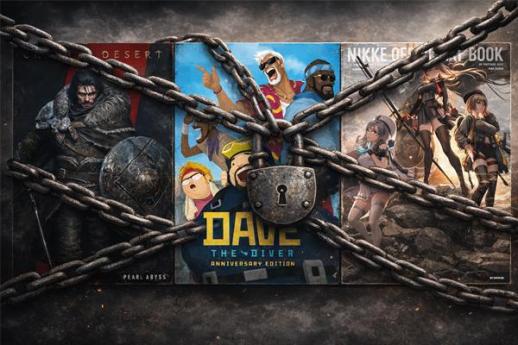 Korean games earn billions abroad but lose spotlight to K-pop SEOUL, March 11 (AJP) - South Korea's video game industry is quietly generating billions of dollars overseas, yet publishers say it remains overshadowed by the global success of K-pop and film while facing heavier regulatory and financial burdens at home. Once the flagship sector of the country's "K-content" boom, game developers complain they struggle to gain global attention or policy support despite remaining the largest content export industry. Games accounted for 60.4 percent of South Korea's total content exports in 2024, generating about $8.5 billion, exceeding the combined overseas sales of music, film, television and advertising, according to industry data. The 2025 export data are yet to be published. Domestic revenue reached roughly 23.8 trillion won ($16.2 billion). Yet the industry says it receives little institutional backing. Game production is notably absent from South Korea's content production tax credit framework, a gap lawmakers and trade groups have increasingly criticized. At a National Assembly forum Tuesday hosted by the Korea Association of Game Industry (K-GAMES), developers and policymakers pointed to the widening disparity with other cultural sectors. Film and television productions receive tax credits of up to 30 percent, while webtoon creators qualify for 10 to 15 percent incentives. Game developers receive no comparable support, even though 86.4 percent of Korean game companies employ fewer than 10 people, leaving most unable to meet the threshold for existing R&D tax credits. "Triple-A titles now routinely cost more than 1 trillion won to produce," said Culture Minister Chae Hwi-young. "National-level institutional support is more urgent than ever." The contrast is even sharper overseas. Britain offers a 34 percent tax credit on core game production costs, Canada reimburses up to 37.5 percent of labor expenses, and Japan allows companies to deduct 30 percent of qualifying intellectual-property income under its tax regime. Regulatory pressures are also rising. South Korea's Framework Act on Artificial Intelligence, which took effect in January, requires AI-generated content to carry disclosure labels. The game industry has opposed a proposed amendment that would introduce additional disclosure rules, warning the overlap could create regulatory confusion. Platform economics remain another sticking point. Google announced on March 4 it would lower its Google Play commission from 30 percent to a maximum of 20 percent, but the change will not take effect in Korea until December — six months after implementation in the United States and Europe. Apple continues to charge commissions of up to 30 percent through the App Store. According to K-GAMES, Korean developers paid an estimated 9 trillion won in platform commissions to the two companies between 2020 and 2023. Industry concerns come as financial pressures mount across major publishers. NCSoft reported revenue falling 5 percent last year despite launching Aion 2, while Kakao Games posted its first annual operating loss since listing. Pearl Abyss recorded a 14.8 billion won loss amid a prolonged content drought, and Krafton saw operating profit fall 10.8 percent despite record sales. Meanwhile Nexon logged roughly 4.5 trillion won in annual revenue, but operating income barely increased. A wave of project shutdowns has compounded the industry's difficulties. Extraction shooter Dungeon Stalkers will close on June 9 just seven months after launch, while NCSoft ended service for Blade & Soul Heroes in February and plans to shut down global services for Blade & Soul 2 in June. Critics say the industry's own strategy has also contributed to the slowdown. "Many game executives come to us saying 'this type of game makes money' rather than asking what makes a good game," said Im Chung-jae, professor of game software at Keimyung University. "For years the industry has focused on a narrow business model built around a small group of heavy-spending users." Despite the setbacks, major titles scheduled for release in 2026 are raising hopes for a revival. Pearl Abyss is preparing to launch the open-world blockbuster Crimson Desert, while Nexon's Arc Raiders and the globally acclaimed indie hit Dave the Diver have already demonstrated the international potential of Korean studios. Other successes — including Shift Up's Stellar Blade and Neowiz's Lies of P — suggest Korean developers can compete globally when they move beyond established formulas. Im said the industry ultimately needs broader recognition and greater creative diversity. “If companies adopt a longer-term philosophy and expand their genres, solutions will emerge,” he said. “The industry must be structured so it can ride whatever cycle comes — and right now, with such a narrow spectrum, it cannot.” 2026-03-11 15:04:56
 -
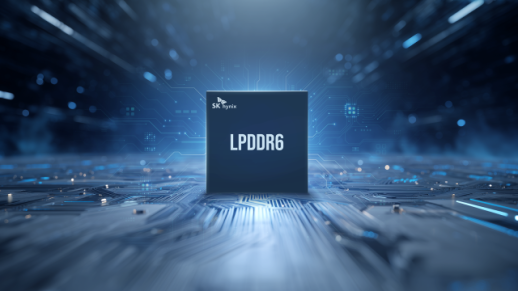 SK hynix expands AI memory portfolio beyond HBM with LPDDR6 breakthrough SEOUL, March 11 (AJP) - SK hynix said Tuesday it has developed the world’s first 16-gigabit LPDDR6 DRAM built on its sixth-generation 10-nanometer-class (1c) process, positioning the chipmaker to capture the next wave of artificial-intelligence demand spilling over from data centers to smartphones and mobile front. The new mobile memory, designed for devices running on-device AI, improves data processing speed by 33 percent and boosts power efficiency by more than 20 percent compared with the current LPDDR5X generation. With a base operating speed exceeding 10.7 gigabits per second, the chip surpasses the maximum performance of existing mobile DRAM products, the company said. The LPDDR6 chip incorporates Dynamic Voltage and Frequency Scaling (DVFS) and a sub-channel architecture that activates only necessary data paths, enabling devices to maximize bandwidth during heavy workloads while lowering voltage and power consumption during routine tasks. SK hynix plans to complete preparations for mass production in the first half of the year and begin supplying global smartphone and tablet makers in the second half. The development underscores how aggressively SK hynix is leaning into the AI memory boom that has reshaped the semiconductor industry over the past two years. The company has emerged as one of the biggest beneficiaries of the AI infrastructure build-out, particularly through its dominance in high-bandwidth memory (HBM) used in AI accelerators supplied to companies such as Nvidia. Demand for AI servers has tightened the supply of advanced memory, driving prices sharply higher across the industry. Server-grade DRAM prices are expected to rise as much as 60 to 70 percent this year compared with late 2025, according to industry estimates, as hyperscale cloud providers including Microsoft and Google rush to secure memory supplies for expanding AI data centers. The surge in AI-related demand has also spilled over into conventional DRAM markets. Even as chipmakers prioritize production of HBM for AI servers, tighter supply of standard DRAM is pushing up prices for memory used in PCs, smartphones and other consumer electronics. Against that backdrop, SK hynix is broadening its portfolio beyond data-center memory to include mobile chips optimized for AI workloads running directly on devices. Industry analysts say the shift toward on-device AI, where smartphones process AI tasks locally rather than through remote servers, is creating a new growth engine for mobile memory with higher bandwidth and better power efficiency. The LPDDR6 chip is designed to support faster response times and longer battery life in AI-enabled smartphones and tablets, enabling complex tasks such as real-time language processing and image recognition without relying heavily on cloud computing. By moving early into LPDDR6 while maintaining leadership in HBM, SK hynix is positioning itself at both ends of the AI memory spectrum — from hyperscale data centers to next-generation mobile devices — as the industry pivots toward AI-driven computing. 2026-03-11 14:59:43