

Journalist

CGTN
-
 Hanmi Pharmaceutical Group Chair Song Young-sook Apologizes Over Sexual Misconduct Controversy Song Young-sook, chair of Hanmi Pharmaceutical Group, issued a formal apology over a recently raised sexual misconduct controversy and reiterated the company’s commitment to an independent, board-led governance structure under a professional management system. In a statement released on the 5th, Song said that as a family member of the company’s founder and one of its major shareholders, she feels a heavy responsibility for failing to prevent the situation. She apologized “sincerely” to the person harmed by the sexual misconduct case and to employees who she said would have felt deep disappointment. “Anyone, regardless of position, who engaged in inappropriate conduct must offer an apology and show a responsible attitude,” she said, adding that only “genuine remorse and reflection” can open a path back to unity. Song also referred to the ongoing in-house placard protests by some employees. She said watching staff continue the daily demonstrations made her feel devastated, as it suggested her pledge to be a reliable support for their lives had not been fully kept. She used the episode to restate Hanmi’s governance principles. “Hanmi is not a company that any one individual can run with full authority,” she said. She described the “advanced professional management system” promised to customers and shareholders as a principle designed to respect professional managers’ roles and authority and to ensure independent management centered on the board. Song added that major shareholders should support sound direction rather than intervene directly in management, calling it a management philosophy emphasized by the late Chairman Lim Seong-gi and the path Hanmi should pursue. On preventing a recurrence, she urged professional managers across group affiliates to overhaul systems and internal controls to make them fairer and more transparent. Song said the group’s driving force is the unity of its employees, rooted in Lim’s spirit of “respect for humanity.” As group chair, she said, she will hold the line so the company can regain trust.* This article has been translated by AI. 2026-03-05 16:30:00
 -
 Posco Future M to Invest 357 Billion Won in Vietnam Synthetic Graphite Anode Plant Posco Future M will build a synthetic graphite anode material plant in Vietnam as it seeks to stabilize supply of key battery materials. The company said its board on Wednesday approved an investment of about 357 billion won ($3570억원) to build the plant in Thai Nguyen, an industrial city in northern Vietnam. Construction is scheduled to begin in the second half of this year, with mass production planned from 2028. The plant will be built on a site that can be expanded to a maximum capacity of 55,000 tons. Posco Future M said it plans to increase output in stages depending on orders. Synthetic graphite anode material is used to improve fast-charging performance and battery life, and demand has been rising. The company said the material has drawn attention as a strategic item because supply is heavily dependent on certain countries, making diversification a priority. The company cited moves by major markets to reshape supply chains. The United States last year created requirements for “prohibited foreign entities” under implementing rules for the Inflation Reduction Act, and Europe set goals under the Critical Raw Materials Act to reduce reliance on specific countries for strategic raw materials. Posco Future M said it has been working to internalize the full supply chain for natural and synthetic graphite anode materials, covering raw materials, intermediate materials and finished products. It said it localized natural graphite anode materials in 2011 and completed a synthetic graphite anode plant in Pohang in 2021, establishing a mass-production system and supporting supply-chain self-reliance for South Korea’s battery industry. Posco Future M said Vietnam offers cost advantages in investment, electricity, labor and logistics, and can secure competitive costs compared with other Southeast Asian countries such as Indonesia. It also cited Vietnam’s industrial infrastructure, including its power grid, and said the country is pursuing export-led growth while working to create favorable trade conditions with major countries, including the United States. A Posco Future M official said the company is holding talks with multiple customers in South Korea, North America and the European Union on supplying cathode and anode materials, based on supply-chain solutions and technology that can respond to trade restrictions. The official said the company will continue to strengthen competitiveness and expand sales, aiming to become a top-tier global battery materials player. 2026-03-05 16:09:26
 -
 Culture Minister Choi: BTS Concert Will Test Anti-Scalping Efforts, Platforms Must Act 최휘영 문화체육관광부 장관은 5일 "최근 국민적 관심이 집중된 BTS의 공연은 암표 대응의 중요한 시험대가 될 것"이라며 민관이 함께 암표 근절에 적극적으로 나서야 한다고 밝혔다. Choi said at the launch ceremony in Seoul for a joint public-private anti-scalping task force that the group must become a practical platform that carries out enforcement, built on constant cooperation between government and the private sector. The task force, which officially began work that day, brings together the Ministry of Culture, Sports and Tourism and ticketing-platform companies to routinely check for illegal ticket resales and strengthen response systems. Choi has described scalping as a long-standing chronic problem in the cultural industry and has pledged a tough response. Under revisions to the Performance Act and the National Sports Promotion Act, authorities can impose penalties of up to 50 times the amount of illegal ticket sales and allow confiscation and recovery of profits from unlawful resales, sharply raising sanctions. Some have said that because the bills were drafted quickly, detailed enforcement rules still need to be prepared. Choi said, however, that "legal revisions alone are not enough," calling scalping a complex issue involving technology, distribution channels and consumer awareness. He said results will come only when each institution’s role is linked, including blocking fraud at the booking stage, constant monitoring by platform operators, rapid information-sharing with investigative agencies and public-awareness campaigns. Choi also urged ticketing platforms for performances, exhibitions and sports to take a more active role. "The role of platforms that can become a channel for scalping is important," he said, adding that monitoring of the BTS Gwanghwamun concert found multiple suspected scalping cases on some platforms. He said tighter platform-level controls are needed and that thorough public-private action is required to reduce demand for scalped tickets and help the revised laws take hold quickly. He also stressed the need to clearly warn the public about the risks of buying scalped tickets. Choi said that even if people purchase scalped tickets for BTS concerts and other events, bookings can be canceled if the transaction is detected, and on-site identity checks can make transfers effectively impossible, potentially leading to fraud losses. * This article has been translated by AI. 2026-03-05 16:03:20
 -
 Actress Ku Hye-sun Defends Price of Patented ‘KOOROLL’ Hair Roller Actress Ku Hye-sun has addressed criticism over the price of her patented hair roller, ‘KOOROLL.’ Ku wrote on her social media on the 5th that KOOROLL “removes more than 80% of the plastic” used in conventional round hair rollers. She said that unlike round rollers, which can tangle with hair and become dirty, KOOROLL can be unfolded to remove hair easily and then returns to its original shape. She added that the product is durable and “can be used permanently.” Ku said the initial production run was small, raising costs, and that “for that reason the price is currently on the high side,” but she plans to offer discounts and other promotions so consumers are not burdened. She also promoted the product, saying, “If you consider the environment, choose ‘KOOROLL.’” Debate flared online after Ku shared a link to the official sales website along with pricing information. Typical hair rollers generally cost about 400 to 500 won, and even some higher-priced products are often in the 4,000 to 5,000 won range. Ku recently received a master’s degree in engineering from the Graduate School of Science Journalism at the Korea Advanced Institute of Science and Technology, known as KAIST. KOOROLL was selected as a recipient of South Korea’s Excellent Patent Award in 2025. * This article has been translated by AI. 2026-03-05 15:54:15
 -
 Shinhan Bank Hires Big Tech AI Talent to Speed Digital Transformation Shinhan Bank is expanding recruitment of outside talent in artificial intelligence and digital transformation, known internally as AX, as it seeks to strengthen its AI capabilities. The bank has been bringing in engineers and executives with backgrounds at major technology companies including Samsung Electronics and SK. On March 5, the financial industry said Shinhan Bank this month appointed Choi Cheol as head of its AX Digital division. Choi previously led the SK AIX Convergence Group and the SK C&C Convergence Group. Shinhan Bank is said to have valued his expertise in areas including blockchain-based Web3, AI and the Internet of Things. The AX Innovation Unit where Choi works was created in the second half of last year and sits under the AX Innovation Group. Choi is expected to help lead companywide digital transformation strategy with AX Innovation Group head Choi Hyeok-jae. Choi is not the only outside hire as the bank moves away from a tradition of promoting from within. Last year, Shin Young-pil, who previously worked at Samsung Electronics and NCSoft, was named head of the Tech Innovation Unit. In 2024, Lee Guk-hee, with experience at Amazon, Microsoft and KT Cloud, was hired as head of the Tech Innovation Team. Other Samsung Electronics alumni who have joined include Jin Young-gyu, head of the Customer Experience Innovation Center; Jeon Seong-ik, head of the Customer Platform division; and Kim Jun-hwan, a team leader at Shinhan Financial. The hiring push is focused on strengthening competitiveness in the AX area as AI competition intensifies and banks race to secure capabilities in a fast-changing digital environment. Shinhan Financial has said it aims to deliver hyper-personalized financial services through AI. In his New Year’s address, Chairman Jin said the industry is at a major turning point as technologies such as digital assets, Web3 wallets and agent AI expand, and he called for faster adoption of AI. The group is actively introducing AI agents in customer management, wealth management, internal controls and credit screening. Departments are also developing their own AI agents for task-specific use, and the bank is testing what it calls the country’s first AI unmanned branch, the “Shinhan AI Branch.” Monthly active users of its financial platform rose from 21.3 million in 2023 to 24.67 million in the third quarter of last year, reflecting growth in non-face-to-face usage. Industry officials say the bank has limits in building enough in-house specialists who can also meet regulatory requirements such as internal controls, prompting it to look outside. As digital transformation accelerates, banks are increasingly competing to recruit technology talent from big tech, analysts say. A financial industry official said, “Beyond existing technology, there are still many areas we must pay closer attention to, including anti-money laundering (AML),” adding, “Digital assets are seen as a test case for judging the success or failure of financial companies’ recruitment of outside digital talent.” 2026-03-05 15:51:00
 -
 Korean Industry Urges Action as Hormuz Closure Fears and U.S. Tariffs Add Pressure U.S.-Iran fighting has heightened fears that the Strait of Hormuz could be blocked, prompting South Korean industry leaders to press for swift countermeasures at an emergency meeting at the National Assembly on the 5th. Exporters and energy companies attended the “Democratic Party-industry emergency meeting on Middle East issues,” urging the government to respond quickly to what they called a compound crisis driven by Middle East instability and U.S. tariffs. Democratic Party lawmaker Kim Young-bae said South Korea relies on the Middle East for about 70% of its crude oil. “It’s a very grave situation,” he said, calling for diversified supply chains and tighter energy security. Democratic Party lawmaker Ahn Do-geol said crude oil stockpiles cover about 270 days, but liquefied natural gas reserves amount to only about nine days. He urged a stronger plan centered on LNG supply. Representing industry, Kim Chang-beom, vice chairman of the Federation of Korean Industries, warned that if the Iran situation drags on, it could quickly weigh on the broader economy, including energy and shipping. He said difficulties could deepen for the petrochemical sector, where restructuring has only just begun. Kim said broad government support is needed, citing key variables such as energy and logistics costs, exchange rates and non-tariff barriers. He also asked lawmakers to help pass a “special law on investment in the United States” quickly through bipartisan agreement. After opening remarks, the meeting shifted behind closed doors. Oh Tae-gil, vice president of HD Hyundai Oilbank, told reporters afterward that he asked the government to release oil from strategic reserves. He said there was no discussion of the petrochemical sector, where naphtha cracking capacity is being reduced. Democratic Party lawmaker Heo Seong-moo said response measures for the shipping industry were also discussed. He said participants raised the need to keep hotlines with embassies and consulates running smoothly to ensure the safety of employees and family members dispatched to the Middle East. Heo said a recent rise of about 200 won per liter in gasoline prices reflected, in part, psychological factors, and stressed the need for the government to send a stabilizing signal to the market. International oil prices have jumped amid the fighting, fueling controversy around domestic refiners. Critics have raised collusion suspicions after refiners adjusted prices preemptively, rather than following the usual practice of reflecting global oil-price increases two to three weeks later. Gasoline prices in Seoul topped 1,800 won per liter, the highest level in about two years and five months. The government has said it will respond strictly to unfair trading and has announced plans to hold meetings with refiners and others to review oil supply and market conditions. The meeting, hosted by the Democratic Party, was attended by Hanwha Ocean President Jeong In-seop; Samsung Electronics Vice President Yoon Young-jo; Hyundai Motor Vice President Lee Hang-soo; HD Hyundai Oilbank Vice President Oh Tae-gil; Ko Yoon-joo, head of LG’s Global Strategy Development Institute; Park Seok-joong, head of SK’s Management and Economy Research Institute; Ahn Young-mo, head of policy at GS Caltex; FKI Vice Chairman Kim Chang-beom; Jang Sang-sik, head of the Korea International Trade Association’s Institute for International Trade; and Kim Myeong-hee, vice president of the Korea Trade-Investment Promotion Agency. HMM was listed among participants but did not attend due to company circumstances, according to the report.* This article has been translated by AI. 2026-03-05 15:36:55
 -
 Jinyoung and Kim Minju Lead JTBC’s New Friday Romance Series “Shining” Actors Park Jinyoung and Kim Minju are betting a first-love story can help revive JTBC’s Friday series. JTBC’s new Friday drama “Shining,” directed by Kim Yoon-jin (“Our Beloved Summer”) and written by Lee Sook-yeon (“One Fine Spring Day”), layers a teenage first meeting with a reunion in the characters’ 30s. The creators said the series aims to prove love through the passage of seasons rather than through big “incidents.” On the afternoon of the 5th, JTBC held a production presentation for “Shining” (written by Lee, directed by Kim) at The Link Hotel Seoul in the Guro district of Seoul. Kim and cast members Park and Kim attended and described the tone of the project. “Shining” follows young people who once shared a world of their own as they become each other’s faith and a light that guides their lives. Park and Kim co-star alongside Shin Jae-ha and Park Se-hyun. Kim said it is “a drama that doesn’t drive the story with some huge event.” He said that when he read the script, he felt the characters Tae-seo and Eun-a were portrayed in ordinary, recognizable moments, with a narrative that builds as the seasons pass. Asked how it differs from his previous work, Kim said, “If the last project felt like spring into early summer, I think ‘Shining’ may be a work that contains all four seasons.” Park plays Yeon Tae-seo, a subway train driver who looks at the world with precision. Living by the goal of simply getting through each day safely, the character is shaken in quiet ways when he reunites with his first love, Mo Eun-a, from when he was 19. Park said he found the through line from the character’s teens to his 30s in “consistency.” He called Tae-seo an ordinary person and said it was difficult to portray, adding that the writer told him she wanted Tae-seo to remain consistent in his teens, 20s and 30s. Park said he looked back on his own life and felt he had not changed dramatically, though his ways of coping with hardship differed over time. He said he tried to reflect that by playing Tae-seo with small shifts, keeping the performance restrained so viewers might think, “Someone like this really exists.” He also joked about wearing a school uniform again, crediting the lighting and cinematography teams for helping him pull it off. He said playing Tae-seo let him revisit his teens and 20s, and that his 30s now feel like the best time of his life. Asked about pressure after his previous work “Unknown Seoul,” Park said it would be a lie to say he felt none. He said he was grateful for the love but needed to approach the next project coolly, adding that “Shining,” unlike the previous work, is primarily a male-female romance. Kim plays Mo Eun-a, a manager of an old-house stay in Seoul with a background in hotel work. The character is energetic and charming but, after cycles of small rewards and major failures, meets her first love again. Kim said it was her first time playing a character across her teens, 20s and 30s. She said she had many concerns but enjoyed building the role in a more three-dimensional way. She said portraying a 30-something version of the character was especially challenging, so she talked extensively with the director and asked people around her for input. She said outward changes have limits, so she focused on how the character’s attitude and values might have shifted. Both actors emphasized their on-screen chemistry. Park called it “perfect,” saying the director scheduled extensive readings in advance — including one that lasted 10 hours — and that it would have been their fault if they had not become close. Kim said the readings helped her start filming in a comfortable state and called the time valuable. She said the set was fun and relaxed, crediting the director and Park. Park and Kim said they would work to make the “first love” story relatable, saying they wanted to show it “as if through a magnifying glass.” Park said the drama contains a story that anyone who has been in love will relate to, adding that while love is a common theme, “Shining” enlarges and highlights it like a magnifying glass. Kim said it is a story “everyone can relate to,” and added that the visuals are beautiful and may feel healing to watch. Park agreed, saying he knew South Korea was pretty but did not realize “how beautiful it is,” adding that the production filmed around the country and found it “truly beautiful.” JTBC’s Friday series slot was newly programmed last year, but earlier dramas including “The Good Man,” “My Youth” and “Love Me” stayed in the 1% to 3% ratings range, failing to establish a strong presence. That track record has fueled both anticipation and concern for “Shining.” Kim said any project comes with pressure, but noted the time slot’s format, with Episodes 1 and 2 airing back-to-back. He said viewers who follow how Tae-seo and Eun-a begin, move through time and return to each other may feel they want to keep watching for the full two hours. Episodes 1 and 2 air back-to-back at 8:50 p.m. on Friday the 6th.* This article has been translated by AI. 2026-03-05 15:30:12
 -
 Middle East Crisis: Away from the front lines, Iran and Israel wage a war of words in Seoul SEOUL, March 05 (AJP) - The Iranian and Israeli embassies in Seoul held back-to-back press briefings Thursday, trading starkly opposing narratives over the escalating war in the Middle East as both sides sought to shape international opinion. The unusual diplomatic exchange unfolded within hours of each other in central Seoul, with the Iranian ambassador accusing the United States and Israel of launching an illegal war and the Israeli envoy defending the military campaign as a necessary step to stop Iran’s nuclear and missile programs. The dueling briefings underscored how the widening conflict — sparked by U.S.-Israeli strikes on Iran — is rapidly becoming a global information battle as well as a military confrontation. Iran: “Illegal aggression” and war crimes Speaking at the Iranian Embassy in Yongsan, Ambassador Saeed Koozechi blamed Washington and Israel for triggering the conflict. “The responsibility for the current crisis in West Asia lies with the United States and the Zionist regime of Israel,” Koozechi said. “Today’s war did not originate from Iran’s actions, but from the deliberate decision of the United States and Israel to abandon diplomacy and choose military aggression.” The ambassador said Iran had engaged in negotiations with Washington twice in the past nine months over its nuclear program, arguing that the attacks during ongoing diplomacy demonstrated that the talks were used as a cover for military action. He accused Israel of violating international law and targeting civilians, citing an alleged strike on a girls’ elementary school in the southern Iranian city of Minab. “The attack killed 165 students and seriously injured dozens more. Such acts are clear war crimes and blatant violations of international humanitarian law,” he said. Iran, he added, would continue exercising its right to self-defense under Article 51 of the United Nations Charter until the attacks stop. “The Islamic Republic of Iran will not hesitate to defend itself. Our response is not revenge but legitimate self-defense,” Koozechi said. The ambassador also rejected accusations that Iran is pursuing nuclear weapons, calling them “fabricated claims and disinformation.” “The country possessing nuclear weapons in the region is not Iran but Israel,” he said, noting that Israel is not a signatory to the Nuclear Non-Proliferation Treaty (NPT). Israel: Preventing a nuclear threat Roughly an hour later in a separate venue in central Seoul, Israeli Ambassador Rafael Harpaz offered a sharply different account. According to Harpaz, the military operation was aimed at preventing Iran from completing a nuclear weapons capability and halting the expansion of its ballistic missile arsenal. “Iran was approaching the final stage of nuclear weapon capability,” Harpaz said. “If we did not act now, we might not have another opportunity to prevent it.” He argued that years of diplomatic efforts had failed to stop Iran’s nuclear ambitions. “Iran has been explaining its nuclear program for decades and promising that it is peaceful,” he said. “But each time, the negotiations simply bought them more time to advance their program.” Harpaz also pointed to Iran’s financial support for Hezbollah in Lebanon, estimating that Tehran has provided the group with $2 billion to $3 billion in funding. The ambassador framed the operation as a defensive measure for Israel’s security. “When you imagine a one-ton warhead mounted on a ballistic missile hitting a densely populated Israeli city, the threat becomes very clear,” he said. Dispute over civilian casualties The two ambassadors clashed sharply over allegations that Israeli strikes hit civilian facilities. Iran said attacks on schools and hospitals represented clear violations of international humanitarian law. Israel denied intentionally targeting civilian infrastructure and warned that misinformation was circulating widely. “There is a lot of fake news coming out of Iran,” Harpaz said. “Israel has never intentionally targeted civilian facilities.” He added that Israel operates under a system of free media and urged journalists to verify claims carefully. Competing visions of the conflict The diplomatic clash in Seoul reflected a broader divide over the goals and legitimacy of the war. Iran framed the conflict as an unlawful act of aggression aimed at undermining its sovereignty and destabilizing the region. Israel, by contrast, presented the campaign as a preemptive effort to neutralize a nuclear and missile threat that could endanger its survival. Both ambassadors acknowledged the risk of a prolonged conflict but expressed confidence in their respective positions. “Iran has faced many invasions in its history and will continue to resist aggression,” Koozechi said. Harpaz said Israel believes the military campaign will not become an endless war. “We trust our capabilities and the support of our allies,” he said The rare diplomatic confrontation in Seoul highlighted how the Middle East conflict is being fought not only on battlefields but also in global capitals. 2026-03-05 15:08:39
 -
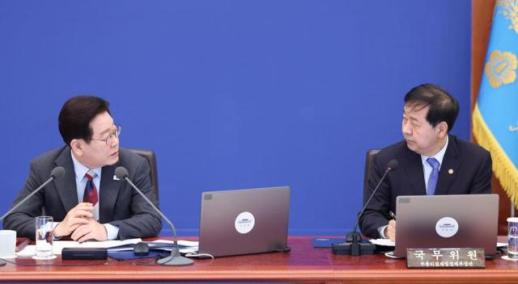 South Korea to crack down fuel price collusion amid Middle East tensions SEOUL, March 5 (AJP) - The government will crack down on price collusion and other unfair practices, and strict measures will be taken against any violations, Deputy Prime Minister and Finance Minister Koo Yoon-cheol said on Thursday. His remarks came as domestic fuel prices were already surging even before the impact of escalating tensions in the Middle East caused by last week's U.S.-led airstrikes against Iran under the military operation dubbed "Operation Epic Fury" was fully felt in the local market. Speaking at an emergency Cabinet meeting chaired by President Lee Jae Myung at Cheong Wa Dae, Koo said "We are seeing an excessive hike in gasoline and other petroleum prices," vowing to conduct intensive inspections to punish any collusion and implement corrective measures in cooperation with relevant industries. Koo said energy prices had climbed approximately 13 percent as of early Thursday morning, outlining contingency measures that include securing energy supplies beyond the Middle East, exercising pre-emptive purchase rights and tapping strategic oil reserves if necessary. Turning to the broader economic fallout, Koo said that about 49 small and medium-sized exporters had reported difficulties including shipping disruptions, delayed payments, and rising logistics costs. To support them, the government plans to provide 20.3 trillion Korean won (US$14 billion) in funding through interest rate cuts and expanded loans, along with tax relief measures for affected firms. Lee then ordered the immediate injection of 100 trillion won ($68.3 billion) into capital and financial markets to counter the fallout from the Middle East conflict. "Our first priority must be to actively address the increased market volatility across financial sectors, including equities and exchange rates," he said. If the Middle East conflict drags on and disrupts oil shipments through the Strait of Hormuz, a critical chokepoint for roughly one‑fifth of the world's oil supply, the government will help cover rising freight costs and deploy emergency response teams to monitor supply chains for goods heavily dependent on the perennially volatile region. Some 38 South Korean vessels are currently operating in and around the strategically vital waterway including 26 within the strait itself, with no incidents or damage reported so far. Meanwhile, Foreign Minister Cho Hyun said that a total of 18,472 South Korean nationals including some 4,935 short-term visitors, are currently in 14 Middle Eastern countries. Regarding their safety, Cho said, "There have been no casualties among our nationals so far," adding that evacuations to neighboring countries have been carried out with support from local diplomatic missions. Lee urged ministers to respond swiftly and thoroughly, stressing that the safety of South Korean nationals overseas should be treated as a matter of utmost priority. 2026-03-05 15:01:16
 -
 Hyundai Motor-Kia AVP Chief Park Min-woo Urges Staff to Embrace Conflict as 'One Team' Park Min-woo, head of Hyundai Motor and Kia’s AVP division, urged employees to keep a “one team” mindset even when disagreements arise. Hyundai Motor Group said Thursday that Park, who took office Feb. 23, met employees in a town hall meeting and told them, “There will be countless clashes and differences of opinion, but let’s not avoid them.” He added that conflict can be “positive friction” aimed at building the most complete product. Park stressed collaboration as “One Team,” saying real innovation will begin when the AVP division and 42dot work closely and when teams across the group — including R&D, design and product — actively share information and communicate. He urged employees to focus on “the best technology that helps people,” not technology for its own sake. The town hall, held at Pangyo Tech One, the AVP division’s research hub, was themed “Vision & Direction” and shared Park’s strategic direction. About 150 employees attended in person, and more than 500 joined a live online broadcast from Namyang Research & Development Center, overseas research centers and other sites. “True mobility innovation happens when scalable hardware and strong software capabilities are fully integrated,” Park said. He called on the division to become an “execution” organization that applies its technology to mass-produced vehicles without error, and asked employees to practice three priorities: expertise, persistence and agile execution. He also emphasized flexible culture and faster decision-making. Park said he would work with teams to build a flexible collaboration system, while reducing unnecessary hierarchy and complicated decision steps to stay focused on goals and speed up execution. On leadership, Park said his philosophy is “measurable and transparent goal-setting and building trust based on predictability.” He said it is important to set clear success standards, align all teams to those standards and maximize collaboration efficiency across the organization. Park added that employees should join efforts to help Hyundai Motor Group become a leading company in next-generation intelligent mobility that balances technology and people.* This article has been translated by AI. 2026-03-05 14:27:26