

Journalist

CGTN
-
 S. Korea enters era of 1 million foreign patients, moves to regulate medical fees SEOUL, March 01 (AJP) - South Korea's medical tourism boom shows no signs of slowing, with the number of foreign patients having surpassed the 1 million mark for the first time in 2024 and no meaningful reversal in sight — prompting the government to tighten oversight of fees charged to overseas visitors. The Ministry of Health and Welfare recently announced proposed amendments to the enforcement decree and rules of the Act on Supporting Overseas Expansion of Medical Services and Attraction of International Patients, establishing a clearer legal basis for investigating fees and medical charges at facilities catering to foreign patients. Under the existing law, the ministry is authorized to examine commission fees — payments that medical institutions make to brokers for attracting foreign patients — as well as the medical charges levied on those patients. However, the scope of duties that could be delegated to its supporting agency, the Korea Health Industry Development Institute (KHIDI), had remained ambiguous until now. Ministry officials say the law had long allowed for such investigations but that the delegation framework under the enforcement decree lacked clarity, adding that the revised rules would also require medical institutions to report commission fees and medical charges when submitting their annual performance records. The ministry noted that the amendments do not impose new mandatory obligations and that reporting systems were already in place, meaning significant changes on the ground were not expected. Authorities said they hope the clearer mandate will help generate reliable policy statistics on the foreign patient attraction market. According to a statistical report by the KHIDI, the number of unique foreign patients treated in South Korea in 2024 — excluding repeat visits — reached about 1.17 million, surging 93.2 percent from the previous year. It marked the first time the figure has crossed the 1 million threshold since the medical tourism program began in 2009, when just about 60,000 foreign patients were recorded. Among foreign visitors that year, about 919,000 patients who used overseas-issued cards spent a combined 1.4 trillion won ($972 million) on medical services, averaging about 1.5 million won per person. 2026-03-01 09:48:54
 -
 Over 130 IAF aircraft gather to demonstrate full-spectrum combat readiness in Pokhran POKHRAN, INDIA, March 01 (AJP) - The Indian Air Force (IAF) successfully conducted its massive triennial firepower demonstration, 'Vayushakti,' at the Pokhran Field Firing Range near Jaisalmer, Rajasthan. The exercise underscored the IAF's seamless combat readiness and its ability to deliver lethal strikes with surgical precision. The event was graced by the Supreme Commander of the Armed Forces, Hon'ble President Droupadi Murmu, along with senior military leadership and civil dignitaries. The exercise operated under the IAF's core doctrine: "Achook, Abhedya aur Sateek" (Infallible, Invincible, and Precise). This year’s Vayushakti stood out by moving beyond a simple display of ordnance. For the first time, the exercise was conducted with a defined operational storyline, simulating a live combat theatre. This allowed for a more realistic demonstration of how air power is integrated into modern, high-intensity warfare. The exercise featured a formidable fleet of over 130 aircraft, including frontline fighters such as the Rafale, Su-30 MKI, Mirage-2000, MiG-29, Jaguar, and Hawk. Support assets like the C-17, C-130J, and C-295 transport aircraft, along with Apache and Chinook helicopters, played vital roles. The simultaneous precision strikes by the French-made Rafale and the Russian-origin Su-30 MKI highlighted the IAF's diverse and versatile aerial capabilities. The IAF demonstrated its long-range strike capabilities using advanced air-to-ground precision-guided munitions. A key highlight was the integrated air defence showcase, featuring the Akash and Spyder surface-to-air missile systems, working in tandem with Indian Army air defence assets to neutralize simulated aerial threats. The exercise also emphasized jointmanship and special operations. Garud Commandos and Para SF teams performed high-stakes insertions and simulated urban interventions. Rapid response missions, including assault landings at Advanced Landing Grounds (ALGs) and casualty evacuations (CASEVAC), were executed with clinical efficiency. Spanning both day and night, Vayushakti proved the IAF’s ability to maintain 24/7 dominance over the battlespace. As darkness fell, aircraft equipped with advanced night-vision and targeting systems struck targets with pinpoint accuracy, illuminating the desert sky and demonstrating all-weather operational superiority. An IAF official stated, "Vayushakti is a reaffirmation of our sovereign deterrence and our commitment to national security. By combining jointmanship with cutting-edge technology, we are fully prepared for the challenges of future warfare." Local analysts noted that the exercise not only validated the operational effectiveness of indigenous weapon systems under the 'Atmanirbhar Bharat' (Self-Reliant India) initiative but also sent a strong strategic signal of regional stability and deterrence. 2026-03-01 09:46:27
 -
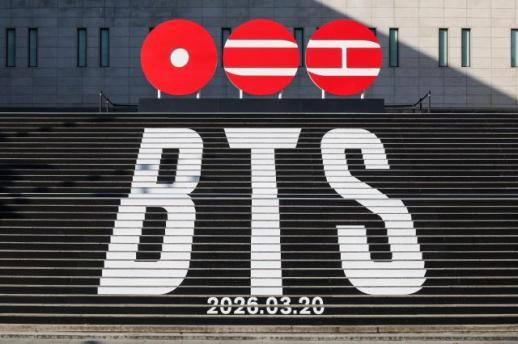 BTS Comeback D-20: Police scramble to curb mass overnight camping ahead of Gwanghwamun concert SEOUL, March 01 (AJP) - South Korean police are wrestling with how to manage the prospect of mass overnight camping by BTS fans ahead of the K-pop group's free comeback concert at Gwanghwamun Plaza on March 21, as global audiences descend on the capital with no ticket in hand. Reports say officers are in talks with the Seoul Metropolitan Government over administrative guidance measures to deter fans from seizing stretches of the plaza and surrounding pavements for extended periods before the show. Police assess that ticketless fans will queue through the night to secure vantage points offering even a partial view of the stage, a concern amplified by estimates that the crowd on the day could swell to about 260,000 people — stretching from the plaza down to Sungnyemun. The challenge, authorities said, is that overnight waiting in itself does not constitute a clear legal violation. Fans who remain on pavements or the plaza without blocking traffic cannot be cited under road traffic law or charged with obstructing public passage, nor can their presence be classified as an illegal assembly. While Seoul city ordinances permit administrative guidance and fines for unauthorized occupation of public space, police official say officers would have no choice but to appeal to fans' goodwill, urging them to move along rather than resorting to force. Police plan to deploy officers to patrol the area starting the day before the concert, and are conducting preemptive safety inspections of rooftops and ventilation structures on nearby high-rise buildings to prevent fall accidents from overcrowding. Authorities are also moving swiftly against a wave of online ticket fraud, having flagged 81 suspected scam posts — many demanding fees of 150,000 won to 1 million won for proxy ticketing services — and requesting that the Korea Communications Standards Commission remove and block them. 2026-03-01 08:51:37
 -
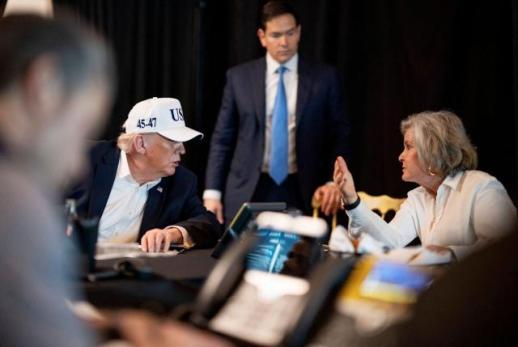 ANALYSIS: Seoul on alert in fear of Iran crisis shockwaves reaching Northeast Asia SEOUL, March 01 (AJP) -South Korea convened an emergency National Security Council working-level meeting Saturday evening as the Iran crisis escalated, underscoring how quickly a Middle East conflict can translate into strategic and economic risk in Northeast Asia. The National Security Office reviewed the situation on the ground, assessed impacts on national security and the economy, and prioritized the safety of Korean nationals in the region. President Lee Jae Myung was briefed and directed officials to place citizen protection first while closely monitoring developments and preparing for a prolonged scenario. The urgency reflects the scale of events. U.S. President Donald Trump declared on social media that Iran’s Supreme Leader Ayatollah Ali Khamenei was dead, framing it as “the single greatest chance” for Iranians to reclaim their country and signaling that joint U.S.-Israeli airstrikes would continue “as long as necessary.” Israel has indicated Khamenei was killed, though Tehran has not issued definitive confirmation. Regardless of formal verification, the claim alone marks a dramatic escalation: the potential removal of the Islamic Republic’s top authority introduces succession uncertainty, raises the likelihood of retaliatory escalation, and shifts the conflict from deterrence to regime-level confrontation. Iran has already responded with missile and drone strikes against Israel and U.S. military bases in the region. Reports of attempts to restrict shipping through the Strait of Hormuz — a chokepoint for roughly 20 to 30 percent of global seaborne crude — have injected immediate volatility into energy markets. For South Korea, heavily dependent on imported oil and global trade flows, that channel represents the most direct economic exposure. Security repercussions on the Korean Peninsula Yet beyond oil prices and currency swings, the crisis carries a deeper strategic resonance for the Korean Peninsula. The U.S. decision to escalate militarily against Iran — including the reported targeting of its supreme leader — signals that Washington is willing to employ decisive force when it judges long-term threats to outweigh immediate risks. While the Iranian case differs significantly from North Korea’s nuclear status and deterrence structure, the broader message is unmistakable: the United States retains both the capability and the political will to act preventively under certain conditions. For Pyongyang, led by nuclear-armed and nuclear-ambitious leader Kim Jong Un, the episode offers competing lessons. On one hand, it may reinforce the regime’s long-held conviction that nuclear weapons are the ultimate guarantee of survival — a shield against external intervention. On the other, it underscores that strategic isolation, internal repression, and overt missile or nuclear brinkmanship do not remove the possibility of calibrated military action by adversaries. North Korea’s deterrence posture is structurally different from Iran’s. Pyongyang already possesses an operational nuclear arsenal and tested delivery systems, creating a far more immediate retaliatory risk calculus. That mutual deterrence raises the threshold for direct military confrontation. But it does not eliminate pressure, especially if the international community judges that proliferation or escalation is crossing unacceptable lines. For Seoul, the priority is twofold. First, to ensure that alliance coordination with Washington remains tight and predictable, minimizing the risk of misinterpretation in Pyongyang. Second, to maintain robust crisis communication mechanisms that reduce the possibility of accidental escalation in a tense regional environment. South Korea’s security planners worry that events in the Middle East can shape strategic psychology in East Asia. A U.S. demonstration of force elsewhere can alter threat perceptions, alliance expectations, and the signaling environment on the Korean Peninsula. In such moments, clarity and restraint matter as much as capability. At the same time, Seoul policymakers would have to closely watch the economic dimension of the shock. Rising oil prices, shipping disruptions, and renewed currency volatility could intersect with security anxieties, amplifying uncertainty. Korea’s recent equity surge and relative currency stabilization were signs of improving sentiment; a prolonged Middle East conflict could challenge that stability. 2026-03-01 07:37:03
 -
 BTS’ Jung Kook builds solo success with ‘Seven’ and ‘GOLDEN’ ahead of group comeback With BTS preparing to return in March, anticipation is rising worldwide. The comeback news, carried by “Arirang,” and plans for a world tour are expected to trigger immediate reactions beyond the music industry, affecting tourism and broader local economies. BTS is seen as both a force with global economic impact and a symbolic name that has elevated South Korea’s image. Ahead of the comeback, this outlet is publishing a “BTS member profile” series examining the group’s seven members one by one. <Editor’s note> Jung Kook, BTS’ youngest member, has carried one of the group’s broadest roles — main vocalist, lead dancer and sub-rapper. Onstage, he is known for steady live vocals paired with precise performance, and his work has extended into songwriting. His nickname, “golden maknae,” has become shorthand for that range. In 2023, his solo debut single “Seven” established his name beyond the group’s achievements. The song topped domestic and international charts and debuted at No. 1 on Billboard’s Hot 100 upon entry. On Spotify, it set a record as the fastest track by an Asian artist to reach 1 billion streams. The momentum continued with his first solo album, “GOLDEN,” which led in both sales and streaming and cemented his standing as a solo act. “GOLDEN” frames what the album calls Jung Kook’s “golden moments.” Built around “Standing Next to You,” the track order follows an emotional arc from the start to the end of love. The retro-funk title track highlights his groove-driven vocals and performance, while the album leans into pop-centered global sounds. Collaborations with world-renowned producers also underscored his positioning as a global pop star. Vocals remain his core strength. Rather than relying only on power, he shifts smoothly between chest voice and falsetto to shape a song’s mood. Even while executing BTS’ demanding choreography, he is known for stable live singing — a key reason he has long been central to the group’s vocal line. With performance added, he is often described not as a “dancing singer,” but as a vocalist who completes the stage. He has also steadily built a record as a creator. From “OUTRO: Love is Not Over” to “Autumn Leaves,” his solo track “Begin,” and the fan song “Magic Shop,” he contributed his own language to BTS’ narrative. Later releases such as “Still With You,” “My You” and “Never Let Go” showed a careful approach to emotion and melody. “Still With You,” in particular, has remained widely discussed beyond the fan base, highlighting his songwriting sensibility. His impact is reflected in streaming figures. On Spotify, “Seven” and “Standing Next to You” each surpassed 1 billion streams, setting a first for an Asian solo singer, and his cumulative streams on his personal account also reached a new milestone. Jung Kook is no longer defined only as “the group’s youngest member,” but as a solo artist proving himself through results in the global pop market. As BTS returns as a team, Jung Kook is set to resume his role as a central vocalist. At the same time, he has already secured a clear place as a solo artist — across performance, vocals and records — and remains one of the most direct examples of how far K-pop has reached.* This article has been translated by AI. 2026-03-01 06:03:21
 -
 Culture Minister Choi Hwi-young Attends K League 1 Opener, Discusses Soccer’s Growth Culture, Sports and Tourism Minister Choi Hwi-young visited the opening match of the K League 1 season and met with officials to discuss ways to sustain the growth of professional soccer. The ministry said Choi attended the Hana Bank K League 1 2026 match between Incheon United and FC Seoul at Incheon Football Stadium on the 28th, encouraged players and heard on-site views from soccer officials on measures to support the sport’s continued development. Before kickoff, Choi held a meeting with professional soccer officials, including a vice president of the Korea Professional Football League, the owner and CEO of Incheon United, and the CEO of FC Seoul. They exchanged views on improving the stadium experience for fans and strengthening development programs for professional and youth players. Choi also urged the K League to actively join efforts to curb ticket scalping and promote fair access, following a revision to the National Sports Promotion Act that bans illegal purchases and resales of sports tickets. The revision was promulgated Feb. 27 and takes effect Aug. 28. “Professional soccer has grown thanks to the efforts of the players on the field, the fans in the stands, and club and league officials who dedicate themselves behind the scenes,” Choi said. He added that professional soccer is a high value-added industry linking sports, leisure culture and tourism, and said the government would stay in close contact with the field and provide institutional and policy support so the K League can continue to grow.* This article has been translated by AI. 2026-02-28 19:24:00
 -
 US begins major combat operations against Iran after Israeli strikes on Tehran SEOUL, February 28 (AJP) - United States President Donald Trump announced the start of "major combat operations" against Iran in an eight-minute video posted to Truth Social at approximately 2:30 a.m. Saturday (local time). The move marks a massive military escalation in the Middle East, ending an eight-month period of relative calm following the 12-Day War last June. "The United States military has undertaken a massive and ongoing operation to prevent this very wicked, radical dictatorship from threatening America and our core national security interests," President Trump said in the video speech. He accused the Iranian government of attempting to rebuild its nuclear program and developing long-range missiles. "We are going to destroy their missiles and raze their missile industry to the ground. It will be totally, again, obliterated. We are going to annihilate their navy," he added. The U.S. offensive follows a series of "preventive strikes" launched by the Israeli Ministry of Defense against Tehran. Iranian state television reported explosions and thick smoke rising from the capital's city center, with international media reporting blasts near the office of the 86-year-old Iranian Supreme Leader Ayatollah Seyyed Ali Khamenei. It remains unconfirmed if Khamenei was present, as he has not appeared in public for several days. Following the strikes, Israel ordered a nationwide closure of schools and businesses. President Trump stated the operations also aim to neutralize regional proxies and protect allies. "We are going to ensure that the region's terrorist proxies can no longer destabilize the region or the world, and attack our forces, and no longer use their IEDs—or roadside bombs, as they are sometimes called—to so gravely wound and kill thousands and thousands of people including many Americans," he said. He further emphasized that the mission would "ensure that Iran does not obtain a nuclear weapon." This escalation follows the deployment of the largest assembly of American military assets in the region since the 2003 invasion of Iraq. The buildup includes two aircraft carrier strike groups, led by the USS Abraham Lincoln and the USS Gerald R. Ford, and over 100 fighter jets including F-35s and F-22s. The shift to open combat follows the collapse of diplomatic efforts. Washington had engaged in three rounds of indirect nuclear negotiations with Tehran through intermediaries in Switzerland and Oman, but the talks failed to reach a breakthrough. During the final round in Geneva on February 26, U.S. negotiators reportedly demanded the full dismantling of nuclear facilities at Fordow, Natanz, and Isfahan. The current hostilities follow the 12-Day War of June 2025, which caused significant damage to Iranian nuclear infrastructure and military leadership before a ceasefire was reached on June 24. President Trump characterized the new offensive as a necessary response to renewed Iranian provocations. The Pentagon has not yet released specific details regarding the initial targets of the American strikes. Iranian officials have previously warned that any military action by the United States would be met with a decisive response. 2026-02-28 17:14:50
 -
 BTS to Hold Free Gwanghwamun Comeback Show; Gyeongbokgung to Close March 21 BTS’ free comeback concert at Seoul’s Gwanghwamun Square is three weeks away, and the group is expected to perform a mix of new tracks and past hits during the roughly one-hour show. According to the music industry on Friday, HYBE is discussing a set list for the March 21 event, a free performance marking the release of BTS’ fifth full-length album, titled “BTS THE COMEBACK LIVE: ARIRANG,” to be held at Gwanghwamun Square. The concert is expected to run about an hour. HYBE said the length was set in consideration of the venue’s location in central Seoul, adding that the decision reflects the challenges of staging an event in an outdoor public space, including overall stage operations, spectator safety management and on-site control plans. Demand has been strong. The 13,000 seats available for general reservation sold out immediately after sales opened on Feb. 23, with 100,000 people placed in an online waiting queue. Police expect about 230,000 people to gather from the area around the stage to the Daehanmun Gate area of Deoksugung, and as many as 260,000 as far as Sungnyemun. With a major event planned in the city center, police are preparing safety measures. The Seoul Metropolitan Police Agency has already asked Seoul Metro to consider having three nearby subway stations — Gwanghwamun, Gyeongbokgung and City Hall — pass through without stopping to help prevent crowding. Traffic controls are also expected. Vehicle access will be restricted on nearby roads including Sejong-daero, the main event site, as well as Saemunan-ro, Jongno, Sajik-ro and Yulgok-ro. Specific control times will be announced in advance through electronic road signs and other channels once finalized. Nearby cultural and tourism sites will also suspend operations. The Korea Heritage Service’s Royal Palaces and Tombs Center said on its website and social media Friday that Gyeongbokgung Palace is scheduled to close temporarily on Saturday, March 21, for safety reasons. The palace is normally closed on Tuesdays. The National Museum of Korean Contemporary History, adjacent to the square, also said it will close temporarily that day for safety reasons. The Sejong Center for the Performing Arts is canceling or adjusting scheduled performances, including musicals, plays and ballet, for that day. The National Palace Museum of Korea, next to Gyeongbokgung, is also reported to be reviewing whether to close. 2026-02-28 15:33:20
 -
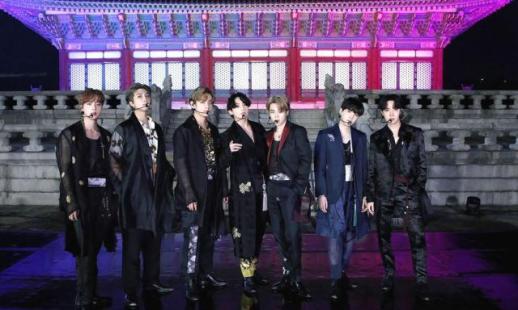 BTS Comeback D-21: BTS to play one-hour comeback set at Gwanghwamun Plaza SEOUL, February 28 (AJP) - BTS will headline a 60-minute performance at Gwanghwamun Plaza next month, featuring a setlist that balances new material with the group's global hits. The free concert, titled "BTS THE COMEBACK LIVE: ARIRANG," is scheduled for Mar. 21 and marks the first time the group will perform tracks from its fifth studio album in nearly four years. HYBE, the agency for BTS, confirmed Saturday that it is finalizing a program to showcase songs from the new album, Arirang, alongside established fan favorites. Agency officials said the one-hour duration was chosen to balance the scale of the production with the logistical demands of a major urban center. The decision aims to prioritize public safety and minimize disruption in the heart of the capital. "The performance time is a matter decided by the company, and we have decided to operate for an appropriate performance time that can be conducted safely and smoothly," HYBE said. The agency added that the Gwanghwamun event is a "performance in a special environment conducted in an outdoor public place, unlike a general concert hall," and that the duration was determined after considering stage operations, visitor safety, and site control plans. The Seoul Metropolitan Government noted that the composition and timing of the performance remain under the sole discretion of HYBE. Demand for the event has already proven historic. The 13,000 reserved seats were claimed instantly when ticketing opened on February 23, with online queues peaking at 100,000 people. Police estimates suggest the actual crowd on the day of the event could reach 260,000 people, potentially filling the corridor from the plaza down to Sungnyemun. To accommodate the expected turnout, organizers are exploring the installation of large screens in the vicinity of Seoul Plaza. The event will also necessitate the closure of Gyeongbokgung Palace, which is set to serve as a backdrop for the global broadcast on Netflix. 2026-02-28 15:00:30
 -
 BTS Comeback D-21: Gyeongbokgung Palace to close for BTS comeback at Gwanghwamun SEOUL, February 28 (AJP) - Gyeongbokgung Palace will deviate from its standard operating schedule and close its gates on a Saturday next month to accommodate a massive live performance by BTS at the adjacent Gwanghwamun Plaza. The Royal Palaces and Tombs Center at the National Heritage Administration announced on February 28 that the landmark will be shuttered on March 21. While the palace typically remains open on weekends and takes its weekly break on Tuesdays, officials cited safety and logistical requirements for the high-profile event. BTS is set to release its fifth studio album, Arirang, on March 20, followed by a televised comeback concert the next evening. The performance, which will be streamed globally on Netflix, is expected to utilize the historic architecture of the palace as a primary backdrop. According to Cultural Heritage Committee minutes, the group's agency plans an opening sequence featuring the members walking through the three arched gates of Gwanghwamun toward a stage installed at the northern end of the plaza. Authorities are bracing for record crowds, with police estimates suggesting up to 260,000 people could descend on the area. Tickets for the performance sold out within minutes of their release on February 23. The scale of the event has prompted a near-total shutdown of cultural activities in the immediate vicinity. The National Museum of Korean Contemporary History will close for the day, while the Sejong Center for the Performing Arts has already canceled or rescheduled several planned musicals, plays, and ballet productions. The National Palace Museum of Korea, located within the palace grounds, is also reviewing a potential closure. National Heritage Administration officials recently met with representatives at the agency for BTS to finalize crowd control and preservation measures for the historic site. 2026-02-28 12:12:23