

Journalist

CGTN
-
 Korean Air, UK’s Skyports to Co-Develop eVTOL Integrated Operations Platform Korean Air said on the 26th it has partnered with UK advanced air mobility infrastructure firm Skyports Infrastructure to jointly develop an integrated operations platform for electric vertical takeoff and landing aircraft, or eVTOLs, for urban air mobility. The two companies signed a memorandum of understanding that afternoon at the Drone Show Korea (DSK) 2026 event at BEXCO in Busan, the airline said. Attendees at the signing included Kim Gyeong-nam, head of Korean Air’s Aircraft Technology Research Institute, and Ankit Das, Skyports’ chief technology officer, among other officials. eVTOL aircraft use electric power to take off and land vertically without a runway. Korean Air said they are considered suitable for future air transport, including urban operations, because they are more than 100 times quieter than helicopters. Under the partnership, the companies plan to combine Korean Air’s integrated control system, ACROSS — specialized in flight and traffic management for advanced air mobility — with Skyports’ VAS, which focuses on vertiport operations. They aim to develop a platform that oversees the full process, from a passenger’s arrival at a vertiport through boarding, arrival at the destination and passing through security screening. A Korean Air official said smooth service delivery is becoming increasingly important for advanced air mobility and other low-altitude air traffic management, adding that cooperation with Skyports, described as a global leader in vertiport design and operations, is significant. 2026-02-26 15:27:17
 -
 Korea's battery makers forge lithium alliance to counter China's grip SEOUL, February 26 (AJP) - POSCO Group and SK On have sealed a long-term lithium supply deal worth up to 25,000 tons through 2028, in the latest sign that South Korean battery players are locking arms to build a domestic supply chain capable of challenging China's stranglehold on the global battery market. Under the agreement announced Wednesday, POSCO Argentina will ship lithium extracted from the Salar del Hombre Muerto salt flat in Argentina's Salta province to SK On's electric vehicle battery projects in Europe and North America. The volume is enough to produce batteries for about 400,000 EVs, and SK On is also exploring the use of the material in energy storage systems. The deal marks POSCO's largest lithium supply contract since it launched commercial production in Argentina in 2024. POSCO Group Chairman Jang In-hwa recently outlined a vision to elevate battery materials, LNG, energy and recycling as the group's "Next Core" business pillars. For SK On, the contract bolsters a "de-China" lithium procurement strategy at a time when the raw material accounts for about 40 percent of cathode costs - the single most expensive component in a battery cell. The partnership arrives after a bruising 2025 for South Korea's battery sector. The combined value of terminated contracts in the final months of last year exceeded 17 trillion won ($11.9 billion). Ford Motor scrapped a 9.6 trillion won deal with LG Energy Solution in December, while SK On itself dissolved its BlueOval joint venture with Ford, splitting control of three gigafactories. The combined global EV battery usage of LG Energy Solution, SK On and Samsung SDI slid to about 15.4 percent during of 2025, down 3.3 percentage points year-on-year, according to SNE Research. China's CATL alone commanded 39.2 percent, while BYD held 16.4 percent - meaning a single Chinese automaker-battery maker now outsells all three Korean producers combined. A government-backed study released Tuesday by the Korea Institute for Industrial Economics and Trade reinforced the urgency. The report found that South Korea has fallen behind China across most next-generation industries, including batteries, where Chinese firms have achieved localization rates exceeding 90 percent across raw materials, components and equipment. "Competition between Korea and China has now shifted from simple catch-up to structural rivalry," said Cho Eun-kyo, head of KIET's China analysis team. "China has built integrated industrial systems that Korea is struggling to match." The POSCO-SK On lithium deal is part of a broader wave of domestic collaboration. In August last year, Hyundai Motor, Kia and all three Korean battery makers signed a memorandum of understanding to jointly develop EV battery safety technologies, including shared patents and fire prevention systems - the first time a Korean automaker and its domestic cell suppliers had pooled resources on safety. "The global EV battery market is a competition between countries, and the way we can survive it is cooperation - going beyond competition," LG Energy Solution CEO Kim Dong-myung said at the signing ceremony. Later in December, Samsung SDI struck a deal with automaker KGM to co-develop battery pack systems based on its 46-millimeter cylindrical cells. The partnership is notable because KGM had previously relied almost exclusively on BYD and other Chinese suppliers for its passenger EV batteries. On the commercial front, LG Energy Solution secured a cumulative $16 billion worth of battery contracts with Mercedes-Benz over 2024 and 2025, spanning more than 150 gigawatt-hours of next-generation cylindrical cells. Industry sources said the orders were clinched after intense competition with China's CATL and Farasis Energy. The government has also stepped forward, with Seoul moving to back the industry with both money and policy. In January 2025, the government unveiled a plan to channel at least 21 trillion won into eco-friendly vehicles and batteries, with 7.9 trillion won earmarked for the secondary battery sector - a 31.7 percent increase from the previous year. In November, it announced an additional 280 billion won over four years for next-generation battery technologies including all-solid-state and lithium-sulfur cells. How effective Korean battery solidarity can play to challenge China's dominance remains an open question. Chinese manufacturers control more than 90 percent of the global ESS market and have built end-to-end supply chains that Korean firms are still assembling piece by piece. But the flurry of domestic alliances signals a strategic recalibration that the industry's survival depends on collective, rather than solitary, strength. 2026-02-26 15:26:01
 -
 BOK seen on extended hold as financial risks resurface SEOUL, February 26 (AJP) - Financial stability concerns have re-emerged as the decisive variable in South Korea’s monetary policy outlook this year as inflation and economic growth return to target range. The Bank of Korea’s Monetary Policy Board on Thursday unanimously kept the benchmark rate unchanged at 2.5 percent, where it has remained since the May 2025 cut. “With inflation expected to remain stable near the target level, economic growth is projected to improve at a stronger-than-expected pace,” the BOK said in its statement. Governor Rhee Chang-yong in a post-meeting briefing shared the internal concerns over the gap between the overnight policy rate and the three-year government bond yield as “excessive,” saying rates could move higher in the second half should financial imbalances intensify. Markets interpreted the decision as extending the pause rather than preparing for tightening. The three-year government bond yield fell 5.6 basis points to 3.068 percent, while the 10-year yield declined 4.6 basis points to 3.510 percent, reflecting expectations that policy neutrality may last longer than previously thought. Improving macro conditions also lessen the rationale for further easing. The BOK revised up its 2026 growth forecast to 2.0 percent from 1.8 percent projected in November. Consumer price inflation is expected to reach 2.2 percent, broadly in line with last year’s 2.1 percent pace. The projections are consistent with outlooks from the International Monetary Fund and the OECD. If realized, the economy would be running at its estimated potential growth rate after slowing to 1.0 percent in 2025. Notably, the BOK in January removed language referencing further easing from its policy statement — a subtle but meaningful shift in forward guidance. Liquidity and leverage back in focus Thursday’s meeting placed heavy emphasis on excess liquidity and leveraged asset investment, particularly in real estate and equities. Household credit reached 1,978.8 trillion won ($1.38 trillion) in the fourth quarter of last year. Policymakers have repeatedly warned that household loans — especially property-related borrowing — have approached levels that threaten financial stability and must be reduced. The red-hot equity market has added to those concerns. The KOSPI surged 3.1 percent on Thursday, topping 6,200 a day after breaking above the 6,000 milestone, raising renewed debate over asset-price overheating. While the BOK’s six-month dot plot still assigns a higher probability to a rate cut than a hike, it effectively signals prolonged neutrality unless clearer directional signals emerge. What appears to concern policymakers most is the composition of growth. According to the BOK’s Economic Outlook report released Thursday, growth excluding the IT sector is projected at just 1.4 percent within the revised 2.0 percent headline forecast. That compares with the same 1.4 percent non-IT projection when overall growth was previously estimated at 1.8 percent. The data suggests that Korea’s recovery is becoming increasingly dependent on semiconductors and IT exports — a concentration risk that complicates policy normalization. 2026-02-26 15:19:49
 -
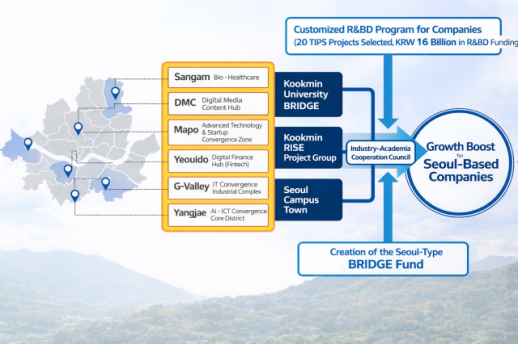 Kookmin University selected for S. Korea's Seoul BRIDGE project to commercialize strategic technologies SEOUL, February 26 (AJP) - Kookmin University announced on Thursday that its Industry-Academic Cooperation Foundation has been selected for the Seoul BRIDGE project. The initiative is a key component of the Regional Innovation System and Education (RISE) framework, a project managed by the Seoul Metropolitan Government to align university research with regional economic needs. Through this selection, Kookmin University will receive 650 million won annually over the next four years, totaling 2.6 billion won in financial support. the university intends to use these funds to commercialize research in five of South Korea's primary strategic sectors: artificial intelligence, bio-health, fintech, robotics, and creative industries. To address the historical gap between campus research and industrial application, the university is forming an industry-academic cooperation council. This group will include researchers, corporate representatives, and field experts to create a steady collaboration pipeline. The goal is to identify technical hurdles faced by startups and small businesses in Seoul and match them with existing university patents or research through a demand-based Research and Business Development (R&BD) system. The university also plans to establish the Seoul BRIDGE Fund. This fund will capture 30 percent of all technology transfer revenue to be reinvested into the program, creating a self-sustaining cycle for future research and development. According to the Seoul Metropolitan Government, Kookmin University was selected based on its strong track record in startup support and technology income. In the most recent JoongAng Ilbo university rankings—a prominent annual evaluation of higher education in South Korea—the school ranked second in industry-academic cooperation income per science professor and first in revenue per startup. These figures reflect the university's transition into a "company-builder" style accelerator that provides investment and post-management support rather than just simple licensing. "The selection for the Seoul BRIDGE project is a turning point that will allow us to connect our research capabilities directly to Seoul's strategic industries," said Son Jin-sik, the head of the Kookmin University Industry-Academic Cooperation Foundation and vice president for planning. "We aim to build a deep-tech startup ecosystem in the northeastern district of Seoul, creating a growth model where the university and the local community thrive together." The program will focus on practical technology applications rather than theoretical research throughout the four-year funding period. 2026-02-26 15:08:07
 -
 Korea Golf Course Association Board Discusses Tax Relief, Labor Law Response The Korea Golf Course Association said Wednesday it held its 167th board meeting a day earlier at the Korea Golf Hall in Bundang, Seongnam, Gyeonggi Province. The meeting was convened as golf course operators face a rapidly shifting business environment, including fewer visitors, a weakening economy, the implementation of the so-called Yellow Envelope Act, and a push for a worker presumption system. The association said the board discussed the industry’s direction and steps to build a response framework. The board reviewed plans to approve operating proposals for two dedicated bodies aimed at easing what it called excessive tax burdens on membership-based golf courses: a consultative group to push for lower punitive property tax rates and another to seek abolition of the individual consumption tax. It also voted to set up a separate consultative group made up of representatives from member companies to improve decades-old standards for classifying golf courses as “luxury property” and to pursue legislative efforts more systematically and quickly to reduce user costs. To limit risks tied to revisions to labor laws, the association said it will strengthen on-site support by holding briefings in eight regions, distributing guidance for reviewing collective bargaining agreements and employment rules, and preparing a standard contract template for caddie operating agreements. Chairman Choi Dong-ho said the association will provide broad support, including briefings and an advisory system, to prevent confusion among member companies as labor conditions change. He said fixing institutional shortcomings will be a top priority so the golf industry can firmly establish itself as a core part of the sports and leisure sector.* This article has been translated by AI. 2026-02-26 15:06:00
 -
 Mercedes-Benz Korea Becomes Title Sponsor of Korea Women’s Open, Purse Set at 1.5 Billion Won The Korea Golf Association said Feb. 25 that Mercedes-Benz Korea will serve as title sponsor of the major Korea Women’s Open Golf Championship. Mercedes-Benz Korea and the KGA held a signing ceremony the morning of Feb. 25 at the Shilla Hotel in Seoul’s Jung District. Mercedes-Benz Korea CEO Mathias Vaitl and KGA Vice President Jeong Chang-gi attended, the KGA said. The Korea Women’s Open is the national title event in Korean women’s golf. Launched in 1987, it marks its 40th anniversary this year. The Mercedes-Benz 40th Korea Women’s Open Golf Championship will be held June 11-14, with the venue to be announced later. Under the sponsorship, the total purse will rise to 1.5 billion won. The winner will also receive an exemption into the AIG Women’s Open, one of women’s golf’s five major championships. Vaitl said it was meaningful to partner with a tournament with “deep tradition and high standing,” adding that Mercedes-Benz Korea will continue investment and cooperation in the Korean market while expanding opportunities to promote the brand’s values and philosophy alongside the development of the country’s golf culture. Joy Ridgway, director of the R&A’s AIG Women’s Open, said the event is working to bring together the world’s best players, and that granting a direct entry spot through the Korea Women’s Open reflects an effort to broaden global qualifying pathways while recognizing the strength of Korean women’s golf. KGA President Kang Hyeong-mo said the sponsorship will further elevate the national title event. He said the association is providing pathways for young golfers to progress from youth competition to the domestic pro ranks and on to overseas majors, and pledged to keep creating new opportunities.* This article has been translated by AI. 2026-02-26 14:51:31
 -
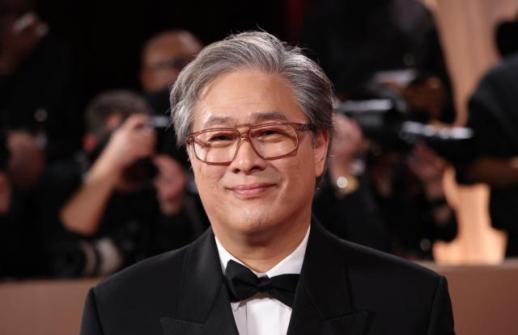 South Korean director Park Chan-wook to lead jury at 79th Cannes Film Festival SEOUL, February 26 (AJP) - Korean film director Park Chan-wook will serve as jury president of the 79th Cannes Film Festival, organizers announced Thursday, marking another milestone in his long-standing relationship with the prestigious event. Park will chair the main competition jury responsible for selecting the Palme d'Or, the festival’s top prize. He is the first Korean filmmaker to preside over the Cannes jury. His ties to Cannes date back more than two decades. In 2004, the noir-thriller "Oldboy" won the Grand Prix, propelling him into the international spotlight. He returned in 2009 to receive the Jury Prize for the vampire-themed thriller "Thirst," and again in 2022, when he was named Best Director for the neo-noir romantic mystery "Decision to Leave." Over the years, Park has become one of the festival’s most closely associated auteurs. Widely regarded as one of the most distinctive voices in contemporary world cinema, Park has built a reputation for meticulous visual composition and morally complex storytelling. Beyond representing Korean film abroad, he is viewed as a global auteur whose works regularly circulate through major festivals and critical discourse. In a joint statement, Cannes president Iris Knobloch and festival director Thierry Frémaux said "Park Chan-wook's inventiveness and visual mastery have given contemporary cinema some truly memorable moments. His ability to capture the complex impulses of characters with unusual destinies has left a lasting mark." They added, "We are delighted to celebrate his immense talent and, more broadly, the cinema of a country deeply engaged with the questioning of our time." Park succeeds French actress Juliette Binoche, who led the jury in 2025. Korea previously celebrated a historic Cannes victory in 2019, when Bong Joon-ho won the Palme d'Or for "Parasite," underscoring the country’s growing influence in global filmmaking. Park’s most recent feature, "No Other Choice," is a dark satire about an unemployed family man who resorts to extreme measures to secure a new job. The film was selected as South Korea’s submission for the Academy Awards, but did not receive a nomination. The 79th Cannes Film Festival will be held from May 12 to 23 in Cannes, France. 2026-02-26 14:30:29
 -
 Suwon's UNESCO world heritage Banghwasuryujeong Pavilion SEOUL, February 26 (AJP) - Banghwasuryujeong Pavilion and Hwahongmun Gate stand as iconic symbols of Suwon's UNESCO World Heritage site, Hwaseong Fortress. Banghwasuryujeong Pavilion, meaning "a pavilion where one can enjoy flowers and willows while water flows," sits elegantly at the northeastern corner of Hwaseong Fortress. Built in 1794 during King Jeongjo's reign, this hexagonal pavilion offers stunning views where the fortress walls meet Suwoncheon Stream. The pavilion was designed as a resting place for soldiers and a strategic military post. Its unique architectural beauty, reflected in the water below, creates one of Suwon's most photographed scenes. Hwahongmun Gate, also known as Buksumun (North Water Gate), was constructed in 1794 as part of Hwaseong Fortress. This seven-arched stone gate allows Suwoncheon Stream to flow through while serving as a defensive structure. The gate combines practical flood control with military defense, featuring openings that could be closed during attacks. Today, it becomes especially beautiful during the evening when illuminated, and hosts a spectacular waterfall display during the Hwaseong Cultural Festival. Both structures represent the architectural excellence of the Joseon Dynasty and remain beloved gathering places for locals and tourists alike. 2026-02-26 14:21:28
 -
 FNC Entertainment Tops 100 Billion Won in 2025 Revenue, Posts Third Straight Quarterly Profit FNC Entertainment, or FNC, said on the 27th that its 2025 consolidated revenue totaled 102.4 billion won, while operating results were around break-even, with an operating loss of 200 million won. Revenue rose 16.1 billion won from a year earlier, topping 100 billion won for the first time in eight years since 2017. Operating profit improved by 4.0 billion won from the previous year, reflecting both sales growth and stronger profitability. On a consolidated basis, fourth-quarter revenue was 35.0 billion won and operating profit was 900 million won, extending a streak of operating profit for a third consecutive quarter since the second quarter. On an annual basis, the company said it has improved operating profit by about 3.0 billion to 5.0 billion won each year since 2022. Net loss widened from a year earlier, but the company said the increase was due to valuation losses on derivatives tied to convertible bonds, reflecting a rise in its share price. It said the loss was a non-cash, book entry from revaluing the fair value of conversion rights at the end of the period and was not directly related to operating activities. Chief Executive Officer Kim Yu-sik said the company’s “selection and concentration” strategy and business restructuring, pursued steadily since 2023, have been reflected in results each year and brought performance to around break-even, adding that it expects to enter a “full-fledged profit phase” going forward. Kim said the music business will continue to expand domestic and global fandoms, support the growth of newer artists and strengthen core areas such as albums, concerts and merchandise. He said results from the drama production business are expected to become visible soon, and that the actor management business will also continue efforts to improve profitability through activities including acting and fan meetings. * This article has been translated by AI. 2026-02-26 14:21:16
 -
 Milan Korea House Sets Record Attendance During Winter Olympics The Ministry of Culture, Sports and Tourism said it and the Korean Sport & Olympic Committee operated Korea House in Milan from the 5th to the 22nd around the 2026 Milan-Cortina Winter Olympics, drawing the largest crowd in the program’s history. The ministry said Korea House, opened at Villa Necchi Campiglio in central Milan, drew 32,656 visitors over 18 days, or about 1,800 a day on average. Online reservations for about 1,700 people per day sold out throughout the period, prompting organizers to raise the daily reservation cap to 2,000. Visitors were largely local and international, the ministry said. About three-quarters were Italians. In a satisfaction survey, Italian and English accounted for 95% of response languages, and about 90% of respondents said they were satisfied, citing strong interest in the programs and content. The ministry said Korea House also produced results as a venue for sports diplomacy. For the first time at a Korea House opening event, 13 International Olympic Committee members attended, including IOC Executive Board member Spyros Capralos. Visits continued after the opening, including by IOC Vice President Juan Antonio Samaranch Jr. Officials from international sports federations and national Olympic committees, along with athletes and other figures in international sport, also visited for exchanges and cooperation, the ministry said. Kim Jaeyeol, elected to the IOC Executive Board, attended the opening and other key official events, and IOC Athletes’ Commission member Won Yoonjong held a news conference at Korea House after his election. Korea House also served as a support hub for South Korea’s athletes, the ministry said. It hosted four group cheering events for the national team, including for short track and curling, and ran a visit program for athletes. On the final day, it held a team wrap-up ceremony to mark the close of the competition and recognize athletes’ efforts. Organizers also ran cultural programs aimed at showcasing South Korea, drawing strong interest from visitors. The Korea Tourism Organization and CJ presented a hands-on tourism program under the “K-Dailycation” concept, and 320 people took part in a K-beauty experience over five days. A four-day K-pop cover-dance program drew 600 participants, who learned choreography to songs including those associated with K-pop Demon Hunters and BLACKPINK’s Jennie. A business-to-business tourism event was also held, inviting Italian travel agencies and media. The ministry said it sought to link on-site promotion to the development and sale of future travel products to South Korea. The National Museum Foundation of Korea introduced its “MU:DS” merchandise on site and drew strong interest, the ministry said. During the event, it sold 2,507 items for about 65 million won in revenue. The “magpie-and-tiger” badge, which had also been popular in South Korea amid the K-pop Demon Hunters boom, sold out early. Other items included products featuring motifs such as the gat and mother-of-pearl, along with an Irworobongdo pouch, a moon-jar key ring and items related to the Pensive Bodhisattva. Average daily sales at Korea House were about 3.61 million won, the ministry said. That was about three times the roughly 1.2 million won in average daily MU:DS sales during the Lee Kun-hee Special Exhibition held at the Smithsonian museum in the United States from last November through February. Korean street foods such as hotteok and fish cakes were also popular. Culture Minister Choi Hwi-young visited Korea House on the 7th and sold street food himself to promote Korean food, the ministry said. Hands-on events linking traditional culture to the global popularity of Squid Game and K-pop Demon Hunters also drew attention. Traditional games featured in Squid Game, including ddakji and gonggi, drew an enthusiastic response from local visitors, and Italy’s state broadcaster said “Squid Game was recreated at Villa Necchi Campiglio in Milan.” Trying on hanbok and the gat, which drew worldwide attention through K-pop Demon Hunters, was also among the most popular programs, the ministry said. Choi said, “On the Olympic stage, where the world’s attention is focused, we were able to vividly feel the stature of Korean culture and Korean sports through Korea House.” He added, “At the upcoming 2028 Los Angeles Summer Olympics, we will operate a Korea House where the appeal of K-sports and K-culture comes together, based on this experience and these results.”* This article has been translated by AI. 2026-02-26 14:15:36