

Journalist

Chang SeongWon
-
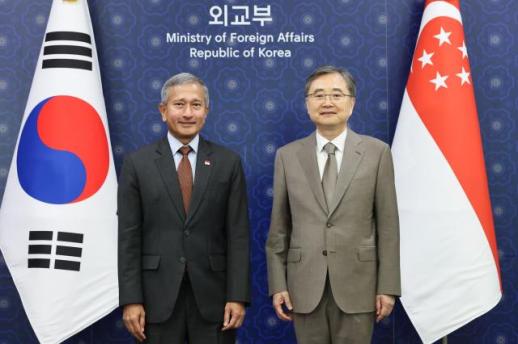 South Korean Foreign Minister Cho Hyun says Seoul to press Iran over vessel strike SEOUL, May 29 (AJP) - South Korean Foreign Minister Cho Hyun said Thursday that Seoul will urge Iran to prevent any recurrence of the recent strike on the South Korean vessel Namu, though he added that Tehran is unlikely to acknowledge responsibility or issue an apology. In an interview with a South Korean media outlet, Cho suggested that he could soon hold another phone call with Iranian Foreign Minister Abbas Araghchi following South Korea’s investigation into the attack. “We will tell the Iranian side through other channels that we reached this conclusion and that such an incident must never happen again,” Cho said. Asked whether he planned to directly raise the issue with Araghchi, Cho said the two ministers had agreed during a previous conversation to speak again soon. “We said during the last call that we should talk again soon, so we will likely do so,” he said. South Korea’s government announced findings Wednesday that the Namu had been struck by a missile of Iranian origin, but stopped short of directly blaming Tehran for the attack. Cho defended the government’s cautious response, citing the presence of South Korean nationals and vessels in the region. “There are 25 South Korean ships in the Strait of Hormuz, as well as diplomatic staff and Korean nationals in Iran,” he said. “Taking various factors into account, we chose an appropriate level of response.” Cho added that South Korea also has long-term economic interests tied to possible reconstruction projects in the region if tensions between the United States and Iran ease. “Still, this is not the end of it,” he said. “We will continue conveying to Iran that such an incident should never happen again.” Cho also addressed comments by President Lee Jae Myung regarding Israeli Prime Minister Benjamin Netanyahu and an International Criminal Court warrant against him. “What Israel did by detaining activists on the high seas was a violation of international law,” Cho said. “But the ICC is where international law and international politics intersect. The realities of international politics must also be taken into consideration.” On North Korea, Cho said Pyongyang currently shows “no sign” of returning to dialogue with Seoul, but expressed hope that the North would eventually respond to the Lee government’s outreach efforts. “Our basic position is peaceful coexistence through dialogue,” he said. “Sending drones to North Korea would be wrong. The point is to come to the dialogue table.” Cho’s remarks came after Singaporean Foreign Minister Vivian Balakrishnan visited North Korea earlier this week before traveling to Seoul for talks Thursday. South Korea’s Foreign Ministry said Cho and Balakrishnan discussed efforts to create conditions for dialogue with North Korea and exchanged views on regional security issues. Balakrishnan visited Pyongyang on Tuesday and Wednesday, where he met North Korean Foreign Minister Choe Son Hui and senior official Jo Yong Won. It marked the first visit to North Korea by a Singaporean foreign minister since 2018, when Singapore hosted the first summit between then-U.S. President Donald Trump and North Korean leader Kim Jong-un. Balakrishnan also said he invited North Korea to attend the ASEAN Regional Forum scheduled for July in Manila. North Korea had participated in the annual security forum since 2000 but skipped last year’s meeting in Kuala Lumpur. 2026-05-29 13:56:52
 -
 Spiritual Asia: Encountering Korean people's spirit of heaven in era of AI This is the fifth installment of AJP’s “Spiritual Asia” series exploring the religious traditions and philosophical foundations that have shaped Asia’s spiritual consciousness. This chapter turns to the ancient texts of Hinduism — the Vedas and Upanishads — and their enduring ideas on cosmos, consciousness and the nature of existence in the emerging AI era. In the 21st century, humanity once again stands before its oldest questions. Artificial Intelligence (AI) is learning human language, robots are replacing human labor, and algorithms are encroaching upon the realm of human judgment. Yet, as technology advances, humans find themselves asking even more fundamental questions. Who are we? Where did we come from? What do we live for? And where are we going? Over the past three installments, we examined the massive roots of Asian spirituality through Indian Hinduism. The Vedas sang of the origins of the universe, the Upanishads explored the divinity within humans, and the Bhagavad Gita presented a path to practicing truth in everyday life. What answer, then, did the Korean people provide? For thousands of years, the Korean people have asked these same questions. And the answers remain within Korea's unique spiritual tradition, passed down through the Cheonbugyeong (The Heavenly Code), Samil Singo (The Teachings of the Three-in-One God), and Chamjeongyegyeong (The Classic of the Heavenly Way). The religion that revived this spirit in the modern era is Daejonggyo. Today, Daejonggyo is often understood merely as a religion, but in truth, it was a cultural and national spiritual movement aimed at restoring the primordial spirit of the Korean people. On January 15, 1909 (lunar calendar), patriot Na Cheol revived Dangungyo and renamed it Daejonggyo. At the time, the Korean Empire was on the brink of losing its national sovereignty, and Japanese imperialism was attempting to obliterate the history and spirit of the Korean people. Na Cheol believed that a nation's soul collapses even before it falls to guns and swords. He believed that spiritual independence was necessary before political independence. Thus, he reestablished Dangun not merely as the founding father of the nation, but as the symbol of the Korean people's spirit. He sought to give back the answer to the question "Who are we?" to a people who had lost their country. The central scriptures of Daejonggyo are the Cheonbugyeong, Samil Singo, and Chamjeongyegyeong. Among them, the Cheonbugyeong is a short scripture consisting of only 81 characters. However, it is considered to encapsulate the creation of the universe, the meaning of human existence, and the principles of nature and life. While various academic opinions exist regarding the exact date of its creation, Daejonggyo and the national religious community have long respected it as a spiritual heritage passed down through the ages. The first sentence of the Cheonbugyeong is highly famous. "Il-si-mu-si-il (一始無始一)" It means that One is the beginning, yet it is a beginningless One. It implies that all existence in the universe originates from One and ultimately returns to One. Interestingly, this bears a certain resemblance to the concept of Brahman in the Hindu Upanishads. The Upanishads explain that all beings in the universe emerge from a single source and ultimately return to it. The Cheonbugyeong goes on to say: "Il-seok-sam-geuk-mu-jin-bon (一析三極無盡本)" This means that One divides into three, and those three become the inexhaustible root of all things. This also connects to the Korean cosmic view that flows through Hwanin, Hwanung, and Dangun. Hwanin symbolizes the foundational existence of heaven (God). Hwanung is a being who descended to the human world carrying the will of heaven—similar to a figure like Jesus. And Dangun is the figure who connected heaven and humanity, establishing a nation based on the ideal of Hongik Ingan. To put it simply, seeing as the title was passed down through 47 generations of Danguns, one could compare this role to that of the Pope in Catholicism. The story connecting Hwanin, Hwanung, and Dangun is not mere mythology. Within it lies the unique worldview of the Korean people, wherein heaven, nature, and humanity are interconnected in a single order. This leads to the belief—much like the Indian concepts of Brahman and Atman—that the nature of heaven resides within humans as well. However, Korean spirituality takes this one step further. While Indian spirituality placed a major emphasis on individual enlightenment and liberation (Moksha), Korean spirituality placed greater emphasis on a life that benefits the community and the world. The core of this is Hongik Ingan (弘益人間). To broadly benefit humanity. This short phrase can be considered the essence of the Korean people's spiritual culture. Humans are not beings who reach perfection in isolation. Only when individuals fulfill their roles within a community and benefit the world do they truly complete the meaning of their existence. The Samil Singo states that divinity exists within humans. The Chamjeongyegyeong details the ethics and virtues people must uphold in life. And Hongik Ingan explains the ultimate purpose behind all these teachings. In short, Korean spirituality is a spirit that looks toward heaven without turning its back on the world. In fact, Daejonggyo became one of the spiritual centers of the independence movement during the Japanese colonial period. During the March 1st Movement in 1919, while Cheondogyo, Christianity, and Buddhism played central roles within the religious community, Daejonggyo also actively participated in declarations of independence and anti-Japanese movements nationwide and in Manchuria. Notably, independence army organizations in Manchuria and North Gando maintained extremely close ties with Daejonggyo. General Kim Jwa-jin, the hero of the Battle of Qingshanli, worked closely with Daejonggyo leaders to train the independence army and lead armed anti-Japanese struggles. General Hong Beom-do also interacted with Daejonggyo factions, sharing in this national spirit. To the independence fighters, Daejonggyo was not simply a religion. It was the answer to the question, "Who are we?" It served as the spiritual foundation that, before they even picked up their guns to fight, reminded them that they were the descendants of Dangun and a free people. Kim Gu also interacted extensively with Daejonggyo figures during the independence movement, highly evaluating the importance of a national spirit centered on Dangun. Baekbeom (Kim Gu's pen name) emphasized the nation's soul and historical consciousness, forming a deep consensus with the spiritual world pursued by Daejonggyo in this regard. Looking back, Daejonggyo was not just a religion. It was a spiritual movement meant to protect the nation's soul in an era when the country was lost. The heavenly origin symbolized by Hwanin, the harmony of heaven, earth, and humanity symbolized by Hwanung, and the ideal of Hongik Ingan symbolized by Dangun became a spiritual power stronger than guns and swords for the independence activists. Today, we are once again living in an era of massive civilizational transition. AI is imitating human intelligence. However, it cannot completely replace human conscience, love, responsibility, and sacrifice. It is precisely at this juncture that the Cheonbugyeong, Samil Singo, Chamjeongyegyeong, and the spirit of Daejonggyo come alive once more. They are not relics of the past. They are questions directed toward the future. The questions posed by Indian sages through the Vedas 5,000 years ago and those posed by Korean ancestors through the Cheonbugyeong are ultimately the same. Who are we? Why do we exist? And what does it mean to be human? As the AI era deepens, ancient wisdom that questions the human soul will become even more precious. That is exactly why today, we must read the Cheonbugyeong again, look back on Daejonggyo, and reflect on the Korean people's spirit of heaven. Truth, justice, and freedom always outlast technology. And that pursuit of truth, which began thousands of years ago in the Vedas and the Cheonbugyeong, continues once again in our lives today. 2026-05-29 13:52:07
 -
 Small Businesses Face Talent Shortages Amid Competition for Skilled Workers "There are no people." Currently, small businesses are grappling with a significant labor shortage. They have the technology and workload but lack the workforce to carry out their tasks. The shortage of research and development (R&D) personnel has emerged as a critical issue that could determine the future of small enterprises. Han Seong-sook, Minister of SMEs and Startups, noted during a government meeting on May 28, marking the first anniversary of the administration, that large companies' substantial performance bonuses are exacerbating the concentration of talent in these firms. She emphasized the need for policy support to help small businesses secure skilled researchers. Her remarks reflect the concerns voiced by those in the field. In a market economy, it is natural for talented individuals to seek better compensation and working conditions. Companies achieving good results and rewarding employees with bonuses should not be criticized; rather, rewarding performance is a fundamental principle of a market economy. The problem lies in the widening gap that threatens the balance of the industrial ecosystem. Recently, some large corporations announced performance bonuses ranging from millions to tens of millions of won, while many small businesses are struggling to survive amid high interest rates and economic downturns. As a result, talented individuals gravitate toward large companies, leaving small businesses unable to find workers. Even researchers hired with difficulty tend to leave for better conditions after gaining a few years of experience. For small businesses, this means losing both the investment in talent development and technical know-how. If this trend continues, it could signal a decline in national industrial competitiveness. The South Korean economy does not operate solely on the strength of large corporations. Numerous small and medium-sized enterprises support the industrial ecosystem in areas such as parts, materials, equipment, software, and research and development. This is especially true in sectors like semiconductors, biotechnology, artificial intelligence (AI), and future mobility, where the role of small but strong companies is crucial. However, if the current trend of talent concentration in large companies persists, the technological innovation capabilities of small businesses will inevitably weaken. Reduced investment in R&D and declining productivity will further diminish wage competitiveness, creating a vicious cycle that leads to talent outflow. The issue is that this phenomenon is not temporary. Due to low birth rates and an aging population, the working-age population is rapidly declining. The preference of young people for metropolitan areas and large companies is also intensifying. The National Statistical Office projects that the decline in the working-age population will accelerate over the next decade, suggesting that labor shortages in the industrial sector are likely to worsen. A recent survey by the Korea Small Business Agency provides meaningful insights. About 78.4% of domestic small businesses expressed a willingness to hire foreign students and job seekers. Additionally, 63.7% believe that foreign workers can significantly help alleviate labor shortages. Notably, 78.8% of foreign students and job seekers indicated their intention to work in South Korea. While many global talents are already studying at domestic universities and are familiar with Korean culture, they are not being connected with companies. Companies cited the difficulty of finding suitable candidates as their biggest challenge in the hiring process. Foreign job seekers pointed to a lack of job information, language and cultural barriers, and the complexity of visa procedures as significant obstacles. This mismatch indicates that while there are individuals willing to work, companies are struggling to find them. Strengthening 'talent matching' through the establishment of a national platform to systematically connect small businesses with foreign students and job seekers is crucial for the government. Moreover, it is essential to enhance support for small businesses in securing research personnel through incentives and to establish a more robust industry-academia cooperation system linking universities, research institutions, and companies. The competitiveness of the South Korean economy is not solely built on the achievements of a few large corporations. Sustainable competitiveness can only be achieved when numerous small businesses, strong companies, and startups grow together. The future of industry lies where talent is found. Thus, creating an environment where small businesses can secure skilled workers is vital for revitalizing the industrial ecosystem and safeguarding South Korea's future competitiveness.* This article has been translated by AI. 2026-05-29 13:52:00
 -
 Samsung Electro-Mechanics Surges 10%, Hits Record High and Becomes 4th in KOSPI Market Cap Samsung Electro-Mechanics is reaching new heights, driven by expectations of strong performance due to rising prices of multilayer ceramic capacitors (MLCC) for artificial intelligence applications. According to the Korea Exchange, as of 10:25 a.m. on May 29, Samsung Electro-Mechanics shares rose by 189,000 won (10.22%) to 2,038,000 won, marking an all-time high. The company's market capitalization now stands at 152.1511 trillion won, placing it fourth in the KOSPI rankings, surpassing Hyundai Motor. Analysts attribute the surge in buying interest to upgraded target prices in response to anticipated strong earnings from the rising prices of MLCCs for AI. On the same day, Hyundai Motor Securities raised its target price for Samsung Electro-Mechanics from 1,030,000 won to 2,300,000 won, citing sustained positive market conditions. Kim Jong-bae, a researcher at Hyundai Motor Securities, stated, "It is important to pay attention to the rising trend in MLCC prices due to increased overall utilization rates and the accelerating market cycle. The company's market cycle is expected to continue in the long term." He added, "The key triggers for the stock price increase are the market conditions, technological capabilities, market position, and performance, all of which Samsung Electro-Mechanics possesses." The previous day, Daol Investment & Securities also raised its target price for Samsung Electro-Mechanics to 2,300,000 won, noting that the company stands to benefit from simultaneous booms in MLCCs and flip-chip ball grid arrays (FC-BGA), indicating potential for further performance improvement.* This article has been translated by AI. 2026-05-29 13:52:00
 -
 NVIDIA's Jensen Huang Strengthens Ties in Taiwan and South Korea Jensen Huang, CEO of NVIDIA, is set to visit South Korea following a trip to Taiwan, as he directly engages in managing the semiconductor supply chain in Asia. In Taiwan, he aims to solidify ties with the local semiconductor ecosystem, known as the "brotherhood room," through significant investments and the establishment of a local headquarters. He will then head to South Korea to arrange a second "Kangbu meeting" with major business leaders in the country. According to industry sources on May 28, Huang plans to visit South Korea after concluding his schedule at the GTC event in Taiwan. If the visit occurs, he is expected to meet with prominent figures such as Chey Tae-won, chairman of SK Group; Chung Eui-sun, chairman of Hyundai Motor Group; Koo Kwang-mo, chairman of LG Group; and Lee Hae-jin, founder of Naver. This meeting is anticipated to revisit discussions on AI collaboration following their initial gathering at a chicken restaurant in Gangnam, Seoul, last October. The main agenda for this visit is expected to focus on physical AI. NVIDIA is expanding its AI ecosystem beyond generative AI to include robotics, autonomous driving, smart factories, and manufacturing automation. SK Group is involved in high-bandwidth memory (HBM), Hyundai Motor Group in robotics and autonomous driving, LG Group in automotive and manufacturing AI, and Naver in cloud and AI platforms, all of which intersect with NVIDIA's interests. Despite the emphasis on Taiwan in Huang's Asian strategy, South Korea's strategic importance is not diminished. South Korea boasts capabilities in HBM, memory semiconductors, automotive, batteries, robotics, and internet platforms. For NVIDIA, while Taiwan's TSMC-centered supply chain is critical for AI semiconductor manufacturing, South Korea provides essential partners for expanding AI infrastructure and implementing physical AI. Notably, SK Hynix and Samsung Electronics are competing for the HBM supply chain, which is vital for NVIDIA's next-generation GPU performance. Analysts suggest that Huang will need to maintain ongoing relationships with South Korean semiconductor firms. Although Samsung Electronics Chairman Lee Jae-yong is likely to miss this meeting due to overseas commitments, the company remains a key player in NVIDIA's supply chain. Industry insiders interpret Huang's movements as establishing Taiwan as a manufacturing ally and South Korea as an expansion ally. While Taiwan serves as a core hub for AI semiconductor manufacturing and assembly, South Korea is seen as a partner for broadening AI applications in industries such as HBM, automotive, robotics, and cloud computing. An industry source stated, "It is clear that NVIDIA views Taiwan as its most reliable manufacturing partner, but South Korea is also an indispensable country for expanding the AI ecosystem. Jensen Huang's visit will demonstrate that South Korean companies still hold an important position in NVIDIA's future AI plans."* This article has been translated by AI. 2026-05-29 13:40:00
 -
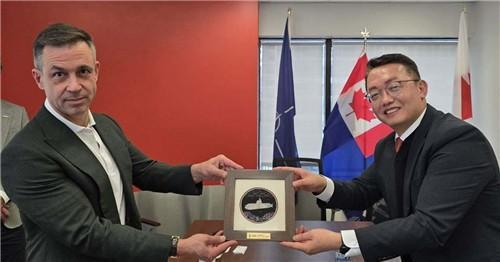 HD Hyundai Heavy strengthens Davie ties in push for Canada submarine deal SEOUL, May 29 (AJP) - HD Hyundai Heavy Industries is stepping up its campaign to win Canada’s submarine procurement project by strengthening ties with Davie Shipbuilding, Canada’s largest shipyard. The company said Thursday that its executives met with senior officials from Davie Shipbuilding at the Canadian shipbuilder’s Ottawa office on May 26 to discuss ways to strengthen strategic cooperation across shipbuilding and naval vessel projects. The meeting was attended by Park Yong-yeol, head of HD Hyundai Heavy Industries’ naval ship business division, and James Davies, chief executive officer of Davie Shipbuilding. During the meeting, HD Hyundai Heavy Industries highlighted its shipbuilding technologies as the world’s largest shipbuilder and promoted the strengths of South Korea’s K-submarine platform. The two sides also exchanged views on possible cooperation to contribute to the development of Canada’s shipbuilding industry. Davie Shipbuilding, based in Quebec, is Canada’s largest shipyard and has a long history dating back to the early 19th century. It has experience building a wide range of vessels, including icebreakers, offshore plants and naval support ships. As Davie also owns Helsinki Shipyard in Finland, cooperation between the two companies is expected to develop into a long-term strategic partnership combining HD Hyundai Heavy Industries’ technology with Davie’s local infrastructure, potentially extending into the Arctic market. HD Hyundai Heavy Industries executives, including HD Hyundai Heavy Industries President Joo Won-ho, also attended a welcoming ceremony for the ROKS Dosan Ahn Chang-ho at Esquimalt naval base in Victoria, British Columbia, on May 23, as well as a reception hosted by South Korea’s ambassador to Canada. At the events, the company promoted the strengths of South Korea’s submarine technology to key local figures, adding momentum to its final push for the contract. “Together with Canada’s leading shipyards, including Davie Shipbuilding and Irving Shipbuilding, we are working to share capabilities and expand business areas in shipbuilding and naval vessel projects,” Joo said. “We will do our utmost to help South Korean companies work together to win Canada’s submarine project by taking the lead in shipbuilding cooperation with Canada.” In January, HD Hyundai proposed a multitrillion-won cooperation package for Canada’s submarine project, including plans for HD Hyundai Oilbank to import Canadian crude oil and for the group to share shipbuilding know-how with local shipyards while offering consulting on submarine operation and maintenance. 2026-05-29 13:39:19
 -
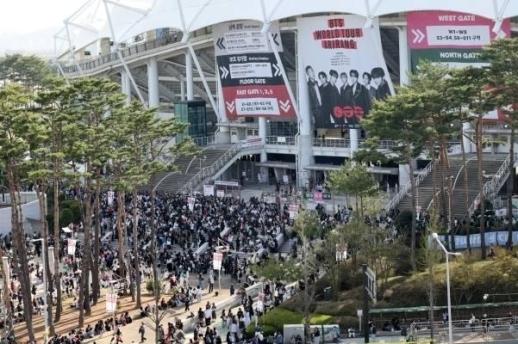 South Korea to Conduct Special Inspections on Lodging Prices Ahead of BTS Concert The Ministry of the Interior and Safety announced on May 29 that it will conduct three joint special inspections with various agencies, including the Ministry of Culture, Sports and Tourism, the Ministry of Health and Welfare, the National Tax Service, the Fair Trade Commission, and the National Police Agency, ahead of BTS's concert in Busan on June 12-13. The inspections, scheduled for May 29 and June 8-9, aim to prevent illegal and excessive pricing during the BTS concert and to establish transparent pricing practices. This initiative is part of a broader effort to enhance the positive image of South Korea among foreign tourists visiting Busan. The inspection teams will thoroughly verify compliance with pricing display regulations at lodging establishments. Additionally, in collaboration with private organizations such as the Korea Accommodation Association, they will launch a campaign to eliminate overcharging, encouraging local merchants and residents to participate voluntarily. The Ministry of the Interior and Safety will also strengthen evaluations of local price stability management, particularly regarding the elimination of overcharging, and expand benefits for exemplary local governments. The inspection teams plan to focus on areas where overcharging is likely to occur, and swift action will be taken against any violations in accordance with relevant laws and regulations. Furthermore, to encourage active reporting, the government will eliminate the existing reward payment limit of 100 million to 3 billion won and will revise regulations to allow whistleblowers to receive up to 10% of the imposed fines as a reward, with the process expected to be completed by June. Kim Min-jae, Vice Minister of the Interior and Safety, stated, "As the BTS concert draws global attention, it is crucial to create an environment where all visitors to Busan can stay without inconvenience. We will do our utmost to enhance South Korea's international credibility through this special inspection."* This article has been translated by AI. 2026-05-29 13:32:00
 -
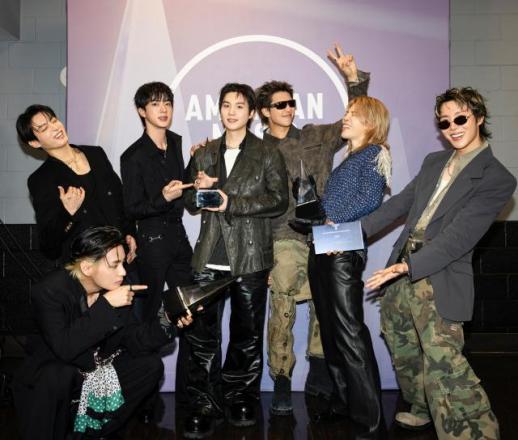 Warning Issued Over High Hotel Prices Ahead of BTS Concert in Busan #. A hotel in Haeundae, Busan, demanded an additional payment of 500,000 won from a consumer who had booked a two-night stay during the BTS concert, claiming the original rate was below market value. Another establishment reportedly canceled a confirmed reservation made two months prior and resold the room to another customer.As consumer complaints about additional charges and unilateral cancellations by hotels have increased ahead of the BTS concert in Busan, fair trade authorities have issued a warning.On May 29, the Fair Trade Commission announced a 'Consumer Alert on Exorbitant Accommodation Fees' in collaboration with the Korea Consumer Agency and the Busan Consumer Association to prevent potential lodging-related consumer harm during the concert next month.The commission explained that the surge in accommodation demand during the concert period raises the risk of additional charges and reservation cancellations.According to the current public health management regulations, lodging businesses must adhere to posted rates, and consumers are not obligated to accept any additional charges after a reservation is confirmed.The Fair Trade Commission and the Korea Consumer Agency advised consumers to keep photographic or screenshot records of the posted rates and reservation details and to verify any additional charges after booking. They emphasized that consumers should not comply with additional payment requests after the contract payment and should retain relevant documents such as confirmation letters.In cases of unilateral cancellations or contract breaches by lodging providers, the commission informed consumers they could seek advice and remedies through the 1372 Consumer Counseling Center, the 1330 Tourism Information Center, and Consumer24.The Fair Trade Commission and the Korea Consumer Agency conducted joint inspections of lodging establishments in Busan on May 13 and plan to carry out additional checks before and after the concert. They will also closely monitor whether unfair trading practices, such as collusion, occur during the price increase of accommodation fees during the BTS concert.A Fair Trade Commission official stated, "If businesses share price information to collectively set accommodation rates or establish a price floor, it may constitute collusion under fair trade laws."The official added, "We will strengthen monitoring against unfair practices, such as coercing consumers into purchasing bundled goods or services." 2026-05-29 13:32:00
 -
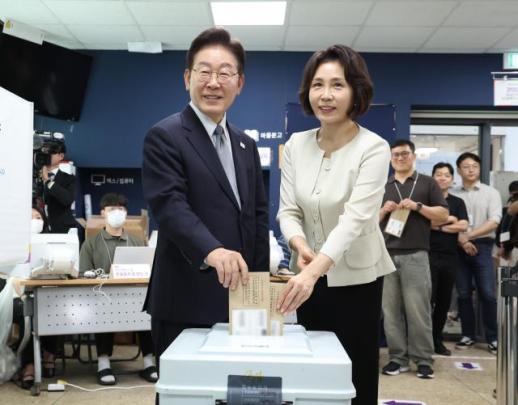 President Lee Casts Early Vote Ahead of Local Elections On May 29, President Lee Jae-myung participated in early voting for the local elections and the National Assembly by-elections at a polling station in the Samcheong-dong community center near the Blue House. Wearing a gray tie, President Lee arrived around noon with his wife, Kim Hye-kyung, and Chief of Staff Kang Hoon-sik to cast their votes. A Blue House official stated, "This early voting is targeted at the Incheon Gyeyang-eul district, which is the President's registered residence. Incheon Gyeyang-eul is where President Lee served as a district representative before his presidential campaign. The Democratic Party has strategically nominated Kim Nam-jun, a former Blue House spokesperson who closely assisted President Lee, as the candidate for Incheon Gyeyang-eul." This election marks the first nationwide election held exactly one year after President Lee took office, with early voting taking place from May 29 to 30, from 6 a.m. to 6 p.m.* This article has been translated by AI. 2026-05-29 13:24:00
 -
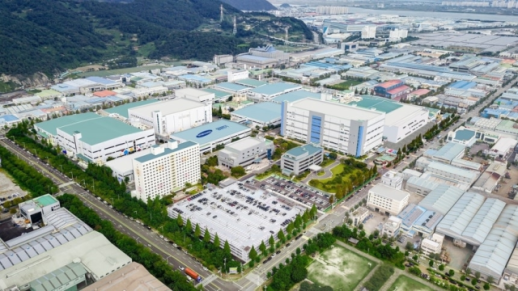 HOT STOCK: Samsung Electro-Mechanics flies to No. 3 stock on KOSPI SEOUL, May 29 (AJP) - Samsung Electro-Mechanics' shares landed comfortably above 2 million won milestone Friday, flying over 15 percent to No. 3 on South Korea's main bourse — the culmination of a two-month rerating that has carried the stock from around twentieth on the KOSPI to within reach of the two trillion-won chip giants. By 1:00 p.m., the stock traded at 2,130,000 won, up 15.2 percent from the previous session, with a market capitalization just short of of 160 trillion won. Amid AI frenzy, the chipmaking equipment maker's stock has swelled 5 times and nearly 20 times from a year-ago period. Behind the breakout is a single product driving the change in sentiment: multilayer ceramic capacitors, known as MLCCs, used in AI servers and high-performance computing systems. The stock gained renewed momentum after the company on May 20 disclosed a 1.56 trillion won two-year contract with an unnamed U.S. big-tech company to supply silicon capacitors. Brokerages have flagged rising MLCC prices as utilization rates climb across the industry, and have raised their targets on the stock accordingly. Hyundai Motor Securities on Thursday lifted its target price to 2.3 million won, citing a sustained upturn in the company's business cycle. The previous day, Daol Investment Securities also raised its target to 2.3 million won, pointing to simultaneous booms in MLCCs and in flip-chip ball-grid-array, or FC-BGA, substrates used in advanced chip packaging. The size of Thursday's single-day move, however, suggests the upgrades caught a market already primed for the rotation that has run through the broader AI value chain this week. "It is worth paying attention to the MLCC price increases as overall utilization rises, and to the accelerating industry cycle," said Kim Jong-bae, an analyst at Hyundai Motor Securities. He argued that the current upturn would persist over the long term and that the core triggers for share-price gains — industry cycle, technical capability, market position and earnings — were all present at Samsung Electro-Mechanics. The dual exposure to MLCCs and FC-BGA substrates has placed the company at the intersection of two segments of the AI value chain that, until recently, drew less attention than the memory chipmakers themselves. As capital has rotated this week from Samsung Electronics and SK hynix toward names with operating exposure to AI infrastructure, Samsung Electro-Mechanics has been one of the clearest beneficiaries. 2026-05-29 13:12:49