

Journalist

Chang SeongWon
-
 Toss Bank Reports First Quarter Net Profit of 29.6 Billion Won, Up 58% Year-Over-Year Toss Bank has significantly improved its performance, driven by an expanding customer base. On May 29, Toss Bank announced that it recorded a net profit of 29.6 billion won in the first quarter of this year, a 58% increase compared to 18.7 billion won during the same period last year. The total number of customers reached 14.87 million, up 19.3% from 12.47 million a year earlier. The bank surpassed 15 million customers at the end of April. The monthly active user count was 10.2 million at the end of March and increased to 11 million by the end of May. In the first quarter, the loan balance stood at 15.5 trillion won, marking a 4.4% increase from the same period last year. Toss Bank explained that it has enhanced its risk management system based on its proprietary credit evaluation model (TSS 3.0) and specialized review models. The loan portfolio has also diversified. The share of guaranteed loans in total loans reached 38.5%, up 12.9 percentage points from 25.6% a year earlier, driven by growth in loans for small business guarantees and rental deposits. During the first quarter, Toss Bank launched loans for professionals and stable-rate rental loans, with plans to introduce mortgage loans later this year. The total deposit balance was recorded at 29.0455 trillion won. In January, the bank launched dedicated accounts and card products for small business owners, expanding its deposit and loan offerings for this segment. The non-interest income segment also saw a reduction in losses. The non-interest loss for the first quarter was 7 billion won, more than halving from 15.2 billion won in the same period last year. As of the end of March, the cumulative sales amount for wealth management (WM) services reached 27.7 trillion won, an increase of about 4 trillion won compared to the end of last year. Toss Bank plans to expand its asset management services after obtaining a full license for fund sales brokerage this month. The transaction volume of debit cards increased by 26% compared to the same period last year. The overseas remittance service launched in January also contributed to the improvement in non-interest income, according to the bank. Financial health indicators have improved as well. The delinquency rate for the first quarter was 1.07%, down 0.19 percentage points from the same period last year. The non-performing loan (NPL) ratio decreased by 0.11 percentage points to 0.87%. The BIS capital adequacy ratio rose to 16.62%, up 0.72 percentage points from 15.90% a year earlier. The loan loss reserve ratio increased by 35.19 percentage points to 320.81% compared to the same period last year. In the inclusive finance sector, the share of loans to low- and medium-credit borrowers in the first quarter was recorded at 34.75%. The supply of policy financial products for the underprivileged, such as the Sunshine Loan Bank and the Saitdol Loan, amounted to 457.4 billion won in the first quarter, bringing the cumulative supply to 2.5628 trillion won. A Toss Bank official stated, "The quality growth of our loan portfolio and improvement in non-interest profitability have been reflected in our results, based on a large customer base. We will pursue responsible inclusive finance based on our strengthened financial health."* This article has been translated by AI. 2026-05-29 11:14:00
 -
 Savings Banks Report 333.8 Billion Won Profit in Q1 Despite Rising Delinquency Rates Savings banks in South Korea reported a net income of 333.8 billion won in the first quarter of this year, continuing their profitability trend. While the increase in non-interest income and a reduction in provisions for bad debts contributed to improved performance, the delayed economic recovery and weakened repayment ability among borrowers led to a rise in delinquency rates. According to the Savings Bank Association's report on the first quarter of 2026, the net income for the sector was 333.8 billion won, an increase of 289.8 billion won compared to 44 billion won during the same period last year. The improvement in performance was driven by increased non-interest income and a decrease in the burden of provisions. Operating profit for the first quarter reached 422 billion won, up 370.6 billion won from 51.4 billion won a year earlier. Interest income rose slightly to 1.36 trillion won, an increase of 12 billion won, while non-interest income surged to 294.4 billion won, up 267.7 billion won. The amount allocated for provisions decreased by 104 billion won to 801.8 billion won compared to the same period last year. The total assets of savings banks also saw a slight increase. As of the end of March, total assets amounted to 119.3 trillion won, up 13 trillion won from the previous quarter. Loans increased by 15 trillion won to 95 trillion won. Notably, loans to small and medium-sized enterprises rose by 12 trillion won, from 42 trillion won at the end of last year to 43.2 trillion won by the end of March. Deposits increased by 6 trillion won to 99.6 trillion won compared to the previous quarter. Capital adequacy remained at a healthy level. The BIS ratio at the end of March was 16.0%, up 0.1 percentage points from 15.9% at the end of the previous quarter. The Savings Bank Association explained that the increase in capital was due to profit generation outpacing the growth in risk-weighted assets associated with loan expansion. The liquidity ratio stood at 170.8%, exceeding the legal requirement of 100% by 70.8 percentage points. The provision coverage ratio was also above the legal standard at 108.3%. However, asset quality indicators worsened. The delinquency rate for savings banks rose to 6.7% at the end of March, up 0.7 percentage points from 6.0% at the end of the previous quarter. The delinquency rate for corporate loans increased from 8.0% to 8.9%, a rise of 0.9 percentage points, while the delinquency rate for household loans edged up from 4.7% to 4.8%. The ratio of non-performing loans also increased to 8.6%, up 0.2 percentage points from the previous quarter.* This article has been translated by AI. 2026-05-29 11:08:00
 -
 New Fund Acquires 960.2 Billion Won in Long-Term Delinquent Loans, Aiding 116,000 Debtors The New Leap Fund has acquired an additional 960.2 billion won in long-term delinquent loans held by the National Agricultural Cooperative Federation Asset Management Company, mutual finance institutions, and private lenders. This acquisition will benefit approximately 116,000 debtors, and collection efforts will cease immediately. On May 29, the Financial Services Commission announced that the New Leap Fund purchased long-term delinquent loans from various entities, including the National Agricultural Cooperative Federation Asset Management Company, Saemaul Geumgo, Suhyup, Shinhan Bank, and public institutions. The fifth round of purchases targets unsecured loans of less than 50 million won that have been delinquent for over seven years. By sector, the largest portion of the loans came from the National Agricultural Cooperative Federation Asset Management Company, totaling 561.7 billion won, affecting 58,000 debtors. Other included amounts were 179.4 billion won from 14 private lenders, 59 billion won from four public institutions, 57.5 billion won from credit card companies, 34.7 billion won from Saemaul Geumgo, 34.4 billion won from Suhyup, and 33.2 billion won from Shinhan Bank. Following the loan acquisition, collection efforts will be immediately halted. Loans owed by vulnerable social groups, such as basic livelihood recipients, will be forgiven without a separate assessment of repayment ability. This includes individuals receiving disability pensions among the severely disabled and those receiving living adjustment allowances or livelihood support among veterans. Other loans will undergo assessments to determine repayment ability. If a debtor's income falls below 60% of the median income and they lack recoverable assets, their debts may be forgiven within one year. With this fifth round of purchases, the total amount of long-term delinquent loans secured by the New Leap Fund has reached 9.1232 trillion won, benefiting approximately 750,000 individuals based on overlapping criteria. Cumulatively, the amounts acquired by sector include 5.9117 trillion won from the public sector, 847.3 billion won from credit cards, 635.4 billion won from private lenders, 541.7 billion won from banks, and 562.1 billion won from other asset management companies. Next month, the New Leap Fund plans to acquire additional long-term delinquent loans held by the Sangnoksu First Special Purpose Company, the Korea Credit Guarantee Fund, the National Agricultural Cooperative Federation, and private lenders. A comprehensive survey of companies holding long-term delinquent loans, similar to Sangnoksu, is also underway. The Financial Services Commission is also working to expand participation from the private lending sector. Currently, 15 out of the top 30 private lenders holding long-term delinquent loans have joined the New Leap Fund agreement. Financial authorities are considering practical incentive measures to increase participation from private lenders and will continue to communicate with the industry.* This article has been translated by AI. 2026-05-29 11:08:00
 -
 Early Voting Begins for Local Elections in South Korea The National Election Commission reported that as of 9 a.m. on May 29, the first day of early voting for the 9th nationwide local elections, the voter turnout was 1.7%. Since early voting began at 6 a.m., 758,381 out of 44,649,908 eligible voters have cast their ballots. This turnout is 0.11 percentage points higher than the 1.59% recorded at the same time during the early voting for the 8th local elections in 2022. Notable figures who participated in early voting today include Jung Cheong-rae, the Democratic Party's chief election campaign chair, National Assembly Speaker Woo Won-sik and his wife Shin Kyung-hye, Supreme Court Chief Justice Cho Hee-dae, and Samsung Electronics Chairman Lee Jae-yong. Early voting will continue for two days, from May 29 to May 30. Voting hours are from 6 a.m. to 6 p.m., and participants must bring identification and visit their designated early voting locations. A total of 3,571 polling stations have been set up nationwide. Voters can check the locations of polling stations on the Election Commission's website (nec.go.kr) or by calling the main hotline at 1390.* This article has been translated by AI. 2026-05-29 11:08:00
 -
 Anthropic Surpasses OpenAI with $965 Billion Valuation Following $65 Billion Funding Round Artificial intelligence (AI) company Anthropic is positioning itself for an initial public offering (IPO) this year, having achieved a valuation of $965 billion, surpassing OpenAI to become the world's highest-valued AI startup. According to the IT industry on May 29, Anthropic, the developer of 'Claude,' raised $65 billion in its Series H funding round on May 28 (local time), significantly increasing its valuation from $380 billion in February. This marks a valuation nearly reaching $1 trillion just over three years after launching its first product, Claude. Industry insiders believe this funding round will be Anthropic's final pre-IPO financing. The round included $15 billion in existing commitments, which featured a $5 billion investment from Amazon. Anthropic's valuation has now surpassed OpenAI's, which was assessed at $852 billion at the end of March. OpenAI is also projected to reach a valuation of up to $1 trillion upon its IPO, indicating a competitive landscape among global AI companies. The increase in Anthropic's valuation is largely attributed to the growing number of corporate clients utilizing Claude. Earlier this month, Anthropic's annualized revenue exceeded $47 billion. This funding round also saw participation from global memory semiconductor companies such as Samsung Electronics, SK Hynix, and Micron as 'strategic infrastructure partners,' coinciding with rising demand for high-bandwidth memory (HBM) and next-generation memory solutions. Anthropic announced that it will unveil its top-tier model, 'Claude Mythos,' in the coming weeks. This model is designed to possess expert-level capabilities in detecting cybersecurity vulnerabilities, although its release has been delayed for security reasons. On the same day, Anthropic introduced a new version of 'Opus,' called 'Opus 4.8.' Opus is a sub-model of Mythos and is the highest product among the public models. Opus 4.8 was released just 41 days after Opus 4.7, reflecting a rapid upgrade cycle, with improvements in performance benchmarks for agent coding, financial analysis, and reasoning. The fast mode (2.5 times speed) has become three times cheaper than the previous model, and the Claude code now includes a 'dynamic workflow' feature that allows multiple sub-agents to run in parallel. Krishna Rao, Anthropic's Chief Financial Officer, stated, "Claude is becoming an increasingly essential component. This investment will help us meet high demand and continue cutting-edge research."* This article has been translated by AI. 2026-05-29 11:04:00
 -
 Simmons Reports Strong Sales for Twin Super Single Frames Amid Rising Interest in Independent Sleep Simmons announced on May 29 that interest in its Twin Super Single (TSS) frame, which can accommodate two super single (SS) mattresses, is growing. This trend is driven by an increasing demand from couples and families who want to choose mattresses tailored to their individual body types and sleep habits.According to Simmons, sales of the TSS frame 'Houti' have surged by 92% this month compared to its launch in January. Another TSS frame, 'Marpi,' also saw a 33% increase in sales during the same period.Houti features a four-part headboard design and is available in a natural oak color. Its surface is finished with LPM, which is resistant to heat, scratches, and stains, enhancing durability. The headboard includes a built-in Type C charging port for smartphones and tablets.Marpi also comes with charging ports on both sides, allowing users to charge electronic devices while in bed. Both products are compatible with Simmons' premium vegan mattress, the N32, and its representative adjustable bed, the 'N32 Motion Bed.' This compatibility allows for various combinations, such as motion bed plus motion bed or motion bed plus foam mattress. Additionally, both frames are made from eco-friendly materials that exceed national certification standards (E0 grade).A Simmons representative stated, "As awareness grows that quality sleep is essential, independent sleep is becoming a recognized sleep culture. We expect demand for TSS frames, which allow individuals to reflect their sleep preferences even in the same space, to continue to rise."In related news, Simmons reported a revenue of 323.9 billion won and an operating profit of 40.5 billion won last year. The company has maintained its position as the industry leader for three consecutive years, surpassing Ace Bed since 2023.* This article has been translated by AI. 2026-05-29 11:04:00
 -
 Government Takes Action Against Employers Delaying Wage Payments #. A construction company operating in the metropolitan area has received approximately 900 million won in wage payments but has yet to fulfill its repayment obligations.#. Another construction firm in Gyeongnam has failed to repay 470 million won of the 500 million won it owes, and its CEO is reportedly missing.The government is set to implement credit sanctions for the first time against employers who have not repaid wage payments for an extended period.The Ministry of Employment and Labor and the Korea Workers' Compensation and Welfare Service announced that they will impose credit sanctions on 2,057 employers who have not repaid wage payments since August 7 of last year, starting on May 29. The total amount owed by these employers is 386.8 billion won.Wage payments are a system where the state pays workers who have been deprived of their wages due to employer defaults and then seeks reimbursement from the employers.This action marks the first instance of credit sanctions since the revised Wage Claim Guarantee Act was enacted. The government plans to provide the personal information and unpaid amounts of employers who have not repaid wage payments for over a year and whose total unpaid amounts exceed 20 million won to the Korea Credit Information Service.Employers subject to credit sanctions will be registered as credit management subjects for seven years, which could lead to disadvantages in financial transactions and loan assessments.The government expects this measure to increase the recovery rate of wage payments and enhance awareness among habitual wage defaulters. There are also expectations that the strengthened sanctions against repeat offenders will help prevent wage defaults.Kim Young-hoon, Minister of Employment and Labor, stated, "Wage defaults are a theft of wages that threaten the livelihoods of workers and their families, and it is a serious crime. We will enhance the sustainability of the wage payment system through the application of national tax collection procedures and credit sanctions."* This article has been translated by AI. 2026-05-29 11:02:00
 -
 Accelerating AI Robot Ecosystem Development: Expanded Support for Humanoids and Key Components Artificial intelligence (AI) robot industry development is gaining momentum through the public-private partnership platform known as the Manufacturing AI Transformation (M.AX) Alliance, which shared its collaborative achievements and future plans in the AI robot sector. The government aims to enhance the competitiveness of related industries by focusing on humanoid development, localization of key components, and advancement of robot AI models.The Ministry of Trade, Industry and Energy announced on May 29 that it discussed major achievements and future policy directions with stakeholders from academia and industry during the 2nd M.AX Conference held at the headquarters of Roboteers in Seoul.The M.AX Alliance's AI robot division was established to respond to intensifying global competition in AI and robotics, currently involving over 280 organizations, including robot manufacturers, AI companies, component suppliers, and end-users. These entities are collaborating across various fields, including robot AI model development, localization of key components, and on-site demonstrations.This year, the government is investing approximately 180 billion won in research and development (R&D) for the robotics sector and about 76 billion won in on-site demonstration projects to support technology development and commercialization.Since its inception, the M.AX Alliance has fostered collaboration between robot manufacturers and end-users, resulting in various practical applications. Notably, the AI-based quadruped welding robot developed through a partnership between Didun Robotics and HD Hyundai Samho has garnered attention for overcoming limitations in working on curved sections inside ships.Additionally, a vision AI-based livestock processing robot being developed by Robos and the Changnyeong Livestock Auction House, as well as an autonomous patrol robot operated in collaboration with Seongnam City Hall and Bundang Police Station by Newbility, are also seeing expanded on-site implementation.Recently, the development of humanoids, identified as a next-generation key area, has gained traction. The Ministry initiated a project last year to develop six types of industry-specific humanoids, targeting tasks that existing industrial robots struggle with, such as fire monitoring on ships, valve operation in hazardous environments, and product reclassification in logistics centers. Related projects aim for commercialization by 2028, with concurrent development and on-site demonstrations.In addition, the Ministry is increasing investments in the localization of key humanoid components, such as actuators and robotic hands. A research team led by Professor Park Hae-won from KAIST has developed a humanoid lower body platform capable of speeds up to 13 km/h based on its own actuator, while Aiden Robotics has introduced robotic hand technology that can withstand loads over 20 kg and features tactile sensing capabilities.The development of robot foundation models, which serve as the brain of robots, is also accelerating. Tomorrow Robotics is working on a model with a high processing speed compared to global competitors, while Real World is advancing AI models capable of precision tasks based on tactile feedback.The Ministry is also addressing regulatory improvements based on feedback from companies. Last year, the review period for outdoor mobile robot safety certification was shortened from 60 days to 30 days, and the number of review items was halved. The Ministry is also supporting the on-site demonstration of bipedal humanoids through regulatory sandboxes.In the future, the planned robot mega-special zone will implement various regulatory exceptions, such as utilizing original video data for robot AI model training, allowing outdoor advertising for outdoor mobile robots, and special provisions for fire-fighting robots on roads. Additionally, a dedicated fund of 500 billion won will be established to support funding for outstanding robot startups, with a mandatory investment in the humanoid sector.Conference attendees emphasized that AI robots are a key industry that will determine the future competitiveness of manufacturing, highlighting the need for not only technology development and demonstrations but also large-scale data collection and support for initial demand creation.A Ministry official stated, "We will actively reflect related opinions in future policy and budget planning processes."* This article has been translated by AI. 2026-05-29 11:02:00
 -
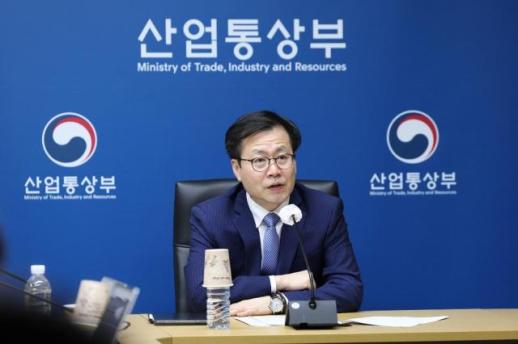 Korea's Electric Equipment Sector Positioned as Key Export Industry Yeo Han-goo, the head of the Trade Negotiation Bureau at the Ministry of Trade, Industry and Energy, stated on May 29 that despite increasing volatility in exports due to factors like the Middle East conflict and U.S. tariff policies, South Korea is turning these challenges into opportunities. He emphasized that electric equipment has established itself as a key export industry for South Korea, and the government will provide comprehensive support to ensure continued growth in exports. Yeo made these remarks during a meeting with the electric equipment industry at HD Hyundai Electric. In the months of March and April, exports exceeded $80 billion for two consecutive months, with electric equipment exports, including transformers, circuit breakers, cables, and motors, also showing an upward trend. Last year, electric equipment exports reached $16.7 billion, marking a 7.2% increase from the previous year and setting a record. From January to April this year, exports continued to grow by 3.8%. This growth is significantly influenced by the global expansion of artificial intelligence (AI) infrastructure and ongoing policies for transitioning to eco-friendly energy. Additionally, the replacement of aging power grids in the U.S. is driving global demand, suggesting that this year could also see record performance in the sector. To support the continued growth of electric equipment exports, the Ministry of Industry held this meeting to mark the first anniversary of the Lee Jae-myung administration. Companies attending the meeting requested assistance in stabilizing supply chains for raw materials and other resources to maintain stable business operations and exports amid global uncertainties. The ministry plans to provide extensive support to ensure that the electric equipment sector and other industries can sustain their export momentum. This includes expanding trade insurance to a record 275 trillion won this year, with 114 trillion won allocated for small and medium-sized enterprises. Furthermore, financial support for large-scale projects in nuclear power, defense, and electric equipment will be increased to 127 trillion won over the next five years. Regarding the electric equipment industry, the ministry aims to support the entire process from identifying global energy infrastructure projects to matching companies and providing proactive financial assistance in response to the growing demand from global AI data centers. Yeo stated, "Despite the instability in international circumstances, our electric equipment industry is leading the global market with its exceptional technological capabilities. The government will do its utmost to expand the operational scope of our companies through trade channels with major countries to maintain our leadership in the global market." 2026-05-29 11:02:00
 -
 April Tax Revenue Reaches 55.2 Trillion Won Amid Rising Corporate and Income Taxes Tax revenue in South Korea has shown an upward trend, coinciding with a strong performance in semiconductor exports. According to the Ministry of Finance and Economy, corporate tax revenue has increased due to improved corporate performance, while income tax has also risen due to higher performance bonuses. Additionally, the securities transaction tax has surged due to a booming stock market. In its report released on May 29, the ministry stated that tax revenue for April reached 55.2 trillion won, marking an increase of 6.3 trillion won (12.9%) compared to the same month last year. Corporate tax revenue rose significantly by 2.2 trillion won to 12.8 trillion won, largely due to improved corporate performance. A ministry official noted, "The increase includes amounts reported by semiconductor companies in March that were paid in installments, as well as figures from financial institutions' consolidated tax filings." The official added, "The rise in operating profits for semiconductor companies will likely have a more significant impact on the mid-term tax payments due in August and September rather than this reporting period." Income tax also saw an increase of 1.3 trillion won, totaling 9.7 trillion won. This rise was driven by higher performance bonuses and an increase in capital gains tax from rising stock prices. The securities transaction tax surged by 1.1 trillion won to 1.3 trillion won, more than five times higher than last year. The official explained, "The increase in securities transactions in March led to a rise in transaction taxes submitted in April, while the special rural tax also increased by 1.3 trillion won due to higher trading volumes on the KOSPI." Value-added tax increased by 300 billion won to 21.2 trillion won, and inheritance and gift taxes rose by 200 billion won to 3.5 trillion won, attributed to an increase in real estate gifts. The individual consumption tax and transportation, energy, and environmental taxes each rose by 100 billion won. As a result of the increase in April tax revenue, the cumulative tax revenue for the year reached 164.1 trillion won, up 21.9 trillion won from the previous year. The revenue progress rate stands at 39.5%, surpassing last year's rate of 38.0% and the average of 38.6% over the past five years. With the increase in tax revenue, the government anticipates a larger surplus for the year. Earlier, the government projected an excess tax revenue of 25.2 trillion won while preparing the first supplementary budget for the year. A ministry official stated, "To align with last year's performance of 373.9 trillion won, we need an increase of 41.5 trillion won this year. We have already secured about half of that, so there should be no major issues in meeting the supplementary budget amount." However, the official cautioned, "With first-half results still pending, there is currently no data indicating a large surplus will occur, so we will need to monitor corporate tax revenue in the second half." 2026-05-29 11:02:00