

Journalist

Chang SeongWon
-
 Celltrion begins primate trials for quad-target obesity drug SEOUL, May 29 (AJP) - Celltrion has kicked off primate toxicity trials for its next-generation obesity drug candidate CT-G32, moving the compound into the final stretch of preclinical development ahead of a planned investigational new drug (IND) submission in the first half of 2026. CT-G32 simultaneously targets four biological pathways, including GLP-1, making it what Celltrion describes as a potential first-in-class therapy. The company said the drug is designed to address persistent shortcomings of existing GLP-1 treatments — including inter-patient variability in weight loss, muscle loss, and durability — while maximizing fat reduction. The ongoing toxicity study covers 252 rats and 48 monkeys to assess the compound's safety profile and establish appropriate clinical dosing ranges. Celltrion said it will also evaluate CT-G32's pharmacokinetic and pharmacodynamic properties alongside the toxicity assessments. In earlier preclinical work, CT-G32 demonstrated superior weight loss compared to a reference compound at equivalent doses, while preserving lean body mass — a key differentiator in a market increasingly focused on muscle retention during treatment. "CT-G32 is being developed as a next-generation drug that addresses the limitations of existing GLP-1-based therapies and extends beyond obesity to cover metabolic diseases," said a Celltrion spokesperson. The company is also developing an oral obesity drug in parallel, targeting an IND filing in the second half of 2028. 2026-05-29 09:56:51
 -
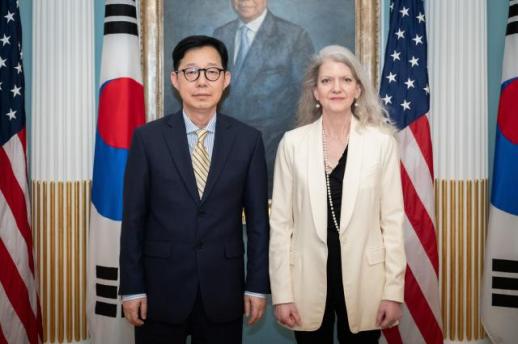 Korea, US to open talks on nuclear submarine, uranium enrichment rights SEOUL, May 29 (AJP) - South Korea and the U.S. will hold talks in Seoul next week on implementing agreements reached by their leaders, including Seoul’s plan to build a nuclear-powered submarine, the Foreign Ministry said Friday. The meeting is scheduled to take place in Seoul from June 2 to 3 to discuss follow-up measures in the security field under the Joint Fact Sheet issued last November after the Korea-U.S. summit, according to the ministry. South Korea’s delegation will be led by First Vice Foreign Minister Park Yoon-joo and include officials from key security, energy, science, industry and nuclear safety agencies. The U.S. delegation will be led by Allison Hooker, under secretary of state for political affairs, and include officials from the NSC, State Department, Energy Department and Department of War. The State Department also said Hooker will visit South Korea from June 1 to 3, leading an interagency delegation to advance nuclear cooperation initiatives reached during U.S. President Donald Trump’s visit to South Korea last October. The meeting is expected to cover key security-related agenda items agreed upon by the two leaders, including the construction of nuclear-powered submarines, Seoul’s push to secure uranium enrichment and spent fuel reprocessing rights, and shipbuilding cooperation. The South Korean government believes a separate agreement with the U.S. is needed for Washington to supply military nuclear fuel for the planned nuclear-powered submarine. For uranium enrichment and spent fuel reprocessing for civilian nuclear power generation, Seoul would need to revise the existing Korea-U.S. agreement on the peaceful use of nuclear energy. The government has reportedly been preparing closely with the U.S. at the working level so the launch meeting can produce substantive progress rather than remain a courtesy meeting. Seoul is seeking to advance the security agreements as much as possible during Trump’s term, as nonproliferation concerns remain strong in Washington. The meeting had initially been expected to take place earlier this year, but was delayed as Washington raised issues related to South Korea’s investment in the U.S. and Coupang, while also focusing on the Iran war and the U.S.-China summit. Hooker is also expected to discuss other pending issues during her visit. The State Department said Hooker will discuss a range of bilateral and global issues with South Korean officials to strengthen the alliance, including cooperation in security and economic affairs. “The U.S.-ROK Alliance remains the linchpin of peace and security on the Korean Peninsula and across the Indo-Pacific region,” it said. 2026-05-29 09:55:23
 -
 E-Land Retail Reports First Quarter Operating Profit of 22.1 Billion Won E-Land Retail has successfully returned to profitability in the first quarter of this year. This marks the first quarterly net profit since the COVID-19 pandemic, attributed to improved store efficiency and enhanced profitability in its food business.On May 29, E-Land Retail reported consolidated sales of 384.6 billion won for the first quarter, a 2.5% increase compared to the same period last year. The operating profit reached 22.1 billion won, reflecting a significant improvement of 19.6 billion won year-on-year.The company also reported a net profit of 2.2 billion won for the quarter, an improvement of 34.1 billion won compared to the previous year. E-Land Retail stated, "This is the first time we have achieved a quarterly net profit since the pandemic began."The improvement in performance is attributed to structural enhancements and operational efficiencies. The company has focused on increasing the efficiency of urban outlet stores, such as NC, NewCore, and 2001 Outlet, while strengthening the competitiveness of its food business centered around Kim's Club. Additionally, attracting new content to key commercial locations and renewing store layouts are expected to positively impact performance in the second half of the year.Previously, E-Land Retail faced profit pressures due to one-time costs, structural changes, and high-interest burdens until last year. However, the company noted that this year has seen a clear recovery in core business competitiveness alongside a reduction in financial burdens.An E-Land Retail representative remarked, "Achieving a quarterly net profit for the first time since the pandemic indicates that our structural improvements are beginning to show in the numbers. We will focus on profitability-centered operations rather than aggressive expansion to strengthen our stable growth foundation."In January, E-Land Group introduced a business group (BG) system for its retail and food service sectors. The previously integrated retail division has been restructured into a Retail BG and a Food BG, establishing leadership tailored to each business's characteristics. This aims to enhance accountability in response to the rapidly changing retail environment.* This article has been translated by AI. 2026-05-29 09:54:00
 -
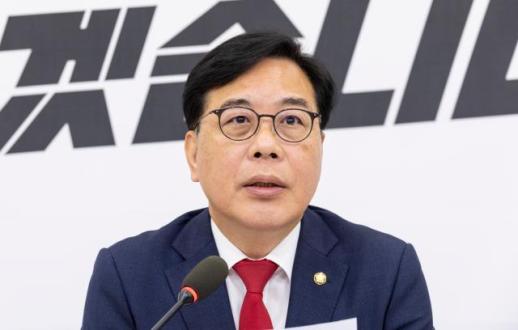 Song Eon-seok Warns of Tax Burden After Local Elections Amid Economic Concerns Song Eon-seok, the floor leader of the People Power Party, stated on May 29 that if the administration of Lee Jae-myung continues its reckless policies, the public will face a tax burden, along with soaring rents and interest rates, following the local elections. During a press conference at the National Assembly, Song expressed concerns about the increasing burden of interest rates and the stagnation in the construction sector, which he said has significantly reduced the supply of new apartments. He warned that the decline in rental listings and the surge in rental costs could push the lives of ordinary citizens and young people to the brink. He noted that the Bank of Korea's monetary policy committee decided to keep the base interest rate at 2.5% and pointed out that this effectively signals an impending rate hike after the elections. Song also highlighted that since the inception of the Lee Jae-myung administration, the exchange rate has soared from the 1,400s to the 1,500s. He remarked that prices are rising, oil costs are increasing, and national debt has surpassed 1,000 trillion won. He expressed concern not just about the current economic reality but also about the government's perception of it. He criticized Kim Yong-beom, head of the Presidential Policy Office, for framing the high interest rates, high exchange rates, and high inflation as a new normal, calling it a fallacy of success. He argued that the government, which should be warning about the economic crisis and proposing solutions, has instead dismissed the public's suffering as a given, revealing its focus on political calculations and populism. Song added that the interest burden on citizens is reaching its limits, and while warning signs are emerging throughout the economy, the government remains fixated on populism and pro-labor policies, even suggesting the introduction of dangerous anti-market measures. He also criticized Labor Minister Kim Young-hoon for mentioning the redistribution of excess profits from large corporations, calling it a declaration of intent to pursue policies that directly contradict the market economy and constitutional principles that underpin Korea's remarkable economic growth. He noted that while competing nations are investing heavily in research and development and financial support for advanced industries, the current government is stuck in outdated ideologies, attempting to undermine the market. He emphasized that the upcoming June 3 local elections should be a referendum on protecting the economy and the lives of the people, urging voters to send a stern warning against the government's misguided economic policies and arrogant governance.* This article has been translated by AI. 2026-05-29 09:50:00
 -
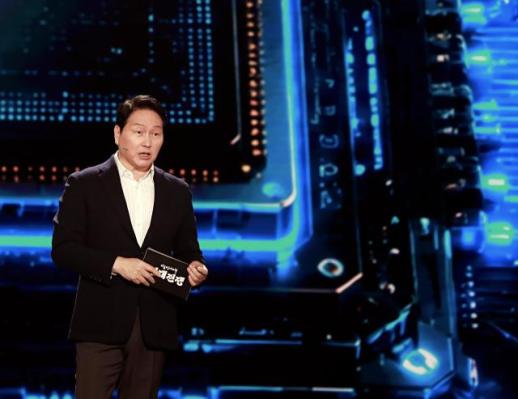 SK Group Chairman Chey Tae-won Calls for Generalists in the AI Era Chey Tae-won, Chairman of SK Group and the Korea Chamber of Commerce and Industry, emphasized the need for generalist-type talent in the AI era during a recent special lecture. In an appearance on KBS1TV's Documentary Insight – Talent Wars 2: Chey Tae-won's Response, which aired on May 28, Chey stated, "We are moving beyond the era of 'reasoning AI,' where machines provide answers to human questions, and are entering a period of 'agentic AI,' where machines will make decisions and take actions independently." He noted that the gap in capabilities between those who actively utilize AI and those who do not could widen significantly. "Both individuals and organizations will face increasing polarization based on how quickly and effectively they can leverage AI," he explained. Chey predicted that in the AI era, the importance of generalist-type talent, who can understand and integrate various fields, will surpass that of specialists with expertise in specific areas. He added, "As AI takes over many tasks, the possibility of multi-job roles will increase, leading to a gradual shift away from the traditional '9 to 6' work model and rigid job definitions." Chey stressed that individuals must develop new competencies to align with the evolving definition of talent in the AI era. He identified four key competencies as essential for competitiveness: 'thinking muscle,' 'adaptation muscle,' 'empathy muscle,' and 'body skill.' He also highlighted the need for changes in the education system to foster these competencies. "Schools should transform from mere knowledge transmission spaces to platforms where students can experiment and experience coexistence with AI," he said. Chey proposed a national strategy to enhance AI competitiveness, outlining three core conditions for South Korea to become a competitive AI nation: speed, scale, and safety. He emphasized the need to accelerate technological advancements, expand large-scale AI infrastructure and investments, and establish a societal and institutional framework that allows citizens to safely utilize AI. Finally, Chey remarked, "AI talent does not solely refer to engineering students. Education and social systems must rapidly adapt to enable future generations to naturally utilize and coexist with AI." Industry insiders interpret Chey's remarks as a message that goes beyond mere discussions of AI technology, hinting at potential changes in corporate culture and recruitment practices. As industries such as manufacturing, semiconductors, and energy accelerate their AI transitions, competition for 'convergent talent' is expected to intensify.* This article has been translated by AI. 2026-05-29 09:48:00
 -
 Jensen Huang Visits South Korea, Ushering in the Era of Physical AI The 19th-century industrial revolution produced steel magnate Andrew Carnegie, while the 20th-century automotive revolution gave rise to Ford and Toyota. The internet revolution birthed Bill Gates and Steve Jobs. Today, the world stands at the forefront of yet another industrial revolution, with Jensen Huang, CEO of NVIDIA, at its center. On the 29th, an intriguing scene unfolded in the South Korean stock market. As rumors circulated about Huang's visit to meet with Koo Kwang-mo, chairman of LG Group, LG Electronics' stock surged. No contracts have been signed, nor have specific business plans been announced; the mere prospect of the meeting was enough to move the market. This may sound exaggerated, but it reflects the reality of the AI era. Today, NVIDIA is more than just a semiconductor company. It serves as the power grid and operating system of the AI era, essentially forming the backbone of the digital economy. Major companies like Microsoft, Google, Meta, and Amazon, along with countless AI firms worldwide, rely on NVIDIA chips. If NVIDIA is the engine driving the AI vehicle, Huang is its designer. Thus, Huang's visit to South Korea signifies more than just a corporate visit; it represents a pivotal moment in determining whether Korea will remain a supplier in the AI era or emerge as a key player in shaping a new industrial order. Beyond HBM to Physical AI For the past two years, the relationship between South Korea and NVIDIA can be summed up in one term: HBM (High Bandwidth Memory). SK Hynix has emerged as the biggest beneficiary in the AI semiconductor market, while Samsung Electronics is fiercely competing to enter NVIDIA's supply chain. The buzz surrounding the meeting between Chey Tae-won and Huang was ultimately driven by HBM. However, this time, the conversation is different. The business community is paying close attention because the key topic of this meeting is not merely memory supply but rather Physical AI. Physical AI represents the next stage of generative AI. While ChatGPT generates text and images, Physical AI refers to AI that interacts with the real world. It envisions a future where cars make autonomous decisions, robots move objects, and factories optimize production independently. Huang has repeatedly emphasized this year that "the next wave of AI is Physical AI." In fact, NVIDIA is making substantial investments in robotics, autonomous driving, digital twins, and smart factories. This is where South Korea's competitive edge becomes evident. Hyundai Motor owns Boston Dynamics, a company with world-class humanoid robot technology. LG possesses expertise in home appliances, robotics, smart factories, and industrial automation systems. Naver has capabilities in digital twin and AI platform technology. SK controls AI semiconductors and data center infrastructure. In other words, South Korea is one of the few countries that possesses both the brain of AI—semiconductors—and the body of AI—manufacturing. While the U.S. excels in AI software, South Korea has a robust industrial foundation that moves the real world. This is likely why Huang is visiting Seoul. The Real Competitor is China, Not the U.S. One misconception to discard when considering this meeting is that meeting Huang guarantees success. Corporate history is filled with glamorous meetings, but not all have led to fruitful outcomes. What matters is not who you meet, but what you create. Recently, the movements of Chinese AI companies have been significant. Companies like DeepMind have begun offering AI services at one-tenth the price of their American counterparts. While performance may lag slightly, their price competitiveness is overwhelming. History shows that the best technology does not always win. There were companies that made better PCs than IBM and better mobile phones than Nokia. However, the market ultimately sided with the companies that dominated the ecosystem. The same applies to the AI competition. If the U.S. pursues top performance, China is pushing forward with a low-cost strategy. Where should South Korea position itself? The answer is clear. It should become a powerhouse in Physical AI that combines semiconductors and manufacturing. South Korea manufactures cars, ships, and robots. It also possesses world-class semiconductors and batteries. As AI begins to move into the real world, South Korea's strengths can only grow. Winners in the AI Era are Companies that Change Reality Looking back at history, industrial revolutions have always been won by technologies that changed reality. The steam engine transformed factories, electricity changed cities, and the internet altered human communication. AI is no different. The era of people being astonished by ChatGPT's responses may pass more quickly than expected. True change begins when AI enters factories, cars, hospitals, and warehouses. At that moment, AI becomes not just a technology but an industry. Huang's visit to South Korea symbolizes this turning point. For Chey Tae-won, it is an opportunity to contemplate the future beyond AI semiconductors. For Chung Eui-sun, it is a chance to design the future of robotics and mobility. For Koo Kwang-mo, it is an opportunity to connect LG's manufacturing competitiveness with AI. For Lee Hae-jin, it is a stage to explore new possibilities for software and platforms. Of course, expectations may currently outpace reality. Even if the meeting materializes, it does not guarantee immediate contracts worth trillions of won. However, one fact is clear. The weight of global industry is shifting toward AI. And the focus of AI is moving from generative AI to Physical AI. This meeting is not just a meal between business leaders. It symbolizes the direction of South Korea's manufacturing and AI industries. Winners in the AI era will not be those who possess technology. They will be the companies that connect technology to reality. This is why Huang's trip to Seoul is significant. South Korean companies now stand at a crossroads: will they be mere spectators in the AI era, or will they become architects of a new industrial revolution? Industrial revolutions have always favored the prepared. This time will be no exception.* This article has been translated by AI. 2026-05-29 09:46:00
 -
 Lee Jae-Yong Casts Ballot on First Day of Early Voting for Local Elections Lee Jae-Yong, Chairman of Samsung Electronics, voted on the morning of May 29, 2026, at an early voting station set up at the Hannam-dong Community Center in Yongsan-gu, Seoul, marking the first day of early voting for the 9th nationwide local elections. Early voting is being conducted nationwide at 3,571 polling stations from May 29 to May 30, from 6 a.m. to 6 p.m. 2026-05-29 09:44:00
 -
 Cleanup work begins after overpass collapse in Seoul SEOUL, May 29 (AJP) - The removal of remaining structures and debris from an overpass in Seosomun, western Seoul began on Friday after a partial collapse during demolition earlier this week, according to the Seoul Metropolitan Government. City officials said the operation would take more than a day including safety reinforcement, dismantling and cleanup work. Should the work proceed as planned, it is expected to be completed by early Saturday morning, allowing train services underneath to resume after test operations. Roads near the construction site will remain fully closed until the afternoon so workers can quickly remove unstable structures, ensuring public safety and resuming normal traffic and train services. The aging overpass had been under demolition since last summer, with plans to be fully demolished by early next month, but work was halted on Tuesday after part of the structure became unstable. Several hours later, a section of the overpass collapsed during a safety inspection, leaving three workers dead and three others injured. The collapse disrupted train services linking Seoul to Paju and other northern areas of Gyeonggi Province, as the affected section was located above railway tracks. According to state-run rail operator KORAIL, train services are currently operating at about 80 percent of normal levels. Meanwhile, police earlier in the morning raided multiple locations including the offices of the city government and main contractors and subcontractors to gather evidence, determine the cause of the collapse, and identify those responsible. 2026-05-29 09:40:51
 -
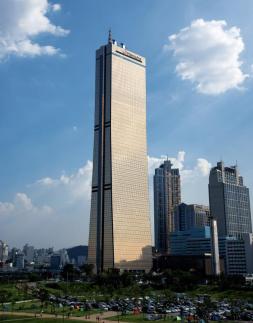 Hanwha Insurance Subsidiaries Upgraded to 'A+' by S&P Amid Improved Profitability and Stability Hanwha Group's insurance subsidiaries have achieved a top-tier global credit rating. On May 29, financial sources reported that Standard & Poor's (S&P), one of the world's three major credit rating agencies, upgraded the credit ratings of Hanwha Life and Hanwha General Insurance from 'A' to 'A+'. The rating outlook is classified as 'Stable.' In its report, S&P stated, "Hanwha Life is expected to maintain a solid market position in the domestic market based on a stable business foundation and a broad sales network that includes Hanwha Life Financial Services. The company's sales strategy, centered on profitable protection insurance, is projected to enhance future profitability, as indicated by the insurance contract margin (CSM) showing growth potential." S&P further noted, "The growth of premiums is ongoing, and the investment portfolio, primarily consisting of high-quality long-term bonds, is expected to remain stable. Profits generated by overseas subsidiaries in Indonesia and Vietnam accounted for approximately 19% of Hanwha Life's consolidated net income as of 2025, supporting its profitability." A representative from Hanwha Life commented, "This recognition reflects the competitiveness of our core insurance business and the successful diversification strategy through global expansion and subsidiaries, which is translating into tangible profits. We will continue to strengthen our growth foundation based on stable financial health to enhance corporate value." The upgrade for Hanwha General Insurance is attributed to the strengthened capital adequacy and stable profit generation capabilities across the Hanwha Financial Group. The strategic importance of achieving service synergies between life and non-life insurance has also been acknowledged. A representative from Hanwha General Insurance stated, "Receiving the 'A+' rating officially recognizes our solid financial structure and profit-generating capacity on the global stage. We will strive to become a trusted insurance company for our customers through stable capital management."* This article has been translated by AI. 2026-05-29 09:36:00
 -
 Jung Dong-won's Agency Vows Legal Action Against Rumors Jung Dong-won's agency has announced a strong response to various rumors surrounding the singer. On May 29, Showplay Entertainment stated, "We have taken actions such as warnings and requests for the removal of posts regarding malicious slander, defamation, the spread of false information, and the dissemination of baseless rumors targeting Jung Dong-won." The agency added, "Recently, actions have escalated beyond simple malicious postings, with individuals posing as fans to spread completely unfounded information or distort and exaggerate specific situations to create negative public sentiment. These actions have also incited conflicts within the fandom and have caused harm to our partner companies, continuously obstructing the artist's activities." They further noted, "While these actions may outwardly resemble typical fan activities, they are actually damaging the artist's image and creating confusion within the fandom, which we are taking very seriously." Finally, the agency emphasized, "We prioritize the protection of the artist's rights and will continue to pursue strong legal action against the dissemination of false information, defamation, malicious slander, and the creation and spread of rumors, as well as actions impersonating fans or inciting conflicts within the fandom, without any leniency or settlement." Meanwhile, Jung Dong-won enlisted in the Marine Corps in February.* This article has been translated by AI. 2026-05-29 09:36:00