

Journalist

Chang SeongWon
-
 LG Chem Accelerates Future Portfolio Transition with Four Growth Drivers LG Chem announced on May 28 that it is accelerating the restructuring of its future business portfolio centered around four growth drivers: eco-friendly products, battery materials, pharmaceuticals, and high-value specialty businesses. The company aims to triple its revenue from these sectors, which stood at 5.8 trillion won last year, by 2030. In the battery materials sector, LG Chem is enhancing the development of next-generation cathode materials, including high-voltage mid-nickel (HV Mid-Ni), lithium manganese-rich (LMR), and lithium iron phosphate (LFP). The company is also working on sodium-ion battery (SIB) materials while focusing on optimizing its production base in Tennessee, North America, to secure price competitiveness. The company is also pursuing global expansion in its oncology pharmaceuticals business. Clinical trials are underway for treatments targeting head and neck cancers and immuno-oncology therapies, with plans to explore adjacent areas such as women's health and osteoporosis. In the eco-friendly sector, LG Chem is strengthening its low-carbon materials business based on PCR (post-consumer recycled) plastics and bio-based raw materials. The company is accelerating the development of next-generation low-carbon technologies, including biofuels derived from used cooking oil (HVO), sustainable aviation fuel (SAF), dry reforming of methane (DRM), and e-SAF. The specialty business is being restructured around high-performance materials, including high-heat ABS, ultra-high molecular weight SSBR, and high-purity IPA for semiconductors. LG Chem is also aiming to expand its high-value product lineup, targeting PVC for electric vehicle fast-charging cables, aerogels, and SAN for cosmetic containers.* This article has been translated by AI. 2026-05-28 18:02:00
 -
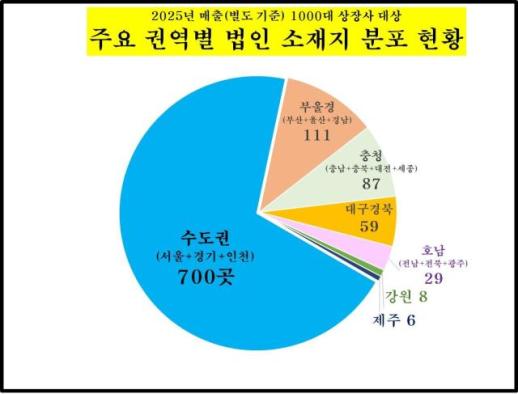 70% of South Korea's Top 1,000 Companies Are Based in the Capital Region A recent report reveals that 70% of South Korea's top 1,000 listed companies are headquartered in the capital region. Despite discussions about relocating public institutions and businesses to provincial areas since the launch of the Lee Jae-myung administration, the concentration of corporate headquarters in Seoul and Gyeonggi Province remains strong. Notably, larger companies tend to be more concentrated in Seoul, while the Busan-Ulsan-Gyeongnam (BULG) area shows relative strength among non-capital regions.According to the Korea CXO Research Institute's analysis of the locations of the top 1,000 listed companies by revenue in 2025, 700 of these companies are based in the capital region, which includes Seoul, Gyeonggi, and Incheon.The analysis focused on the top 1,000 listed companies based on individual and separate revenue figures from last year, using the corporate addresses listed in their business reports.Within the capital region, the concentration in Seoul is particularly pronounced. Of the top 1,000 companies, 405 are headquartered in Seoul, while 263 are in Gyeonggi Province and 32 in Incheon. This means that nearly 40% of South Korea's major companies are based in the capital.The trend of larger companies being more concentrated in Seoul is evident. Among the 40 companies in the '10 trillion club,' which reported revenues exceeding 10 trillion won last year, 30 are headquartered in Seoul. Hyundai Motor and Kia are based in the Seocho district of Seoul, while Posco International and Hyundai Mobis are located in the Gangnam area.However, some of the country's leading manufacturing firms are headquartered in Gyeonggi and Incheon. Samsung Electronics, the top company by revenue and market capitalization, is based in Suwon, Gyeonggi Province, while SK Hynix is located in Icheon, Gyeonggi. Hyundai Steel is also headquartered in Incheon. This reflects the characteristics of the manufacturing sector, which often aligns with production sites despite the overall trend of concentration in the capital region.In non-capital regions, the BULG area shows the strongest presence, with 111 of the top 1,000 companies headquartered there, accounting for about 11% of the total. Among the metropolitan areas, Gyeongnam has the third-highest number of companies, with 50.In Gyeongnam, companies in the shipbuilding, defense, and machinery industries play a central role. Hanwha Ocean is based in Geoje, while Changwon is home to major defense and heavy industry firms such as Hanwha Aerospace, Hyundai Wia, Doosan Enerbility, and Hyundai Rotem. Changwon has the highest number of top 1,000 company headquarters among non-capital cities, with 25.Busan has 37 companies headquartered there, including HJ Heavy Industries, Seongwoo Hightech, and Hwasung Industry. Recently, HMM, one of the largest shipping companies in the country, officially announced its relocation to Busan, raising the possibility of further corporate clustering in the city. Busan is accelerating its strategy to attract businesses in the maritime and logistics sectors.In Ulsan, companies such as HD Hyundai Heavy Industries, Lotte Fine Chemical, and Gyeongdong City Gas are located, reflecting the city's traditional manufacturing base.In the Chungcheong region, a total of 87 companies are headquartered, with 35 in South Chungcheong, 31 in North Chungcheong, 14 in Daejeon, and 7 in Sejong. Notable companies in South Chungcheong include Coway, Dongwon Systems, and Hanamicron, while North Chungcheong is home to Hyundai Elevator, HK InnoN, and Simtech. Daejeon features KT&G and Hanon Systems among its leading companies.The Daegu-Gyeongbuk region has 59 companies headquartered there, with 33 in North Gyeongsang and 26 in Daegu. Pohang is home to Posco Holdings and Posco Future M, while Hanwha Systems is located in Gumi. In Daegu, Korea Gas Corporation, L&F, and SL are leading companies driving the local economy.The Honam region has relatively fewer company headquarters, totaling 29, including 13 in North Jeolla, 9 in South Jeolla, and 7 in Gwangju. However, the presence of Korea Electric Power Corporation in Naju, South Jeolla, is significant. Other companies such as KEPCO KPS and Kumho Construction are also based in Naju.Gangwon and Jeju regions have 8 and 6 companies headquartered, respectively. Gangwon Land is the largest revenue-generating company in Gangwon, while Kakao and Jeju Air are notable firms in Jeju.At the municipal level, Gangnam District in Seoul has the highest number of headquarters, with 89 companies. It is followed by Seongnam City in Gyeonggi Province and Jung-gu in Seoul, each with 63. Seocho District in Seoul has 47, Yeongdeungpo District has 46, and Hwaseong City in Gyeonggi has 41, all identified as areas with a high concentration of corporate headquarters.Gangnam District is home to Hyundai Mobis, Posco International, DB Insurance, and GS Retail, while Seongnam City hosts KT, Naver, Samsung Heavy Industries, and SK Gas. Yeongdeungpo District houses major LG Group affiliates, including LG Electronics, LG Display, and LG Chem.Despite recent government initiatives aimed at balanced regional development and discussions about relocating businesses, analysts suggest that the preference for the capital region among companies is unlikely to change easily. Factors such as access to top talent, transportation and business infrastructure, supplier networks, and financial accessibility remain concentrated in the capital.As large corporations increasingly rely on connections to investment, finance, legal, and consulting services, the preference for Seoul is particularly pronounced. In contrast, provincial areas often serve primarily as manufacturing sites, limiting incentives for relocating headquarters.Oh Il-seon, head of the Korea CXO Research Institute, stated, "The ongoing concentration of major corporations in the capital region continues to widen the socio-economic gap with non-capital regions across various indicators. When companies relocate to provincial areas, there needs to be a premium and long-term support strategy in terms of taxation, location, and talent acquisition that can be practically felt."* This article has been translated by AI. 2026-05-28 18:02:00
 -
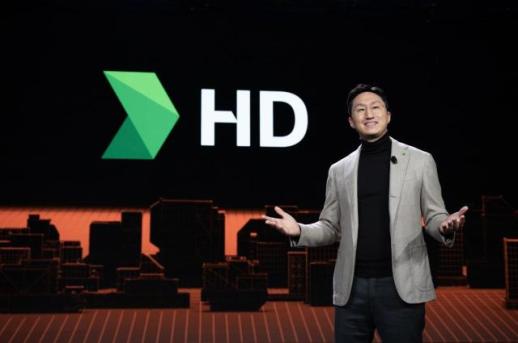 Korean Shipbuilders Gather at Posidonia 2026 for Major Deals The world's largest shipbuilding and maritime exhibition, Posidonia 2026, is set to open in Athens, Greece, next month, attracting a significant presence from South Korean shipbuilders. The event provides a platform for direct engagement with global shipowners, raising the possibility of major deals. According to industry sources on May 28, HD Hyundai Chairman Chung Ki-sun, Samsung Heavy Industries CEO Choi Sung-an, and HJ Shipbuilding CEO Yoo Sang-cheol will participate in the Posidonia event from June 1 to 5 (local time). Posidonia is recognized as one of the top three maritime exhibitions globally, alongside Norway's Nor-Shipping and Germany's SMM. Chairman Chung plans to aggressively promote liquefied natural gas (LNG) carriers, eco-friendly ships, autonomous navigation technology, and AI-based smart ship solutions. This year, key subsidiaries including HD Hyundai Heavy Industries, HD Hyundai Samho, HD Hyundai Marine Solutions, Avikus, and HD Hyundai Electric will join the event, bolstered by the presence of Vice Chairman Lee Sang-kyun of HD Hyundai Heavy Industries. Hanwha Ocean will also emphasize its competitiveness in LNG carriers and maritime defense technology, focusing on securing new contracts. Samsung Heavy Industries will have CEO Choi Sung-an personally travel to Athens to explore expanding its global shipowner network. The company has recently strengthened its bidding competitiveness in floating LNG production facilities (FLNG) and LNG and eco-friendly ships, planning to leverage its technological expertise to penetrate the market. HJ Shipbuilding, which is enhancing its presence through eco-friendly and specialized vessels, will also attend the event. CEO Yoo Sang-cheol aims to broaden connections with global shipowners. Industry experts believe that this year's Posidonia will serve as a crucial stage to gauge the ordering trends of global shipowners and the future direction of the shipbuilding market. One industry insider noted, "With growing interest in eco-friendly ships, autonomous navigation, and AI-based smart ship technology, domestic shipbuilders are increasingly committed to participating in the event."* This article has been translated by AI. 2026-05-28 18:02:00
 -
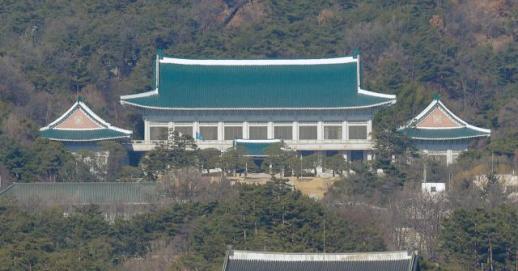 Blue House Encourages Public Discussion on Redistribution of Corporate Excess Profits On May 28, the Blue House expressed hope for various opportunities for public discourse regarding the social distribution of excess profits from large corporations, in light of an upcoming discussion hosted by the Ministry of Employment and Labor.During a briefing at the Chunchugwan, Chief Spokesperson Kang Yu-jung responded to a question about whether the discussion is a continuation of comments made by Policy Chief Kim Yong-beom regarding excess tax revenue. Kang stated, "Labor Minister Kim Young-hoon has mentioned the need for public discourse on the distribution of excess profits from semiconductor companies, and it seems he is emphasizing the necessity of social dialogue on performance distribution." She added that Industry Minister Kim Jeong-kwan could also address excess operating profits or earnings from the industry's perspective.Kang noted, "As various social issues and tasks that need to be discussed have been raised in this process, it appears that the Labor Minister believes these are matters that our society should openly discuss."The day before, Labor Minister Kim Young-hoon stated during a meeting with reporters, "The only solution for the social distribution of excess profits from large corporations is social dialogue. We plan to hold an urgent discussion on June 1, led by the Ministry of Labor."* This article has been translated by AI. 2026-05-28 18:00:00
 -
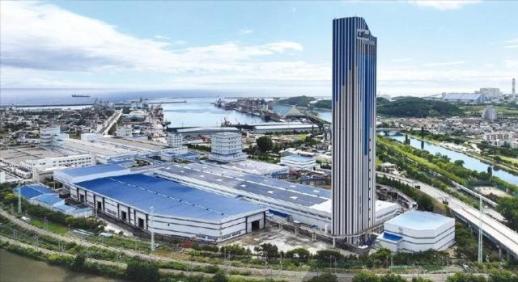 LS Cable and Daehan Cable Dispute Escalates Amid Technology Theft Allegations The conflict between LS Cable and Daehan Cable over alleged technology theft has intensified, reflecting a fierce competition for dominance in the domestic undersea cable market. As global investments in offshore wind and power networks grow, undersea cables have emerged as a key growth area for the wire and cable industry, heightening tensions between the leading LS Cable and the pursuing Daehan Cable. On May 28, the Southern Gyeonggi Police Agency's Security Investigation Division referred 13 individuals, including an executive from Daehan Cable, and three corporations—Daehan Cable, Gawon Architectural Firm, and a construction company—to prosecutors on charges of violating laws related to unfair competition and trade secret protection. This development is expected to further escalate the conflict between the two companies. According to industry sources, LS Cable has long been the dominant player in the undersea cable sector. High-voltage undersea cables require substantial investment in equipment and years of accumulated production and construction experience. This field demands not only product manufacturing but also expertise in cable design, insulation technology, operational management of production facilities, quality verification, and offshore installation experience, making it difficult for new entrants to gain a competitive edge quickly. Recently, Daehan Cable has been expanding its investments, positioning undersea cables as a future growth driver. The company has established a production base for undersea cables in Dangjin, South Chungcheong Province, and is entering the global bidding competition, directly challenging LS Cable. Industry analysts suggest that the movement of personnel from LS Cable and the use of related technologies by Daehan Cable during its rapid market entry may have ignited the conflict. To support its entry into the undersea cable market, Daehan Cable has continued significant investments. Following the establishment of its first undersea cable factory in the Godeabu area of Dangjin, the company is also pursuing additional investments aimed at producing high-voltage direct current (HVDC) undersea cables. Daehan Cable is working to secure specialized installation vessels and expand its international certifications, striving to broaden its foundation for winning global projects. LS Cable has raised concerns that Daehan Cable's expansion into the undersea cable business may infringe upon its core technologies and know-how. The company argues that information related to factory design and production processes is not merely documentation but trade secrets accumulated over years of trial and error. Conversely, Daehan Cable contends that it has pursued its business through independent investment and technology development. In response to the referral to prosecutors, LS Cable claimed it has suffered damages amounting to billions of won, while Daehan Cable reportedly denied the allegations, asserting that the contested information does not qualify as a trade secret. Industry experts note that the fundamental reason for the ongoing conflict is the expanding market itself. Undersea cables are critical infrastructure connecting offshore wind farms to onshore power grids. Demand for power network expansion is increasing not only in Europe and the United States but also in Asia, making this a market that domestic cable manufacturers cannot afford to overlook. Securing a supply record can influence subsequent project bids, making technological leadership and trust crucial in the competition. There are concerns that the legal battle between the two companies could prolong. Ongoing police investigations, prosecutor evaluations, civil damage claims, and disputes over trade secret violations may continue. A key issue will be determining the extent to which undersea cable technology can be classified as a trade secret and how to distinguish between accumulated experience and company-owned technology during personnel transitions. If the conflict drags on, it could burden the entire domestic undersea cable industry. Global competitors, particularly European and Chinese firms, are vying for large projects. A prolonged legal dispute between domestic companies could raise questions about technological reliability and supply trustworthiness in bidding competitions. An industry insider remarked, "Undersea cables are poised to become the most important growth market for the wire and cable industry, so the clash between leading and emerging companies is somewhat predictable. This issue extends beyond specific personnel or document leaks to encompass the struggle for dominance in the domestic undersea cable market and the stability of national power network projects." 2026-05-28 17:58:00
 -
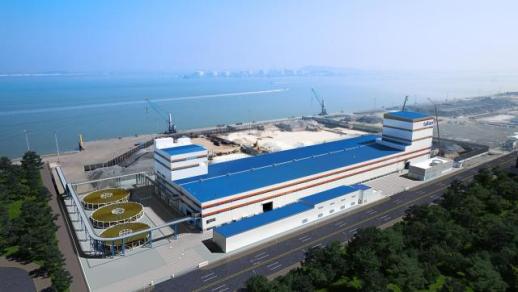 Daehan Cable Denies Allegations of Technology Theft from LS Cable Daehan Cable has denied allegations of technology theft related to LS Cable, asserting that the investigation's initial findings do not confirm any wrongdoing or liability. In a statement released on May 28, Daehan Cable said it is currently verifying specific details regarding the investigation into its submarine cable plant. The company emphasized that it did not utilize or conspire to use any trade secrets from other companies during the construction of the plant.Daehan Cable stated that various specialized firms participated in the construction of the submarine cable plant, and it selected partners through proper procedures based on their relevant experience and expertise. The company argued that the mere fact that some participating firms had prior project experience does not imply that Daehan Cable acquired or used another company's trade secrets.The key issues at stake include whether the information in question qualifies as legally protected trade secrets and whether Daehan Cable obtained or used them improperly. These matters will require thorough legal examination and judgment in future judicial proceedings.In response to concerns raised about similarities in the plant's structure, Daehan Cable countered that the submarine cable plant was constructed considering its business plan, site conditions, production products, equipment specifications, and logistics. The company asserted that common process flows or equipment layouts in the industry do not necessarily indicate the use of a specific company's trade secrets.Daehan Cable noted that the current issues are related to the construction of the submarine cable plant and are separate from the ongoing development of its second submarine cable plant and HVDC submarine cable projects. The company emphasized that its existing operations, production, delivery, international contracts, and future business initiatives are proceeding normally.The possibility of significant damages claims was dismissed by Daehan Cable as an unfounded assertion. The company stated that the actual liability and extent of damages will be determined through strict judicial scrutiny, and viewing the reported amounts as guaranteed is an overinterpretation.Daehan Cable concluded by stating its commitment to responsibly engage in the relevant processes and indicated that it would consider necessary actions against any false or exaggerated reports that could significantly impact its business and shareholder value. 2026-05-28 17:56:00
 -
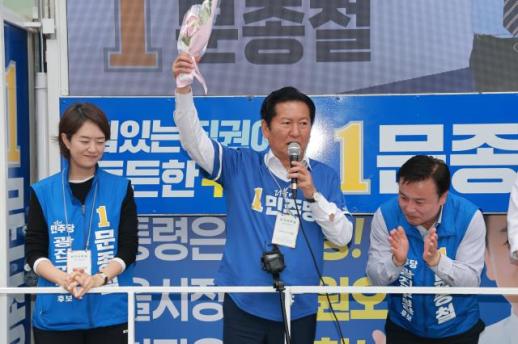 Pre-Election Campaigns Heat Up Ahead of Local Elections in South Korea With just one day to go before the June 3 local elections and by-elections for the National Assembly, Jung Cheong-rae, leader of the Democratic Party, and Jang Dong-hyuk, leader of the People Power Party, campaigned in Seoul and the Chungcheong region, respectively, on May 28. Jung called for support to work alongside the administration of President Lee Jae-myung, while Jang urged voters to prevent government overreach. Jung emphasized the need to choose a 'strong' Democratic Party to ensure collaboration between the Lee Jae-myung administration and local governments during his campaign in the competitive districts of Gangdong, Gwangjin, and Mapo in Seoul. He argued that the election of candidates such as Seoul mayoral candidate Kim Jong-mu and district heads like Moon Jong-cheol and Yoo Dong-kyun is essential for regional development. He also expressed concern over the consolidation of conservative forces following the support of former Presidents Lee Myung-bak and Park Geun-hye for People Power Party candidates. During his rally in Gangdong, he stated, "Please support President Lee Jae-myung to help stabilize the government. If they (the conservatives) unite, we must unite even more. Show that we support this president more than ever." Jung, who has been actively engaging with voters across the country, has been spending more time in the capital region as the local elections approach. He campaigned in Yeouido, Seoul, and in Gyeonggi Province's Yeoju, Icheon, and Ansan, as well as in Incheon on May 26 and 27. Jang, who had suspended his campaign following the collapse of the Seosomun overpass on May 26, resumed his rallies on May 28, visiting Nonsan and Daejeon. At the Nonsanhwa Market, he criticized President Lee Jae-myung, stating, "Before becoming president, he said, 'If a president commits a crime, he should go to jail.' Now that he is president, he wants to halt his trials and eliminate them altogether. The citizens of Nonsan must rise up and hold him accountable." Jang also pointed out the government's recent actions that seem to encourage a boycott of Starbucks, questioning, "Is it acceptable for a country to interfere with something as simple as the president drinking coffee? We may still enjoy our freedoms, but our children might live in a South Korea where even their ability to breathe is controlled." In conjunction with Jang's visit to the Chungcheong region, the People Power Party announced tailored pledges for each city and county in the area. The plan aims to establish Chungcheong as a key hub for advanced industries and enhance infrastructure, including transportation networks, to invigorate the region. Jang has been focusing on the Chungcheong region, having kicked off his official campaign on May 21 at Daejeon Station. This area is often regarded as a bellwether, with the saying that the party that wins in Chungcheong wins the overall election. The People Power Party views Daejeon and Chungcheongnam-do as competitive regions and is ramping up its efforts there ahead of the early voting period. 2026-05-28 17:56:00
 -
 Candidates Clash in Negative Debate for Busan North District Busan's North District by-election candidates faced off in a televised debate that was marked more by negative exchanges than policy discussions. Ha Jung-woo of the Democratic Party and Park Min-sik of the People Power Party launched concentrated attacks on independent candidate Han Dong-hoon regarding the controversy surrounding the party's member board and his involvement in the investigation of former President Park Geun-hye.During the debate organized by the National Election Commission at Busan MBC on May 28, Ha questioned Han about the 30-year prison sentence sought for Park, asking, "Even if you did not directly influence the sentence, can it not be said that you contributed significantly?"In response, Han acknowledged his role, stating, "I worked as a dispatched prosecutor in the team led by Yoon Seok-yeol at that time and was involved in that trial. I do not deny it," adding, "I fulfilled my duties as a public servant. I have also served as a prosecutor under other administrations and faced oppression during the Moon Jae-in administration." He expressed regret, saying, "While I did what I had to do, I feel sorry for former President Park. I appreciate the encouragement and advice she gave me during the last general election."Ha also questioned Han about the member board controversy, asking, "Is the news about identity theft true? If not, why haven’t you filed a complaint?" Han retorted, "I have been accused of spreading false information," and added, "While I would expect Park to raise the issue of the member board, I did not expect you to bring it up."Park joined in the criticism of Han, calling the member board controversy "a significant wound to the conservative support base" and questioned the legitimacy of the 30-year sentence sought for Park Geun-hye, asking, "Do you think that was justified, especially when compared to heinous criminals like Yoo Young-chul?" Han replied, "I feel personally sorry for former President Park," and criticized the debate for focusing on a former president instead of discussing the future of North Busan.Han then turned to Ha, referencing the controversy over President Yoon's decision to drop charges against Lee Jae-myung, asking, "Do you support or oppose the dismissal of charges? The citizens of Busan have already expressed their opposition to granting such authority, so what more needs to be said?" He also criticized the Busan Global Hub City Special Law, stating, "When President Yoon called it populism, you did not dare to oppose him."Ha shot back, saying, "Is this a prosecutor's interrogation room? This is why people say you can't shake off your prosecutor habits." He emphasized that regarding the dismissal of charges, he would focus on gathering public opinion in the National Assembly and concentrate on the residents of North Busan.* This article has been translated by AI. 2026-05-28 17:56:00
 -
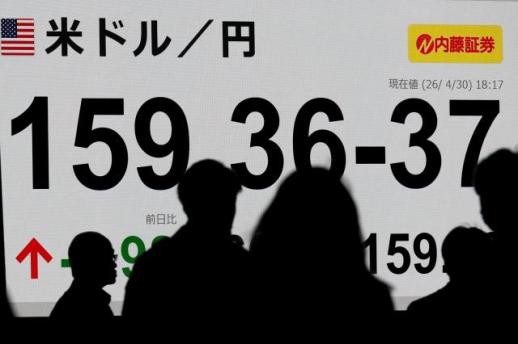 Yen Approaches 160 Mark Again Amid Growing Doubts The Japanese yen is once again nearing the 160 mark against the dollar. Following a market intervention by Japanese authorities at the end of April that temporarily pushed the yen back to the mid-155 range, it has slipped back to the mid-159 range within a month. The 160 yen defense line, which was barely maintained, is now being tested again. According to the Nihon Keizai Shimbun (Nikkei), the yen was trading at 159.57 to 159.58 yen per dollar in the Tokyo foreign exchange market on the afternoon of May 28. This represents a 0.22 yen increase (indicating a decline in yen value) compared to the previous day. At one point in the morning, the yen rose to around 159.60, marking its highest level since April 30. Reports of renewed tensions between the U.S. and Iran during negotiations have driven up oil futures prices, contributing to concerns about Japan's trade balance, which continues to weigh on the yen, according to Nikkei. However, attributing the yen's return to the 160 level solely to Middle Eastern factors is insufficient. During this period, Japan has seen rising long-term interest rates and a record current account surplus, while concerns about market intervention remain. All three factors typically support a stronger yen, yet the currency has weakened. Market attention has shifted to why these factors are failing to support the yen. The most notable aspect is the divergence between long-term interest rates and the yen's performance. Generally, rising government bond yields enhance the attractiveness of a currency. However, in Japan, despite rising long-term interest rates, there has not been a corresponding increase in yen buying. Nikkei reported that the gap between U.S. and Japanese long-term interest rates has narrowed over the past year, yet the yen's weakness persists. The market interprets the rise in Japanese long-term rates not as a sign of economic recovery or normalization of monetary policy, but rather as a reflection of fiscal risks and concerns that the Bank of Japan is lagging in addressing inflation. The impact of interest rate changes on exchange rates varies based on market interpretation. If rising rates signal that the Japanese economy is normalizing, it could lead to yen buying. Conversely, if they signal that higher returns are needed to hold Japanese government bonds, it could indicate anxiety about Japanese assets. Currently, the latter interpretation is gaining traction, making it difficult for foreign capital to actively purchase Japanese government bonds and the yen, even as yields rise. Another complicating factor for the yen's weakness is Japan's external balance. Daisuke Karakama, chief market economist at Mizuho Bank, recently noted that Japan's current account surplus for 2025 is projected to reach 34.52 trillion yen, marking a record high for three consecutive years, while the trade balance has returned to surplus for the first time in five years. On the surface, these statistics suggest little reason for the yen to weaken. However, in the foreign exchange market, what matters is not just the statistical surplus but the actual flow of money leading to yen purchases. If dollars earned overseas do not convert to yen upon entering Japan but are reinvested locally or remain in foreign asset forms, the current account surplus does not increase yen demand. Karakama pointed out that while Japan's current account surplus for January to March was 9.54 trillion yen, the actual cash flow surplus, excluding overseas reinvestment income that does not lead to yen purchases, was only about 1.6 trillion yen. The concern is what will happen if oil prices rise again. With the yen unable to escape its weakness despite a record current account surplus, an increase in oil prices could jeopardize the trade surplus that has been supporting the external balance. Karakama analyzed that the decline in oil prices last year was a key factor in Japan's return to a trade surplus. If geopolitical instability in the Middle East leads to higher oil import costs, the trade balance could deteriorate over time, increasing selling pressure on the yen. Will There Be Market Intervention Again? The remaining safety net is the possibility of market intervention by authorities. As the yen approaches 160 again, there are growing concerns that Japanese authorities may intervene in the market, similar to April. However, even if intervention temporarily boosts the yen, it does not eliminate the underlying pressure for a weaker yen. The yen still has a low funding cost compared to major currencies. With major overseas stock markets rising, investor sentiment for risk assets is also reviving. In this environment, even if intervention temporarily strengthens the yen, the yen carry trade—where investors borrow yen to invest in higher-yielding assets like dollars—could resurface, renewing selling pressure on the yen. Nikkei noted that if intervention leads to a rebound in the yen, long-term selling pressure from carry trades could quickly reemerge, further pushing the yen down. Therefore, the market suggests that even if the Bank of Japan raises rates in June, without a clear commitment to further increases, it will be difficult to curb carry trades, and the effect on yen appreciation will be limited. Ultimately, all three trends converge on one point: rising long-term interest rates, a record current account surplus, and the potential for market intervention are not being interpreted as compelling reasons to buy the yen. Concerns about fiscal and inflation instability accompany interest rates, while the current account surplus is hindered by a lack of actual yen buying demand, and intervention faces limitations due to carry trades. To prevent further yen depreciation, the Bank of Japan must demonstrate a willingness to raise rates, but its options are not straightforward. Raising rates could trigger instability in the long-term bond market and increase long-term interest rates. According to Nikkei, Japan's 10-year government bond yield recently reached 2.8%, the highest level in 29 and a half years, indicating an already unstable situation. The Bank of Japan will discuss the possibility of further rate hikes and plans to reduce government bond purchases at its monetary policy meeting next month. Slowing the pace of bond purchase reductions could stabilize the bond market, but it may also delay the withdrawal of liquidity from the market, increasing pressure for a weaker yen. The strategies to prevent yen depreciation and stabilize the bond market are in conflict. The market is closely watching the next move of the Bank of Japan, which finds itself in a difficult position.* This article has been translated by AI. 2026-05-28 17:46:00
 -
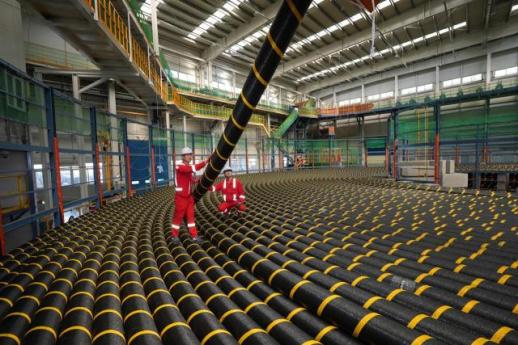 Police Charge 13 in Alleged Undersea Cable Technology Theft Case Police investigating allegations of technology theft involving LS Cable have determined that Daehan Electric improperly acquired trade secrets. The Southern Gyeonggi Police Agency announced on May 28 that they have referred 13 individuals, including an executive from Daehan Electric and four employees, along with seven representatives from Gaun Architectural Firm and two from an equipment company, to the Suwon District Prosecutors' Office on charges of violating laws related to unfair competition and trade secret protection. The Daehan Electric employees are accused of unlawfully obtaining LS Cable's trade secrets during the design process for an undersea cable factory in Dangjin, South Chungcheong Province, between 2022 and 2023. Police believe that Gaun Architectural Firm violated a confidentiality agreement with LS Cable by providing internal documents to Daehan Electric without authorization. Daehan Electric has faced suspicions that it selected Gaun Architectural Firm as the design contractor to obtain LS Cable's accumulated expertise in undersea cable technology, which is considered a trade secret. According to relevant laws, a trade secret is defined as information that is not publicly known, has been kept confidential, and holds economic value. The police began their investigation in 2023 after receiving a tip and have concluded the case nearly three years later, referring the matter to prosecutors. LS Cable stated that it has suffered losses amounting to hundreds of billions of won due to this incident, while Daehan Electric has reportedly countered that the information in question does not qualify as a trade secret. Other involved parties, including Gaun Architectural Firm, have also denied the allegations, asserting that the information does not constitute a trade secret. Meanwhile, if the prosecutors and courts recognize the charges against Daehan Electric, significant civil lawsuits are expected to follow. In response to the police investigation, an LS Cable representative stated, "LS Cable plans to respond in accordance with principles to protect the core technologies and industrial ecosystem that have been accumulated through decades of effort, dedication, and substantial investment by our employees against acts of technology theft and infringement." 2026-05-28 17:46:00