

Journalist

Chang SeongWon
-
 Coupang Fulfillment Expands Program for Specialized High School Graduates Coupang Fulfillment Service (CFS) is expanding its work-study program, allowing recent high school graduates to pursue careers as logistics experts while continuing their education.On May 27, CFS announced it hosted an information session at Yeungnam University in Daegu for local specialized high school teachers and students.The program offers a hiring process where participants can start working after graduating high school, transition to full-time positions after about a year, and earn an associate degree. This pathway allows them to become automation engineers or team captains (site managers) up to two years faster than the traditional route of attending college before entering the workforce.To alleviate financial burdens, the work-study program at Yeungnam University is conducted entirely online. It provides a 50% tuition subsidy for the first semester and a 30% scholarship from the second semester until graduation.Students from vulnerable backgrounds, such as low-income families and single-parent households, can receive full tuition support through national scholarships.CFS has also introduced measures to ease the military service burden for job-seeking youth. If participants enlist after transitioning to full-time positions, their service will be classified as a 'military leave' without termination, and their service time will be recognized as work experience upon returning.During the information session, three current employees shared their experiences, highlighting cases where they were promoted to full-time positions and became the youngest team captains just three months after joining the company.Jung Sol-hee, a 2026 Yeungnam University electrical automation major, stated, "I appreciate being able to achieve financial independence right after high school while studying online for my degree."Lee Min-gun, a 2026 major in smart convergence machinery at the same university, expressed pride in working for a company that offers management opportunities based solely on ability, regardless of age.Yoon Tae-hyun, also a 2026 electrical automation major, noted, "I plan to enlist in two years, and it reassures me that I can continue to grow at Coupang without worrying about my career after my service."Park Soo-hyun, CFS Chief Human Resources Officer (CHRO), emphasized, "The work-study program is a win-win model that allows young talents who have graduated high school to enter the workforce early and build their careers while achieving their academic dreams. We will actively expand this recruitment to help local youth grow into global logistics experts within Coupang's advanced logistics system."In addition to talent development, CFS is also focusing on enhancing workplace safety. On April 23, the company conducted tailored safety training for about 20 employees from its Jeolla Gwangju Centers 1 and 3 at the Damyang Safety Experience Education Center.Key personnel, including center managers, automation team members, team captains, and forklift operators, participated in theoretical training followed by immersive virtual reality (VR) experiences. They practiced scenarios involving forklift and pedestrian collisions, conveyor belt entrapments, ladder falls, electrical shocks, and truck collisions.* This article has been translated by AI. 2026-05-28 16:14:00
 -
 DAXA Implements Standards to Prevent Misuse of API Keys The Digital Asset Exchange Association (DAXA) has developed standards to prevent the improper lending of API keys by users of virtual asset exchanges. This initiative comes in response to reports of API keys being misused for unfair trading practices, such as market manipulation, highlighting the need for user protection and market order.According to DAXA, the new standards were created in collaboration with its member companies and following discussions with the Financial Supervisory Service.An API key allows users to connect external programs to access exchange features such as price and balance inquiries, order placements, and fund transfers. Recently, there have been instances where some users lent or shared their API keys, leading to unfair trading activities.The standards outline a tiered response to suspected improper lending of API keys, based on the level of risk identified. Member companies can implement measures such as enhanced monitoring, warning notifications, re-verification of user identity, and forced expiration of API keys.The plan also includes strengthening security measures. Member companies will adopt a whitelist IP system, allowing API key access only from pre-registered IP addresses.Kim Jae-jin, DAXA's Executive Vice President, stated, "The establishment of these standards is part of our member companies' efforts to fundamentally eliminate unfair trading. We will take necessary actions to swiftly address various emerging threats and prioritize user protection."* This article has been translated by AI. 2026-05-28 16:14:00
 -
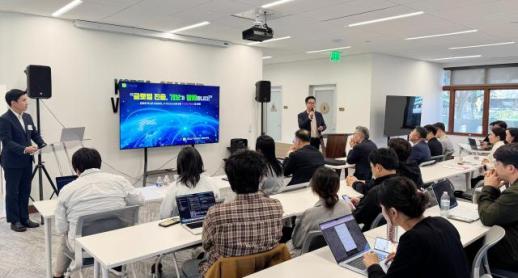 Korea Technology Guarantee Fund Hosts Event in Silicon Valley to Expand Startup Ecosystem The Korea Technology Guarantee Fund announced that it hosted the 'Global K-Venture Finance Mixer' at the Startup Venture Campus (SVC) in Silicon Valley, California, to provide financial support for domestic ventures and startups in the U.S. on May 28. This event was a follow-up to a memorandum of understanding signed in January between the Korea Technology Guarantee Fund and Hanmi Bank. It aimed to address challenges faced by domestic startups entering the U.S. market, including funding, investment attraction, and establishing local financial infrastructure. The event also aimed to expand connections with the local startup ecosystem through collaboration with the Stanford Consumer Accelerator Program (SCAP). Lee Jang-hoon, the Deputy Director of the Small and Medium Business Administration at the Korean Consulate in San Francisco, stated in his opening remarks, "This year, the consulate has been designated as a hub for export contracts, science and technology, and K-beauty. We will work with relevant agencies to effectively improve the support system for deep-tech startups and promote K-initiatives." During the event, Hanmi Bank shared practical know-how on establishing accounts, using credit cards and checks, and other financial foundations necessary for startups facing difficulties in their initial U.S. market entry. In line with the government's global venture policy, the Korea Technology Guarantee Fund introduced global technology finance support systems tailored to the Silicon Valley investment and financial environment, including overseas expansion guarantees linked to local direct loans, venture capital investment guarantees, and a recommendation system for tech credit loans in collaboration with Hanmi Bank. Professor Kim So-hyung from Stanford University emphasized, "We will strengthen our cooperation with the Korea Technology Guarantee Fund to support the growth of excellent startups in the K-beauty and K-food sectors and enhance technology commercialization." Earlier, the Korea Technology Guarantee Fund announced the opening of its 'Silicon Valley branch' in January, aiming to provide close support for domestic startups and ventures entering this challenging market. The Silicon Valley branch is the second overseas branch, following the opening of its Singapore branch in June of the previous year. Lee Jong-hyuk, head of the Korea Technology Guarantee Fund's Silicon Valley branch, stated, "We will continue to gradually expand our collaboration with Hanmi Bank and Stanford University to strengthen an effective global technology finance support system for startups." 2026-05-28 16:12:00
 -
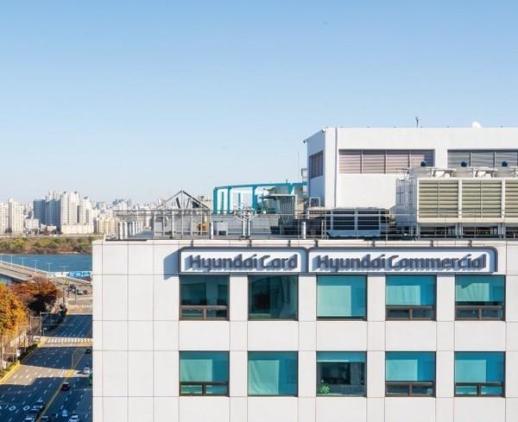 Hyundai Card's Blue Walnut Struggles Despite Ambitious Payment Platform Goals Hyundai Card's subsidiary Blue Walnut, established to build a future mobility payment platform, has been reporting losses for several years. The in-car payment business, which relies on Hyundai Motor Group's volume, has not expanded as quickly as anticipated, leading to ongoing challenges in achieving profitability. Industry analysts suggest that the company's plans for the future mobility market may have outpaced actual market growth. According to the Financial Supervisory Service's electronic disclosure system, Blue Walnut recorded a net loss of 2.9 billion won last year, more than double the 1.2 billion won loss from the previous year. The company has now posted losses for nine consecutive years, accumulating a total deficit of 23.8 billion won since its inception. Blue Walnut was founded in late 2016 under the leadership of Vice Chairman Jung Tae-young and other Hyundai Card executives as an electronic payment gateway (PG) subsidiary. Fully owned by Hyundai Card, it aims to establish a payment infrastructure for connected cars, focusing on services such as fuel, charging, and toll payments. From the outset, Blue Walnut differentiated itself by collaborating with Hyundai Mobis to develop a service that allows payments via vehicle navigation systems without a physical card, targeting the connected car era. The company has steadily expanded its offerings, including payment services for rental cars and certified used cars. Last year, Blue Walnut generated 165.8 billion won in revenue from Hyundai Motor Group affiliates, a 16.2% increase from 142.6 billion won the previous year. This accounted for approximately 89% of its total revenue of 186.3 billion won, with payment processing fees related to Kia reaching 143.3 billion won. However, the long-awaited in-car payment service, 'In-Car Payment,' from Hyundai and Kia was only officially launched in 2022, indicating that the company remains in the early stages of development. Renault Korea, which began its in-car payment service in 2021, discontinued it after about two years due to low usage rates. The slow progress in expanding the in-car payment market, initially seen as a promising new business, has hindered Blue Walnut's ability to improve profitability. Industry insiders cite the low-margin structure typical of PG businesses and high initial investment costs as reasons for Blue Walnut's struggles. While the costs of building and operating connected car payment systems are significant, revenues are primarily limited to transaction fees. Additionally, the company's business model, which focuses more on transactions within the group rather than expanding to external customers, limits its revenue diversification. With the domestic PG market already dominated by large players, new entrants find it challenging to secure stable revenue streams. For instance, Samsung Card sold its PG subsidiary Allat to KG Inicis in 2016. An industry source noted, "The in-car payment business was approached more as a new business concept by Hyundai Card rather than being led by Hyundai Motor Group. Although Blue Walnut has conducted extensive research and development since its inception, it will require a long-term perspective for widespread adoption."* This article has been translated by AI. 2026-05-28 16:10:00
 -
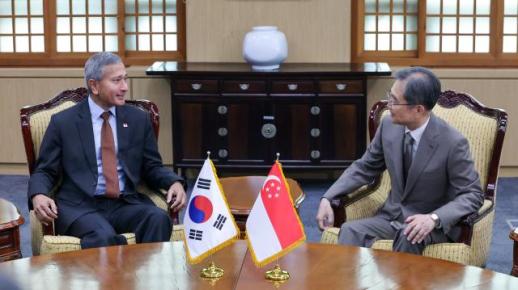 South Korean Foreign Minister Meets with Singapore's Vivian Balakrishnan South Korean Foreign Minister Cho Hyun held talks with Singapore's Foreign Minister Vivian Balakrishnan on May 28 in Seoul, discussing key issues between the two countries as well as regional and international developments.According to the Ministry of Foreign Affairs, Cho explained the South Korean government's policies and efforts for peaceful coexistence on the Korean Peninsula. He also listened to Balakrishnan's impressions from his recent visit to North Korea and urged ASEAN, including Singapore, to show interest and support in creating conditions for dialogue with North Korea.Balakrishnan expressed agreement and emphasized the importance of close communication between both sides for peace and stability on the Korean Peninsula.Balakrishnan is visiting China, North Korea, and South Korea from May 24 to 28, and he met with North Korean Foreign Minister Choe Son-hui in Pyongyang on May 26.He highlighted that South Korea and Singapore are allied nations sharing core values such as free trade and multilateralism, expressing hope for further deepening and expanding mutual cooperation in various fields, including trade, investment, and emerging industries.The two ministers also shared assessments of the recent situation in the Middle East, agreeing that peace in the region and the safe passage of international shipping routes, such as the Strait of Hormuz, are crucial for the security and economy of both nations.Following the meeting, Unification Minister Jeong Dong-young also met with Balakrishnan. The details of their discussion were not disclosed, as per mutual agreement.Jeong expressed his gratitude for Singapore's constructive role regarding issues on the Korean Peninsula. 2026-05-28 16:08:00
 -
 Kakao Union Announces June Strike Amid Trust Issues with Management The Kakao union, known as Crew Union, announced plans to prepare for a strike next month following the Labor Commission's decision to halt mediation. The union criticized the company's passive negotiation stance. In a statement released on May 28, the Kakao branch of the union stated, "The cessation of mediation after months of negotiations is not merely due to wage differences, but a result of the breakdown of trust between the company and its employees. The company has consistently responded passively rather than making responsible decisions." The union has been advocating for not only wage increases but also improvements to the opaque performance compensation structure and organizational measures to restore trust. They pointed out that the company unilaterally distributed bonuses during negotiations and frequently changed negotiation representatives, undermining the continuity of discussions. The union emphasized, "With nearly half of this year gone, many employees have yet to receive the application of normal wage agreements. True management reform should begin with restoring trust among employees, not through cost-cutting or organizational restructuring." The union also highlighted the recent resignation of Hong Mintak, Kakao's Chief Product Officer, and the announcement of layoffs at XL Games during the mediation process. They argued that accumulated management risks and repeated controversies within the Kakao community have increased distrust among employees. While the Kakao branch stated that it would not completely close off the possibility of dialogue after the mediation halt, they added, "We can no longer resolve issues through mere waiting and patience. We will prepare for a strike in June with our members to ensure that the value of labor is justly respected and that the company's achievements are fairly distributed."* This article has been translated by AI. 2026-05-28 16:04:00
 -
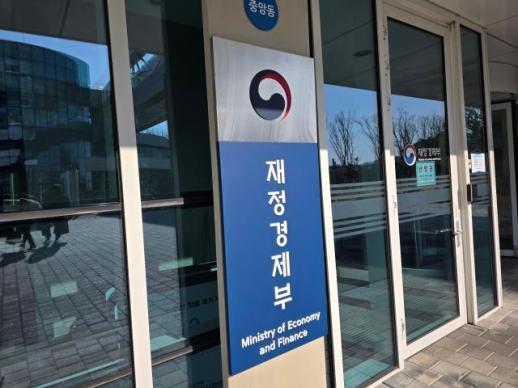 Government Dividends from State-Owned Enterprises Reach Record 2.8 Trillion Won The total government dividends from state-owned enterprises this year have approached 2.8 trillion won, marking the highest level on record. The improved performance of institutions such as the Industrial Bank, the Korea Development Bank, and Korea Electric Power Corporation has driven this increase, continuing a trend of rising dividends for the fourth consecutive year. On May 28, the Ministry of Finance and Economy announced that the total government dividends from state-owned enterprises for the fiscal year 2025 have been confirmed at 27.951 trillion won, an increase of 4.954 trillion won from the previous year’s 22.987 trillion won. The average dividend payout ratio also rose to 40.90%, up 1.18 percentage points from the previous year. A ministry official stated, "The continuous increase in government dividends and payout ratios over the past four years reflects the government's consistent approach to raising dividend ratios in line with the growing trend of shareholder returns in the private sector." Out of 40 state-owned enterprises, 20 distributed dividends this year. Dividends are calculated based on 'distributable profits,' which are determined after accounting for net income, carried-over losses, and legal reserves. No dividends are issued if there are losses or insufficient distributable profits. This year, new entrants to the list of dividend-paying institutions included the Korea Housing Finance Corporation, Korea Gas Corporation, Incheon Port Authority, Korea Electric Power Corporation, and KOTRA. Notably, Korea Electric Power Corporation returned to the dividend list after successfully turning a profit, aided by the effects of electricity rate increases and improved performance. The largest contributor to government dividends was the Industrial Bank, which distributed a total of 8.806 trillion won, accounting for over 30% of the total government dividends. The Korea Export-Import Bank followed with 4.762 trillion won, and the Incheon International Airport Corporation with 3.194 trillion won. The increase in dividends from the Industrial Bank included approximately 2.5 trillion won from the recovery of policy fund investments. The government agreed to receive these recovery funds in the form of dividends through prior consultations. However, excluding this amount, the actual payout ratio for the Industrial Bank stands at around 36.8%. The Korea Development Bank saw an increase in its dividends this year after introducing a semi-annual dividend system for the first time. The government noted that some expected profits for next year were reflected in this year’s dividends, resulting in an increase of about 1 trillion won. Energy public enterprises maintained relatively low payout ratios due to high debt levels and significant investment needs. A ministry official remarked, "Given that Korea Electric Power Corporation's debt ratio reaches around 600%, it is necessary to retain some profits internally to manage financial soundness." In contrast, LH Corporation, which distributed approximately 1.491 trillion won in dividends last year, was excluded from this year's dividend list due to recording losses amid a sluggish housing market, resulting in no net income.* This article has been translated by AI. 2026-05-28 16:02:00
 -
 Financial Authorities Expand Measures to Combat New Types of Fraud Financial authorities are establishing a rapid response system to swiftly freeze accounts suspected of involvement in various types of new fraud, including voice phishing, no-show scams, romance scams, and investment fraud. This initiative aims to address gaps in the existing legal framework that have led financial institutions to hesitate in freezing accounts that do not clearly fall under the category of voice phishing. On May 28, the Financial Services Commission (FSC) held the first meeting of the "Voice Phishing Eradication Council". This council formalizes the previously irregular channels for addressing voice phishing within the financial sector. During the meeting, participants discussed a system for freezing transactions on suspicious accounts related to new types of phishing, methods for detecting ghost accounts, and preventive measures within the financial sector. The focus is on the "proactive blocking" of suspicious accounts linked to new types of phishing. The FSC plans to implement guidelines for a "transaction freeze system for suspicious accounts related to new phishing" starting in late June. Under these guidelines, financial institutions will be able to temporarily freeze accounts for up to 72 hours if there is suspicion of telecommunications fraud, regardless of the type of crime, based on their own financial transaction detection systems, victim reports, or police notifications. Previously, scams such as no-show fraud, romance scams, and investment fraud often disguised themselves as legitimate transactions, making it unclear whether they fell under the telecommunications fraud compensation law. While financial institutions could track the flow of funds between accounts, they faced challenges in determining the nature of the transactions or whether fraud had occurred, limiting their ability to act decisively. In the future, financial institutions will first temporarily freeze suspicious accounts, after which the National Police Agency's integrated response team for telecommunications financial fraud will assess whether the case involves voice phishing or new types of phishing within 72 hours and notify the financial institutions. If deemed voice phishing, the payment suspension and victim relief procedures will follow the telecommunications fraud compensation law. If classified as new phishing, a temporary transaction freeze will be imposed for seven days, followed by a review by the Financial Intelligence Unit, which could extend the freeze for up to 60 days. Efforts to strengthen detection systems targeting ghost accounts and new phishing will also be enhanced. The FSC, the Financial Supervisory Service, and the Financial Security Institute have drafted joint detection rules for six types of new phishing and nine types of ghost accounts. After simulations in June and July across different sectors, the final joint rules are expected to be confirmed in the third quarter, starting with the banking sector. This will later expand to areas such as virtual accounts and savings accounts, where detection has been lacking.* This article has been translated by AI. 2026-05-28 15:58:00
 -
 FuriosaAI taps Broadcom to build third-generation AI inference chip SEOUL, May 28 (AJP) - South Korean artificial intelligence chip designer FuriosaAI said it had forged a strategic partnership with U.S. semiconductor giant Broadcom to co-develop a next-generation AI inference platform, deepening a homegrown bid to challenge the dominance of established players in the booming market for AI silicon. According to the neural processing unit maker on Thursday, the two companies will evolve FuriosaAI's proprietary tensor contraction processor architecture into a multi-die chiplet system, building an engine tuned for the high-volume token processing that global hyperscale data centers increasingly demand. The collaboration builds on FuriosaAI's second-generation accelerator, RNGD, a 180-watt PCIe chip now in mass production. Fabricated on TSMC's 5-nanometer process and paired with SK hynix HBM3 memory, the accelerator is optimized for large language models and agentic AI workloads, and has already been validated in production at customers including Samsung SDS and LG AI Research. The third-generation accelerator will carry a 2-nanometer compute die and HBM4/4E memory, drawing on Broadcom's advanced packaging to fuse multiple silicon dies into a single high-performance chip. The two firms plan to begin sampling the chip in the first half of 2028, as surging demand for agentic AI pushes inference workloads to outpace the training tasks that first fueled the generative AI boom. 2026-05-28 15:57:59
 -
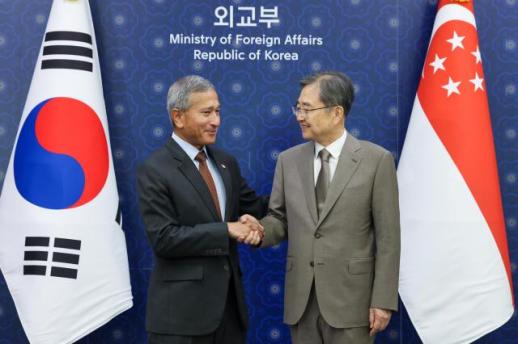 Foreign ministers of South Korea and Singapore agree to deepen cooperation SEOUL, May 28 (AJP) - Foreign Minister Cho Hyun met with his Singaporean counterpart in Seoul on Thursday to discuss bilateral cooperation, regional security issues, and broader international affairs, according to the Ministry of Foreign Affairs. Their meeting came after Singaporean Foreign Minister Vivian Balakrishnan's visit to North Korea earlier this week as part of a regional tour that also included China. During his trip to Pyongyang last Tuesday, Balakrishnan met with his North Korean counterpart Choe Son-hui. Cho was quoted as saying that it is important for Singapore and other ASEAN countries to continue engaging North Korea, as this could help build momentum for talks with Pyongyang. Balakrishnan agreed that the two countries should work closely together to support peace and stability on the Korean Peninsula, according to the ministry. Balakrishnan also said South Korea and Singapore share key values such as free trade and multilateralism, and he expressed hope for closer cooperation in areas including trade, advanced technologies, and emerging industries. The two ministers also discussed the prolonged conflict in the Middle East, stressing that keeping global shipping routes such as the Strait of Hormuz open and safe is vital for both countries' security and economic stability. Later in the day, Balakrishnan also met with Unification Minister Chung Dong-young, though details of their meeting were not disclosed. Speaking to reporters afterward, Chung said he "deeply appreciated" Singapore's constructive role in addressing issues on the Korean Peninsula. 2026-05-28 15:56:23