

Journalist

Chang SeongWon
-
 South Korea to Release 12 Million Barrels of Strategic Oil Reserves With about ten days remaining until the deadline for releasing strategic oil reserves under the International Energy Agency (IEA) joint resolution, the South Korean government has decided to lower the mandatory private stockpile days. This decision comes as refiners accelerate the import of alternative crude oil, and approximately 15 million barrels of strategic oil swap are already circulating in the market, leading to the conclusion that government releases would be less effective. Yang Gi-wook, head of the Ministry of Trade, Industry and Energy's Resource Security Division, announced on May 28 during a briefing at the Sejong Government Complex, "We have decided to implement the IEA international cooperation by adjusting the mandatory private stockpile days. We will issue a notice to reduce the requirement from 40 days to 20 days, effective from May 29." Previously, on March 11, shortly after the outbreak of war in the Middle East, the IEA decided to release a record 400 million barrels of strategic oil. South Korea's share of this release amounts to 22.46 million barrels, which must be completed by June 9. According to the Ministry of Trade, the IEA's release conditions differentiate between government releases from strategic oil storage facilities and private releases through the adjustment of mandatory stockpile days. Initially, the government had informed the IEA that it would utilize both government and private releases equally. This new approach indicates a preference for proceeding primarily with private releases. Yang emphasized, "We made this decision based on three factors: the national interest, the current domestic crude oil supply situation, and the prolonged uncertainty in the Middle East. Given that there are no significant issues with the current domestic supply situation, we are moving forward with private releases to comply with the IEA joint resolution." The estimated volume for the private release under the joint resolution is 12 million barrels. The government believes that reducing the mandatory private stockpile will allow refiners to manage their inventories more effectively. However, since refiners currently have sufficient stock, the release of private reserves is not expected to happen immediately. Yang noted, "This means that the private sector will have more flexibility in how they utilize their reserves, but it does not imply that they will be released right away. We also considered that the private stockpiles are not significantly different from pre-war levels in the Middle East." The government estimates that the private sector holds about 90 million barrels of crude oil and products, exceeding the mandatory holding requirement. Given the heightened uncertainty surrounding the Middle East conflict, the government plans to conserve its strategic reserves as much as possible. Yang stated, "During discussions with refiners, it was suggested that since they have secured alternative supplies, it would be prudent to proceed with strategic oil swaps for the time being, and to release government reserves only if the situation worsens. This was a comprehensive assessment considering the supply situation of the nation and refiners." Among the 22 million barrels to be released under the IEA joint resolution, the 10.46 million barrels not allocated for private release are unlikely to be released. Yang explained, "Of the 32 IEA member countries, four have not participated in the joint resolution, and as of June 8, ten countries have yet to release any strategic oil. Each country has considerable discretion in this matter." He added, "Since each country has flexibility regarding their situation, release methods, timing, and volumes, there are no penalties for not releasing. We believe that if we communicate our intentions adequately, the non-release of about 10 million barrels will not become a major issue." Yang also mentioned, "The strategic oil swap is being viewed as a new method for government reserves to enter the market, and we will be able to explain this adequately to the IEA in the future." Meanwhile, the government expects to secure crude oil at about 85% of the previous year's levels by July and anticipates no significant issues with crude oil supply in August. Yang remarked, "As we continue to secure alternative supplies, the supply situation does not seem to be difficult, and we do not expect significant differences from June and July."* This article has been translated by AI. 2026-05-28 11:39:00
 -
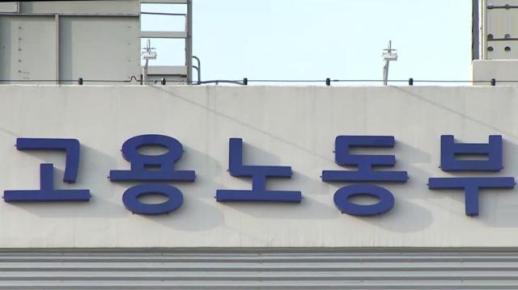 Government Calls for Enhanced Safety Management at Power Plants Government officials have convened power generation companies to address recent serious accidents at power plants and to strengthen safety management across all operational phases. They emphasized the need for power companies to establish a responsible safety management system not only during operation but also during maintenance and decommissioning stages.On May 28, the Ministry of Employment and Labor held a meeting at the Government Sejong Center, led by Ryu Hyun-cheol, head of the Occupational Safety and Health Agency. Participants included representatives from the Ministry of Climate, Energy and Environment, five major power companies—Namdong, Nambu, Dongseo, Seobu, and Jungbu Power—and the Korea Occupational Safety and Health Agency.This meeting was organized to review measures to prevent the recurrence of serious accidents, following incidents such as the Taehan Thermal Power Plant entrapment accident and the collapse of the boiler building at the Ulsan Thermal Power Plant last year. The focus was on sharing risk factors across power plant sites and discussing safety management practices and areas for improvement specific to each company.During the meeting, the Ministry identified several common risk factors present at power plants, including collisions during crane and forklift operations, falls during scaffolding installation and dismantling, asphyxiation in confined spaces, explosions due to flammable gas leaks, and heat-related illnesses caused by extreme temperatures.Given the complex nature of operations involving high-temperature and high-pressure equipment, as well as the handling of chemicals and confined space work, the Ministry stressed that power companies must go beyond mere legal compliance and ensure that risk factors are effectively managed during actual work processes.The Ministry also shared findings from an inspection related to the Ulsan Thermal Power Plant collapse, conducted by HJ Heavy Industries. The inspection revealed deficiencies in the safety and health management system and improper use of industrial safety and health management funds, resulting in 52 criminal referrals, 306 fines totaling 880 million won, six work stoppages, and one equipment shutdown.During the meeting, power companies discussed the improvements made since the incidents and acknowledged the need for enhanced safety management support for subcontractors, identification of safety blind spots, and the refinement of work procedures.Ryu Hyun-cheol stated, "Safety management at power plants must be thorough across all phases, including operation, maintenance, and decommissioning. Power companies must ensure that worker safety is not compromised during the decommissioning process and take responsible safety measures."* This article has been translated by AI. 2026-05-28 11:33:00
 -
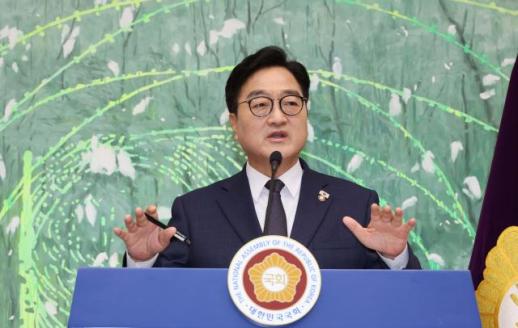 Outgoing National Assembly Speaker Reflects on Tenure, Calls for Constitutional Reform Woo Won-sik, the Speaker of the National Assembly, reflected on his two-year tenure during a press conference on May 28, stating, "It was a good decision to lead the effort to lift the illegal martial law." However, he expressed disappointment over the failure of the constitutional reform proposal due to opposition from the People Power Party. During the press conference held at the National Assembly, Woo remarked, "I feel like I was in the midst of upheaval and turmoil." He was elected as the Speaker of the 22nd National Assembly in 2024 and is set to conclude his term on May 29. Recalling the martial law period, Woo criticized former President Yoon Suk Yeol, saying, "He ignored the National Assembly," and added, "It was unrealistic, but I thought, 'This is what he intended to do' when the martial law was declared." He also confessed, "At that time, I was worried that we needed to resolve this before dawn, fearing that if the sun rose, the people might resist, leading to bloodshed." During his term, Woo led efforts to pass the proposal to lift the December 3 martial law, the impeachment motion against former President Yoon, and the establishment of the Serious Crimes Investigation Agency as part of judicial reform. Recently, he had also pushed for the processing of the constitutional reform proposal. Woo expressed regret over the failure of the constitutional reform initiative, stating, "I am disappointed that it did not come to fruition," but noted, "We resolved procedural obstacles, and public consensus on gradual constitutional reform has increased." He added, "I regret that we did not build barriers against the illegal martial law that I thought would never happen again, which occurred until recently." He highlighted the passage of urgent legislation, including the Special Law on Rental Fraud, the Yellow Envelope Law, the Franchise Business Act, and the Basic Law on Life Safety, as well as laws aimed at enhancing the nation's future competitiveness, such as the Commercial Act and the Semiconductor Special Act. Woo reflected, "There were times when the process of passing legislation was quite painful, but I prioritized bipartisan agreement and chose to mediate directly rather than waiting indefinitely, and when that failed, I made decisive choices." Addressing concerns about the neutrality of the Speaker, Woo stated, "If I had only taken the easy path amid the normalization of conflict between the parties, there would have been no progress at all. While bipartisan agreement is important, I believe the Speaker's role in the current National Assembly is to read the direction of public sentiment and find solutions." Woo also offered advice to his successor, saying, "I pondered a lot about how to conduct myself as Speaker. I faced complaints from People Power Party members about being one-sided and received strong criticism from Democratic Party supporters. However, in those moments, one must consider whether the choices benefit the people and democracy, rather than making partisan decisions." Following Woo's retirement, the National Assembly will temporarily operate under an acting Speaker. According to National Assembly law, the longest-serving member will assume this role. The longest-serving members in the 22nd National Assembly are Jo Jung-sik of the Democratic Party and Joo Ho-young and Jo Kyung-tae of the People Power Party. Given that Joo, born in 1960, is the oldest, he is likely to take on the acting Speaker role. Democratic Party spokesperson Lee Joo-hee also stated on May 21, "It seems that Joo will preside over the meeting for the election of the Speaker." The parties plan to hold a vote on June 5 to establish the leadership for the second half of the National Assembly. Meanwhile, the Democratic Party has nominated Jo Jung-sik for Speaker and Nam In-soon (fourth term) for Deputy Speaker. The People Power Party has nominated Park Deok-heum (fourth term) for Deputy Speaker. Both the Speaker and Deputy Speaker nominations require a majority vote from the members present. 2026-05-28 11:30:00
 -
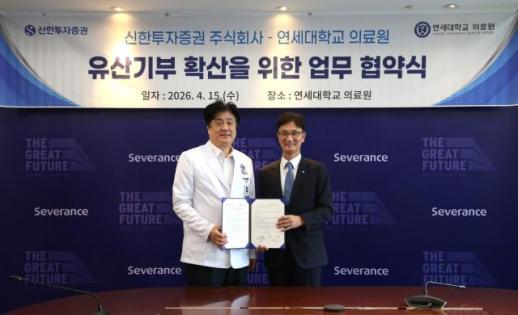 Lee Sun-ho, CEO of Shinhan Investment Corp., Rebuilding Trust in Finance Lee Sun-ho's leadership at Shinhan Investment Corp. begins with restoring trust rather than focusing solely on growth. He has taken on the role of rebuilding the organization, which was shaken by a major financial incident and internal control controversies. Since his appointment, he has emphasized that 'internal control is not just an obligation but a part of the organizational culture.' At the same time, he is pursuing new growth strategies, including the issuance of notes, digital assets, and AI-based asset management. His leadership is characterized by a focus on organizational stability and trust recovery while not neglecting digital transformation. Leadership Focused on Restoring Trust After Financial CrisisLee Sun-ho took the helm during a crisis. Shinhan Investment Corp. faced a loss of approximately 130 billion won during the management of an ETF LP in 2024, which was compounded by issues of internal record manipulation, shaking the entire organization’s trust. The market viewed this not merely as a management failure but as a fundamental issue with the internal control system.Lee made his direction clear immediately after taking office. He stated that internal control would be redesigned as a fundamental structure of organizational operations rather than merely a post-event inspection function. In practice, Shinhan Investment Corp. has reorganized the roles and responsibilities across its front, middle, and back offices and elevated the risk management department to a group level. A new customer risk management department was established, and operational risk management functions were strengthened.He repeatedly emphasized, "Internal control should not be an obligation imposed by someone but should become a habit." This is not just a slogan; following the top-down system establishment, he now demands a bottom-up cultural change within the organization. The implementation of a whistleblower system and a mandatory leave system, along with the introduction of an AI-based anomaly detection system, aligns with this approach.The core of Lee's leadership is ultimately 'finance that prevents accidents.' He aims to establish the trust structure of the organization before focusing on short-term performance. This approach, while not flashy, is considered the most necessary leadership in the current financial sector. Pursuing Growth Strategies Amid StabilityHowever, viewing Lee Sun-ho's leadership as merely stability-focused is insufficient. He is simultaneously pursuing growth strategies, with the issuance of notes being a prime example. Shinhan Investment Corp. secured approval for note issuance at the end of 2025, establishing a new funding base.This is not just a new business; it is an enterprise-wide infrastructure connecting corporate finance, management, and retail. Lee aims to strengthen the competitiveness of investment banking centered on productive finance and venture capital based on this foundation. In fact, he established a comprehensive investment banking department to provide financial solutions to emerging industries such as AI, semiconductors, healthcare, and green energy.He does not view note issuance merely as a funding tool. His statement, "We will create a virtuous cycle that supplies growth capital to companies and shares the fruits of growth with investors," reflects this direction.Performance is also showing signs of recovery. Shinhan Investment Corp.'s net profit reached 381.6 billion won, a 113% increase from the previous year, and operating profit also improved significantly. The recovery in performance was driven by increases in commission fees and profits related to financial products. Notably, the IRP yield ranked among the highest in the industry, enhancing wealth management competitiveness.Ultimately, Lee Sun-ho's strategy is not merely defensive. It is more about redesigning the growth structure based on internal control. Transforming Asset Management with AI and Life CareAnother focus for Lee Sun-ho is digital and life care asset management. He does not see asset management merely as the sale of financial products but aims to expand it into a service that designs the entire life of the customer.In fact, he emphasized in a recent essay that "asset management is evolving beyond simple investment management into life care." He believes that integrated solutions encompassing taxes, real estate, inheritance, and retirement planning will be key in the future.To this end, Shinhan Investment Corp. operates the 'Shinhan Premier Pathfinder' organization. This structure allows tax, real estate, legal, and foreign exchange experts to conduct a comprehensive diagnosis of customer assets. This strategy connects not just wealth management competition but the entirety of the customer's life within financial services.AI is also utilized in the same direction. Shinhan Investment Corp. is developing services that support customers' investment decisions through AI-based PB services and enhanced mobile trading systems. This is an attempt to provide 'understandable investments' and 'managed assets' rather than a transaction-centered platform.However, challenges remain. In the past five years, the number of IT system failures has been among the highest in the industry, and the ETF loss incident revealed limitations in internal systems. Ultimately, digital innovation must ensure stability alongside speed.Lee Sun-ho's leadership currently stands at a turning point. He emphasizes trust recovery and system stability over aggressive expansion. However, he also aims not to overlook future growth foundations such as note issuance, AI, and digital assets. Ultimately, his entrepreneurial spirit in finance connects to one question: Can finance that has regained trust grow again?* This article has been translated by AI. 2026-05-28 11:30:00
 -
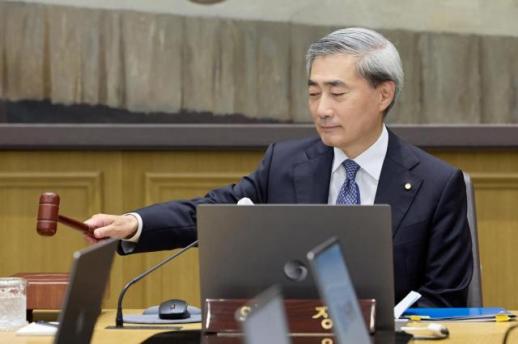 Bank of Korea Governor Shin Hyun-sung: Strong Semiconductor Market to Boost Growth by 0.7% Bank of Korea Governor Shin Hyun-sung stated on May 28 that a stronger-than-expected semiconductor market and the resulting increase in exports will raise the country's growth rate by 0.7 percentage points. Following a monetary policy committee meeting where the base rate was held steady at 2.50%, Shin held a press conference and noted that while the ongoing conflict in the Middle East is expected to lower growth by 0.4 percentage points, government fiscal measures and a booming stock market could boost growth by 0.2 and 0.1 percentage points, respectively. Regarding consumer price inflation, Shin predicted that the effects of the Middle East conflict would emerge. He remarked, "The government's price stabilization measures will help alleviate upward pressure, but the rising international oil prices are likely to impact the prices of industrial goods and services, leading to greater demand pressure than anticipated as the economy continues to improve." In fact, domestic prices surged significantly due to rising oil prices, with the consumer price inflation rate reaching 2.6% in April, and short-term inflation expectations hovering in the upper 2% range. Looking ahead to monetary policy direction, Shin indicated that an increase in the base rate would be necessary at an appropriate time. The Bank of Korea's monetary policy, which has maintained the base rate for eight consecutive meetings, is now more likely to shift toward a tightening stance. He explained, "With inflation expected to exceed target levels for an extended period and growth showing solid improvement, we need to remain cautious about financial stability, particularly regarding exchange rate volatility, housing prices in the metropolitan area, and household debt risks. Considering these factors, it will be necessary to raise the base rate at an appropriate time."* This article has been translated by AI. 2026-05-28 11:30:00
 -
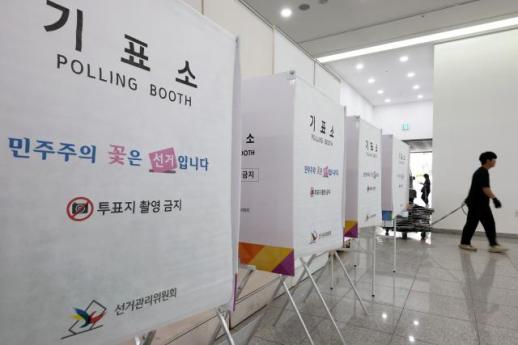 Ruling Party Expected to Win Local Elections with 57.1% Support A recent poll indicates that the ruling Democratic Party is expected to win the upcoming local elections. On May 28, the Korea Social Opinion Institute (KSOI) released results from a survey conducted from May 26 to 27, which showed that 57.1% of respondents anticipate a victory for the ruling party. In contrast, only 22.1% expect the opposition party to win, marking a 35 percentage point gap between the two. By age group, 66.7% of respondents in their 50s and 66% in their 60s predicted a win for the ruling party. However, among those in their 20s, 32.3% forecasted a victory for the opposition, the highest among all age groups. Regionally, the ruling party's expected victory was dominant across all areas. The highest support was in Gwangju and Jeolla, where 69.5% predicted a win, followed by Gangwon and Jeju at 64.3%, Gyeonggi and Incheon at 60.8%, and Daejeon, Sejong, and Chungcheong at 60.1%. In Seoul, the gap between expectations for the ruling and opposition parties was narrower. The ruling party's expected victory dropped by 6.5 percentage points from the previous survey to 48.8%, while the opposition's forecast rose to 30.7%. Looking at party support, 84.9% of Democratic Party supporters expect a win for their party, while support for the opposition party among People Power Party supporters fell by 8.3 percentage points to 47.6%. Among undecided voters, 36.2% expect a ruling party victory compared to 11.3% for the opposition, resulting in a 24.9 percentage point gap. In terms of political ideology, 83.7% of progressives and 67.1% of centrists anticipate a win for the ruling party. The survey was conducted using automated response methods with wireless virtual numbers provided by three telecommunications companies. The margin of error is ±3.1 percentage points at a 95% confidence level, with a response rate of 7.4%. For more details, please refer to the Central Election Polling Review Committee's website.* This article has been translated by AI. 2026-05-28 11:27:00
 -
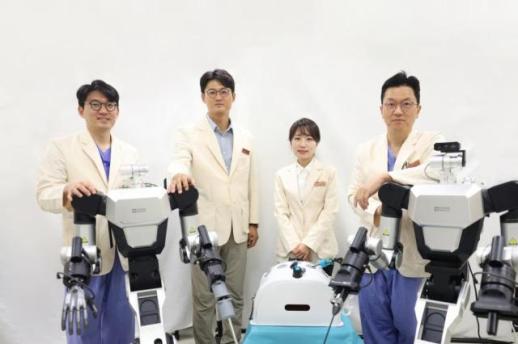 Samsung Medical Center to Build AI Surgical Robot Platform Samsung Medical Center is set to establish a platform to support the development and commercialization of AI-based surgical robots. As the medical AI robot market expands, the hospital aims to accelerate the establishment of a hub that supports everything from clinical validation to product commercialization. Industry observers are keen to see if the combination of the hospital's clinical capabilities and advanced technology can propel the domestic medical robot industry forward.On May 28, Samsung Medical Center announced that it has been selected as the lead organization for the Ministry of Health and Welfare's "AI-Based Surgical Robot Innovation Lab Construction and Utilization Project," which will receive approximately 10 billion won in government funding over the next five years.The hospital plans to establish the "AI-Based Surgical Robot Innovation Lab" and the "AURORA Lab (AI-Unified Robotics & Operative Research Accelerator Lab)," which will identify unmet needs in surgical settings and enable rapid validation and feedback in real clinical environments.Additionally, dedicated research facilities and testing environments for surgical robots will be created, and a specialized team will support the entire product development process, including performance verification, safety assessments, and usability evaluations.The project will involve collaboration with robotics companies such as Rainbow Robotics, E-Rob, and Roen Surgical, as well as institutions like Samsung Convergence Medical Center, Daegu Gyeongbuk Institute of Science and Technology, Tomorrow Robotics, and Ha Hae-ho. The project will be led by Professor Jeong Yong-ki from the Department of Otorhinolaryngology at Samsung Medical Center.During the first phase of the project, which runs until 2028, the focus will be on establishing specialized research facilities for surgical robots, enhancing AI technology, developing prototypes, and securing patents. In the second phase, from 2029 to 2030, the goal is to elevate the technology readiness level (TRL) to 8. Following this, the plan includes obtaining regulatory approvals from domestic and international agencies and facilitating the introduction of innovative medical technologies into actual healthcare settings.The medical AI robot market is also in a phase of expansion. According to the U.S. market research firm Grand View Research (GVR), the global medical robot market is estimated to reach $25.56 billion in 2023, with an expected annual growth rate of 16.55% until 2030.* This article has been translated by AI. 2026-05-28 11:24:00
 -
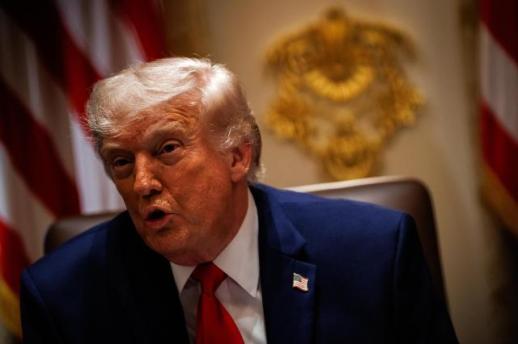 Trump Warns Oman Over Iran's Proposed Hormuz Toll Donald Trump, the President of the United States, issued a strong warning regarding Oman’s discussions with Iran about imposing a toll on ships passing through the Strait of Hormuz, even mentioning the possibility of military action. On May 27, during a Cabinet meeting at the White House, Trump stated, "Oman must act like other countries. Otherwise, we may have to blow them away." He added, "They understand that point. It will be fine." Earlier, Mohammad Aminnejad, Iran's ambassador to France, revealed in an interview with Bloomberg that Iran and Oman were discussing the establishment of a permanent toll system for vessels transiting the Strait of Hormuz. Politico reported that Trump rejected this proposal and threatened that Oman, a U.S. ally, could face severe consequences. The reopening of the Strait of Hormuz has emerged as a key issue in negotiations aimed at ending the conflict between the U.S. and Iran. The strait, located between Iran and Oman, could be completely blocked if the two nations reach an agreement. Therefore, Oman’s discussions with Iran regarding tolls could be seen as a thorn in the side of the U.S., which is currently pursuing the reopening of the strait through peace negotiations with Iran. Trump reiterated his stance that the Strait of Hormuz should not be under the control of any nation. He stated, "The strait must be open to everyone. It is international waters. No one will control it. We will monitor it, but no one can control it." Oman has played a crucial mediating role in the Iran nuclear negotiations and U.S.-Iran backchannel communications. While maintaining a friendly relationship with the U.S., Oman has not participated in Trump’s Abraham Accords. CNN noted that Trump’s remarks add Oman to the list of countries he has threatened or mentioned as potential targets during his presidency. Since taking office, Trump has conducted military actions in Iran, Iraq, Nigeria, Somalia, Syria, Venezuela, and Yemen, and has also mentioned the possibility of attacks on Canada, Colombia, Cuba, Greenland, Mexico, Panama, and Oman. However, CNN pointed out that not all of these threats and actions are of the same nature, with some being limited attacks aimed at specific terrorist groups. Analysts suggest that Trump employs a so-called "madman theory" in his foreign policy, using unpredictable rhetoric to pressure adversaries.* This article has been translated by AI. 2026-05-28 11:24:00
 -
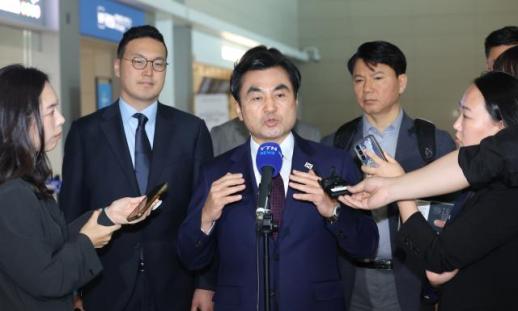 An Kyoo-baek to Attend Shangri-La Dialogue, Hold Bilateral Talks with Japan and Australia Defense Minister An Kyoo-baek will participate in the 23rd Shangri-La Dialogue, scheduled to take place in Singapore from May 29 to 31. According to the Ministry of National Defense on May 28, Minister An will deliver a speech on May 30 addressing "Regional Security Challenges and South Korea's Strategic Response," outlining South Korea's defense policies in response to the rapidly changing security environment. During the event, Minister An is expected to hold discussions with delegations from the United States Congress, as well as defense ministers from Japan, Australia, Norway, the Philippines, and Thailand, focusing on expanding defense and military cooperation. This will mark the first face-to-face meeting between Minister An and Japan's Defense Minister Shinjiro Koizumi since their bilateral talks in Yokosuka, Kanagawa Prefecture, during An's visit to Japan in January. U.S. Secretary of Defense Pete Hegseth will also attend this year's Shangri-La Dialogue. However, a bilateral meeting between the U.S. and South Korean defense ministers has already taken place on May 11 during Minister An's visit to the U.S., making another meeting during the Shangri-La Dialogue unlikely. Attention will be on whether the defense ministers of South Korea, the U.S., and Japan will have the opportunity to meet together. The Shangri-La Dialogue is an annual multilateral security conference organized by the International Institute for Strategic Studies (IISS) since 2002, bringing together defense ministers, senior military officials, and security experts from major countries in the Asia-Pacific and Europe, including South Korea, the United States, Japan, ASEAN, and the EU. The event has been held annually at the Shangri-La Hotel in Singapore since its inception, hence the name "Shangri-La Dialogue."* This article has been translated by AI. 2026-05-28 11:24:00
 -
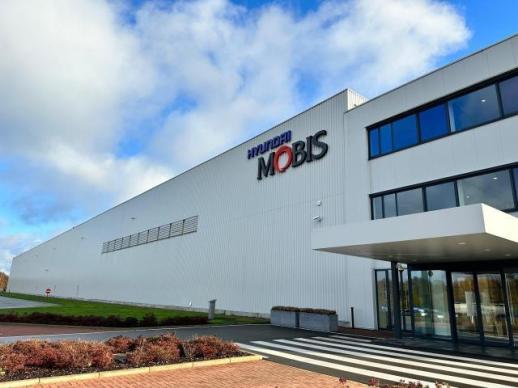 Hyundai Mobis joins Eclipse Foundation's open-source SDV project SEOUL, May 28 (AJP) - Hyundai Mobis announced it has joined the Eclipse Foundation's Software-Defined Vehicle working group and will contribute to the S-Core project, a global open-source initiative to standardize the software platforms that underpin next-generation connected vehicles. The S-Core project, launched in late 2024 by a consortium of European firms, aims to build a common middleware layer for SDV systems certified to functional safety standard ASIL-B — the first of its kind built on an open-source foundation. Thirteen companies are currently involved in the effort, pooling resources to reduce duplicated investment and accelerate development of the shared technical base that applications such as autonomous driving depend on. Hyundai Mobis said Thursday it marks the first time the company has opened its proprietary code to outside developers. The company will contribute its container solution technology, which isolates individual software processes running on Linux to prevent interference between them. Through the project, Hyundai Mobis said it expects to collaborate with a broad range of automakers, parts suppliers, and software specialists, while positioning its technologies as candidates for global industry standards. The company added that open-sourcing its code is itself a public demonstration of confidence in its software capabilities. 2026-05-28 11:21:20