

Journalist

Chang SeongWon
-
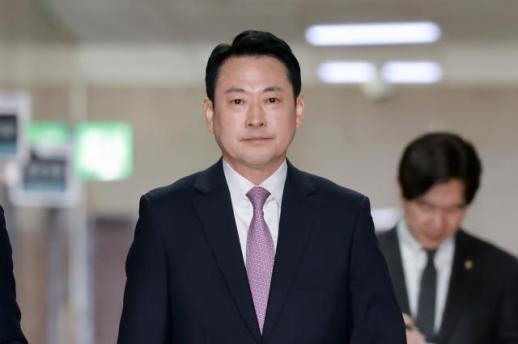 South Korea’s People Power Party Feuds Over Leader Jang Dong-hyeok With Local Vote Near 6·3 local elections and parliamentary by-elections are 40 days away, and infighting in the People Power Party is intensifying over calls for leader Jang Dong-hyeok to step down. Pressure has grown amid controversy over a U.S. trip and the party’s lowest support level since its founding, but Jang has signaled he will stay, suggesting the dispute will continue. Jang on April 24 rejected demands that he resign. In a Facebook post, he wrote, "Stepping down as party leader because the situation is not good is not what a responsible politician does." He added, "Since becoming party leader, I have run toward victory in the local elections," and said he would "finish the local elections to the best of my ability and be evaluated with confidence." He moved to tamp down speculation about his future about three hours after saying he would think about his position. Earlier that morning, Jang told reporters at the National Assembly that he would consider whether resigning 40 days before the local elections would truly fulfill his responsibility as leader and whether it would help the party win. He was responding after a poll released the previous day showed the party’s support at 15%. In the National Barometer Survey released April 23, the Democratic Party’s support stood at 48% and the People Power Party’s at 15%. The poll was conducted April 20-22 by Embrain Public, Kstat Research, Korea Research and Hankook Research through telephone interviews of 1,005 adults age 18 and older. The margin of error was plus or minus 3.1 percentage points at the 95% confidence level. (For details, see the National Election Survey Deliberation Commission website.) Calls for Jang to step aside continued within the party. Rep. Bae Hyun-jin, who chairs the party’s Seoul chapter, said Jang’s news conference was the first time he had shown a willingness to make a decision, whether by moving to a second-line role or resigning, for the sake of candidates and the party. She warned that May 14 was Jang’s final deadline, saying that after all main candidates are registered, "there will be no Jang Dong-hyeok left in the People Power Party." Seoul Mayor Oh Se-hoon, the party’s candidate for Seoul mayor, also urged Jang to pull back. In a media interview, Oh said, "The time has come when restraint or a decision is needed," adding that candidates "honestly" want Jang to be less visible because they believe that would help. Citing the party’s lowest support since its founding, Oh said the leader should feel responsible and reduce his public activities, effectively calling for Jang to move to the sidelines. Others defended Jang. Twenty-eight party committee chairs who are not lawmakers called for an end to efforts to shake him. Park Jong-jin, head of the party’s Incheon chapter, said at a National Assembly news conference that demanding the resignation of a legitimate leader elected by party members and guaranteed a term was an act that would ruin the election. He asked whether the party could win by excluding a leader who has the support of more than half of party members and running a separate campaign committee. Park said that with the local elections close, it was undesirable to undermine the leadership system regardless of who leads, and the party should unite. With the local elections nearing and Jang publicly refusing to resign, he appears unlikely to step down before voting ends. Still, some in the party say the leadership turmoil has become an election risk as the leader is distracted by questions about his future.* This article has been translated by AI. 2026-04-24 17:58:03
 -
 South Korea Finds 32 Syringe Sellers Violating Anti-Hoarding Rules, Launches Ongoing Checks The Ministry of Food and Drug Safety said April 24 it found 32 companies nationwide that violated a government notice banning syringe hoarding, following a special inspection aimed at stabilizing distribution. The ministry said it will file complaints and issue corrective orders against the companies and will continue to monitor compliance through follow-up inspections. The ministry disclosed the results at a briefing at its Seoul regional office in Yangcheon-gu. The first round of inspections, conducted from April 20 to 22, targeted sellers with low sales compared with incoming stock, unusually large inventories, supplies concentrated on specific buyers, or sales at high prices. Inspectors found four companies that stored syringes for at least five days in excess of 150% of their monthly average sales volume, and 30 companies that supplied excessive quantities to the same buyers. Two companies were found to have committed both types of violations. One company was caught holding about 130,000 syringes for more than five days as inventory far exceeded its sales volume. The ministry ordered the excess stock to be shipped within 24 hours to online shopping malls experiencing shortages. Another company was found to have supplied about 620,000 syringes — up to 59 times its monthly average sales volume — to 33 repeat buyers, including specific medical institutions and sellers. Kim Myeong-ho, director general of the ministry’s Medical Device Safety Bureau, said the ministry will file complaints and issue corrective orders, and will immediately pursue additional complaints if violations are confirmed again during re-inspections. The ministry said syringe production remains at normal levels compared with last year and that supply is not a problem. It said daily output averaged about 3.6 million units last year and has risen to more than 4.5 million this year. The ministry said it believes anxiety over recent supply instability led to hoarding at some points in the distribution chain. The ministry said it is collecting data from about 1,000 companies and analyzing distribution routes to check whether supplies are being concentrated at specific firms. It also said it is responding quickly to on-site enforcement through a reporting center where the public can report syringe hoarding. The ministry said it will strengthen monitoring across manufacturing and distribution and continue cracking down on actions that disrupt distribution order and risk supply disruptions.* This article has been translated by AI. 2026-04-24 17:57:10
 -
 TJ Media Meets With Dealers to Revive Sluggish Karaoke Market TJ Media convened talks with dealership representatives as it seeks to reinvigorate a sluggish karaoke market. TJ Media, the top seller by revenue in South Korea’s karaoke industry, said April 24 that it held a two-day regional council meeting with dealers on April 22 and 23 to discuss ways to boost the market. The company said the meeting was designed to explore cooperation for shared growth, gather broad feedback from the field on customer needs and market changes, and look for a path to a rebound for the industry. Regional dealer heads and TJ Media executives and staff attended, sharing recent market trends and reviewing operational difficulties karaoke venue owners face in day-to-day business, the company said. Participants also discussed how to attract new customers, what kinds of entertainment features could encourage repeat visits, and how to improve operating efficiency, it said. The meeting also checked market reaction to TJ Media’s recently introduced karaoke accompaniment systems, the A3 and P3. Attendees shared field feedback that customer satisfaction with sound improved after A3 installations, and said the “Room-to-Room Singing Battle” feature helped extend time spent on site and increase repeat visits. A TJ Media official said the company will reflect the views raised at the meeting and respond closely, working to revitalize the karaoke market by improving user satisfaction and strengthening venue competitiveness.* This article has been translated by AI. 2026-04-24 17:54:20
 -
 South Korea secures over 74 million barrels of crude oil for May, presidential aide says SEOUL, April 24 (AJP) - South Korea has secured more than 70 million barrels of crude oil for May, according to presidential chief of staff Kang Hoon-sik. During a press briefing at Cheong Wa Dae in central Seoul on Friday, Kang said, "South Korea has secured about 74.62 million barrels of crude oil, which is equivalent to roughly 87 percent of last year's monthly average," adding that the government is "making every effort" to secure additional supplies amid the prolonged conflict in the Middle East. He also said that the country is diversifying the shipping routes and sources of its oil imports, adding that additional supplies from Africa and North America have reduced reliance on the Middle East from 69 percent to 56 percent. Stressing that the government is closely monitoring supplies of petrochemical products such as naphtha, plastics and vinyl bags on a daily basis, Kang said South Korea plans to import 23.99 million barrels from Saudi Arabia and 16 million barrels from the United Arab Emirates (UAE) in May via alternative routes that do not involve the Strait of Hormuz, a critical chokepoint for roughly one-fifth of the world's oil supply. He also said that about 2.1 million tons of naphtha secured through a special envoy's visit would be brought in stages starting at the end of this month, expressing some optimism about supply conditions in about a month or so. But he remained cautious, saying the impact of higher prices "may only be beginning," citing rising global oil and raw material prices. "We cannot let our guard down," he said, adding that inflation would weaken purchasing power and slow the domestic recovery. He also pledged to implement a supplementary budget to support those hit by soaring oil prices. 2026-04-24 17:53:03
 -
 Big-tech layoffs: a prelude to AI replacement? SEOUL, April 24 (AJP) - What has long been feared is beginning to take shape. From May 20, Meta plans to cut about 8,000 jobs — roughly 10 percent of its workforce — while leaving 6,000 roles unfilled, even as it raises capital spending to as much as $135 billion this year for AI data centers and infrastructure. “We’re starting to see projects that used to require big teams now be accomplished by a single very talented person,” Mark Zuckerberg said during an earnings call, outlining plans to develop a so-called CEO agent. Microsoft has also offered voluntary buyouts to about 8,750 U.S. employees, even as it accelerates investment in artificial intelligence. Its chief executive, Satya Nadella, has repeatedly highlighted internal AI adoption, saying it has driven significant productivity gains. In April 2025, he said AI was already handling as much as 30 percent of the company’s coding work. In short, the very companies that once led a hiring boom to secure programming talent are now making room for AI. Kim Jin-young, a professor of economics at Korea University, describes the shift as deeply ironic. “Some programmers are rewarded in proportion to how much they use AI tools,” he said. “It creates a system where people work harder to build the weapon that could replace them.” Still, he cautions against overestimating the speed of disruption. “There is an assumption that AI can quickly replace labor, but in reality there are many hurdles to overcome, and that transition is likely to take considerable time,” he said. The scale of the shift is already visible. According to Crunchbase News, about 127,000 jobs were cut at U.S.-based technology companies in 2025, following 95,667 in 2024 and more than 191,000 in 2023. Among individual firms, Intel recorded the largest cuts in 2025 with more than 27,000 job losses, followed by Microsoft, Verizon and Amazon. The clearest signs of strain are emerging at the entry level. A 2023 study by GitHub and Microsoft found developers using GitHub Copilot completed coding tasks 55.8 percent faster on average, raising concerns that generative AI is absorbing routine work — coding, debugging, testing and documentation — traditionally assigned to junior engineers. The so-called “entry-level squeeze” is already evident in the United States. According to reporting by The Washington Post, computer programming jobs fell 27.5 percent over two years, while software developer employment remained largely flat. By 2025 and into 2026, major tech firms including Google and Meta have scaled back aggressive new-graduate hiring, shifting focus toward experienced engineers who can leverage AI tools more effectively. South Korea is showing similar signs. According to the Ministry of Data and Statistics, employment in professional, scientific and technical services fell by 105,000 on year to 1.373 million last month — the sharpest decline since the industrial classification system was revised in 2017. Employment in information and communications also dropped by 42,000, marking a second straight monthly decline. The impact is particularly acute among younger workers. Employment among people in their 20s fell by 163,000 to 3.262 million, the lowest level since records began in 1982 — the only age group to post a decline. Job placement data for computer science graduates tell a similar story. Placement rates have dropped across major universities, including Seoul National University, KAIST and Hanyang University. The shift is also reflected in hiring demand. According to the Korea Labor Institute, the share of entry-level openings in software developer job postings fell to 37.4 percent in 2024 from 53.5 percent in 2022. This coincides with the rapid adoption of generative AI. A survey by McKinsey & Company found the share of companies using generative AI in at least one business function jumped to 65 percent in 2024 from 33 percent a year earlier. As AI becomes standard in the workplace, companies are increasingly favoring experienced workers who can deploy these tools effectively, rather than hiring juniors for repetitive tasks. That does not mean software development is disappearing. The U.S. Bureau of Labor Statistics projects employment for software developers will grow 15 percent from 2024 to 2034. Rather, the nature of the work is shifting. Demand is weakening for routine coding, while rising for higher-skilled developers who can design systems, validate models and integrate AI into products. International institutions point in the same direction. The International Monetary Fund estimates about 40 percent of global employment — and up to 60 percent in advanced economies — is exposed to AI, while the World Economic Forum projects the technology could create 11 million jobs by 2030 while displacing 9 million. The implication is less about wholesale job destruction than a reconfiguration of work — unbundling tasks, automating some, and raising the value of others. Kim Geun-tae, a professor of public sociology at Korea University, says education must adapt accordingly. “Computer science students should also be taking humanities and social science courses,” he said, noting that future competitiveness will hinge on combining technical skills with human judgment. He pointed to renewed interest in philosophy departments at top universities as employers place greater value on reasoning, ethics and interpretive skills that are harder to automate. Even hiring practices are evolving. Companies such as KT Corporation are incorporating AI-assisted problem-solving into recruitment, asking applicants to use AI tools during interviews. Yet the two professors agree the current correction does not signal the end of human labor. “The essential things are not easily replaced,” Kim said. 2026-04-24 17:52:45
 -
 Hong Seung-hye’s ‘On the Move’ show at Kukje Gallery Busan explores rhythm and motion Tap, tap, tap… In Hong Seung-hye’s solo exhibition ‘On the Move,’ water drops fall without pause. As they gather into a puddle, each drop sends out ripples that read as circles, triangles and squares. Across eight video works installed in the gallery, similar but distinct sounds drift together, break apart and return, creating subtle variations. At a news conference held on the 24th at Kukje Gallery Busan, Hong spoke about rhythm, saying, “Music moves me without me even realizing it.” “Even the spacing when you hang frames isn’t random. It’s the result of countless adjustments. I can’t explain every moment, though,” she said. The exhibition centers on the “mobility” Hong has long pursued, bringing together works from different periods. It traces a progression from geometric forms to sound and from sound to choreography. The show spans flat works that appear to move, video works that actually move, and sculptural pieces that viewers can move themselves. A key focus is a group of major video works shown together. They include ‘Snoopy in Space’ (2019), which drifts through a vast cosmos, and ‘Facial Expression Practice’ (2025), in which circles, bars and crosses meet and separate to form expressions that seem to laugh and cry. In the videos, pared-down shapes move like notes on a musical staff, shifting, varying and expanding. Hong linked that sense of movement to her own life: memories of a father who loved music, time spent learning the marimba, scenes from the film ‘The Sound of Music,’ and accidental changes produced by the undo process. She added Photoshop at 40 and began using GarageBand at 50, she said, turning her life into a kind of rhythm that remains in motion. “I actually love dancing,” she said. “It’s like I’ve found a dance I can do even when I’m old. Even if I don’t have much energy later, if I still have the strength to move a mouse, I’ll be able to keep dancing.” The exhibition runs through June 14. * This article has been translated by AI. 2026-04-24 17:51:25
 -
 KOSDAQ IPO Filings Surge in April as Audit Season Ends As the season for filing audited financial statements by December-closing companies winds down, South Korea’s initial public offering market is showing renewed momentum. Companies that had paused for year-end accounting work have moved in April to finalize listing preparations and file with the Korea Exchange. The exchange said on the 24th that 10 companies have filed preliminary review applications this month to list on the KOSDAQ market. Applicants since April include NeoSapience on April 22; Gido Industry on April 21; Brills and MS Bio on April 16; WisePlanet Company on April 15; Global Technology on April 13; MBD on April 10; Optonics on April 8; Creates on April 7; and HL Genomics on April 3. The pace marks a sharp pickup from the first quarter. From January through March, 12 companies filed for new listings, including SPAC survival mergers. That means nearly as many applications arrived in a single month as in the entire first quarter. The surge is closely tied to the common practice of closing books in December. To seek a preliminary listing review, companies generally must submit the latest financial statements and an external audit report. Because financial data are available only after the close is completed, firms typically wait until after March shareholder meetings and the disclosure of audit reports before moving ahead with IPO preparations. Global conditions have also improved. The worldwide IPO market has posted three straight years of growth in funds raised, showing a clear recovery. An EY research report said global IPO proceeds in the first quarter totaled about $40 billion, or roughly 55 trillion won. Securities firms expect the stronger global tone to support South Korea’s listing market, with activity likely to build into the second half of the year. The filing rush is expected to continue through the end of April. With an average of three to four companies submitting preliminary review applications each week this month, market watchers expect April’s total to easily exceed the first-quarter count of 12. Companies seeking technology-special listing status are also moving faster. One such company is expected to file a preliminary review application next week, adding to expectations that demand will remain strong through month’s end. Given that it typically takes about three months from a preliminary review application to a final listing, companies that filed in April could begin passing reviews and submitting securities registration statements in June and July, setting up a more active public subscription season. “More technology-special listing candidates are coming to market around this time,” an IPO industry official said. “After April, demand is likely to concentrate further among companies seeking to enter the market based on recognized technological growth potential rather than simple earnings.”* This article has been translated by AI. 2026-04-24 17:42:21
 -
 Kim Keon Hee Denies Knowing Robot Dog Project, Rejects Watch Bribery Claim in Court Kim Keon Hee, accused of receiving a Vacheron wristwatch worth 39.9 million won along with an alleged request to support a robot dog business, testified in court that she had never even heard of such a project. Kim appeared April 24 as a witness at the Seoul Central District Court in the continued trial of robot dog entrepreneur Seo Seong-bin, who is charged with violating South Korea’s anti-graft law. The case was heard by the court’s Criminal Division 21, presided over by Judge Jo Soon-pyo. Kim is also on trial in a separate proceeding on charges of receiving a bribe in return for influence under the Act on the Aggravated Punishment of Specific Crimes, but the hearings were separated for her testimony that day. As in previous appearances, Kim entered the courtroom in a black suit and white mask, supported by a corrections officer. During questioning by Special Prosecutor Min Jung-gi’s team, Kim invoked her right to refuse to testify more than 50 times. Asked whether she told Seo she needed a watch to wear on overseas trips, and how the watch box and warranty card were found at the home of her brother Kim Jin-woo’s mother-in-law, Kim repeatedly said, “I refuse to testify.” She also declined to answer more than 10 times during cross-examination. But when Seo’s attorney pressed her to address whether the watch was given in exchange for anything, she responded, at times hesitating and looking toward her lawyer in the gallery. “I did not receive any request from Seo Seong-bin,” Kim said. “He has a great sense of fashion, so I asked him about that a lot. I have never even heard of a robot dog or anything like that.” When Seo’s attorney said the special prosecutor saw it differently, Kim replied, “I don’t understand it either. I know nothing about any request. It’s absurd.” She added that she treated Seo “like a neighborhood uncle” and talked about fashion, saying she did not know what business he was in. After those answers, Kim again invoked her right to refuse to testify, and questioning ended after about 50 minutes.* This article has been translated by AI. 2026-04-24 17:38:53
 -
 KOSDAQ hits 25-year high as Asia trades mixed on oil, Middle East tensions SEOUL, April 24 (AJP) - Korea’s junior index KOSDAQ emerged as the winner on Friday as it hit a 25-year high, while broader Asian markets stayed mostly sidelined under pressure from rising oil prices and escalating Middle East tensions. The KOSDAQ rose 2.5 percent to close at 1,203.84, swinging between 1,172.32 and its intraday high. Foreign investors bought a net 729.3 billion won ($491 million) worth of shares, while institutions followed with 187.7 billion won. Retail investors sold 901.6 billion won. Biotech and growth stocks led the rally, as funds rotated out of large-cap technology shares following recent gains. Among major KOSDAQ stocks, Ecopro fell 0.4 percent to 156,600 won, while Alteogen rose 1.2 percent to 369,000 won and Rainbow Robotics gained 2.0 percent to 612,000 won. Samchundang Pharm surged 8.3 percent to 411,500 won, and Peptron jumped 10.1 percent to 278,500 won. The benchmark KOSPI finished little changed, up 0.03 percent to 6,475.6, taking a breather after its record run before seizing the 6,500 mark. Retail investors bought a net 1.18 trillion won, while institutions added 805.3 billion won. Foreign investors sold 1.95 trillion won, weighing on the index. Among large-cap stocks, Samsung Electronics fell 2.2 percent to 219,500 won and SK hynix slipped 0.2 percent to 1,222,000 won, as investors locked in profits following a recent rally. Hyundai Motor dropped 3.6 percent to 513,000 won, and Kia fell 3.2 percent to 153,400 won after reporting weaker earnings. In contrast, HD Hyundai Heavy Industries rose 4.7 percent to 671,000 won, while Hanwha Aerospace gained 2.7 percent to 1,463,000 won. Doosan Enerbility climbed 3.7 percent to 127,100 won, supported by expectations of increased demand for nuclear and power infrastructure amid heightened geopolitical risks. Japan’s Nikkei 225 rose 1.0 percent to close at 59,716.18, supported by semiconductor gains. Data showed Japan’s core consumer inflation rose 1.8 percent on year in March, remaining below the central bank’s 2 percent target and reinforcing expectations of gradual policy normalization. China’s Shanghai Composite Index fell 0.3 percent to 4,079.9, while Hong Kong’s Hang Seng Index gained 0.24 percent to 25,976.4. Corporate earnings highlighted mounting cost pressures. Kia reported a 26.7 percent drop in first-quarter operating profit despite record sales, citing higher U.S. tariff costs and logistics disruptions. Hyundai Steel returned to profit with operating profit of 15.7 billion won, while revenue rose 3.2 percent on year to 5.74 trillion won, though margins remained under pressure from higher raw material costs. Meanwhile, Hyundai Mobis reported operating profit of 802.6 billion won, up 3.3 percent from a year earlier, supported by strong demand for electrification components and aftermarket parts. The Korean won weakened slightly to 1,483.6 per dollar, while Brent crude held above $105 a barrel, extending gains amid concerns over supply disruptions linked to Middle East tensions. 2026-04-24 17:37:20
 -
 Jung Won-oh Appears With Chung Cheong-rae and Yoo Si-min at Seongsu Store Opening Democratic Party Seoul mayoral candidate Jung Won-oh on April 24 appeared alongside prominent figures associated with the Roh Moo-hyun and Moon Jae-in camps, underscoring his push for victory. Jung attended the opening event for the Seongsu branch of handmade shoe company Azio at Under Stand Avenue in Seongsu-dong, Seongdong District, with Democratic Party leader Chung Cheong-rae and writer Yoo Si-min. Tak Hyun-min, described as a protocol secretary under the Moon Jae-in administration, was also present. Azio, a social cooperative, is a handmade shoe brand run by people with visual impairments and produced by people with hearing impairments. It gained attention as “the president’s shoes” after Moon wore them to the May 18 Democratic Uprising commemoration ceremony in 2016. President Lee Jae-myung also supported the company when he was mayor of Seongnam in Gyeonggi Province. The event marked the first time Chung and Yoo appeared together since reconciling after two decades of political conflict. Yoo, an Azio cooperative member and promotional model, and Chung, who joined after finishing a party schedule in Incheon, exchanged deep bows in greeting. Chung also struck an upbeat tone with Jung, saying, “So many people had a hard time under Seoul Mayor Oh Se-hoon, and many people say we have to win.” Yoo joked about Jung’s campaign operation, telling him the “Jung Won-oh campaign is mammoth,” adding that “if you’re not a current or former lawmaker, you can’t even hand out a business card,” and quipping, “Is it OK for local government to be like this?” Jung, Chung, Yoo and Azio Chairman Yoo Seok-young then stood in front of shoes on display and chanted, “Azio, fighting.” Yoo drew laughter by raising his voice to say, “Not ‘Jung Won-oh, fighting’ — ‘Azio, fighting.’” After the Azio event, Jung moved to Geumnam Market in Geumho-dong to again ask Seongdong residents for support. Jung, who is from Yeosu in South Jeolla Province, served three terms as Seongdong district mayor.* This article has been translated by AI. 2026-04-24 17:33:00