

Journalist

Chang SeongWon
-
 Kia Profit Falls as U.S. Tariffs and Incentives Rise; Hybrid and PBV Push Planned Kia posted its highest-ever quarterly revenue but saw profitability slide as external costs piled up, including more than 700 billion won in U.S. tariff-related expenses. The automaker said it will lean more heavily on hybrids and expand into purpose-built vehicles to seek a rebound. Kia said in a regulatory filing on Thursday that first-quarter revenue rose 5.3% from a year earlier to 29.5019 trillion won, a record for any quarter. Operating profit fell 26.7% to 2.2051 trillion won. The profit decline came despite higher sales as the impact of U.S. tariffs took hold and other factors added pressure, including higher incentives amid tougher competition in North America and Europe and an increase in foreign-currency warranty provisions tied to a late-quarter rise in the won-dollar exchange rate. Kia said its first-quarter U.S. tariff cost totaled 755 billion won. Kia said profitability worsened due to "external factors," including the full impact of U.S. tariffs on imported finished vehicles and higher incentives driven by intensified competition in North America and Europe. It added that it maintained "solid fundamentals" by improving its mix toward higher-margin models and lifting average selling prices, helping it achieve record revenue. Kim Seung-jun, Kia’s head of finance, said on an earnings conference call that oil prices could remain around $100 this year even if the war ends, posing a clear cost risk. Still, he said Kia ships about 260,000 vehicles a year to the Asia-Middle East region and believes it has enough capacity to make up the difference in other regions such as the domestic market, Europe and India. Looking ahead, Kia said it will strengthen its electrification strategy centered on higher-value hybrids. It plans to roll out models including the Telluride HEV and Seltos HEV this year, followed by the K4 HEV, aiming to meet demand for eco-friendly vehicles. Kia set a 2026 target of 690,000 hybrid sales and said it will secure an additional 400,000 units of production capacity over the mid-to-long term while reinforcing its global production system. Kia also plans to expand into purpose-built vehicles, or PBVs. It said it launched its first PBV model, the PV5, last year and sold about 8,500 units by year-end. For this year, it aims to sell 54,000 units as it begins a full global rollout. The PV5 base model and conversion models will be introduced sequentially in Europe, Asia-Pacific and the Asia-Middle East markets this year. Kim said Kia expects demand in India, Latin America and the Asia-Pacific region to grow by more than 10% in the second quarter. He said Kia plans to raise production this year by 5% at its plants in South Korea and by more than 10% at its China plant, which he described as key facilities for meeting emerging-market demand.* This article has been translated by AI. 2026-04-24 16:40:10
 -
 Democratic Party calls 30-year sentence request for Yoon Suk Yeol in Pyongyang drone case 'anti-state crime' The Democratic Party on April 24 called prosecutors’ request for a 30-year prison term for Yoon Suk Yeol, indicted over allegations he ordered a drone operation into Pyongyang, “a deserved response to an anti-state crime.” Some party figures said prosecutors should have sought life in prison. Spokesman Kim Nam-guk said Yoon “used the nation’s survival and the lives of its people as chips in a gamble to maintain his power.” Earlier, the special counsel team asked the Seoul Central District Court’s Criminal Division 36, presided over Chief Judge Lee Jeong-yeop, to sentence Yoon to 30 years at the closing hearing in the first trial. Kim said it would be recorded as “an indelible disgrace” that the commander in chief, who should protect lives, “artificially stoked the risk of war on the Korean Peninsula” and tried to undermine the constitutional order. He said the alleged “Pyongyang drone insertion” operation went beyond abuse of power and amounted to “aiding the enemy,” calling the offense serious. Kim said the operation was aimed at stirring a “North wind” to justify declaring martial law, sending a key military asset into enemy territory and, in the process, giving North Korea grounds for retaliation that put border residents and the public under the threat of war. “Now only the judiciary’s stern judgment remains,” Kim said, urging a ruling “based solely on law and principle” so that “power does not again threaten the people by taking security hostage.” Rep. Kim Byung-joo, a former four-star general, wrote on Facebook that the request was too light and that seeking life in prison “would not have been excessive.” Rep. Kim Yong-min also said prosecutors should have sought the maximum penalty of life in prison, saying history should record the fate of someone who “schemed for war” to keep power. Yoon is accused of ordering an operation around October 2024 to send drones into Pyongyang to militarily provoke North Korea with the aim of declaring martial law. The special counsel has concluded the operation heightened military tensions between the Koreas and that a deployed drone crashed, leaking military secrets related to the operation and capabilities and harming military interests.* This article has been translated by AI. 2026-04-24 16:39:19
 -
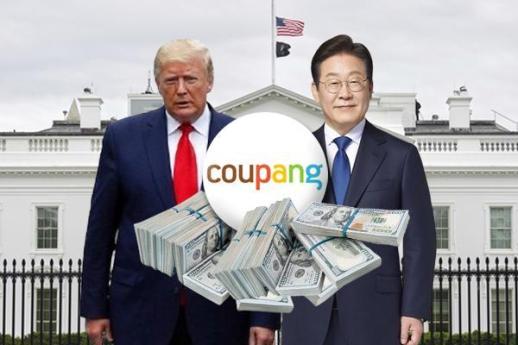 Coupang overstretches into security front, stirring Korea-U.S. friction SEOUL, April 24 (AJP) - In a rare and uneasy convergence, a retail dispute has spilled into the security domain between Seoul and Washington, underscoring the growing political reach of Coupang, a New York-listed retailer whose business is almost entirely rooted in South Korea. According to lobbying disclosure reports filed with the U.S. Congress, Coupang spent a combined $1.785 million in the first quarter of 2026 – nearly doubled from $895,000 in the previous quarter - as political and legal scrutiny mounted for a massive data leak in Korea last November. The filings show that Coupang not only boosted its in-house lobbying to $1.09 million, but also expanded its roster of external firms, adding Ballard Partners, Crossroads Strategies and Williams & Jensen to existing partners including Miller Strategies, Continental Strategy and Monument Advocacy. While the disclosed amount reflects only direct lobbying activities required under U.S. law, it excludes broader advisory and strategic consulting fees, suggesting total spending may be significantly higher. The scope of engagement has also widened. In late 2025, Coupang’s lobbying focused largely on trade-related agencies such as the Commerce Department, the Office of the U.S. Trade Representative and the State Department. By early 2026, outreach had expanded to include the White House, the Office of the Vice President and even the National Security Council, indicating that discussions may have entered security-sensitive territory. The involvement of high-profile lobbyists with deep ties to U.S. policymakers — including figures connected to Secretary of State Marco Rubio and former White House advisory teams — underscores the strategic nature of the campaign. Its efforts appear to have paid off. U.S. Vice President J.D. Vance reportedly raised concerns about Coupang during a January meeting with South Korean Prime Minister Kim Min-seok, while Rubio has also referenced the company in discussions with Korean officials. The issue further blew over this week when 54 Republican lawmakers affiliated with the Republican Study Committee sent a letter to South Korea’s ambassador in Washington, urging Seoul to halt what they described as “discriminatory regulations” against U.S. firms — explicitly naming Coupang alongside Apple Inc., Alphabet Inc.’s Google and Meta Platforms Inc.. According to people familiar with the matter, U.S. officials have also conveyed concerns through diplomatic channels about potential legal actions against Coupang Chairman Bom Kim, warning such moves could complicate high-level security consultations between the allies. Underscoring the elevation of the agenda, South Korea’s National Security Adviser Wi Sung-lac acknowledged the spillover effect during an overseas briefing while accompanying the president in Vietnam. “This is fundamentally a corporate issue, but it is true that it is influencing security consultations between South Korea and the United States,” Wi said. “We do not believe it is desirable for corporate matters and security negotiations to become linked.” He added that delays in security talks are already occurring and warned that prolonged disruptions could harm the alliance. At home, the response has been more forceful. National Assembly Speaker Woo Won-shik described the U.S. lawmakers’ letter as “a clear interference in domestic affairs,” stressing that companies operating in Korea must comply with Korean law. “There have been large-scale personal data leaks and allegations of algorithm manipulation. These are clear violations of current law,” Woo said. The company denied any wrongdoing and dismissed claims that its lobbying extends into security issues as “categorically false,” stating its activities focus on economic cooperation, trade expansion and technology partnerships, including artificial intelligence initiatives. It also emphasized that its lobbying expenditures remain modest compared with other major U.S. and Korean corporations. Founded in 2010 by Bom Kim, Coupang has grown into South Korea’s largest e-commerce platform, often compared to Amazon for its logistics-driven model and rapid delivery services. Headquartered in Seattle, incorporated in Delaware and listed on the New York Stock Exchange, it occupies an ambiguous identity — structurally American, operationally Korean. Its rapid growth has been accompanied by controversy. The company has faced criticism over industrial safety conditions in its logistics network, with several worker deaths linked by labor groups to harsh working conditions. It has also been embroiled in a major personal data breach that intensified regulatory scrutiny, alongside allegations of algorithm manipulation to favor its own products — claims the company denies. The dispute may ultimately move into the courts, with lawmakers exploring legal options including class action mechanisms. “We are reviewing class action legislation,” said Kim Yong-min of the Democratic Party of Korea, noting that such systems are already well established in the United States. Meanwhile, Lee Un-ju, a member of the party’s Supreme Council, pointed to a fundamental perception gap in Washington. “In the United States, people tend to think of Coupang simply as an American company,” she said. “They don’t realize that most of its revenue is generated in Korea, and that the majority of victims in the personal data breach are also in Korea.” Lee said she conveyed this view directly to U.S. policymakers during a recent visit, emphasizing that understanding Coupang’s operational reality is key to evaluating the dispute. “It is very important to recognize that Coupang is, in effect, a Korean company,” she said. 2026-04-24 16:37:51
 -
 BLACKPINK's Jisoo wins rising star award at Canneseries SEOUL, April 24 (AJP) - BLACKPINK's Jisoo has won an award at this year's Cannes International Series Festival, which kicked off its weeklong run in the French resort city earlier this week. Jisoo received the Madame Figaro Rising Star Award last Wednesday at the annual festival, also known as Canneseries, which promotes television series around the world. According to the festival's organizers, Jisoo, alongside her music career, has "steadily expanded her presence as an actress, building her acting profile across music videos, advertising campaigns, television series, and films." "Jisoo continues to balance careers in music and acting, with a focus on expanding her filmography through diverse roles and formats. With her international reach, screen presence, and ongoing artistic growth, she remains a prominent and promising figure in contemporary Korean and global entertainment," they added. Having debuted as a member of BLACKPINK in 2016, she has gained worldwide popularity and branched out in her career into acting with her latest appearance in romantic comedy "Monthly Boyfriend," in which she plays a webtoonist wearied by daily life who turns to a virtual dating. 2026-04-24 16:37:17
 -
 IBK Industrial Bank Q1 Net Profit Falls 7.5% to 753.4 Billion Won on FX Volatility IBK Industrial Bank of Korea said Friday its first-quarter net profit fell 7.5% from a year earlier to 753.4 billion won, citing the impact of exchange-rate volatility. The bank said the decline was linked to currency-related factors stemming from Iran. Lending to small and midsize enterprises increased as the bank expanded what it called “productive finance.” The outstanding balance of SME loans rose 0.9% from the end of last year to 264.2 trillion won. Its share of the SME market was 24.4%. Asset-quality indicators were mixed. The ratio of substandard or below loans was unchanged from the end of last year at 1.28%, while the credit cost ratio fell 0.04 percentage point to 0.43%. An IBK official said the bank will continue supporting SMEs facing difficulties from rising exchange rates and oil prices through its “IBK-type Productive Finance 30-300 Project.” The official added that, as disclosed in March, the bank plans to introduce quarterly dividends for the first time, with July 31 set as the dividend record date. * This article has been translated by AI. 2026-04-24 16:36:18
 -
 Huawei to Invest Up to 80 Billion Yuan in Autonomous Driving Computing Power Over 5 Years China’s Huawei is sharply increasing investment in smart driving technology, aiming to expand its influence in China’s electric-vehicle market as a supplier of autonomous driving systems rather than a carmaker. According to Reuters on the 24th, Huawei Senior Vice President Jin Yizhi said at an event in Beijing that the company will invest 70 billion to 80 billion yuan ($13.6 trillion to $15.5 trillion won) in computing power over the next five years. The event was held ahead of China’s largest auto show, which opens on the 25th. Huawei plans to invest 18 billion yuan ($3.5 trillion won) globally this year in research and development for smart driving technology. Of that, 10 billion yuan ($1.9 trillion won) will be allocated to training computing power to process large-scale driving data and further develop in-vehicle artificial intelligence models. Huawei does not build finished vehicles. Instead, it supplies automakers with smart driving systems, intelligent cockpit technology and operating systems. Over the past four years, it has emerged as a key supplier in China’s smart electric-vehicle market. Reuters reported Huawei showcased 38 vehicle models equipped with its smart driving and intelligent cockpit systems at the event, with partners including Audi and Toyota. Huawei also unveiled a new Qiankun (乾崑) ADS advanced driver-assistance system. ADS is the company’s core smart driving technology, designed to help vehicles detect their surroundings and assist with lane changes, parking and highway driving. The system is set to be installed in the Epikland X9 sport utility vehicle developed with Dongfeng Motor, Reuters said. Automotive-related revenue is rising quickly. Reuters reported Huawei’s automotive revenue reached 45 billion yuan ($8.7 trillion won) in 2025, up 72% from a year earlier, far outpacing the company’s overall revenue growth of 2.2%. That suggests the auto business has become a new growth engine since U.S. sanctions. Competition in China’s auto industry is also shifting from EV pricing to AI features. Reuters said that in line with the Chinese government’s “AI Plus” push, companies including Xpeng, Xiaomi and Huawei are emphasizing in-car AI functions, such as voice commands for destinations and driving preferences and operating systems that adjust features based on a driver’s condition and usage patterns.* This article has been translated by AI. 2026-04-24 16:34:36
 -
 Seoul Han River Rebuild Bids Heat Up as Builders Offer 150% LTV, Zero Member Payments South Korea’s urban redevelopment contracts this year are expected to total about 80 trillion won. As major projects along Seoul’s Han River — including Apgujeong, Yeouido, Mok-dong and Seongsu — move into full swing, construction firms are escalating bids with aggressive financing packages and high-end designs. According to the redevelopment industry on the 26th, Hyundai Engineering & Construction and DL E&C are locked in a fierce contest for the reconstruction of Apgujeong District 5 in Seoul’s Gangnam district. Hyundai E&C is highlighting premium features, including AI-based services and a panorama design aimed at maximizing river views. DL E&C has focused on financing, offering a fixed construction cost of 11.39 million won per 3.3 square meters and relocation loans with a loan-to-value ratio of 150%. The Seongsu area has also emerged as a key battleground. Seongsu District 4, seen as a centerpiece of new Han River redevelopment, is reshaping the competitive field through a re-bid. Daewoo E&C and Lotte Engineering & Construction have emphasized their funding capacity: Lotte offered relocation-loan support, while Daewoo proposed full responsibility for project financing and an interest rate set at 0.5 percentage points below the CD rate, a market benchmark. Seongsu District 4, however, has seen repeated disputes during the bidding process. After last year’s bid was canceled over allegations of missing documents and violations of promotion guidelines, the re-bid has also drawn debate over interest-rate cap conditions. Competition is also intense in Banpo. In the combined reconstruction of Sinbanpo complexes 19 and 25, Samsung C&T and POSCO E&C are vying for the contract. Samsung C&T has promoted an upscale strategy centered on building a “Raemian town,” while POSCO E&C has put forward a financing plan built around “zero member payments.” POSCO E&C said it would eliminate members’ contributions by paying 200 million won per household in advance as financial support and then maximizing revenue from general sales through post-completion sales. A POSCO E&C official said a general meeting to select the builder is set for May 30, adding that the company is pursuing a strategy that puts maximizing members’ interests first. The financing terms themselves are also drawing scrutiny. Critics say offers such as interest rates below the CD benchmark or relocation loans with 150% LTV could raise legal issues, tied to Article 132 of the Act on the Maintenance and Improvement of Urban Areas and Dwelling Conditions. Interpretations differ over whether such terms amount to providing monetary benefits unrelated to construction work. Seo Jin-hyeong, a professor in the Department of Real Estate Law and Administration at Kwangwoon University, said the support does not involve handing over cash directly, making it unclear whether it constitutes a benefit to members. “It can work as a favorable condition, but it could also become subject to legal judgment later,” he said. Lee Eun-hyeong, a senior researcher at the Korea Construction Policy Research Institute, said areas drawing intense competition tend to have clear profitability or symbolic value, and builders generally present terms within bounds that avoid legal risk. He added that financial authorities could still raise concerns, but any decision would likely come after the fact, and that builders are pursuing an “all or nothing” strategy focused on core projects. 2026-04-24 16:33:22
 -
 Finance Minister Koo Yoon-cheol urges firms to keep innovating after Q1 GDP jump Koo Yoon-cheol, deputy prime minister and minister of finance and economy, met on April 24 with executives from major South Korean companies and said the corporate sector made a major contribution to the improvement in gross domestic product in the first quarter. The meeting at the Government Complex Seoul included executives from Samsung, LG and Hyundai Motor, among others. Koo said that despite a worsening external environment, including the war in the Middle East, the economy was supported by a semiconductor boom, with the preliminary first-quarter GDP estimate rising 1.7% from the previous quarter. He said it was the highest quarterly growth rate since the third quarter of 2020, 5 years and 6 months earlier. He thanked major companies for their contribution and said business leaders had always been a reliable backer in times of crisis. He urged companies not to be satisfied with current results and to "keep innovating on top of innovation" so they can become "global ultra-innovative companies" and help foster second and third growth engines comparable to the semiconductor industry. Koo also said some companies at times try to secure profits in ways the public may view as undesirable. He said the era has changed as industrial paradigms shift, including through artificial intelligence, and that companies should expand the overall size of the economy by leading the world with top-ranked products and services, demonstrating the innovative entrepreneurial spirit they have shown in the past. He said he discussed investment and future-readiness efforts with the companies and added that the government would mobilize all available tools — including financial, tax and regulatory reforms — to fully support corporate investment and innovation efforts. * This article has been translated by AI. 2026-04-24 16:30:13
 -
 South Korea, Poland Discuss Stronger Economic Ties and Supply Chain Cooperation South Korea’s Ministry of Trade, Industry and Energy said Trade Vice Minister Park Jeong-seong met Thursday in Seoul with Michal Jaros, a deputy minister at Poland’s Ministry of Economic Development and Technology, to discuss ways to strengthen bilateral economic cooperation and expand collaboration in supply chains and advanced industries. The ministry said the talks followed a recent summit between the two countries’ leaders and were intended to sustain momentum from that meeting through high-level exchanges. The two sides shared the view that Poland is one of South Korea’s key trading partners in the European Union and the largest destination for South Korean investment among the Visegrad Group countries — Poland, Hungary, the Czech Republic and Slovakia. They agreed to further develop industrial cooperation built around large-scale South Korean corporate investment in batteries, while working to expand trade and improve balance in the trade structure. Citing energy storage systems as a core area tied directly to energy security, the ministry said it asked Poland to increase the use of batteries made by South Korean companies producing locally for Polish ESS projects. It also requested Polish government attention so the battery industry can be included among sectors eligible for support under Poland’s “Energy-Intensive Industry Support Act.” The ministry also asked for Poland’s cooperation so South Korea’s position is sufficiently reflected in EU legislative discussions related to the Industrial Acceleration Act, known as the IAA. With economic and security issues increasingly intertwined amid global supply chain restructuring, intensifying strategic competition among major countries and an accelerating energy transition, the two sides agreed to pursue supply chain stability in strategic industries, technology cooperation and policy coordination, the ministry said. The ministry said it plans to deepen cooperation with Poland to produce concrete results in key areas including supply chains, the energy transition and advanced industries. “South Korea and Poland have built a stable foundation for cooperation based on mutual trust,” Park said. “We hope to continue expanding tangible outcomes not only in strategic industries such as batteries, but also in supply chain stability and advanced technology.”* This article has been translated by AI. 2026-04-24 16:23:03
 -
 South Korea Steelmakers Hold Up in Q1 as Hyundai Steel Returns to Profit Hyundai Steel returned to profit this year, but the rebound was limited by higher raw-material costs and currency headwinds. Dongkuk Steel Group improved profitability on stronger exports. In a regulatory filing Thursday, Hyundai Steel said first-quarter consolidated revenue rose to 5.7397 trillion won ($5.7397 trillion won) and operating profit totaled 15.7 billion won. It swung from an operating loss of 19.0 billion won a year earlier. Operating profit, however, fell 63.7% from the previous quarter, missing market expectations. The company cited higher coking coal prices and a heavier exchange-rate burden, while product prices faced downward pressure. In a conference call, Hyundai Steel said price normalization is under way as low-priced imports are pushed out and steelmakers reflect higher costs in prices. It said construction demand is unlikely to improve much in the first half, but demand should be maintained at a certain level through large projects by Samsung Electronics and SK hynix. Hyundai Steel said the impact from the war in the Middle East is limited. It said annual export volume to the region is about 140,000 tons, accounting for less than 1% of total sales. While higher oil prices weigh on profitability, it said it is working to defend margins, including shifting long-distance logistics to shorter routes to cut shipping costs. The company said rebuilding demand would emerge from six months after the war ends, adding it would respond jointly with South Korean construction firms if such demand materializes. Dongkuk Steel said in a preliminary earnings release that first-quarter revenue was 857.2 billion won and operating profit was 21.4 billion won, up 403.8% from a year earlier. After posting operating profit of 59.4 billion won last year amid weak steel demand, the company said it has shown a recovery trend starting in the first quarter. Dongkuk Steel said the improvement reflected its strategy to expand global exports. It said higher export volumes led to increased production and sales of long steel products, and it plans to adjust the share of export sales flexibly in response to changes in domestic demand this year. Dongkuk CM, an affiliate of Dongkuk Steel Group, also improved results on higher selling prices and cost controls, returning to profit from the previous quarter. First-quarter operating profit was 11.2 billion won, down 25.9% from a year earlier, but it reversed an operating loss of 3.8 billion won in the prior quarter. External conditions for the steel industry remain challenging, including a slowdown in construction. Still, the industry is watching for higher import prices as the government tightens anti-dumping investigations and for a possible demand pickup as the seasonal peak approaches. With structural oversupply and a delayed demand recovery, the pace of improvement is expected to be gradual. An industry official said some of the rise in raw-material costs has been reflected in selling prices, supporting results, but energy costs and uncertainty in downstream demand remain high. The official said it will take time for a full-fledged improvement in profitability.* This article has been translated by AI. 2026-04-24 16:22:09