

Journalist

Chang SeongWon
-
 Sewol families still trapped in that day 12 years ago as closure never arrives SEOUL, April 16 (AJP) - The familiar ache — the rage, the self-hate, the gut-wrenching grief, and finally the emptiness — returns every April. It is, for Choi Soon-hwa, the cruelest month. Each night in the days leading up to April 16, she returns to that day, now twelve years ago. “Why did so many people have to die? Why weren’t they saved? Why didn’t anyone tell them to come out, to jump, to escape?” For twelve years, these questions have never left her. In mental health, closure is not a luxury. Without it, the mind circles back — replaying the past in endless variations of what if. The questions remain unanswered, and the past does not settle into memory. It continues to intrude, reshaping the present. For Choi, and for many of the families, closure has remained out of reach. She is the mother of Lee Chang-hyun, a second-year student at Danwon High School in Ansan, one of the 250 students and 14 teachers who never returned from what was meant to be a long-awaited school trip to Jeju Island. The night before, her son left for the trip. For once, there was no struggle to wake him, no need to rush him out the door. She turned off her phone and went to bed, expecting something rare — rest. Then came the call. A pastor asking for her husband. A ferry was sinking. At first, it did not feel real. It was daytime. The waters off Jindo were not distant. The ship was large, visible, close to shore. There were hundreds on board. “I thought they would be saved,” she recalls. Inside the ferry, Chang-hyun tried to call his mother. The call never connected. Only later, through phone forensics, did she learn he had reached out. Instead, a message remained — sent to a friend. “Hey, the ship is sinking right now. If I die, will you come to my funeral?” “If the call had gone through… if anyone had answered… if someone could have comforted those children, even a little, when they must have been so afraid and alone…” Her voice fades. It is a regret that does not disappear with time. It changes shape, but it remains. Chang-hyun was, as she describes him, a boy who loved his friends more than anything. He chose his high school simply to stay with them. He spent his days with classmates, drifting between school, internet cafés, and the familiar rhythms of adolescence. More often than not, she let him be. Then something began to change. A teacher, Lee Hae-bong, entered his life in his second year. Chang-hyun began to think about studying, about his future, about the shape of his life. He wrote it down — his twenties, thirties, forties — a quiet plan stretching forward. His dream was simple - to run a bean sprout soup restaurant, a place like the one he frequented with friends, where meals were inexpensive and portions generous. After he was gone, his mother found that note in his room. The room remained as it was. His belongings stayed in place. Only later, when she returned home after the funeral, did the silence settle in. The absence became real. A never-ending replay For hours after the ferry began to sink, part of it remained visible above the water — a tilted silhouette. There were rumors of air pockets. Reports suggested that survivors might still be inside. Hope lingered, even as time passed.Then the ship slipped beneath the surface. Chang-hyun’s body was found the next night, about 100 meters from the ferry. There were no proper procedures. Bodies were placed in black bags and delivered without ceremony. The funeral passed in a blur. People came from across the country. The scale of the tragedy overwhelmed the intimacy of grief. The question that took root that day has never left her. Why was nothing done? Why were they not told to escape? Why were they not saved? Twelve years have passed. Investigations have come and gone. Committees have issued findings that satisfied no one. Accountability remains contested. For the families, the sense that the truth has not been fully uncovered persists. Families fractured under the weight of grief. Siblings, often overlooked, carried their own burdens. Many withdrew from public attention, wary of scrutiny and hostility. “After 2014, my children didn’t want us to speak publicly,” Choi says. “There was too much criticism directed at Sewol families.” Her children are still in therapy. “For siblings and surviving students, trauma can deepen over time,” she says. “And the parents — we’ve spent twelve years out on the streets, fighting. We haven’t taken care of our own bodies.” Support systems exist, but they remain limited — bound by timelines that do not reflect the enduring nature of loss. Under current law, medical support is set to expire in April 2029. Choi points to the United States, where victims of the September 11 attacks have been tracked through long-term studies for decades. She is also calling for the passage of a comprehensive life safety law — one that would establish a permanent support system and train professional responders. At present, support depends on individual special laws. After several years, assistance fades. And then, another disaster follows. Jecheon. Itaewon. Osong. Hwaseong. Muan. After Itaewon, she says, the realization was devastating. “It was exactly the same. Nothing had changed.” Memory, too, has become uncertain ground. Temporary memorials have been moved. Permanent spaces remain incomplete. Even remembrance has, at times, felt provisional. And yet, some continue. Some write poems for each child’s birthday. Some return to classrooms where desks remain as they were. The Sewol tragedy did not end that day. For the families, it continues — in unanswered questions, in unresolved responsibility, in the absence of closure. Closure is not about forgetting. It is not about moving on. It is about being able to hold the past in a form that can be endured. What the families want is not something large: answers to their questions, a process of understanding, a way to live with what happened. So that one day, they might remember their children without being pulled back into that day. So that grief, finally, can come to rest. 2026-04-16 17:59:06
 -
 Report: LIV Golf Faces Uncertainty as Saudi PIF Funding Halt Rumored Reports said LIV Golf is facing an existential threat four years after its launch amid speculation that Saudi Arabia’s Public Investment Fund, or PIF, could end its financial support. The Financial Times and The Telegraph reported on April 16 (Korea time) that LIV Golf held an emergency meeting in New York a day before its Mexico event and was likely to make an announcement related to PIF funding. The outlets said LIV could be forced to shut down if the backing stops. The Financial Times said PIF initially invested aggressively in sports to expand political, social and cultural influence, but that its approach is shifting amid changes in the international environment, including tensions between the United States and Iran. The paper said PIF has sought to keep LIV going after committing large sums, but believes it cannot provide open-ended support if losses continue. PIF is estimated to have put about $5 billion (7.38 trillion won) into LIV Golf since the league launched in 2022. LIV drew attention with rules that set it apart from the PGA Tour, including 54-hole events over three rounds, no cut, and shotgun starts. But it has struggled to secure profitability as attendance and TV ratings fell short of expectations. This season, LIV expanded all tournaments to 72 holes over four rounds. Still, some star players, including Brooks Koepka and Patrick Reed of the United States, left LIV ahead of the season, prompting assessments that its competitiveness has weakened. Reuters reported that PIF funding will continue as planned and that the remaining nine events on this season’s schedule will proceed as scheduled. LIV Golf is also set to be held in South Korea. The season’s eighth tournament is scheduled for May 28-31 at Busan Asiad Country Club.* This article has been translated by AI. 2026-04-16 17:57:00
 -
 Singer Park Hye-kyung Releases New Single, 'Dreams Don’t Melt' Singer Park Hye-kyung is returning with a new song. Park is releasing the single, “Dreams Don’t Melt,” on Wednesday. The modern rock track, marked by a polished British alternative feel, carries a message that dreams held deep inside do not disappear even through hardship and the passage of time. The song opens with a lyrical guitar riff and restrained vocals, then builds as distorted guitar and a driving rhythm intensify toward the chorus. Park’s clear tone and huskier voice add to the song’s sincerity. Through her agency, Park said she hopes the new release “will become a song of encouragement for everyone going through a difficult time, so they can run again toward tomorrow.” She added that returning with new music after a long break feels especially meaningful, saying she spent that time thinking and preparing musically and “put that sincerity into this new song.” Park also said she plans to connect more directly with fans through busking and other formats, and promised to repay those who have waited with better music and an earnest presence. “Dreams Don’t Melt” will be available at 6 p.m. Wednesday on major online music platforms.* This article has been translated by AI. 2026-04-16 17:54:08
 -
 After Gulf war, Section 301 looms as next hit to Korean economy SEOUL, April 16 (AJP) — As South Korean markets price in a winding down of the Middle East conflict, another front is quietly opening — this time in trade. With the KOSPI hitting fresh highs on easing war concerns, attention is shifting to Washington, where a new round of investigations under Section 301 of the Trade Act is gathering pace, raising the risk of fresh tariffs on key trading partners, including South Korea. Seoul, alongside Japan and China, is among 16 countries targeted in the probe announced March 11 by the Office of the United States Trade Representative. Those same countries have also been repeatedly singled out by U.S. President Donald Trump for offering limited support during the Gulf conflict despite their heavy reliance on the Strait of Hormuz for energy imports — a linkage that is increasingly shaping Washington’s trade posture. The Trump administration is turning to Section 301 as a workaround after a Feb. 20 Supreme Court ruling struck down its reciprocal tariff framework, effectively reviving one of its most powerful trade tools. From war shock to trade pressure The potential fallout of the Section 301 investigation was initially overshadowed by the Gulf crisis. Following the Feb. 28 U.S. strike on Iran and Tehran’s subsequent blockade of the Strait of Hormuz, oil markets were jolted. Dubai crude surged nearly 150 percent, while disruptions to supply chains drove up freight rates and fuel surcharges, feeding directly into the real economy. With the immediate energy shock beginning to ease, analysts say Washington is likely to revert to trade pressure. “Tariffs could be back at previous levels by early July,” U.S. Treasury Secretary Scott Bessent said at a Wall Street Journal event this week, citing ongoing Section 301 investigations into what the U.S. deems “unfair” trade practices, including excess profits and oversupply. South Korea’s persistent trade surplus leaves it structurally exposed. In autos, Hyundai Motor Group captured a record 11.3 percent share of the U.S. market in 2025, ranking fourth behind General Motors, Toyota and Ford. The Trump administration had previously imposed a 25 percent tariff on automobiles, later reduced to 15 percent after Seoul pledged large-scale investment under the “Special Act on Investment in the U.S.” Even so, Hyundai’s first-quarter operating profit fell 32 percent on-year to 2.46 trillion won, reflecting the end of a near tariff-free environment. Semiconductors present another point of friction. U.S. tech firms, particularly in artificial intelligence, rely heavily on chips from Samsung Electronics and SK hynix, while U.S.-based Micron Technology has lagged behind in high-value segments such as high-bandwidth memory. Non-tariff barriers remain a persistent source of tension. For years, Seoul restricted exports of high-precision 1:5,000-scale maps to foreign firms, citing national security concerns and the need to protect domestic platforms such as Naver and Kakao. Conditional approval for exports to Google was only granted in late February. Washington has also flagged issues such as network usage fees as potential barriers. Section 301 as a “permanent tool” Economists say the likelihood of tariffs under Section 301 is high. “The U.S. has been maintaining a temporary 15 percent tariff under Section 122, but that expires in July,” said Kang In-soo, an economics professor at Sookmyung Women’s University. “Raising Section 301 suggests they intend to impose tariffs in some form even after that.” Section 122 allows tariffs of up to 15 percent for 150 days. By contrast, Section 301 offers a more durable legal basis. “Unlike the IEEPA framework used previously, Section 301 is a permanent tool with stronger legal footing,” said Jang Sang-sik of the Korea International Trade Association, reinforcing expectations of a more sustained tariff regime. The Korea Institute for International Economic Policy also warned of broad-based damage, noting the lack of precedent for applying Section 301 measures to a close U.S. ally. Some analysts see geopolitical factors compounding the risk. Seoul remained cautious when Washington called for naval support to secure tanker routes through the Strait of Hormuz, saying no formal request had been received. At the same time, South Korea engaged in a series of diplomatic exchanges with countries such as Brazil and France, while extending $2.5 million in humanitarian aid to Iran and Lebanon. The Center for Strategic and International Studies (CSIS) recently described Section 301 as a “strategic tool,” suggesting it could be used as a form of calibrated retaliation. Still, others caution against over-interpreting the linkage. “Section 301 is grounded in claims of unfair trade practices,” Kang said. “It is unlikely that the U.S. would formally tie tariff measures to Korea’s diplomatic positioning.” For South Korea, the concern is less about whether pressure will come than when. With the won already under strain from prolonged energy shocks and trading above 1,400 per dollar for more than six months, additional tariffs could further weaken the currency and fuel inflation. “If large-scale outward investment continues, it could erode Korea’s capacity to stabilize the exchange rate,” Kang said. As the Gulf conflict moves toward de-escalation, markets may be looking past the next risk. But for Korea’s export-driven economy, the end of one crisis may simply mark the beginning of another. 2026-04-16 17:52:05
 -
 KOSPI flirts around record highs amid signs of de-escalating Gulf tensions SEOUL, April 16 (AJP) -Korean stocks extended gains Thursday, with the benchmark KOSPI hovering near a record close on signs of de-escalating Gulf tensions and renewed institutional buying. The KOSPI rose 2.2 percent to close at 6,226.10, a tad below last record finish of 6,307.27 on Feb. 26. Institutions led the advance, purchasing 1.10 trillion won($746.7 million), while foreign investors added 464.4 billion won. Retail investors sold 1.81 trillion won, locking in gains after recent rallies. Large-cap stocks broadly advanced, led by semiconductors and autos. Samsung Electronics rose 3.1 percent to 217,500 won, supported by renewed foreign buying. SK hynix gained 1.7 percent to 1,155,000 won despite some profit-taking following recent gains. Hyundai Motor jumped 5.1 percent and Kia rose 4.2 percent, extending momentum in auto shares. The strength in chipmakers reflects continued confidence in the memory cycle, as tight inventories and expectations of sharp price increases in DRAM and NAND reinforce earnings visibility. Supply constraints in high bandwidth memory (HBM), driven by surging demand from AI infrastructure, have further strengthened pricing power across the broader semiconductor sector. At the same time, diverging foreign flows between Samsung Electronics and SK hynix suggest growing sensitivity to valuation levels, as investors weigh whether current earnings momentum can be sustained beyond the first quarter. Sector rotation was also evident, with paper and wood products surging 12.2 percent, followed by retail and distribution-related shares, indicating broad-based participation beyond index heavyweights. The KOSDAQ rose 0.9 percent to close at 1,162.97, after trading between 1,168.77 and 1,156.31. Retail investors led buying on the secondary board, purchasing 361.0 billion won, while foreign and institutional investors sold 246.0 billion won and 64.5 billion won, respectively, suggesting continued retail-driven risk appetite. Gains were concentrated in select technology and thematic names. Komico surged 14.5 percent to 151,000 won, while Philoptics jumped 15.2 percent to 45,950 won. Kona I rose 17.1 percent to 71,100 won, and Interflex advanced 7.7 percent to 13,030 won, highlighting strong momentum in high-beta growth and component plays. Global markets provided supportive cues. The Nasdaq Composite rose 1.6 percent and the S&P 500 gained 0.8 percent, while Japan’s Nikkei 225 advanced 2.4 percent and Hong Kong’s Hang Seng rose 1.6 percent. Oil prices remained elevated, with Brent crude holding above $95 per barrel, as markets weighed the possibility of an extended ceasefire between the United States and Iran alongside ongoing supply risks tied to the Strait of Hormuz. The Korean won strengthened slightly against the dollar, with the currency rising to 1,473.1 per dollar, while the VIX volatility index edged lower, signaling easing near-term risk sentiment. 2026-04-16 17:51:44
 -
 Robert De Niro, Ben Stiller and Ariana Grande Set for 'Meet the Parents 4' in November 'Meet the Parents 4' has set a November release and unveiled its first poster and trailer. The 'Meet the Parents' franchise is a comedy built on the tense, often awkward standoff between a father-in-law and son-in-law. It has centered on Jack Byrnes, a CIA veteran, and Greg Focker, who is trying to win approval to marry into the family. The first film earned $330 million worldwide, and the second topped it with $522 million. In the fourth installment, Greg’s son, Henry, introduces his girlfriend, Olivia, to the family. Robert De Niro and Ben Stiller return, and Ariana Grande joins the cast as Olivia. The newly released poster highlights the friction among the characters, contrasting Stiller’s Greg with De Niro’s Jack glaring at him, alongside a confident Olivia. The trailer uses BLACKPINK’s “JUMP” as background music. Jack tells Olivia, “Don’t worry. We do this with all potential new family members,” as he puts her through a lie detector test. Greg also tries to determine whether Olivia is right for Henry. Olivia, described as a former FBI hostage negotiator, pushes back in unexpected ways, raising the stakes. The film’s team said Stiller’s character, once the son-in-law under scrutiny, now faces a reversal. They said the sparring between Stiller as a prospective father-in-law and Grande as a formidable prospective daughter-in-law will be a key draw. '’Meet the Parents 4’ is directed by John Hamburg, who worked on the scripts for all previous films. De Niro, Stiller, Owen Wilson and Grande star. The film is scheduled for release in November.* This article has been translated by AI. 2026-04-16 17:48:26
 -
 Car exports edge up last month despite Middle East conflict PYEONGTAEK, April 16 (AJP) - South Korea's car exports increased last month despite the prolonged conflict in the Middel East. According to a report by the Ministry of Trade, Industry and Energy on Thursday, the total amount of car exports stood at $6.37 billion in March, up 2.2 percent from the same period last year. Exports of hybrid vehicles drove the increase, surging by over 60 percent, despite a significant decline in shipments to the Middle East. 2026-04-16 17:44:49
 -
 Jung Woo Returns as Jjangu in New Film, Co-Directing Autobiographical Story 2009’s hit film “Wish” (“Baram”), often dubbed an “unofficial 10 million” blockbuster and long embraced by many Korean men as a defining movie, is bringing back its character Jjangu after 16 years — this time as the focus of a new film. “Jjangu” follows the character in his 20s after high school, thrown into what the film portrays as a jungle-like adult world, fighting to survive while chasing a single goal: becoming an actor. A press screening and news conference for “Jjangu,” co-directed by Oh Seong-ho and Jung Woo, was held Wednesday afternoon at CGV Yongsan I’Park Mall in Seoul. Oh, Jung and cast members Jung Soo-jung, Shin Seung-ho, Kwon So-hyun and Jo Beom-gyu attended. Set in the 2000s, the film depicts Jjangu (played by Jung) as he starts living on his own in Seoul and confronts the realities of pursuing his dream. The project draws heavily from Jung’s own story; he wrote the screenplay and also co-directed. Capturing the atmosphere and sensibility of Busan, where the story is rooted, was a key challenge, Oh said. “Gyeongsang Province’s sensibility was very important,” Oh said, adding that locations needed to feel lived-in rather than like tourist spots. He said the team practiced to avoid “fake” dialect and deliver authentic Busan speech. For Jung, filming in his hometown came with a warm reception. He said some locations — including a nightclub and a gukbap restaurant — were initially difficult to secure, but local contacts offered support after hearing he was making the film. “They sponsored us and even lent us the places,” Jung said. “I thought, ‘I’m not done yet,’ and that people in Busan still care about me. I filmed with a grateful heart.” Like “Wish,” which drew attention for its lively chemistry among friends, “Jjangu” leans on fast back-and-forth between characters. Jung said he wrote the script as if he were hanging out with his real friends, while also doing extensive rehearsals and read-throughs. He said the cast was chosen not only for dialect but for acting ability and fit with the roles, adding that their personalities helped create the on-screen rhythm. Co-stars credited Jung’s drive on set. Jo said he felt he would learn a lot by working alongside Jung, whose energy helped shape the chemistry between their characters. Shin said the set was consistently enjoyable and that he hoped that feeling would carry to audiences. He said Jung’s leadership allowed the actors to perform in a “live” tone and situation, to the point he sometimes forgot they were filming. Jung said returning to the role of Jjangu — and taking on directing — carried special meaning. He said “Jjangu” has been his nickname since he was 2 or 3 years old, and that the character again brought thoughts of his father. “It was nice to revisit the acting I did 16 years ago as Jjangu,” he said. “I thought audiences might be happy to see him again, too. I hope they feel that way.” Jung said that while co-directing and starring can bring practical burdens, he had fun during production. He also said he was grateful to have the chance to make the film at a time when the movie market is difficult. Asked about how autobiographical the characters are, Jung said not all of them are based on real people. He described Min-hee as a “wannabe” figure for men, and said characters such as Beom-gyu and So-hyun reflect things he saw and experienced indirectly. Jung Soo-jung plays Min-hee, Jjangu’s first love, described as skilled at pushing and pulling in relationships. She said she enjoyed “Wish” and had long been curious about a follow-up. “When I got the offer, I enjoyed reading it, and I wanted to work with Jung Woo,” she said, adding that the cast filmed in a good mood together. On Min-hee’s feelings, Jung said that while the character may seem hard to read, she played every moment as sincere. “Min-hee’s feelings for Jjangu are real,” she said, adding that what begins as a joke gradually becomes an honest confrontation with her true emotions. “Jjangu,” which revisits 2000s nostalgia and the bittersweet growing pains of youth, is expected to offer fans of “Wish” a sense of return while introducing new audiences to Jung’s personal story. It opens in theaters on the 22nd. * This article has been translated by AI. 2026-04-16 17:42:35
 -
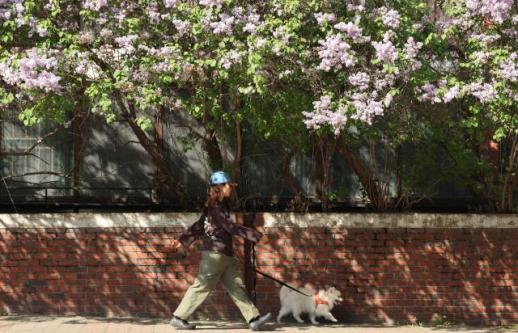 Spring gives way to early summer heat SEOUL, April 16 (AJP) - This year's spring, which had only just begun, has suddenly disappeared, giving way to early summer heat this week, with daily highs hovering above 20 degrees Celsius nationwide. According to the Korea Meteorological Administration (KMA), temperatures in most parts of Seoul and the surrounding metropolitan area soared to 27 degrees Celsius on Thursday, marking one of the warmest levels recorded for April. The unusually high temperatures, compared with seasonal averages, are expected to last through this weekend. 2026-04-16 17:30:42
 -
 Mimiirose’s Yoon Ji-a Leaves Group, Ends Agency Contract Yoon Ji-a has left the girl group Mimiirose. In a post on social media on the 15th, Yoon said she recently departed Mimiirose and that her contract with the agency has also ended. She said the decision came after she and the other members spent ample time thinking it over and talking. She apologized for the sudden news, saying she believed it likely surprised the group’s fans, known as “Blueme.” Yoon said the time she spent with Blueme was a major source of strength and something she will cherish for a long time. She added that she will never forget seeing Blueme from the stage. She said she is working to be able to stand in front of Blueme again in some form, and encouraged fans to find small, everyday happiness in their own ways. Yoon debuted in 2022 as a member of Mimiirose, a girl group under Yes I Am, an agency founded by Lim Chang-jung. In 2024, she and the other members moved to Pocket7 Entertainment, but she is leaving the group two years later.* This article has been translated by AI. 2026-04-16 16:51:15