

Journalist

Chang SeongWon
-
 Han Kang’s ‘We Do Not Part’ sales surge after NBCC award Han Kang’s novel We Do Not Part won the National Book Critics Circle (NBCC) award on March 27, fueling renewed interest in the author and a sharp jump in sales. Online bookseller Yes24 said sales of the title rose 407% from 9 a.m. to noon after the award news broke, compared with the previous day’s total. Kyobo Book Centre reported sales were up 4.4 times as of 2 p.m., compared with the day before. The surge also reshaped bestseller lists. On Yes24, the book climbed to No. 5 on the real-time “Korean books” chart and No. 2 in the “novels, poetry and plays” category. After the NBCC selected the English edition translated by Lee Yewon and Paige Morris, the U.S. edition also rose to No. 6 on Yes24’s real-time “foreign books” list. On Kyobo’s real-time bestseller list, the title ranked No. 4. A Yes24 official said, “Following the Nobel Prize in Literature, another global award has kept readers’ interest going,” adding that demand is also rising among readers who want to read the work in English. The official added that it was “the first win for a Korean-language original novel,” and the second such achievement for a Korean author since poet Kim Hye-soon won in the poetry category in 2024 for Wing Phantom Pain. Publishers said Han’s latest award could keep interest in literature elevated for some time, with expectations that momentum will lift the broader fiction market. Kyobo said Han’s novel Human Acts was the overall bestseller No. 1 for two straight years in 2024 and 2025. Major bookstores rolled out promotions. Kyobo is running an event that will select 100 members who leave congratulatory messages and give each a 1,000-won Kyobo e-gift certificate. Yes24 said it will offer gifts, including a hardcover notebook made with the award-winning book’s cover illustration, to customers who buy Han’s works during a congratulatory comment event, and will also select 300 members who leave comments to receive YES points. Readers posted reactions such as, “Thank you to Han Kang for bringing good news in an anxious time marked by war,” and “Good writing is recognized by everyone.” 2026-03-27 15:45:18
 -
 Gulf Crisis, One Month On: Asia learns to wean itself off US Editor's Note: One month into the Iran war, a conflict that began in the Middle East is rapidly evolving into a broader economic and strategic shock for Asia, and in this special series, AJP examines those spillovers in full — from a comprehensive overview of Asia-wide shocks to industrial realignments, the mounting risk of a third oil shock, and rising security tensions — as the central question shifts from how the war unfolds in the Middle East to how deeply its consequences will be embedded across Asia. SEOUL, March 27 (AJP) - For decades, the American security umbrella underpinned stability in Asia. But in the first month of the U.S.-Iran war, that foundation has begun to shift. Amid a global surge in military spending, Asia’s leading economies are no longer waiting for Washington — they are bracing for a future where self-reliance is the only reliable guarantee of security. Since the late-February U.S.-Israel offensive, the conflict has reached a grim milestone: more than 3,000 dead, 15,000 targets struck, and a near-total paralysis of the Strait of Hormuz. Costs have climbed rapidly, surpassing an estimated $18 billion and rising by roughly $500 million a day. This anxiety is reflected in global arms flows. According to the Stockholm International Peace Research Institute (SIPRI), the volume of major arms transfers between 2021 and 2025 rose 9.2 percent from the previous five-year period, marking the sharpest increase in a decade. “It is common sense that the momentum of military buildup will persist long after the conflict ends,” said In Nam-sik, professor at the Korea National Diplomatic Academy. “For Gulf nations, no amount of economic prosperity can compensate for a collapse in national security. That existential fear drives them to spare no expense.” While the Middle East confronts immediate threats, East Asia is responding with more measured but accelerating adjustments. Long accustomed to chronic tensions, the region is now reassessing the durability of its alliances. “In East Asia, we are not seeing a sudden spike, but a steady and broad intensification of defense spending,” In said. “The key variable is the United States. Countries are beginning to internalize that American involvement may not be as steadfast as before. Preparation for reduced dependency is now essential.” That reassessment has been sharpened by Washington itself. As the United States presses allies for greater burden-sharing — including naval participation in securing the Strait of Hormuz — its latest 2026 National Defense Strategy signals a shift toward prioritizing homeland defense and Indo-Pacific deterrence, with partners expected to assume greater responsibility elsewhere. Recent rhetoric has reinforced that perception. President Donald Trump, in an Oval Office briefing, openly questioned allied “enthusiasm” for joint deployments, underscoring a more transactional approach to security commitments. In South Korea, this shift is accelerating long-standing debates over military sovereignty. President Lee Jae Myung has reiterated the need for “self-reliant defense,” including the transfer of wartime operational control (OPCON), currently held by the United States, by 2028. The urgency became tangible during the early weeks of the Iran conflict, when key U.S. assets — including THAAD batteries and ATACMS systems — were reportedly redeployed from the Korean Peninsula to the Middle East, exposing what officials described as a temporary “hardware gap.” “There is no better strategic location for the U.S. than South Korea to keep China and Russia in check,” said Koh Yu-hwan, former president of the Korea Institute for National Unification, pointing to Seoul’s leverage even as it seeks greater autonomy. Japan is undergoing a similarly profound shift. Tokyo has approved a record 9 trillion yen ($56.4 billion) defense budget for fiscal 2026, part of a five-year plan that would make it the world’s third-largest defense spender. Its growing investment in long-range strike capabilities marks the most significant military pivot since World War II. China, meanwhile, has avoided direct entanglement, opting instead for strategic patience. Analysts say Beijing views U.S. involvement in the Middle East as an opportunity to consolidate its position in the Indo-Pacific, particularly around Taiwan. India is moving along a parallel path. Facing persistent tensions with China and Pakistan, New Delhi is accelerating its push for defense self-reliance, with calls to raise military spending to 2.5 percent of GDP. “From Ukraine to the Middle East, we are witnessing a chain reaction of global instability,” said Air Marshal Anil Chopra, former Director-General of the Center for Air Power Studies in New Delhi. “These crises are a wake-up call for regional powers to expand defense spending and fast-track self-reliance.” Across the Indo-Pacific, the conclusion is increasingly clear: there is little time left to wait for stability elsewhere. Asia is emerging simultaneously as a major arms supplier and a primary arena for military buildup. China and South Korea now rank among the world’s top 10 arms exporters, while regional demand continues to surge. Japan’s arms imports have jumped 76 percent, and India remains the world’s second-largest importer. At the same time, dependence on foreign weapons is declining. Imports by China, South Korea and India have all fallen, reflecting growing domestic production capacity and a structural shift toward self-sufficiency. What was once a strategic preference is becoming a necessity. In a world where security guarantees are no longer absolute, Asia is no longer waiting. 2026-03-27 15:45:01
 -
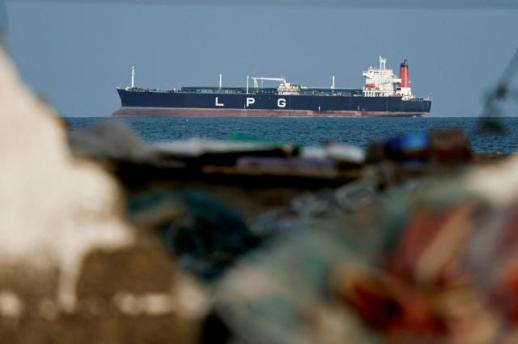 Gulf Crisis, One Month On: Seoul fending off stagnationary pressure with few options Editor's Note: One month into the Iran war, a conflict that began in the Middle East is rapidly evolving into a broader economic and strategic shock for Asia, and in this special series, AJP examines those spillovers in full — from a comprehensive overview of Asia-wide shocks to industrial realignments, the mounting risk of a third oil shock, and rising security tensions — as the central question shifts from how the war unfolds in the Middle East to how deeply its consequences will be embedded across Asia. SEOUL, March 27 (AJP) -A crisis is simmering - with the won revisiting levels seen during the global financial crisis and bond yields nearing 4 percent even as the base rate remains anchored at 2.5 percent - but Seoul authorities have few firefighting tools left. Even before the United States and Israel launched strikes on Iran in late February, Seoul authorities were struggling to defend the won, pressured by a persistent preference for dollar-denominated assets. The volatility in oil prices following the blockade of the Strait of Hormuz has since rendered much of the country’s reshoring efforts ineffective. Since the invasion began on Feb. 28, Iran’s Islamic Revolutionary Guard Corps (IRGC) has effectively maintained a near-total blockade of the strait, cutting off a critical transit route for crude oil and liquefied natural gas. The Dubai crude has surged to $130 per barrel, more than doubling from $60 at the start of the year, while Brent crude has risen over 40 percent to trade near $100. Asian economies, led by South Korea, are bearing the brunt of the shock. As of January 2026, 70 percent of South Korea’s crude oil imports originated from countries reliant on the strait — including Saudi Arabia, Qatar, the UAE, Kuwait and Iraq — far exceeding China’s dependency of 48 percent. The impact has quickly filtered through to the real economy. Retail prices for gasoline and diesel have risen sharply, while the government’s “emergency maximum price system” has struggled to contain the surge. A revised price ceiling set at 1,930 won per liter — more than 200 won higher than the initial cap — points to the limits of administrative controls and signals a de facto policy retreat. The semiconductor industry is also under strain. South Korea relies on Qatar for 65 percent of its helium supply, a critical input for chip etching processes, raising the risk of disruptions to high-tech manufacturing lines if the blockade persists. According to the Woori Finance Research Institute, if Brent crude averages $100 per barrel for a full year, South Korea’s GDP growth could fall by 0.55 percentage points while consumer prices rise by 0.76 percent. The Hyundai Research Institute warned that if prices exceed $150, growth could slow to near zero. Heightened complexity, deeper impact While South Korea has navigated geopolitical crises before, experts say the current situation is fundamentally different in both scale and structure. Unlike the COVID-19 pandemic — which reduced demand while leaving shipping lanes largely intact — the Hormuz blockade disrupts a vital artery handling more than 20 percent of global trade. The closest historical parallel is the oil shocks of the 1970s, when crude prices surged from $3 per barrel in 1973 to $39 in 1980, nearly doubling gasoline prices domestically. Yet even those shocks, analysts note, were less severe in their immediate supply impact. “What makes the current situation structurally distinct from prior oil shocks is the simultaneous disruption of liquefied natural gas,” said David Bieri, professor at Virginia Tech. “The strait carries not just oil, but also fertilizers and high-tech supply chains — compounding the shock in ways not seen in earlier crises.” Fatih Birol, executive director of the International Energy Agency, echoed that view, noting that current supply losses exceed those seen during past oil crises combined. Domestic policy responses are further constrained by structural vulnerabilities. Household debt, which surpassed 1,852 trillion won in late 2025, limits the scope for aggressive monetary tightening without risking broader financial instability. “Monetary policy must carefully consider the household debt situation to maintain mid- to long-term financial stability,” said Jang Jeong-su, deputy governor general at the Bank of Korea, acknowledging the “force majeure” constraints facing policymakers. Market interventions fueling distrust Despite the gravity of the situation, repeated government interventions — including verbal warnings, foreign exchange operations and a 5 trillion won bond buyback — have done little to stabilize market sentiment. The won has weakened sharply, falling nearly 5 percent since the start of the year and underperforming most regional peers. Bond yields have also climbed, with the 10-year Korea Treasury Bond approaching levels last seen during the peak of U.S. monetary tightening. International institutions have raised concerns over the ad-hoc nature of Seoul’s policy response. “South Korea’s aggressive market interventions risk undermining the predictability of its financial markets,” the Atlantic Council said in a recent report, warning that reliance on short-term measures could erode long-term institutional credibility. Experts have also flagged concerns over fuel subsidy policies. “When supply risks occur, demand must also be adjusted. Setting a price ceiling sends the wrong signal by encouraging continued consumption despite the crisis,” said Kim Hyung-gun, an economics professor at Kangwon National University. The Carnegie Endowment for International Peace similarly warned that expanded subsidies are crowding out social spending and delaying structural reforms that were only viable under more favorable external conditions. 2026-03-27 15:28:45
 -
 Fine dust advisory issued as smog blankets Seoul SEOUL, March 27 (AJP) - An ultrafine dust advisory was issued for Seoul and surrounding areas on Friday, as heavy smog carried by northwesterly winds blanketed the capital, with fine dust levels exceeding 81 ㎍/㎥, according to the Korea Environment Corporation. Such an advisory is issued when PM2.5 concentrations exceed 75 ㎍/㎥ for more than two consecutive hours. The elderly, children, and those with respiratory or cardiovascular diseases are advised to refrain from outdoor activities. Even healthy adults are encouraged to limit time outdoors and wear masks when going outside. Ultrafine particles, roughly one-thirtieth the thickness of a human hair, can penetrate deep into the lungs without being filtered, posing serious health risks. 2026-03-27 15:22:11
 -
 Gulf Crisis, One Month On: Asia turns to coal to keep factories and crackers running Editor's Note: One month into the Iran war, a conflict that began in the Middle East is rapidly evolving into a broader economic and strategic shock for Asia, and in this special series, AJP examines those spillovers in full — from a comprehensive overview of Asia-wide shocks to industrial realignments, the mounting risk of a third oil shock, and rising security tensions — as the central question shifts from how the war unfolds in the Middle East to how deeply its consequences will be embedded across Asia. SEOUL, March 27 (AJP) - As the energy crisis triggered by the blockade of the Strait of Hormuz drags on, the collateral damage has spilled well beyond oil and gas. From South Korea — where hoarding has driven up prices of plastics, paint, cement and even garbage bags — to Southeast Asia, governments are declaring energy emergencies and reverting to stopgap measures such as restarting coal-fired power plants, risking lasting carbon footprints in a region that already accounts for more than half of global emissions. At the core of the disruption lies naphtha, the petrochemical feedstock underpinning a wide range of industrial production. Prices have surged about 73 percent since early January, while ethylene — the basic building block of plastics — has doubled, reflecting both supply disruptions and panic buying. With supplies tightening, Seoul has moved into what it calls "wartime" management. The government imposed a temporary ban on naphtha exports, mandated daily reporting of inventories and shipments, and warned against hoarding, with the power to intervene directly in corporate stockpiling if necessary. "Supply itself has been cut off, halting production entirely," said Jung Jun-hwan, a senior researcher at the Korea Energy Economics Institute, warning that shutdowns could spread across industries where raw material costs account for a large share of total expenses. The strain is already cascading. Paint makers have raised prices by up to 55 percent, cement producers are grappling with a tripling in urea costs, and freight surcharges have climbed as much as 50 percent. Across manufacturing supply chains — from autos to shipbuilding — firms are scrambling to secure dwindling petrochemical inputs. Industry groups warn of a potential "April shutdown cascade," as smaller firms are priced out by larger competitors stockpiling limited supplies. Even garbage bags have emerged as a symbol of the disruption, prompting government reassurances over inventory levels. In a sign of how far policy boundaries are shifting, the United States has allowed South Korea to pay for Russian oil products, including naphtha, in non-dollar currencies without triggering secondary sanctions — reopening supply routes once closed after the Ukraine war. The shock, however, is regional. Across Asia, governments are rolling back energy transition policies to secure immediate supply. South Korea is lifting caps on coal generation and accelerating nuclear restarts, while Japan is releasing record emergency oil reserves. The Philippines has declared a national energy emergency, and countries including Thailand, Indonesia and India are turning back to coal to meet surging demand. Some economies have gone further, introducing four-day workweeks to curb fuel consumption. The result is an energy policy reversal that could push regional carbon emissions up by an estimated 5 to 8 percent in the short term, even as longer-term dynamics point in the opposite direction. Analysts say the crisis is reinforcing the strategic vulnerability of fossil fuel dependence. "The most viable escape from a world where geopolitical instability dictates energy prices is clean energy," said Kim Do-hyun, a senior analyst at Samsung Securities, noting that while fossil fuel use may rise in the near term, the relative appeal of renewables and nuclear power will strengthen over time. For now, however, the immediate pressure is mounting. With petrochemical plants running at minimum rates and inventories measured in days rather than weeks, the window to prevent broader industrial disruption — and a deeper economic shock across Asia — is narrowing fast. 2026-03-27 15:07:35
 -
 South Korea marks 11th anniversary for fallen naval heroes SEOUL, March 27 (AJP) - A ceremony marking the 11th anniversary of a joint commemoration honoring victims of naval incidents in the West Sea was held in Daejeon on Friday. South Korea has observed the fourth Friday of March as a day of remembrance, holding annual ceremonies since 2016 to honor victims of naval incidents and skirmishes with North Korea including a naval battle near the border island of Yeonpyeong in June 2002, the sinking of the corvette Cheonan in March 2010, and the shelling of the same island in November 2010. About 1,500 people attended including President Lee Jae Myung, the bereaved families of the fallen sailors, their surviving crewmembers, military officials and war veterans as well as residents of five northernmost islands near the Northern Limit Line (NLL), a de facto maritime border with North Korea. In his speech, Lee vowed, "The sacrifices of those who died defending the country will not be forgotten." 2026-03-27 14:54:44
 -
 KBO League to Allow “Torpedo” Bats, Add Asia Player Slot and Shorten Pitch Clock in 2026 The 2026 KBO League regular season is set to open in one day after exhibition games wrapped up. The Korea Baseball Organization has overhauled rules to strengthen competitive fairness and deliver a faster-paced product. At the plate, the league will allow so-called “torpedo” bats for the first time. The KBO also removed an exception that had allowed bats not distributed through certified vendors if they were approved for Major League Baseball or Japan’s NPB. Instead, the KBO will allow additional bat certification during the season through Aug. 31, using the same process as the regular January application period. The newly introduced Asia quota system is expected to be the biggest variable this season. Designed to boost league competitiveness and ease foreign-player recruitment, it allows each club to sign one player from an Asian league — including Australia — for up to $200,000, with no position restrictions. Dual nationals from non-Asian countries are not eligible. Clubs can now carry four foreign players: the existing three plus one Asia-quota player. All four may appear in the same game. Nine of the 10 teams used the slot on a pitcher. The only club to sign a position player was the KIA Tigers, who added Australian infielder Jared Dale. By nationality, Japan accounts for seven players, Australia two and Taiwan one. The league is also pushing to shorten games. The pitch clock in the top division has been reduced by two seconds: pitchers must deliver within 18 seconds with the bases empty and 23 seconds with runners on. The Futures League will operate the same as last year. To speed and improve officiating, first- and second-base umpires will use wireless intercoms, allowing them to communicate with the replay center and handle in-stadium announcements without moving. Replay review has been expanded to include “strategic overruns” at second and third base. A new authority also allows officials to correct an obvious error on a different play not requested by a club during a review. Base-running interference rules have been tightened. If interference occurs on a pickoff play, the runner will be awarded one base rather than being sent back. Penalties for illegal defensive shifts were clarified, including charging an error to the fielder who first touches a ball in play. For consistent rulings, the foul-line width at all parks was standardized at 4 inches (10.16 centimeters). Player-protection measures were also updated. Injuries occurring after the start of exhibition play can be placed on the injured list if the move is made within three days of the Opening Day roster announcement. Players who apply for an extension can return to the active roster without waiting 10 days, easing roster strain. Doubleheaders were tightened as well. They may be scheduled only from April 12 to May 31, and back-to-back weeks of doubleheaders are prohibited. A Sunday doubleheader will be played as two nine-inning games only when a Saturday game is canceled, and teams may add two special roster spots for that day only.* This article has been translated by AI. 2026-03-27 14:54:00
 -
 Gulf Crisis, One Month On: From Gulf battleground to shockwaves across Asia Editor's Note: One month into the Iran war, a conflict that began in the Middle East is rapidly evolving into a broader economic and strategic shock for Asia, and in this special series, AJP examines those spillovers in full — from a comprehensive overview of Asia-wide shocks to industrial realignments, the mounting risk of a third oil shock, and rising security tensions — as the central question shifts from how the war unfolds in the Middle East to how deeply its consequences will be embedded across Asia. SEOUL, March 27 (AJP) - The immediate battlefields may be in the Gulf, but the war’s toll has landed heavily on Asia, as regional economies scramble to survive without Middle Eastern fuel while the critical chokepoint of the Strait of Hormuz remains effectively closed for a month. The shock in South Korea has spilled beyond capital markets. Gas stations saw lines stretch until midnight ahead of the lifting of a temporary price cap on Friday, even as the government rolled out sweeping “wartime” measures — from extended fuel tax cuts and sovereign bond buybacks to a ban on naphtha exports and emergency supplementary budgeting. Consumers are hoarding trash bags and delivery containers amid fears of a plastic shortage after a domestic cracking facility halted operations due to naphtha supply disruptions. More than 70 percent of South Korea’s energy imports come from the Middle East, and over 90 percent of that oil passes through the Strait of Hormuz — a route now at the center of geopolitical risk. While Seoul holds one of the world’s largest strategic reserves — enough for more than 200 days when combined with private stockpiles — the immediate economic shock has proven difficult to contain. The impact is more pronounced in emerging Asian economies with far thinner buffers. The war, triggered by U.S. and Israeli airstrikes on Iran on Feb. 28, has effectively choked off one of the world’s most vital energy arteries. Roughly a fifth of global oil consumption and a similar share of LNG trade typically pass through the Strait of Hormuz. The disruption has been compounded by direct damage to supply. Qatar, the world’s second-largest LNG exporter, has lost 17 percent of its export capacity following Iranian attacks, with recovery expected to take up to five years, according to QatarEnergy CEO Saad al-Kaabi. Asia buys about four-fifths of Qatar’s LNG — a share that has increased further since sanctions on Russia following its invasion of Ukraine. In Southeast and South Asia, the crisis has rapidly escalated from an energy shock into a broader economic emergency. The Philippines has declared a “national energy emergency,” warning of imminent fuel shortages as gasoline and diesel prices surge. The country relies on the Middle East for over 90 percent of its crude imports, while its reserves cover just 45 days of demand. Pakistan faces even deeper vulnerabilities. With 99 percent of its gas imports sourced from Qatar, authorities have warned that shortages could disrupt electricity supply within weeks, threatening its export-critical textile sector. In Laos, more than 40 percent of gas stations have shut down, prompting school closures and remote work policies. Cambodia has seen a third of its stations suspend operations, while Thailand is grappling with fuel shortages severe enough to disrupt farming and even halt cremations at temples. Cremation is the standard funeral practice in the country, and the abbot of Wat Saman Rattanaram temple said in an interview, “In my 50 years, I have never seen anything like this.” In India, shortages of cooking gas have reportedly triggered street clashes, while restaurants and hotels are closing temporarily. Thailand is no different. The Bangkok Post reported on March 22 that despite the rice harvest season, farmers are struggling due to a lack of fuel for harvesting machinery and transport trucks. Panic buying has spread at gas stations, and rising fuel prices have sharply increased the cost of essential goods such as palm oil and bottled water. In Myanmar, the impact has been even more severe. Authorities have implemented an odd-even vehicle rationing system, while the military government has introduced fuel rationing as gasoline prices have doubled. While South Korea and Japan hold strategic reserves well above the International Energy Agency’s recommended 90 days, countries such as Indonesia and Vietnam have stockpiles lasting just 20 to 23 days. Unlike crude oil, LNG lacks a global reserve system due to the high cost of storage, leaving many Asian economies reliant on just-in-time imports. Shipping costs for LNG carriers have more than doubled since the war began, forcing countries such as Vietnam and the Philippines to suspend purchases altogether. "On the one-month anniversary of the war in Iran, its impact on the global economy has been severe, with developing countries suffering the most,” said John Kirton, Professor Emeritus at the University of Toronto. “Almost all countries around the world have suffered in many ways, starting with rising prices and dwindling supplies of Middle Eastern oil, natural gas, helium, sulphur, and chemicals,” he said, noting the spillover into food, medical supplies, and critical minerals. Kirton warned that the crisis is evolving into a macroeconomic threat. “We are looking at a potential 1% reduction in global growth, inflation rising toward 5%, and the growing risk of stagflation,” he said. The burden, however, is not evenly shared. “These countries are being hit hardest due to high debt burdens, limited fiscal capacity, and reduced international aid,” Kirton added, pointing to rising food prices, weakening currencies, and growing political instability. Andreas Rasche of Copenhagen Business School framed the divide as structural. “Many of them are highly dependent on imported energy and food, so price increases hit faster and harder,” he said. “At the same time, they have far less fiscal and monetary space to respond.” Richer economies like South Korea retain greater policy flexibility, stronger institutions, and in some cases strategic reserves that cushion the immediate blow. Yet even for them, the crisis is exposing a deeper vulnerability. For decades, the global economy has depended on a narrow waterway that carries nearly every barrel exported from Saudi Arabia, Kuwait, Iraq, Qatar and the United Arab Emirates. As long as that dependency persists, the shockwaves now rippling across Asia may not be a one-off crisis — but a recurring fault line in the global energy system. 2026-03-27 14:39:54
 -
 South Korea honors fallen sailors of naval skirmishes in West Sea SEOUL, March 27 (AJP) - South Korea honored some 50 sailors and other victims who died defending the maritime border in the West Sea at a ceremony in Daejeon on Friday. About 1,500 people gathered at Daejeon National Cemetery to mark the 11th anniversary of a joint commemoration honoring victims of naval incidents and skirmishes with North Korea including a naval battle near the border island of Yeonpyeong in June 2002, the sinking of the corvette Cheonan in March 2010, and the shelling of the same island in November 2010. The country has observed the fourth Friday of March as a day of remembrance, holding annual ceremonies since 2016 to honor those who gave their lives defending the nation. Among those in attendance were President Lee Jae Myung, the bereaved families of the fallen sailors, their surviving crewmembers, as well as military officials and veterans. In his speech, Lee vowed to ensure that the "blood and sweat shed by our heroes" would not be forgotten and prayed for their "eternal rest." He also offered condolences to families who "buried loved ones in their hearts" and thanked veterans living with "wounds and memories," saying, "Because you are here, South Korea stands firm today." Pledging proper treatment and compensation for those who served and sacrificed for the country, Lee said monthly payments will be handed out to spouses of war veterans to support their livelihoods, starting from May. He also promised that the number of medical institutions accessible to veterans and other national merit recipients would be increased to 2,000 nationwide by 2030, adding that "those in uniform" can serve their duties with greater pride. He said building a peaceful Korean Peninsula, free from the fear of war, is the legacy the West Sea heroes left behind. 2026-03-27 14:36:37
 -
 South Korea Policy Lenders Form ‘One Team’ to Expand Productive Finance Major South Korean policy finance institutions agreed to step up cooperation to expand what they call “productive finance,” aiming to channel more private capital into innovation industries amid overlapping risks such as rising global protectionism and instability in the Middle East. Korea Development Bank said it held a meeting on March 27 at its headquarters in Seoul with the Industrial Bank of Korea, the Korea Credit Guarantee Fund, the Export-Import Bank of Korea, the Korea Trade Insurance Corp. and the Korea Technology Finance Corp., and signed a memorandum of understanding. The institutions selected seven core joint initiatives to support government policy goals, focusing on expanding productive finance, strengthening cooperation with the National Growth Fund and increasing regional finance to back locally led growth. They also agreed on ways to work together. The seven areas are: expanding productive finance support and leading private finance; supporting the successful operation of the National Growth Fund; expanding regional finance for locally led growth; supporting ventures and startups through closer links among venture platforms; creating joint funds to strengthen the innovation ecosystem; building a system to foster climate tech; and boosting the competitiveness of small and midsize companies. Park Sang-jin, chairman of Korea Development Bank, said the institutions formed a “one team” to pool their capabilities and expand productive finance support “amid a complex crisis,” adding that they would serve as a catalyst for private money to flow into innovation industries and would also expand the scale of regional finance operations to drive locally led growth. Jang Min-young, president of the Industrial Bank of Korea, said combining the institutions’ expertise “organically” could help lead a successful shift toward productive finance despite domestic and external uncertainty and further strengthen the growth foundation for South Korean industries and companies. The consultative body was set up as a follow-up to instructions given in January by Lee Eok-won, chairman of the Financial Services Commission, during a work report by public and affiliated agencies under the commission. Park said that while the commission had called for three organizations to form a consultative group, he believed it was more important for all institutions involved in productive finance to gather and cooperate. Addressing criticism that projects promoted by KDB were being prioritized, Park said the basic principle was fairness. He added that he preferred reviewing regional projects first in the interest of balanced regional development, and said that could lead to misunderstandings. Separately, Park said that regarding the scale of damage to South Korean companies from the recent Hormuz situation, large companies had not prepared specific answers because they expected it to end quickly, but were now tallying losses and appeared likely to request financial support.* This article has been translated by AI. 2026-03-27 14:30:11