

Journalist

Chang SeongWon
-
 Han Kang’s ‘We Do Not Part’ wins National Book Critics Circle Award Han Kang, who won the 2024 Nobel Prize in Literature, has received the National Book Critics Circle Award for her novel We Do Not Part, the English-language edition of her Korean novel Jakbyeolhaji Anneunda. It is the first Korean-language novel to win an NBCC award. The National Book Critics Circle said it selected We Do Not Part, translated by E. Yaewon and Paige Morris, as the winner in the fiction category at its awards ceremony for books published in 2025, held March 26 local time in New York. It is the second time a work by a South Korean author has won an NBCC award, following poet Kim Hyesoon’s 2024 win for her collection Phantom Pain Wing. The NBCC award is considered one of the leading U.S. literary prizes, along with the Pulitzer Prize and the National Book Award. Critics working in U.S. media and publishing select the best books published in English each year across six categories: fiction, nonfiction, biography, autobiography, poetry and criticism. Announcing Han’s win, the NBCC cited the novel’s delicate portrayal of trauma left by the Jeju April 3 incident and called it “a meditation on creation and truth amid loss.” It added, “This artistic novel conjures a strange atmosphere and leaves an overwhelming, dreamlike afterimage.” Han did not attend the ceremony. In remarks read by her publisher’s editor, she thanked the translators “for creating an astonishing connection from my mother tongue, Korean, into English.” She added, “I still want to believe there is a flickering light within us,” and said she hopes people “hold fast to that light and move forward.” Heather Scott Partington, chair of this year’s fiction judging panel, told The New York Times the novel stands out for its “dazzling melancholy, desolate weather and whisper-like prose,” adding that it “lingers for a long time like an intense dream.” Major U.S. outlets also highlighted the win and described the Jeju April 3 incident as a democratization movement on Jeju Island, south of the Korean Peninsula, in which thousands were killed, while noting the historical context behind the novel. Jakbyeolhaji Anneunda is Han’s first novel in five years since she won the International Booker Prize in 2016 for The Vegetarian. Along with The Vegetarian and Human Acts, it is considered one of her signature works. The novel depicts the tragedy of the Jeju April 3 incident through the perspectives of three women, following the protagonist, Gyeongha, as she visits a friend, Inseon, at her home on Jeju after Inseon suffers an accident in which a finger is severed, and traces the painful past of Inseon’s mother, Jeongsim. The novel won the Medicis Prize for foreign literature in November 2023, the first time a Korean work received the award, and also received the Emil Guimet Prize for Asian Literature. The Japanese edition’s translator and poet, Mariko Saito, won the Yomiuri Prize in the research and translation category. Publishers said Han’s latest award could help sustain a surge of interest in literature following her Nobel win, with expectations that fiction will continue to gain ground. Kyobo Book Centre said Han’s novel Human Acts ranked No. 1 overall on its bestseller list for two consecutive years, 2024 and 2025, as sales of fiction rose sharply. Han is also set to take part in the Korean Pavilion at the Venice Biennale in May. Invited as a fellow, she will present a sculpture. Artist Noh Hyeri, one of the participating artists, said Han created a sculpture titled “Funeral” that is scheduled to be shown with her work, adding, “A community not only saved people, it also killed many people. We will talk about that.” Noh said “Funeral” is a sculptural realization of a dream scene that became a motif for We Do Not Part. Two anthologies to be published in place of a catalog will include Han’s writing, including pages 1 and 2 of We Do Not Part. Han is not expected to attend the exhibition opening, the report said. 2026-03-27 10:34:17
 -
 KBS ‘Music Bank’ Announces Lineup Featuring Kangmin, Yuna, Baby DONT Cry and Moon Byul KBS has announced the lineup for its music show “Music Bank.” The KBS2 program airing Friday afternoon will feature AB6IX, ALL(H)OURS, AmbiO, AtHeart, Baby DONT Cry, cosmosy, CSR and DIGNITY. Also set to appear are H1-KEY, NouerA, ODD YOUTH, RED OOPART, V01D, YENA (Choi Ye-na), Gamseong Dansokban, Kangmin, Moon Byul, S2IT and Yuna (ITZY). Kangmin and Yuna are scheduled to perform their “hot debut” stages on the show. Baby DONT Cry and Moon Byul will return with comeback performances. Hosted by Kim Jae-won and Bang Ji-min, “Music Bank” airs every Friday at 5:05 p.m. * This article has been translated by AI. 2026-03-27 10:12:09
 -
 Korean Inc. gloom deepens under war-driven scourges SEOUL, March 27 (AJP) - Pessimism deepened across the Korean Inc. in March as businesses grappled with worsening trade conditions, a sharply weaker won and rising energy costs stemming from the monthlong conflict in the Middle East. According to the Bank of Korea on Friday, the all-industry composite business sentiment index (CBSI) stood at 94.1 in March, down 0.1 point from the previous month. A reading below 100 means pessimists outnumber optimists. The reading also fell far short of the BOK's February projection of 97.6, missing the forecast by 3.6 points. Manufacturing sentiment was unchanged at 97.1, but still below the expected 98.9. More worrying was the outlook for April, which fell 3 points to 95.9, the steepest monthly drop in 14 months since January 2025. The deterioration was more pronounced among small and medium-sized enterprises. While the outlook for large firms edged down 0.9 point to 98.7, sentiment among SMEs plunged 2.7 points, underscoring their greater vulnerability to rising costs and supply-chain disruptions. The BOK said gains of 0.6 point each in production and new orders were offset by a 0.6-point drop in inventory conditions and a 0.4-point decline in funding conditions. The data also showed a widening gap between exporters and domestic-oriented firms. Sentiment among exporters rose 1.2 points to 103.1, staying above 100 for a third straight month. By contrast, sentiment among import-reliant domestic businesses stood at just 94.5. "Exports of semiconductors, automobiles and steel products remained solid in the first 20 days of March, partially offsetting the initial impact of the Iran war," Lee Heung-hoo, head of the BOK's economic sentiment survey team, said. He warned, however, that the impact of the Middle East conflict is likely to become more visible in April, further darkening the manufacturing outlook. Non-manufacturing sentiment stood at 92.0, well below the February projection of 96.8, while the April outlook came in even lower at 91.2. Services were hit particularly hard, with the transportation and warehousing sector posting a CBSI of 93.4, far below the earlier projection of 99. "The blockade of the Strait of Hormuz has caused major disruptions in global logistics, dealing a severe blow to the transportation and warehousing sectors," Lee said. Among manufacturers, the most frequently cited business difficulty was "uncertain economic conditions," at 22.1 percent, up 2.8 percentage points from the previous month. Concern over rising raw material prices more than doubled to 21.0 percent, reflecting higher energy and commodity costs linked to the conflict. While weak domestic demand remained a major complaint at 19.0 percent, it lost its position as the top concern from February's 24.6 percent as geopolitical risks moved to the forefront. The broader economic sentiment index (ESI), which combines business and consumer confidence, fell 4.8 points to 94.0, wiping out all gains made in February and marking the sharpest drop since September 2023. Still, the ESI cyclical indicator — which strips out seasonal and irregular external shocks — edged up 0.4 point to 96.6, suggesting the underlying trend may have improved absent the sudden geopolitical escalation. The survey was conducted from March 12 to 19 among 3,524 companies nationwide, with responses from 3,223 firms, including 1,799 manufacturers and 1,433 non-manufacturers. 2026-03-27 10:05:45
 -
 ADC Drug Development Shifts to Platforms as Linker Technology Becomes Key Edge Antibody-drug conjugate (ADC) development is increasingly shifting from individual drug candidates to platform-based approaches, as companies seek technologies that can be scaled across multiple programs in cancer drug development, where costs and timelines are heavy. According to global market research firm Grand View Research, the ADC market is projected to grow from about $12 billion in 2024 to about $32 billion in 2033. As the market expands, companies that control core technology platforms are gaining value. With tumor-killing efficacy reaching a certain level, precise design to reduce toxicity and improve stability in the body has emerged as a key differentiator. Pfizer moved to secure an ADC platform by acquiring Seagen, an ADC leader, for about $43 billion in 2023. The goal was to obtain an integrated technology system that includes linkers, payloads and manufacturing know-how, rather than a single candidate. Pfizer expects more than $10 billion in revenue from the business by 2030. A platform strategy can also reduce development risk. An industry official said that even if clinical results for a specific candidate fall short, a platform makes it possible to switch to other targets, creating a structural advantage. South Korean drugmakers are also pursuing platform access. Chong Kun Dang Pharmaceutical followed joint ADC discovery research with Netherlands-based Synaffix by securing nonexclusive rights to related platform technology in 2023 for about $132 million. While other companies can also use the platform under a nonexclusive deal, the move is seen as a way to speed development by adopting a validated technology. Synaffix is known for linker technology that precisely attaches payloads at specific sites, and it has signed multiple technology-transfer agreements with global drugmakers including Janssen and Amgen. Chong Kun Dang's candidate CKD-703 targets the hepatocyte growth factor receptor (c-Met) and has received U.S. Food and Drug Administration approval to begin a Phase 1 clinical trial. Dong-A ST acquired ADC specialist Aptis to secure its third-generation linker platform, AbClick. The company aims to accelerate ADC development by combining its antibody research capabilities with Aptis' linker technology. Previously, attaching drugs effectively often required genetically modifying antibodies. AbClick is designed to selectively connect drugs at specific sites without antibody modification. DA-3501, an ADC candidate targeting gastric and pancreatic cancers that applies the platform, is scheduled to enter Phase 1 trials in the first half of this year. Samjin Pharm has also built in-house platforms for ADC development, including OncoStab and OncoFlame, and plans to improve research efficiency through open innovation with Novelty Nobility and APT Bio, companies specializing in antibody drug development. Its gastric and breast cancer treatment candidate SJA21 and immuno-oncology ADC candidate SJA71 are in preclinical stages. As technology advances, competition is also shifting. Han Yong-hee, a researcher at Growth Research, wrote in an ADC industry report that biotech companies with platforms can secure stable cash flow through technology transfers and royalties, while global drugmakers can speed development and diversify portfolios by licensing platforms. He said the ADC market is evolving from competition over new drugs to competition over platforms.* This article has been translated by AI. 2026-03-27 09:57:03
 -
 Nobel laureate Han Kang wins prestigious American literary award SEOUL, March 27 (AJP) - Han Kang, South Korea's first Nobel laureate in literature, has won another prestigious award for her novel "We Do Not Part." Han took home an award at the annual awards ceremony of the National Book Critics Circle (NBCC) in New York on Thursday, which "presents awards for the finest books published in English in six categories" - fiction, nonfiction, biography, autobiography, poetry, and criticism. The fiction honor adds to her growing collection of accolades, which includes the 2024 Nobel Prize in Literature and the 2016 International Booker Prize for "The Vegetarian." "We Do Not Part," first published in 2021 and translated into English by e. yaewon and Paige Aniyah Morris in 2024, tells the story of a woman confronting the emotional scars left by a bloody anti-communist crackdown on Jeju Island in 1948. About 10 percent of islanders were killed during the uprising, many of them civilians with little or no connection to insurgents. Shortly after its release in September 2021, Han described the novel as both a historical account of what occurred on April 3, 1948, and an "intense tale of love." In 2023, the novel already won the Prix Médicis, one of France's most prestigious literary awards, making Han the first novelist to receive the prize, which has recognized foreign works published in translation since 1970. 2026-03-27 09:55:16
 -
 Dongkook Pharm Moves to Develop Generic of Chong Kun Dang Diabetes Drug Duvie Dongkook Pharmaceutical has begun developing a generic version of Chong Kun Dang Pharmaceutical’s diabetes drug Duvie (lobeglitazone). According to the Ministry of Food and Drug Safety on the 27th, Dongkook Pharmaceutical on March 13 received approval to conduct a bioequivalence study for “DKF-457.” Duvie, developed by Chong Kun Dang, is described as South Korea’s first thiazolidinedione (TZD) class diabetes treatment, with annual prescriptions totaling about 20 billion won. TZD drugs once led the diabetes market in the 2000s, but their use declined after cardiovascular side-effect concerns emerged over GlaxoSmithKline’s Avandia (rosiglitazone). Dipeptidyl peptidase-4 (DPP-4) inhibitors later took the lead, and the market is now dominated by DPP-4 inhibitors and sodium-glucose cotransporter-2 (SGLT-2) inhibitors. While TZDs represent a smaller segment today, they continue to be prescribed for certain patients, including those with high insulin resistance or fatty liver disease. Interest has recently returned to combining TZDs with SGLT-2 inhibitors, and the move into TZD generics is being viewed as part of a strategy to broaden options for combination prescribing. Dongkook Pharmaceutical has been seeking to expand its share of the diabetes market in prescription drugs since 2023. It said it has 15 diabetes-related products, including Tenelican, Daplejin, Sitakan and the insulin injection Glazia, along with treatments for chronic conditions that often accompany diabetes, such as hypertension and high cholesterol. A company official said, “At the research stage, the flagship pipeline is DKF-447, a diabetes treatment that has completed product approval, and we plan to continue expanding the diabetes pipeline.” Competition in the Duvie generic market has already begun. Shin Poong Pharmaceutical started development first last year, setting up a race for generics. The substance patent is set to expire March 21 next year. A pharmaceutical industry official said competition is already overheated in markets centered on blockbuster products, adding that companies are expected to keep focusing strategies on areas where they can secure clear market share.* This article has been translated by AI. 2026-03-27 09:45:21
 -
 Ahn So-hee Says She Misses the Stage but Will Focus on Acting Wonder Girls member Ahn So-hee has shared her plans for future work. A video titled “Actor Ahn So-hee” was posted on March 26 to the YouTube channel “Insaeng84.” Ahn said she recently appeared in the play “Geuttaedo Oneul 2,” which ended last month. She said the two-person production was physically demanding, and that she played four roles, calling it a work that required significant energy both physically and emotionally. When Kian84 asked whether she would sing again, Ahn said she has shifted her focus to acting only. She said she does not regret the decision or feel disappointed, but added that she misses it. She said she used to enjoy being onstage for concerts. Ahn said the energy she receives as a singer is different from what she gets in theater, describing theater as quieter and more intensely focused. She said she misses the stage, but that theater has filled much of that, adding that she started doing plays the year before last and has continued without a break.* This article has been translated by AI. 2026-03-27 09:36:15
 -
 South Korea to Cut Generic Drug Pricing to 45% of Brand-Name Level, Industry Warns of R&D Hit The government will lower the benchmark used to set prices for generic drugs to about 45% of the price of original medicines, down from 53.55%. The pharmaceutical industry says the cut, combined with supply uncertainty tied to the Middle East conflict, could curb research and development spending and worsen job insecurity. According to the industry on the 27th, the Health Insurance Policy Deliberation Committee approved the drug-pricing overhaul at a meeting the previous day. It is the first broad revamp since a across-the-board cut in 2012, and the new pricing system is set to take effect in the second half of this year. The Health Ministry said it will phase in the adjustments over 10 years through 2036 to limit the impact on the industry. For drugs already listed, the rollout will be staged based on the listing year, with the first phase covering medicines listed in 2012 and the second phase covering those listed from 2013 onward. The so-called stepwise price cut, previously applied starting with the 20th generic, will be tightened to begin with the 13th generic. The industry has pushed back since the government announced a plan in November to lower generic prices into the 40% range of original drugs. Drugmakers said they could accept a reduction to 48.2%, about 10% lower, but the government proposed lowering the level to “43% or 45%,” leaving the sides at odds. A pharmaceutical company official said concerns have grown because the decision did not settle at 48.2%, adding that the change would begin to weigh on operating profit in earnest starting next year. The official said companies could move beyond cutting costs and selling and administrative expenses to reducing labor costs, raising job insecurity. A small and midsize drugmaker official said an immediate drop in operating profit is unavoidable and that smaller firms, which have limited ability to develop new drugs in the near term, would be hit harder. With raw-material supply instability linked to the Middle East war spreading to the domestic industry, some warned that investment decisions for new-drug development could be halted. A major drugmaker official said operating profit already fell last year and that, considering the coming price cuts, decisions on investment in new-drug development would be “all stop.” The official added that companies’ moves to cut labor costs would also become reality. 2026-03-27 09:09:00
 -
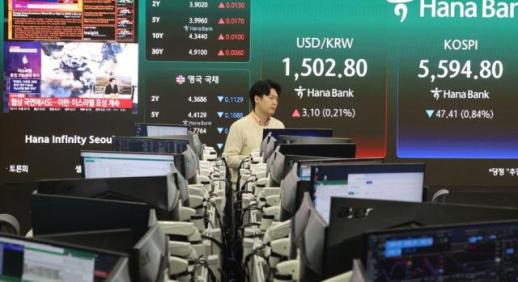 Foreign investors dumped nearly 20 trillion in South Korean stocks last month SEOUL, March 27 (AJP) - Foreign investors offloaded nearly 20 trillion Korean won (US$12.98 billion) worth of South Korean shares last month, extending their selling streak to a second consecutive month, according to data released by the Financial Supervisory Service on Friday. Foreign investors net sold 19.56 trillion won worth of shares - including 19.31 trillion won on the benchmark KOSPI and 239 billion won on the junior KOSDAQ - resulting in a net outflow of 12.13 trillion won in February. They instead shifted toward bonds, snapping up 7.43 trillion won worth for a fourth consecutive month. As of the end of February, foreign investors held 2,026 trillion won worth of listed stocks here, accounting for about 32.6 percent of the market. By country, the U.S. led with 838.19 trillion or 41.4 percent of total foreign holdings, followed by Europe at 31.8 percent, Asia at 13.8 percent and the Middle East at 1.8 percent. Foreign holdings of local bonds, meanwhile, continued to grow, rising 6.8 trillion won from the previous month to 337.3 trillion won, accounting for 12 percent of the total. 2026-03-27 09:01:51
 -
 Singer Lee Ji-hye Says Daughter Moved to Public Kindergarten After English Preschool Closed Singer and TV personality Lee Ji-hye said her younger daughter transferred from an English-language preschool to a public kindergarten after the preschool announced it was shutting down. A video titled “Why Lee Ji-hye’s daughter transferred to a public kindergarten after giving up English preschool? (Early English education)” was posted on March 26 to her YouTube channel, “밉지않은 관종언니.” Lee said she received a notice from the English preschool attended by her second daughter, Ellie, saying the school would close. “Tae-ri (my first daughter) graduated from there, and Ellie naturally went there too, so when I heard it was going away, I panicked,” she said. Lee said the English preschool assigned homework such as reading vocabulary words. She said Tae-ri followed instructions without much difficulty, but Ellie “absolutely didn’t want to do it.” Lee added that she decided it was not the right age to force her to do things she disliked, and began looking into public kindergartens. After Ellie moved to a public kindergarten, Lee said she was pleased with the change. “After switching kindergartens, Ellie started washing her hands on her own, eating on her own, and even learned to greet people,” she said.* This article has been translated by AI. 2026-03-27 08:57:22