

Journalist

Chang SeongWon
-
 Chong Kun Dang CEO Kim Young-joo Pledges Profit Growth, Higher Corporate Value in 2026 Major drugmakers including Chong Kun Dang, Dong-A ST and Ildong Pharmaceutical held annual shareholder meetings on March 26, approving agenda items as proposed, including new director appointments and cash dividends aimed at boosting shareholder value. According to the industry, Chong Kun Dang held its 13th annual general meeting that morning at its headquarters in Chungjeong-ro. Shareholders approved a cash dividend of 500 won per share, equal to 20% of par value. In opening remarks, Chong Kun Dang CEO Kim Young-joo said the company would “deliver profit growth this year” by launching new products on schedule, strengthening product competitiveness and improving market responsiveness. He said it would also raise drug development efficiency through Achela, described as an NRDO (No Research Development Only) specialist, and “increase corporate value” by building a Baegot bio complex development cluster to secure biotech competitiveness. Chong Kun Dang Holdings also held its 71st annual general meeting on March 26. The company reported 2025 consolidated revenue of 959 billion won and operating profit of 58.3 billion won, and approved a cash dividend of 1,400 won per share, equal to 56% of par value. Dong-A ST held its 13th annual general meeting at its headquarters in Seoul’s Dongdaemun district, approving six items as proposed, including approval of financial statements, amendments to the articles of incorporation and director appointments. Shareholders approved a cash dividend of 700 won per common share and a stock dividend of 0.05 shares per share. The meeting also approved a 30 billion won reduction in capital reserves and a transfer to retained earnings to secure funding for tax-exempt dividends. CEO Jeong Jae-hoon said the company is also stepping up investment in digital health care, which he said will be central to future medical technology, and is building a foundation for growth. Dong-A Socio Holdings also held its 78th annual general meeting at its headquarters in Seoul’s Dongdaemun district. Shareholders approved five items as proposed: approval of the 78th financial statements and consolidated financial statements, partial amendments to the articles of incorporation, director appointments, appointment of an outside director who will serve on the audit committee, and approval of the cap on director compensation. They also approved a cash dividend of 1,000 won per share and a stock dividend of 0.03 shares per share. The company said the dividend is tax-exempt and not subject to dividend income tax. Ildong Pharmaceutical and Ildong Holdings each held annual shareholder meetings on March 26 at Ildong Pharmaceutical’s headquarters in Seoul’s Seocho district. Ildong Pharmaceutical CEO Yoon Woong-seop said the company will focus this year, under its management policy of “creating results with competitive advantage,” on generating sales and profit, securing new growth engines and building a sustainable business structure, while strengthening its core businesses such as pharmaceuticals and concentrating capabilities on future growth including R&D. At the meeting, all agenda items were approved as proposed, including approval of financial statements, partial amendments to the articles of incorporation, and the appointment of directors and an auditor. Ildong Holdings also approved its agenda items as proposed, including approval of financial statements reflecting its dividend plan, partial amendments to the articles of incorporation, and the appointment of directors and an auditor. Ildong Holdings CEO Park Dae-chang said the company will continue to pursue management efficiency and reform across group affiliates to strengthen its business foundation and build momentum for growth, adding that it also plans to work to enhance corporate value and increase shareholder returns.* This article has been translated by AI. 2026-03-26 15:33:00
 -
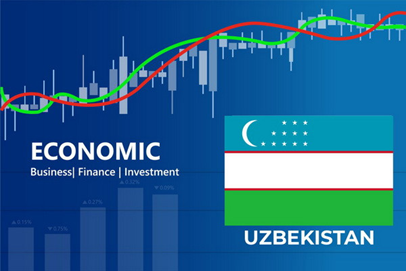 Uzbekistan's business climate signals decoupling from historical stagnation as demand surges SEOUL, March 26 (AJP) - The Center for Economic Research and Reforms in Uzbekistan reported Wednesday that the national business climate reached 65 points in February 2026, an 11-point increase over the previous year. This shift signals a significant decoupling from historical stagnation, marking a fundamental transition in how the private sector navigates the regional economy. The acceleration aligns with a broader macroeconomic surge shown by data from the Statistics Agency of Uzbekistan. The country's GDP growth reached 6.0 percent in 2025 according to World Bank estimates, supported by record gold export revenues and a 10.5 percent growth in fixed asset investments. The February data marks a shift in private sector sentiment, as the composite index for expectations climbed 13 points to 81. This optimism is anchored by expansion in the real economy. 19 percent of enterprises reported increasing their workforce, up from 12 percent a year earlier. These developments suggest that Uzbekistan is moving into a high-velocity growth cycle, where domestic demand is becoming a primary engine. Agriculture has emerged as the vanguard of this expansion, with its sectoral index jumping 29 points to 73. This growth is reinforced by structural shifts, including a zero VAT rate for most agricultural producers that took effect in January 2026. Approximately 52 percent of agricultural entrepreneurs now report rising demand, up from 35 percent in early 2025. This reflects the success of new export corridors and an increase in domestic processing capacity. In the services and construction sectors, indices rose to 61 and 69 points, respectively. Construction activity has remained resilient, with the sector expanding by 14.2 percent throughout 2025. This is mirrored in the labor market, where 27 percent of construction firms expanded their payrolls. The industrial sector, while growing more moderately at 67 points, continues to benefit from a stabilization in energy supply. National utility reforms aim to commission 6.7 GW of new power capacity by the end of 2026, a move that has already led to a decline in the number of firms citing electricity shortages as a barrier to growth. Geopolitical and fiscal stability have supported these figures. Inflation in Uzbekistan was recorded at 8.8 percent over 2025, which provided a more predictable environment for the 61 percent of surveyed entrepreneurs who reported an absence of operational constraints. This is an improvement from the 57 percent recorded just one month prior. The survey highlights emerging friction points as the economy matures. While concerns regarding credit and logistics have receded, entrepreneurs are increasingly citing the cost of land resources and a 7 percent indexation of land and property taxes as rising challenges. Furthermore, tax reforms introduced in early 2026, including a move toward turnover-based taxation for smaller entities, represent a shift in the fiscal landscape. 2026-03-26 15:31:20
 -
 Online P2P lenders seek looser investment caps as cumulative loans near 20 trillion won Online investment-linked finance firms, known as on-tu-eop, are calling for deregulation — including higher investment caps for retail investors — to improve profitability and expand inclusive finance. With cumulative lending nearing 20 trillion won, the sector is increasingly seen as an alternative source of credit, drawing attention to whether talks on easing rules will gain momentum. According to the financial industry, the sector held a policy forum at the National Assembly on March 26 under the theme of measures to revitalize online investment-linked finance. The business connects investors and borrowers through online platforms. Investors participate in loans and earn returns through claims to principal and interest. After the relevant law took effect in 2020, the sector was brought into the regulated financial system. Recently, through linked investments with savings banks, firms have supplied midrate credit loans averaging in the 12% range to borrowers in the bottom 50% of personal credit scores, serving as a channel for working-class lending. At the forum, participants highlighted the need to broaden institutional investor participation and raise investment limits for individuals. Institutional investors are currently capped at 40% of investment per loan. The limit for general retail investors is 40 million won, while products tied to real estate-collateralized loans are capped at 20 million won. Lee Hyo-jin, CEO of 8percent, said the sector differs from traditional banks because it relies on transaction fees rather than net interest margins, meaning higher volume directly supports growth. “If we expand transaction volume through easing investment regulations, a virtuous cycle is possible — more funding supply, lower rates and stronger demand,” Lee said. He added that improving the operating environment is needed to meet policy goals such as spreading inclusive finance and supporting financial innovation. Speakers also called for expanding the scope of loans eligible for linked investment by lending institutions. Lee Jung-min, an attorney at Kim & Chang, said linked-investment products are currently limited to personal credit loans where risk can be managed. “Given the purpose of the On-tu Act to supply midrate financing to blind spots in lending, the scope should be expanded to include loans to sole proprietors, where funding demand is high,” he said. Other proposals included easing limits on on-tu firms’ own-capital investments and restructuring investment frameworks. Financial authorities and some experts urged caution. Jeong Seon-in, director of digital finance at the Financial Services Commission, said investment risks can emerge years later, requiring a careful approach. “Efforts to strengthen qualitative management and build trust must go hand in hand,” Jeong said. Seo Byeong-ho, head of the Financial Innovation Research Division at the Korea Institute of Finance, noted that deregulation such as raising minimum capital requirements was implemented in 2022 and 2023, and said the focus now should be on boosting trust, including stronger disclosure. 2026-03-26 15:24:00
 -
 Seoul deploys "wartime" policy arsenal to fight Gulf shockwaves SEOUL, March 26 (AJP) -South Korea is deploying “all possible” fiscal and policy tools — including a supplementary budget of around 25 trillion won ($18.7 billion), expanded fuel tax cuts and market stabilization measures — as it moves into what the government described as a “wartime” economic response to the prolonged Middle East conflict. “In the face of a grave wartime situation, we will mobilize all policy means and the optimal mix to ensure the hard-won recovery momentum is not derailed,” Deputy Prime Minister for Economy Koo Yun-cheol said in a televised briefing Thursday after an emergency cabinet meeting. The emergency package comes as the conflict enters its fourth week, driving sharp volatility in global oil prices and financial markets, with South Korea particularly exposed due to its heavy dependence on Middle Eastern energy imports. Under the plan, the government will expand temporary fuel tax cuts to 15 percent for gasoline and 25 percent for diesel through May 31, nearly doubled from current reductions, in a bid to cushion rising energy costs. The measures are part of a broader push to stabilize prices and supply chains, while preventing spillovers into vulnerable sectors such as small businesses, farmers and low-income households. To contain inflation and energy price shocks, authorities will maintain a ceiling price system on petroleum products, strengthen market surveillance against collusion and expand subsidies for freight and public transport operators. On the supply side, the government will secure alternative crude and liquefied natural gas sources, including increased imports from the United Arab Emirates and swap arrangements with Japan, while preparing to release strategic reserves in coordination with the International Energy Agency if needed. A crisis-level supply chain task force has also been launched to monitor key items such as naphtha and urea on a daily basis, with emergency financial support and import diversification measures to mitigate disruptions. To support affected businesses, policymakers will expand policy financing by more than 4 trillion won, provide low-interest loans and extend maturities for firms facing liquidity stress, while fast-tracking approvals for emergency funding. Additional targeted support will be directed at small merchants, farmers and transport operators, including energy subsidies, logistics cost assistance and temporary toll exemptions. In financial markets, authorities pledged “timely” intervention to curb excessive volatility in the won and bond markets, including liquidity injections, bond buybacks and activation of a 100 trillion won-plus market stabilization program if necessary. The finance ministry separately announced 5 trillion-won buyback program to bolster the bond market, with government bonds yielding more than 100 basis points over the base rate. The government will conduct stress tests across the financial sector and maintain 24-hour monitoring of foreign exchange and capital markets to guard against systemic risks. The U.S. dollar hit 1,506.90 won as of 3:00 p.m. Thursday, unshaken by the Seoul government response. The markets instead pay heed to the government warning. “The longer the situation persists, the greater the downside risks to the economy, including slower growth, higher inflation, supply chain disruptions and financial market volatility,” the government said in its assessment. 2026-03-26 15:18:42
 -
 Naver's counterfeit crackdown lifts seller revenues by 34%, study finds SEOUL, March 26 (AJP) - Naver's anti-counterfeit measures have driven a 34 percent rise in seller revenues and a 20 percent increase in sales volume on its e-commerce platform, according to research released by the company's user protection and self-regulation committee. The findings, led by Kim Ji-young, a professor at Sungkyunkwan University, drew on transaction data from sellers who cooperated with Naver's counterfeit prevention program. Brands participating in the initiative also saw likes and visitor counts on their Smart Store pages climb 11 percent and 9 percent, respectively. Consumer sentiment tracked alongside the sales data. More than 80 percent of shoppers surveyed said the program was effective at protecting them from fake goods, while over 73 percent expressed satisfaction with Naver's overall enforcement efforts. Brands were even more bullish — more than 92 percent said cooperation with Naver had a meaningful impact on their image, and every respondent indicated plans to deepen the partnership. Naver deploys an AI-powered monitoring system to flag suspicious listings and behavior at an early stage. The platform also runs a mystery shopping program, in which staff purchase goods as ordinary consumers before sending items for expert authentication, and a buyer-participation appraisal service that lets customers submit products for free verification. Sellers found to be distributing counterfeits face immediate account termination under a one-strike-out policy, a measure Naver says has sharply curtailed fake goods on the platform. "This is a leading case in which platform self-regulation has simultaneously achieved consumer protection and merchant growth," committee chairman Kwon Hun-yeong said, adding that the body would continue research to help spread similar practices across other platforms. 2026-03-26 15:07:08
 -
 South Korea to buy back $3bn bonds to bolster market SEOUL, March 26 (AJP) -South Korea will buy back 5 trillion won ($3.3 billion) of sovereign bonds in a rare market intervention to cap a surge in yields that have overshot the policy rate by more than 100 basis points amid the prolonged Middle East conflict. The Ministry of Economy and Finance (MOEF) said Thursday it will conduct the buyback on Friday, targeting Korea Treasury Bonds (KTBs) with maturities ranging from two to 10 years — one of the largest liquidity injections into the local bond market in recent years. The move comes as benchmark yields have spiked sharply, with the three-year KTB rising to 3.558 percent and the 10-year to 3.859 percent on Wednesday, both the highest levels since late 2023. The surge reflects a rapid sell-off in bonds as investors price in geopolitical risk, a weaker won and persistent inflation pressure. The buyback forms part of a broader emergency package that includes tax cuts, policy financing and a supplementary budget, as authorities shift into what they described as a “wartime” economic response to the monthlong Gulf conflict. “In the face of a grave wartime situation, we will mobilize all possible policy tools and the optimal mix,” Deputy Prime Minister for Economy Koo Yun-cheol said at a press briefing. The government said the intervention is aimed at preemptively containing excessive volatility and ensuring stable liquidity in the bond market, where yields have risen well above the 2.5 percent base rate. Bond prices move inversely to yields, and the sell-off has been exacerbated by currency weakness. The won has breached the key 1,500-per-dollar level and continued to slide toward 1,510, adding to upward pressure on market rates. MOEF said it will maintain round-the-clock monitoring of financial markets and coordinate closely with the Bank of Korea to deploy additional stabilizing measures if needed. Whether the intervention will help to reverse the sentiment remains uncertain, unless the war ends and removes oil price-driven inflationary scare. The buyback delivered only a mild lift to shorter-dated bonds while triggering a selloff at the long end, effectively inverting the policy’s intended signaling. The two-year government bond yield fell 2.2 basis points to 3.489 percent, with the three-year little changed at 3.552 percent. But yields further out the curve moved sharply higher: the 20-year jumped 3.9 basis points to 3.880 percent and the 30-year rose 4.6 basis points to 3.762 percent. Rather than easing overall financing conditions, the move steepened the curve — a sign that investors see the intervention as a near-term liquidity patch, not a solution to underlying inflation and supply risks. In effect, the market is pricing in more pressure ahead, demanding higher compensation for holding long-dated debt even as the government steps in. Immediate market response was lukewarm — and telling. The buyback delivered only a mild lift to shorter-dated bonds while triggering a selloff at the long end, effectively inverting the policy’s intended signaling. The two-year government bond yield fell 2.2 basis points to 3.489 percent, with the three-year little changed at 3.552 percent. But yields further out the curve moved sharply higher: the 20-year jumped 3.9 basis points to 3.880 percent and the 30-year rose 4.6 basis points to 3.762 percent. Rather than easing overall market conditions, the move steepened the curve — a sign that investors see the intervention as a near-term liquidity patch, not a solution to underlying inflation and supply risks. In effect, the market is pricing in more pressure ahead, demanding higher compensation for holding long-dated debt even as the government steps in. 2026-03-26 15:05:06
 -
 Many teenagers still addicted to smartphones despite overall decline SEOUL, March 26 (AJP) - About a quarter of South Koreans were at risk of overdependence on smartphones last year, according to a survey released Thursday. The risk was similarly high among young children but decreased among adults and those in their 60s compared with the previous year. The Ministry of Science and ICT conducted one-on-one interviews with about 10,000 households nationwide to survey patterns of smartphone usage. Some 22.7 percent of smartphone users were classified as being at risk, down 0.2 percentage points from the previous year, seeing a continuous decline since 2021. By age, teenagers had the highest rate at 43 percent, followed by young children at 26 percent. Adults stood at 22.3 percent and those in their 60s at 11.5 percent, both down from a year earlier. But digital inclusion made steady progress overall. Digital literacy, accessibility, and usage improved among digitally vulnerable groups, including people with disabilities older adults, low-income individuals, and those working in agriculture and fisheries. In terms of overall usage of smart devices, these groups reached 77.9 percent of the general public's level, up 0.4 percentage point from the prior year, marking the fifth consecutive year of growth. The ministry said it will offer consultation services and other programs to help high-risk teenagers reduce their use of smart devices, in cooperation with other government agencies. 2026-03-26 14:59:54
 -
 From "mind the gap" to driver's seat, hands-on experience SEOUL, March 26 (AJP) -From “mind the gap” practice to a glimpse inside the driver’s cabin, elementary students stepped into the world of urban rail operations during a hands-on safety program in Incheon. Students from Gyulhyeon Elementary School explored an electric train during a safety experience program at the Gyulhyeon Depot in Gyeyang-gu, Incheon, on March 25. Hosted by Incheon Transit Corporation, the program gave 23 students hands-on exposure to urban railway operations, including a tour of the driver’s cabin and train interiors. They also visited key depot facilities while learning essential rail safety rules and emergency response procedures. The on-site experience offered a close-up look at how the system runs, helping students better understand urban railways and the importance of safety. 2026-03-26 13:49:12
 -
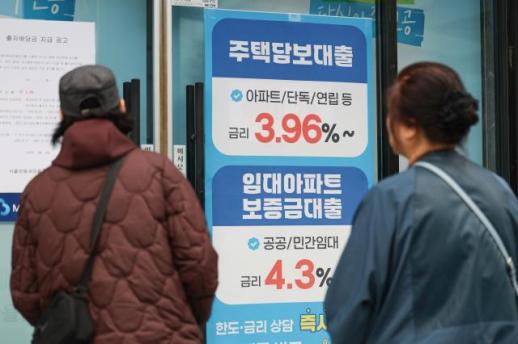 Rising subprime borrowers face delinquency risk amid fast rate rises in Korea SEOUL, March 26 (AJP) - A growing pool of overleveraged, subprime borrowers is emerging as a key financial risk in South Korea, with war-driven surge in market and dollar rates amplifying repayment stress. Data released Thursday by the Bank of Korea (BOK) showed the share of “subprime borrowers” — defined by the BOK as individuals with loans from three or more financial institutions, belonging to the bottom 30 percent income bracket and holding low credit ratings who would bear much higher borrowing terms — rose to 6.7 percent at end-2025, up from 6.4 percent in the previous quarter. The ratio had hovered near 7 percent earlier in the year before easing temporarily on the back of the government’s “bad bank” debt relief program, which targeted long-term small-scale delinquencies. The improvement, however, proved short-lived, reversing within a quarter. More concerning is the steady buildup of borrowers at risk of slipping into that category. The share of “potentially vulnerable borrowers” climbed from 17.5 percent at the start of 2025 to 18.0 percent by the fourth quarter, signaling a widening pipeline of credit-strained households. With debt spread across multiple institutions, repayment risks are compounding. Such borrowers face heightened exposure to “Ponzi-like” rollover behavior, making them particularly vulnerable to default if income fails to keep pace with rising interest costs. The BOK defines this group broadly as either middle-income borrowers with multiple loans or low-income borrowers with debt from at least two institutions. Corporate indicators point to a parallel strain, underscoring a deepening K-shaped divergence. The share of “zombie” small and medium-sized enterprises (SMEs) — firms with an interest coverage ratio (ICR) below 1.0 — jumped to 61.4 percent in the third quarter, up from 56.9 percent in the second quarter. The figure is nearly double that of large conglomerates, at 32.6 percent. SMEs’ average ICR stood at minus 0.4, indicating operating profits are insufficient to cover even interest payments, while large firms improved to 4.7, widening the corporate gap. The outlook is darkening further as external shocks intensify. The Korean won has weakened past the 1,500-per-dollar level — a threshold last seen during the global financial crisis — amid disruptions tied to the effective closure of the Strait of Hormuz. Korea’s heavy reliance on Middle Eastern energy has amplified the impact. Market rates, a key gauge of borrower stress, have also surged. As of Wednesday, the three-year government bond yield stood at 3.558 percent, up 21 percent year-to-date, while the 10-year yield climbed to 3.859 percent, more than 100 basis points above the 2.5 percent policy rate. “If holding rates steady has not eased principal and interest burdens, it suggests income weakness across households and firms has not been fully reflected,” said Jang Jeong-su, deputy governor general for financial stability and payments. “As market rates rose, delinquency rates followed, increasing the number of vulnerable borrowers and firms,” added Kim Jeong-ho, head of the BOK’s stability analysis team. Officials also flagged the policy dilemma facing incoming BOK Governor nominee Shin Hyun-song. “While a rate hike could support financial stability, it would also increase the burden on vulnerable borrowers and firms,” Jang said, noting the central bank will closely monitor both domestic conditions and external risks, including developments around the Strait of Hormuz. 2026-03-26 13:44:14
 -
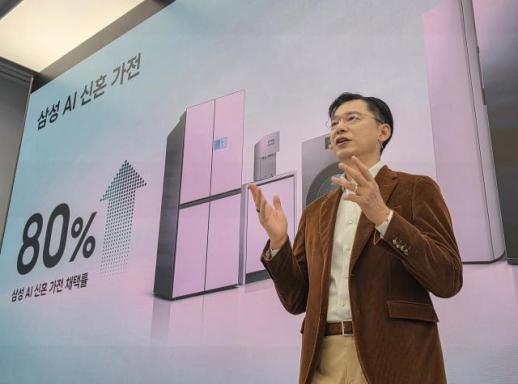 Samsung targets rebounding marriage boom to drive AI home appliance sales SEOUL, March 26 (AJP) - Samsung Electronics is betting on a revival in South Korea’s marriage market to accelerate adoption of artificial intelligence-powered home appliances, positioning its latest all-in-one washer-dryer as a centerpiece for newlyweds building automated homes. At a media briefing in Gangnam on Thursday, the company unveiled the 2026 Bespoke AI Combo, integrating upgraded hardware with generative AI features as part of its push to dominate the premium “hon-su” — or wedding essentials — segment. The strategy comes as marriage rates show a meaningful rebound. Marriages rose about 6.9 percent in 2025 to roughly 207,000, marking the first notable recovery after years of decline. The momentum has carried into 2026, with January marriages climbing 12.4 percent on-year. The demographic shift is being driven in part by the so-called “second echo boom,” as those born between 1991 and 1995 — children of Korea’s second baby boom generation — enter peak marriage and childbearing years. Samsung said internal data shows more than 80 percent of newlyweds opted for AI-enabled appliances last year, underscoring the segment’s strategic importance. Its Bespoke AI Combo already accounts for about 25 percent of the domestic drum washer-dryer market, with the company aiming to lift the share of combo models to 60 percent within the year. The 2026 model offers a record domestic capacity of 25 kilograms for washing and 20 kilograms for drying. Equipped with a “Booster Heat Exchanger” and “Pre-heat” system, it completes a full wash-and-dry cycle in 69 minutes — about 30 minutes faster than the previous generation. Samsung acknowledged challenges in replicating the “hon-su” effect overseas, where bundled appliance purchases tied to marriage are less common and where non-Galaxy users may face ecosystem barriers. “Consumers in foreign markets may not be familiar with Korea’s ‘hon-su’ culture, where newlyweds purchase a full suite of appliances,” said Lim Seong-taek, executive vice president and head of Samsung Electronics Korea. “But as adoption of AI appliances grows and the SmartThings ecosystem expands, we believe the value proposition will scale globally.” To lower entry barriers, Samsung is expanding its “AI Subscription Club” and “Wedding Professional Stores,” offering services such as relocation support and reinstallation tailored to younger renters with more mobile lifestyles. “This is often the first appliance consumers choose for themselves,” Lim said. “It is a critical moment to demonstrate how AI can meaningfully reduce the burden of household labor.” 2026-03-26 13:13:20