

Journalist

Chang SeongWon
-
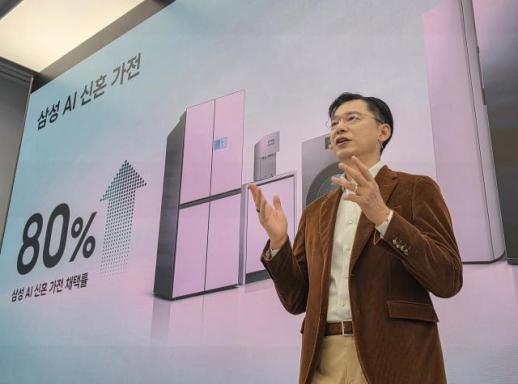 Samsung targets rebounding marriage boom to drive AI home appliance sales SEOUL, March 26 (AJP) - Samsung Electronics is betting on a revival in South Korea’s marriage market to accelerate adoption of artificial intelligence-powered home appliances, positioning its latest all-in-one washer-dryer as a centerpiece for newlyweds building automated homes. At a media briefing in Gangnam on Thursday, the company unveiled the 2026 Bespoke AI Combo, integrating upgraded hardware with generative AI features as part of its push to dominate the premium “hon-su” — or wedding essentials — segment. The strategy comes as marriage rates show a meaningful rebound. Marriages rose about 6.9 percent in 2025 to roughly 207,000, marking the first notable recovery after years of decline. The momentum has carried into 2026, with January marriages climbing 12.4 percent on-year. The demographic shift is being driven in part by the so-called “second echo boom,” as those born between 1991 and 1995 — children of Korea’s second baby boom generation — enter peak marriage and childbearing years. Samsung said internal data shows more than 80 percent of newlyweds opted for AI-enabled appliances last year, underscoring the segment’s strategic importance. Its Bespoke AI Combo already accounts for about 25 percent of the domestic drum washer-dryer market, with the company aiming to lift the share of combo models to 60 percent within the year. The 2026 model offers a record domestic capacity of 25 kilograms for washing and 20 kilograms for drying. Equipped with a “Booster Heat Exchanger” and “Pre-heat” system, it completes a full wash-and-dry cycle in 69 minutes — about 30 minutes faster than the previous generation. Samsung acknowledged challenges in replicating the “hon-su” effect overseas, where bundled appliance purchases tied to marriage are less common and where non-Galaxy users may face ecosystem barriers. “Consumers in foreign markets may not be familiar with Korea’s ‘hon-su’ culture, where newlyweds purchase a full suite of appliances,” said Lim Seong-taek, executive vice president and head of Samsung Electronics Korea. “But as adoption of AI appliances grows and the SmartThings ecosystem expands, we believe the value proposition will scale globally.” To lower entry barriers, Samsung is expanding its “AI Subscription Club” and “Wedding Professional Stores,” offering services such as relocation support and reinstallation tailored to younger renters with more mobile lifestyles. “This is often the first appliance consumers choose for themselves,” Lim said. “It is a critical moment to demonstrate how AI can meaningfully reduce the burden of household labor.” 2026-03-26 13:13:20
 -
 Tongyeong, Seoul Launch Spring Classical Season With Major Music Festivals South Korea’s spring classical music season is opening with a run of major festivals, led by the Tongyeong International Music Festival and followed by the Seoul Arts Center Symphony Festival and the Seoul Spring Chamber Music Festival. Industry officials said Thursday that the three events will offer a wide range of programs, from large-scale orchestral concerts to chamber music. The Tongyeong International Music Festival runs March 27 to April 5 at Tongyeong Concert Hall under the theme “Face the Depth,” presenting 26 performances. British contemporary music composer George Benjamin will serve as composer-in-residence, with five of his major works to be performed. Violinist Augustin Hadelich will appear in a recital, as a soloist and in a chamber project. Countertenor Jakub Jozef Orlinski will present works spanning Baroque and Classical music as well as Polish art songs. Both resident artists are set to appear together on April 3 in “Tongyeong Festival Orchestra II.” The festival will also feature contemporary works and premieres, including Unsuk Chin’s “Graffiti,” with leading performers from Korea and abroad, including pianist Seong-Jin Cho. The Seoul Arts Center Symphony Festival will be held April 1-23 at the Seoul Arts Center Concert Hall under the theme “Connecting The Notes.” Nineteen symphony orchestras from across the country and one overseas ensemble will present 20 performances. Conductors include Jaap van Zweden with the Seoul Philharmonic Orchestra and Roberto Abbado with the National Symphony Orchestra. Women conductors Holly Choi, Yeoja Kyung and Park Seung-yu are also on the roster. Vincent Ong, a prizewinner at the Chopin Competition, and other emerging musicians will appear as soloists. Programs will pair core repertoire by Beethoven, Brahms and Tchaikovsky with large-scale 20th-century works by Shostakovich and Stravinsky. On April 7, the Verbier Festival Chamber Orchestra is scheduled to perform, highlighting the festival’s international reach. The Seoul Spring Chamber Music Festival runs April 21 to May 3 under the theme “Mozart and Prodigies,” with 13 performances at venues including the Seoul Arts Center and Sejong Center for the Performing Arts. Marking the 270th anniversary of Mozart’s birth, the festival will focus on his late masterpieces while also highlighting works by other prodigy composers such as Saint-Saens, Debussy and Beethoven. A total of 82 musicians will take part. Performers include young artists such as violinist Kim Yeon-a and cellist Kim Jeong-a, alongside festival mainstays including pianist Kim Young-ho, violist Kim Sang-jin and pianist Lim Hyo-sun. 2026-03-26 12:03:23
 -
 New Book Traces Tech Revolutions From the Industrial Age to the AI Era Sapiens’ Last Voyage in the Age of the AI Revolution=By Kim Do-yeol, Cheongnyeon Seogwan. The book reviews major technological upheavals from the 18th-century first Industrial Revolution to today’s AI revolution, tracing in chronological order the fear and resistance people have repeatedly shown when confronted with new technology. Organized in four parts, it frames the central question facing humanity in the AI era — “how” to respond — through a narrative history. Kim argues that today’s anxiety about AI is not new. He points to 1825, when the arrival of the steam locomotive helped open the way to mass production and fueled conflict and backlash, including the collapse of some craft labor and the Luddite movement. He writes that those who opened new eras did not ignore technology or follow it blindly; they sought to understand it and use it proactively to ride out sweeping change. The book says the AI era is no different, urging readers to face fear without being ruled by it. * This article has been translated by AI. 2026-03-26 11:21:23
 -
 KOSPI slips on chip concerns as hopes for Middle East ceasefire lift Asian markets SEOUL, March 26 (AJP) - Asian markets mostly opened higher on Thursday amid growing hopes for a possible ceasefire in the Middle East. In contrast, South Korean stocks fell as semiconductor shares dropped over concerns that Google's "TurboQuant" could reduce demand for memory chips. Earlier investor sentiment improved as signs of possible talks between the U.S. and Iran lifted Wall Street overnight. The Dow Jones Industrial Average rose 0.66 percent to 46,429.49, the S&P 500 gained 0.54 percent to 6,591.90, and the tech-heavy Nasdaq Composite advanced 0.77 percent to 21,929.83. In Japan, the Nikkei 225 rose 0.66 percent to 54,114.46 in morning trading, reflecting gains on Wall Street. China's Shanghai Composite also gained 1.3 percent to 3,931.84 and Taiwan's TAIEX climbed 0.83 percent to 33,707.60. In Seoul, the benchmark KOSPI fell 1.41 percent to 5,562.60, while the junior KOSDAQ rose 0.58 percent to 1,166.28 shortly after the day's trading began. The decline was mainly driven by weakness in semiconductor stocks, as Google's TurboQuant algorithm sparked concerns that improved data efficiency could reduce demand for memory chips. Most major stocks traded lower, with Samsung Electronics falling 2.38 percent to 184,500 won, and SK Hynix dropping 2.91 percent to 966,000 won. Hyundai Motor declined 0.7 percent to 497,500 won, and LG Energy Solution slipped 1.02 percent to 390,000 won. But Samsung Biologics rose 0.76 percent to 1,597,000 won, and Hanwha Aerospace and Doosan Enerbility both gained 0.29 percent, to 1,404,000 won and 102,900 won, respectively. In the KOSDAQ, Samchundang Pharm rose 3.32 percent to 1,152,000 won, while Alteogen surged 11.16 percent to 398,500 won after a technology-licensing deal with global pharmaceutical company Biogen the previous day. Kolon TissueGene jumped 13.29 percent to 115,900 won, backed by optimism ahead of its final-stage, large-sale clinical trial for a knee osteoarthritis treatment. The won weakened to 1,504.60 per dollar from 1,499.70 in the prior session. 2026-03-26 11:10:44
 -
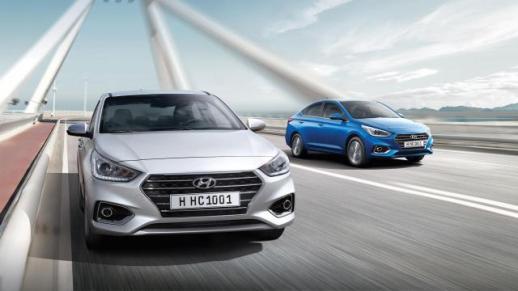 Hyundai's US, Europe plants run full while Southeast Asia lags SEOUL, March 26 (AJP) - Hyundai Motor Group is facing widening disparities across its global production network, with plants in the United States and Europe operating at or above full capacity while Southeast Asian facilities remain underutilized. The divergence comes as the automaker accelerates localization strategies amid rising global protectionism, but weak demand and intensifying competition have weighed on its Southeast Asian operations. According to Hyundai Motor Group on Wednesday, the company produced 3,847,741 vehicles across nine global plants last year, recording an average utilization rate of 81.2 percent. Plants in Korea, the United States, Türkiye and Brazil all posted utilization rates exceeding 100 percent. Hyundai’s domestic plants produced 1,846,837 vehicles, with utilization reaching 102.1 percent. Brazil recorded 214,139 units at 102 percent, while the Alabama plant in the United States produced 362,000 units with a 100.6 percent rate. Türkiye produced 197,000 vehicles at 98.5 percent, and India produced 772,830 vehicles at 94.2 percent. The Hyundai Motor Group Metaplant America (HMGMA) in Georgia, which began operations last year, produced 66,420 vehicles, with utilization rising to 65.3 percent. In contrast, Hyundai’s Vietnam plant recorded a utilization rate of 37.6 percent, down from 48.9 percent a year earlier, with output falling to 42,540 units. Indonesia also lagged, posting a utilization rate of 47.3 percent, down from 57.2 percent the previous year. Analysts attributed the slowdown to weaker regional demand, intensifying competition and the rapid shift toward electric vehicles. Hyundai, which once topped Vietnam’s market in 2021, has recently struggled against local brand VinFast and low-priced Chinese EV makers. While Vietnam’s total auto sales rose 22.2 percent to 604,064 units last year, Hyundai’s sales fell by about 20 percent, according to the Vietnam Automobile Manufacturers’ Association. Indonesia also saw domestic sales decline 7.2 percent to 803,687 units, data from the Indonesian Automotive Industry Association showed. Japanese brands Toyota, Mitsubishi and Suzuki held about 45 percent of the market, while China’s BYD entered the top five. Hyundai ranked 10th with about 3 percent. Despite the slowdown, Southeast Asia remains central to Hyundai’s localization strategy. The company plans to increase local sourcing in Vietnam and introduce new EV models, while building a full EV value chain in Indonesia and launching 15 new models by 2028. 2026-03-26 10:55:07
 -
 Trump's Beijing trip rescheduled for mid-May amid prolonged Middle East conflict SEOUL, March 26 (AJP) - U.S. President Donald Trump will meet Chinese President Xi Jinping in Beijing in mid-May, the White House said on Wednesday, after their summit was postponed due to the prolonged conflict in the Middle East. Announcing a newly-arranged date for the summit originally scheduled for next week, White House press secretary Karoline Leavitt said, "I'm pleased to announce that in China will now take place in Beijing on May 14th and 15th." She added that First Lady Melania along with Trump will also host Xi and his wife Peng Liyuan "for a reciprocal visit" to Washington, D.C. later this year. "Our Representatives are finalizing preparations for these Historic Visits," Trump wrote on his own social media platform Truth Social. "I look very much forward to spending time with President Xi in what will be, I am sure, a Monumental Event." When asked about whether the Middle East conflict that began with U.S.-led airstrikes on Iran late last month could wind down in time for Trump's trip to China, Leavitt said, "We've always estimated approximately four to six weeks. So you could do the math on that." 2026-03-26 10:20:26
 -
 Most top officials got richer last year SEOUL, March 26 (AJP) - Most high-ranking government officials and lawmakers saw their wealth increase last year, mainly due to a rise in the value of their real estate and stocks, according to figures released by the Government Ethics Committee on Thursday. Some 1,903 public servants including central and provincial officials required to declare their wealth, reported average personal assets of 2.09 billion Korean won (US$1.3 million) as of the end of last year, up about 148 million won from the previous year. Among 287 lawmakers, excluding Ahn Cheol-soo and Park Deok-heum of the People Power Party, the two with assets exceeding 50 billion won, the average wealth of the remaining 285 stood at 2.89 billion won, up about 202 million won. Ahn reported by far the greatest wealth among lawmakers at 125.7 billion won, though his assets declined by 11.07 billion won. The former IT tycoon was followed by Park who reported 54.79 billion won. About 30 percent or 616 officials had assets exceeding 2 billion won, followed by 538 officials with 1 billion to 2 billion won and 374 officials with 500 million to 1 billion won. The rest held less than 500 million won. President Lee Jae Myung reported 4.98 billion won, up 1.89 billion won from a year earlier, largely due to income from a book he published last year outlining his political visions, as well as savings from his salary. Among cabinet members, Han Seong-sook, a former CEO of the country's largest online portal Naver, disclosed the highest assets at 22.3 billion won. 2026-03-26 09:43:24
 -
 Comedian Yoon Taek Says His Father Has Terminal Bile Duct Cancer Comedian Yoon Taek spoke about his father’s illness on tvN’s “You Quiz on the Block.” The program aired on the 25th and featured “I Am a Natural Person” cast members Lee Seung-yoon and Yoon. Yoon said his father has end-stage bile duct cancer. “There isn’t much time left, so every time I face my father, it’s so hard that I can’t hold back my tears,” he said. “Nothing lasts forever, but he says he’ll go peacefully,” Yoon added. “It’s heartbreaking, but there’s nothing I can do.” Yoon also said “I Am a Natural Person” was the happiest time of his father’s life. He recalled his father proudly telling people at restaurants, “Do you know ‘Natural Person’? Yoon Taek is my son,” and said that was when his father seemed happiest. * This article has been translated by AI. 2026-03-26 09:39:31
 -
 NH NongHyup Bank CEO Kang Tae-young Opens Pangyo Corporate Finance Center, Pledges Tailored Support Kang Tae-young, CEO of NH NongHyup Bank, has stepped up on-site management as the bank seeks to expand what it calls productive finance. The bank said on the 26th that Kang attended the opening ceremony the previous day for the Pangyo Corporate Finance Center in Seongnam, Gyeonggi Province. The center is tasked with focusing support on future growth industries tied to the Pangyo area, including artificial intelligence, data, information technology and semiconductors. Kang said the bank will “take the lead in fostering and supporting growth in advanced technology industries” by reflecting the characteristics of local client companies, and will “expand region-tailored productive finance to boost economic vitality.” Also on the 25th, Kang visited the Gyeonggi Business and Science Accelerator, which supports small and midsize companies and industrial innovation, to assess on-the-ground demand for financial services. He then went to the bank’s Gyeonggi headquarters and said he would continue field-focused management so that feedback from front-line staff can be translated into practical financial support policies. A bank official said the Pangyo foothold will be used to strengthen financial solutions tailored to specialized industries by region. The official said the bank plans to continue on-site management by touring major regions nationwide to expand cooperation with companies and institutions and to hear from employees. * This article has been translated by AI. 2026-03-26 09:36:00
 -
 South Korea to Hold Forum on Adding Hangul Signboard at Gwanghwamun Gate The Ministry of Culture, Sports and Tourism said Thursday it will hold a public forum March 31 to hear views on whether to add a Hangul signboard at Gwanghwamun Gate. The “Gwanghwamun Signboard Forum” is scheduled for 2 p.m. at a sixth-floor conference room of the National Museum of Korean Contemporary History. At a Cabinet meeting on Jan. 20, Culture Minister Choi Hwi-young proposed keeping the existing signboard in Chinese characters while adding a Hangul version, aiming to respect the gate’s historical character while reflecting a modern symbol. The ministry said the forum will organize key issues and begin fuller discussion, and any interested member of the public may attend. Presentations will be given by Lee Geon-beom, head of the Hangul Culture Solidarity, and Choi Jong-deok, former director of the National Research Institute of Cultural Heritage. The discussion will be moderated by Yang Hyun-mi, a professor in cultural arts management at Sangmyung University. Panelists include Kim Kwon-jung, a curator at the National Museum of Korean Contemporary History; Kim Ju-won, president of the Hangul Society; Lee Kang-min, a professor of architecture at the Korea National University of Arts; Hong Seok-ju, a professor of architecture at Seoil University; and Kim Hyung-woo, head of the Korean Peninsula Culture and Tourism Research Institute. The ministry said it will continue gathering opinions after the forum. It plans to open an online message board on its website in early April and to conduct expert consultations and a public survey as it reviews the policy in detail. “Gwanghwamun is a place where history and the future coexist, and a leading space that symbolizes the Republic of Korea, so we need to think together about what is appropriate for it,” Choi said. “The government will listen broadly with an open attitude and, through sufficient deliberation and opinion-gathering, prepare an option the public can support.” * This article has been translated by AI. 2026-03-26 09:24:17