

Journalist

Chang SeongWon
-
 BigHit Music VP: BTS’ ‘Arirang’ album starts from the group’s roots Kim Hyun-jung, a vice president at BigHit Music, introduced BTS’ new album, titled 'Arirang.' A media briefing for Netflix's 'BTS Comeback Live: Arirang (ARIRANG)' was held March 20 at Cinecube in Seoul's Jongno district. Attendees included Brandon Rigg, Netflix VP for nonfiction series and sports; Kim; Yoo Dong-ju, APAC representative for HYBE Music Group; and executive producer Garrett English. Kim said BTS has consistently made music that reflects the stories they want to tell and the emotions they feel at the time. She described the full-length album 'Arirang' as capturing the members' feelings and messages. She said the group worked closely during production with BTS members, executive producer Bang Si-hyuk and BigHit staff. She added that, as the album title suggests, it starts from BTS' roots and uses both Korean and English so listeners worldwide can understand the message. Kim said she hopes the album can be enjoyed across generations by longtime fans as well as people less familiar with BTS. BTS will release its fifth full-length album, 'Arirang,' at 1 p.m. on March 20. It is the group's first new release in three years and nine months since the June 2022 anthology album 'Proof.' The group has said the release will open a new chapter, 'BTS 2.0.' The album, which includes BTS' identity and universal emotions, was executive produced by Chairman Bang Si-hyuk. A comeback live show will be held at Gwanghwamun at 8 p.m. on March 21 and streamed live on Netflix.* This article has been translated by AI. 2026-03-20 12:00:19
 -
 South Korea's digital payments surge, platform dominance intensifies SEOUL, March 20 (AJP) - Digital payment transactions in South Korea continued their steady upward trajectory last year, with both transaction volume and value rising from a year earlier. Notably, the dominance of tech platforms in simplified payment and remittance services has intensified, with their market share once again surpassing the 50 percent mark. According to data released by the Bank of Korea (BOK) on Friday, the average daily value of Payment Gateway (PG) services reached 1.55 trillion won ($1.04 billion) in 2025, a 9.2 percent increase from the previous year. The daily average number of transactions also climbed 11.8 percent to 33.64 million. PG services, which manage the overall online payment process, include major operators such as Nice Payments, KG Inicis, Toss Payments, and Kakao Pay. By payment method, credit cards accounted for approximately 77 percent of the total daily volume at 26.04 million cases. In terms of value, credit card payments reached 1.17 trillion won, up 12.3 percent year-on-year. Other payment methods, including "pay money" and local currencies, saw a 14.4 percent increase to 4.80 million cases (115.3 billion won). Bank transfers also rose significantly, jumping 20.2 percent to 2.00 million daily transactions. In contrast, the use of virtual accounts—often used for wire transfers—dropped 9.0 percent to 798,000 cases as the rise of simplified payments reduced their necessity. Despite a brief rebound in 2024, the downward trend resumed last year as payment platforms became more deeply integrated into daily life. The use of prepaid electronic payment services, where users charge funds in advance, also grew. Daily transactions rose 8.0 percent to 36.54 million, while the total value increased 11.0 percent to 1.31 trillion won. Payments through non-bank electronic financial business operators, such as Toss Payments and Naver Pay, reached 34.21 million cases, a 7.7 percent increase from 2024. These entities saw a 10.7 percent rise in value to 1.26 trillion won, maintaining a dominant market share within the prepaid sector. Specifically, simplified payments saw the largest growth, with transaction volume and value increasing by 31.1 percent and 27.2 percent, respectively. Simplified remittances also grew, reaching 6.95 million cases and 969.23 billion won. While the daily value of transportation card usage edged up 1.2 percent to 13.85 billion won, the number of transactions fell 7.2 percent to 11.27 million. This decline is attributed to certain operators adjusting their data collection methods in 2025 to exclude "invalid tags," such as transit transfers. Reliance on simplified payment and remittance services—which utilize bio-authentication or simple passwords instead of public certificates—surged to a daily average of 35.57 million transactions (up 14.9 percent) and 1.11 trillion won (up 14.6 percent). The expanding influence of "Electronic Financial Business Operators," led by Toss and Kakao, is particularly striking. Their daily transaction volume surged 24.7 percent to 22.67 million, accounting for 64 percent of the total simplified payment volume. The market share of these online financial platforms remained relatively stable between 49 percent and 50 percent from 2022 to 2024. However, the 4.4 percentage points jump to 54.9 percent in 2025 (by value) represents an unusually rapid acceleration in their market dominance. 2026-03-20 11:55:50
 -
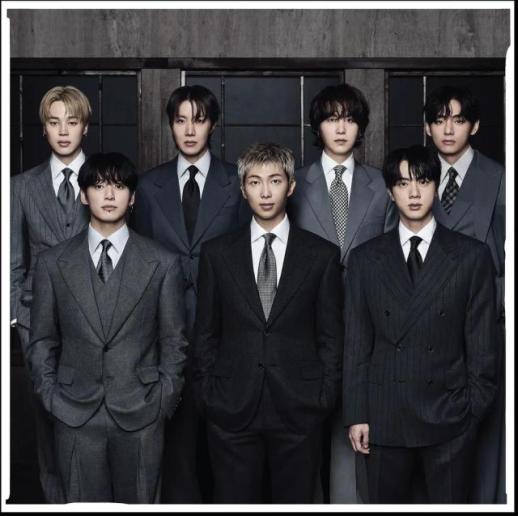 BTS Live D-1: From waiting to Arirang, from Gwanghwamun to the world SEOUL, March 20 (AJP) -They are officially back as seven, with the drop of the fifth BTS full-member album ARIRANG on Friday. That simple fact is the emotional center of this comeback — bigger than chart numbers, bigger than spectacle, even bigger than the stage rising in central Seoul. After three years and nine months without a full-group album, BTS has returned with ARIRANG, carrying something both intimate and immense: the joy of reunion and the weight of time. The members said it plainly. They had prepared carefully because ARMY had waited so long. They felt excited, nervous and above all deeply moved. More than anything, they said, they were grateful simply to be able to do something together again as seven. Before it is an event, this comeback is a reunion. Yet BTS is not returning by repeating what came before. The fifth full-length album, ARIRANG, opens what the group calls “BTS 2.0” — a new chapter shaped as much by growth as by reunion. The title track “SWIM” captures that direction. Jimin described it as a message about continuing forward: there is pressure, there are doubts, but there is no stopping. It is not a return to shore. It is movement through water. That sense of motion runs through the album. The members said they focused on expanding genre, sound and vocal expression, even stepping into unfamiliar territory. Some tracks push rougher or more experimental textures, while others deliberately strip things back. Still, the guiding question remained simple, as SUGA put it: what is most like us? That question may explain the title. Arirang is one of the most resonant words in Korean culture — a song, a feeling, a shared memory of endurance and passage. For BTS, it becomes a bridge between identity and reinvention. Each member described “BTS 2.0” differently — a new beginning, growth, a new direction — but RM brought it into focus as balance: half is the meaning of being seven again, and half is the need to move forward. That balance also explains why they chose Gwanghwamun. Most artists would return in a stadium. BTS chose Gwanghwamun Square, the symbolic heart of Seoul. Framed by Gyeongbokgung Palace, it is a place where history, public life and national identity meet. That choice turns the comeback into more than a concert. It becomes a national narrative moment — where K-pop, cultural symbolism and public emotion converge. The space itself becomes part of the performance. Even before the music begins, the setting carries meaning. The decision to make the show free adds another layer. This is not a closed, ticketed return. It is open, in a public square. That changes the emotional contract. It makes the comeback feel communal rather than exclusive — less like a product launch, more like a gathering. For a group built on its connection with ARMY, the symbolism is clear: the first step back is outward. And yet the moment is not limited to Seoul. The Gwanghwamun performance will be livestreamed globally, allowing fans across the world to share the same moment. That duality — local and global, intimate and vast — has always defined BTS. Their rise was not a single explosion, but a steady accumulation. From their 2013 debut through years of gradual growth, from early tours to global chart dominance, BTS built momentum step by step. Even at their largest scale, they retained something direct — a closeness with fans that did not disappear as the stage expanded. That is why this reunion carries such weight. During the hiatus, each member pursued solo work, but the group itself never faded. If anything, the time apart clarified what BTS is: seven distinct artists whose meaning is strongest together. Jungkook recalled the process of listening to more than 100 demo tracks as a group — sometimes hearing each other’s work for the first time — as one of the most memorable parts of making the album. Jin said the members have grown closer. The atmosphere — the jokes, the laughter — remains unchanged. BTS 2.0, then, is not a break from who they were. It is a continuation, with more depth. The Gwanghwamun stage is also a beginning. It opens into a global tour and the so-called “BTSnomics 2.0,” where the group’s impact extends beyond concerts into platforms, digital content and a wider cultural economy. 2026-03-20 11:55:19
 -
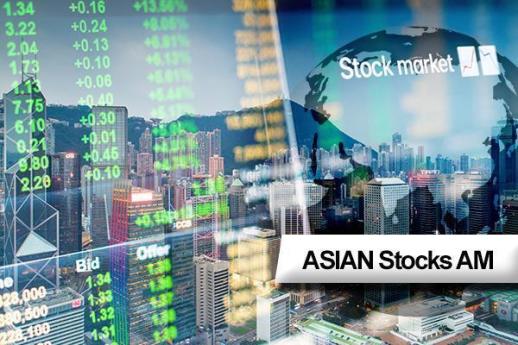 KOSPI defies broader trend as Asian markets decline amid oil-driven inflation fears SEOUL, March 20 (AJP) - Asian markets mostly fell on Friday, with South Korea's benchmark KOSPI the only major index to edge higher, as investors weighed rising oil prices against signs of easing tensions in the Middle East. Wall Street's three major indexes closed lower overnight but pared earlier losses, with the Dow Jones falling 0.44 percent and the S&P 500 and Nasdaq declining 0.27 percent and 0.28 percent, respectively. Markets initially came under pressure from a surge in oil prices triggered by retaliatory attacks on energy facilities in the Middle East, compounded by expectations that the Federal Reserve will keep interest rates higher for longer. Losses narrowed toward the day's trading close as U.S. officials signaled restraint on further escalation and made remarks aimed at stabilizing oil markets, prompting bargain hunting. The Fed's chair Jerome Powell reinforced a hawkish stance, indicating that rate cuts are unlikely unless inflation shows a clear and sustained decline, and saying that further rate hikes were discussed at the latest meeting. Oil prices remained a key overhang, with Brent crude surging more than 10 percent intraday and briefly nearing $120 per barrel after Iran's attack on an energy complex in Qatar heightened supply concerns. The spike fueled inflation fears and pushed U.S. Treasury yields higher, with the 2-year yield touching 3.96 percent before closing at 3.79 percent, up 5 basis points. But sentiment improved later in the session after Israeli Prime Minister Benjamin Netanyahu said Iran had lost the capability to enrich uranium or produce missiles, signaling that military objectives may have largely been achieved. His remarks, along with indications that further strikes on energy infrastructure would be avoided, helped limit losses. Sector-wise, mega-cap tech stocks broadly declined, with Tesla dropping 3.18 percent. In contrast, artificial intelligence (AI) and semiconductor-related shares showed resilience, lifting the Philadelphia Semiconductor Index by 0.87 percent. The CBOE Volatility Index (VIX) fell 4.11 percent to 24.06, reflecting reduced immediate market stress despite ongoing uncertainty. In Asia, investor focus is shifting toward corporate earnings, particularly in semiconductors. Cautious guidance from Micron despite strong earnings has raised concerns over a potential peak in the memory cycle, which may weigh on regional chipmakers such as Samsung Electronics and SK Hynix in the near term. As of Friday morning, Samsung Electronics was unchanged at 200,500 won, while SK hynix rose 0.49 percent to 1,018,000 won. Investors are likely to remain sensitive to oil prices, as prolonged energy inflation could complicate the Fed's policy path to rate cuts and sustain volatility across global markets. Foreign investors have been net sellers on the KOSPI this year, offloading over 36 trillion won worth of shares. Some analysts, however, believe the sell-off may be nearing its end, pointing to improving earnings momentum, particularly in semiconductor sectors. Geopolitical risks from the Middle East and a sharply weaker won have been cited as key drivers of foreign outflows. Surging oil prices and a stronger U.S. dollar pushed the won past the 1,500 level against the greenback, further accelerating selling and market volatility. Pressure eased slightly as the won strengthened to 1,492.30 per dollar from a previous close of 1,501.3. As of 11:04 a.m., the KOSPI rose 0.48 percent to 5,790.78 points, and the junior KOSDAQ gained 1.60 percent to 1,161.80. But stocks traded mixed, with biopharmaceuticals, financials and energy shares leading gains while automakers and defense-related stocks lagged. In the energy and battery sector, LG Energy Solution gained 0.94 percent to 374,500 won and Doosan Enerbility advanced 2.45 percent to 108,900 won. Biopharmaceutical stocks showed strength, with Samsung Biologics climbing 2.27 percent to 1,621,000 won and Celltrion adding 0.50 percent to 203,000 won. Hyundai Motor was unchanged at 522,000 won, Kia edged down 0.12 percent to 170,300 won, and Hyundai Mobis fell 1.57 percent to 406,500 won. Defense and shipbuilding stocks were mixed, with Hanwha Aerospace dropping 3.78 percent to 1,323,000 won and HD Hyundai Heavy Industries slipping 0.53 percent to 564,000 won, while Hanwha Ocean rose 0.46 percent to 130,600 won. In the financial sector, KB Financial Group gained 0.64 percent to 156,700 won, Shinhan Financial Group rose 1.35 percent to 97,800 won, and Mirae Asset Securities jumped 3.90 percent to 69,300 won, though Samsung Life Insurance fell 2.60 percent to 224,500 won. Elsewhere in Asia, Japan's Nikkei 225 fell 3.38 percent to 53,372.53 amid geopolitical uncertainty, as U.S. President Donald Trump urged Japan to take a more active military role including support in the Strait of Hormuz during a summit with Japanese Prime Minister Sanae Takaichi in Washington, D.C. But she said that there are actions Japan can and cannot take "within the limits of Japanese law." Hong Kong's Hang Seng Index declined 0.59 percent to 25,349.29, China's Shanghai Composite slipped 0.17 percent to 3,999.54 and Taiwan's Taiex Index edged down 0.10 percent to 33,655.23. 2026-03-20 11:52:40
 -
 Road Closures Begin at 9 p.m. Ahead of BTS Comeback Show at Gwanghwamun "Starting at 9 tonight, everything will be closed except for two lanes. Stage installation will continue. Seating will be set up across all areas except those two lanes. Eight large LED screens will also be installed," said Kim Jong-gi, head of HYBE’s Policy Operations Center. Culture, Sports and Tourism Minister Choi Hwi-young visited the Gwanghwamun area on March 20 to check preparations and the safety management system for BTS’ comeback concert. He also inspected the ministry’s situation management headquarters set up at the National Museum of Korean Contemporary History. With as many as 260,000 people expected to gather around Gwanghwamun and the Gyeongbokgung area on the day of the concert, Choi urged organizers and relevant agencies to coordinate closely to ensure a safe environment for attendees. Kim said the stage backdrop will effectively be Gwanghwamun Gate and the palace wall, adding that lighting for a facade will be installed behind the pillar on the right side of the stage. He emphasized that special efforts are being made to protect cultural heritage. Choi also stressed a hard line against ticket scalping. "Even if you bought a scalped ticket, we will block it through various measures, including ID checks," he said. He added that transferring wristbands would also be stopped, including by using hand stamps to prevent entry, and reiterated that scalped tickets would not get people into the venue. "Scalped tickets are 100% a scam," Choi said. "People should never buy them. You will end up disappointed at the site." Choi then visited the ministry’s situation management headquarters at the National Museum of Korean Contemporary History to review overall crisis-response plans. To strengthen safety readiness, the ministry will issue a ‘caution’ level disaster alert for concert venues in Seoul’s Jung and Jongno districts from 7 a.m. March 21 to 7 a.m. March 22. It is the first time the ministry has issued a crisis alert specifically for concert-venue disasters. Choi asked staff whether anything more was needed, saying the work environment must not be lacking to maintain focus and that supplies should be well stocked. He also visited HYBE’s safety management headquarters next to the ministry’s situation room and asked it to work closely with the ministry to ensure the concert ends smoothly. "This concert will be a highly symbolic moment to showcase the appeal of K-culture to people around the world," Choi said. "The government is working with relevant ministries to review crowd-management measures and venue safety rules and to prepare for all possible situations." "What matters most for a successful performance is safety," he said, calling for public cooperation so the concert can be held safely based on mature civic awareness. 2026-03-20 11:36:21
 -
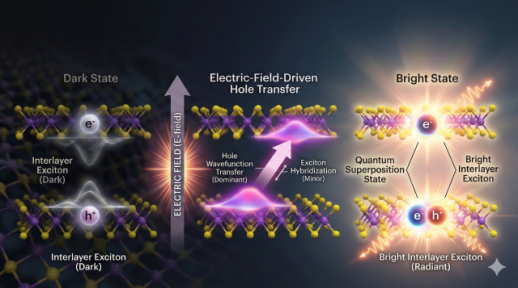 Sookmyung University researchers identify mechanism for observing interlayer excitons SEOUL, March 20 (AJP) - A research team at Sookmyung Women's University in South Korea has uncovered a new physical mechanism that allows scientists to observe "interlayer excitons" in two-dimensional semiconductors using electric fields. Led by School of Intelligent Electronic Systems Professor Cha Soon-young, the study provides a theoretical framework for a phenomenon that had previously been difficult to explain. Two-dimensional semiconductors are key materials for the development of next-generation optoelectronic devices and quantum information technology. In a two-layer structure, an interlayer exciton forms when an electron and a hole—a quasiparticle representing the absence of an electron—are located in different layers. While these excitons have long lifespans and energy levels that can be controlled by external fields, they are notoriously difficult to observe. Because the electron and hole are physically separated, their interaction with light is extremely weak, often leaving them in an invisible "dark" state. The researchers applied electric fields to bilayer tungsten diselenide (WSe2) and precisely measured its optical spectrum. They discovered that as the electric field increased, the normally undetectable interlayer exciton signals grew progressively stronger. Earlier studies attributed this brightness to "exciton hybridization," a process where different exciton states mix together. However, Professor Cha's team determined that hybridization alone could not account for their experimental data. Using an analysis that combined density functional theory (DFT) calculations with exciton modeling, the team proposed a "hole transfer" mechanism. When an electric field is applied, the wave function of the hole in one layer moves partially to the other, creating a quantum superposition state. This process amplifies the exciton's interaction with light, essentially turning the dark state into a "bright" state. The team's calculations confirmed that this hole transfer mechanism is the primary reason for the increased signal strength, while the contribution from hybridization is significantly smaller. "This research shows that the optical properties of interlayer excitons are determined by the quantum superposition of charge wave functions rather than simple state mixing," Cha Soon-young said. "These findings provide a critical foundation for future research into quantum physics and the design of 2D semiconductor-based devices." The study was a collaborative effort with researchers from the University of California, Riverside, Carnegie Mellon University, Nanjing University, National Cheng Kung University, and the National Institute for Materials Science (NIMS) in Japan. The findings were published on March 6, 2026, in Physical Review Letters, a journal ranked in the top 7.5 percent of the physics field. (Reference Information) Journal/Source: Physical Review Letters Title: Brightening interlayer excitons by electric-field-driven hole transfer in bilayer WSe2 Link 2026-03-20 11:24:32
 -
 Hyundai Motor CEO Jose Munoz: 20 New Models in China, Full Electrified Lineup in Europe by 2027 Hyundai Motor said it will step up its push in global markets this year with an aggressive rollout of new vehicles, while strengthening so-called “physical AI” capabilities in areas such as autonomous driving and robotics to compete in future mobility. Jose Munoz, Hyundai Motor’s CEO, said in a CEO shareholder letter released on the 20th that the company will “aggressively launch global new models tailored to customer expectations.” For China, Munoz said Hyundai will follow a “in China, for China, and for the world” strategy, launching 20 new models over the next five years and targeting annual sales of 500,000 vehicles. In South Korea, he said Hyundai plans to release new versions of the Tucson and Avante this year. In North America, Munoz said Hyundai will introduce extended-range electric vehicles starting in 2027 with a driving range of more than 600 miles (about 965 kilometers) per charge. He also said the company plans to launch its first body-on-frame midsize pickup truck before 2030. In Europe, Munoz said Hyundai will unveil five new models over the next 18 months, including the Ioniq 3, which he said will be shown to the world for the first time at Milan Design Week in April. He added that by 2027 Hyundai will have an electrified model lineup for every vehicle it sells in Europe. For India, Munoz said Hyundai will invest $5 billion through 2030 and launch a total of 26 new models. He said the company will introduce its first locally strategic electric SUV in India by 2027, planned, designed and produced locally. Hyundai also said it will accelerate its physical AI strategy, including autonomous driving and robotics. Munoz said the group’s technology platform, Pleos, will be a key element in speeding up autonomous driving development. He said Hyundai plans to equip Ioniq 5 vehicles produced at Hyundai Motor Group Metaplant America with specifications optimized for autonomous driving and supply them to Google’s Waymo. He also called Boston Dynamics’ Atlas “one of the world’s most advanced humanoid robots,” and said Hyundai aims to develop intelligence that goes beyond building cars to changing how vehicles are made and operated. On the fast-changing international environment, Munoz said the global trade landscape remains uncertain due to tariff pressure, currency swings and geopolitical tensions. He said Hyundai will carry forward the spirit of founder Chung Ju-yung, who expanded the business by turning uncertainty into opportunity. * This article has been translated by AI. 2026-03-20 11:21:56
 -
 Jeju Air tops 60 million passengers as it marks 17 years of international flights SEOUL, March 20 (AJP) - Short-haul carrier Jeju Air said Friday it has carried over 60 million passengers as it marks the 17th anniversary of launching international routes. Jeju Air became the first South Korean budget carrier to launch international services, with flights between Incheon and Osaka in March 2009. Starting with about 159,000 passengers in its first year, Jeju Air continued to expand, reaching a milestone of serving over 1 million passengers in 2012. By offering more diverse routes to neighboring Japan, China, and Southeast Asian countries in later years, the airline's cumulative international passengers surpassed 10 million in 2016 and topped 50 million in 2024. As of the end of February this year, its cumulative international passengers stood at about 62.86 million, showing an average annual growth of 27.5 percent. Jeju Air currently operates some 58 international routes, with destinations in China, Indonesia, Japan, Laos, Malaysia, Mongolia, the Philippines, Singapore, Thailand, and Viet Nam. Notably, what started as one daily flight between Incheon and Osaka now operates seven times a day, making Jeju Air the most frequent carrier on the route. The number of passengers has grown nearly eightfold, from 73,000 in 2009 to 574,000 in 2025. "We have helped make air travel more accessible and affordable for passengers over the past 17 years," a Jeju Air staffer said, adding that the airline will continue to promote "healthy competition" in South Korea's aviation industry. 2026-03-20 11:19:31
 -
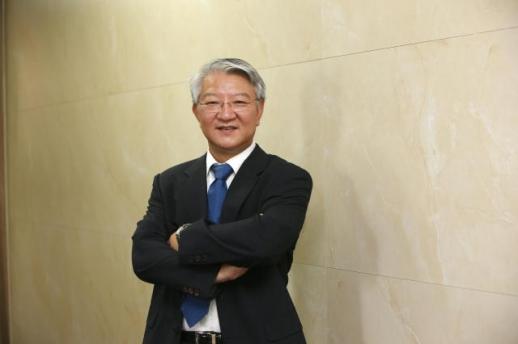 KAIST professor Lee Sang-yup becomes first Asian fellow of European Academy of Microbiology SEOUL, March 20 (AJP) - South Korea has produced its first fellow of the European Academy of Microbiology (EAM) with the induction of Korea Advanced Institute of Science and Technology's Distinguished Professor Lee Sang-yup. The prominent research institute said Friday that Lee was officially elected to the academy on March 19, making him the first researcher from an Asian institution to join the prestigious body. The EAM serves as the leadership tier of the Federation of European Microbiological Societies (FEMS), a network representing 30,000 scientists across 38 nations. Founded in 2009, the academy acts as a primary advisory body for European science policy and international research cooperation. Membership is restricted to scholars who have demonstrated significant impact on the field of microbiology through high-level research and academic leadership. Selection for the fellowship is a closed process where candidates are nominated and vetted by existing members without their knowledge. In the 2026 cohort of 95 new fellows, the vast majority were based in Europe. Outside of the continent, the academy selected 16 researchers from the United States and three from Australia, with Lee standing as the sole representative from Asia. Professor Lee is widely regarded as a pioneer in the fields of systems metabolic engineering and synthetic biology. His work focuses on re-engineering microorganisms to serve as microscopic factories. These microbes are programmed to convert renewable biomass into useful chemicals, fuels, and materials, offering a sustainable alternative to traditional petroleum-based manufacturing. "I find this election to the European Academy of Microbiology very meaningful," Lee Sang-yup said. "I will continue to contribute to solving environmental and energy challenges facing humanity through microbial-based sustainable production technologies, while actively participating in international research and academic exchange." His research at KAIST over the last 31 years has led to several industrial breakthroughs, including the development of biodegradable polymers, high-efficiency succinic acid production, and spider silk that is stronger than steel. To date, he has published 796 journal papers and registered or applied for more than 860 patents. Lee's career has been defined by a series of international firsts. He remains the only scientist in the world to be elected to the National Academy of Engineering (NAE), the National Academy of Sciences (NAS), the Royal Society, and the Chinese Academy of Engineering. He has also been named a Highly Cited Researcher by Clarivate for nine consecutive years, placing him in the top 1 percent of his field globally. 2026-03-20 11:01:27
 -
 Kia CEO Song Ho-sung: EV2 to Debut This Year; 13 EV Models Planned by 2030 Kia said it will step up its push into the global auto market this year with a strategy aimed at making electric vehicles more widely adopted. The automaker made the remarks at its 82nd annual shareholders meeting held Friday morning at its headquarters in Seocho-gu, Seoul. In opening comments, Kia President Song Ho-sung said, "We will strengthen our leadership in the EV market by launching the EV2 this year." The EV2, unveiled in January at the Brussels Motor Show, is Kia’s compact electrified model designed for city driving, with interior space and convenience features that exceed expectations for its class. Kia said it is expanding its EV lineup by adding the EV2 this year, following the launch of the EV3 in 2024 and the EV4 and EV5 last year. The company plans to roll out a total of 13 EV models by 2030 to broaden consumer choice, while moving step by step to improve products, boost accessibility and strengthen its supply chain. Kia’s purpose-built vehicle (PBV) program calls for the PV7 next year and the PV9 in 2029. Song said Kia will optimize its EV supply chain by diversifying production bases by region, centered on domestic plants and expanding across Europe, the United States and emerging markets. Kia said it completed the Hwaseong EVO Plant EAST last year and plans to complete the WEST facility by next year to produce the PV7. By 2027, the company plans to introduce a next-generation software-defined vehicle (SDV) combining AI-based user experience and connectivity. It said it will secure autonomous driving technology in stages through cooperation with Motional and 42dot. In the U.S. market, Kia said it will strengthen a strategy centered on hybrids and sport utility vehicles. It plans to expand sales by launching new versions of the Telluride and Seltos and adding to its hybrid lineup. Song said cost burdens are rising due to the impact of U.S. tariffs and intensifying global competition. Still, he said Kia will bolster product competitiveness with hybrids in the United States and EVs in Europe, while expanding its portfolio for broader EV adoption. At the meeting, Kia put forward proposed amendments to its articles of incorporation, including adopting electronic shareholders meetings, introducing cumulative voting, expanding directors’ duty of loyalty, strengthening the audit committee’s composition and renaming outside directors as independent directors. The company also reappointed Chief Financial Officer Kim Seung-jun as an inside director. It reappointed Jun Chan-hyuk, chairman of Cesco, as an outside director, and reappointed Shin Jae-yong, a professor of business administration at Seoul National University, as an outside director serving on the audit committee. 2026-03-20 10:45:21