

Journalist

Chang SeongWon
-
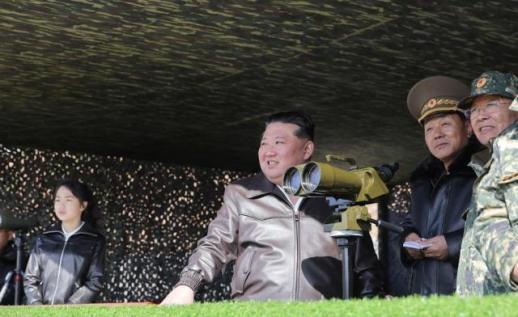 North Korea conducts military drill with new battle tanks SEOUL, March 20 (AJP) - North Korea conducted an "offensive tactical drill of infantrymen and tankmen's sub-units," state media reported on Friday. According to the state-run Korean Central News Agency (KCNA), its leader Kim Jong-un oversaw the drill featuring "new-type main battle tanks" the previous day. Kim was quoted as saying the tanks, which made their debut demonstrating their "remarkable combat efficiency," are "highly superior," hailing them as "unequalled in the world" in their striking power. "Our army will be equipped with such most powerful tanks," Kim added. Touting that "all the drills have been recently switched into the ones with scientific and practical forms and methods for an actual war," he stressed that military units at all levels should "achieve rapid successes in completing war preparations." Thursday's drill also involved "various types of attack drones" striking "the enemy's command base and anti-armor firing positions," according to KCNA. The drill was "aimed at getting familiar with the coordinated order and combat methods in the tactical sub-units' offensive action to expand successes in their attack through an assault of tanks and infantrymen after striking, raiding and occupying the enemy's anti-armor defense line," according to KCNA. 2026-03-20 09:25:09
 -
 Geely Auto Group Tops 206,000 Global Sales in February as Zeekr Surges Geely Auto Group, the parent of Zeekr, said Thursday its global sales totaled 206,160 vehicles in February. That brought worldwide sales for January and February to 476,327 vehicles. Exports in February alone reached 60,879 vehicles, up 138% from a year earlier. New energy vehicles (NEVs) — including Zeekr, Geely and Lynk & Co. — accounted for 117,488 units in February, up 19% from the same month last year. NEV sales for the year to date totaled 241,740 units, a 10% increase from a year earlier. By brand, Zeekr posted the strongest growth. Despite fewer production days due to China’s Lunar New Year holiday, which lasted up to nine days, Zeekr sold 23,867 vehicles worldwide in February, a 70% jump from a year earlier. While many NEV makers reported month-to-month declines, Zeekr’s January-February sales rose 84% from a year earlier to about 47,700 vehicles, the company said. The company attributed the performance to strong sales of Zeekr’s flagship 9X SUV. In China’s domestic market in February, the Zeekr 9X was named the top-selling model in the large SUV segment priced above 100 million won (500,000 yuan). It also marked a fourth straight month as the best-selling vehicle across all models in that price range. A Geely Auto Group official said February is typically a difficult month for Chinese automakers to deliver results, but the group still posted sharp year-on-year growth. The official added that if Zeekr makes an official entry into the South Korean market this year, its growth could accelerate further. * This article has been translated by AI. 2026-03-20 09:24:06
 -
 Samsung Heavy Wins $260 Million Order for One LNG Carrier Samsung Heavy Industries said Friday it has won an order for one liquefied natural gas carrier from an Oceania-based shipping company for 377.9 billion won. The vessel is scheduled for delivery by April 2029. The shipbuilder said its year-to-date orders total 12 vessels worth $2.4 billion, reaching 17% of its $13.9 billion annual target. The tally includes four LNG carriers, two ethane carriers, two container ships and four crude oil carriers. A company official said Samsung Heavy is maintaining a selective order strategy focused on high value-added ships while responding flexibly to changes in market conditions.* This article has been translated by AI. 2026-03-20 09:18:14
 -
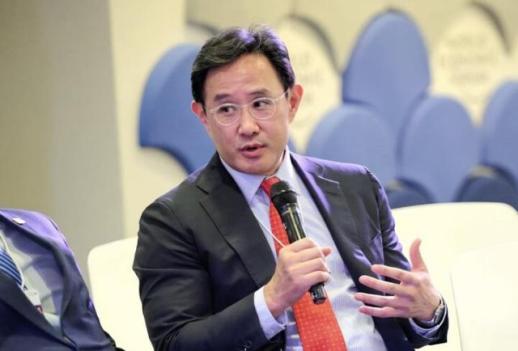 South Korea’s NPS Withholds Vote on Korea Zinc Chairman Choi’s Board Reappointment The National Pension Service, seen as a swing voter in Korea Zinc’s management-control dispute, has decided not to exercise its voting rights on a proposal to reappoint Chairman Choi Yun-beom as an inside director. The NPS fund’s Stewardship Responsibility Committee said on the 20th it made the decision at its fifth meeting the previous day, ahead of Korea Zinc’s shareholders meeting on the 24th. The committee decided not to vote on the company-backed director nominees Choi Yun-beom, Hwang Deok-nam and Park Byeong-uk. It also decided to vote against the election of audit committee members Kim Bo-young and Lee Min-ho. The NPS said the decision reflected that the nominees fall under those with a record of damaging corporate value or infringing on shareholder rights. On proposals to elect directors through cumulative voting — “Election of five directors” and “Election of six directors” — it decided to vote in favor. For voting rights allocated through cumulative voting, the NPS said it will split its votes evenly by proposal sponsor: half for candidates proposed by Young Poong, YPC and Korea Corporate Investment Holdings — Choi Yeon-seok (outside non-executive director), Choi Byeong-il and Lee Seon-suk (outside directors) — and half for Walter Field McLellan (outside non-executive director), proposed by Crucible JV. The NPS holds 5.20% of Korea Zinc and has been viewed as a key swing vote in the proxy fight. Choi and the Young Poong-MBK alliance are each reported to have secured friendly stakes of around 40%. In response, Korea Zinc said it respects the NPS’s “strategic direction” in exercising voting rights and will use the outcome as momentum for the company’s continued growth. Korea Zinc said the NPS recommended approval for most agenda items, including amendments to the articles of incorporation supported by the board and approval of the financial statements. It added that the NPS showed strong support by exercising half of its cumulative-voting rights for the Crucible JV nominee, which the company said carries symbolic meaning tied to its U.S. smelter project. The company said the decision reflects recognition that the U.S. smelter construction being pursued by current management and the board is significant for growth, corporate value and shareholder value, and described the NPS decision as balanced and neutral, taking into account factors including greater board diversity.* This article has been translated by AI. 2026-03-20 09:15:16
 -
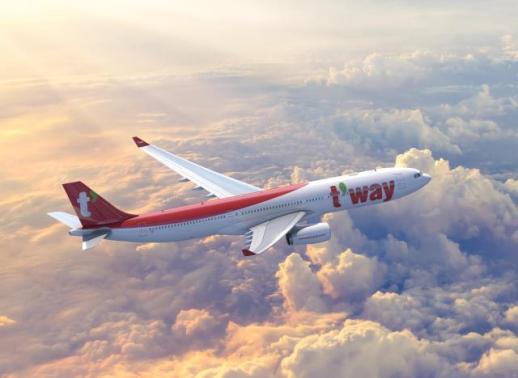 T’way Air Says Incheon-Saga Route Hit 95% Load Factor in Jan.-Feb., Up 12 Points T’way Air said Friday that its Incheon-to-Saga route in Japan, which it operates exclusively, posted a 95% load factor in January and February. That was up 12 percentage points from 83% a year earlier. The airline said bookings for March and April were running at about 87%. The Incheon-Saga service operates four times a week (Monday, Wednesday, Friday and Sunday), departing Incheon International Airport at about 8:10 a.m. and arriving at Saga Airport on Japan’s Kyushu island at about 9:40 a.m. local time. The return flight leaves at about 10:40 a.m. local time and arrives at Incheon at about 12:15 p.m. Flight time is about 1 hour 30 minutes. Saga, in Japan’s Kyushu region, is known for hot springs, natural scenery, and historical and cultural sites. Local specialties include eel, tofu, seafood and sake. Major attractions include Arita’s pottery village, Takeo Onsen, Ureshino Onsen and Keishuen Garden. Saga Prefecture can also be paired with nearby Fukuoka and Kumamoto, allowing travelers to build broader Kyushu itineraries. T’way said interest in the route has risen as more travelers seek quieter, more distinctive destinations. Separately, the airline said it is running a discount event for Saga sightseeing tour buses for T’way passengers through March 31, with details available on its website. “Demand for the Saga route continues to grow as interest in travel to smaller Japanese cities increases,” a T’way official said. “We will continue to provide convenient travel options by diversifying our routes, based on safe operations.” 2026-03-20 09:09:20
 -
 Hyundai Xcient Hydrogen Trucks to Join Uruguay Green Logistics Project Hyundai Motor Co.’s Xcient hydrogen fuel cell truck will be used in a green logistics project in Uruguay. Hyundai said it recently supplied eight Xcient hydrogen fuel cell trucks in Uruguay for the “Kairos Project.” Set to begin full operations in the second half of 2026, the private-sector partnership aims to cut carbon emissions from timber logistics. The project is being carried out in Uruguay by the Kairos consortium. The plan centers on introducing hydrogen trucks into transport and producing green hydrogen directly using solar power to reduce long-term emissions from timber hauling. Hyundai Motor Group said it has completed construction of a 4.8-megawatt solar power plant. It added that electrolysis equipment and a hydrogen refueling station, capable of producing 77 tons of hydrogen a year, are under construction. The project is valued at $40 million (about 60 billion won). Three Uruguayan companies formed a consortium for the effort, and Spain’s largest bank, Santander, is participating as a key investor with support from the World Bank Group’s International Finance Corp. and the U.N. Renewable Energy Innovation Fund, Hyundai said. Under the arrangement, renewable energy company Ventus will handle hydrogen production and operate the refueling station. Timber logistics company Fraylog will oversee overall logistics operations. Fidocar, Hyundai’s sales agent in Uruguay, will manage imports, permits and maintenance for the trucks. The Xcient hydrogen fuel cell truck is a 37.2-ton gross vehicle weight tractor model. It is equipped with a 180-kilowatt hydrogen fuel cell system and a drive motor with a maximum output of 350 kW. With 10 hydrogen tanks, it can store a total of 68 kilograms of hydrogen and travel up to 720 kilometers on a single fill, Hyundai said. Once operations begin, six of the eight trucks will be deployed first for timber transport, with total annual mileage expected to reach about 1 million kilometers. The remaining two trucks will be added later as transport services expand, the company said. Hyundai said the project is significant because it will be the first case of hydrogen fuel cell trucks being operated for commercial purposes in Latin America. A Hyundai official said the company was “very pleased” that the Xcient hydrogen fuel cell truck is expanding its presence in the hydrogen ecosystem to Latin America, following Europe and North America. The official said Hyundai will continue efforts to decarbonize key parts of the transport value chain and pursue a clean, sustainable future. * This article has been translated by AI. 2026-03-20 08:57:20
 -
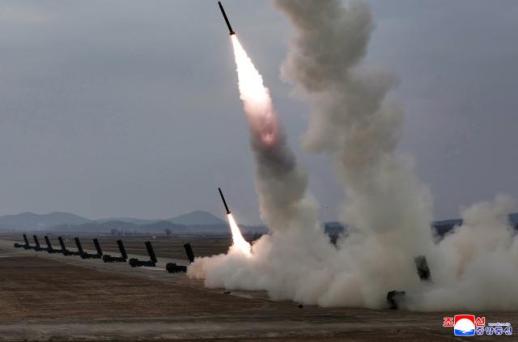 North Korea warns of 'destruction' as Japan moves to lift lethal arms export ban SEOUL, March 20 (AJP) - North Korea's state news agency, the Korean Central News Agency, denounced a legislative push in Tokyo to dismantle decades of restrictions on the export of lethal weaponry through a formal commentary on Friday. The media outlet characterized the move by the Liberal Democratic Party and Japan Innovation Party as a final abandonment of the "exclusively defense-oriented" posture Japan adopted following its defeat in World War II. The proposal recently submitted to Prime Minister Takaichi Sanae seeks to abolish the "five categories" principle that currently limits exports to non-combat equipment such as rescue, transport, and surveillance gear. If enacted, the revised policy would authorize the transfer of fighter jets, destroyers, and submarines to 17 nations with which Tokyo maintains defense technology agreements. Pyongyang alleged that the shift is a calculated effort to transform the Japanese economy into one centered on a "gigantic military-industrial complex." The restrictions under challenge are rooted in Japan’s post-war identity and the 1947 Constitution, which renounces war and prohibits the maintenance of "war potential." In 1967, the Three Principles on Arms Exports were established to prevent the nation from fueling international conflicts, effectively resulting in a total ban by 1976. This pacifist stance was first significantly altered in 2014 under the administration of Abe Shinzo, and further relaxed by the current government to allow for the transfer of finished defense products to Washington. KCNA argued that Tokyo is maneuvering to secure "re-invasion" capabilities by testing its weapon systems in global "hot spots" to verify their killing efficiency. The commentary warned that such a massive export of offensive weapons constitutes a grave challenge to global peace and will inevitably trigger an intense arms race among neighboring countries. The report stated that the path toward new weapon markets is a road to "irretrievable destruction" for the island nation. The pursuit of these exports is seen by regional observers as a move to bolster the domestic defense industry while deepening security ties between Tokyo, Washington, and the administration of President Lee Jae Myung in Seoul. However, the commentary emphasized that any shift toward a military-led economy would only serve to destabilize the geopolitical balance in East Asia. The report concluded that the current trajectory of the Takaichi government marks a dangerous escalation in the militarization of the region. 2026-03-20 08:27:35
 -
 Netflix to Livestream BTS ‘Comeback Live: Arirang’ From Seoul’s Gwanghwamun Square Ticket demand for “BTS Comeback Live: Arirang (ARIRANG),” set for March 21 at Seoul’s Gwanghwamun Square, has been intense. The venue’s 22,000 seats sold out immediately, and the ticketing site’s virtual queue topped 100,000 people. Because it is a free outdoor show, some forecasts say as many as 260,000 people could gather on site. Fans who cannot attend in person will still be able to watch live. Netflix said it will stream the Gwanghwamun performance in real time to more than 190 countries. For Netflix, the company said, the event is its first live event in South Korea and a major test of live-streaming capability in the OTT market. Netflix is also highlighting the production team. The show is overseen by Hamish Hamilton, a director known for major live broadcasts, including multiple U.S. Super Bowl halftime shows featuring artists such as Madonna, Beyonce and, most recently, Bad Bunny. Hamilton, who has led broadcasts including the 2012 London Olympics opening ceremony and awards shows such as the Grammys and Oscars, is expected to bring a style that goes beyond standard coverage, capturing small movements and emotional moments, Netflix said. The opening, which begins as three gates at Gwanghwamun open, the large stage planned around the Yukjo Madang area, and media-facade visuals along the walls are all to be carried on Netflix’s stream. To support the broadcast, Netflix said it is applying operational know-how built over the past decade to deliver what it described as “flawless” streaming without delays even with large numbers of simultaneous viewers worldwide. Netflix said it has built a stable viewing environment using its content delivery network, Open Connect. It will use advanced video-encoding technology that adjusts quality in real time to match a user’s network conditions, along with load-balancing technology designed to prevent traffic from concentrating on a single server. Netflix also said it has set up a multi-layer recovery system that automatically switches to a backup encoder if the main encoder fails, reducing the risk of interruptions. The company said it has tested the stability of such technology through live events including the “Jake Paul vs Mike Tyson” boxing broadcast and “Baby Gorilla Cam.” A Netflix official said the company is “putting full effort into broadcasting this BTS comeback live by mobilizing all live know-how accumulated since 2023 by the best experts for the best live.” The official added that, unlike offline concerts limited to a specific location or ticket holders, Netflix aims to create “a historic moment in K-culture” in which fans worldwide watch at the same time under the same subscription conditions. Netflix’s plan extends beyond the livestream. The company has already promoted BTS-related content through a marketing push around Seoul’s Seongsu-dong area. The rollout continues March 27 with the feature-length documentary “BTS: The Return.” The film is directed by Bao Nguyen, and produced with the global production company This Machine and HYBE, according to the article. It follows the seven members during a 3-year, 9-month hiatus as they gather in Los Angeles to reflect on what “BTS” means and complete the new release “Arirang.” Netflix subscribers will be able to watch both the March 21 live event and the March 27 documentary at no additional cost on TVs, mobile devices and other platforms.* This article has been translated by AI. 2026-03-20 06:03:52
 -
 Geely’s Zeekr Targets South Korea Launch in Q3 With 7X Premium Electric SUV Geely Automobile’s premium electric-vehicle brand Zeekr is preparing to enter South Korea in the third quarter, led by the midsize electric SUV 7X. The model has already drawn attention among Korean consumers, who have dubbed it the “Porsche of the continent.” Zeekr is betting on a “premium masstige” approach — offering high-end specifications at roughly half the price of comparable vehicles — to shake up Korea’s upscale EV market. Industry officials said on the 19th that Zeekr Korea is preparing to launch the 7X with customer deliveries targeted for the third quarter. The company had initially planned a May-to-June launch, but said the schedule slipped due to government certification, building a dealer network suitable for a premium brand, strengthening after-sales service and tightening marketing policies. A Zeekr official said the goal is to minimize gaps between the launch, deliveries and the start of services, adding, “We will be that much more fully prepared.” Zeekr says the 7X will arrive as a 2026 facelifted model, a point that has boosted expectations compared with some import brands criticized for selling older models in Korea. The 7X is similar in size to Kia’s Sorento, with a length of 4,825 millimeters and a wheelbase of 2,925 millimeters, but Zeekr says second-row space is significantly larger, allowing an adult man 180 centimeters tall to stretch out his legs. The company highlights a long list of features typically found in luxury vehicles, including a large display, surround-view camera, automated parking, power reclining seats, a power sunshade, a second-row power table and a refrigerator. With a 75 kWh battery, maximum output is about 370 kW and 0-100 kph acceleration is 5.4 seconds; with a 103 kWh battery, output is 585 kW and 0-100 kph is 2.9 seconds. Zeekr says its 900-volt high-voltage architecture can charge from 10% to 80% in 10 minutes, and it expects a certified driving range of 550 to 600 kilometers per charge. Zeekr believes it can compete in Korea by building a stronger service network than Tesla while pursuing a more premium strategy than BYD. While BYD has lowered the entry barrier with EVs priced in the 20 million won range, Zeekr aims to sell a fully optioned premium EV that would typically cost about 100 million won at roughly half that price, using the “Porsche of the continent” concept. Aggressive pricing is also expected. The domestic launch price for the facelifted 7X is projected to be in the 60 million won range. In Europe, including Germany and the Netherlands, it has been priced at 53,000 euros (90.63 million won), while in China it sells for 229,800 yuan (about 49.5 million won). Zeekr plans to align Korea pricing as closely as possible with China because it views Korea as a strategic market. Zeekr’s Korea strategy is being led by CEO Lim Hyun-gi, who previously served as head of Audi Korea. The company expects him to leverage his experience in building dealer networks to strengthen Zeekr Korea’s retail and after-sales operations. Zeekr Korea plans to target consumers in their 30s to 50s with a “3E” strategy centered on premium positioning, eco-friendliness and family appeal. The push is also being closely watched by Hyundai Motor Group and Tesla, the two leading players in Korea’s EV market. According to the Korea Automobile Importers & Distributors Association, Tesla sold 7,868 vehicles last month, including 7,015 Model Y units, making it the top-selling single EV model in the country. Over the same period, Kia sold 14,488 EVs and Hyundai sold 9,956. Chinese EV brands including Xiaomi, Xpeng and Nio are also watching Zeekr’s performance. An industry official said that if more than 150 Chinese EV brands continue to seek entry into Korea, consumers will have more choices, and competition will accelerate not only in low-priced models but also in the premium segment, reshaping the market around quality. * This article has been translated by AI. 2026-03-20 05:03:29
 -
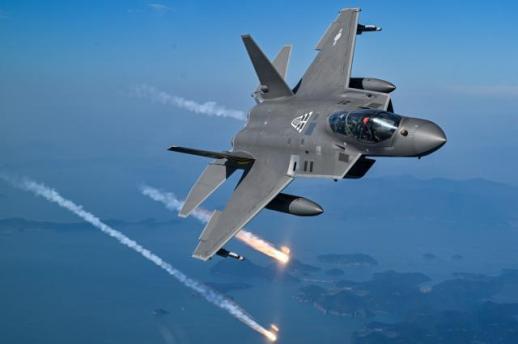 South Korea’s KF-21 Fighter Jet Set for First Export to Indonesia South Korea’s homegrown Boramae (KF-21) fighter jet, slated to enter mass production this year, is set for its first export — to Indonesia, a co-developer of the program. Government and defense industry officials said Thursday that an export agreement for Indonesia to acquire 16 KF-21s is expected to be signed during Indonesian President Prabowo Subianto’s state visit to South Korea planned for later this month, at Korea Aerospace Industries (KAI). Officials said the two sides are expected to fine-tune the final amount afterward and hold a separate contract-signing ceremony in the first half of the year. The deal would mark the first export of a fighter jet developed with South Korean technology. The KF-21 system development program dates to November 2000, when former President Kim Dae-jung declared South Korea would become an advanced aviation nation by developing an advanced fighter jet by no later than 2015. The project is a key national defense program aimed at replacing the Air Force’s aging F-4 and F-5 aircraft with a domestically developed 4.5-generation fighter suited to future battlefields. The program initially struggled to gain traction over feasibility questions and securing advanced technologies, but accelerated after the Defense Acquisition Program Administration signed a main system development contract with KAI in December 2015. A total of 8.1 trillion won was invested in system development with Indonesia from 2015 through this year, and 8.4 trillion won has been set aside for mass production costs from 2026 to 2028. The overall project cost totals 16.5 trillion won, and has been described as the largest defense capability buildup project since the founding of the nation. In January, the KF-21 completed a test flight successfully. DAPA plans to finalize system development in the first half of this year and begin delivering the first mass-produced aircraft to the Air Force in the second half. * This article has been translated by AI. 2026-03-19 19:36:18