
Journalist

Choi Jong-moon
-
 KOSPI slips after record rally while BOK holds rate but signals hikes ahead SEOUL, May 28 (AJP) - The Bank of Korea held its benchmark interest rate steady on Thursday but delivered its clearest signal yet that a tightening cycle is coming, pulling the KOSPI back from this week's record highs as traders repriced for higher borrowing costs ahead. The central bank kept its policy rate at 2.5 percent, a decision nearly every economist had expected, at the first meeting chaired by new BOK governor Shin Hyun-song. The news lay in the dissent: five of the seven board members voted to hold while two pushed for an immediate increase, a rare split that underscored how quickly the policy mood has shifted. The board's own projections now lean toward lifting the rate to 3 percent within six months, with two members signaling it could rise further, toward 3.25 percent. The benchmark KOSPI fell about 0.5 percent to close at consecutive sessions, taking profit after a rally that has nearly doubled the index this year, while domestic individuals and institutions continued to provide the offsetting demand that has sustained the market through the run. Market breadth, though still narrow, was less lopsided than Wednesday, when only 77 stocks advanced against 826 declines on the main board even as the index set a record — a sign the rally may be beginning, tentatively, to widen beyond its semiconductor core. The junior KOSDAQ underperformed the main board, weighed by weakness across smaller growth shares. Elsewhere in Asia, Japan's Nikkei 225 closed down nearly 0.5 percent at around 64,693, easing from record territory as investors positioned ahead of the Bank of Japan's mid-June policy meeting, now widely seen as the likely moment for its next rate increase. China bucked the regional trend, the Shanghai Composite edging up around 0.25 percent to close near 4,103, led by a near 6 percent jump in SMIC, the country's largest chipmaker, on optimism over China's drive for domestic chip self-sufficiency. The Korean won eased to around 1,504 against the dollar, weaker than Wednesday's close near 1,500.9 and consistent with the strain the central bank cited in justifying a tighter path. Oil, the source of the inflation pressure behind the day's decision, remained the key external variable. The regional picture is one of central banks diverging. Korea and Japan are both edging toward tighter policy, while China leans the other way in search of growth. For Korea, the message of the day is that the era of cheap money is ending — and a path toward 3 percent rates will test the chip-driven rally that has powered the market all year, pressuring the lofty valuations behind it even as a firmer won reshapes the calculus for the foreign investors who have lately been selling. 2026-05-28 16:38:49
 -
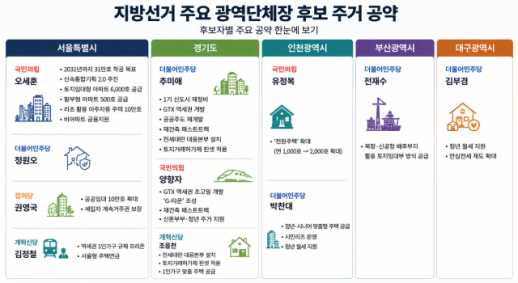 New Housing Models Proposed Ahead of Local Elections As the June 3 local elections approach, candidates for regional leadership positions are unveiling various housing models, including 1,000-won housing, citizen REITs, installment apartments, and land lease housing. These policies target young people, newlyweds, and those displaced by redevelopment projects. However, an analysis of the official five-point pledges submitted to the National Election Commission on May 28 reveals that few candidates have provided specific details regarding supply volume, funding, pricing conditions, or implementation pathways. The analysis categorized the new housing models proposed by candidates into land lease, installment, REITs, 1,000-won housing, and social housing. This review focused on the extent to which the official pledges outlined the supply entities, funding sources, volume, pricing conditions, and execution methods, rather than ranking the merits or effectiveness of the policies. In Seoul, Oh Se-hoon, the candidate from the People Power Party, proposed land lease apartments, installment apartments, and housing for migrants utilizing REITs, along with financial support for non-apartment construction. Oh aims to initiate the construction of 310,000 units by 2031 through the Rapid Integrated Planning 2.0 initiative, with plans to supply 6,000 land lease apartments and 500 installment apartments. His proposal also includes 100,000 units of REITs-based housing for migrants and financial support for non-apartment construction. While the official pledge document provides relatively detailed information on supply volume and business methods, actual occupancy may take time due to the construction timeline. Additionally, the land lease housing model's success depends on land acquisition methods and consumer preferences. The installment apartments also require further clarification on repayment structures and the timing of ownership transfer in subsequent plans. In the Incheon mayoral race, Yoo Jeong-bok from the People Power Party stands out with his pledge for 1,000-won housing, aiming to expand the current program, which operates at 1,000 units annually, to 2,000 units. While this expansion is based on an existing policy, the official pledge document does not sufficiently clarify land acquisition strategies, target demographics, locations, or selection criteria. Park Chan-dae, the Democratic Party candidate for Incheon mayor, has promised housing tailored for youth and seniors, citizen REITs, Incheon-style social housing, and rental support for young people. However, the operational structure of the citizen REITs, supply volume, and profit-sharing methods are not clearly outlined in the official pledge document. Similarly, details regarding the supply areas, methods, and volume for Incheon-style social housing require further explanation. In Busan, Jeon Jae-soo from the Democratic Party proposed public SPC land lease supply utilizing the North Port and the area behind the new airport. However, this proposal is intertwined with other development projects, making it difficult to assess the timing and volume of housing supply separately. In Sejong, candidate Jo Sang-ho proposed supplying 1,000 units of basic housing for youth, while Choi Min-ho proposed 3,000 units of rental housing exclusively for civil servants. Yet, the official pledge documents still need additional details on supply methods, pricing conditions, funding structures, and land acquisition plans. Experts emphasize the importance of evaluating supply volume, funding, and execution pathways rather than merely focusing on the new housing models. The supply shortage in Seoul and the surrounding metropolitan area is linked to a lack of new construction in urban centers, suggesting that small-scale models targeting specific demographics may not sufficiently alleviate overall market instability. Song Seung-hyun, CEO of Urban and Economy, stated, "Seoul's supply expansion pledges must also address business viability and regulatory easing. The level of detail in execution plans will influence the credibility of the pledges." Seo Jin-hyung, a professor at Kwangwoon University, noted that while recent housing welfare policies are shifting from selective to universal welfare, the critical issue remains securing funding. He added, "While redevelopment projects can increase supply, they may also trigger price hikes, necessitating complementary policies." Kim Je-kyung, head of Tumi Real Estate Consulting, remarked, "Among local election pledges, policies related to redevelopment projects can have the most direct impact on the market, as they are linked to the Seoul city's permitting authority. It is essential to assess the candidates' genuine commitment and sincerity in their proposals." 2026-05-28 16:38:00
 -
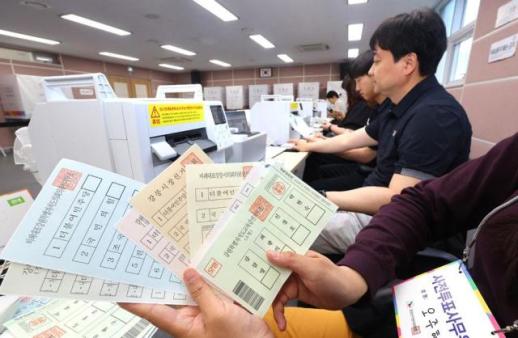 Two-day early voting for local elections set to begin this week SEOUL, May 28 (AJP) - Early voting for the upcoming June 3 local elections is set to begin this week. According to the National Election Commission (NEC), voters may cast their ballots at any polling station nationwide, regardless of their registered address, from 6 a.m. to 6 p.m. over two days from Friday to Saturday. Voters must bring a photo ID showing their date of birth such as a resident registration card, passport or driver's license. Mobile IDs are accepted only if they can be opened and verified on site, and saved images are not valid. Depending on their registered address, voters may receive up to seven ballots, as the elections will choose about 4,000 metropolitan mayors, provincial governors, local government heads and education superintendents, and fill other vacancies. Voters should use the official tool provided at polling booths and mark just one candidate per ballot. Taking photos inside polling stations or of ballots is prohibited, and violators can face up to two years in prison or a fine of up to 4 million won (about US$2,700). Damaging ballots or causing a disturbance at a polling station is also punishable. Meanwhile, more than 44.6 million people are eligible to vote, up more than 340,000 from the previous elections in 2022. Of them, 89,151 are South Koreans residing overseas and 151,532 are foreigners staying here. 2026-05-28 16:35:31
 -
 Salary Workers Launch AX Organization to Drive AI Development Salary Workers has established a dedicated organization for AI transformation (AX) aimed at creating an AI-centered development environment. According to Salary Workers on May 28, the AX team is an engineer-focused organization that seeks to enhance brand productivity and operational efficiency through AI transformation. Team members assigned the role of AX engineers will develop and implement strategies to maximize AI utilization in the product development process. The formation of the AX organization is part of a strategy to accelerate business expansion, contributing to the enhancement of Salary Workers' platform capabilities. Salary Workers envisions an AI-centered development system that goes beyond mere efficiency improvements, aiming to introduce new features and shorten service update cycles. The short-term goal of the AX organization is to expand an AI-centered development system focused on efficient reasoning. To achieve this, the team will concurrently pursue protocol definition, standardization, and harness engineering. They will define agreements on development outputs, unify work processes, and establish a harness system to enhance reasoning reliability. In the medium to long term, the focus will be on creating business impact. The dedicated team plans to expand its AI transformation experience, initially applied in the development sector, across the entire business. A representative from Salary Workers stated, "Standardization and automation of the development process are essential steps to maximize the effectiveness of AI utilization. We aim to build a reliable development environment to create a more stable service operation system."* This article has been translated by AI. 2026-05-28 16:34:00
 -
 Chinese Embassy Criticizes US Forces Commander for 'Dagger' Comment The Chinese government has strongly criticized U.S. Forces Korea Commander Javier Brunson for describing South Korea and the U.S. military presence there as a "forward base" for countering China. On May 28, the Chinese Embassy in South Korea issued a statement in response to Brunson's recent public remarks, stating, "Your comments have clearly crossed the line." Brunson had previously likened South Korea to a "dagger" and a "fixed aircraft carrier" in the context of its geographical significance and the role of U.S. forces in deterring China. A spokesperson for the Chinese Embassy questioned, "Is referring to U.S. forces as an aircraft carrier or dagger an act of aggression, or is there an intention to take other countries hostage?" The spokesperson also referenced a recent agreement between U.S. and Chinese leaders to establish a "constructive and strategically stable relationship," asking Brunson whether his hostile remarks toward China were sanctioned by Washington or aimed at undermining the outcomes of the U.S.-China summit. Additionally, some South Korean media outlets have criticized Brunson's comments, urging him to respect regional countries and work harder to promote peace and stability in the area. This statement from the Chinese Embassy is seen as an effort to counter U.S. moves to expand the role of U.S. forces in South Korea beyond North Korean deterrence to include responses to regional conflicts such as those in the Taiwan Strait. China has recently reiterated the need for stability in U.S.-China relations. According to state-run Xinhua News Agency, Wang Yi, a member of the Political Bureau of the Communist Party of China and Foreign Minister, met with U.S. strategic and economic figures in New York on May 27, stating, "China-U.S. relations extend beyond bilateral ties and affect global peace and the future of humanity." Wang emphasized the need for both countries to quickly realize a "constructive strategic stability relationship." Regarding the Taiwan issue, he stated, "Taiwan independence and peace and stability in the Taiwan Strait are incompatible."* This article has been translated by AI. 2026-05-28 16:34:00
 -
 Bank of Korea Holds Interest Rates Steady Under New Governor Shin Hyun-sung Shin Hyun-sung, the new Governor of the Bank of Korea, held his first monetary policy committee meeting and decided to keep the benchmark interest rate unchanged. Market attention focused not just on the decision itself but on the future trajectory of interest rates. Governor Shin indicated that he would consider raising the benchmark rate at an appropriate time, taking into account inflation and financial stability. This decision, characterized as a 'hawkish' hold, sends a signal of monetary tightening, aligning closely with the central bank's fundamental role in light of the current economic realities facing South Korea. Coincidentally, the United States is also experiencing a leadership transition at its central bank. The Federal Reserve is adjusting its initial policy direction under new leadership. Both central banks are facing scrutiny as they deliver their 'first messages' to the market. In the U.S., inflationary pressures are mounting, creating conditions more favorable for interest rate hikes rather than cuts. Meanwhile, South Korea must navigate a complex landscape of unexpected economic growth, rising household debt, real estate market fluctuations, and currency volatility. Given this context, Governor Shin's initial message carries significant weight. He stated, "The most challenging aspect is when the factors we consider conflict, leading to a dilemma. However, this time, looking at inflation, growth, exchange rates, and real estate, the path forward is clear." This declaration suggests that all indicators are pointing toward a single goal: raising interest rates. Recently, South Korea's economy has shown relatively strong growth, buoyed by a semiconductor boom and recovering exports. However, a closer look reveals underlying weaknesses. Real estate prices in the capital region are rising again, and household debt is increasing at an alarming rate. The ongoing conflict in the Middle East has led to rising international oil prices and increased currency volatility, contributing to upward pressure on inflation. This has raised concerns in the market about the potential for inflation due to the combination of fiscal expansion and rising oil prices. In this environment, the first monetary policy meeting under Governor Shin strongly suggests the possibility of two additional interest rate hikes within the year, which is seen as a signal to reduce market uncertainty. The prevailing sentiment in the market, driven by the impact of the Middle East conflict, has been in favor of interest rate increases, leading to rising rates. In a structure like South Korea's, where asset markets and household debt significantly influence the economy, a passive stance from the central bank could exacerbate issues. Governor Shin's remarks have effectively confirmed the likelihood of a rate hike, the first in three and a half years. Within the Federal Reserve, there is a growing sentiment that "signals of interest rate increases must be sent." Earlier this year, the market favored expectations of rate cuts, and there was pressure from the President for such cuts. However, recent inflation concerns stemming from the Middle East conflict have opened the door to potential rate hikes. Despite pressures from the market and political spheres, the Fed appears committed to maintaining price stability. This underscores the notion that the trust in a central bank stems from its ability to make uncomfortable decisions. Governor Shin must firmly grasp this critical point. As calls for economic stimulus grow amid the government's expansionary fiscal policy, the independence of the monetary authority and its commitment to price stability will face increasingly stringent tests. In times when fiscal and monetary policies are misaligned, the central bank must play a stabilizing role. Failing to tighten monetary policy could lead to severe consequences, including currency instability and entrenched inflation in the future. Of course, tightening alone is not a panacea. With the pain of small business owners and vulnerable borrowers reaching a critical point, interest rate policies always come with painful side effects. The key, as Governor Shin mentioned, lies in the speed and direction of these policies. Another crucial task for the Bank of Korea is to manage market expectations effectively, providing a compass for economic actors to navigate a predictable environment. As the last line of defense for the economy, the central bank must be willing to deliver tough messages, even if they are uncomfortable for the market. In this regard, the first monetary policy meeting under Governor Shin has left a legacy that goes beyond a simple rate hold. What the Bank of Korea needs now is time to build trust, which begins with a principled monetary policy that moves steadily toward a clear destination indicated by the data. 2026-05-28 16:34:00
 -
 Hana Bank Launches 'Korea Forever Savings' for Veterans with 2% Interest Rate Hana Bank announced on May 28 that it will launch the 'Korea Forever Savings' account on June 1, in honor of the month dedicated to patriotic service and veterans.The Korea Forever Savings account offers a preferential interest rate of 2.0% per year to veterans, police officers, firefighters, and other uniformed personnel without any conditions.General customers can also benefit from a maximum interest rate of 2.0% by meeting certain criteria: a 1.0% rate for making six or more salary or pension deposits within the first year, a 0.5% rate for the first transaction, and an additional 0.5% for completing a pledge to display the national flag and demonstrate love for the country.From June 15 to August 15, customers who sign up will have a chance to win prizes through a lottery, including five An Jung-geun medals and twenty Taegeukgi card medals. Additionally, 100 participants will receive an opportunity to join a tour of the Seoul Veterans Affairs Office's historical sites along with a commemorative gift.Active police officers and firefighters who open an account will receive a 3,000 won mobile voucher for Paris Baguette.The savings account will be available for a limited time, with a cap of 60,000 accounts sold from June 1 to August 15. Each year, Hana Bank collaborates with various organizations, including the Daejeon Veterans Affairs Office, to launch products in recognition of the month dedicated to patriotic service.* This article has been translated by AI. 2026-05-28 16:32:00
 -
 Oh Se-hoon: Negative Campaigning Accusations Misguided Oh Se-hoon, the People Power Party candidate for Seoul Mayor, criticized his opponent Jung Won-o on May 28, stating, "It is misguided to classify unfavorable comments as negative campaigning." This remark was in response to Jung's claim that he refused to participate in a debate due to negative attacks from Oh's camp. During a press conference held at his campaign office in Gwancheol-dong, Oh expressed that Jung's approach to the election was not appropriate. He emphasized, "Elections are fundamentally about verification," adding that both positive and negative aspects should be examined to assess a candidate's capabilities. He noted that how candidates respond to unfavorable circumstances is also a critical evaluation factor. Oh defined negative campaigning as "creating falsehoods to attack opponents," asserting that his campaign has never made baseless claims but has only sought clarifications regarding past actions. He stated, "It is wrong to label something negative simply because it is unfavorable to oneself." He further criticized Jung, saying, "A candidate who classifies requests for clarification as negative and refuses to attend debates may be the first in the world to do so." Oh insisted that the more significant and personal the issue, the more it is the candidate's responsibility to clarify directly to voters, rather than relying on their campaign or spokesperson. Oh also accused Jung of engaging in smear tactics throughout the election. Jung claimed, "From the beginning of the campaign, I proposed a policy-focused election without negativity, but I have consistently faced slander against me." In response to Jung's heightened criticism regarding safety concerns, Oh firmly rebutted, stating, "I was the one who led the installation of closed-circuit television at construction sites commissioned by the city and the 100% installation of screen doors in subways." He reiterated his commitment to prioritizing safety through policy development and execution. Regarding a recent poll showing both candidates tied in support, Oh stated he would not be swayed by the results and would continue to campaign with a challenger’s mindset until the election's conclusion. He remarked, "This was an expected phenomenon," and expressed his determination to campaign vigorously, saying, "I have worked hard over the past five years and have relied on policies to win support. I trust the citizens of Seoul." A survey conducted by Munhwa Ilbo and Embrain Public from May 25 to 27 revealed that both Jung and Oh received 39% support, significantly narrowing the gap that was previously in double digits. The poll involved 805 Seoul voters and had a response rate of 14.0%, with a margin of error of ±3.5 percentage points at a 95% confidence level. For more details, refer to the Central Election Survey Deliberation Committee's website. Oh's campaign is currently considering resuming active campaigning. He had suspended his campaign schedule following the collapse of the Seosomun overpass on May 26 to focus on recovery efforts and response measures. Since the incident, he has visited the site four times and paid respects to the victims without notifying the media on May 27. During the press conference, Oh stated, "It is premature to discuss resuming campaign activities while the victims have not yet been laid to rest," but acknowledged the importance of the election and indicated he was deeply contemplating the situation.* This article has been translated by AI. 2026-05-28 16:30:00
 -
 K-Tourism's Future Rides on Fair Accommodation Practices As the large K-pop concert in Busan approaches in June, the issue of accommodation overcharging has resurfaced. The practice of unilaterally canceling confirmed reservations and demanding extra fees goes beyond mere pricing disputes; it undermines the very order of transactions. This behavior leaves foreign tourists with a negative impression, shaking the foundation of trust that is vital for K-tourism. In response, the city of Busan and local communities have stepped in, urgently providing over 1,300 alternative accommodations by utilizing university dormitories and religious facilities. It is a bittersweet scene where local governments, desperate to attract tourists, take on the role of firefighters to prevent some businesses from exploiting the situation for short-term profits. In this context, the establishment of the 'Task Force to Eradicate Regional Overcharging' by the government on the 28th holds significant importance. Led by the Ministry of Economy and Finance and the Ministry of Culture, Sports and Tourism, the task force includes the Fair Trade Commission, the National Tax Service, the National Police Agency, and the city of Busan. Notably, this response goes beyond mere recommendations for restraint. The government plans to eliminate the cap on rewards for reporting price collusion and unfair practices among accommodations, offering up to 10% of fines as rewards. Joint inspections by the National Tax Service and the Fair Trade Commission will be conducted, with corrective orders and business suspensions for any identified violations. Additionally, businesses found guilty of overcharging will face a threefold increase in penalties for hotel grading evaluations. The true significance of this task force lies in the government's clear intention to regulate accommodation prices and reservation practices within a formal framework for the first time. In February, the government had already announced measures to eradicate overcharging, introducing the 'Safe Price System' that requires accommodations to report and disclose seasonal pricing in advance. Amendments to relevant laws, including the Tourism Promotion Act, are underway to allow for business suspensions if accommodations charge more than reported or fail to display prices. Proposals are also being considered to penalize unilateral reservation cancellations. Historically, the domestic accommodation market has been left unchecked during specific periods such as concerts, festivals, and holidays under the guise of 'market pricing.' However, the government's current approach is different. Rather than simply preventing price increases, it aims to establish a minimum level of predictability and order in transactions. This means ensuring that tourists can check into their reserved rooms and pay the displayed prices. Of course, there are structural issues. While demand for K-pop concerts and international events is rapidly increasing, the supply and management of accommodations have not kept pace. This is why prices skyrocket whenever demand concentrates in specific areas. However, overbooking and overcharging cannot be justified. Supply shortages are a policy issue, while undermining transaction order is a separate concern. As we talk about a future with 20 million foreign tourists, tourism competitiveness cannot be built solely on flashy content. The level of Korean tourism ultimately depends on how tourists are treated outside world-class venues, whether they can access their reserved rooms, and if the displayed prices are honored. K-pop has already reached the pinnacle of global success. Now, the focus must shift to enhancing the fundamental capacity of Korean tourism to welcome these fans. If local communities continue to scramble for alternative accommodations every time a concert is held, the growth of K-tourism will inevitably face limitations. What is needed now is not another campaign but a predictable accommodation order. It is hoped that this task force will serve as a starting point for rebuilding trust in the accommodation market beyond mere one-time crackdowns. 2026-05-28 16:24:00
 -
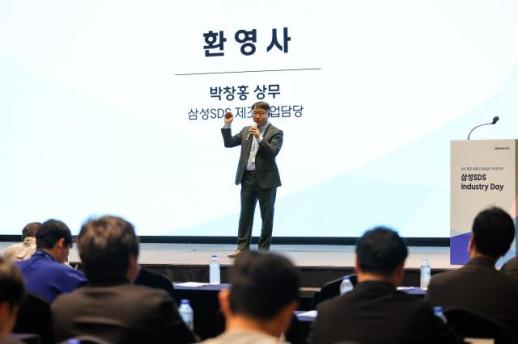 Samsung SDS Shares AI Transformation Strategies with Manufacturers in Chungcheong and Jeolla Regions Samsung SDS hosted the "Samsung SDS Industry Day" on May 28 at Lotte City Hotel in Daejeon, targeting manufacturing companies in the Chungcheong and Jeolla regions. The event focused on sharing strategies for AI transformation (AX) in the manufacturing sector and showcased innovative case studies. The Industry Day serves as a customer seminar introducing Samsung SDS's key solutions, service directions, and actual implementation cases across various industries, including public, finance, manufacturing, distribution, and defense. Since March, Samsung SDS has conducted seminars starting with the public sector, followed by sessions for manufacturing, distribution, services, and finance in April. Under the theme "AX: Accelerating the Future of the Manufacturing Industry," the seminar attracted over 100 IT professionals from manufacturing companies in the Chungcheong and Jeolla regions. The agenda included strategies for implementing AX in manufacturing and real-world examples of AI-driven business innovations and outcomes. In his welcoming remarks, Park Chang-hong, Executive Director of Samsung SDS's Manufacturing AM Team, stated, "Companies are now focusing on how to apply AI to their operations to achieve tangible results, moving beyond mere AI adoption. Samsung SDS is actively supporting our clients' successful AX transformations based on our AI full-stack strategy." Samsung SDS is enhancing its approach to the AX market by leveraging its comprehensive AI full-stack strategy, which encompasses AI infrastructure, platforms, solutions, and consulting, covering all areas from implementation to operation. This strategy aims to support not just technology adoption but also real operational innovations and outcomes. The subsequent presentation session highlighted several AX innovation cases in the manufacturing sector, including: data platforms for manufacturing AX, the Harim Group's One ERP implementation, AI-driven product lifecycle management (PLM) strategies, operational technology (OT) security strategies against ransomware, applications of 5G networks for physical AI implementation, and the use of generative AI-based collaboration solutions like Britworks. Samsung SDS noted that the OT security strategy, tailored to the unique characteristics of manufacturing environments where production halts can lead to significant losses, and the application of 5G networks for the dissemination of physical AI within factories garnered considerable interest. In domestic manufacturing settings, various robots, including automated guided vehicles (AGVs) and autonomous mobile robots (AMRs), are being utilized. The integration of AI allows for the creation of a physical AI environment that can control robots and processes with a single complex command. Samsung SDS introduced a case study on building a 5G network that supports real-time data transmission between robots and control systems. Additionally, Samsung SDS presented the One ERP implementation case for the Harim Group, which connects 18 key subsidiaries. The company shared its experience and results in standardizing ERP to enhance operational efficiency, aligning with Harim Group's integrated business structure from raw materials to distribution. Lee Jeong-heon, Vice President and Head of Strategic Marketing at Samsung SDS, remarked, "This seminar was significant in sharing AX implementation directions and actual innovation cases with manufacturing companies in the Chungcheong and Jeolla regions. Samsung SDS will continue to provide insights to clients across various industries based on our AI full-stack capabilities and industry expertise." Meanwhile, Samsung SDS is expanding its AX business across various sectors, including manufacturing, finance, and public services, leveraging its AI full-stack capabilities that encompass infrastructure, platforms, solutions, and consulting. The company's strategic collaborations with global firms allow for the flexible adoption of various AI models, tailored to client operations through consulting and system integration (SI) capabilities. Notably, Samsung SDS is rapidly expanding the application of AI in real operational environments, including customer service and manufacturing sites, through innovations driven by AI agents.* This article has been translated by AI. 2026-05-28 16:20:00