
Journalist

Christopher Featherstone
-
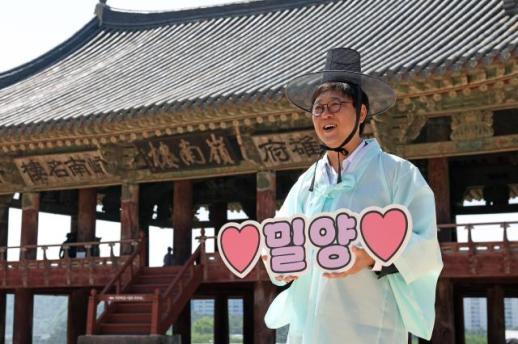 Miryang Attracts Tourists with Half-Price Travel Program, Minister Praises Efforts "I can really feel the impact of the half-price travel program here in Miryang," said Choi Hyu-young, the Minister of Culture, Sports and Tourism, during his visit to the city on May 14-15. Minister Choi attended a Miryang Arirang performance, purchased books at Cheonghak Bookstore, and enjoyed a bowl of pork soup at Miryang Market. He also climbed Yeongnamru to take in the panoramic views of the city, appreciating Miryang's unique charm. Tourism has become a key driver of growth for Miryang's local economy. As population outflows continue to major cities like Seoul and Busan, Miryang's population fell below 100,000 last year. However, the city has focused on attracting tourists by promoting its traditional culture, heritage, and local cuisine, resulting in an increase in visitors. Recently, young entrepreneurs have also begun to capture the attention of younger demographics by developing local specialties like Bupyeon-tteok. The half-price travel program has attracted thrifty tourists, spreading warmth throughout the local tourism sector. Jointly promoted by the Ministry of Culture, Sports and Tourism, the Korea Tourism Organization, and local governments, the program reimburses half of the travel expenses—such as accommodation, meals, and experiences—through mobile local love gift certificates for visitors to declining population areas. The ministry secured additional funding in the recent supplementary budget to expand the number of supported locations from 20 to 30 due to high demand. Indeed, Miryang's applications for the May half-price travel program sold out in just one day. Minister Choi visited Yeongnamru and Miryang Fortress, both certified travel destinations under the half-price program, and found them bustling with tourists even on a weekday morning. Lee Kyung-sook, head of the Tourism Promotion Division in Miryang, stated, "In April, we received 2,000 applicants, and in May, 2,500, all of which filled up in just one day." She noted that immediate reimbursement processing, along with mail delivery of tourism guides and seasonal events, has received positive responses. She added, "There are tourists returning to participate in monthly events, which is helping the local economy." Applications for the June half-price travel program will open on May 28. Although Miryang is classified as a population decline area with its population below 100,000, the impact of the half-price travel program has led to over 100,000 digital resident certificates being issued. The city is promoting local consumption by linking major tourist attractions like Sunshine Miryang Theme Park, Miryang Arirang Space Observatory, and Miryang Ice Valley Cable Car with the benefits of digital tourism resident certificates. The half-price travel initiative appears to be yielding greater results than policies aimed at addressing population decline. On the same day, Minister Choi met with officials involved in the 'Tourism Dure' project, which aims to empower residents to create and operate tourism businesses based on local resources and stories. The ministry plans to nurture over 100 new youth businesses in non-capital areas, backed by a supplementary budget of 3.1 billion won for the 'Youth Tourism Dure' program confirmed in April. One participant from Changwon expressed concern, saying, "Due to a lack of cultural infrastructure and job opportunities, friends interested in culture are leaving for Seoul or Busan." In response, Minister Choi emphasized the need for improved cultural infrastructure and content to retain residents, stating, "Through the 'This is Coming to Our Neighborhood' project, we will ensure that performances and exhibitions are easily accessible in local areas." He promised to create an environment where residents feel that culture is always present in their lives, rather than feeling disconnected from cultural centers.* This article has been translated by AI. 2026-05-15 21:34:44
 -
 Solar Stocks Plummet Amid US-China Reconciliation Hopes Following the recent US-China summit, optimism for improved relations between the two countries has led to a sharp decline in solar stocks, which had previously surged. The expectation of benefits from increased US restrictions on China has weakened, resulting in a wave of profit-taking. As of 2:59 PM on May 15, HD Hyundai Energy Solutions was trading at 195,600 won, down 48,400 won (19.84%) from the previous trading day. At the same time, OCI Holdings saw a drop of 80,000 won (21.95%), bringing its stock price to 284,500 won. Recently, solar stocks had been buoyed by the US's efforts to effectively exclude Chinese solar supply chains. On May 8, Reuters reported that Sunrun, the largest residential solar installer in the US, had removed Chinese module manufacturers from its approved supplier list distributed to installation partners. Sunrun cited uncertainties regarding compliance with the tax credit requirements under the US Inflation Reduction Act (IRA) as the reason for restructuring its supply chain to focus on non-Chinese sources. The approved list included only non-Chinese companies such as Silfab, Elin, and REC Group, while Chinese firms like Canadian Solar, JinkoSolar, and Longi Solar were excluded. This development has fueled speculation that the Chinese solar supply chain in the US could collapse rapidly. Starting in 2026, the US plans to tighten the requirements for clean energy tax credits under the Made in America (MACR) standards, which, if not met, will restrict access to the Investment Tax Credit (ITC) and Production Tax Credit (PTC). As a result, companies like Hanwha Solutions and OCI Holdings, which have production bases in the US, have emerged as key beneficiaries. However, following the US-China summit, the mood shifted as expectations for cooperation between the two nations grew. Concerns have increased that US restrictions on China may be less stringent than anticipated, leading to concentrated profit-taking in solar stocks that had previously surged on the back of US-China tensions.* This article has been translated by AI. 2026-05-15 21:33:00
 -
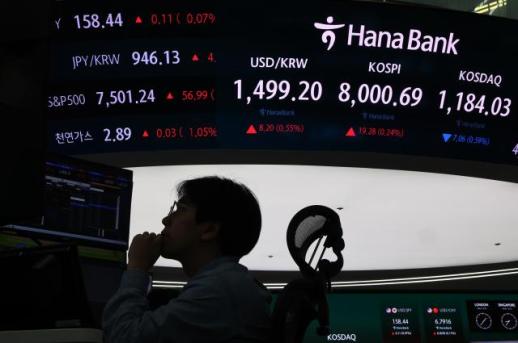 Korean Won Surpasses 1500 Against US Dollar Amid Inflation Concerns The won-dollar exchange rate surpassed 1500 won for the first time in over a month. As of 2:50 PM on May 15, the exchange rate in the Seoul foreign exchange market stood at 1504.7 won per US dollar. The rate opened at 1494.2 won, up by 3.2 won from the previous session, and continued to rise throughout the afternoon. This marks the first time the rate has exceeded 1500 won since April 7. The strengthening of the dollar is interpreted as a response to growing global inflation concerns. The dollar index, which measures the dollar's value against six major currencies, rose by 0.31% to 99.19 compared to the previous trading day. In April, the U.S. Producer Price Index (PPI) increased by 6.0% year-on-year, the highest rate since December 2022, largely due to soaring energy prices. Additionally, the Consumer Price Index (CPI) for April showed a 3.8% increase from the previous year, marking the largest rise in nearly three years, further heightening inflation fears. The depreciation of the won appears to be influenced by foreign selling. As of 2:54 PM, foreign investors had net sold 5.8553 trillion won in the stock market.* This article has been translated by AI. 2026-05-15 21:30:19
 -
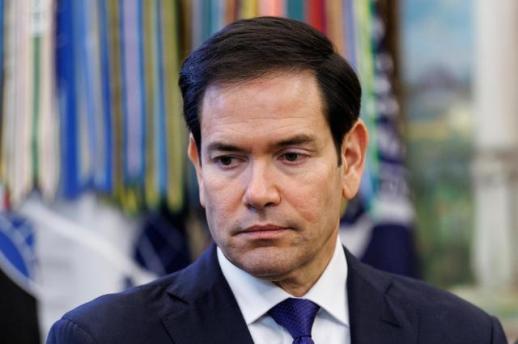 U.S. Secretary of State Rubio: No Change in Taiwan Policy Amid China Tensions The U.S. State Department has reaffirmed that its policy toward Taiwan remains unchanged. Despite discussions on Taiwan during a meeting between President Donald Trump and Chinese President Xi Jinping in Beijing, the U.S. has indicated it will maintain its existing stance. On May 14, in an interview with NBC, Secretary of State Marco Rubio stated, "As of today, and based on today's meeting, the U.S. policy on Taiwan has not changed." He added, "They always raise this (Taiwan) issue, and we clarify our position before moving on to other topics." Rubio also drew a line regarding the possibility of China's military unification with Taiwan, warning that such an action would be a "big mistake." He cautioned that any aggressive moves would have repercussions not only from the U.S. but also from the international community. He clarified that the issue of arms sales to Taiwan was not a central topic of the recent meeting. "It is well known that China opposes U.S. arms sales to Taiwan, but this issue was not prominently addressed during the Trump-Xi meeting," he said. He noted, "Arms sales to Taiwan are a matter for the President to decide, and Congress also plays a procedural role." Rubio's comments came shortly after Xi strongly emphasized the Taiwan issue during their meeting, stating that it is the most critical matter in U.S.-China relations and warned that failure to address it properly could lead to conflict and tension between the two nations. However, the White House's briefing materials did not separately mention the Taiwan issue. Taiwan welcomed the reaffirmation of U.S. policy. The Taiwanese Foreign Ministry expressed gratitude for the U.S. emphasis on peace and stability in the Taiwan Strait and the maintenance of existing policies. Taiwan criticized the ongoing activities of the Chinese military, stating that Beijing remains a major risk factor for regional peace and stability.* This article has been translated by AI. 2026-05-15 21:28:28
 -
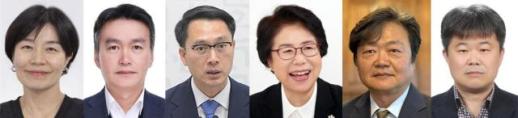 Korea's Lee replaces health and customs deputies SEOUL, May 15 (AJP) - South Korean President Lee Jae Myung replaced the country’s top health and customs officials Friday in a vice-ministerial reshuffle carried out less than a year after both incumbents took office, the presidential office said. Hyeon Su-yeop, spokesperson for the Ministry of Health and Welfare, was named first vice minister of health and welfare, while Lee Jong-wook, vice commissioner of the Korea Customs Service, was appointed customs commissioner, presidential spokesperson Lee Kyu-yeon said Friday. They replace First Vice Health Minister Lee Se-ran and Customs Commissioner Lee Myung-gu, who are stepping down less than a year after assuming office in June and July of last year, respectively. The presidential office dismissed speculation that the reshuffle amounted to disciplinary action. “It has been about a year, and the government believes new appointments are needed to move policies forward more quickly,” spokesperson Lee said, adding that the outgoing officials had helped lay the groundwork for the administration’s key initiatives during its early months in office. New Vice Health Minister Hyeon spent much of her career at the Health Ministry, serving in a broad range of healthcare and welfare policy roles. She previously handled issues involving emergency medical services, pharmaceutical policy, childcare and health technology, before later overseeing population and child policy and serving as ministry spokesperson. New Customs Commissioner Lee Jong-wook was described as a longtime customs official who held several senior posts within the Korea Customs Service, including head of planning and coordination. The presidential office said Lee played a key role in uncovering large-scale illegal export schemes designed to circumvent trade restrictions and tariffs, while also cooperating with Thai authorities to crack down on drug smuggling networks. 2026-05-15 18:00:10
 -
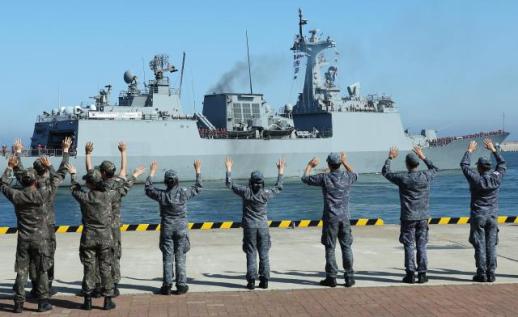 Korea's Cheonghae Unit departs for Gulf of Aden amid Hormuz tensions SEOUL, May 15 (AJP) - The South Korean Navy’s destroyer Wang Geon departed from Busan on Friday to replace the Cheonghae Unit currently operating in the Gulf of Aden, amid speculation that the unit could be deployed near the Strait of Hormuz depending on regional developments. The 4,400-ton Wang Geon, a Chungmugong Yi Sun-sin-class destroyer, left Busan Naval Base at 4 p.m. after a send-off ceremony attended by service members and their families. The 48th rotation of the Cheonghae Unit consists of about 260 personnel, including the ship’s crew, command staff, a UDT/SEAL boarding team, an aviation unit operating a Lynx maritime helicopter, and Marine Corps, medical and maintenance support personnel. The Navy said about 80 members, or roughly 30 percent of the unit, have previous experience serving with the Cheonghae Unit. The unit will carry out anti-piracy operations in the Gulf of Aden, escort vessels and support safe navigation. It is also tasked with protecting South Korean nationals in emergencies and participating in maritime security operations led by the Combined Maritime Forces and the European Union Naval Force Somalia. Under the deployment approval passed by the National Assembly, the Cheonghae Unit’s operational area is limited to waters around the Gulf of Aden. However, speculation has grown that the unit’s mission area could be expanded to the Strait of Hormuz if Seoul decides to join U.S.-proposed military cooperation efforts aimed at reopening the key waterway. Such a move would require parliamentary approval. The 48th rotation has strengthened its counter-drone defense system, reflecting concerns over threats such as explosive drones used during the Iran war. A Navy official said the upgrade was not made with a possible Hormuz deployment in mind, but was intended to prepare for various threats that could arise during the unit’s mission. The currently deployed Dae Jo-yeong destroyer is also known to have established communication channels with South Korean vessels near the Strait of Hormuz and has been checking their safety conditions. The Cheonghae Unit is expected to take three to four weeks to reach the Gulf of Aden and replace the 47th rotation next month. At the ceremony, Navy Chief of Staff Adm. Kim Kyung-ryul said the Cheonghae Unit “symbolizes the strong naval power of the Republic of Korea” and shows the country’s role as a responsible global state. Col. Ahn Woo-jin, commander of the 48th rotation, said the unit would work as “one team” to complete its mission. Oceans Minister Hwang Jong-woo asked the unit to protect South Korean vessels, saying ships flying the Korean flag are “our territory moving across the world.” Launched in March 2009, the Cheonghae Unit has escorted more than 2,400 vessels and supported the safe navigation of about 39,000 ships over the past 17 years. 2026-05-15 17:43:31
 -
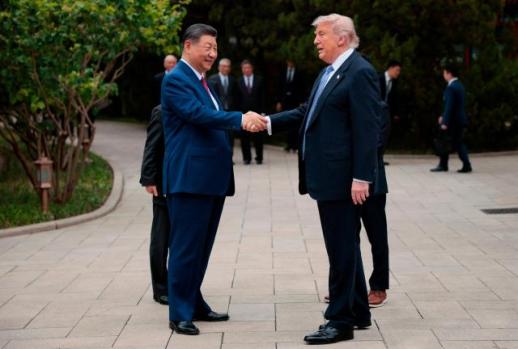 ASIA INSIGHT: The Taiwan Strai poses as most dangerous fault line in US-China relations A Strategic chokepoint rivaling the Strait of Hormuz and the Strait of Malacca Whenever the leaders of the United States and China meet, the world watches closely. Yet behind the formal photographs, diplomatic courtesies, and carefully calibrated statements, one issue continues to dominate the strategic core of the relationship: Taiwan. Trade disputes, tariffs, artificial intelligence, supply chains, Ukraine, and the Middle East all occupied the agenda during the Beijing summit between U.S. President Donald Trump and Chinese President Xi Jinping. But in the end, the meeting reaffirmed an uncomfortable reality: the Taiwan Strait remains the most combustible geopolitical flashpoint between the world’s two great powers. President Xi delivered an unusually blunt warning during the summit, declaring that mishandling the Taiwan issue could lead to direct confrontation between China and the United States. For Beijing, this was not merely rhetorical escalation. China has long described Taiwan as the “core of its core interests,” but Xi’s latest remarks carried the tone of a strategic red line drawn with greater clarity than before. The American response came swiftly. U.S. Secretary of State Marco Rubio stated after the summit that America’s Taiwan policy “has not changed” and remains consistent with previous administrations. That statement, though diplomatically measured, carries profound significance. For decades, Washington has operated under a carefully engineered ambiguity. It formally recognizes the “One China” policy while simultaneously sustaining Taiwan’s defensive capabilities through the Taiwan Relations Act. The United States has therefore maintained a delicate equilibrium: acknowledging Beijing diplomatically while supporting Taipei strategically. Particularly notable was Rubio’s somewhat ambiguous comment that arms sales to Taiwan were “not a major agenda item” during the summit. In diplomatic circles, such phrasing rarely lacks meaning. One interpretation is that both sides prioritized tariffs and economic tensions. Another is that Washington sought to avoid publicly exposing the intensity of Beijing’s demands behind closed doors. For China, American arms sales to Taiwan remain among the most sensitive of all issues. Beijing believes Washington’s military support emboldens pro-independence forces in Taipei and disrupts the military balance across the Strait. The United States, however, sees Taiwan’s defensive resilience as essential to maintaining the broader balance of power throughout the Indo-Pacific. Thus, the two nations continue to study the same map while reading entirely different realities. The Taiwan Strait is not merely a regional dispute zone. It is one of the central arteries of the global economy — a strategic corridor through which maritime trade, semiconductor supply chains, and the infrastructure of the AI age increasingly converge. If the Strait of Hormuz is the lifeline of global energy markets, then the Taiwan Strait has become the lifeline of the digital and technological economy. If the Strait of Malacca serves as the gateway of East-West commerce, the Taiwan Strait is rapidly emerging as the gateway to 21st-century technological supremacy. The historical roots of this confrontation are complex. Following the Chinese Civil War in 1949, Chiang Kai-shek’s Nationalist government retreated to Taiwan, creating the divided political structure that still exists today. During the Cold War, the United States protected Taiwan as a critical anti-communist outpost in Asia. The strategic framework shifted in the 1970s, when President Richard Nixon and Henry Kissinger opened relations with Beijing. Washington normalized ties with China while maintaining unofficial relations with Taiwan, creating one of the most intricate balancing acts in modern diplomacy. For decades, that balance endured. Today, however, it is under severe strain. The most important reason is China’s dramatic rise in national power. Economically, militarily, and technologically, China is no longer the country it was twenty or thirty years ago. The modernization of the Chinese navy and missile forces has altered the military equation in the Western Pacific and increasingly challenges American dominance in the region. At the same time, Taiwan itself has changed politically. The older “One China” identity associated with the Kuomintang era has weakened substantially. Among younger generations in particular, a distinctly Taiwanese identity has emerged. Political forces aligned with the Democratic Progressive Party increasingly emphasize Taiwan’s separate political and cultural identity. This is precisely the trend Beijing fears most. For Xi Jinping’s government, Taiwan is not simply a territorial matter. It is deeply tied to the historical legitimacy of the Chinese Communist Party and to the broader narrative of national rejuvenation. Overlaying this geopolitical tension is the intensifying global struggle over semiconductors and artificial intelligence. Taiwan stands at the very center of the world’s advanced semiconductor ecosystem. TSMC has become one of the indispensable corporations of the AI era. A substantial share of the advanced chips powering artificial intelligence systems — including those designed by Nvidia and other American technology giants — depend upon Taiwan’s semiconductor manufacturing capacity. Washington understands this reality as clearly as Beijing does. For that reason, Taiwan is no longer simply a territorial dispute. It is also a strategic contest over technological dominance in the age of AI. The United States cannot easily abandon Taiwan because Taiwan now occupies a critical position within the architecture of the global digital economy. Recent American policy reflects this strategic calculation. The United States has strengthened security cooperation with Japan, the Philippines, and Australia while integrating Taiwan more deeply into its broader Indo-Pacific strategy. China, meanwhile, increasingly views the South China Sea, East China Sea, and Taiwan Strait as a single interconnected strategic theater. Military tensions have risen accordingly. Chinese military aircraft now enter Taiwan’s Air Defense Identification Zone with increasing frequency. American naval transits through the Taiwan Strait have likewise become more common. The possibility of accidental confrontation is no longer theoretical. The deeper problem is that neither side can easily retreat. For Washington, credibility with allies and the preservation of the Indo-Pacific order are at stake. For Beijing, nationalism and regime legitimacy are inseparable from the Taiwan issue. That is why Taiwan has become the most dangerous intersection point in the broader U.S.-China rivalry. Neither South Korea nor Japan can remain insulated from these tensions. Japan’s southwestern islands lie geographically close to Taiwan, making Okinawa and Yonaguni strategically significant in any Taiwan contingency. Tokyo’s accelerating military modernization and acquisition of counterstrike capabilities cannot be understood separately from the Taiwan question. South Korea faces an equally complex dilemma. Economically, Seoul remains deeply connected to China. Strategically, however, its security framework rests upon its alliance with the United States. South Korea’s semiconductor industry, in particular, stands precariously between the Chinese market and American technological systems. Should a crisis erupt in the Taiwan Strait, the consequences for South Korea would extend far beyond diplomacy. Export markets, financial stability, shipping routes, energy prices, exchange rates, and semiconductor supply chains would all face severe disruption. This is why the Taiwan issue cannot be dismissed as a distant geopolitical quarrel. It is directly connected to the economic architecture and strategic future of Northeast Asia itself. Ultimately, the Taiwan Strait represents far more than a dispute between Beijing and Taipei. It is the convergence point of great-power rivalry, artificial intelligence, maritime strategy, semiconductor dominance, and the future order of the Indo-Pacific. Sun Tzu wrote in The Art of War that “the supreme art of war is to subdue the enemy without fighting.” If the United States and China truly aspire to act as responsible strategic powers, they must find a path toward disciplined competition and managed tension rather than military collision. For if gunfire ever erupts across the Taiwan Strait, the consequences will not stop at Taiwan’s shores. They will spread across South Korea, Japan, Asia, and ultimately the entire global economy. 2026-05-15 17:41:56
 -
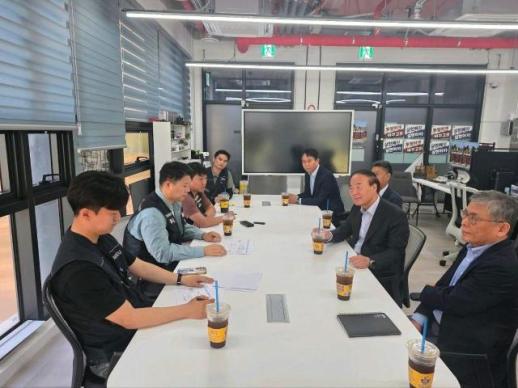 No breakthrough for Samsung Elec despite 11th-hour C-suite visit to union SEOUL, May 15 (AJP) - Top executives of Samsung Electronics failed Friday in an eleventh-hour attempt to avert a looming general strike after visiting the labor union office of the world’s largest memory chipmaker, whose exports alone account for roughly one-fifth of South Korea’s total outbound shipments. Mindful of the government’s determination to prevent a strike at a company whose production disruption could cost billions of dollars in economic losses and tax revenues, Samsung’s C-suite moved directly to engage union leaders after government-mediated wage talks collapsed earlier this week. The delegation, led by Vice Chairman and Device Solutions (DS) chief Jun Young-hyun, arrived at the office of the National Samsung Electronics Union (NSEU) at the company’s Pyeongtaek campus Friday afternoon. The executive team also included Foundry Business head Han Jin-man and System LSI chief Park Yong-in. Shares of Samsung Electronics plunged 7.8 percent Friday to close at 270,700 won after nearing the 300,000-won milestone in the previous session, as investor sentiment deteriorated on disappointment over the labor impasse. The visit followed a rare public apology issued by Samsung’s board of presidents earlier in the day, expressing “heavy responsibility” for the burden the prolonged labor dispute has placed on shareholders and the public. Management said it remained willing to engage the union with an “unconditional” and “open” mindset and urged labor representatives to return to negotiations as soon as possible, raising hopes for a potential breakthrough. Samsung emphasized that semiconductor manufacturing operates on a continuous 24-hour production cycle, warning that any work stoppage could inflict lasting damage on the company’s credibility and “trust assets” with global customers. Despite the conciliatory tone and unusual high-level visit, the meeting ended on a negative note as both sides remained firmly entrenched ahead of the union’s planned strike beginning May 21. Union leader Choi Seung-ho reportedly maintained a hard-line stance even after the government signaled it could consider invoking rarely used emergency mediation authority to prevent a strike viewed as harmful to the national economy. “Employees have lost trust in management,” Choi reportedly told executives during the meeting, adding that the union would only consider returning to formal negotiations if Samsung presents a concrete agenda addressing its core demands regarding compensation and performance bonuses. Choi also suggested that renegotiation could only resume after June 7, signaling the union’s determination to proceed with its planned 18-day strike beginning May 21. The union estimates that as many as 50,000 workers could participate. The standoff comes at a sensitive moment for Samsung as the company attempts to regain momentum in the intensifying global AI semiconductor race. Industry analysts warned that prolonged disruptions could carry risks extending beyond short-term production losses. “Samsung Electronics is at a vital moment where it still has the opportunity to solidify its position as a top global leader,” a semiconductor industry analyst said. “With global tech companies such as Apple, Tesla and NVIDIA among its key customers, failing to meet orders because of an internal strike could become a lost opportunity that permanently damages its competitive standing.” The government has also increased pressure on both sides to reach a compromise, warning that a large-scale disruption at Samsung could ripple through South Korea’s export-dependent economy at a time of heightened market volatility and geopolitical uncertainty. With the union’s strike deadline approaching and no compromise in sight, the standoff between Samsung management and labor is expected to continue through the weekend as both sides weigh the economic and strategic consequences of a full-scale production disruption. 2026-05-15 17:30:08
 -
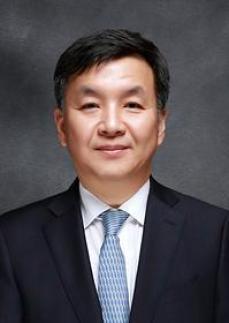 BOK brings on hawkish new member SEOUL, May 15 (AJP) - Kim Jin-ill, a former professor at Korea University, held his inauguration ceremony on Friday, to succeed Shin Sung-hwan, who retired from the Bank of Korea’s (BOK) Monetary Policy Board earlier this week. Kim is expected to strengthen the BOK’s hawkish stance with his focus on the traditional role of a central bank. Kim held a private inauguration ceremony at the BOK on Friday afternoon. This comes just four days after the Korea Federation of Banks (KFB) recommended him as a board member following Shin’s departure. Kim’s term officially began this Tuesday, immediately after Shin’s retirement, in accordance with the Bank of Korea Act. The right to nominate the five board members, excluding the BOK governor and senior deputy governor, lies with the BOK governor, the Minister of Economy and Finance, the Financial Services Commission chairman, the chairman of the Korea Chamber of Commerce and Industry, and the chairman of the KFB. Since Shin was appointed upon the KFB’s recommendation, the vacancy was filled by the same body. In contrast to Shin, who was known for his strong dovish tendencies—issuing seven dissenting opinions, five of which favored rate cuts—Kim is an expert who emphasizes the traditional roles of a central bank. He is recognized as a "U.S. expert," having conducted research as an invited economist at the U.S. Federal Reserve from 1996 to 1998 and from 2003 to 2010. Given that this appointment comes under the leadership of Governor Shin Hyun-song, a traditional financial stability advocate who succeeded former Governor Rhee Chang-yong, the central bank is expected to place more weight on monetary policy itself moving forward. Notably, Kim views himself as a relative hawk compared to other board members. In an interview with a media outlet shortly after his nomination, Kim stated that if he were to place a dot on the BOK’s dot plot, it would be "half a click (0.125 percent)" above the average or median. He did not hide his intention to prioritize financial stability, aligning with Governor Shin’s past stance of suggesting preemptive rate hikes during the 2008 financial crisis. In his inauguration speech on Friday, Kim opened by stating that "inflationary concerns have intensified due to high oil prices caused by the war in the Middle East" and mentioned exchange rate risks stemming from capital outflows. He clearly signaled that he would prioritize price stability. The increasing likelihood that the U.S. Federal Reserve will not cut interest rates is another burden. While Fed Chair-designate Kevin Warsh, often called a "hawkish dove" for advocating simultaneous balance sheet reduction and rate cuts, is set to begin his term soon, the timing of any cut has become uncertain. U.S. consumer prices rose 3.8 percent in April, the highest in about three years since May 2023. Some presidents of major regional Federal Reserve Banks, including Chicago and Boston, have even suggested rate hikes, forcing the BOK to prepare accordingly. However, Kim drew a line against the possibility of a radical rate hike, citing the 2,000 trillion won ($1.36 trillion) in household debt and the steady rise in apartment prices. Under the leadership of former Governor Rhee, the BOK had frozen the benchmark interest rate at 2.5 percent for seven consecutive sessions until April 10, following its last cut in May last year, to account for households' debt repayment capacity. Kim has not ruled out the possibility of aligning with this cautious approach. 2026-05-15 16:57:45
 -
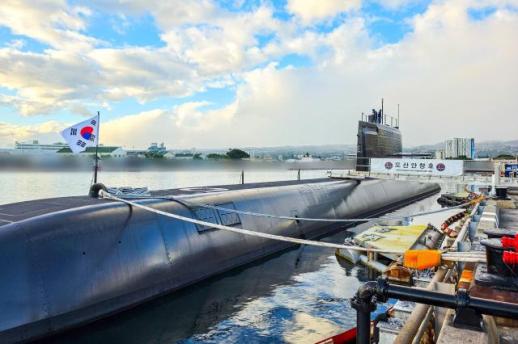 Seoul offers Canadians a real undersea ride in last stretch of submarine race SEOUL, May 15 (AJP) - A South Korean flag-bearing submarine will surface at the Port of Victoria, off Canada's western coast, later this month after a two-month journey with Canadian crew members aboard — sailing from Jinhae in southern Korea in a symbolic outreach as Ottawa weighs Team Korea against Europe for a multibillion-dollar submarine contract. The bid to supply Canada with up to 12 next-generation submarines has narrowed to consortia led by Korea's Hanwha Ocean and Germany's Thyssenkrupp Marine Systems (TKMS). Canadian Prime Minister Mark Carney has said Ottawa aims to decide on a supplier for the Canadian Patrol Submarine Project by the end of next month. As Ottawa seeks to replace its aging Victoria-class fleet, analysts cited by Canadian media estimate the total cost at between 60 billion and 120 billion Canadian dollars over the submarines' life cycle, including roughly 24 billion to 30 billion for the initial purchase. Hanwha Ocean is offering a variant of South Korea's KSS-III Batch-II submarine, while TKMS is proposing the Type 212CD, jointly procured by Germany and Norway. Both are conventionally powered diesel-electric submarines. Seoul has mounted an unusually aggressive campaign. The Republic of Korea Navy's Dosan Ahn Chang-ho, a KSS-III-class vessel, left Jinhae Naval Base on March 25 on a 14,000-kilometer trans-Pacific voyage. The submarine is expected to arrive at CFB Esquimalt in Victoria, British Columbia, before participating in joint exercises with the Royal Canadian Navy in June. During a stop in Hawaii on May 7, two Canadian submarine crew members boarded the vessel to observe its operations firsthand. "The South Korean Navy has friendly ties with Canada," a South Korean Navy official said. "There have been several maritime exercises before, but this is the first time a South Korean submarine has gone there." The June exercise is expected to involve one submarine and one surface vessel from each side. The voyage allows South Korea to demonstrate both the submarine's capabilities and its ability to operate the platform across the Pacific — a pointed argument to Ottawa about operational reach. Diplomatic efforts are also intensifying. According to sources familiar with the matter, Seoul is considering sending a high-level government delegation, potentially including presidential chief of staff Kang Hoon-sik, to Ottawa. Canada extended the bidding process in early April, giving the two remaining contenders more time to revise their proposals — a move widely seen as a signal that Ottawa wanted stronger economic and industrial benefits before making a final decision. Hanwha Ocean has since raised the value of its proposed economic benefits from 60 billion to about 70 billion Canadian dollars, and added a plan to produce military and industrial vehicles in Canada using local parts and labor. Germany is making an equally aggressive late push. German Defense Minister Boris Pistorius is expected to return to Ottawa in late May for CANSEC, Canada's largest defense industry exhibition. Earlier this month, German Vice Chancellor and Finance Minister Lars Klingbeil also visited Canada to champion TKMS' bid. TKMS has emphasized industrial cooperation with Canadian companies, including Bombardier, framing its proposal as a long-term partnership rather than a traditional arms purchase. The geopolitical backdrop has added another layer of complexity. Trade pressure from the Trump administration has reinforced calls in Canada to reduce dependence on the United States and deepen strategic ties with Europe and Asia — a current that both bidders are trying to ride. Canada has not ordered a new submarine since the Cold War era and has never sought to acquire 12 at once. Its current fleet of four secondhand Victoria-class submarines has been plagued by persistent readiness problems, with reportedly only one vessel available for operations at times. On paper, TKMS holds a clear export advantage, having supplied submarines to navies around the world. Hanwha Ocean, by contrast, counts only one overseas submarine contract — with Indonesia. But Seoul is betting that a submarine arriving under its own power on Canada's doorstep, crewed in part by Canadians, makes an argument that no brochure can. The opportunity comes as South Korea pursues an ambitious goal of becoming one of the world's four largest defense exporters. According to the Stockholm International Peace Research Institute, South Korea ranked among the world's top ten arms exporters from 2020 to 2024, with systems including the K9 self-propelled howitzer, Chunmoo multiple rocket launcher and FA-50 light attack aircraft expanding Seoul's footprint in NATO markets. 2026-05-15 16:49:55