

Journalist

Dorian Rhea Debussy
-
 City Construction Fined 38 Million Won for Delayed Contracts and Unpaid Discounts City Construction has been found to have issued contracts late to its subcontractors and failed to pay subcontracting fees in accordance with legal standards. Despite receiving full payment in cash from the client for construction work, the company paid subcontractors significantly less than the legal requirement. On June 3, the Fair Trade Commission announced that it imposed a corrective order and a fine of 38 million won on City Construction for violating subcontracting laws. The company also received a warning for failing to pay discount fees on promissory notes. According to the Fair Trade Commission, City Construction issued contracts for 61 projects, including reinforced concrete work, to 44 subcontractors with legal requirements included in the contracts at least one day and up to 310 days after the start of construction. Additionally, while receiving full cash payments from the client for landscaping infrastructure projects contracted to 144 subcontractors, City Construction paid subcontracting fees in cash ranging from 0% to a maximum of 89%. City Construction also issued promissory notes to 82 subcontractors with due dates exceeding 60 days from the receipt of goods, failing to pay 79.36 million won in discount fees for the extended period. However, during the Fair Trade Commission's investigation, City Construction paid the full amount of the unpaid discount fees to the subcontractors, resulting in only a warning for that violation. The Fair Trade Commission determined that the delayed issuance of contracts violated the written contract issuance obligation under the subcontracting law, and the failure to maintain the cash payment ratio and unpaid discount fees also constituted violations of the law. This case highlights the need for transparency in the payment process for subcontracting fees, as the cash benefits provided by the client did not adequately reach the subcontractors. A Fair Trade Commission official stated, "We plan to continuously monitor violations of subcontracting laws by primary contractors and impose strict penalties when violations are confirmed."* This article has been translated by AI. 2026-06-03 12:03:00
 -
 Contractor Fined for Failing to Pay Subcontractor in Sehwa Academy Case School corporation Sehwa Academy has been penalized by the Fair Trade Commission for failing to pay a subcontractor despite agreeing to do so. On June 3, the Fair Trade Commission announced that it had issued a corrective order to Sehwa Academy for not paying 26.4 million won to the subcontractor as required under a direct payment agreement. In 2021, Sehwa Academy commissioned a construction project to reinforce a hazardous area at Sehwa High School in Pohang to a primary contractor, Company A. Company A then subcontracted the earthworks to subcontractor Company B, and all parties reached a tripartite agreement for Sehwa Academy to pay Company B directly for the earthworks. While Sehwa Academy had made payments according to the agreement, it withheld the final payment of 26.4 million won, citing construction defects. However, during a meeting attended by Sehwa Academy, the primary contractor, the subcontractor, and the supervisor, it was confirmed that the remaining payment for the earthworks was indeed 26.4 million won. Investigations revealed that the defects raised by Sehwa Academy were related to landscaping work performed by another company, not the earthworks. The Fair Trade Commission determined that Sehwa Academy's failure to pay the subcontractor without just cause constituted a violation of subcontracting law. Considering that the primary contractor is currently pursuing a civil lawsuit against Sehwa Academy for the payment, the Commission opted not to issue a separate payment order but instead imposed only a corrective order. This decision is significant as it reaffirms that even parties not directly involved in a subcontracting agreement, such as the contractor, have payment obligations under the subcontracting law when they agree to direct payments. A Fair Trade Commission official stated, "We will continue to monitor violations of payment obligations by contractors and take strict action when violations are confirmed to protect the integrity of subcontracting transactions."* This article has been translated by AI. 2026-06-03 12:03:00
 -
 Generative AI Becomes Ubiquitous, 92.6% Usage Rate Among 20-Somethings Generative artificial intelligence (AI) is transforming the way people search for information, shifting from traditional search engines to asking AI questions. Notably, the usage rate of generative AI among individuals in their 20s has reached 92.6%, indicating its establishment as a daily service. On June 3, the Ministry of Science and ICT released the results of its '2025 Telecommunications Business Survey.' According to the findings, the experience rate of using generative AI stands at 78.1%. Among age groups, those in their 20s reported the highest usage rate at 92.6%. Furthermore, 47.1% of respondents expressed trust in the information or news obtained through generative AI, significantly outpacing the 9.2% who did not trust it. The survey also indicated that generative AI is influencing changes in search service usage behavior. About 60% of generative AI users reported that they have replaced more than 50% of their search functions with AI. Specifically, 18.8% indicated that they have replaced 60-70% of their searches with AI, followed by 17.7% who replaced 50-60%, and 16.5% who replaced 70-80%. The tool is also being utilized extensively in work and study, with 76.4% of respondents stating that generative AI has helped improve productivity in these areas. Conversely, only 1.9% felt it was not helpful. In examining overall digital platform usage, search portals and messaging services continue to show the highest usage rates. The survey found that 98.7% of respondents used search portals, followed closely by messaging services at 98.5%, place and map services at 96.8%, e-commerce at 95.6%, and video-sharing services at 92.7%. Daily usage rates were highest for messaging services at 91.3%, followed by search portals at 85.8%, video-sharing services at 69.5%, and social networking services at 56.6%. This suggests that most citizens are using major platform services almost daily. Competition among platforms is intensifying. In the past three months, the rate of 'multi-homing,' or using two or more platforms, was highest for e-commerce at 83.9%, followed by social networking services at 79.9%, search portals at 76.9%, and place and map services at 69.1%. E-commerce users were found to use an average of 3.4 platforms, indicating a highly competitive market. In contrast, the rates for secondhand trading (25.9%) and app markets (24.9%) were relatively low, suggesting that users exhibit strong loyalty to specific platforms. Experiences of changing primary platforms were notably higher in food delivery (27.0%) and e-commerce (20.9%). However, app markets (10.3%) and messaging services (9.4%) showed lower transition rates, indicating a strong lock-in effect among users. Common reasons for not switching platforms included habits, service quality, and the desire to maintain usage history. Additionally, last year's revenue from domestic value-added telecommunications services was estimated at 502.9 trillion won, with digital platform service revenue accounting for 161.5 trillion won. These figures represent increases of 15.3% and 5.4%, respectively, compared to the previous year. According to real-time app and payment data analysis solution WiseApp and Retail, ChatGPT had 23.45 million monthly active users in April. Gemini recorded 8.45 million users, while Claude had 2.41 million. Among these, Claude saw the most significant growth compared to the same month last year, with a user growth rate of 1,148%. Gemini followed with a growth rate of 1,034%, while ChatGPT's growth was 34%. 2026-06-03 12:03:00
 -
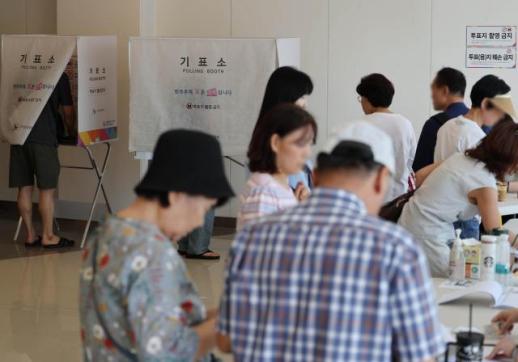 Voter Turnout at 15.0% in June 3 Local Elections with 6.71 Million Participants As the 9th nationwide local elections are underway, voter turnout across South Korea was reported at 15.0% as of 11 a.m. on June 3. This figure is 3.0 percentage points higher than the turnout of 12.0% recorded at the same time during the 8th nationwide local elections in 2022. According to the National Election Commission, approximately 670,000 voters had participated out of a total of 44,649,908 eligible voters by 11 a.m. The main voting began at 6 a.m. at polling stations nationwide. Regionally, Daegu recorded the highest turnout at 18.9%, followed by Gangwon Province at 17.7%, Gyeongsangbuk-do at 17.6%, and Gyeongsangnam-do at 16.5%. In contrast, Gwangju had the lowest turnout at 11.4%. Following Gwangju were Jeollabuk-do at 11.9% and Sejong at 12.9%. In the metropolitan area, voter turnout was recorded at 14.3% in Seoul, 14.5% in Gyeonggi Province, and 14.2% in Incheon. Additionally, the early voting turnout of 23.51%, conducted from May 29 to 30, will be added to the overall turnout starting at 1 p.m. Voting will continue until 6 p.m., and voters must bring identification such as a resident registration card, driver's license, or passport to their designated polling stations.* This article has been translated by AI. 2026-06-03 11:21:00
 -
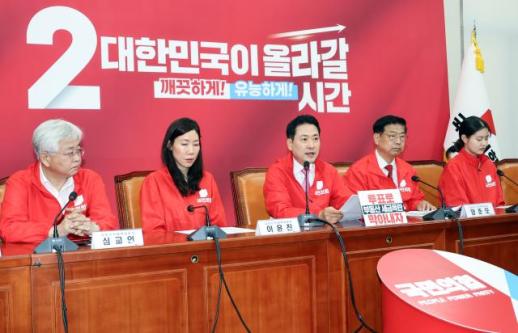 Jang Dong-hyuk Vows to Protect Citizens' Freedoms and Lives Ahead of Local Elections Jang Dong-hyuk, leader of the People Power Party, emphasized on June 3 that he is committed to protecting the constitutional order of South Korea and the freedoms of its citizens. He stated, "I will prioritize the livelihoods of the people in all policies and make every effort to safeguard their lives." During the final meeting of the election campaign committee held at the National Assembly, Jang criticized President Yoon Suk Yeol and the Democratic Party for what he described as reckless behavior. He referred to President Yoon's recent comment about correcting mistakes by apologizing and canceling decisions, arguing that it was an indication of arrogance, saying, "It shows the worst kind of arrogance, disregarding the people's concerns." Jang accused President Yoon of violating the duty of neutrality expected of a president by campaigning across the country and displaying marked ballots in front of cameras. He labeled these actions as serious illegal acts that could warrant impeachment. He also addressed the recently announced consumer price index, which showed a 3.1% increase in May, the highest rise in 26 months since March 2024. Jang stated, "The consequences of Yoon's self-serving governance have led to economic ruin and a collapse of livelihoods. The Democratic Party has nothing to boast about except stock prices, as nothing else is functioning properly." Jang predicted that the influx of money during the election period would lead to rising exchange rates and soaring prices, warning that increasing the base interest rate would cause loan rates to spike. He described the situation as a 'triple hell' of high exchange rates, high prices, and high interest rates. To address these challenges, Jang urged voters to exercise their right to vote in the local elections and the National Assembly by-elections taking place on June 3. He stated, "Abstaining from voting is equivalent to giving up your home, property, salary, and freedom. I urge everyone to go to the polls now and demonstrate the great power of the electorate. I trust in the wise judgment of the people." Meanwhile, the People Power Party interpreted a higher voter turnout in this election compared to previous ones as a reflection of public sentiment against the arrogance and recklessness of the Yoon administration and the Democratic Party. Park Sung-hoon, the party's chief spokesperson, told reporters, "We see a continuous flow of citizens and voters determined to protect our precious daily lives, freedoms, the future of South Korea, and the dreams of our children. The anger and voices of voters wanting to safeguard their homes and properties will continue to head to the polls."* This article has been translated by AI. 2026-06-03 11:15:00
 -
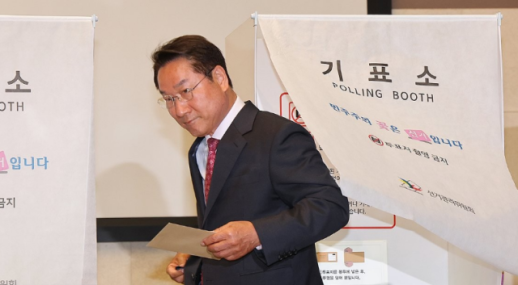 Election Commission Files Complaint Against Incheon Mayor Candidate Yoo Jeong-bok for Asset Disclosure Violation The Incheon Election Commission has filed a complaint against Yoo Jeong-bok, the People Power Party's candidate for Incheon mayor, over allegations of failing to disclose virtual assets. According to legal sources on June 3, the Incheon Election Commission submitted a complaint to the Incheon Police Agency on June 1, accusing Yoo of violating the Public Official Election Act. Yoo is alleged to have omitted part of his spouse's assets during the asset disclosure process, leading to a false report. The National Election Commission announced the day before that the amount of Yoo's spouse's assets was not the previously reported 439.881 million won, but rather 518.579 million won. Consequently, the total family assets of Yoo were determined to be 1.92297 billion won instead of the previously stated 1.844272 billion won. The Election Commission identified the omitted amount as approximately 78.69 million won. The core of the allegations revolves around the overseas virtual asset account held by Yoo's spouse. A media outlet previously reported that Yoo's spouse owned 21,000 virtual assets, which were allegedly transferred to an overseas exchange and omitted from the asset disclosure for the local election candidacy. Yoo's camp has explained that the virtual assets were investments made with proceeds from the sale of his brother's real estate, asserting that they do not represent actual assets of his spouse. However, the Election Commission has deemed that the reported asset values for both the candidate and his spouse were inaccurate, prompting the correction announcement and subsequent complaint. The Public Official Election Act stipulates penalties for candidates who publish false information regarding their own or their spouse's assets for the purpose of election. A confirmed fine of over 1 million won would result in the invalidation of the election. Previously, Park Chan-dae, the Democratic Party's candidate for Incheon mayor, also filed a complaint against Yoo and his spouse for violations of the Public Official Election Act and the Public Officials Ethics Act. Yoo's camp has countered by filing a complaint against those who raised the allegations for disseminating false information. The Incheon Police Agency's anti-corruption investigation unit plans to merge the Election Commission's complaint with the existing investigation into the Democratic Party's complaint.* This article has been translated by AI. 2026-06-03 11:06:00
 -
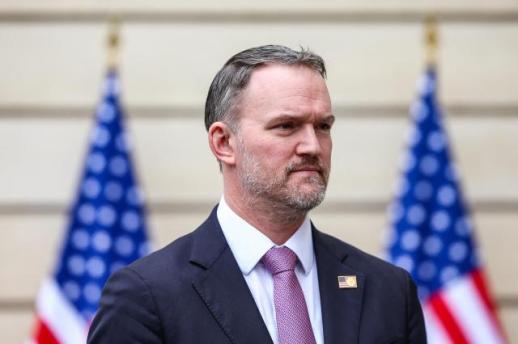 USTR Chief: South Korea Became Steel Power Without Coal or Iron Ore Jamison Grier, the U.S. Trade Representative, emphasized the justification of the tariff policies promoted by the Trump administration, arguing that South Korea's rise as a global steel producer despite its lack of resources is due to government intervention. In a commentary titled "Trade Theory Must Catch Up with Tariffs, Industrial Policy, and the Costs of Globalization" published in the June issue of the International Monetary Fund's (IMF) Finance & Development magazine, Grier noted that for nearly 30 years, tariffs and import regulations have been excluded from policy options due to economic models and elite consensus, and that President Trump is changing this. "The return of tariffs and import regulations presents an opportunity to update outdated assumptions and models with evidence from real-world data and experience," he stated, pointing out that existing free trade theories fail to adequately reflect the real costs of labor market shocks, supply chain vulnerabilities, and the decline of manufacturing bases. Grier explained that even those who designed the post-World War II international economic system recognized the risks of unrestricted trade. He emphasized that the General Agreement on Tariffs and Trade (GATT) was designed to allow the use of tariffs for essential security guarantees, preventing domestic industry harm, responding to unfair competition, promoting economic development, and addressing balance of payments issues. He criticized policymakers, economists, and business leaders since the 1990s for forgetting this pragmatism and embracing hyper-globalization. As a result, multinational corporations relocated production bases in search of subsidies and lax labor and environmental regulations, leading to the loss of quality manufacturing jobs and factories in the U.S. Grier argued that modern economics must reflect structural trade imbalances that cannot be explained solely by comparative advantage. He questioned, "How can the U.S., with the richest farmland in the world, run a trade deficit in agriculture? How could South Korea, with limited energy resources and no coal or iron ore, become a steel powerhouse?" He pointed out that economic interventions by various countries have distorted the global economy, placing some nations in chronic trade deficits while others enjoy surpluses, stating, "This is unhealthy for both sides." Grier criticized the IMF for warning about the U.S. current account deficit while only proposing large tax increases, austerity measures, and cooperation with trading partners as solutions. He argued, "The imbalances that have grown over the past decade show that politely requesting structural economic changes is ineffective." He also emphasized that tariffs are a key tool for encouraging domestic production and altering trade patterns. Citing the Reagan administration's restrictions on Japanese auto imports and the safeguard tariffs on washing machines during Trump's first term, he explained that tariffs have led to increased investment and job creation in the U.S. Grier stated, "Tariffs that directly target the main sources of deficits are a simpler and more flexible solution," adding that the U.S. is encouraging productive investment through tariffs and reciprocal trade agreements, increasing domestic production incentives, and opening U.S. export markets. Meanwhile, following the Supreme Court's ruling on the invalidation of reciprocal tariffs in February, the Trump administration has imposed a 10% 'global tariff' on all trading partners based on Section 122 of the Trade Act. The deadline for imposing tariffs under this provision is up to 150 days, with new tariffs expected to be introduced based on the findings of Section 301 investigations by late July. In a CNBC interview, Grier announced that the results of the Section 301 investigation, which includes South Korea and dozens of other countries, will be released in the coming weeks.* This article has been translated by AI. 2026-06-03 11:06:00
 -
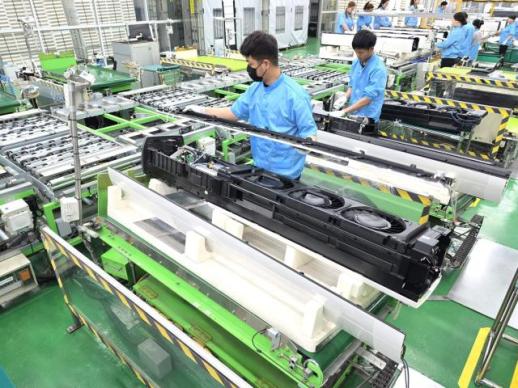 Samsung Electronics Recycles 165 Tons of Styrofoam into New Materials for Air Conditioners and Air Purifiers Samsung Electronics announced on June 3 that it has received UL Solutions' ECV certification for new materials made from recycled styrofoam used in packaging home appliances, which are now incorporated into air conditioners and air purifiers. The company transformed styrofoam collected after the installation of home appliances through sorting and manufacturing processes, resulting in a new plastic composite material of the same quality as the original. Packaging styrofoam is relatively low in contamination, making it easier to recycle due to its minimal odor and harmful substances. According to Samsung, this new material has been applied to the internal components of the 'Bespoke AI Wind-Free Combo Gallery' air conditioner and the 'Infinite AI Air Purifier,' achieving a 10% recycled material content recognized by the ECV certification. The ECV certification from UL Solutions is awarded after a rigorous process that includes manufacturing process audits and engineering verification to validate the environmental performance of products. Samsung plans to recycle a total of 165 tons (approximately 5,500 cubic meters) of styrofoam this year, enough to fill a soccer field (about 7,140 square meters) to a height of approximately 77 centimeters. Earlier in January, Samsung received ECV certification for a composite fiber material made from recycled glass, which was used in the 'Bespoke AI Combo' washer-dryer. This material was integrated into the outer tub, a critical component that affects the durability of home appliances, showcasing a successful example of converting waste glass into high-value appliance parts. Looking ahead, Samsung plans to expand the use of recycled materials, including those from old washing machine tubs, in its air conditioners and other home appliances. Moon Jong-seung, Vice President of Samsung Electronics' DA Division, stated, "We will continue to develop various recycled materials and expand their application across our products, including refrigerators, washing machines, and air conditioners. We are committed to reducing environmental impact and contributing to resource circulation through sustainable material development."* This article has been translated by AI. 2026-06-03 11:03:00
 -
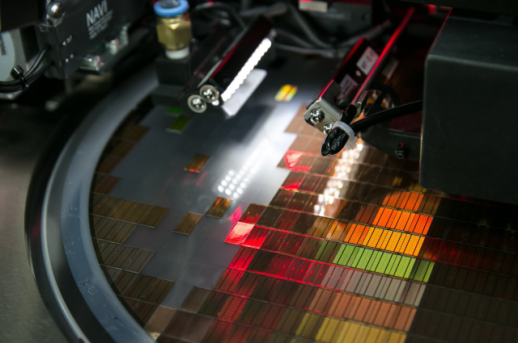 South Korea's Strategic Role in the AI Semiconductor Landscape One of the most pressing questions in South Korea's modern economic history has always been the same: What will we rely on for our livelihood? In the 1960s, the answer was steel and shipbuilding; in the 1980s and 1990s, it was automobiles and electronics. Since the 2000s, semiconductors and the information and communication industry have become the backbone of the South Korean economy. However, history has never allowed a specific industry to dominate forever. Just as there was an era of steel and an era of automobiles, semiconductors have now reached a point where they must redefine their role in a new civilizational shift, and that shift is called artificial intelligence (AI). Today, the world stands before a massive wave of the AI revolution. However, many people understand this revolution too simplistically. With the emergence of ChatGPT and DeepSeek, and the announcement of new large language models, the world seems to celebrate as if these developments represent the entirety of the AI revolution. Daily debates arise over which model is smarter, which country is ahead, and who will first achieve human-level intelligence. Yet, the history of industry teaches us the same lesson: the unseen foundations are more important than visible results. In the age of steam engines, the key was not the train but coal; in the automotive era, it was not the car manufacturers but the oil supply chain; and in the internet age, it was not the portals but semiconductors and communication networks. The AI era is no exception. The essence of the AI competition currently unfolding globally is not a chatbot race but a competition for computational power, and at the heart of this competition lies the semiconductor race. AI ultimately consumes electricity and operates through machines, requiring processors to perform calculations, and memory to enable those processors to reach their full potential. As AI models grow larger, the importance of memory increases exponentially. In today's AI data centers, the most critical asset is the GPU, and the performance of the GPU is determined by HBM (High Bandwidth Memory). If the GPU is the brain, then HBM is the bloodstream. No matter how brilliant the brain, it cannot function if the bloodstream is blocked; similarly, no matter how powerful the AI, it cannot exist without memory. This is where South Korea's strategic value emerges. While the world focuses on the competition between the United States and China, the key components enabling that competition are supplied by South Korea. The U.S. is constructing astronomical-scale data centers to maintain its AI dominance, while China is building more AI servers to overcome U.S. sanctions. Memory is essential for the U.S. to attack and for China to defend. Whether the U.S. wins or China catches up, memory will be sold. Just as oil consumption increased during the Cold War as the U.S. and the Soviet Union competed, memory consumption will rise as the U.S. and China compete in the AI era. And the country with the oil refinery is South Korea. Recent AI-related indicators have made this structure even clearer. The U.S. still possesses world-class AI research and development capabilities, capital markets, and platform ecosystems, while China is rapidly closing the gap. In terms of papers, patents, industrial robot proliferation, and manufacturing applications, China has already entered the global top tier. However, advanced semiconductor design, core software ecosystems, global investment capital, and innovation systems still operate primarily around the U.S. This is why the U.S. is seen as the champion of innovation, while China is viewed as the champion of efficiency. The emergence of DeepSeek symbolically illustrates this reality. Some have referred to it as the AI Sputnik shock, but a more measured perspective is necessary. China is aggressively pursuing advancements but has not yet completely surpassed the U.S. However, what truly matters is not the current victory or defeat but the speed of the pursuit. History has always been shaped by the speed of latecomers. Japan's manufacturing sector exemplified this, as did South Korea's semiconductors, and now China's AI is following this historical trend. From an industrial perspective, another crucial fact emerges. The U.S. needs more GPUs and data centers to defeat China, while China requires more AI servers and computing resources to catch up. HBM is necessary for both the U.S. victory and China's pursuit. Memory will be sold whether the U.S. invests or China chases. This is the structural benefit of the AI era. Many investors focus solely on NVIDIA in the AI industry. However, a broader question arises when considering the entire industry: What will be consumed the most as the AI war prolongs? The answer is memory. If data is the new oil of the AI era, then memory is the bloodstream that moves that data. And the country that excels in producing that bloodstream is South Korea. However, we must not stop here. Semiconductors are just the beginning. The real change is only starting now. Until now, AI has primarily existed on screens. People have interacted with AI, created documents, and generated images. But in the future, AI will emerge into the real world. It will operate factories, control robots, drive cars, manage ships, and oversee logistics. The moment AI integrates with real-world machines, humanity will enter another industrial revolution, and that revolution will be called physical AI. Many experts predict that over the next decade, the focus of the AI industry will shift from generative AI to physical AI. If this forecast becomes reality, South Korea will find itself in a more advantageous position than expected. This is because South Korea is not only strong in semiconductors but also a manufacturing powerhouse. It has automobiles, shipbuilding, batteries, displays, precision machinery, and steel industries. While the U.S. excels in software, its manufacturing base is relatively weak, and while China has a massive manufacturing scale, it faces limitations in advanced semiconductors and global trust systems. In contrast, South Korea is one of the few countries that possesses both manufacturing and digital technology. In an era where AI operates factories, designs ships, and produces cars, the value of being a manufacturing powerhouse will inevitably rise. From this perspective, Jeonbuk and Saemangeum take on entirely different meanings. Many have understood Saemangeum as merely a land reclamation or regional development project. However, from the perspective of the AI era, Saemangeum represents a vast strategic space. AI data centers require enormous amounts of power, humanoid robots must be trained in real environments, and autonomous driving systems need extensive testing grounds. The metropolitan area is nearing saturation, with power shortages and excessively high land costs. In contrast, Saemangeum offers vast space, ports, renewable energy potential, and the capacity for industrial complex development. If AI data centers, next-generation semiconductor industrial complexes, humanoid robot clusters, autonomous logistics centers, smart agricultural innovation zones, and physical AI testing grounds are interconnected as a single ecosystem, Saemangeum could become not just a regional development project but a national strategic hub that redraws South Korea's industrial map. Just as Ulsan symbolized South Korea's economic growth during the industrialization era and Pangyo became a symbol of the digital revolution, the AI era requires another strategic space. This is why I propose the concept of Jeonbuk as the special capital of physical AI. However, we must remember one crucial fact: what drives history is not technology itself but the national strategy that connects technology to a vision. In the 19th century, Britain did not dominate the world simply because it invented the steam engine first. It established a national system that connected the steam engine to railroads, shipbuilding, finance, trade, education, and industry, allowing it to stand at the center of the world. Similarly, in the 20th century, the U.S. became a superpower not just because it created automobiles and electricity first, but because it developed them into a cohesive economic system and way of life. The AI era will be no different. South Korea's future is not guaranteed merely by producing the world's best memory semiconductors. We must connect semiconductors to AI, AI to manufacturing, manufacturing to physical AI, and physical AI to national innovation strategies. Only when industries connect and technologies converge can a new civilization be born. South Korea's strengths are clear. It has the world's best memory semiconductors, a globally competitive automotive industry, and robust shipbuilding, steel, battery, display, and precision machinery sectors. All these industries are national assets created through decades of accumulated technology, talent, and industrial ecosystems. At this juncture, South Korea occupies a unique position that neither the U.S. nor China can replicate. The U.S. has the world's best software and platform competitiveness but a relatively weak manufacturing base. China has the largest manufacturing scale but still faces limitations in advanced semiconductors and global trust systems. In contrast, South Korea is one of the few countries that possesses both semiconductors and manufacturing capabilities. Ultimately, South Korea must create a new national model that is neither the U.S. model nor the Chinese model. If the U.S. is the champion of innovation and China the champion of efficiency, what should South Korea become? I believe it should become the champion of trust. In the future, AI will not just be a technology; it will become a core infrastructure that drives national governance, industry, finance, healthcare, education, and administration. In such an era, people will not simply want fast or massive AI; they will seek trustworthy AI. South Korea, based on democracy and the rule of law, possesses world-class manufacturing and semiconductor industries. It should supply memory that the U.S. cannot easily produce, offer trust that China struggles to provide, and combine AI with world-class manufacturing. This is the path South Korea must take. Over the past century, South Korea has achieved three miracles: the miracle of industrialization, the miracle of democratization, and the miracle of informatization. Now, we stand at the threshold of a fourth miracle: the miracle of AI semiconductors, the miracle of physical AI, and beyond that, the miracle of South Korea's second founding. In the biblical story, David was not stronger than Goliath. However, David knew where to throw his stone. South Korea must take a similar approach. There is no need to follow the U.S. path blindly or imitate China. South Korea must forge its own path. With the world's best memory semiconductors, world-class manufacturing, trust built on democracy, and the resilience of its people to turn crises into opportunities, these four elements will become South Korea's strongest strategic assets. In an era where the two Goliaths, the U.S. and China, clash over AI supremacy, South Korea does not need to be the largest nation; it only needs to be the most necessary one. At the center of that path lies AI semiconductors, and at the end, there is a vision of physical AI, trust as a nation, and the second founding of South Korea. This is not merely an industrial strategy. It is a new national strategy that opens the next 100 years for South Korea and a civilizational choice to pass on to future generations. South Korea's fourth challenge, moving beyond industrialization, democratization, and informatization toward the era of AI and physical AI, has just begun.* This article has been translated by AI. 2026-06-03 10:57:00
 -
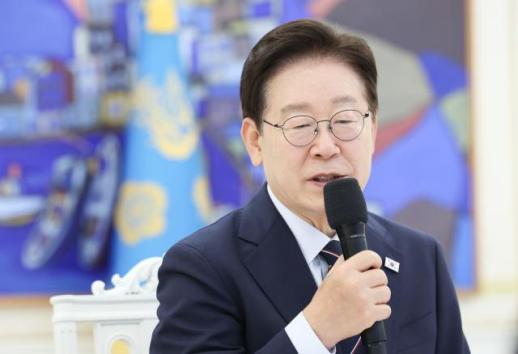 President Lee Encourages Voter Participation on Election Day President Lee Jae-myung encouraged voter participation through a series of social media posts on June 3, the day of local elections.In a post on X (formerly Twitter), President Lee stated, "Now, South Korea must move from a chasing nation to an indispensable core nation with the great power of the Korean people. We can go as far as we want, and we are already on our way, but only if we do not give up on voting and choose capable and loyal workers well."He also referenced an article about the Anti-Corruption and Civil Rights Commission awarding a record 2 billion won to a whistleblower in a corruption case."Whether individuals, companies, or the government, if you report corruption, you will receive a reward of 20-30% of the recovered amount," he explained. "For example, if a company colludes to sell at inflated prices, the reward could amount to hundreds of billions of won."He added, "The fines for collusion in flour and other products total about 700 billion won, so if employees of the related companies had reported it, they could have received up to 200 billion won in rewards."President Lee emphasized, "In the future, it will be impossible to profit from illegal activities that harm others. Of course, it is fundamental to create opportunities for diligent and capable individuals under fair and transparent rules."Earlier, he had asked on X, "Did you vote to avoid being ruled by the worst, as Plato said?"This was a reiteration of his earlier quote from Plato regarding the dangers of political apathy. He stated, "In a democratic republic, the silence and abandonment of voting by the sovereign gives opportunities to those who deceive the public and abuse power for personal gain, ruining the lives of citizens and their families."Additionally, President Lee shared a post encouraging followers to connect with Justice Minister Jeong Seong-ho, who has begun using X to communicate with the public. He welcomed Minister Jeong to the platform, saying, "Please give a warm welcome to Jeong Seong-ho as he joins the world of X with a massive following."Minister Jeong is a fellow alumnus of the 18th Judicial Research and Training Institute with President Lee and is mentioned as a potential candidate for Prime Minister if Kim Min-seok resigns to run in the Democratic Party's convention in August.Meanwhile, President Lee is expected to monitor the live election results and exit polls from his residence in Hannam-dong later in the evening.* This article has been translated by AI. 2026-06-03 10:57:00