
Journalist

Elizabeth Englezos
-
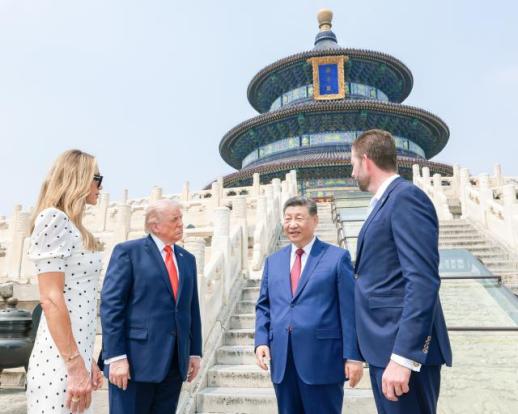 Trump and Xi Visit Temple of Heaven, Marking a Shift in Protocol During their meeting on May 14, U.S. President Donald Trump and Chinese President Xi Jinping visited the Temple of Heaven in Beijing, a notable change from their first meeting nine years ago when they toured the Forbidden City together. According to state media, Xi welcomed Trump near the Hall of Prayer for Good Harvests at the Temple of Heaven, where they posed for commemorative photos and enjoyed a brief tour. The Temple of Heaven was a site where emperors of the Ming and Qing dynasties held ceremonies to pray for good harvests. It symbolizes the ancient Chinese cosmological belief that "heaven is round and the earth is square." This was the first visit by a sitting U.S. president to the Temple of Heaven since Gerald Ford in 1975. The visit has drawn attention for its contrast to Trump's first trip to China in 2017, when he and Xi toured the Forbidden City and attended a performance of Peking opera, followed by a lavish banquet. In contrast, the Temple of Heaven visit lasted about 30 minutes, a stark difference from the half-day Trump and his wife, Melania, spent at the Forbidden City. Analysts suggest this change in protocol reflects the evolving dynamics of U.S.-China relations. Unlike in 2017, the strategic competition between the two nations has intensified, and China appears more confident in its dealings with the U.S., leading to a shift in ceremonial practices. Trump is scheduled to hold additional talks and a luncheon with Xi at Zhongnanhai on May 15 before returning to the United States.* This article has been translated by AI. 2026-05-15 03:14:59
 -
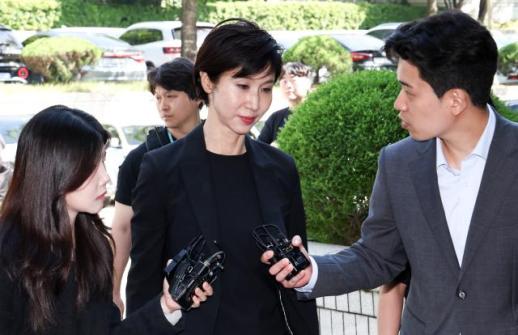 Choi Tae-won and Noh So-young to Return to Court Next Month for Asset Division Dispute Choi Tae-won, 66, chairman of SK Group, and Noh So-young, 65, director of Art Center Nabi, will return to court next month to continue their divorce asset division dispute. As the retrial process intensifies, both sides are expected to reignite their battle over the division of assets valued at over 1 trillion won. According to Yonhap News on May 14, the Family Division of the Seoul High Court, led by Judge Lee Sang-joo, has scheduled the second mediation session for the asset division case between Choi and Noh for June 15 at 2 p.m. During the first mediation session held the previous day, the court indicated it would set a new date that accommodates both parties. Unlike the first session, where only Noh attended, there is a possibility that Choi will appear in person for the second mediation. If both parties do attend, it will mark their first court appearance together in approximately 14 months since the final arguments of the appeals trial in April of last year. A key issue in this retrial is whether the SK shares should be included in the asset division. Choi argues that the SK Corporation shares are his separate property, inherited and gifted, and thus not subject to division. Conversely, Noh contends that her long-term contributions to household management and child-rearing supported Choi's business activities, and therefore, those shares should be considered marital property. In a previous ruling, the first trial ordered Choi to pay Noh 100 million won in alimony and 66.5 billion won in asset division. However, the second trial significantly increased this to 2 billion won in alimony and 1.38 trillion won in asset division. The second trial court determined that 30 billion won in slush funds from Noh's father, former President Roh Tae-woo, had flowed to Choi's late father, Choi Jong-hyun, contributing to the foundation of SK's growth. However, in October of last year, the Supreme Court ruled that this money, deemed illegal, could not be recognized as a contribution to Noh's asset formation and sent the case back to the Seoul High Court. The decision to award 2 billion won in alimony was upheld.* This article has been translated by AI. 2026-05-15 03:13:17
 -
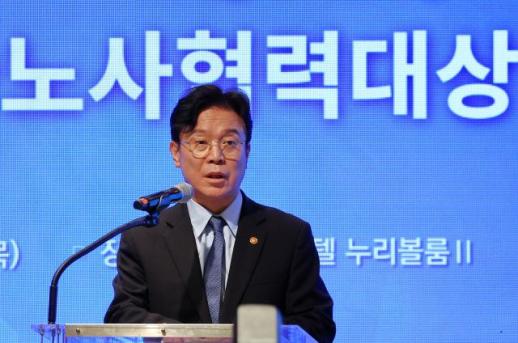 Labor Minister Calls for Dialogue Amid Samsung Electronics Strike Threat As a general strike at Samsung Electronics approaches in a week, Labor Minister Kim Young-hoon emphasized the importance of dialogue, stating, "There are no companies without workers, and no unions are established to drive companies to failure." On May 14, Kim posted a message on his social media titled "Democracy Believes in the Power of Dialogue." He noted, "There are no companies without workers, and no unions are established to drive companies to failure. From my experience, the most challenging aspect of a strike is the negotiations. If the strike is not the ultimate goal, it must eventually conclude with negotiations." He also included hashtags such as '#Let'sLiveTogether' and '#DialogueIsNeeded.' This statement reiterates the call for a resolution through dialogue amid ongoing labor disputes at Samsung Electronics. There are growing demands for the activation of emergency mediation rights. The Central Labor Relations Commission officially requested Samsung Electronics and its labor union to engage in post-adjustment discussions again on May 16. The initial post-adjustment talks held on May 11-12 ended in failure when the Samsung Electronics union left the negotiation table in the early hours of May 13, well past midnight.* This article has been translated by AI. 2026-05-15 03:12:00
 -
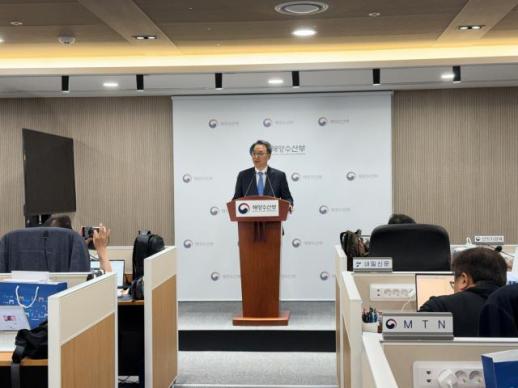 Incheon Maritime Museum Celebrates Second Anniversary with Focus on Marine Culture The National Incheon Maritime Museum has attracted 850,000 visitors since its opening two years ago, establishing itself as a leading museum in the Seoul metropolitan area. On May 14, Woo Dong-sik, the museum's director, held a press conference at the Ministry of Oceans and Fisheries in Busan, stating, "We will do our best to introduce marine culture to the public." Woo explained that the museum was created to educate residents of the metropolitan area, where more than half of the country's population lives but has limited access to the sea and knowledge of the marine industry, through marine artifacts, history, and heritage. Currently, there are two specialized maritime museums in South Korea, located in Busan and Incheon. Woo highlighted the difference in exhibition focus between the two: while the Busan Maritime Museum primarily showcases marine civilization, the Incheon museum centers on maritime exchange history and marine industry. According to recent data, 48% of the Incheon Maritime Museum's visitors are from the Incheon area, followed by 28% from Gyeonggi Province, 15% from Seoul, and about 10% from other regions. Notably, family visitors, including children, account for 70% of total attendance. In response to this demographic, the museum has established a children's section on the first floor, featuring a hands-on program titled "Little Navigator's Adventure." Additionally, it is collaborating with local artists to develop marine education programs that reflect regional characteristics. Woo has set a goal of reaching 4 million cumulative visitors by 2029. He also plans to host an annual special exhibition on maritime trade, showcasing a series on global marine civilizations. Regarding plans to attract foreign visitors, Woo noted that tourists arriving in Incheon typically head directly to Seoul. He mentioned that the museum is considering strategies to draw tourists in collaboration with relevant organizations such as the Incheon Tourism Organization and Incheon Port Authority. However, he acknowledged that accessibility remains a challenge. To address this, the Incheon Maritime Museum plans to analyze visitor numbers and behaviors through a pilot shuttle bus service, with the possibility of expanding operations in the future. Woo also introduced an upcoming special exhibition on Greece, scheduled for August. This exhibition follows a visit from the Greek Minister of Culture in 2024 and will focus on maritime exchanges between Greece and Korea. "Currently, 50-60% of the ships ordered by Greek shipowners are being built in Korean shipyards," Woo said, adding that the exhibition will feature five sub-themes showcasing Greece's national treasures.* This article has been translated by AI. 2026-05-15 03:07:57
 -
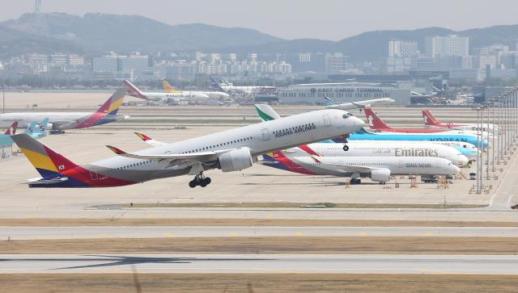 Korean Air and Asiana Airlines Finalize Merger Agreement Ahead of December Launch Korean Air has officially confirmed its merger with Asiana Airlines, setting the launch date for the new integrated airline for December 17. While the framework for the merger is in place, significant challenges remain, including the integration of mileage programs, adjustments to seniority, and internal organizational restructuring. With approximately seven months until the launch, last-minute complications related to stakeholder interests are expected.According to industry sources, Korean Air and Asiana Airlines signed the merger agreement on May 14, marking the conclusion of a process that began with the resolution to acquire Asiana Airlines on November 16, 2020.Korean Air has been progressing through the absorption merger process, including a 300 billion won investment in new shares of Asiana Airlines. The merger has received approval from the Korean Fair Trade Commission and 13 foreign competition authorities over a three-year period. In December 2024, Korean Air acquired a 63.88% stake in Asiana Airlines.This merger agreement represents the final stage of the integration process. As the year-end launch approaches, Korean Air has submitted a request for merger approval to the Ministry of Land, Infrastructure and Transport immediately following the signing. In June, the airline plans to apply for approval of changes to operational standards that include safety compliance conditions and restrictions.Asiana Airlines is scheduled to hold an extraordinary shareholders' meeting on August 12 to vote on the merger proposal. An industry insider stated, "Given the lengthy integration process, the merger proposal is expected to pass without issues at the shareholders' meeting, marking the final hurdle for the launch of the integrated full-service carrier (FSC)."However, even if these legal procedures are completed, substantial challenges remain before achieving a true integration. Notably, the interests of employees from both airlines are intricately linked and are seen as key variables surrounding the launch of the new airline.One significant issue is the integration of seniority. Pilots, due to the nature of their roles, are particularly sensitive to changes in seniority, which can affect promotion timelines, flight schedules, aircraft types, and work location choices.Regarding seniority adjustments, it has been reported that Korean Air is not currently engaging in separate discussions with the union. No further four-party meetings involving both airlines and the pilots' union have occurred since March. Instead, Korean Air has been conducting HR integration briefings since last month, leading to tensions with the union. Consequently, it is anticipated that achieving harmony among employees and stabilizing the organization will take considerable time even after the physical merger.The integration of mileage programs also remains an outstanding issue. The Fair Trade Commission is currently reviewing the third mileage integration proposal submitted by Korean Air. Previously, the commission rejected two proposals, citing insufficient consumer benefits.An industry insider noted, "Once the FSC integration is completed, the three low-cost carriers (LCCs) will likely begin their integration efforts in the first quarter of next year, with the Korean Air-Asiana Airlines merger process potentially serving as a benchmark for future integrations."* This article has been translated by AI. 2026-05-15 03:06:06
 -
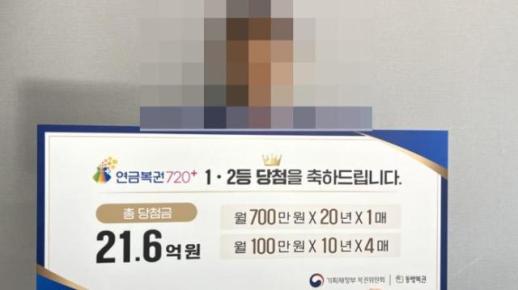 Dream of Crossing a River with Chestnuts in an Apron: 315th Pension Lottery 720+ Winning Numbers Drawn "After winning, I remembered a dream my mother had when she was pregnant with me. She dreamed of crossing a river with chestnuts in her apron." As interest mounts in the winning numbers for the 315th Pension Lottery 720+ on May 14, the story of a winner from the 287th draw has captured public attention. In a recent post on the Donghaeng Lottery winners' board, the winner of one first-place ticket and four second-place tickets from the 287th draw shared, "I usually buy lottery tickets without any special expectations. I think about how the lottery proceeds are used for good causes, so I keep buying them. I purchased the lotto and pension lottery tickets as usual, and a few days later, I checked the QR code at home and was amazed to find I had won both first and second prizes." The winner recalled, "I couldn't believe it and spent 30 minutes verifying the winning numbers on the website. For the next three days, I couldn't sleep because my mind was racing with thoughts." When asked if they had any memorable dreams recently, the winner replied, "I didn't have any special dreams, but after winning, I remembered a dream my mother had when she was pregnant with me. She dreamed of crossing a river with chestnuts in her apron." The winner, who purchased the lottery ticket at a retailer in Cheongsan-myeon, Okcheon-gun, stated, "I usually buy lotto and pension lottery tickets." Regarding plans for the winnings, the winner mentioned, "I still can't believe it, so I haven't made any plans for how to use the prize money yet." Meanwhile, the winning numbers for the 315th Pension Lottery 720+ will be available after 7:05 PM today.* This article has been translated by AI. 2026-05-15 03:04:07
 -
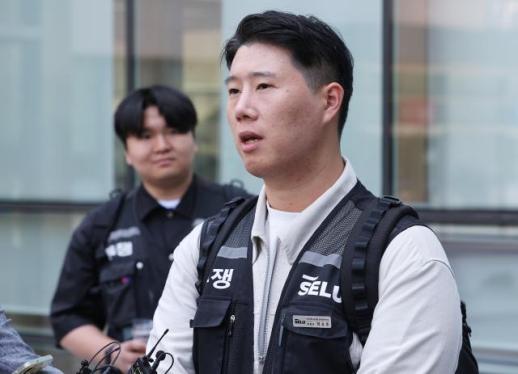 Samsung and Government Urge Return to Negotiations Amid Ongoing Strike The Central Labor Relations Commission has urged Samsung Electronics to return to the negotiating table, but the union is maintaining its stance by insisting on the institutionalization of performance bonuses as a precondition. Analysts suggest that if the union chooses to strike despite the potential for a significant special compensation package, it may find itself at a disadvantage in the public relations battle. On May 14, Samsung Electronics sent a formal letter titled "Proposal for Additional Dialogue Between Labor and Management" to the National Samsung Electronics Labor Union and the inter-company labor union. On the same day, the Central Labor Relations Commission also officially requested the resumption of post-adjustment meetings on May 16. Both the government and the company are calling for a return to negotiations. However, Choi Seung-ho, chairman of the inter-company labor union, stated, "There is no reason to engage in dialogue unless the institutionalization and transparency of performance bonuses are achieved," indicating that the union expects its demands to be met before negotiations can proceed. The union is demanding that 15% of the operating profit be permanently allocated as a performance bonus for the Device Solutions (DS) division and that the current cap on the Operating Profit Incentive (OPI) be eliminated, formalizing these changes into the system. The Central Labor Relations Commission's proposal includes a provision that if the DS division achieves the highest operating profit in the country, 12% of the operating profit would be used for special bonuses in addition to the existing OPI, potentially amounting to around 40 trillion won in total compensation. Nevertheless, the union's rejection of this proposal is largely interpreted as a focus on securing a permanent profit-sharing structure rather than a one-time compensation this year. Industry experts argue that the union's demands extend beyond simple wage negotiations and challenge the very principles of profit distribution within the company. Given that Samsung Electronics operates across various sectors, including semiconductors, foundries, mobile, home appliances, and automotive electronics, fixing the profit distribution structure during a boom in one division could lead to fairness issues among divisions. Concerns have also been raised that repeated demands for fixed distributions during downturns or periods requiring significant preemptive investments could subordinate management decisions to labor negotiations. Samsung Electronics has reportedly entered an emergency management mode in anticipation of a potential strike. Since continuity is crucial in semiconductor processes, any actual production disruptions due to a strike could lead to issues with yield, delivery, and customer trust. Kim Young-hoon, Minister of Employment and Labor, emphasized the urgent need for dialogue, stating, "We must engage in discussions, even if it means staying up all night." As long as the union maintains its preconditions, the likelihood of resuming negotiations remains limited, with less than a week remaining until a general strike is scheduled for May 21.* This article has been translated by AI. 2026-05-15 03:02:15
 -
 Samsung Workers Express Concerns Over Upcoming Strike As a general strike at Samsung Electronics approaches, internal members are expressing growing fatigue regarding the union's demand for the institutionalization of performance-based bonuses. Critics argue that the request to fix a certain percentage of operating profit as a bonus fund and to eliminate the cap on excess profit bonuses (OPI) is excessive, separate from existing grievances about the company's compensation system. On May 13, an employee from a manufacturing company affiliated with the metalworkers' union described the upcoming strike as "quite bizarre." He noted, "We have also made demands during wage negotiations for basic salary increases of around 150,000 won, hundreds of percent in bonuses, retirement extensions, and job security. However, the starting point for negotiations was to determine how to share based on actual results, inflation, and employment instability." He added, "The demand from the Samsung Electronics union to fix a certain percentage of yet-to-be-determined future operating profits as a bonus fund each year is fundamentally different. It sounds like they want to dictate the profit-sharing formula itself, rather than just asking for more bonuses." Colleagues in the same industry are also critical. An employee in the electronics sector remarked, "I often discuss the Samsung Electronics strike with my peers, and many find it ironic that while some are discussing bonuses in the millions of won, they are resorting to a strike again." Another employee recalled, "I remember choosing not to join Samsung Electronics due to workplace preferences, even though we were both hired at the same time. I don't believe the current results solely belong to Samsung Electronics workers." The atmosphere within Samsung Electronics is also divided. A staff member from the Device Experience (DX) division said, "Employees with around 15 years of service feel resentment towards newer employees who seem to demand credit for the company's achievements as if they built it themselves." Another employee raised concerns about whether it is fair for a 20-year veteran in memory to share performance outcomes in the same way as a one-year employee. Criticism of the union's demands is strong among Samsung Electronics employees. One employee questioned, "Will we get paid for going on strike? If we keep incurring losses from strikes and then demand compensation, how can the company survive?" Another added, "While the company’s previous handling of issues was excessive, the current stance of the union also seems unreasonable." The internal sentiment regarding the strike is complex. One union member stated, "I understand the intent behind the union's demands, but the psychological burden of a general strike is significant. I worry that we might be seen as hindering progress at a time when the semiconductor industry is recovering." While there is agreement on the need for performance-based bonuses, many internal voices draw the line at the strike as a means to achieve those demands. Concerns have also been raised that this situation could exacerbate the controversy surrounding the 'elite union' status of the Samsung Electronics union. A business insider commented, "The issues of demanding higher compensation and fixing the profit-sharing structure are entirely different. If the strike proceeds, it is likely to be perceived as an unreasonable demand for profit distribution rather than a legitimate request for fair compensation."* This article has been translated by AI. 2026-05-15 03:00:12
 -
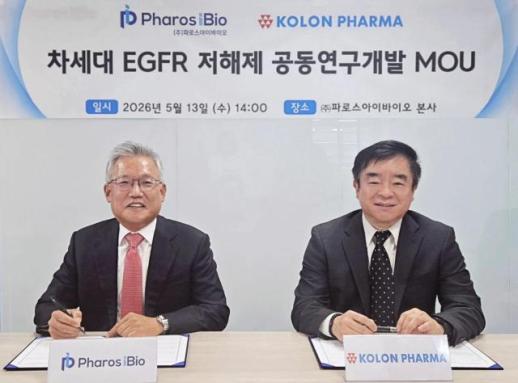 Pharos AI Bio and Kolon Pharmaceutical Collaborate on Next-Generation EGFR Inhibitor Pharos AI Bio, an artificial intelligence-based drug development company, announced on May 14 that it has signed a strategic memorandum of understanding (MOU) with Kolon Pharmaceutical's new drug division to develop a next-generation lung cancer treatment, PHI-701. The agreement aims to combine Pharos AI Bio's AI drug design technology with Kolon Pharmaceutical's clinical translational research capabilities to expand joint research and development efforts. The two companies plan to develop a next-generation epidermal growth factor receptor (EGFR) mutation inhibitor that can overcome the resistance limitations of existing treatments. According to global market research firm DelveInsight, the global market for EGFR mutation-targeted non-small cell lung cancer treatments is expected to grow at a compound annual growth rate (CAGR) of approximately 7.3%, reaching about $14.6 billion by 2036. The companies will work together to derive new candidate substances targeting EGFR protein mutations, which are known to be a major cause of non-small cell lung cancer, with the goal of entering preclinical trials. Pharos AI Bio will focus on designing small molecule compounds and securing the candidate substance PHI-701 using its AI drug development platform, Chemiverse. Kolon Pharmaceutical's new drug division plans to conduct translational research, including mechanism studies and non-clinical efficacy evaluations of PHI-701. While existing third-generation EGFR-targeted therapies have improved efficacy compared to traditional chemotherapy, they have been criticized for the emergence of mutations within one to two years of treatment. In response, the two companies are focusing on overcoming resistance through a "dual mechanism." They aim to develop a fourth-generation EGFR inhibitor that selectively suppresses mutated proteins while blocking alternative survival pathways in cancer cells. Analysts believe this approach will address unmet patient needs and drive market expansion. Yoon Jeong-hyuk, CEO of Pharos AI Bio, stated, "We plan to accelerate the creation of results by expanding our AI drug design capabilities through external collaborations and joint research and development. We will also demonstrate the scalability and competitiveness of our platform in the high-value oncology market."* This article has been translated by AI. 2026-05-15 02:57:39
 -
 Hanwha Solutions Delays 1.8 Trillion Won Capital Increase to July Hanwha Solutions announced a revised schedule for its capital increase on May 14. The date for the new share allocation has been moved from May 5 to July 5, and the date for confirming the new share issuance price has been changed from June 17 to July 7. The expected listing date for the new shares has also been postponed from July 10 to July 31. The total amount of the capital increase is 1.8144 trillion won, with 907.7 billion won allocated for facility funds and 906.7 billion won designated for debt repayment. The purpose of the fundraising remains consistent with previous announcements. After receiving a second correction request, Hanwha Solutions had previously changed the related schedule to unspecified on May 12. A company representative stated, "We plan to submit a revised report to the Financial Supervisory Service soon." Additionally, Hanwha Solutions will conduct an in-person and group investor relations (IR) meeting in Hong Kong from May 27 to 28, organized by UBS, to discuss the details of the capital increase, the intended use of funds, and the company's current management status while gathering investor feedback.* This article has been translated by AI. 2026-05-15 02:56:59