
Journalist

Elizabeth Englezos
-
 SK Square Hits 52-Week High on SK Hynix Rally SK Square rose to an intraday 52-week high on Wednesday, lifted by strength in shares of chipmaker SK Hynix. According to the Korea Exchange, SK Square was trading at 845,000 won as of 1:39 p.m., up 15,000 won, or 1.81%, from the previous session. The stock climbed as high as 877,000 won during the session, setting a new 52-week high. The move was widely seen as reflecting expectations that SK Square’s stake value will rise as SK Hynix shares advance. SK Square is SK Hynix’s largest shareholder with a 20.5% stake and is a holding company focused on investments in information and communications technology, artificial intelligence and semiconductors. Brokerage optimism also continued. NH Investment & Securities said in a report Wednesday that it raised its target price for SK Square to 1.10 million won from 740,000 won, citing a strong semiconductor cycle and what it described as a virtuous cycle of shareholder returns. It maintained a “buy” rating. Ahn Jaemin, an analyst at NH Investment & Securities, said SK Hynix — which accounts for an “absolute” share of SK Square’s net asset value — has continued a steep rise on the back of favorable semiconductor conditions, adding that SK Square’s corporate value has been rising in tandem. Ahn said the stock’s high sensitivity reflects expectations that business expansion, including additional mergers and acquisitions within the semiconductor value chain, could emerge around SK Square. He also cited an active shareholder-return policy, including annual share buybacks and cancellations. He added that the company plans a 200 billion won cash dividend this year and said SK Square’s relatively smaller market-cap weight than SK Hynix offers a supply-and-demand advantage for benchmark-tracking institutional investors seeking to increase exposure. Ahn also said the semiconductor industry is undergoing structural change as diversified memory is adopted in line with a trend he called “layering of computation,” arguing that demand is unlikely to fade quickly. He said that supports expectations for further gains in SK Hynix shares and, in turn, SK Square’s corporate value.* This article has been translated by AI. 2026-04-30 13:56:03
 -
 CJ ENM Unveils AI-Assisted Feature Film, Says Costs and Time Cut Up to Sevenfold “Watching a shot that wouldn’t come together for days get solved at once with AI made me realize how important technology is in content production.” Jung Chang-ik, head of CJ ENM’s AI Studio team, made the remarks April 30 at the “CJ ENM 2026 AI Culture Talk” event at CGV Yongsan I’Park Mall in Seoul. CJ ENM used the event to debut “Apartment (The House),” a hybrid feature film combining AI and live-action footage, and said it signals a shift in how films are made. The film was completed on a total budget of about 500 million won. CJ ENM estimated that producing it through conventional methods would have cost at least five times more. Filming was completed in just four days. The company said the project was an “efficiency experiment” aimed at cutting both cost and time while maintaining quality. CJ ENM said the key approach was to use AI to create all backgrounds and visual effects, while keeping the actors’ performances live. Actors were filmed against a green screen, then combined with AI tools for image generation, retouching and video generation. Google’s generative AI solutions, including Imagen, Nano Banana and Veo, were applied across the production pipeline. Jung said the team maximized efficiency by shooting indoors without moving to locations. He said backgrounds were simulated in detail during preproduction so actors could perform as if they were seeing the real environment on set. CJ ENM also discussed technical limits. Jung said combining different AI solutions can produce uneven color and detail, making digital color grading in postproduction more important. “Each AI output has different color characteristics, so standardizing them is essential,” he said. “The technology has advanced, but the production process still needs refinement.” CJ ENM said it does not see AI as a replacement for actors. The company said authentic acting is difficult for AI to substitute, and that a hybrid model — preserving performance while using AI for backgrounds and effects — is the most practical approach for now. Actor Kim Shin-yong said being able to see AI backgrounds and effects on set helped him stay immersed. He said it was easier to act than in traditional chroma-key shoots. Kim added that AI should be a tool that creates more opportunities to produce content, rather than replacing actors. Baek Hyun-jung, head of content innovation at CJ ENM, said efficiency gains vary by genre and directing style, but that films could see five- to sevenfold cost efficiency. She said the challenge is to use AI not simply to lower budgets, but to raise quality. Baek also highlighted a strategic partnership with Google, saying the company has foundation models strong in realistic depiction. She said CJ ENM is expanding cooperation to move beyond basic generative AI toward “narrative AI,” where storytelling and direction are central. Ahn Sung-min, director of customer engineering at Google Cloud, said AI is a tool to realize creators’ intent, not to replace creativity. He said production quality was improved by precisely analyzing video elements and generating results with consistency. Looking ahead, CJ ENM said the distinction between AI films and conventional films will gradually fade. As computer graphics once expanded the industry, the company said AI will broaden production scale and expressive range. CJ ENM said it expects AI use in film production to expand in earnest starting in the second half of the year. A CJ ENM official said the goal is to apply AI across planning, production, distribution and marketing to strengthen global competitiveness, while advancing the technology and building an industry ecosystem in parallel. 2026-04-30 13:45:21
 -
 OneStore Unveils 'All-in-One' Platform Plan, Targets 2 Trillion Won in Transactions by 2030 South Korean app marketplace OneStore on April 30 laid out an “All in ONE Store” vision that combines downloading, payments and play on a single platform, as it moves to expand beyond a traditional app store. The company said it aims to reach 2 trillion won in transaction volume by 2030. OneStore unveiled its growth strategy for the next decade at a 10th anniversary press briefing at SKT’s T Tower in Seoul. CEO Park Tae-young said the past decade was about becoming a leading domestic app marketplace by cutting commissions, and the next phase will be about expanding the app store’s role. “We will open an era where downloading, payment and play happen on one platform,” he said. The company also introduced OneWebShop, a web-based direct-to-consumer (D2C) payment platform, and OnePlay Games, a service that lets users launch games instantly without installing them. OneStore said the additions are meant to offer developers and users more options and strengthen platform competitiveness. OneWebShop is a web-based D2C payment infrastructure offered directly by an app marketplace operator, reflecting OneStore’s experience in payments, settlement and customer support. OneStore said developers can adopt it without separate build development by using existing in-app payment integration standards. Fees, including payment gateway costs, are about 8%. About 40 products are preparing to join, and the service is scheduled for an official launch in late May. OnePlay Games allows users to run games immediately within the OneStore app without installing them. OneStore said it is working with Tencent to provide mini-game content, linking gameplay and item purchases through its login and payment infrastructure. The service is set for an official launch in May after a pilot period. OneStore said it will pursue a mid- to long-term growth strategy built around three pillars: its existing app marketplace, OneWebShop and OnePlay Games. The company said it aims to expand transaction volume and increase time spent on the platform while diversifying its growth model. It also set goals of reaching 2 trillion won in transaction volume by 2030 and providing developers with cumulative benefits of more than 1 trillion won. Park declined to commit to a renewed push for an initial public offering. “More important than when we do an IPO is how we are evaluated as a company,” he said. “An IPO is not the goal but one step in the growth process. For now, we will focus on growing the business based on OneWebShop and OnePlay.” * This article has been translated by AI. 2026-04-30 13:33:17
 -
 Hana Bank to Provide Up to 85 Billion Won in Support for HD Construction Equipment Suppliers Hana Bank said April 30 it signed a business agreement with HD Construction Equipment and the Korea Credit Guarantee Fund to support shared growth in the construction equipment industry. The agreement aims to help promising small and midsize companies in the sector grow, while building a public-private cooperation framework to support next-generation technology development and expand exports. Under the deal, Hana Bank and HD Construction Equipment will set up a special contribution fund of up to 5 billion won — 4 billion won from Hana Bank and 1 billion won from HD Construction Equipment — and use it to pursue financial support totaling up to 85 billion won. The partners plan to contribute 1 billion won first and then increase the amount in stages depending on how quickly the fund is used. Support will be offered to partner companies recommended by HD Construction Equipment. Benefits include preferential guarantee coverage from the Korea Credit Guarantee Fund of up to 100%, reduced guarantee fees, and lower financial costs through loan-rate cuts and preferential exchange rates. Lee Ho-seong, president of Hana Bank, said the agreement was designed to provide practical financial benefits to small and midsize construction equipment companies struggling with high oil prices and rising raw material costs. He said the bank will continue expanding support to strengthen the stability and competitiveness of export-oriented small and midsize firms. * This article has been translated by AI. 2026-04-30 13:18:45
 -
 Korean Economy/Business Calendar SEOUL, April 30 (AJP) - May 6 (Wed) Apr. 2026 Consumer Price Index (Preliminary) - Ministry of Data and Statistics May 8 (Fri) Mar. 2026 Balance of Payments (Preliminary) - Bank of Korea May 13 (Wed) Apr. 2026 Employment Trends - Ministry of Data and Statistics Mar. 2026 Money and Liquidity - Bank of Korea May 15 (Fri) Apr. 2026 Export/Import Prices + Trade Indices (Preliminary) - Bank of Korea May 19 (Tue) Q1 2026 Household Credit (Preliminary) - Bank of Korea May 21 (Thu) Apr. 2026 Producer Price Index (PPI) (Preliminary) - Bank of Korea May 22 (Fri) May 2026 Consumer Survey Index (CCSI) - Bank of Korea May 27 (Wed) Q1 2026 International Investment Position (Preliminary) - Bank of Korea May 2026 Business Survey Index (BSI) & Economic Sentiment Index (ESI) - Bank of Korea May 29 (Fri) Apr. 2026 Industrial Activity Trends - Ministry of Data and Statistics *1Q 2026 Tentative Earnings Release Schedule May 7 (Thu) Kakao LG Uplus Hyundai Department Store May 8 (Fri) Korean Air KT May 11 (Mon) Lotte Shopping May 12 (Tue) CJ CheilJedang SK Telecom May 13 (Wed) NCSoft 2026-04-30 13:13:31
 -
 Samsung Electro-Mechanics Q1 Operating Profit Rises 40% as Revenue Tops 3 Trillion Won Samsung Electro-Mechanics said Thursday it posted first-quarter consolidated revenue of 3.2091 trillion won and operating profit of 280.6 billion won. Revenue rose 470.5 billion won, or 17%, from a year earlier and 307.0 billion won, or 11%, from the previous quarter. Operating profit increased 801 billion won, or 40%, year over year and 411 billion won, or 17%, quarter over quarter, despite reflecting 71.4 billion won in one-time costs. It was the first time since the company was founded that quarterly revenue exceeded 3 trillion won. The company said results improved on steady demand for high value-added industrial and automotive products, as it expanded supply of multilayer ceramic capacitors, or MLCCs, for artificial intelligence servers and advanced driver-assistance systems, or ADAS, as well as flip-chip ball grid array, or FCBGA, products. For the second quarter, Samsung Electro-Mechanics forecast continued growth in industrial and automotive components on expanding global AI investment and autonomous driving. It said demand should remain strong for high value-added MLCC and FCBGA products used in AI servers and data centers, citing data center upgrades and rising power use by AI servers. The company said it plans timely supply of its most advanced industrial MLCCs and next-generation high-layer, large-area FCBGA products. In the components business, first-quarter revenue rose 16% from a year earlier and 7% from the previous quarter to 1.4085 trillion won. The company cited rapid growth in AI-related sales for servers, power and networks, and expanded supply of automotive MLCCs as vehicle electrification accelerates. In the package solutions business, first-quarter revenue increased 45% year over year and 12% quarter over quarter to 725.0 billion won. Samsung Electro-Mechanics said revenue rose across applications as it expanded supply of high value-added substrates for global big tech customers’ AI accelerators, server CPUs and networks, and increased automotive substrate supply for ADAS and autonomous driving. It expects strong demand in the second quarter for high value-added FCBGA substrates for AI, servers and networks, and said it will begin full-scale supply of new products for big tech customers’ AI data center networks. In the optical solutions business, first-quarter revenue rose 5% from a year earlier and 15% from the previous quarter to 1.0756 trillion won. The company said performance improved as it began mass production of high-performance camera modules for IT devices, including 200-megapixel cameras and slim folded zoom, and expanded supply to global electric vehicle customers and broadened its in-cabin camera lineup for domestic original equipment manufacturers. For the second quarter, it said it will respond to continued demand for differentiated camera modules for flagship models at home and abroad by ramping up next-generation high-resolution folded zoom modules, while expanding automotive supply tied to new EV platform transitions and continuing to increase shipments to domestic OEMs.* This article has been translated by AI. 2026-04-30 12:48:25
 -
 South Korea Supreme Court Upholds Convictions of 18 in Seoul Western District Court Riot Supporters who stormed the Seoul Western District Court in protest of an arrest warrant for former President Yoon Suk Yeol have had their convictions finalized. According to the legal community on Wednesday, the Supreme Court’s third division, with Justice Oh Seok-jun presiding, upheld lower-court rulings that sentenced 18 defendants, including a man identified by his surname Kim, to prison terms or suspended sentences on charges including aggravated trespass. Prosecutors said the group forced its way into the court on Jan. 19 last year after the warrant was issued for Yoon. They assaulted police officers guarding the building and court employees, and searched for the judge who issued the warrant. They were indicted for breaking court windows, damaging facilities and furnishings, and causing a disturbance inside the building. Some also faced additional charges, including aggravated unlawful confinement, after surrounding and damaging a vehicle belonging to the Corruption Investigation Office for High-ranking Officials as it returned to the Gwacheon Government Complex after completing its schedule. Prosecutors indicted 63 people over the incident on Feb. 10 last year. In earlier trials, a first-instance court convicted 59 defendants, handing down sentences ranging from up to five years in prison to suspended terms. Of 49 people charged with aggravated trespass, 40 received prison terms, eight received suspended sentences and one was fined. Thirty-six of the 59 appealed. In an appeals ruling issued in December last year, the court kept the original sentences for 16 and reduced sentences for 20, imposing shorter prison terms or suspended sentences. Eighteen then appealed to the Supreme Court, which upheld the rulings. The Supreme Court on Wednesday also finalized a guilty verdict for documentary director Jeong Yun-seok, who said he entered the court with a camera to document the scene. He was fined 2 million won. The appeals court said Jeong could not be deemed to have shown “the power of a crowd” because he separated from rally participants and only filmed after entering the grounds. But it added that court staff could not distinguish between Jeong’s entry and that of other defendants who entered the building.* This article has been translated by AI. 2026-04-30 12:36:21
 -
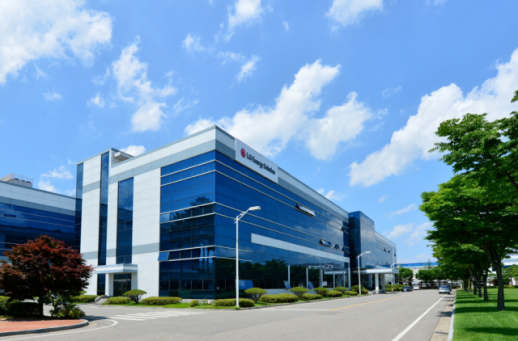 LG Energy Solution posts second straight loss, bets on ESS pivot SEOUL, April 30 (AJP) - LG Energy Solution reported its second consecutive quarterly operating loss in the first three months of 2026, hit by shrinking U.S. battery subsidies and weak electric vehicle demand. The nation's largest battery maker posted a consolidated operating loss of 207.8 billion won ($139.7 million) for the January to March period, reversing an operating profit of 374.7 billion won a year earlier, according to a regulatory filing on Thursday. Revenue slipped 2.5 percent year-on-year to 6.555 trillion won, while net losses ballooned to 944 billion won. Experts say the deterioration stemmed largely from a steep drop in the subsidies cut under Washington's Inflation Reduction Act, which fell to 189.8 billion won — just 41.5 percent of the 457.7 billion won booked a year ago. Ramp-up costs at five newly expanded North American ESS production sites and reduced pouch-type EV battery shipments to a major customer compounded the drag. Despite the red ink, LG Energy Solution laid out an aggressive blueprint to reshape its revenue mix around energy storage. The company said it would raise the share of ESS in total sales from about 25 percent in the first half to 35 percent by year-end, up from below 10 percent in 2025. "We secured an ESS order backlog of about 440 gigawatts in North America as of the end of April, and aim to build more than 50 gigawatts of ESS battery production capacity in the region by year-end," LG CNS CFO Lee Chang-sil said during an earnings conference call. To meet surging demand from power grid operators and AI data center developers, the company plans to convert multiple EV battery lines to ESS output at plants in Michigan, Ontario, Lansing and joint ventures with Honda and General Motors. The CFO projected second-quarter results would improve by about 10 percent from the first quarter on robust North American ESS demand and healthy appetite for high-nickel EV and hybrid batteries in Europe. Lee forecasted revenue growth of 15 to 20 percent in the second half relative to the start of the year, adding that the company aims to turn a profit without relying on U.S. production subsidies over the longer term. 2026-04-30 12:21:59
 -
 Samsung Electronics says Q1 chip profit hit 53.7 trillion won; HBM sales to triple in 2026 Samsung Electronics said its semiconductor business generated about 54 trillion won in operating profit in the first quarter, far exceeding the company’s total operating profit for all of last year. In its final earnings release on Wednesday, Samsung said its Device Solutions (DS) division posted revenue of 81.7 trillion won and operating profit of 53.7 trillion won. Results surged as the spread of artificial intelligence boosted demand for high-value memory chips and prices rose. Revenue from its finished-goods businesses totaled 52.7 trillion won, with operating profit of 3 trillion won. The Mobile eXperience (MX) unit grew on stronger flagship sales, including the Galaxy S26 Ultra, but profit gains were limited by higher costs and tariff burdens. Samsung said the widening gap between business units is likely to persist. It expects the semiconductor business to continue leading companywide results this year as memory prices keep rising and supply-demand imbalances deepen. The company also expects high-bandwidth memory (HBM) sales to climb sharply. On a first-quarter earnings conference call, Samsung said, “The situation where memory supply fails to keep up with demand is expected to continue into next year,” adding that the supply gap versus demand next year could widen further than this year even on those demand drivers alone. Samsung said it expects HBM sales this year to rise to more than three times last year’s level. It said HBM4 began mass-production shipments in February, the first in the world, and capacity expansion is proceeding as planned, with supply set to ramp up in the second half. Samsung added that HBM4 revenue is expected to exceed half of total HBM revenue starting in the third quarter and to account for a majority of full-year HBM sales. By contrast, Samsung said profitability at its Device eXperience (DX) division — which includes mobile, home appliances and TVs — is likely to weaken. “Due to factors such as rising component costs, a year-on-year decline in profitability for the MX business is unavoidable,” the company said. It added that securing performance and profitability in the TV market this year will be difficult amid higher raw material prices and an uncertain external business environment. Samsung said it plans a broader reshaping of its DX business under a “select and focus” strategy. It said it has withdrawn from sales in China’s TV and home-appliance markets and is reviewing outsourcing production for some low-margin appliance product lines. Samsung said it will pursue “fundamental improvements” through cost reductions, structural efficiency and stronger long-term organizational competitiveness, and will also focus on securing future growth engines through mergers and acquisitions. Samsung also said it will significantly increase semiconductor-related facility investment to meet AI-driven demand. “With continued AI demand this year, capex is expected to increase to a considerable level compared with last year,” it said, adding it will expand early-stage R&D investment in next-generation processes and core technologies to secure technology leadership. Samsung said memory investment fell from the previous quarter after it front-loaded spending late last year, including adding new cleanroom space at its Pyeongtaek campus, but investment is expected to rise this year as equipment is installed in that space, lifting overall capex substantially. * This article has been translated by AI. 2026-04-30 12:10:45
 -
 South Korea culture minister urges faster guidance as game rules lag behind AI era “Companies need to see a guide to move, but we keep only reviewing things. Then game companies can only ask, ‘Are you telling us to market or not?’” (Culture, Sports and Tourism Minister Choi Hwi-young) Culture, Sports and Tourism Minister Choi Hwi-young on April 30 scolded the ministry’s game policy team, saying it must quickly provide the industry with clear guidance as rules and interpretations lag behind rapid change in gaming and AI. “We need to give guidance quickly,” Choi said at the second meeting of the Culture and Arts Policy Advisory Committee’s game subcommittee at the National Museum of Modern and Contemporary Art, Seoul. “Even if it’s just, ‘You can do this much for now,’ or ‘Ask us,’ we should issue as much guidance as we can within what’s possible.” The meeting brought together committee members representing the ministry and the game industry (Bae Su-jeong, Yoo Seung-hyun and Lim Su-jin), academia (Lee Seung-hoon and Hwang Seung-heum), and associations and groups (Cho Young-gi, Hwang Sung-ik and Kim Young-man) to discuss key tasks and policies for the sector. Members said the industry remains constrained by the fallout from the Sea Story controversy 20 years ago, arguing that a lingering gambling-related stigma makes it difficult to run promotions, including prize giveaways. Kim Young-man, president of the Korea e-Sports Association, said prizes are also used in e-sports and are unrelated to gambling. He said problems persist because of regulations rooted in two-decade-old concerns, citing cases in which services that had operated for 15 years without issues, including Real Farm, were blocked. Kim added that game companies in Taiwan and Japan offer rewards and urged faster action on issues that can be resolved through the will of the ministry and the public. Choi said the government is reviewing regulatory easing but faces concerns about side effects. “We should move one step within what society can accept, then another step,” he said, adding that officials are discussing how far rules can be relaxed while remaining effective and reducing public unease. Lee Seung-hoon, a professor in the Department of Game Contents at Anyang University, said restrictions on prize giveaways are making it harder for game companies to build user data. He said Google and Apple do not share user information with developers, and that marketing costs tied to those platforms rise while companies cannot accumulate data. Lee said game companies risk losing key assets beyond development, including open-market access and promotion. He added that when the Sea Story issue erupted, there were no e-sports tournaments, and suggested that even clearer legal interpretation could help remove gambling-related concerns. Artificial intelligence was also a major topic. Choi said the game industry leads IT advances and urged rapid adoption of AI achievements in the field. He asked participants to propose what government support is needed so the industry does not fall behind. Industry representatives criticized support programs as outdated. Yoo Seung-hyun, CEO of Wonder Potion, said AI has made it possible for small teams to build games, but Korea Creative Content Agency programs still reflect older standards, including residency requirements that set a minimum staffing level of about 10 people. With AI, he said, three people can now make a game. Yoo called the criteria too harsh and urged easing standards to match changing conditions. He also said there is some support for AI tool costs, but the amounts are limited even as prices rise, and asked for expanded, more advanced support. The meeting also reviewed follow-up progress on issues raised at the first subcommittee session, including cracking down on illegal private game servers, making the 52-hour workweek rule more flexible for the game sector, and introducing a tax credit for game production costs. Choi said illegal private servers would be blocked immediately through the introduction of an emergency takedown authority. He said the tax credit for game production costs should be introduced next year. He also pledged that a 120 billion won game fund, created with a 60 billion won investment from Nexon, would be focused on small and indie game companies. 2026-04-30 12:09:17