
Journalist

Elizabeth Englezos
-
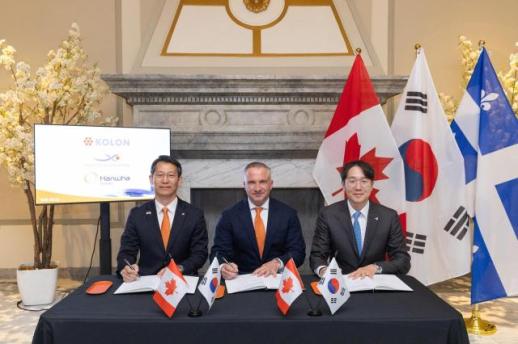 Kolon Spaceworks Expands North America Defense Push With Canada Submarine Teaming Deal Kolon Spaceworks said it is stepping up its push into the North American defense market through cooperation with Hanwha Ocean and Canadian firm Spartec. The company said it signed a teaming agreement, or TA, with Hanwha Ocean and Spartec at ‘CPSP Partners Day’ held April 28 (local time) in Montreal to strengthen competitiveness for Canada’s next-generation submarine program, known as CPSP. Kolon Spaceworks said the agreement establishes a cooperation framework with a local partner that has manufacturing capabilities and helps secure localization capacity needed to carry out the project. Under the CPSP effort, Kolon Spaceworks said it will work with Spartec, a Canadian composites company, to expand in North America based on its own technology. Spartec is headquartered in Erin, Ontario, and has more than 40 years of experience producing composite parts for the automotive, industrial and defense sectors, the company said. Kolon Spaceworks said it plans to use the agreement to find additional local partners and broaden cooperation with institutions, strengthening its mid- to long-term business base in the North American defense market. CEO Ahn Sang-hyun said the deal will reinforce the company’s cooperation network with Canadian partners and contribute to improving competitiveness across Canada’s defense industry. He said Kolon Spaceworks aims to have its core technologies, proven through domestic submarine projects, recognized in global markets and to expand cooperation into aviation and space.* This article has been translated by AI. 2026-04-29 13:39:21
 -
 CertiK report says 2026 digital-asset rules tighten AML and expand security-audit mandates Global Web3 security firm CertiK has released its “2026 Digital Asset Regulation Landscape” report, outlining regulatory trends and compliance challenges across major markets. The report said that as of April 2026, regulatory frameworks for digital assets are becoming more defined in key jurisdictions including the United States, the European Union, Hong Kong and Singapore. It said the industry is moving beyond early-stage self-regulation and reactive enforcement toward comprehensive compliance covering licensing, anti-money laundering (AML), security audits and reserve management. CertiK listed four major shifts: tougher AML enforcement; smart-contract security audits moving into formal regulatory requirements; convergence in stablecoin standards; and changes in institutional participation as bank prudential rules are introduced. Enforcement focus shifts from securities status to AML The report said global enforcement is increasingly centered on controlling fund flows rather than debating whether tokens are securities. From 2024 to 2025, the U.S. Securities and Exchange Commission’s crypto-specific enforcement actions and penalty totals declined, while the U.S. Department of Justice and the Financial Crimes Enforcement Network stepped up AML-related actions, it said. In the first half of 2025 alone, more than $900 million in fines and settlements were imposed in AML-related matters. It cited sanctions involving OKX and KuCoin. OKX reached a $504 million settlement over allegations tied to operating an unlicensed money services business and violating the Bank Secrecy Act. KuCoin agreed to a $297.4 million settlement over similar violations. CertiK said the cases show that exchanges’ transaction monitoring, customer due diligence and sanctions screening have become core regulatory risks, not just internal controls. The report also noted regional differences. Europe has tended to respond by raising the level of AML fines and sanctions, while Asia-Pacific regulators more often rely on license revocations, business restrictions and corrective orders rather than monetary penalties. “The logic of digital-asset regulation is shifting from disputes over an asset’s legal character to controlling fund flows and market access,” the report said, adding that transaction monitoring, suspicious-activity reporting and sanctions screening will be key capabilities for exchanges and custodians. Smart-contract audits become a market-entry requirement CertiK said security regulation is also tightening. Smart-contract audits, once closer to an industry best practice, are increasingly being treated in major jurisdictions as a de facto requirement for licensing, token listings and asset-approval processes. Hong Kong, the United Arab Emirates, Singapore and Brazil are incorporating independent security assessments into licensing reviews or asset approvals, the report said. Hong Kong applies smart-contract audit requirements in its stablecoin issuer authorization process, and Dubai’s Virtual Assets Regulatory Authority requires regular smart-contract audits for licensed entities. The EU’s Digital Operational Resilience Act, or DORA, strengthens obligations for operational resilience, information and communications technology risk management and security testing for financial institutions and related service providers, it said. VARA requires annual smart-contract audits and can order threat-based penetration testing when needed. Brazil’s central bank requires independent technical certification in the licensing process for virtual asset service providers, including cybersecurity, segregated custody and key-management systems. CertiK’s internal analysis found that about 80% of projects that later suffered hacking losses had not undergone an official security audit before the incident, and those projects accounted for more than 89% of total losses. Attack patterns are also changing, the report said. In 2025, about 76% of total losses were attributed to infrastructure-layer issues such as private-key leaks and failures in access-permission management. That indicates operational security, key management and access controls are driving larger losses than traditional code vulnerabilities. CertiK said regulators’ security expectations are expanding beyond code reviews to broader assessments that include key management, operational security, penetration testing and internal controls. Stablecoin rules converge around reserves and licensing The report said stablecoins are the area where global standards are converging fastest. It cited the U.S. GENIUS Act, the EU’s Markets in Crypto-Assets regulation, or MiCA, Hong Kong’s stablecoin rules and Singapore’s payment services licensing framework. While details differ, the report said these regimes generally share core principles: reserves backed by fiat currency or highly liquid assets; limits on algorithmic stablecoins; independent reserve audits; licensing of issuers; and guaranteed redemption rights. However, the report said reserve composition rules, audit frequency, capital requirements and how foreign issuers are recognized are not yet fully aligned. As a result, stablecoin issuers face the challenge of meeting multiple, differing regulatory systems at the same time, not merely securing legal status in one market. For global operators, the report pointed to burdens including conflicting reserve rules across regions, the lack of mutual recognition for licenses and rising compliance costs. It said oversight by central banks and financial regulators is likely to intensify as stablecoins become more connected to payment infrastructure. Basel standards expected to reshape banks’ crypto exposure The report said the structure of institutional and banking participation in digital assets is also changing. It forecast that the Basel Committee on Banking Supervision’s prudential standards for cryptoassets will be incorporated into national regulatory systems in stages. The framework classifies digital assets by risk characteristics and applies differentiated capital requirements depending on what banks hold. Stablecoins and tokenized traditional financial assets that meet regulatory requirements may receive relatively lower risk weights, while unsecured digital assets such as bitcoin would face higher capital charges, it said. CertiK said this is likely to influence banks’ and large financial institutions’ strategies, with institutional capital more likely to concentrate in digital assets that demonstrate regulatory compliance, reserve transparency, securities-like structures and robust custody. “Compliance is no longer optional” CertiK said that while major regulatory systems are gradually converging, the compliance barriers companies must clear continue to rise. It said AML, security audits, reserve management and license maintenance are becoming ongoing costs for digital-asset firms expanding globally. Stefan Muehlbauer, CertiK’s head of U.S. government policy, said, “The era of ambiguous digital asset regulation is already over,” adding that enforceable regulatory systems are spreading quickly across major markets worldwide. “The key question for institutional investors and companies is no longer ‘Do we need compliance?’ but ‘How quickly can we build compliance infrastructure that meets regulatory requirements and can actually be enforced?’” he said. The report said Web3 firms and institutions operating across multiple jurisdictions should incorporate licensing, upgraded AML systems, ongoing security audits and key-management programs into long-term capital planning. It said security and compliance are becoming decisive conditions for market entry as the digital-asset industry moves into formal regulation.* This article has been translated by AI. 2026-04-29 13:37:41
 -
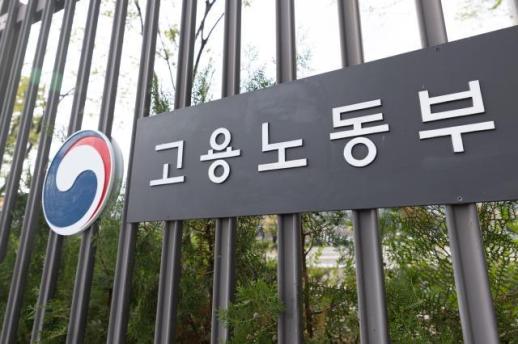 South Korea Labor Ministry Holds Forum With Industrial Accident Victims, Pledges to Close Coverage Gaps The government held a meeting to hear directly from workers injured in industrial accidents and their families during a memorial week for the Day of Workers Killed or Injured in Industrial Accidents. The Ministry of Employment and Labor said Ryu Hyeon-cheol, head of its Occupational Safety and Health Headquarters, hosted a discussion forum on Tuesday afternoon with the Korea Workers’ Compensation and Welfare Service under the theme “Listening to Injured Workers.” The event was organized for the memorial week, held from April 28 to May 4, to remember those killed in industrial accidents and to comfort bereaved families. It was also the first memorial-week event since Ryu took office. About 60 people attended, including members of the bereaved families’ network “Dasisneun,” representatives of industrial accident groups and injured workers. Participants shared difficulties they faced while seeking workers’ compensation, problems in treatment, recuperation and rehabilitation, and areas where they said the system needs improvement. They also held an open discussion on the overall industrial accident insurance system. They called for expanded support to help injured workers return to their jobs and daily lives after treatment, sustained welfare support for families, and greater assistance for related organizations. Ryu said the government would work to “expand the scope of protection by eliminating blind spots in industrial accident insurance, build a fast and accurate compensation system, and support a return to work through early treatment and tailored assistance,” with the goal of making the country safer and healthier for workers. He added that it was meaningful to communicate directly with injured workers and said the ministry would actively review the difficulties and proposals raised at the forum so they can be linked to policy.* This article has been translated by AI. 2026-04-29 13:33:37
 -
 LX International Q1 Operating Profit Falls 6.8% to 108.9 Billion Won LX International said in a regulatory filing Tuesday that its first-quarter operating profit on a consolidated basis totaled 108.9 billion won, down 6.8% from a year earlier. The company cited factors including a decline in the Shanghai Containerized Freight Index (SCFI). First-quarter revenue rose 4% from a year earlier to 4.2113 trillion won, helped by higher output and sales at key assets including the AKP nickel mine in Indonesia and palm plantations. Operating profit, however, jumped 96.2% from the previous quarter, nearly doubling as profitability rebounded. The company pointed to stronger resource-market conditions, supported by supply-control policies in major resource-producing countries including Indonesia and by the closure of the Strait of Hormuz. It said improved results in its resources and trading businesses led the companywide gain in profitability. With selling prices rising on stronger commodity markets, it expanded production and sales at major assets such as the AKP nickel mine and palm plantations. Sales volumes also increased for key trading items, including methanol, contributing to quarter-on-quarter improvement. In logistics, the company said it continued to generate steady profit, led by its contract logistics (CL) business that manages overall logistics operations for corporate clients. A company official said, "On the back of a recovery in global resource markets and improved profitability in the trading division, we saw a sharp improvement in profitability from the previous quarter," adding, "Even in an uncertain business environment marked by greater volatility in resource and logistics markets, we are focusing on improving operating efficiency at core assets and generating stable cash flow." The official said the company will accelerate diversification and a shift in its business portfolio by investing in future-oriented minerals such as nickel, bauxite and copper; developing new markets and expanding new businesses; and entering new growth areas including energy infrastructure and power solutions, with a focus on producing visible results. * This article has been translated by AI. 2026-04-29 13:30:09
 -
 Seoul’s Han River Bus Tops 70,000 Riders in April as Policy Debate Intensifies The Han River bus has been drawing heavier crowds as the spring outing season gets underway. Data released by the Seoul Metropolitan Government on Tuesday showed April ridership totaled 70,552 from April 1-27, a monthly record. The city projected the figure will exceed 75,000 by the end of the month. Weekend traffic also rose. Ridership over the final weekend of April (April 25-26) reached 10,247, up 15.2% from the first weekend (April 4-5). Seoul said the increase is not only seasonal. In line with the International Garden Expo opening May 1, the city will open a temporary dock at Seoul Forest and add a direct Yeouido-to-Seoul Forest route. The plan is to open to the public a dock previously used only by official vessels and capture more destination-based trips, combining transportation and tourism. The ridership surge has sharpened differences in how politicians assess the program. Jung Won-oh, the Democratic Party’s Seoul mayoral candidate, has taken a negative stance on the Han River bus, saying that if elected he would consider halting operations or, at minimum, scaling it back and shifting it to a tourism-focused service. His comments have raised questions about profitability and efficiency. Mayor Oh Se-hoon, by contrast, has promoted the Han River bus as a platform aimed at both everyday commuting and tourism demand. After skepticism early on, ridership climbed from 62,491 in March to more than 70,000 in April, with cumulative riders surpassing 230,000, the city said. Seoul is also reviewing ways to improve revenue beyond fares, including expanding dockside facilities such as cafes, a chicken pub and convenience stores, along with advertising and events. The city has described the approach as a platform-style transit model intended to attract private demand and reduce the fiscal burden. Park Jin-young, head of Seoul’s Future Han River Headquarters, said the Han River bus “is setting a monthly ridership record and is taking root as a water transit option that meets both everyday transportation and tourism demand.” He added, “Starting in May, we will also open a temporary dock so residents can visit the International Garden Expo at Seoul Forest by taking the Han River bus, improving convenience for citizens.” 2026-04-29 13:06:23
 -
 Salady App Membership Tops 510,000 as Pickup and Delivery Features Expand Salady, a leading salad franchise brand in South Korea, said sign-ups for its official app have surpassed 510,000. That is about a 27% increase from the first quarter of last year, the company said, extending steady growth. The rise is being read as more than a jump in registrations, reflecting that app-based ordering, payment and benefits are becoming established. As contactless ordering and mobile-first dining habits expand, company-run apps are increasingly used to strengthen customer engagement and manage repeat visits and loyalty. Salady has continued updates since a September 2022 app overhaul that combined its membership and ordering functions. The app offers advance ordering for pickup at a chosen time, which the company said can reduce wait times and ease in-store congestion. With delivery added in August 2025, users can place both pickup and delivery orders on the same platform. The company has also focused on convenience features, including simplified payments and a “one-click order” function that allows quick reorders based on recent purchases. Users can save favorite stores and preferred menu items, providing a more personalized experience that can increase time spent in the app and repeat purchases. Its membership program has also expanded. Customers earn stamps for buying main menu items at stores nationwide and through the app, and a 3,000-won discount coupon is automatically issued after 12 stamps. New members receive a 2,000-won discount coupon, and additional benefits such as birthday coupons by membership tier and topping and beverage coupons are offered on an ongoing basis. Promotions are also designed to drive app use. On the 22nd of each month, “Salady Day” offers first-come, first-served pickup and delivery coupons, and the company issues discount coupons when new menu items are launched. Industry observers view the trend as part of the restaurant franchise sector’s digital shift, with brands using their own apps to build order data and offer more tailored benefits and services. Salady is positioning its app as a core platform, rather than only an ordering tool, to manage the customer experience in one place.* This article has been translated by AI. 2026-04-29 13:03:21
 -
 Seoul Area to Offer 13,400 Public Housing Units in First Half, Up 43% The Ministry of Land, Infrastructure and Transport said Tuesday it will sell a total of 13,400 public housing units in the Seoul metropolitan area in the first half of this year, up about 43% from 9,400 units a year earlier. Of the total, 5,700 units will come from third-phase new town developments. According to the ministry, Korea Land and Housing Corp. (LH) and Gyeonggi Housing and Urban Corp. (GH) will issue tenant recruitment notices on Wednesday for 3,100 units in major districts including Incheon Gyeyang and Goyang Changneung. By district, the offering includes Namyangju Wangsuk2 (1,498 units), Goyang Changneung (494), the Anyang Gwanyanggo area (404), Siheung Hajung (400) and Incheon Gyeyang (317). The ministry said supply is accelerating following earlier offerings totaling 1,300 units, including Magok 17 and Incheon Gajeong 2. In May, 3,500 units are scheduled for sale in areas including Hwaseong Dongtan2 and Seongnam Naksaeng. In June, 5,500 units are set to be offered, centered on Goyang Changneung and Bucheon Yeokgok. The ministry said the newly announced sites are expected to draw strong interest from end users due to their locations. Incheon Gyeyang’s A-9 block, a newlywed-focused “Hope Town” project, is adjacent to green space about four times the size of Yeouido Park. Namyangju Wangsuk2’s A-1 and A-3 blocks are planned as a station-area complex within walking distance of Ilpae Station (tentative), on a future extension of Seoul Subway Line 9. Goyang Changneung’s S-1 block also includes plans for an elementary school site within the complex. Sale prices are expected to be set at around 90% of nearby market levels. Exact prices will be released in individual notices, and applications will be accepted starting May 11 on a district-by-district schedule. Kim Yeong-guk, head of the ministry’s Housing Supply Promotion Headquarters, said, “This year, the volume of units for sale in the Seoul metropolitan area is richer than usual, so the public will be able to directly feel the housing supply,” adding, “We will continue to push ahead with housing supply policy at speed.”* This article has been translated by AI. 2026-04-29 13:01:16
 -
 Seoul Mayor Candidate Oh Se-hoon Unveils First Pledge to Cut Health Gaps Oh Se-hoon, the People Power Party’s candidate for Seoul mayor, on Tuesday unveiled his first campaign pledge: “Iron stamina, vibrant Seoul.” He said he would build an environment where residents can manage their health anytime and anywhere, aiming to narrow health gaps tied to income and where people live. Speaking at the Dobong District Public Health Center in Ssangmun-dong, Seoul, Oh said, “A warmer city and a healthier quality of life in Seoul will be the most important policy in the next term.” As part of the plan, he said the city will upgrade its health management platform, Sonmok Doctor 9988, into an artificial intelligence-based health app. The core idea is to use exercise data tracked through the platform and health screening results held by the National Health Insurance Service to predict risks of chronic and serious diseases. Oh also pledged a major expansion of community sports infrastructure. “I will create a ‘10-minute fitness zone city’ where people have a place to exercise within 10 minutes of home,” he said. He said the number of “Seoul Fitness Centers,” where residents can take fitness tests in their neighborhoods, would increase to 100 from 27. He also said the city would expand “Fun Stations” — running and fitness-focused facilities now operating at subway stations including Yeouinaru, Ttukseom and Gwanghwamun — to 25 from six. He also promised to expand exercise spaces for older adults. Oh said the city will create 120 new “Neighborhood Vitality Recharge Stations” by 2030, using public facilities such as welfare centers and libraries for senior-focused leisure and health programs. He also said each district would have at least one “Senior Playground,” which he said can help prevent dementia. Oh said he chose to announce the pledge in northern Seoul to underscore his message on inequality. “If health gaps arise because of income and assets, it can create a gap in overall happiness,” he said, adding, “The gap between rich and poor, or income gaps, must not lead to health gaps.” He said health is the top concern for residents and vowed to “take the Seoul healthy city project — built through policy investment over the past five years — to the next level and decisively complete the changes so far.” 2026-04-29 13:00:13
 -
 Democratic Party recruits Ha Jeong-woo, taps Jeon Eun-su for June 3 by-elections The Democratic Party has recruited Ha Jeong-woo, a former senior presidential secretary for AI future planning, and selected Jeon Eun-su, a former presidential spokesperson, ahead of the June 3 National Assembly by-elections. The party is widely seen as putting figures from the Lee Jae-myung administration at the forefront to rally its base. At a recruitment ceremony at the National Assembly on the 29th, party leader Jeong Cheong-rae said Ha, nicknamed “HaGPT,” was “a talent I wanted to bring in no matter what,” adding he would have made repeated appeals to do so. Jeong described Jeon as “a capable person” who grew up outside the capital region and has a strong commitment to balanced development, noting she had been recruited ahead of the 22nd general election. He urged both to “win,” signaling they would receive nominations. The party said it is using three tracks for strategic nominations in the by-elections: outside recruitment, internal selection and redeploying existing figures. Ha falls under outside recruitment, while Jeon was chosen internally, it said. Ha is being mentioned as a candidate in Busan’s Buk-gu Gap district, and Jeon in South Chungcheong Province’s Asan Eul. Byun Sung-wan, head of the party’s Busan chapter, and Lee Jung-moon, head of its South Chungcheong chapter, attended the event. After Jeong’s remarks, Ha said he would return to his “warm hometown of Busan” and deliver development, calling the moment a “golden time” for major change and a leap forward. “If we use physical AI, Busan can become the very center of global maritime AI,” he said. Jeon said she had stayed connected to people through her work as a teacher, lawyer and spokesperson. “Now I will face the public directly and solve difficulties on the ground,” she said. The party has already made strategic nominations for Kim Nam-jun, a former presidential spokesperson, in Incheon’s Gyeyang Eul, and Kim Nam-kuk, a Democratic Party spokesperson who previously served as a digital communications secretary, in Gyeonggi Province’s Ansan Gap. If Ha and Jeon are confirmed, the number of figures from the Lee administration fielded by the party would rise to four. The by-elections will be held in 14 districts and are being dubbed a “mini general election.” Vacancies include five previously confirmed seats and nine additional openings due to reasons including President Lee’s inauguration, the resignation of presidential chief of staff Kang Hoon-sik, and rulings that voided election wins, as well as seats vacated by runs for metropolitan mayor and governor posts. Of the 14 districts, 13 were previously held by the Democratic Party. 2026-04-29 12:19:14
 -
 Seoul to Host Free Palace Walk on May 31; 5,000 Spots Available First Come, First Served A global cultural walking event tracing Seoul’s palaces and traditional streets will be held in the heart of the city. Aju Media Group (Aju Business Daily, ABC and AJP) said on the 29th it will hold the “2026 Seoul Foreign Residents Palace Walk” on May 31 at the Gwanghwamun Square play yard. Registration opened on the 28th. Participation is free, and all participants will receive a summer T-shirt, a hat and a brunch set. The event is open to foreign residents in Korea, international students and tourists, as well as local residents. Organizers said it is designed as a downtown festival where people of different nationalities and generations can walk together through major palaces and other traditional cultural sites. Registration is available through a dedicated application page on the Aju Business Daily website. Applicants are instructed to enter through the main-page banner rather than a direct address. The walk will accept 5,000 participants on a first-come, first-served basis, with no entry fee. In addition to the T-shirt and hat, organizers said participants will receive a brunch set and bottled water. “We prepared it so people can join without 부담, even in light clothing,” the organizer said. The route is about 7 kilometers, looping from Gwanghwamun Square past Gyeongbokgung, Bukchon-ro and Jeongdok Library, then Changdeokgung, Changgyeonggung and Jogyesa, before returning to Gwanghwamun Square. Organizers said the course blends Joseon-era palaces, hanok neighborhoods, a Buddhist temple and modern city scenery, offering a single walk through Seoul’s past and present. In addition to the walk, the event will include cultural performances and K-culture photo zones, organizers said. “Early summer in Seoul is the best season for walking,” the organizer said, adding that participants can expect “a special experience that naturally carries you across time and history” as they follow the palace and downtown route. The organizer said it hopes the event will help share Seoul’s cultural depth with people from around the world. The “Seoul Foreign Residents Palace Walk” is scheduled to start at 9 a.m. Participants can register on site starting at 8 a.m. on the day of the event. * This article has been translated by AI. 2026-04-29 12:18:19