
Journalist

Elizabeth Englezos
-
 How Coffee Mix Helped Shape South Korea’s K-Coffee Industry South Korea’s coffee culture took a different path from Europe’s bean-first tradition or the United States’ early dominance of chain cafes. In Korea, coffee took off through “mix” packets — a cup made by adding hot water. That convenience became an early template for what is now often called “K-coffee.” Coffee mix was more than a product. By combining coffee, creamer and sugar in one packet, it shifted coffee from something “made” through multiple steps to something simply “stirred.” The change helped reshape consumption: as preparation became easier, coffee moved from a niche preference to an everyday staple. The rise of coffee mix also reflected a broader industrial pattern in Korea: not necessarily inventing something entirely new, but combining existing elements into a more efficient, repeatable form. Coffee, creamer and sugar already existed; the key was building a standardized system. With a process that could deliver the same taste anywhere and support mass production, coffee mix spread quickly. That expansion required both technology and industrial infrastructure. The article cites freeze-drying methods to preserve aroma, processes to produce creamer uniformly, and techniques to keep ingredient ratios consistent. It also required lowering prices and building distribution networks. Together, those factors helped coffee mix become a shared routine — consumed the same way in offices, factories, the military and homes. The article highlights the role of the late Cho Pil-je, a former vice chairman of Dong Suh Foods. Trained in ship engineering, Cho led the company’s technology work and helped drive development of the plant-based creamer “Prima” and integrated coffee mix products. His approach, the article says, treated taste not as a matter of intuition but as a process problem — something that could be made repeatable by design. Coffee mix also fit the pace of rapid industrialization, the article says, in workplaces where people worked fast and took short breaks. A drink that required no equipment or preparation matched that demand for efficiency. The phrase “Let’s have a cup of coffee” became not just an offer of a beverage but a way to open a conversation, helping coffee mix settle into everyday language. Looking abroad, the article points to another feature of K-coffee: the spread of Korea’s “mix-style coffee” in Southeast Asia. In hot climates and price-sensitive markets with fast consumption habits, coffee mix proved competitive. The article describes this as more than exports — a transfer of a Korean way of consuming coffee — now commonly seen in convenience stores and homes across the region. The article argues that the global coffee market is again being reorganized around convenience, citing capsule coffee, ready-to-drink products and premium instant coffee. The common goal is to reduce steps while delivering consistent quality — a value coffee mix pursued early. K-coffee, the article says, is now moving into a new phase as specialty coffee, premium beans and cafe culture expand consumer choice. Still, it argues that the foundation remains a standardized coffee experience, built on the uniformity and accessibility that coffee mix introduced. The article adds that coffee mix began with a simple idea, but making it work required a complex system: production processes, quality control and distribution working together. It says that structure remains relevant for industry today. When people talk about K-coffee, the article says, they often picture trendy cafes or global brands. But its starting point was modest: a small packet of coffee that becomes a cup with just water — a simple experience that also became a competitive strength. Coffee mix remains part of daily life in Korea, the article says, carrying an industrial approach aimed at simplifying complexity and making products widely usable. It argues that K-coffee began that way and continues to grow from that base.* This article has been translated by AI. 2026-04-22 10:37:42
 -
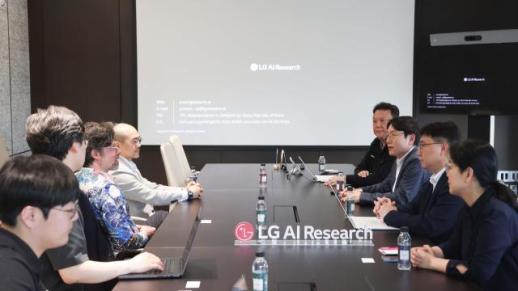 LG AI Research, NVIDIA to co-develop specialized AI models, deepen tech alliance SEOUL, April 22 (AJP) - LG AI Research and U.S. chipmaker NVIDIA will deepen their technology alliance to co-develop specialized artificial intelligence models. Executives from both companies, including LG AI Research Co-head Lim Woo-hyung and NVIDIA’s Vice President of Applied Deep Learning Research Bryan Catanzaro, met at LG's research headquarters in Seoul on Tuesday to discuss joint AI ecosystem strategies. Under the agreement, the companies will combine LG’s EXAONE AI model with NVIDIA’s Nemotron open ecosystem to build domain-specific models. The two firms have collaborated closely from the development of EXAONE 3.0 to the recently unveiled multimodal model, EXAONE 4.5. LG utilized Nemotron open datasets to ensure training data quality, while NVIDIA supplied its latest Blackwell GPUs, NeMo Framework, and TensorRT-LLM software to optimize the models' learning capabilities and inference efficiency. A recent Stanford University AI Index Report ranked South Korea third globally, behind the U.S. and China, for the number of notable AI models. Four of the five recognized Korean models belonged to LG's EXAONE series, including EXAONE Deep, EXAONE Path 2.0, EXAONE 4.0, and K-EXAONE. Catanzaro said the integration of EXAONE and Nemotron will help lead the development of "sovereign AI" and expand the broader ecosystem. Lim added the partnership aims to produce tangible sovereign AI results that can be applied directly to industrial sites. The NVIDIA tie-up follows a series of meetings earlier this month by LG Corp Chairman Koo Kwang-mo with Silicon Valley tech leaders, including Palantir CEO Alex Karp and Skild AI co-founders Deepak Pathak and Abhinav Gupta, as the conglomerate moves to accelerate its AI initiatives. 2026-04-22 10:37:18
 -
 Samsung C&T Proposes Han River View Design for 533 Units in Shinbanpo 19-25 Rebuild Samsung C&T said it has proposed a design for the combined reconstruction of Shinbanpo 19 and 25 that would give every union member a view of the Han River. The union has 446 members, but the company said it designed 533 units with river views. Of the project’s 616 total units, about 87% would have Han River views, it said. Samsung C&T said the proposal focuses on maximizing the site’s river-view advantage by using a method it calls Vista Matrix Analysis, or VMA, rather than a simple AI review. The company said the approach adapts sunlight analysis used in education-environment impact assessments, simulating views from each unit’s windows while factoring in obstructions from nearby buildings. It said repeated simulations were used to adjust building placement, angles, heights and floor plans to reduce blind spots and improve view quality. The company also revised the layout, cutting the number of residential buildings from seven in the union’s original plan to six to reduce interference between buildings. It applied 10-meter-high pilotis to all residential buildings to lift sightlines, and planned a 3.3-meter floor-to-ceiling height to increase openness. Samsung C&T said the changes would increase the number of Han River view units from 464 under the existing maintenance plan to 533. In addition to securing views for 100% of union members, it said the same benefit could be extended to 87 units for general sale. Inside the units, the company said it incorporated large view windows and an LDK-oriented layout, aiming to connect the river view naturally from key living spaces such as the living room and kitchen while reducing visual obstruction and improving openness. Samsung C&T also said it would address a long-standing challenge for riverside apartments in Gangnam: balancing north-facing Han River views with south-facing sunlight access. It said it applied a “swivel” layout that allows residents to switch the placement of the living room and kitchen based on preference, designed to consider both views and daylight. Im Cheol-jin, head of housing sales at Samsung C&T, said Shinbanpo 19 and 25 “will be a key project site that, along with Raemian One Bailey, forms the central axis of a Raemian town.” He said the proposal reflects design know-how that “maximizes the value of Han River views while also considering sunlight rights and overall balance across the complex.”* This article has been translated by AI. 2026-04-22 10:36:19
 -
 Shin & Kim Adds Former Navy Chief of Staff Kim Jeong-su as Adviser to Boost Defense Practice Shin & Kim LLC said on 22일 it has hired Kim Jeong-su, a former chief of staff of the Navy and retired four-star admiral, as an adviser. Kim, a 41st class graduate of the Korea Naval Academy, worked for about 35 years across the Navy, the Joint Chiefs of Staff, the Defense Ministry and the presidential office, holding key posts in policy, strategy, force development and operations, the firm said. He served as the 35th chief of staff of the Navy from 2021 to 2022, overseeing force planning and overall organizational management. His previous roles included commanding the 4,400-ton destroyer Gang Gam-chan (DDH-II), serving as director of the Defense Ministry’s barracks policy division, chief of staff to the Navy headquarters, head of the Joint Chiefs’ test and evaluation division, director general for planning and management at Navy headquarters, and vice chief of staff of the Navy. While serving as planning and management director general as a rear admiral, he helped advance major Navy force-building programs, including a mid-sized submarine, a next-generation frigate, a Korean-type destroyer and a light aircraft carrier, the firm said. Shin & Kim said Kim will join its defense and national security team, advising on defense and maritime policy, the defense industry, force development and responses to military-related issues. The firm said it expects him to help companies develop strategic responses to regulatory and policy risks amid a rapidly changing global security environment and expanding exports of South Korean defense products. Managing partner Oh Jong-han said Kim brings both insight and on-the-ground experience on major defense and security issues. Oh said the firm will provide “strategic and integrated solutions” as legal demand tied to the defense sector grows. Shin & Kim said its defense and national security team is led by attorney Kim Young-hoon, who previously served as the first head of the Air Force prosecution unit, and includes adviser Lee Jae-ik, a specialist in defense finance and procurement, and adviser Kang Jung-hee, a former director of the Defense Acquisition Program Administration’s aviation program division. The firm said the team also includes attorney Cho In-hyung, who worked more than 20 years at the Air Force and DAPA; attorney Shin Dong-wook, a former military prosecutor and judge who also served as legal chief at the Navy Operations Command; attorney Kim Seong-jin, who worked at the Defense Ministry, DAPA and the Navy Logistics Command; and senior specialists Shin Min-cheol, Kim Dong-hyun and Jang Seong-gi, all former military prosecution investigators. Shin & Kim said the group provides one-stop legal services across the defense industry and national security sector. * This article has been translated by AI. 2026-04-22 10:34:00
 -
 BMW to Use AI to Cut Battery Cell Production Time in Half BMW Group is studying ways to use artificial intelligence to cut the time required to produce battery cells by half. BMW Korea said on the 22nd that BMW headquarters and the Regional Center of Excellence for Robotic Technology at the University of Zagreb in Croatia will jointly conduct a research project called “Insight.” The project aims to develop and implement practical AI models to optimize BMW Group’s battery cell manufacturing process. By applying AI-based predictive models to forecast process parameters and performance data in advance, BMW plans to create conditions that reduce material input and production time by more than 50% during battery cell manufacturing. The technology is expected to be used across the battery cell value chain, including electrode production, end-of-line testing and BMW’s in-house direct recycling. BMW’s Battery Cell Competence Center (BCCC) in Munich, Germany, is developing next-generation battery cells. BMW said the Insight project’s AI predictive model is expected to support final approval procedures for battery cells. The company said that if a full analysis can be carried out in advance, it may be possible to skip the “quarantine” step of storing cells at a specified temperature.* This article has been translated by AI. 2026-04-22 10:33:15
 -
 PPP Lawmaker Jin Jong-oh Says He Won’t Avoid Discipline Over Backing Han Dong-hoon People Power Party lawmaker Jin Jong-oh said Tuesday he has no intention of avoiding possible party discipline after he backed Han Dong-hoon in the Busan Buk-gap parliamentary by-election, prompting the party leadership to order a fact-finding probe. “I'm not trying to dodge this because I'm afraid of discipline,” Jin said on KBS radio’s “Jeongyeok Sisa.” He said he believes the choice is “the right one for the country,” adding that conservatives should begin building “a grand unity” and a new conservative history. Jin said he first learned through media reports that PPP leader Jang Dong-hyeok had ordered a review of the facts after Jang’s trip to the United States, and that the party later contacted his office. “Since the U.S. trip itself has become so controversial, I wonder if they looked for a scapegoat and attacked me,” he said. He argued the party should be moving to put Han “on the right path,” and said it was regrettable to “cut off the sprout” at an early stage. He added that the party needs to reflect and improve. Saying he shares Han’s views, Jin addressed reports that he moved his residence to Busan to support Han. Jin said he has been traveling between Seoul and Busan, but time and costs were high, so he made a provisional contract for a small one-room apartment. Jin also criticized Jang for extending his U.S. trip while party candidates were “sweating blood” to win nominations and support. While meetings may be kept private as a diplomatic practice, Jin said, “who he met” is something that can be disclosed. On whether a party audit is needed over Jang’s trip, Jin said, “If we have to do a party audit, of course we should.” But he urged Jang’s leadership not to be swayed by forces “shaking our party,” and called on the leadership to speak transparently and fairly. Earlier, Jang on Sunday instructed PPP Secretary-General Jeong Hee-yong at a closed-door 최고위원회의 to check whether a party audit was needed regarding Jin, who had secured a place to stay in Busan to support Han and argued the PPP should not field its own candidate.* This article has been translated by AI. 2026-04-22 10:31:19
 -
 Jung Cheong-rae says special inspector could have checked Yoon, Kim influence-peddling Jung Cheong-rae, leader of the Democratic Party of Korea, said on the 22nd that President Lee Jae-myung’s request to move forward with a special inspector was “as expected from Lee,” and signaled the party would cooperate quickly in the National Assembly. Speaking at a party supreme council meeting held aboard a ferry off Yokjido in Tongyeong, Jung said the post had “remained only as a system” for 10 years since special inspector Lee Seok-soo resigned under the Park Geun-hye government in 2016. Jung described the special inspector as a key watchdog meant to check presidential power by conducting ongoing oversight of the president’s spouse, relatives within the fourth degree of kinship and senior Blue House officials for matters such as influence-peddling in appointments and the receipt of money or valuables. He added that there was no special inspector throughout the three years of what he called the “Yoon Suk Yeol prosecution dictatorship” and said that if an inspector had been “watching with eyes wide open” next to the Yongsan presidential office, “Yoon Suk Yeol and Kim Keon Hee would not have been able to recklessly engage in state-affairs meddling.” Lee requested on the 19th that the National Assembly begin procedures to appoint a special inspector. The ruling and opposition parties held a “2+2 meeting” on the 20th, with floor leaders and senior deputy floor leaders, and agreed to discuss the appointment process.* This article has been translated by AI. 2026-04-22 10:30:30
 -
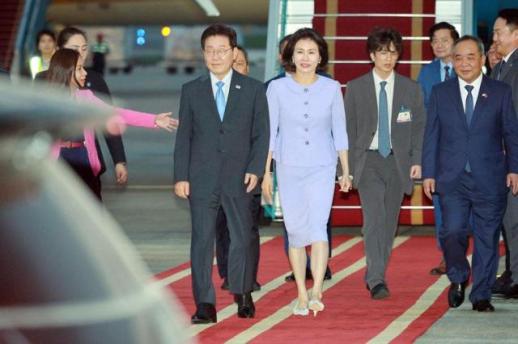 Lee set to hold talks with Vietnamese leader in Hanoi SEOUL, April 22 (AJP) - President Lee Jae Myung is set to sit down for talks with Vietnamese President Tô Lâm in Hanoi on Wednesday. Lee's meeting with Lâm, who also serves as General Secretary of the Communist Party, comes about eight months after the Vietnamese leader visited Seoul in August last year. Their meeting also comes after South Korea agreed with its third-largest trading partner to further enhance bilateral relations in 2022, when the two countries marked the 30th anniversary of diplomatic ties. During the summit, the two leaders are expected to discuss cooperation across various sectors from nuclear power and infrastructure to artificial intelligence, critical minerals, and energy. Senior officials from both sides will then join an expanded meeting, followed by a joint press statement and a state banquet to round out the day. Among key topics in their talks will be concrete steps to deepen bilateral cooperation, with both countries having already set a goal of increasing trade from the current $94.6 billion to $150 billion by 2030. With the prolonged conflict in the Middle East continuing to rattle global markets, the two sides are also expected to pursue a mutually beneficial partnership in supply chains for energy and critical minerals. 2026-04-22 10:28:21
 -
 Seowon Tokeon Upgraded to BBB- Credit Rating on Smart Construction, Safety Push Seowon Tokeon has received a BBB- corporate credit rating from NICE Information Service. The rating sits at the lower end of investment-grade and is typically assigned to companies viewed as having a certain level of financial stability and debt-repayment capacity. Founded in 1991, Seowon Tokeon is a specialty contractor focused on reinforced-concrete work and structural frames for apartment housing. Despite the project-by-project nature of construction orders, the company has built long-term, site-based experience that evaluators said supports stable schedule control and quality assurance. Its relatively steady performance in meeting deadlines and managing safety, key measures in South Korea’s construction industry, also appeared to factor into the assessment. Across the sector, digital transformation has emerged as a priority as companies respond to an aging workforce and persistent safety risks. Seowon Tokeon is pursuing a smart-construction system under its “Vision 2030” plan and formed a Future Strategy task force in January 2026 to verify technology applications at job sites. Industry observers say more mid-sized and smaller builders, with less capacity for large-scale technology investment than major firms, are opting for phased rollouts centered on field deployment. The company has set AI-based safety management and data-driven site operations as key goals, aligning with the Transport Ministry’s push to expand smart construction. The government has been promoting wider use of smart safety equipment and data-based management systems to reduce job-site accidents, and adoption of such technologies is widely seen as likely to become a factor in future competitiveness assessments. Seowon Tokeon is also working with Sungkyunkwan University to develop AI-based safety technology. It is testing systems such as worker-route risk detection and video-based safety monitoring. At the Gwacheon G-town site, a research AI CCTV system has been installed to collect work-environment data, which is being used to refine safety standards and training materials. Use of AI video analytics at construction sites has been increasing, including systems that automatically detect whether workers are wearing protective gear or entering restricted areas. Some large builders have moved beyond pilot programs to broader deployment, and Seowon Tokeon is moving to adopt similar tools. The company’s rating also marks an upgrade. Seowon Tokeon said it rose one notch from the previous year to BBB-. In general, credit upgrades are interpreted as reflecting a combination of improved profitability, a stronger order backlog and a more stable financial structure. Because construction is closely tied to the real estate cycle, evaluators also weigh whether a company has a business base that can withstand shifts in external conditions. The company said preparations for smart construction, along with its construction capabilities, were reflected in the evaluation. It said it plans to continue operations in a way that secures both safety and efficiency, focusing on technologies proven at job sites. Credit-rating industry officials note that while the BBB range is considered investment-grade, it is also viewed as more vulnerable to performance swings during economic downturns. They said maintaining profitability and managing financial stability will be key to any further upgrades. * This article has been translated by AI. 2026-04-22 10:27:29
 -
 Iran’s Leadership Faces Test as U.S. Talks Expose Internal Divisions Iran’s leadership is facing a new test as differences emerge over negotiations with the United States to end the war, according to an analysis. The AP reported Monday that Iran has kept its system running without a power vacuum since the death of Supreme Leader Ayatollah Ali Khamenei, but the coming talks with Washington could expose internal fractures. Khamenei long managed competing power blocs and kept tight, centralized control. Now, with civilian politicians and the Islamic Revolutionary Guard Corps’ military leadership among multiple centers of power, it is unclear who ultimately drives decisions. After Khamenei’s death, his son, Ayatollah Mojtaba Khamenei, was named as a successor, but his role remains uncertain. He has not appeared publicly since reports said he was wounded in an airstrike. In this environment, the Supreme National Security Council is widely seen as the current hub of power. It includes senior civilian and military figures, and Parliament Speaker Mohammad Bagher Qalibaf has taken a leading public role in steering talks with the United States. The council brings together reform-minded President Masoud Pezeshkian alongside hard-line conservatives and military officials, mixing competing interests. Analysts say the layered structure has helped the system endure. Ali Vaez, Iran project director at the International Crisis Group, said, “The leadership was able to survive thanks to overlapping centers of power,” adding that “factionalism is embedded in the DNA of this (Iranian) system.” AP said the same structure could become a source of conflict as negotiations advance. Iranian leaders believe they hold an advantage after blocking the Strait of Hormuz, but U.S. maritime interdiction and economic sanctions are fueling economic damage and anxiety at home. Iran also saw protests late last year calling for the government’s overthrow. In that context, any agreement with the West, including sanctions relief, is expected to be a key factor in maintaining internal control. Vaez said the government may find it more realistic to make concessions to the West for survival than to make concessions to its own people. Recent confusion over the Strait of Hormuz has been cited as a case that exposed internal disagreement. Foreign Minister Abbas Araghchi announced a plan to reopen the waterway, but military authorities later reversed that position, raising questions about policy coordination. Qalibaf has dismissed claims of divisions and said the leadership is maintaining a single line in its negotiating strategy. Still, analysts say the risk of internal splits remains as talks move forward. AP reported that Qalibaf is emerging as a figure who could broker interests among factions. A former IRGC general and former national police chief, he is seen as able to bridge competing camps. He showed a pragmatic streak as Tehran’s mayor and has support not only among conservatives but also among reformist and centrist groups, making him a key player in managing internal differences during negotiations. He has also maintained close ties to the Khamenei family and has strong links to the newly ascendant IRGC leadership. Those connections could help him secure domestic backing across conservative, military, reformist and centrist circles as Iran seeks an agreement with the United States, AP said. 2026-04-22 10:24:28