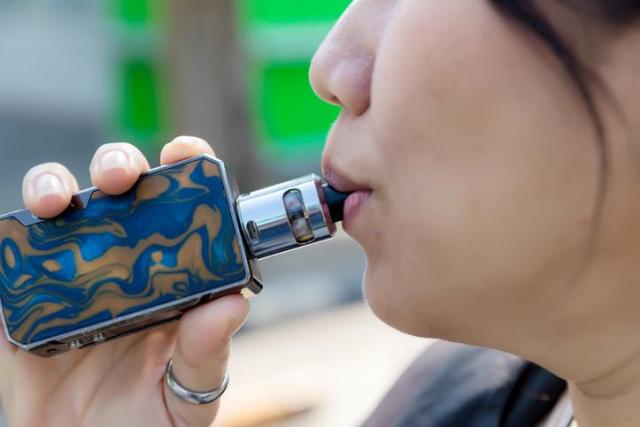
SEOUL, May 27 (AJP) - Nearly half of South Korean smokers trying to quit believe electronic cigarettes help them stop smoking, despite strong warnings from medical experts that the devices hinder cessation efforts.
The findings were released Wednesday at a forum in Seoul organized by the Korean Society for Research on Nicotine and Tobacco and the Korea Medical Broadcast Journalists Association. Researchers polled 500 smokers aged 25 to 59 who had attempted to quit in the past year or plan to do so within the next six months.
The survey showed 43 percent of respondents view electronic cigarettes as a useful tool for quitting, while 23.5 percent intend to use them for this purpose in the future. Another 20 percent have already tried using them to quit, primarily hoping to reduce withdrawal symptoms and manage their daily cravings.
Medical experts at the forum dismissed these beliefs as widespread misunderstandings. Cho Hong-jun, a professor emeritus at the University of Ulsan College of Medicine, noted that about 70 percent of smokers who use electronic cigarettes to quit fail to do so, continuing to use the devices for over six months.
He added that people who use both conventional and electronic cigarettes have only a 5 percent chance of transitioning entirely to electronic versions after two years. Instead, up to 80 percent of these dual users simply revert to smoking regular cigarettes.
"Long-term studies show electronic cigarette users are highly likely to become dual users, and the quitting effects remain uncertain," Cho said. "Because the evidence that electronic cigarettes are less harmful than conventional ones is unclear, it is desirable to regulate all tobacco products equally."
The survey also highlighted that many smokers switch to electronic devices because they smell less and seem less harmful to the body. However, Lee Sung-kyu, head of the Korea Center for Tobacco Control Research and Education, warned that using heated tobacco products indoors can spike nicotine concentrations up to 86 times the acceptable health limit.
Lee noted that public perception is significantly detached from scientific reality. "Just because it lacks a smell or has a sweet scent does not mean it is safe," Lee said.
The forum also addressed public confusion surrounding nicotine replacement therapies, which are legally classified as over-the-counter drugs rather than tobacco products in South Korea. The survey found 48 percent of respondents who knew about the therapies did not understand how they helped, while 46 percent mistakenly believed the nicotine in these medical treatments is identical to the nicotine in cigarettes.
Choi Su-jeong, a family medicine professor at Gachon University Gil Medical Center, stressed that equating the two products is a clear error. "Following the correct usage of different formulations like patches, gum, and candy, and utilizing combination therapy as needed, can further increase the success rate of quitting smoking," Choi said.

Copyright ⓒ Aju Press All rights reserved.