
Journalist

Elizabeth Englezos
-
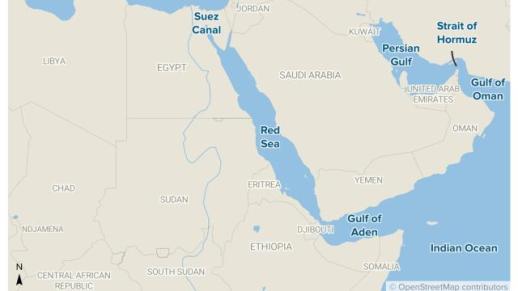 Korean tanker safely clears Red Sea in first Hormuz workaround SEOUL, April 17 (AJP) -A South Korea-linked crude carrier has safely exited the Red Sea after loading oil in Saudi Arabia despite Iranian military's threat of attacks on the corridor along the Saudi coast in protest to U.S. naval blockade of Tehran ports. The Korean sea flag carrier makes the first confirmed shipment to reach Korean-bound routes via a Hormuz bypass since the Gulf conflict disrupted one of the world’s most critical energy corridors, according to the government. The Ministry of Oceans and Fisheries on Friday said the vessel departed from Yanbu on Saudi Arabia’s Red Sea coast and navigated the high-risk waterway without incident amid ceasefire between the U.S. and Iran and separately between Israel and Lebanon. Iran has threatened to block the Red Sea trade route in retaliation to the U.S. naval blockade of the Strait of Hormuz. According to Iranian state media, the commander of Iran’s joint military command said Iran would “act with strength to defend its national sovereignty and its interests”, warning it would completely block exports and imports across the Persian Gulf region, the Sea of Oman and the Red Sea. The Red Sea — increasingly volatile since the 2023 Israel–Hamas war — has seen at least 79 reported vessel attacks linked to Yemen’s Iran-backed Houthi forces, making it a route long discouraged for commercial shipping. Yet with Hormuz partially shut and roughly a fifth of global oil flows disrupted, Seoul has been forced to test options once deemed too dangerous. The ministry said it maintained 24-hour real-time monitoring of the vessel, providing navigation intelligence and running constant communication channels with the ship and operator throughout the transit. The operation follows high-level policy coordination. At an emergency economic review meeting on April 6, the government formally discussed using the Red Sea corridor as a contingency route, pairing supply diversification with enhanced maritime safety oversight. Some 26 South Korea-linked vessels — including crude tankers, LNG carriers and bulk ships — remain stranded or delayed around the Persian Gulf, reflecting the bottleneck created by the prolonged standoff. For an economy that routes around 70 percent of its crude imports through Hormuz, the stakes remain acute. Saudi Arabia accounted for 33.6 percent of Korea’s crude imports in 2025, followed by the United States (17 percent), the United Arab Emirates (11.4 percent), Iraq (10.4 percent) and Kuwait (8.5 percent), underscoring the country’s structural dependence on Middle Eastern supply lines. “The government will continue to prioritize the safety of our vessels and crews while working with relevant agencies and industry to ensure stable crude transport from the Middle East,” Oceans Minister Hwang Jong-woo said. Tensions have showed sign of easing with U.S. President Donald Trump saying the war was "very close to over" with the second round of talks being readied to take place over the weekend in Pakistan. Separately, Washington is arranging the first high-level direct peace talks between Israel and Lebanon for the first time in decades. 2026-04-17 13:42:19
 -
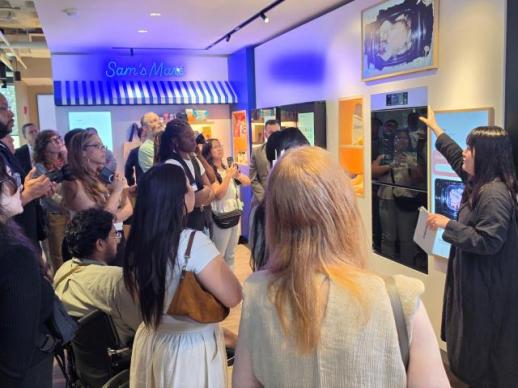 Samsung Electronics unveils AI-driven 'Home Companion' appliances for North American market SEOUL, April 17 (AJP) - Samsung Electronics showcased its latest vision for an artificial intelligence-integrated lifestyle during its "The Brief New York" technical seminar held from Thursday to Friday. The South Korean tech giant introduced its "Home Companion" scenario, a suite of appliance-based solutions designed to reduce household labor and enhance quality of life through advanced AI recognition technologies tailored specifically for North American consumer habits. Central to this new ecosystem is the 2026 Bespoke AI Family Hub refrigerator, which utilizes "AI Vision" technology. The system employs internal cameras to identify food items and even recognize container labels in real time, automatically updating a digital "Food List" to streamline inventory management and prevent unnecessary duplicate purchases. This seamless connectivity extends to the Bespoke AI Oven, where "AI Pro Cooking" monitors the color and condition of ingredients to suggest optimal settings and alert users via mobile notifications to prevent food from burning. The company also highlighted advancements in floor care with the Bespoke AI Steam Ultra robot vacuum, which integrates RGB cameras and infrared LEDs to distinguish between different types of household messes, including transparent liquid spills. Alongside these AI capabilities, Samsung introduced region-specific hardware enhancements such as "Space Max" for expanded internal storage and "Zero Clearance" hinges for flush, built-in installations. "We aim to aggressively target the North American market by evolving our AI appliances into 'home companions' that truly understand and assist our customers' lifestyles," said Moon Jong-seung, Vice President of Samsung’s DA Business. "Our goal is to provide practical convenience in everyday life through advanced recognition technologies that seamlessly connect shopping, cooking, and cleaning." 2026-04-17 13:38:50
 -
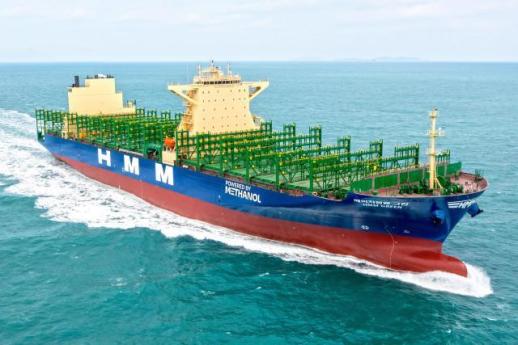 Hormuz crisis fuels air and sea charges, adding to input pressure in Korea SEOUL, April 17 (AJP) - South Korean shipping lines are introducing emergency bunker surcharges as the prolonged conflict between Iran and the U.S.-Israeli coalition drives up fuel costs, adding to input pressures and, ultimately, consumer prices. Sinokor Merchant Marine, one of Korea's largest container operators, said it will impose an emergency bunker surcharge of $100 per 20-foot equivalent unit (TEU) on export cargo bound for Southeast Asia, effective this month. Industry officials said other major container carriers are preparing similar measures, with surcharges ranging from $150 to $200 per TEU. The moves come as global shipping lines including Maersk and OOCL roll out their own emergency surcharges in response to the Middle East crisis. The latest fees mark another layer of cost escalation stemming from the 2026 Strait of Hormuz crisis, which began on Feb. 28 when the United States and Israel launched coordinated airstrikes on Iran under Operation Epic Fury. Iran retaliated by restricting passage through the strait, through which about 20 percent of global oil and a similar share of liquefied natural gas shipments normally pass. The disruption has hit marine fuel markets with particular force. Bunker C fuel oil, the heavy fuel that powers most commercial vessels, is typically produced from the residue of heavier crude grades. Middle Eastern crudes, generally heavier and higher in sulfur content than most benchmark grades, have long been a key feedstock for such fuels. With Hormuz shipments curtailed, bunker prices have climbed sharply, eroding the margin cushion carriers had relied on through the first quarter. Vessels stranded inside the strait are compounding the strain on ocean freight. A total of 26 Korean-flagged ships remain stuck in the Strait of Hormuz, 10 of them belonging to eight small and mid-sized carriers, according to data from the Korea Shipowners' Association. Those carriers are estimated to be losing about 580 million won ($392,086) a day from halted operations, higher fuel costs, war-risk insurance premiums and crew hazard pay. The pressure is spreading into air logistics, where jet fuel costs are tracking the same Middle East supply disruption through the Singapore benchmark widely used across Asia. Singapore Mean of Platts jet fuel averaged 511.21 cents per gallon for May, placing it in the top tier of Korea's 33-step fuel surcharge system, according to the aviation industry. It is the highest reading since the surcharge framework was introduced. Korean Air set its May international fuel surcharge at up to 150,000 won ($101.40) per round trip, depending on distance. The top-end charge is roughly five times the January level. With both sea and air freight costs rising in tandem, Korean exporters face the prospect of higher logistics bills feeding into consumer prices if the Hormuz disruption stretches further into the second quarter, industry officials said. According to preliminary export and import price data for March released by the Bank of Korea on Wednesday, import prices in won terms jumped 16.1 percent from the previous month, the steepest increase since a 17.8 percent surge in January 1998. From a year earlier, they rose 18.4 percent. Jet fuel import prices soared 67.1 percent quarter on quarter and 81.8 percent year on year. Import prices for raw materials jumped 40.2 percent from the previous month and 40.0 percent from a year earlier. Coal and petroleum product import prices rose 37.4 percent month on month and 31.3 percent year on year. Consumer prices rose 2.2 percent in March from a year earlier, still within the target range, but the Bank of Korea has warned that annual inflation could approach 3 percent if the war drags on. 2026-04-17 12:08:07
 -
 Museum Director Kim Myung-in Pledges National Script Research Institute Kim Myung-in, director of the National Museum of World Writing Systems, on April 17 announced a new vision for the museum: “World cultures through writing systems, an open museum preparing for the future.” Speaking at a news briefing at the Korea Press Center, Kim said the museum will pursue the creation of a National Script Research Institute as a key driver, aiming to become a “global hub for writing-system culture” where exhibitions and research operate in tandem. He outlined major initiatives for the museum’s future growth. The proposed institute would be a specialized body to study writing systems broadly, from their origins to changes in the digital era. Through networks of researchers in Korea and abroad and an archive of global writing-system materials, the museum plans to move beyond an “exhibitions and education” focus and build a model that integrates professional research. Kim said the institute would also serve as a central platform to protect shared human heritage by systematically documenting and studying scripts at risk of disappearing. “We will work closely with the Ministry of Culture, Sports and Tourism to push ahead with the institute step by step and establish the museum’s identity,” he said. To expand visitor experiences, the museum will strengthen its domestic and international exhibition lineup. It will open “Geulssi Shop” on May 1, highlighting the meaning and artistry of handwriting. In the second half of the year, it plans a special exhibition marking the 100th anniversary of the proclamation of Korean Braille, tentatively titled “Dots That Communicate — Hunmaengjeongeum.” The museum also plans to deepen global ties. In July, it will hold an exchange exhibition, “A King’s Dream, the Speech of All People,” at the Champollion World Writing Museum in France to mark the 140th anniversary of diplomatic relations between Korea and France, highlighting the history of writing-system exchanges between the two countries. In May 2027, the museum plans a show tentatively titled “ASEAN Fairy Tales,” introducing scripts from Southeast Asian countries alongside traditional stories. In October 2027, it plans a more in-depth special exhibition tentatively titled “Great Exhibition of Chinese Characters.” The show, in cooperation with the Palace Museum in Beijing to mark the 35th anniversary of diplomatic relations between Korea and China, will examine the origins and development of Chinese characters, the formation of the broader Chinese-character cultural sphere, and their cultural influence and future significance through the modern era. The exhibitions are being planned as part of a “World Writing History Series,” with future special shows expected to cover additional scripts and civilizations, including the Latin alphabet (English) and kana (Japanese). 2026-04-17 11:42:19
 -
 Asian shares edge lower ahead of U.S.-Iran talks; Samsung Electro-Mechanics hits record SEOUL, April 17 (AJP) - Asian markets traded lower Friday as recent rally momentum faded, with investors weighing mixed signals from the Gulf over whether the conflict may begin to wind down through renewed U.S.-Iran talks and separate negotiations between Israel and Lebanon. Japan’s Nikkei 225 fell 0.98 percent to 58,937.04, Hong Kong’s Hang Seng Index lost 0.81 percent to 26,180.23 and China’s Shanghai Composite slipped 0.18 percent to 4,048.38. South Korea’s benchmark KOSPI opened higher and moved in a narrow range around the 6,200 level in early trading before turning lower, shedding 0.42 percent to 6,199.97. Despite the broader weakness, Samsung Electro-Mechanics climbed to a fresh record high. As of 10:30 a.m., the stock had surged 6.26 percent from the previous session to 679,000 won, extending gains for an eighth straight session since April 8. The rally reflected growing expectations of an industry upturn, with improving earnings prospects in multilayer ceramic capacitors (MLCCs) and flip-chip ball grid array (FC-BGA) products underpinning investor sentiment. The company’s market capitalization rose to 50.79 trillion won, lifting it to 12th on the KOSPI from 21st at the start of the month. Among chipmakers, Samsung Electronics slipped 0.23 percent to 217,000 won, while SK hynix fell 0.95 percent to 1,144,000 won. Samsung Biologics also declined 0.80 percent to 1,603,000 won. In the industrial sector, Hanwha Aerospace dropped 5.27 percent to 1,439,000 won, while Doosan Enerbility lost 1.90 percent to 108,700 won. Automakers were mixed. Hyundai Motor traded flat at 534,000 won, while Kia edged down 0.25 percent to 157,500 won. Financial stocks posted limited gains, with KB Financial Group rising 0.25 percent to 162,700 won. Elsewhere, LG Energy Solution added 0.36 percent to 417,500 won, while SK Square rose 0.14 percent to 691,000 won. The KOSDAQ swung between gains and losses before edging up 0.05 percent to 1,163.56 as of 10:59 a.m. Among biotech names, Alteogen fell 0.54 percent to 367,500 won, Samchundang Pharm dropped 3.66 percent to 486,500 won, HLB declined 3.61 percent to 61,400 won and LigaChem Biosciences slid 2.42 percent to 193,200 won. Among gainers, Ecopro rose 1.94 percent to 152,100 won, Ecopro BM gained 1.46 percent to 208,000 won and Koh Young Technology advanced 2.12 percent to 111,000 won. The Korean won also weakened slightly against the dollar, with the greenback trading at 1,478.30 won, compared with the previous close of 1,474.60 won. Overnight on Wall Street, major indexes ended higher on expectations for a potential second round of U.S.-Iran ceasefire talks this weekend, along with news that Israel and Lebanon had agreed to a 10-day truce, lifting investor sentiment. The S&P 500 and the Nasdaq Composite rose 0.26 percent and 0.36 percent, respectively, both extending record highs for a second straight session. The Dow Jones Industrial Average also added 0.24 percent. The Nasdaq has now risen for 12 consecutive sessions, marking its longest winning streak since 2009. 2026-04-17 11:34:09
 -
 A village, a baby — and the limits of Korea's birth incentives SEOUL, April 17 (AJP) - It takes a village to raise a child — and in Mungok-ri, a mountain-ringed hamlet in northeastern South Korea, it took a village just to welcome one. For the first time in 20 years, the community of barely 100 residents heard the cry of a newborn. Banners lined the narrow roads to celebrate Seo-yoon, the second child of Kim Hyun-dong and Chang Yoo-jin. Gifts poured in from neighbors and local groups. Even the provincial governor sent his congratulations. In a country confronting demographic decline, the birth felt less like a private milestone than a communal event — a rare interruption in a long silence. It was not entirely by chance. Jeongseon County, where Mungok-ri is located, provides monthly subsidies of 100,000 won ($74) for up to two children in their first year, with payments extended to age 12 from the third child onward. Across South Korea, local governments are deploying increasingly aggressive incentives to slow population decline and revive shrinking communities. Some are pushing further. South Jeolla Province offers a monthly child allowance of 200,000 won starting a year after birth. The province recorded a fertility rate of around 1.1 — the highest in the country — even as the national rate remains well below one. In Incheon, combined central and local government support can exceed 100 million won per child born since 2024, including transport subsidies, childcare allowances and other benefits. Housing has become another lever. Jeonnam’s “10,000-won housing” program offers subsidized rental units for young couples at a fraction of market rates. The competition is intensifying — and becoming more expensive. Yet the results remain uneven. South Korea’s total fertility rate rose slightly to 0.80 in 2025 from 0.75 a year earlier, with births increasing 6.8 percent to 254,457. It marked the first uptick in nearly a decade, but the country still holds the lowest fertility rate in the OECD. The longer-term trend is stark. Annual births have collapsed from over 1 million in 1970 to around 250,000 today, while fertility has fallen from 4.53 to below one. Since 2006, more than 380 trillion won has been spent on pro-natal policies. The return, so far, has been marginal. Recent regional data offers some optimism. Several provinces — including Jeonnam, Sejong and Gangwon — have recorded fertility rates above the national average. But much of the increase reflects delayed marriages rebounding after the pandemic and the temporary demographic boost from the “echo boom” generation entering peak childbearing years, while the underlying trajectory remains unchanged. Japan offers a useful, if cautionary, comparison. Tokyo has rolled out a far more comprehensive policy mix: higher childbirth grants, expanded child allowances, stronger parental leave benefits and workplace reforms aimed at improving work-life balance. It has also moved to reduce the cost of childbirth and expand housing and education support for families. Despite this, Japan’s fertility rate remains stuck around 1.1 to 1.2, with births continuing to decline. The lesson is clear: policy alone has limits. In South Korea, the growing reliance on local incentives raises additional concerns. While subsidies may lift birth rates in specific regions, they risk shifting population rather than increasing it. “Local governments may see higher births, but often because women move into those areas or delay leaving,” said Yang Jae-jin, a professor at Yonsei University. “At the national level, the impact is limited.” Financial support, experts say, addresses only part of the problem. “To increase births, parents need better pay during parental leave, more flexible working hours and reliable childcare,” Yang said. At a deeper level, the issue is structural. “For many young people, avoiding marriage and childbirth has become a rational choice,” said Yee Jae-yeol, a sociology professor at Seoul National University. Employment insecurity, high housing costs and intense competition have reshaped life decisions. In Seoul, marriage itself has become a financial burden. “For younger generations, marriage is no longer a step toward stability, but a decision that may lower their quality of life,” Yee said. The labor market offers little relief. Compared with countries such as the Netherlands or Denmark, where flexible and part-time work is more common, Korea’s rigid employment structure makes it harder to balance work and family. Geography compounds the challenge. Jobs remain heavily concentrated in the capital region, which houses more than half the population on just 12 percent of the land. Young people continue to migrate to Seoul, intensifying competition, driving up housing costs and raising barriers to both marriage and parenthood. A Bank of Korea study found between 2015 and 2021, youth inflows accounted for 78.5 percent of population growth in and around Seoul, while youth outflows made up 75.3 percent, 87.8 percent and 77.2 percent of population decline in the southeast, southwest and Daegu–Gyeongbuk regions, respectively. The trend is even more pronounced among the highly educated, who are disproportionately drawn to the capital. Across all regions, the share of college graduates is higher among those leaving than in the overall youth population. The capital region stands out as the only area where the proportion is higher among inbound migrants, reflecting a stronger tendency for highly educated individuals to remain in or move to Seoul. Rural incentives alone are unlikely to reverse the broader decline. “Providing financial support without addressing the broader context misses the point,” Yee said. Back in Mungok-ri, the village is celebrating — and holding on to a rare moment of hope. But one baby, however cherished, does not change the math. 2026-04-17 11:33:53
 -
 Kpop big 4 unite to launch Coachella-scale Kpop festival SEOUL, April 17 (AJP) - South Korea’s K-pop powerhouses — HYBE, SM Entertainment, JYP Entertainment and YG Entertainment — are moving to institutionalize a Coachella-style annual K-pop festival, marking a rare joint initiative among the industry’s fiercest rivals. The four agencies have jointly submitted a joint-venture proposal, tentatively titled “Fanomenon” a portmanteau of “fan” and “phenomenon” to the Fair Trade Commission, according to sources on Friday. The initiative has also been tabled at the Presidential Committee on Popular Culture Exchange, a policy advisory body launched in October 2025 and co-chaired by Culture Minister Choi Hwi-young and Park Jin-young, founder of JYP. Park is aiming to debut the festival in South Korea in December 2027 as an annual event, with plans to expand into a global touring format across major cities starting in May 2028. He envisions building the project into a large-scale event on par with the Coachella Valley Music and Arts Festival, which spans two weekends and draws more than 120,000 attendees per day. The companies said the project remains under development, with key details on structure, operations and execution yet to be finalized. 2026-04-17 11:25:30
 -
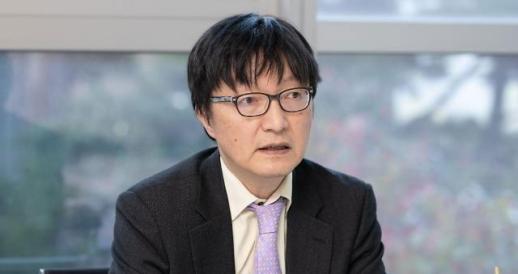 Seasoned economic expert tapped as South Korea's new ambassador to UK SEOUL, April 17 (AJP) - Kim Heung-chong, the former head of a state-run think tank was tapped as South Korea's new ambassador to the U.K., the Ministry of Foreign Affairs said on Friday. Kim, who headed the Korea Institute for International Economic Policy (KIEP) from 2020 to 2023, also served as an adviser in South Korea's negotiations on a free trade agreement with the European Union (EU) and sat on committees under various ministries including the Ministry of Trade, Industry and Energy. The veteran economist is seen as a suitable fit to support President Lee Jae Myung's "pragmatic" diplomacy and economic policies focused on pursuing national interests, given his long career advising the government on trade and economic policy. His appointment also appears to reflect his close involvement with the Lee administration, as he assisted the then presidential candidate of the Democratic Party (DP) during his campaign last year. Kim also co-authored Lee's book on "inclusive innovative growth" with a group of economic experts, published in March last year, just months ahead of a snap election following the ouster of disgraced former President Yoon Suk Yeol over his botched declaration of martial law the previous year. 2026-04-17 11:23:46
 -
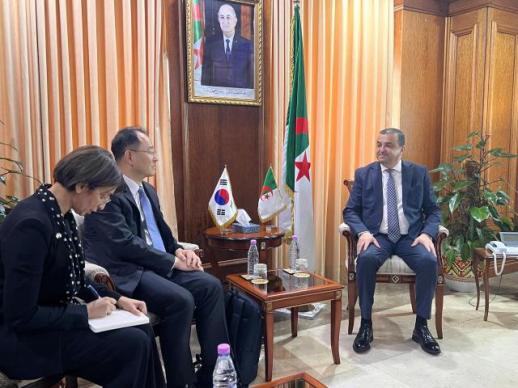 South Korea holds talks with Algeria, Libya to secure alternative oil supplies SEOUL, April 17 (AJP) - South Korea has discussed energy-related cooperation with Algeria and Libya, the Ministry of Foreign Affairs said on Friday. Park Jong-han, a ministry official, visited Algeria and Libya earlier this week to assess the possibility of securing emergency supplies of crude oil and naphtha, according to the ministry. His four-day trip, which began last Monday, was part of efforts to secure alternative supply routes that would remain unaffected by the closure of the Strait of Hormuz, a critical chokepoint for roughly one-fifth of global oil supply, amid the prolonged conflict in the Middle East. Park met several ministers and senior officials in both countries as well as the heads of state-run oil companies including Algeria's Sonatrach and Libya's National Oil Corporation (NOC). Their talks covered mid- to long-term cooperation in the energy sector, as Libya is the world's 10th-largest oil producer and holds Africa's largest oil reserves, estimated at about 48.4 billion barrels. Park asked the NOC to allocate some of its heavy crude to South Korea. The NOC replied that it could do so if technical conditions such as crude grades, delivery timing, and other requirements such as buyer reliability are met. Park told Algerian and Libyan officials that South Korea relies entirely on crude oil imports but exports petroleum products across the Asia-Pacific region thanks to its advanced refining facilities, adding that securing steady supplies is directly linked to maintaining stability in regional supply chains. Before returning home, Park also met with South Korean expatriates and businesspeople there to hear about their difficulties and discuss possible support measures. 2026-04-17 10:28:28
 -
 Callaway Golf Korea Launches Quantum Mini Series Clubs Callaway Golf Korea has introduced the new Quantum Mini Series, built on the technology of its Quantum lineup. The series includes three clubs: the Quantum Mini Driver, Quantum Mini Bertha and Quantum Mini Spinner. The company said the clubs are designed to close common distance gaps between a driver, fairway wood, hybrid and long iron, allowing more precise yardage control depending on course conditions. The Quantum Mini Driver is intended to blend driver distance with the stability of a fairway wood. A compact head and shorter shaft are meant to reduce pressure on tee shots. It uses the Step Sole structure found in fairway woods to reduce turf friction, enabling use on second shots from the fairway. The club also features a Tri-Force Face and a next-generation AI-optimized face design aimed at delivering consistent ball speed. The Quantum Mini Bertha is positioned as a 4-wood concept to bridge the gap between a 3-wood and 5-wood. A larger head and shorter shaft are designed to improve center-face contact. Its Speed Wave 2.0 structure places about 40 grams of weight low on the front of the head to maximize energy transfer efficiency. It also includes an OptiFit 4 hosel to adjust loft and lie angle. The Quantum Mini Spinner is designed for attacking greens with a higher launch and more spin. Callaway said a draw-biased AI face design, deep-face structure and higher center-of-gravity design increase spin. The club is about 0.5 inch shorter than a standard fairway wood to improve impact accuracy and control. A Callaway Golf Korea official said the Quantum Mini Series was developed to address the distance gaps and club-selection challenges golfers most often face during rounds. The official said the clubs, optimized for specific situations, are intended to help golfers deliver more consistent performance and play with greater confidence.* This article has been translated by AI. 2026-04-17 10:21:00