
Journalist

Emma Shortis
-
 Dunamu Reports Q1 Profit of 69.5 Billion Won Amid Declining Trading Volume Dunamu reported a significant decline in its financial performance, with a nearly 80% drop compared to last year. This downturn is attributed to a decrease in trading volume in the virtual asset market amid global economic slowdown.In the first quarter of this year, Dunamu recorded a net profit of 69.5 billion won, marking a 78.3% decrease from the same period last year.The decline in performance is largely influenced by global risks, including the conflict between the United States and Iran, which have led to reduced trading volumes in the virtual asset market. Since the major liquidation crisis in October of last year, the downturn in the virtual asset market has persisted. Upbit's cumulative trading volume for the first quarter of this year was $141 billion, down 62.3% from the previous year. The influx of investment funds into the domestic stock market, driven by a booming stock market, has also contributed to the contraction of the virtual asset market.Domestic virtual asset exchanges rely heavily on transaction fee revenue, with dependence reaching 99%, making the reduction in trading volume directly linked to deteriorating financial results. Dunamu plans to seek a rebound through service enhancements, expanding partnerships, and exploring new business opportunities.* This article has been translated by AI. 2026-05-15 23:42:28
 -
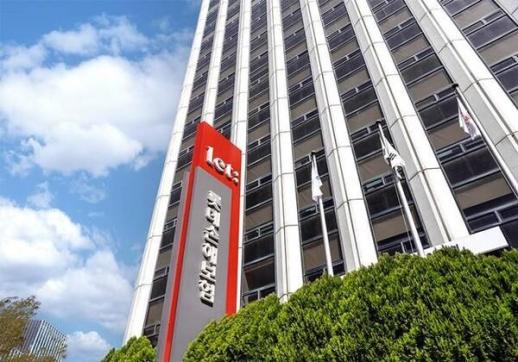 Lotte Insurance Reports Improved Q1 Operating Profit Amid Temporary Investment Losses 롯데손해보험이 올해 1분기 보험영업이익 흑자전환과 보험계약마진(CSM) 성장 등 본업 지표 개선세를 보였다. 다만 중동 전쟁과 유가 상승 등 글로벌 불확실성으로 금리가 급등하면서 투자손익은 일시적으로 악화됐다. Lotte Insurance reported a net loss of 19.8 billion won and an operating loss of 28.5 billion won for the first quarter of this year, reflecting the impact of interest rate hikes on the valuation of interest-bearing assets. The company recorded an investment operating loss of 55.7 billion won in Q1. Officials noted that this loss is primarily a temporary valuation loss on safe assets that guarantee principal at maturity. They expect that as market volatility decreases with the end of the war and normalization of conditions, these losses could be recovered. They also indicated that most of the temporary losses on certain foreign assets could be recouped, excluding hedge costs. In contrast, the core insurance business showed improvement. Lotte Insurance's operating profit for Q1 reached 27.2 billion won, a turnaround from a loss of 11.2 billion won in the same period last year. The improvement was attributed to growth in premiums from long-term protection insurance and enhanced operational efficiency. The future profit base, known as the Contractual Service Margin (CSM), also increased. At the end of Q1, the CSM stood at 2.509 trillion won, up 250.9 billion won, or 11.1%, from the previous year. The CSM amortization amount was 58.7 billion won, an increase of 6.4 billion won, or 12.3%, compared to Q1 last year. The key long-term protection insurance premiums continued to grow, reaching 641 billion won. Lotte Insurance is strengthening its profit base by improving cost efficiency in long-term insurance indirect costs and reducing expenses in auto and general insurance. Capital soundness also exceeded regulatory recommendations. As of the end of Q1 2026, the preliminary solvency ratio (K-ICS) was 164.4%. Lotte Insurance aims to manage its capital soundness stably based on the growth of operating profit and improvements in asset structure.* This article has been translated by AI. 2026-05-15 23:37:56
 -
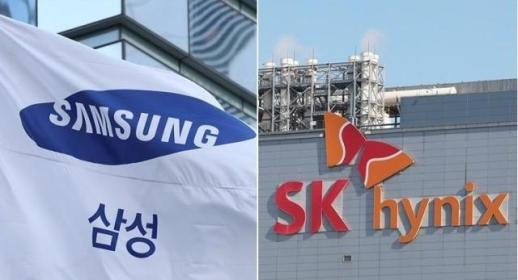 Samsung Electronics and SK Hynix Shares Plummet Amid Foreign Selling Shares of South Korea's semiconductor giants, Samsung Electronics and SK Hynix, closed sharply lower. Analysts attribute the decline to a combination of rising market interest rates, profit-taking, and concerns over labor issues at Samsung, which have dampened investor sentiment. On May 15, the Korea Exchange reported that Samsung Electronics fell by 25,500 won (-8.61%) to close at 270,500 won. SK Hynix also dropped 15,000 won (-7.66%) to finish at 1,819,000 won. Samsung started the day steady but quickly expanded its losses in the morning, dipping below 260,000 won at one point. SK Hynix initially rose to 1,995,000 won but reversed course and increased its losses. The downturn in the two leading semiconductor stocks contributed to a sharp decline in the KOSPI index, which had briefly surpassed the 8,000 mark earlier in the day. The KOSPI closed down 488.23 points (-6.12%) at 7,493.18, marking a decline after three consecutive days of gains. Foreign investors sold a net 5.6195 trillion won worth of stocks on the main bourse. Market analysts noted that the rise in U.S. 10-year Treasury yields above 4.5% and the won-dollar exchange rate surpassing 1,500 won prompted foreign profit-taking. In the Seoul foreign exchange market, the dollar-won exchange rate rose by 9.8 won to close at 1,500.8 won. Lee Kyung-min, a researcher at Daishin Securities, stated, "The overheating from short-term surges and accumulated fatigue from rising prices, combined with concerns over interest rate hikes and higher bond yields, triggered the expanded losses." He added, "The weakness in the semiconductor sector was pronounced, as major memory chip stocks like Micron and SanDisk fell in the U.S. market, further dampening investor sentiment." Concerns over a potential strike by Samsung's labor union have also contributed to the negative sentiment. The Samsung branch of the Federation of Korean Trade Unions has announced plans for an 18-day strike from May 21 to June 7. Analysts predict that additional time may be needed for the KOSPI to stabilize above the 8,000 level. Lee noted, "It may take time for the KOSPI to break through and settle at the 8,000 index level, and whether financial investments will reverse to buying will determine the extent and duration of the corrections."* This article has been translated by AI. 2026-05-15 23:32:25
 -
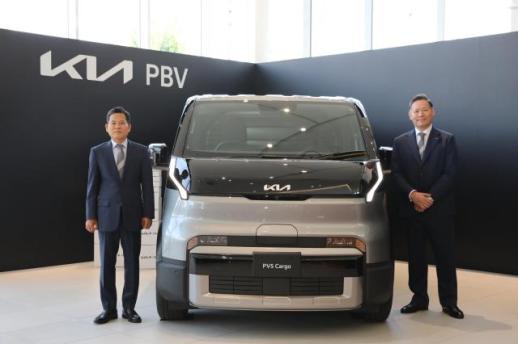 Hyundai Targets Japan and China for Global Expansion Hyundai Motor Group is set to re-enter the Japanese and Chinese markets. In Japan, facing severe labor shortages due to an aging population, the company will introduce purpose-built vehicles (PBVs). In China, where competition among local electric vehicle manufacturers is fierce, Hyundai plans to launch thoroughly localized electric vehicles under its "In China, For China" strategy. Unlike its successful foothold in the U.S. and Europe, and its emerging growth in India and Southeast Asia, Japan and China are considered challenging markets due to strong patriotic consumer culture, often referred to as the "graveyard of imported cars." Hyundai aims to strengthen its presence in Asia to become a global top-tier company. According to industry sources, Kia announced the launch of its first dedicated PBV model, the "PV5," on May 13 at its Tokyo-based Kia PBV Japan showroom. The PV5, tailored to meet the diverse business environments and lifestyles of local customers, features a customized vehicle structure and advanced technologies. Japan is grappling with various social issues, including labor shortages, logistics challenges, and increased gaps in regional transportation due to rapid aging. The PV5 aims to provide a new alternative in Japan's limited electric commercial vehicle market while addressing these social issues. The PV5 is equipped with V2L (Vehicle-to-Load) and V2H (Vehicle-to-Home) specifications, allowing it to serve as an emergency power source during disasters like earthquakes. It also incorporates the CHAdeMO charging method, enhancing usability for the Japanese market. The Japanese government plans for 30% of new car sales to be electric vehicles by 2030. In response to the growing demand for small and medium-sized electric vans, Kia will first launch passenger and cargo models of the PV5, followed by a wheelchair-accessible version (PV5 WAV), with plans to introduce a successor model, the PV7, by 2028 to boost local sales. To effectively penetrate the Japanese market, Kia has established a partnership with Sojitz Corporation, a prominent general trading company. As part of this collaboration, Kia PBV Japan was launched in April last year to develop PBV operations in Japan. Kia PBV Japan currently operates seven dealerships, including the Tokyo-based showroom, and 52 service centers, with plans to expand to 11 dealerships and 100 service centers by the end of the year. Kim Sang-dae, Vice President of Kia PBV Business Division, stated, "The launch of the PV5 in Japan is a significant milestone that showcases Kia's product competitiveness and brand trust. We aim to build long-term trust with Japanese customers and establish ourselves as a reliable partner supporting their transition to electrification." In China, Hyundai will introduce the Ioniq V, the first model developed specifically for the Chinese market. Moving away from the previous strategy of selling global models, the Ioniq V has been designed with a focus on local consumer preferences, featuring batteries from China's CATL, advanced driver-assistance systems (ADAS) from Momentus, AI voice recognition based on Baidu, and infotainment systems that reflect the lifestyle of Chinese consumers. Hyundai is also preparing to launch an extended-range electric vehicle (EREV) to cater to the rapidly growing market in China, which has been traditionally focused on pure electric vehicles. EREVs utilize an internal combustion engine to charge the battery, significantly extending driving range, which is expected to attract consumers in China's less developed regions where charging infrastructure is limited. Hyundai aims to complete a lineup of over 20 models, including six electric vehicles, by 2030, targeting annual sales of 500,000 units in China. Both China and Japan present significant challenges for Hyundai Motor Group due to high brand loyalty towards domestic manufacturers, including BYD, Xiaopeng, and Toyota, which have become global automotive leaders. China, in particular, is the world's largest automotive market, with an annual volume exceeding 30 million vehicles, more than double that of the U.S. It is also a battleground for electric vehicle battery and software technology development, making it essential for Hyundai to establish a foothold in this market. Japan is known as one of the most demanding automotive markets globally, and success there is seen as a testament to winning in quality and detail. If Korean cars, once viewed as alternatives to Japanese vehicles, gain acceptance among Japanese consumers, they could elevate to true premium brands in the global market, according to industry assessments. An industry insider remarked, "If Hyundai secures an advantage in the fiercely competitive local market in China and achieves success in Japan, which is the home ground of global leader Toyota, it would be as symbolic as its achievements in the U.S. or Europe. China and Japan are the final pieces of the puzzle for Hyundai to reach global leadership."* This article has been translated by AI. 2026-05-15 23:25:06
 -
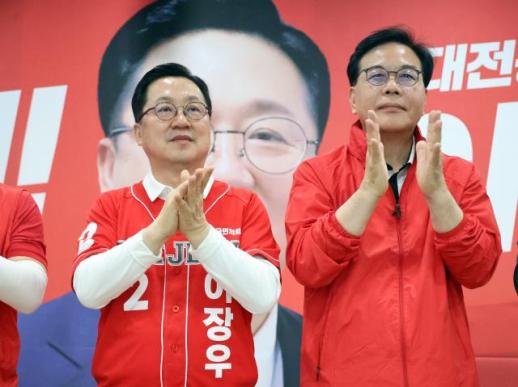 Song Eon-seok Campaigns for Lee Jang-woo in Daejeon to Target Chungcheong Voters Song Eon-seok, co-chair of the People Power Party's election campaign committee, visited Buyeo and Daejeon on May 15 to rally support in the Chungcheong region. He urged voters to back the party's candidates while emphasizing the need to check the government of President Lee Jae-myung.In the morning, Song attended the opening of the campaign office for Buyeo county mayoral candidate Lee Yong-woo, where he also expressed support for Yoon Yong-geun, a candidate in the upcoming by-election for the National Assembly representing Gongju, Buyeo, and Cheongyang.Regarding Lee, who is seeking a third term as Buyeo county mayor, Song stated, "He has already served for eight years and knows Buyeo better than anyone else, making him a well-prepared candidate." He criticized the opposition candidate, saying, "The opposing candidate has a criminal record and has been fined twice, while our candidate is clean."He described Yoon as "our hope who has strongly resisted the dismantling of the prosecution and fought alongside us," adding that if elected, he would have the capability to hold the current Minister of Justice accountable in the National Assembly's Legislation and Judiciary Committee.In the afternoon, Song shifted his focus to Daejeon, where he supported mayoral candidate Lee Jang-woo. He launched an attack on the previous Democratic Party mayor, Heo Tae-jeong, criticizing the ruling party's push for a special investigation into the cancellation of charges."The competence of this mayor and the incompetence of the former Democratic mayor are clearly reflected in the numbers," Song said, noting that Daejeon's city brand reputation, which was among the lowest in the nation during Heo's tenure, has risen to first place under Lee's leadership. He added, "We must continue to accelerate this positive change and development. The choice is simple: a capable mayor or an incompetent one."He also challenged Heo, stating, "He has not properly explained the reason for his toe amputation, and I suspect it was for evading military service. How can we entrust the governance of Daejeon to someone who cannot even remember why his toe was amputated?"Regarding the ruling party's proposed special investigation law, he warned, "I believe President Lee Jae-myung will push it through after this election. He is trying to erase his crimes through a special prosecutor he appointed, but he is not a king. I urge the citizens of Daejeon to show how powerful public sentiment can be."Lee Jang-woo, the Daejeon mayoral candidate, stated, "This election is a judgment on the incompetence, irresponsibility, and lack of plans of the Heo Tae-jeong administration. We will decisively hold accountable the ineffective administration of the seventh term and ensure a clear vision for Daejeon's future."* This article has been translated by AI. 2026-05-15 23:22:14
 -
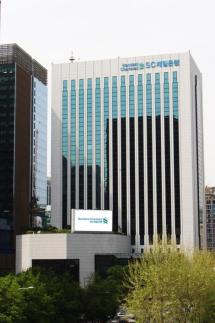 SC First Bank Reports Q1 Net Profit of 104.9 Billion Won, Down 6.3% Year-on-Year SC First Bank reported a decline in profits for the first quarter of this year, attributed to rising operating costs. On May 15, the bank announced that its net profit for the first quarter was 104.9 billion won, a decrease of 6.3% compared to the same period last year.Interest income fell due to a decline in the net interest margin (NIM). For the first quarter, interest income was 291.5 billion won, down 5.1% from the previous year. During the same period, NIM decreased by 0.23 percentage points.In contrast, non-interest income increased significantly, driven by improvements in the wealth management (WM) sector, which saw a rise in high-net-worth clients. Non-interest income for the first quarter reached 110.1 billion won, a 25.1% increase year-on-year.The total loan portfolio grew to 43.7363 trillion won, marking a 2.2% increase from the previous year. Asset quality indicators remained stable, with the non-performing loan (NPL) ratio at 0.56% as of the end of March, similar to the end of last year.SC First Bank plans to continue enhancing its WM sector performance by expanding private banking (PB) centers in the metropolitan area and Busan, following the success in Apgujeong.* This article has been translated by AI. 2026-05-15 23:19:47
 -
 Samsung Electronics DS Division Leadership Engages with Labor Union Samsung Electronics' semiconductor (DS) division leadership visited the labor union office at the Pyeongtaek campus on May 15 to engage in active dialogue with union representatives.According to Samsung Electronics, Vice Chairman Jeon Young-hyun and other executives from the DS division met with the joint action headquarters of the Samsung Electronics labor union at the union office located at the Pyeongtaek campus.The meeting included four executives from Samsung Electronics: Vice Chairman Jeon Young-hyun, President Kim Yong-kwan, President Han Jin-man, and President Park Yong-in. The union was represented by Chairperson Choi Seung-ho, Vice Chairperson Lee Song-yi, Director Kim Jae-won, and Director Jeong Seung-won.Vice Chairman Jeon expressed a commitment to open dialogue with the union and conveyed a desire to resume negotiations.Earlier, the Samsung leadership issued an official statement proposing 'unconditional dialogue' with the union, emphasizing, "We urge the union to engage in discussions promptly, considering the concerns of the public and the national economy."They also conveyed an apology to the public, stating, "The labor-management issues at Samsung Electronics have caused significant burden and concern for the public and the government. As our achievements grow, the expectations of society for Samsung become stricter and larger, and we have not adequately addressed this." They added, "The Samsung leadership feels a heavy sense of responsibility for how the situation has unfolded. We sincerely apologize." * This article has been translated by AI. 2026-05-15 23:18:00
 -
 Chabi Reports Q1 Revenue of 20.7 Billion Won, 21% Growth Year-on-Year Chabi announced that its consolidated revenue for the first quarter reached 20.7 billion won, marking a 21% increase compared to the same period last year. The charging service segment recorded sales of 13.9 billion won, a 13% year-on-year growth, demonstrating stable growth. The charger manufacturing segment also saw a 41% increase in revenue, totaling 6.8 billion won compared to the previous year. Due to the seasonal nature of export volumes, which are concentrated in the fourth quarter, the company reported an operating loss of 9.7 billion won for the first quarter. However, the key performance indicator, EBITDA, improved by 17 percentage points year-on-year, reaching -2%, indicating that the company is nearing profitability, according to Chabi officials. A Chabi representative stated, "The increase in electric vehicle registrations and the rising utilization rate of chargers are driving revenue growth and improving profitability in the charging service sector." Chabi anticipates that demand for charging infrastructure will continue to grow alongside the expansion of the electric vehicle market. The charging service business is structured to expand revenue as the cumulative number of registered electric vehicles and charger utilization rates increase. Recent trends show a sharp rise in electric vehicle sales, which is expected to accelerate both the foundation for long-term growth and the pace of performance improvement. According to the Ministry of Trade, Industry and Energy's report on the automotive industry trends for March and the first quarter of 2026, domestic electric vehicle sales in the first quarter increased by 155.8% compared to the same period last year, with approximately one in four vehicles sold by April this year being electric. This trend suggests a rapid expansion in demand for fast charging services and charger utilization. Choi Young-hoon, CEO of Chabi, remarked, "The charging service sector is improving profitability to a level capable of generating its own cash flow, and the foundation for long-term growth is being further strengthened with the expansion of electric vehicle adoption. The manufacturing sector will also continue to improve annual performance, focusing on global export growth." Meanwhile, Chabi is pursuing various initiatives to expand charging infrastructure nationwide and lead the mobility ecosystem in the era of one million electric vehicles. Starting at the end of May, third-generation chargers equipped with NACS connectors will be fully operational at major living hubs and highway rest areas in Seoul and the metropolitan area, allowing Tesla users to conveniently access Chabi chargers. Recently, Chabi partnered with Hyundai to launch a dedicated electric vehicle charging subscription service for Hyundai customers, enhancing accessibility to charging infrastructure while reducing usage costs.* This article has been translated by AI. 2026-05-15 23:15:17
 -
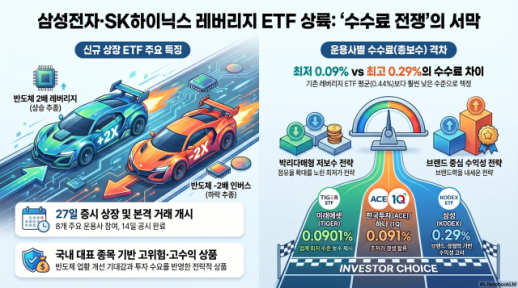 Samsung and SK Hynix Launch Leveraged ETFs Amid Fee Competition Single-stock leveraged and inverse exchange-traded funds (ETFs) based on Samsung Electronics and SK Hynix are set to launch at the end of this month. Major asset management firms are simultaneously introducing related products, intensifying fee competition in the ETF market. According to the financial investment industry on May 15, eight asset management companies, including Samsung, Mirae Asset, Korea Investment, KB, Shinhan, Hanwha, Kiwoom, and Hana Asset Management, completed disclosures for 16 single-stock leveraged and inverse ETFs on May 14. The products are scheduled to be listed on May 27. The upcoming ETFs include leveraged products that aim to double the daily stock price returns of Samsung Electronics and SK Hynix, as well as inverse ETFs that bet on a twofold decline in stock prices. This marks the introduction of high-risk, high-reward products based on leading semiconductor stocks in the domestic market. With similar products launching simultaneously, asset managers are emphasizing fees as a key competitive factor. The total expense ratios for these new products have been set lower than the average annual fee of 0.44% for existing listed equity leveraged ETFs. Mirae Asset Management has proposed the lowest fee, setting the total expense ratio for its TIGER ETF at 0.0901%. Korea Investment Trust Management's ACE ETF and Hana Asset Management's 1Q ETF have also joined the low-fee competition, each setting their fees at around 0.091%. In contrast, the industry leader, Samsung Asset Management, has set the total expense ratio for its KODEX ETF at 0.29%, which is nearly three times higher than the lowest fee offerings. Market analysts suggest that Samsung Asset Management is opting for a strategy focused on profitability, leveraging its market share and brand strength. The financial investment industry anticipates that the launch of these single-stock leveraged and inverse ETFs will intensify competition in the domestic ETF market. Given the recent optimism surrounding the semiconductor sector and increasing investor demand for Samsung Electronics and SK Hynix, interest in related ETFs is expected to grow.* This article has been translated by AI. 2026-05-15 23:12:55
 -
![[6·3 Local Elections] Ruling Party Responds to Oppositions Claims of Election Interference](https://image.ajunews.com//content/image/2026/05/15/20260515162306497471_518_323.jpg) [[6·3 Local Elections]] Ruling Party Responds to Opposition's Claims of Election Interference The Democratic Party on May 15 responded to claims by Song Eon-seok, co-chair of the People Power Party's election committee, who labeled President Lee Jae-myung's market visits as election interference. "Should the government be paralyzed during the election period?" Jo Seung-rae, Secretary General of the Democratic Party, asked during a press conference at the National Assembly. "Does that mean the president should not do anything? If that's the case, then even the Cabinet meetings would be considered election interference," he added. Jo emphasized that governance must continue even during elections, questioning whether the president should refrain from communicating on issues of diplomacy, security, politics, society, safety, and public welfare. He dismissed the allegations as mere political attacks, calling them "quite low-level discourse." Choi Gi-sang, also Secretary General of the Democratic Party's Election Committee and a former judge, remarked, "If the opposition claims that the president's governance violates the law, they should specify which laws were broken. It seems inappropriate to challenge the president's governance in the context of an election." Meanwhile, Song took to Facebook to assert that the president has crossed the line of election interference by actively campaigning. He criticized Lee's visits to the Namnok Market in Ulsan on May 13 and the Moran Market on May 14, describing them as blatant election interference. Song pointed out that Seongnam is Lee's political hometown and that the candidate for mayor, Kim Byeong-wook, is a former senior secretary to the president, suggesting that the choice of locations was intentionally dubious. He noted that while past presidents have faced allegations of election interference, none have campaigned daily at traditional markets nationwide just weeks before an election.* This article has been translated by AI. 2026-05-15 23:10:19
[[6·3 Local Elections]] Ruling Party Responds to Opposition's Claims of Election Interference The Democratic Party on May 15 responded to claims by Song Eon-seok, co-chair of the People Power Party's election committee, who labeled President Lee Jae-myung's market visits as election interference. "Should the government be paralyzed during the election period?" Jo Seung-rae, Secretary General of the Democratic Party, asked during a press conference at the National Assembly. "Does that mean the president should not do anything? If that's the case, then even the Cabinet meetings would be considered election interference," he added. Jo emphasized that governance must continue even during elections, questioning whether the president should refrain from communicating on issues of diplomacy, security, politics, society, safety, and public welfare. He dismissed the allegations as mere political attacks, calling them "quite low-level discourse." Choi Gi-sang, also Secretary General of the Democratic Party's Election Committee and a former judge, remarked, "If the opposition claims that the president's governance violates the law, they should specify which laws were broken. It seems inappropriate to challenge the president's governance in the context of an election." Meanwhile, Song took to Facebook to assert that the president has crossed the line of election interference by actively campaigning. He criticized Lee's visits to the Namnok Market in Ulsan on May 13 and the Moran Market on May 14, describing them as blatant election interference. Song pointed out that Seongnam is Lee's political hometown and that the candidate for mayor, Kim Byeong-wook, is a former senior secretary to the president, suggesting that the choice of locations was intentionally dubious. He noted that while past presidents have faced allegations of election interference, none have campaigned daily at traditional markets nationwide just weeks before an election.* This article has been translated by AI. 2026-05-15 23:10:19