
Journalist

Eugene Y. Chan, Ali Goharyis
-
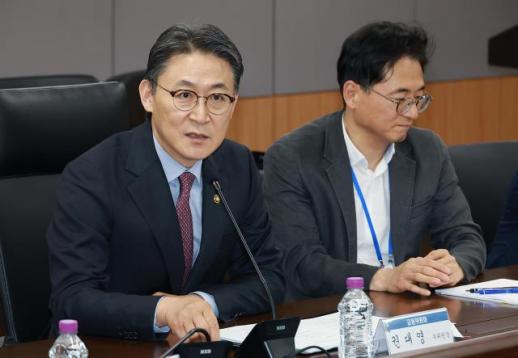 Financial Authorities Accelerate Token Securities Regulation Ahead of 2027 Implementation South Korea's financial authorities are accelerating the design of regulations for token securities (STO), set to be implemented next year. Discussions have begun on various aspects, including the criteria for underlying assets in fractional investments, the approval system for over-the-counter exchanges, and on-chain payment infrastructure, raising expectations for the early establishment of the STO ecosystem. The authorities reaffirmed their commitment to balancing innovation and trust rather than imposing excessive regulations that hinder progress. On May 15, the Financial Services Commission (FSC) held the second meeting of the public-private Token Securities Council at the Government Seoul Building, discussing amendments to subordinate regulations and guidelines in preparation for the implementation of the token securities law. The council, which launched in March, includes members from the FSC, the Financial Supervisory Service, the Korea Securities Depository, the Financial Security Institute, the Korea Financial Investment Association, the Fintech Industry Association, as well as experts from academia and the legal field. The token securities law, established through amendments to the Electronic Securities Act and the Capital Markets Act, is scheduled to take effect in February 2027. The financial authorities aim to minimize market confusion by refining detailed regulations related to issuance, distribution, and payment infrastructure before the law takes effect. During the meeting, discussions focused on three main areas: criteria for fractional investment issuance, expansion of tokenization infrastructure, and the design of the distribution market structure. The authorities plan to announce the final draft of the related enforcement decree and guidelines by July. In the fractional investment issuance sector, the eligibility criteria for underlying assets and investor protection systems were key issues. The authorities expressed their intention to allow innovative asset tokenization to expand the token securities market, provided that objective asset valuation, disclosure systems, and risk management measures are firmly established. Kwon Dae-young, Vice Chairman of the FSC, stated, "Even with innovative tokenization, maintaining market order and protecting investors are fundamental premises of the capital market. Objective asset valuation and risk management systems are necessary." However, the authorities also indicated plans to relax the rigidity of existing regulations. Currently, the issuance of fractional investment securities that bundle multiple underlying assets is effectively restricted, but there is a consensus to allow pooling within a certain range for assets of the same type in the future. Discussions on expanding tokenization targets and building infrastructure have also intensified. While domestic STO discussions are currently focused on fractional investments, the global market is rapidly expanding the tokenization of existing structured securities such as stocks, bonds, and money market funds (MMFs). Kwon emphasized, "Green bonds in Hong Kong and MMFs in the U.S. have been issued in token securities form, and both the New York Stock Exchange (NYSE) and Nasdaq are preparing pilot projects for the tokenization of listed stocks. We must prepare for the imminent future with urgency." However, the financial authorities drew the line at a complete transition of the existing electronic securities system to a blockchain-based structure all at once. They explained that they would approach this with a phased roadmap and concurrent testing to avoid potential conflicts with the existing system. Accordingly, the government and relevant agencies plan to examine the feasibility of digitizing the entire process of on-chain payment systems, rights transfer, trading, and settlement while improving related infrastructure. The industry views the integration of central depository systems with distributed ledger technology as a key challenge ahead. The design of the distribution market structure has also emerged as a core topic of discussion. In particular, the approval system for over-the-counter exchanges capable of multi-party transactions in token securities and the setting of trading limits for general investors were highlighted as major issues. Currently, there are increasing demands for clarity on whether separate approvals are needed for electronic securities-based OTC exchange operators supporting STO transactions and the extent to which concurrent operations among unlisted stocks, investment contract securities, and fractional investment platforms are permissible. The financial authorities aim to design regulations that enhance trading efficiency while achieving fair competition and investor protection. Kwon stated, "We will set limits in a way that does not confine innovation while systematizing investor protection and expanding initial market liquidity." Market participants view this discussion as a significant step toward the implementation of the STO regulatory framework. With proactive efforts to design detailed infrastructure and market structure ahead of the law's enactment, preparations in the securities and fintech sectors are expected to accelerate. However, industry experts caution that challenges remain. If the criteria for assessing the eligibility of underlying assets become overly stringent, it could stifle innovation, while lenient regulations may increase the risk of investor harm. The stability of blockchain-based transactions and the integration with existing financial infrastructure are also identified as pressing issues. Kwon remarked, "Token securities are a developing market without clearly established global standards or answers. We must continuously consider the optimal approach that aligns with our capital market environment while closely monitoring new technologies and business attempts."* This article has been translated by AI. 2026-05-15 22:45:57
 -
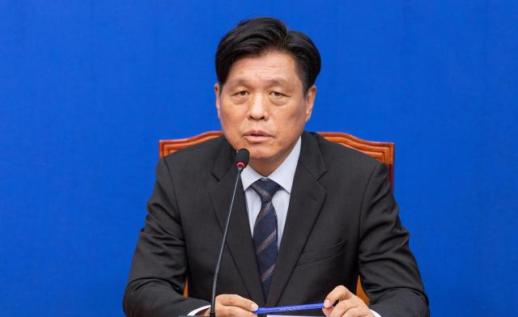 Democratic Party Responds to Kim Du-gyeom's Allegations of Collusion in Ulsan Mayor Race The Democratic Party on May 15 responded to allegations of collusion made by Kim Du-gyeom, the candidate from the People Power Party, regarding the unification of progressive candidates for the Ulsan mayoral election. The party expressed confidence that there would be no unification with independent candidate Park Maeng-woo. While Kim Sang-wook of the Democratic Party and Kim Jong-hoon of the Justice Party agreed to unify their candidacies through a poll-based primary, discussions between Kim Du-gyeom and Park on unification have stalled, raising concerns about the conservative candidates' prospects. However, the unification of progressive candidates could potentially accelerate talks between Kim Du-gyeom and Park. During a press conference at the National Assembly, Cho Seung-rae questioned the basis of Kim Du-gyeom's claims, stating, "What evidence do you have to assert collusion?" He further explained that the decision to unify was made out of a desperate need to correct Ulsan's governance and prevent the People Power Party from regaining power. On the previous day, Hwang Myung-pil, the Ulsan mayoral candidate from the Justice Party, had withdrawn in support of Kim Sang-wook. Additionally, Cho addressed the Pyeongtaek by-election, stating, "Currently, there are no ongoing discussions with the Justice Party." The race has seen sharp exchanges between Democratic candidate Kim Yong-nam and Justice Party candidate Cho Guk, complicating the possibility of unification. Moreover, regarding the support for Cho from Lee Ho-cheol, a former chief of the Civil Affairs Office during the Roh Moo-hyun administration, Cho remarked, "We consider actions by our party members supporting candidates from other parties or independents as inappropriate, and we will make a comprehensive judgment on this matter."* This article has been translated by AI. 2026-05-15 22:43:05
 -
 Hanmico Semiconductor to Enter U.S. Semiconductor Supply Chain Hanmico Semiconductor is poised for significant growth in the second quarter of this year, driven by the ongoing demand for global artificial intelligence (AI) semiconductors. The company anticipates a substantial increase in annual revenue as it prepares to establish its U.S. subsidiary, Hanmi USA, by the end of the year.Hanmico Chairman Kwak Dong-shin stated on May 15, "With the mass production of High Bandwidth Memory (HBM4) ramping up, we are seeing a surge in orders for TC bonders in the second quarter. This trend is expected to accelerate in the second half of the year." He emphasized that Hanmico's TC bonders, which hold the top global market share, will benefit significantly from the expansion of the AI semiconductor market.The establishment of Hanmi USA in San Jose, California, will enable Hanmico to actively respond to local market demands. The company plans to use the San Jose office as a central hub for rapid technical support, aligning with the operational timelines of new semiconductor factories being established by global firms in the U.S. This strategy includes deploying skilled engineers locally to provide proactive technical assistance.The formation of Hanmi USA also marks a significant realization of Hanmico's founding vision of serving as a bridge between Korea and the United States, 50 years after its inception. The company was founded by the late Kwak No-kwon, who built his expertise during 14 years at Motorola in the U.S. before establishing Hanmico in Korea, a country that was then a barren landscape for the semiconductor equipment industry. Now, Hanmico plans to make a substantial entry into the U.S. market through Hanmi USA.As the production of HBM4 expands, Hanmico's growth trajectory is expected to steepen. Analysts are noting that competition among global memory companies to increase HBM production will intensify in the second half of the year, potentially leading to increased orders for TC bonders. Hanmico is currently supplying equipment to global memory companies, including SK Hynix, and anticipates diversifying its revenue portfolio with new products such as next-generation hybrid bonders and 2.5D packaging equipment.Recent investments in large-scale semiconductor manufacturing facilities in the U.S. have been notable. In the fourth quarter of last year, Intel began operations at a new advanced process-based foundry and packaging plant in Chandler, Arizona. By 2027, Micron aims to have a cutting-edge DRAM and HBM manufacturing hub operational in Boise, Idaho, and is constructing the largest memory production facility in the U.S., known as a "megafab," in Syracuse, New York, set to begin operations in 2028. Additionally, SK Hynix plans to start advanced HBM supply in Lafayette, Indiana, by 2027.In this context, Hanmico's direct participation in the U.S. government-led AI semiconductor supply chain is expected to yield significant benefits in the future.Moreover, the establishment of Hanmi USA is significant for building direct collaboration with global hyperscaler companies, which are end-users. Recently, companies like Microsoft, Google, Amazon (AWS), and Meta have been developing their own AI semiconductors, increasingly reviewing and specifying the high-performance memory and essential equipment used in manufacturing processes. Consequently, demand for packaging equipment aimed at hyperscalers is anticipated to rise.Currently, Hanmico holds the top global market share in TC bonders, which are essential for HBM manufacturing, and plans to launch a prototype of its second-generation hybrid bonder equipment within the year to solidify its leadership in the next-generation HBM market.In addition to HBM TC bonders, Hanmico aims to drive revenue growth with a variety of equipment. The company is set to supply its 2.5D packaging equipment, including the "2.5D TC Bonder 40" and "2.5D TC Bonder 120," to foundry and OSAT companies this year. The "BOC COB Bonder," which was launched earlier this year as the world's first, has begun supplying global memory companies and is expected to contribute to revenue growth alongside the expanding demand for AI and data centers.Chairman Kwak stated, "Through our U.S. subsidiary, we plan to actively support our clients' needs closely. We anticipate significant equipment orders alongside the operation of new factories in the U.S., which is emerging as a global semiconductor production hub, and expect continuous revenue growth in the future."* This article has been translated by AI. 2026-05-15 22:37:27
 -
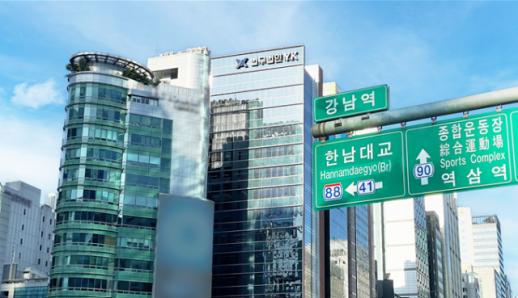 YK Law Firm Offers Experienced Attorneys Annual Salary of 150 Million Won YK Law Firm has announced a base salary of over 150 million won (approximately $130,000) per year for experienced attorneys during its hiring process. Amid increasing competition for talent in the law firm sector, YK is emphasizing a compensation system that prioritizes skills and performance over seniority and tenure. According to legal industry sources on May 15, YK recently posted job openings for experienced attorneys in its criminal law and litigation groups. The job listing includes a base salary of at least 150 million won, an annual performance bonus, and priority participation in high-stakes cases. The firm also indicated that salary negotiations could vary based on location and individual capabilities. While the starting salary for new attorneys at large law firms in South Korea typically ranges from 150 million to 180 million won, it is considered unusual for a mid-sized firm to offer such a high base salary for experienced hires. Industry analysts suggest that the competition for securing top talent, particularly in criminal and corporate litigation, is driving up compensation across the board. This hiring initiative aligns with YK's strategy to expand its corporate legal services in response to growing demand from small and medium-sized enterprises. The firm is reportedly accelerating its recruitment of experienced attorneys with practical expertise. Notably, the job announcement includes a statement rejecting the outdated notion that seniority should take precedence over achievement, emphasizing a performance-driven organizational culture. The firm aims to base its compensation structure on the ability to handle cases and deliver results. YK also plans to improve the working conditions for its current attorneys. Reports indicate that the firm is considering a phased salary increase for existing lawyers to align with the new hiring standards. The legal community is observing an intensifying competition for talent between large and mid-sized law firms. Particularly in the fields of criminal and corporate litigation, there is a fierce competition to attract former judges, prosecutors, and graduates from police academies, which is contributing to rising salary levels. In fact, YK has indicated that it will prioritize candidates with outstanding performance in judicial training or law school, as well as those with strong client management skills. Attorneys with backgrounds as judges, prosecutors, or those who have demonstrated success at other law firms will also have the opportunity for separate salary negotiations. A YK representative stated, "We aim to establish a system where the achievements of professionals lead to fair compensation."* This article has been translated by AI. 2026-05-15 22:34:37
 -
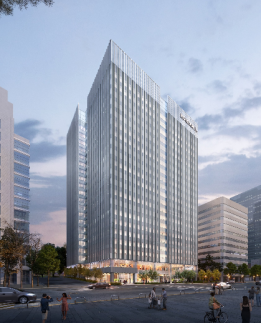 Korean Reinsurance Reports 131.4% Increase in Q1 Net Profit Korean Reinsurance reported a net profit of 209.5 billion won for the first quarter of this year, more than double the amount from the same period last year. The increase was attributed to gains from overseas bond evaluations due to rising exchange rates and a base effect from last year's high-claim incidents. The company announced on May 15 that its revenue for the first quarter reached 1.6981 trillion won, a 9.3% increase compared to the same period last year. The revenue growth was significantly influenced by increased evaluation gains from overseas bonds resulting from the rising exchange rates. As a global reinsurer, Korean Reinsurance has a considerable proportion of overseas investment assets and foreign currency-denominated assets, making it susceptible to fluctuations in exchange rates that can impact investment and evaluation profits. The net profit of 209.5 billion won represents a 131.4% increase from the previous year. This increase reflects the base effect from significant claims incurred during the same period last year, which included losses of 121.5 billion won from three major incidents: the LA wildfires, the Myanmar earthquake, and the Yeongnam wildfires. Reinsurers can experience substantial quarterly profit volatility based on the occurrence of high-claim incidents such as natural disasters, large fires, and industrial accidents. A representative from Korean Reinsurance stated, "The increase in performance was influenced by the base effect from last year's high-claim incidents. In the first quarter of this year, there were no major incidents leading to significant losses, and the increase in evaluation gains from overseas bonds due to rising exchange rates also contributed to revenue growth."* This article has been translated by AI. 2026-05-15 22:33:00
 -
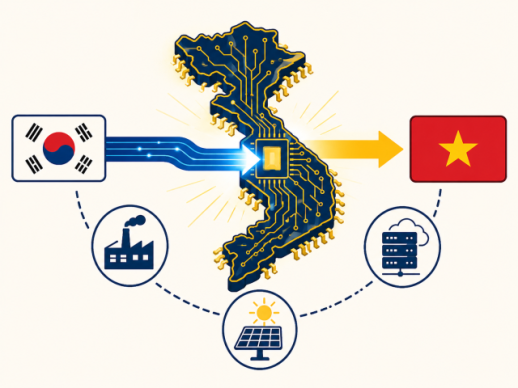 Vietnam No Longer a Low-Cost Base: South Korea's Investment Shifts to Integrated Manufacturing and Services Hub South Korea's foreign direct investment (FDI) in Vietnam is undergoing structural changes amid global value chain (GVC) restructuring and trends toward digital and green transitions. South Korean capital, which accounts for about 18% of total FDI in Vietnam, is moving from a manufacturing focus to high-tech and value-added sectors, significantly impacting Vietnam's industrial structure and supply chains. On May 15, local time, Vietnamese media outlet Cong Thuong reported that a research team led by Professor Do Thi Minh Hue at the National Economics University in Hanoi analyzed these trends in their paper titled "South Korean Direct Investment in Vietnam: Trends and Strategic Business Implications." The team examined changes in the scale, structure, and strategies of South Korean FDI based on secondary data from domestic regulatory agencies and international organizations, drawing implications for businesses and policies. According to the research, as of the end of 2024, Vietnam's cumulative FDI is expected to reach approximately $502.8 billion, with 42,002 projects. Last year, new registered capital of about $38.4 billion was added, projecting the cumulative total to rise to around $540 billion. South Korea is identified as a key investor, with a notable concentration in the processing and manufacturing sectors. Approximately 75% of South Korean FDI is concentrated in this area, leading to the establishment of large-scale production and export clusters focused on electronics, textiles, supporting industries, and chemicals. Major projects from companies like Samsung and LG have transformed regions such as Bac Ninh, Thai Nguyen, Hai Phong, and Ho Chi Minh City into global production hubs for electronics and mobile devices. There is a clear trend of investment being concentrated in areas with well-developed industrial and logistics infrastructure. However, the research notes that some capital is beginning to shift to new regions, considering land availability, labor costs, and infrastructure connectivity. This movement is interpreted as a strategic effort to diversify risks and optimize costs. The nature of investments is also rapidly changing. South Korean FDI, which traditionally focused on assembly and textiles, is now expanding into high-tech electronics, semiconductors, renewable energy, data centers, and finance and logistics sectors. The researchers view this as a signal that Vietnam is evolving from a simple low-cost production base to a strategic regional hub that integrates manufacturing and services. However, deep connections between South Korean and Vietnamese companies remain limited. Many South Korean firms prioritize existing regional supply chains due to factors such as technological gaps, quality standards, delivery capabilities, and financial capacity, which ultimately hinders the level of localization. Institutional support programs for suppliers are also noted to be insufficiently systematic. The research suggests that Vietnamese companies need to move beyond simple subcontracting and more clearly define their roles within the value chain, including components, semi-finished products, supporting services, and research and development (R&D). It emphasizes the need for active investment in technological capabilities, quality management systems, digital transformation, and human resource development. The government is also urged to shift from a quantitative approach focused solely on attracting investment to a "selective FDI strategy" that prioritizes high-tech and high-value projects and connections with domestic companies.* This article has been translated by AI. 2026-05-15 22:30:00
 -
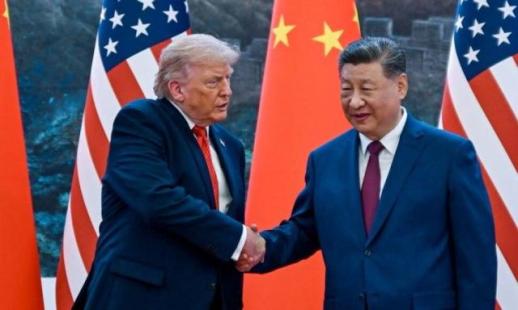 Xi Jinping Emphasizes Stability in U.S.-China Relations During Trump Visit Xi Jinping, the President of China, emphasized the importance of stable development in U.S.-China relations during a meeting with U.S. President Donald Trump at Zhongnanhai. His remarks underscored the need to implement agreements reached during their previous summit and to manage conflicts that could destabilize the bilateral relationship. According to China Central Television (CCTV) on May 15, Xi described Trump's visit as "historic and symbolic." He noted that the two countries had reached significant consensus on stabilizing economic and trade relations, expanding practical cooperation, addressing mutual concerns, and enhancing communication on international and regional issues. Xi stated, "Both sides must accurately set the direction and eliminate obstacles to promote the stable development of U.S.-China relations," indicating the need to translate the agreements confirmed during their May 14 meeting into actionable policies and cooperation. During the previous day's talks, Xi outlined a broader framework for U.S.-China relations, asserting, "The two countries should be partners, not adversaries," and emphasized the need for mutual achievement and shared prosperity. He proposed a new standard for U.S.-China relations: a "constructive strategic stable relationship." On economic and trade issues, Xi stressed the importance of maintaining negotiations. He remarked, "The essence of U.S.-China economic and trade relations is mutual benefit and win-win cooperation," adding that equal negotiations are the only correct choice when faced with disagreements and friction. He also noted that the economic and trade teams from both countries had achieved balanced and positive results overall, urging both sides to maintain the favorable momentum they have gained. Xi raised the stakes regarding the Taiwan issue, stating, "The Taiwan issue is the most important issue in U.S.-China relations." He warned that while proper handling could stabilize bilateral relations, mishandling could lead to conflict and put the entire U.S.-China relationship in jeopardy. He added, "'Taiwan independence' and peace in the Taiwan Strait cannot coexist," urging the U.S. to handle the Taiwan issue with caution. CCTV reported that the two leaders also discussed international and regional issues, including the situation in the Middle East, the war in Ukraine, and matters concerning the Korean Peninsula. They agreed to support each other in successfully hosting the upcoming Asia-Pacific Economic Cooperation (APEC) summit and the Group of Twenty (G20) summit this year.* This article has been translated by AI. 2026-05-15 22:27:54
 -
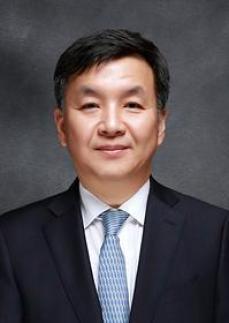 New Bank of Korea Monetary Policy Committee Member Kim Jin-il Pledges to Leverage U.S. Experience Kim Jin-il, the newly appointed member of the Bank of Korea's Monetary Policy Committee, stated on May 15 that he will do his utmost to contribute to achieving the central bank's monetary policy goals by leveraging his accumulated experience. In his inaugural speech, Kim expressed a strong sense of duty in taking on this significant role during a critical time. He officially took office in a ceremony that afternoon, succeeding Shin Sung-hwan, whose term has ended. The term for a member of the Monetary Policy Committee is four years. Kim assessed the current policy environment as complex, noting that inflation concerns have intensified due to rising oil prices stemming from conflicts in the Middle East. He acknowledged that while the economic situation is improving, particularly in the IT sector, uncertainties regarding global investments remain high, and issues of polarization continue domestically. He also highlighted ongoing challenges in financial stability, including household debt and housing price issues, as well as increased vigilance regarding risks associated with capital inflows and outflows due to greater global interconnectedness. "Under these complicated domestic and international conditions, I realize how challenging it is to achieve the central bank's fundamental policy objectives," he emphasized. Kim pledged to apply his research experience in macroeconomics and his background working at the U.S. Federal Reserve to help meet the monetary policy goals. He was recommended by the Korea Federation of Banks on May 11. Kim holds a bachelor's and master's degree in economics from Seoul National University and earned his Ph.D. in economics from Yale University. He served as an economist at the Federal Reserve Board from 1996 and later as a senior economist before becoming a professor of economics at Korea University in 2010. Additionally, he has held various roles, including member of the Financial Development Committee of the Financial Services Commission, non-executive director of the Korea Deposit Insurance Corporation, and chair of the Macroeconomic Division of the Presidential Economic Advisory Council.* This article has been translated by AI. 2026-05-15 22:25:43
 -
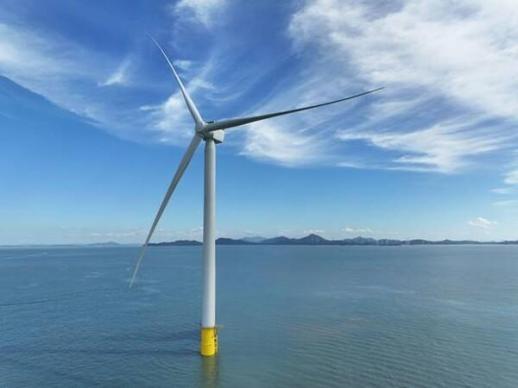 Government to Establish Joint Connection System to Expand Offshore Wind Power The South Korean government is set to address the grid connection issues that have hindered the expansion of offshore wind power by establishing a joint connection system. On May 15, the Ministry of Climate, Energy, and Environment held a signing ceremony and meeting for the promotion of joint offshore wind connections at the Korea Electric Power Corporation's Gyeongin Construction Headquarters. This initiative follows the announcement last December of plans to expand and promote offshore wind infrastructure. At that time, the government outlined a goal to increase the current offshore wind capacity of 0.35 gigawatts (GW) to 10.5 GW by 2030, raising it by 4 GW annually. The government decided to focus on enhancing key infrastructure for offshore wind construction, including ports, installation vessels, and financing. It also aimed to streamline the military operational consultations, which are crucial for project approvals, and to announce plans for long-term supply bidding more promptly. Additionally, a new offshore wind power promotion team at the director level was established, with plans to conduct site bidding starting in 2029, reducing the average project duration from about 10 years to 6.5 years. Previously, offshore wind projects were pursued through individual connections, with each developer building separate lines to land substations. However, as offshore wind farms have grown larger, this has led to increased costs from redundant transmission lines and grid shortages. In response, the government plans to proactively establish a joint connection facility, allowing multiple offshore wind developers to connect at public hubs on islands or coastal areas for rapid integration and expansion. This approach is expected to reduce connection costs, thereby lowering the cost of offshore wind power generation and decreasing Korea Electric Power Corporation's (KEPCO) electricity purchasing expenses. Furthermore, in areas where KEPCO's shared network and offshore wind connection lines are adjacent, integrated facilities are anticipated to lower KEPCO's investment costs in the grid. During the event, a memorandum of understanding (MOU) was signed between KEPCO and offshore wind developers in the Haenam region, which is one of nine candidate sites for joint connections. As a result, the total length of connection lines is projected to decrease from 703 km to 287 km, a reduction of 59%. The total investment is expected to drop by 3.6 trillion won compared to individual connections, with an anticipated average reduction of 20 won per kilowatt-hour in offshore wind generation costs. Following the signing ceremony, the Ministry of Climate and KEPCO introduced detailed plans for the joint connection initiative during a subsequent meeting. The government aims to expand joint connections in areas densely populated with offshore wind projects through consultations among developers by the third quarter of this year. To facilitate this, they will gather opinions on cost-sharing plans that harmonize institutional support with principles of public benefit and beneficiary burden. Minister of Climate, Energy, and Environment Kim Seong-hwan stated, "The expansion of renewable energy is a core issue of energy security that is vital for the nation's survival. The promotion of offshore wind power must be approached from the perspective of national infrastructure management. The government will be a strong ally in breaking down the uncertainties of grid connections and the barriers to permits faced by offshore wind developers."* This article has been translated by AI. 2026-05-15 22:20:37
 -
 KOBA 2026: The Era of High-Quality Video Production The KOBA 2026 exhibition, South Korea's largest broadcasting and video equipment showcase, is no longer just a platform for broadcasters and film production companies. With the rapid growth of short-form content on platforms like YouTube, TikTok, and Instagram Reels, everyday consumers and individual creators have emerged as key players in the professional video production market.Held from May 12 to 15 at COEX in Samseong-dong, Seoul, KOBA 2026 featured numerous booths from global camera manufacturers, including Canon, Sony, and Nikon. This year's exhibition prominently showcased the evolution of video cameras. While previous events focused on photography capabilities, this year's event highlighted video-centric cameras and AI-based video solutions.The audience has also changed. The proportion of general consumers and individual creators producing vlogs and short-form content has significantly increased, alongside traditional broadcasting professionals and cinematographers. Long lines formed at booths where attendees could try out filming equipment, and areas demonstrating vertical video shooting and live streaming attracted many young visitors.Notably, Canon Korea launched a new video-focused mirrorless camera during the exhibition. On May 14, Canon held a press conference at Studio 159 in COEX, unveiling the video-specialized full-frame mirrorless camera, the EOS R6 V, along with the power zoom lens RF20-50mm F4 L IS USM PZ.This new product reflects the rapid shift in the camera market from photography to video. As platforms like YouTube and TikTok grow, the demand for high-quality video production among everyday consumers has surged, prompting camera manufacturers to accelerate the democratization of professional video equipment.Nikon and Sony also emphasized their professional video equipment and cinema cameras in line with the expanding video market. Nikon Imaging Korea operated a joint booth themed "Nikon in KOBA 2026 with RED," featuring the American digital cinema camera company that Nikon acquired. Attendees could experience the latest cinema cameras and mirrorless products firsthand. The "Z CINEMA," showcased for the first time since RED became a subsidiary, particularly attracted independent filmmakers.A Nikon Imaging Korea representative noted, "Visitor numbers increased by 1.5 times compared to last year, especially among younger audiences, indicating a clear rise in demand for video cameras." They added, "With prices around 2 million won, there is growing interest in video cameras among college students and young people." Sony Korea emphasized AI-based video production and a network-centric live production ecosystem. They showcased features like AI auto framing and automatic tracking technology, which adapt camera angles based on the speaker's movements, proving useful in sports, education, and corporate content production.The exhibition confirmed that high-quality video production is no longer confined to a select group of professionals. The camera market is rapidly shifting towards video, as the performance of smartphone cameras has leveled up, leading to a decline in demand for simple photography while the demand for high-quality video production continues to rise due to the popularity of short-form content and reels. The advancement of AI technology is also expected to accelerate the expansion of the video equipment market. With the rapid commercialization of AI-based autofocus, subject tracking, automatic framing, and virtual production technologies, individual creators can now produce professional-level content more easily.An industry insider stated, "The video equipment market, once centered on broadcasters and film production companies, is now rapidly expanding to include everyday consumers and individual creators. The democratization of high-performance video equipment will accelerate further with the growth of AI technology and video platforms."* This article has been translated by AI. 2026-05-15 22:18:00