

Journalist

Gourangalal Das
-
 Jensen Huang and Chey Tae-won Meet Again for Second 'Kkanbu' Gathering Jensen Huang, CEO of NVIDIA, and Chey Tae-won, chairman of SK Group, met again just two days after their initial gathering.The two leaders held an impromptu meeting on June 7 at Kkanbu Chicken in Gangnam, Seoul, following their previous encounter on June 5 near Hongdae, where they enjoyed a meal together.Huang arrived at the venue around 6:45 p.m., where he greeted fans and signed autographs for waiting citizens, showcasing his approachable demeanor.Fifteen minutes later, Chey appeared in casual attire, ready for the meeting.In addition to Chey, several key executives from SK Group were present, including Kwak No-jung, president of SK Hynix; Kim Joo-sun, head of AI infrastructure at SK Hynix; Jeong Jae-hun, president of SK Telecom; and Jeong Seok-geun, head of AI CIC at SK Telecom.The two CEOs engaged in deep discussions in a relaxed atmosphere, enjoying chicken and a mix of soju and beer.* This article has been translated by AI. 2026-06-07 19:12:00
 -
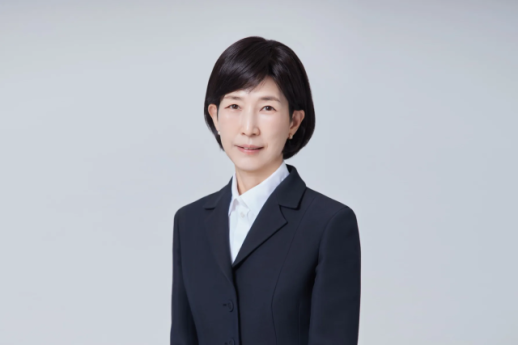
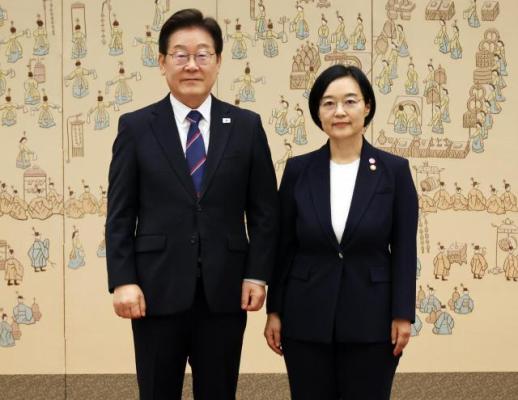 Ruling Party Welcomes Han Seong-sook's Nomination as Prime Minister The Democratic Party of Korea praised the nomination of Han Seong-sook as Prime Minister on June 7, stating it will serve as a significant milestone in advancing the "Artificial Intelligence (AI) national strategy" and expanding women's leadership. During a briefing at the National Assembly, floor spokesperson Lee Joo-hee expressed strong support for the nomination, saying, "As we mark the first anniversary of the Lee Jae-myung administration, we welcome the nomination of a new Prime Minister who will lead successful governance in the second year of our term." Lee described Han as a groundbreaking figure who started as an ordinary office worker and rose to lead a prominent digital company. She highlighted Han's achievements over the past year as Minister of SMEs and Startups, where she drove record exports for small businesses and revitalized the startup ecosystem, demonstrating her exceptional policy capabilities. Lee emphasized, "I deeply resonate with the Lee Jae-myung administration's strong commitment to completing a cabinet that reflects the lives of the people." In addition, Lee criticized the opposition People Power Party for opposing the new Prime Minister's appointment while calling for solutions to issues with voting materials. She stated, "The Election Commission's mismanagement requires both parties to collaborate on thorough investigations, accountability, and legal reforms for organizational renewal." Lee also announced that the Democratic Party is prepared to take immediate action, including considering constitutional amendments, for a comprehensive overhaul of the Election Commission. She urged the People Power Party to stop obstructing governance and actively participate in resolving the current crisis and implementing reforms. Furthermore, she called on the People Power Party to cooperate positively in the confirmation hearings and approval process to ensure a successful start for the Lee Jae-myung administration's second year. The Democratic Party intends to actively pursue the government's policy agenda alongside the new Prime Minister nominee, supporting a robust advance toward a new leap for South Korea. Meanwhile, Prime Minister Kim Min-seok announced on social media that he plans to run for party leader in the upcoming convention scheduled for mid-August to early September. Potential candidates include Kim, Representative Jeong Cheong-rae, and former Representative Song Young-gil. 2026-06-07 19:09:00
 -
 First Indictments Expected from Special Prosecutor's Office After 100 Days The second special prosecutor team, led by Kwon Chang-young, is nearing its first indictment after more than 100 days since its establishment. Following the completion of the first face-to-face investigation of former President Yoon Suk Yeol, the investigation is accelerating into major cases, including allegations of preferential treatment in the relocation of the presidential office, the justification of martial law messaging, and the alleged cover-up of investigations involving Kim Kun-hee. According to legal sources on the 7th, the special prosecutor's office is expected to decide this week whether to indict Kim Dae-ki, the former chief of staff to the president, and Yoon Jae-soon, the former secretary for general affairs, who are currently detained on charges of abuse of power. Their detention period is set to expire on the 10th. The allegations regarding the presidential office relocation center on claims that 2.8 billion won ($2.1 million) from the Ministry of the Interior and Safety's budget was diverted to pay an unqualified contractor, 21 Gram, for additional construction costs during the renovation of the presidential residence in Hannam-dong in 2022. The special prosecutor's office believes that both Kim and Yoon were involved in the budget diversion process, leading to their detention. The special prosecutor is also reviewing whether to take legal action against former Minister of the Interior and Safety Lee Sang-min and former presidential office management secretary Kim O-jin, who face similar charges. Further investigations into the Ministry of Economy and Finance, the Public Procurement Service, and the Board of Audit and Inspection regarding the relocation allegations are also expected to continue. Additionally, the special prosecutor's office summoned former President Yoon for the first time on June 6 as a suspect in the abuse of power investigation. This marked the first time he was questioned since the special prosecutor's office was established on February 25, 101 days prior. The investigation focuses on allegations that Yoon directed the National Security Office, the Ministry of Foreign Affairs, and the National Intelligence Service to communicate messages justifying the martial law to allied countries immediately after the declaration of martial law in December last year. During the investigation, Yoon reportedly denied the allegations, stating that he did not issue any related directives. His legal team claims that he only mentioned the need to explain the situation to allied nations, without instructing the drafting or delivery of specific messages. The special prosecutor's office has already investigated former National Security Office Deputy Director Kim Tae-hyo, former National Intelligence Service Director Cho Tae-yong, and former Deputy Director Hong Jang-won, and plans to summon Hong again on the 11th to confirm the facts. Former President Yoon is scheduled to appear before the special prosecutor's office again on the 13th regarding charges of being a leader of rebellion under military law. The special prosecutor's office is examining whether the actions of Yoon and former Minister of National Defense Kim Yong-hyun, who deployed armed martial law troops to the National Assembly and the National Election Commission during the martial law, constitute rebellion under military law. However, there are concerns about double indictment issues related to the ongoing insurrection leader case, prompting legal reviews. Yoon's legal team argues that the rebellion charges are included in the existing insurrection charges, and there are indications within the special prosecutor's office that a decision of no prosecution may be possible. Investigations into various allegations surrounding Kim Kun-hee are also ongoing. The special prosecutor's office is examining the decision not to prosecute in the Deutsche Motors stock manipulation case and the handling of the Dior bag gift incident. They are investigating former Seoul Central District Prosecutor Lee Chang-soo, who was responsible for the investigations, and Choi Jae-hoon, head of the Daejeon District Prosecutor's Office's Serious Economic Crimes Investigation Unit. Additionally, they are verifying facts related to the allegations of preferential treatment in the presidential office relocation and the alleged cover-up of investigations involving Kim. Former Prosecutor General Shim Woo-jung, who was part of the prosecution leadership at the time, is also under scrutiny. Legal experts believe that the first indictment related to the presidential office relocation will mark the beginning of a more definitive phase in the special prosecutor's investigation. However, significant legal issues and additional investigation schedules remain for each major case, suggesting that thorough reviews will continue before final decisions are made. The special prosecutor's office has already extended its initial investigation period (90 days) once and is currently set to conclude by the 24th of this month. Under the special prosecutor law, the investigation period can be extended twice by 30 days each, allowing for one more extension if necessary. The special prosecutor's office is currently facing a manpower shortage, having secured only 12 out of 15 designated prosecutors. Recently, they have explained to the National Assembly the need to amend the special prosecutor law to allow qualified special investigators to participate in maintaining prosecutions due to the increasing burden of investigations and prosecutions ahead of major indictments.* This article has been translated by AI. 2026-06-07 19:06:00
 -
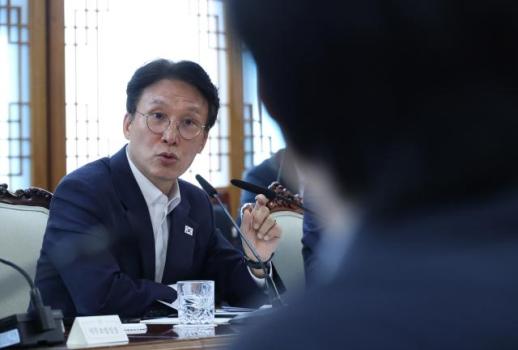 Prime Minister Kim Min-seok Calls for Resignations Over Election Ballot Shortage Prime Minister Kim Min-seok stated on June 7 that the recent shortage of ballots for the June 3 local elections warrants the resignation of senior officials at the Election Commission. During a meeting at the Government Seoul Building with current and former student council representatives, Kim expressed his disbelief over the situation, saying, "This incident is something I have never heard of before, and it is unacceptable. The public's outrage and calls for accountability are entirely justified." He criticized the ballot shortage as a violation of voting rights and a challenge to the foundations of democracy. Kim also mentioned that he had instructed the Minister of the Interior and Safety to initiate an investigation, stating, "If necessary, we should consider a national investigation or a special prosecutor's inquiry through discussions in the National Assembly. This is the current stance of the government, including President Lee Jae-myung." He noted that President Lee has shown deep concern over the issue and emphasized the need for thorough fact-finding and accountability. "We will use all available legal means to clarify the facts surrounding this issue, and if legal amendments are necessary, we will pursue them, even if it takes time," he added. Kim pointed out that the Election Commission holds exclusive authority over voting and election management, lacking external oversight or monitoring systems, which he described as a significant problem. He called for institutional improvements and expressed his intention to foster a nationwide discussion on the matter. Regarding calls for a re-election, he remarked, "While we should verify the facts, whether a re-election is necessary is a matter that requires further discussion. Some areas have already determined winners regardless of the ballot issue, raising questions about the appropriateness of a re-election and whether the winning candidates would accept it." Meanwhile, President Lee Jae-myung announced on Facebook that he has directed the establishment of a joint investigation team involving the prosecution and police to clarify responsibility for the ballot shortage and thoroughly investigate the incident. He added, "The government will also take all possible measures at the administrative level, considering the seriousness of the situation." 2026-06-07 19:06:00
 -
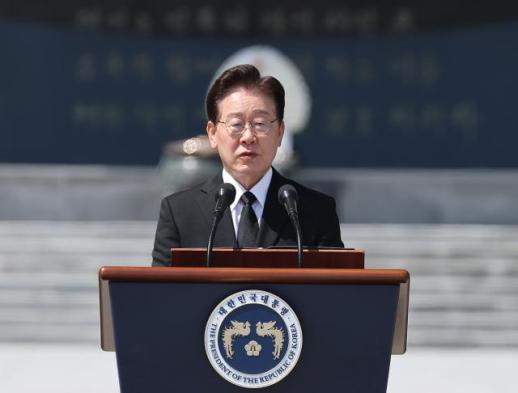 President Lee Orders Joint Investigation into Election Paper Shortage President Lee Jae-myung announced on June 7 that he has instructed the establishment of a joint investigation team involving both the prosecution and police to clarify responsibility regarding the ballot shortage during the June 3 local elections. In a statement on Facebook, President Lee emphasized that the government will take all necessary measures at the administrative level, considering the seriousness of the situation.He criticized the National Election Commission (NEC) for causing significant disruptions to citizens' exercise of their voting rights during the June 3 local elections, stating, "The incident itself is difficult to comprehend, and the subsequent response and explanations to the public have also been insufficient."President Lee asserted, "The right to vote is a constitutional right that must not be restricted or violated for any reason, and this incident is a serious matter that undermines the foundation of popular sovereignty. As a citizen and as the president responsible for the government, I express my deep regret."He also called for a national investigation by the National Assembly, urging lawmakers to promptly conduct an inquiry to clarify the facts of the case and to establish measures to prevent recurrence. He requested that discussions on fundamental institutional improvements for the NEC be included in this process.President Lee noted that the NEC chairperson is classified as one of the five key state officials because the commission, like the executive, legislative, and judicial branches, is an independent agency with corresponding authority, obligations, and responsibilities. He emphasized, "An independent agency that has lost public trust has no reason to exist."He concluded by stating, "The NEC must take this incident seriously and demonstrate a strong commitment to reform and improvement in its organizational operations and overall election management to regain public trust."* This article has been translated by AI. 2026-06-07 18:45:00
 -
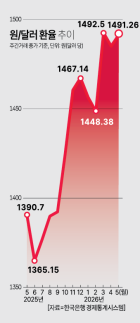 May Currency Trends: Average Exchange Rate Hits 1490 Won Amid Middle East Conflict The won-dollar exchange rate has surged to its highest level since the financial crisis due to geopolitical risks stemming from the Middle East. As U.S.-Iran peace negotiations stall, international oil prices have skyrocketed, exacerbating the downward pressure on the won amid foreign capital outflows. According to the Bank of Korea's economic statistics system, the average exchange rate for the won against the U.S. dollar last month was recorded at 1491.26 won. The exchange rate fell to 1439.0 won during trading on June 6, buoyed by optimism surrounding U.S.-Iran peace talks. However, as negotiations prolonged and military tensions in the region escalated, the rate reversed course. On May 22, it peaked at 1519.5 won, reflecting a significant fluctuation of around 80 won within the month. The primary driver of the rising exchange rate is identified as geopolitical instability in the Middle East. Concerns over prolonged conflict and rising international oil prices are placing additional burdens on South Korea's economy, which is heavily reliant on energy imports, thereby increasing downward pressure on the won. This situation has been compounded by foreign investors selling off domestic stocks and increased demand for dollars. The upward trend in the exchange rate has continued into June. On June 6, during overnight trading, the rate reached 1561.5 won, marking the highest level since March 6, 2009, during the global financial crisis (with an intraday high of 1597.0 won). Consequently, the average exchange rate for the second quarter has also risen to its highest level since the financial crisis. From the beginning of the second quarter until June 5, the average exchange rate was recorded at 1490.98 won, the highest level in nearly 28 years since the first quarter of 1998 (1596.88 won). On an annual basis, the exchange rate is trending towards record highs. So far this year, the average exchange rate stands at 1477.06 won, significantly exceeding last year's average of 1420.97 won. In fact, at airport currency exchange counters, the cash purchase rate for dollars has already surpassed 1600 won. As of June 6, Hana Bank's airport branch reported a cash selling rate of 1624.0 won for dollars. Market analysts believe that the progress of U.S.-Iran peace negotiations will significantly influence the exchange rate this week. Additionally, the U.S. Consumer Price Index (CPI) for May and the European Central Bank's (ECB) monetary policy meeting outcomes are also viewed as key variables. The U.S. CPI, set to be released on June 10, is expected to show an annual increase of around 4%. With international oil prices exceeding $90 per barrel, persistent inflationary pressures could diminish expectations for interest rate cuts by the Federal Reserve, leading to a stronger dollar and increased exchange rate pressures. Experts agree that for exchange rate stability, a resolution to the Middle East situation and a decline in international oil prices are prerequisites. While factors such as foreign capital flows and increased overseas investments are important, the direction of the exchange rate is likely to be heavily influenced by oil prices and geopolitical risks. Park Sang-hyun, a researcher at iM Securities, stated, "If peace negotiations are concluded soon, international oil prices could drop to the mid-$70s to low $80s per barrel. A decline in oil prices would alleviate inflation concerns and increase downward pressure on interest rates, potentially leading to a weaker dollar." He added, "If the Iranian risk is resolved, the exchange rate could quickly drop below 1450 won. While foreign stock sell-offs and supply-demand uncertainties remain, fundamental factors such as economic improvement could offset these concerns significantly."* This article has been translated by AI. 2026-06-07 18:24:00
 -
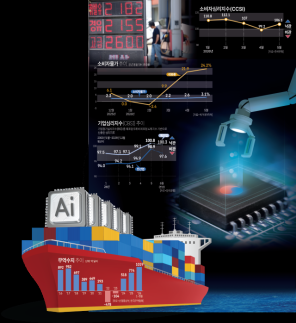 May Economic Data: Record Exports Boost Business Sentiment Amid Recovery Hopes Last month, despite geopolitical risks from the Middle East and pressures from high oil prices and exchange rates, exports, particularly in semiconductors, showed strong performance, leading to improved business sentiment.According to the Ministry of Trade, Industry and Energy, exports in May reached $87.75 billion (preliminary customs data), marking a 53.2% increase compared to the same month last year. This is the third consecutive month that exports have exceeded $80 billion since March.Semiconductors were the primary driver of this export growth. Last month, semiconductor exports totaled $37.16 billion, a staggering 169.4% increase year-on-year, achieving the highest monthly performance on record. Semiconductors accounted for 42.3% of total exports, surpassing 40% for the first time.The expansion of AI data center investments by major U.S. tech companies is cited as a key factor. Companies like Google, Microsoft, and Meta have aggressively built AI infrastructure, leading to a surge in demand for high-value semiconductors, particularly high-bandwidth memory (HBM). Additionally, the demand for SSDs for AI servers contributed to a 290.7% increase in computer exports, which reached $4.18 billion.This export boom has also improved the trade balance. Cumulative exports from January to May totaled $394.23 billion, a 43.4% increase compared to the same period last year. During this time, the trade surplus reached a record $101.98 billion (cumulative), with exports exceeding $80 billion for three consecutive months.There are discussions about the possibility of achieving $1 trillion in annual exports. The average monthly export amount up to May is approximately $79 billion. Although simple calculations suggest a total of $948 billion, sustained strong performance could make the $1 trillion target achievable.Earlier, the Korea Institute for Industrial Economics and Trade (KIET) raised its annual export forecast to $924.4 billion, a 32% increase from its initial prediction of $697.1 billion.The export surge has positively impacted business sentiment. According to the Bank of Korea's 'May 2026 Business Survey and Economic Sentiment Index (ESI)', the overall business sentiment index (CBSI) for all industries reached 98.9, the highest level since October 2022 (99.0). The month-on-month increase of 4.0 points is the largest since May 2023 (4.4 points).The economic sentiment index (ESI) also rose to 97.5, up 5.8 points from the previous month. This improvement reflects enhanced perceptions among economic agents regarding the export growth and expectations for better semiconductor market conditions.However, some experts caution against overly optimistic expectations for economic recovery. Uncertainties surrounding the situation in the Middle East persist, and rising prices for crude oil and liquefied natural gas (LNG) could increase production costs for businesses and exert upward pressure on inflation.Increased exchange rate volatility is another concern. On June 5, the won-dollar exchange rate briefly surpassed 1,540 won, reaching its highest level since the global financial crisis. While a weaker won can enhance price competitiveness for exporters, it also raises costs for energy and raw material imports.Experts note that while the export boom is improving business sentiment, it is premature to interpret this as an immediate signal of overall economic recovery. Lee Jeong-hee, a professor of economics at Chung-Ang University, stated, "It is true that the export boom is improving business sentiment, but it is still too early to interpret this as a signal for domestic economic recovery. The warmth of exports has not sufficiently spread to the domestic market."She added, "With high oil prices, high exchange rates, and rising interest rate pressures, there is a possibility of a 'triple whammy' re-emerging. In the second half of the year, it will be crucial to implement policy responses that alleviate these burdens and support domestic recovery."* This article has been translated by AI. 2026-06-07 18:21:00
 -
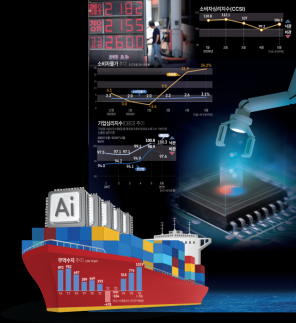 May Economic Data: Consumer Sentiment Rises Amid Soaring Prices In May, the most noticeable expense for 40-something office worker Kim was fuel costs. Traveling every weekend between his children's academy and his parents' home, Kim felt that the burden of filling up his tank had significantly increased. The cost of summer vacation flights also posed a challenge. While planning a family trip, he found that airfare and accommodation prices had risen more than expected, leading him to consider scaling back or postponing his plans. The financial strain felt by middle-class households like Kim's was reflected in last month's inflation data. According to the National Data Agency, the consumer price index rose 3.1% in May compared to the same month last year, marking the highest level in 26 months since March 2024. Fuel prices surged by 24.2%, and international airfare increased by 33.5%. The living cost index also rose by 3.3%, outpacing the overall inflation rate. The root cause of rising prices can be traced back to the prolonged conflict in the Middle East, which has driven up oil prices. The increase in fuel costs has not only affected gasoline and diesel but has also translated into higher transportation and travel expenses. For Kim, this means increased costs for commuting and family travel, alongside rising expenses for vacations and leisure activities. The inflation is spreading beyond grocery bills to encompass overall travel and leisure spending. Despite soaring prices, consumer sentiment rebounded in May, contrary to initial concerns. The Bank of Korea's consumer trend survey indicated that the Consumer Sentiment Index (CSI) rose by 6.9 points to 106.1 compared to the previous month. The Current Living Conditions Index (CSI) increased by 2 points to 93, while the Future Living Conditions Index rose by 5 points to 97. The Current Economic Conditions Index and Future Economic Outlook Index also saw increases of 15 points and 14 points, reaching 83 and 93, respectively. However, this improvement in sentiment does not necessarily translate to increased spending. Kim's choices have become more cautious. Although he feels optimistic about the economic outlook, rising fuel and airfare costs make it difficult to simultaneously increase spending on dining out, travel, and durable goods. In fact, while the Consumer Spending Outlook Index rose by 2 points to 110, the increase in spending may be more a result of unavoidable costs due to price hikes rather than active consumer spending. Concerns about inflation remain prevalent. Over the past year, consumer perception of the inflation rate has risen to 3.0%, up 0.1 percentage points from the previous month. The expected inflation rate for the next year is 2.8%, down 0.1 percentage points, but still hovering in the upper 2% range. Consumers are balancing expectations of economic improvement with worries that the burden of living expenses will not ease easily. The challenge is that the upward trend in prices is likely to continue for the foreseeable future. The Bank of Korea recently projected that the consumer price inflation rate will remain around 3% for some time. Lee Ji-ho, head of the Bank of Korea's research department, stated, "The inflation rate in June is expected to be similar to that of May, as the rise in fuel prices continues at a high level. The increase in consumer prices in May was driven by a significant rise in fuel prices and higher service costs related to travel, such as domestic and international airfare, which expanded the overall increase compared to April." Ultimately, May's household economy can be characterized as a month of conflicting sentiments of 'psychological recovery' and 'perceived burden.' While consumer sentiment indicators showed a rebound, the shock from rising oil prices from the Middle East has constrained actual spending choices for middle-class households through increased fuel, airfare, and accommodation costs. Even if expectations for economic recovery improve, if inflation remains around 3%, it is likely that the pace of consumer recovery will struggle to gain momentum.* This article has been translated by AI. 2026-06-07 18:15:00
 -
 Korean Economic Association to Host 'God Life Meal 5' Featuring Samyang Foods CEO Kim Jung-soo The Korean Economic Association announced on June 7 that it will hold the fifth installment of its public communication project, "God Life Meal 5," on June 24. This event will feature Kim Jung-soo, CEO of Samyang Foods, as a mentor, engaging in discussions with 15 young participants from the MZ generation. Kim previously shared insights with aspiring future leaders at the Korean Economic Association's Future Leaders Camp in January 2025, and he will participate in this event as well. As a global business leader who successfully established the Buldak brand worldwide, Kim will share his experiences and vision under the theme "Chase·Challenge·Change: Creating Change Through Challenges, God Life (갓생)." He stated, "I decided to participate because I resonate with the event's purpose of fostering communication and spreading positive influence among the youth." God Life Meal is an initiative by the Korean Economic Association, akin to a "lunch with the Korean version of Warren Buffett," where young people share meals with mentor entrepreneurs, discussing themes of passion and the concept of 'God Life.' Previous participants have included Hyundai Motor Group Chairman Euisun Chung, Socar CEO Jae-wook Park, Noh Hong-chul of Noh Hong-chul Genius, Mirae Asset Group Chairman Hyun-joo Park, Naver CEO Soo-yeon Choi, Youngone Vice Chairman Rae-eun Sung, and Krafton Chairman Byung-kyu Jang, allowing around 100 young individuals to connect with mentors. Young people aged 20 to 30 interested in participating can submit their applications on the official page for God Life Meal 5 by June 18.* This article has been translated by AI. 2026-06-07 18:12:00
 -
 Nvidia CEO throws first pitch at baseball game before another 'Kkanbu' gathering SEOUL, June 7 (AJP) - Nvidia's CEO Jensen Huang threw a ceremonial first pitch at a baseball game in Seoul on Sunday as part of his high-profile visit to South Korea, which also included meetings with top business leaders and tech experts. Huang, who has been busy with a packed schedule since arriving in Seoul last Friday, appeared at Jamsil Stadium in southern Seoul ahead of the game between the Doosan Bears and Kiwoom Heroes and met fans. He wore a Doosan Bears jersey with the number 93, symbolizing Nvidia's founding year. The ceremonial pitch was reportedly arranged at Huang's request to watch a baseball game, as he is keen on the sport. The stadium featured a large welcome banner for Huang, and a dedicated seating area was prepared for him and around 200 Nvidia employees. It also reflects Huang's growing engagement with South Korean companies as Nvidia expands cooperation in artificial intelligence, robotics, and mobility technologies. Earlier in the day, Huang also met Hyundai Motor Group chairman Chung Eui-sun at a restaurant in central Seoul, where the two reportedly discussed artificial intelligence (AI) and robotics-related collaboration. The lunch meeting comes as Nvidia deepens partnerships with South Korean firms on "physical AI," including autonomous driving systems and humanoid robotics, with Hyundai among its key partners. After watching the game, Huang is scheduled to move to a Kkanbu Chicken restaurant in Gangnam, southern Seoul, to meet SK Group Chairman Chey Tae-won and other senior executives for discussions on AI and semiconductor-related cooperation, according to industrial sources. The restaurant franchise, whose name means "close friend" in South Korean slang, is popular for its signature combination of fried chicken and beer and is also where Huang met top South Korean business leaders during his visit in October last year. 2026-06-07 18:09:33