

Journalist

Gourangalal Das
-
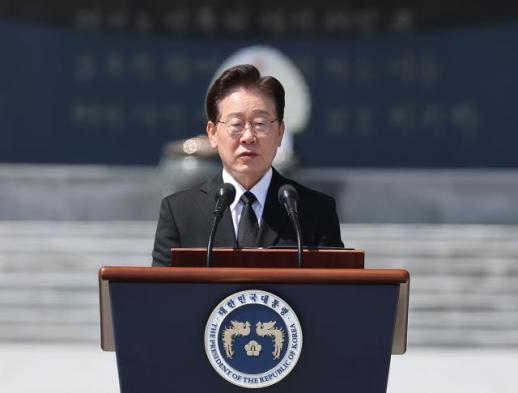 President Lee Reflects on One Year in Office Ahead of Anniversary Press Conference The Blue House has released details of President Lee Jae-myung's extensive activities as he approaches the one-year anniversary of his administration. On June 7, the Blue House issued a press release highlighting the president's achievements over the past year. Starting his term without a transition team, President Lee has participated in 250 domestic events, 178 local events, and international visits to 14 countries over the past year. Domestic events have focused on citizen participation and unity, featuring nationwide town hall meetings and public appointments, in line with the principles of a government centered on the people. In addition to high-level meetings with world leaders, President Lee successfully hosted the 2025 APEC (Asia-Pacific Economic Cooperation) summit in Gyeongju, showcasing a pragmatic approach to diplomacy centered on national interests. The president has traveled approximately 22,929 kilometers domestically—over half the Earth's circumference—while engaging in international diplomacy that covered a total of 150,000 kilometers, equivalent to about 3.8 times around the globe. To promote national unity and communication, President Lee has actively engaged with citizens across the country. The town hall meetings, which have become a hallmark of his administration, attracted over 3,500 residents across 14 cities and provinces, with a total of 12 sessions held. These meetings have established a model for discussing and shaping policies through direct feedback, where policy proposals are distributed, opinions collected, and results communicated back to participants. Additionally, President Lee has been proactive in field communication, holding on-site discussions, visiting industrial sites, meeting with cultural and artistic figures, and making surprise visits to local markets linked to community events. Notably, he visited traditional markets 24 times, averaging once every two weeks, demonstrating his keen interest in revitalizing local economies and addressing citizens' livelihoods. His extensive diplomatic efforts have also been notable. Over the past year, President Lee visited 14 countries, conducted 39 phone calls with other heads of state, and met with 26 foreign dignitaries and business leaders. The Blue House described this as the most active diplomatic engagement among past presidents in their first year. Through participation in major multilateral meetings such as the G7, UN, ASEAN, and G20, President Lee has signaled South Korea's return to the international stage. Despite administrative gaps caused by a state of emergency, he successfully hosted APEC 2025 as the chair country. He held two summits each with the U.S. and Chinese leaders and engaged in shuttle diplomacy with Japan through four reciprocal visits, strengthening key diplomatic ties. In an unusual move for a first year, he also visited and hosted delegations from key global South cooperation countries, including South Africa, India, Egypt, and Brazil. Economic events focused on national interests and meetings with expatriates were also conducted effectively. A total of eight economic events, including the Korea-U.S. Business Roundtable and Korea-China Business Forum, were held across seven countries, successfully establishing cooperative networks. Meetings with expatriates were conducted 14 times across 12 countries (including two each in the U.S. and Japan), with over 3,380 attendees, allowing for a vibrant exchange of voices from the expatriate community. Building on these achievements, President Lee will hold a press conference at 10 a.m. on June 8 at the Blue House guesthouse to mark the one-year anniversary of his inauguration. This will be his fourth official press conference, following those held at 30 days, 100 days, and New Year. The theme of the press conference is "Irreplaceable South Korea," encapsulating a vision and determination to elevate the country from one that the world watches to one that the world needs. During the press conference, President Lee will reflect on his experiences over the past year and outline his vision and four key goals for the second year of his administration. The key visuals will consist of "Light, Path, and South Korea." "Light" symbolizes the democracy that the people have preserved despite numerous crises. "Path" conveys the commitment to create new paths alongside the people in the face of national challenges. "South Korea" represents the aspiration for the country's challenges to set new standards and serve as a model for the world. Approximately 160 journalists from domestic and international media are expected to attend the press conference. As in previous conferences, journalists will be allowed to ask questions freely, without a predetermined script, based on the moderator's and president's selections. Additionally, two university students with backgrounds in journalism will pose questions regarding the concerns and challenges faced by the younger generation. The students are Jeong Bo-hyun (Ewha Womans University, Economics, Year 4) and Sun Woo-young (Inha University, Mechanical Engineering, Year 4). They have each received awards for their journalistic work, including the "SisaIN University Journalist Award" this year and the "Korea Press Foundation University Journalism Award" last year. The press conference will be broadcast live on KTV and the YouTube channel "Lee Jae-myung TV." Chief Blue House Spokesperson Kang Yoo-jung stated, "Through domestic events and overseas visits, President Lee has worked to normalize South Korea, which was stalled due to the state of emergency, and has signaled the country's confident return to the international community. Furthermore, he has actively reflected the voices of the people in policies and led efforts for national unity, more than any previous president." 2026-06-07 11:03:00
 -
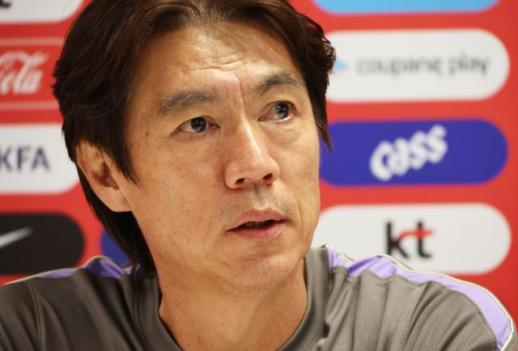 Hong Myung-bo Focuses on Tactical Refinement Ahead of World Cup Opener Hong Myung-bo, head coach of the South Korean national soccer team, emphasized the importance of refining tactics as the team prepares for their first match in the 2026 FIFA North and Central America World Cup in Guadalajara, Mexico. In a press conference held on June 6 at the Chivas Verde Base Camp, Hong stated, "The next three days of training will be crucial. The players have undergone a good process during the pre-camp and have prepared well. We will work on any remaining shortcomings during this training period." The national team set up a pre-camp in Salt Lake City, Utah, at an elevation of 4,800 feet, starting on May 18. During this period, Hong's squad achieved victories against Trinidad and Tobago (5-0) and El Salvador (1-0). They arrived in Guadalajara the previous day via a charter flight. Hong noted, "We analyzed the strengths and weaknesses that emerged from the two evaluation matches. It is important to refine our approach further during the remaining time. The weather in Guadalajara is different from Salt Lake City, so adaptation is necessary. We have limited time to make significant changes, so we will focus on a few key points to enhance our performance." The South Korean team is set to face the Czech Republic in their Group A opener on June 12 at 11 a.m. KST. The Czech Republic recently showcased their strength by defeating Guatemala 3-1 in their last evaluation match. Hong warned, "The Czech Republic has distinct characteristics and is not an easy team to counter. Their physicality is notable, especially in their recent match against Guatemala. Therefore, we need to prepare thoroughly. We must pay attention to their strengths, such as set pieces and crosses, and overcoming the height difference will be crucial." Concerns have been raised about the lack of a definitive starting eleven for Hong's team, given the significant player rotations during the two evaluation matches leading up to the World Cup opener. Hong concluded, "This is why the next three days of training are extremely important. The players generally understand the game model we want to implement. We will focus on comprehensive training to align with our overall strategy."* This article has been translated by AI. 2026-06-07 10:57:00
 -
 U.S. Considers Using Iranian Assets for Gulf Nations' Recovery The United States is reportedly exploring the possibility of using Iranian assets to aid in the recovery and reconstruction of damage suffered by Gulf allies. According to a source familiar with the matter, U.S. Treasury Secretary Scott Vance has instructed a team to assess the extent of the damage inflicted by Iran on its Gulf allies. The source indicated that the U.S. is considering utilizing Iranian assets not only for the reconstruction costs of potential future damage from Iranian attacks but also for the recovery of damages that have already occurred. However, the Treasury Department did not specify which types of assets are under consideration. Reuters reported that the discussions do not appear to be limited to frozen Iranian assets. This initiative is noteworthy as it arises amid Iran's demands for the release of its frozen assets. Instead of accommodating Iran's request, the U.S. is contemplating using those assets to fund the recovery efforts of Gulf allies. Earlier, Mohsen Rezai, a senior advisor to Iran's Supreme Leader, stated in an interview with CNN, "If President Trump wants to reach an agreement with Iran, $24 billion is a test of trust. This is a test that the U.S. must pass, and then the way will be opened." He emphasized, "This money is not America's money; it is our money." Given the challenges the U.S. faces in fully accommodating Iran's asset release demands, this proposal may also be seen as a new leverage point in negotiations. The U.S. is concerned that releasing frozen funds without achieving significant progress on Iran's nuclear program could weaken its negotiating position. President Trump has criticized the Obama administration for providing cash to Iran as part of the nuclear agreement, making a large-scale release of frozen funds politically sensitive. Reuters analyzed that if the U.S. moves forward with utilizing Iranian assets for the recovery of Gulf nations, it could introduce new sources of conflict in the already unstable ceasefire between the U.S. and Iran. Indeed, military tensions between the two countries continued over the weekend. U.S. forces shot down a drone launched by Iran and subsequently struck coastal radar bases near the Strait of Hormuz. The Iranian Islamic Revolutionary Guard Corps (IRGC) claimed to have launched ballistic missile attacks against U.S. military bases in Kuwait and Bahrain.* This article has been translated by AI. 2026-06-07 10:54:00
 -
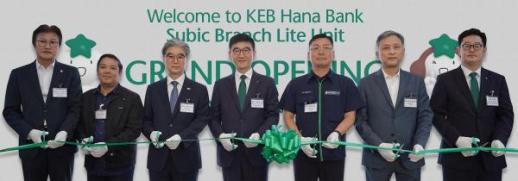 Hana Bank Expands Global Reach with New Office in Subic, Philippines Hana Bank has opened a branch in Subic, Philippines, as part of its efforts to expand its operations in Southeast Asia.On June 7, Hana Bank announced the opening of its Subic branch, aimed at broadening its network in Southeast Asia and meeting the financial service demands of Korean companies and expatriates in the region.Subic is an economic zone located approximately 100 kilometers northwest of Manila, the capital of the Philippines, and is home to HD Hyundai Heavy Industries' Philippine subsidiary. HD Hyundai Heavy Industries has been refurbishing its shipbuilding facilities in Subic and began full-scale ship construction in the second half of last year, aiming to produce up to 10 vessels annually and develop the Subic shipyard as a key production hub in Southeast Asia.Hana Bank plans to proactively address the financial needs of HD Hyundai Heavy Industries through its Subic branch. The bank will also support local Korean businesses and provide financial services to the expatriate community. Building on its experience from the Manila branch, Hana Bank aims to establish a comprehensive network that encompasses the financial needs of the Clark area near Subic.With the opening of the Subic branch, Hana Bank now operates 114 networks across 27 regions, the largest number in South Korea, following the establishment of two branches in India in the second half of last year.Kim Young-jun, Vice President of Hana Bank's Global Group, stated, "The opening of the Subic branch is part of our long-term growth strategy for key markets in Southeast Asia. We will provide more tailored financial services not only to Korean companies and expatriates but also to local customers." 2026-06-07 10:54:00
 -
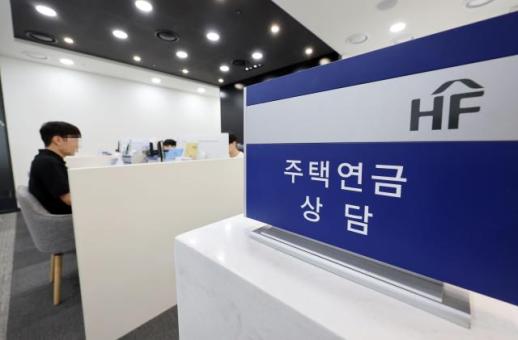 Record Number of New Home Pension Subscribers Amid Increased Benefits As a result of increased benefits and relaxed eligibility requirements, the number of new subscribers to the home pension program surged, reaching a record high in April. According to the Korea Housing Finance Corporation, there were 2,322 new home pension subscribers in April, marking the highest monthly total ever recorded. The home pension program, introduced in July 2007, allows homeowners aged 55 and older to receive a pension for life or for a set period by using their homes valued at 1.2 billion won or less as collateral. The increase in subscribers is attributed to improvements in the program that took effect in March. Following a proposal by the Financial Services Commission in February, new subscribers since March 1 can receive higher pension amounts than before. For an average subscriber (72 years old with a home valued at 400 million won), the monthly pension amount increased from 1.297 million won to 1.338 million won, a rise of approximately 3.13%. Consequently, the number of new subscribers rose from 939 in January and 780 in February to 1,287 in March, and then to 2,322 in April. This marks the first time since March 2023 (2,225 subscribers) that monthly subscriptions exceeded 2,000. Starting in June, further relaxation of eligibility requirements is expected to sustain this growth trend. As of June 1, homeowners with one property can now join the home pension program even if they are not residing in the collateralized home due to unavoidable circumstances such as medical treatment, caring for children, or moving to a senior living facility. If the collateralized home is rented to a third party, applicants can still join the program with approval from the Korea Housing Finance Corporation. Additionally, if a subscriber passes away, their children aged 55 or older can join the program using the same home as collateral without needing to go through a separate debt repayment process. As of the end of last year, the cumulative number of home pension subscribers exceeded 150,000. A representative from the Korea Housing Finance Corporation stated, "The rapid increase in new subscribers is due to the rise in pension amounts and the relaxation of eligibility requirements. We will continue to improve the program to ensure it serves as a stable source of income for retirees." The home pension program allows individuals to maintain ownership of their homes while receiving pension payments, and there is no obligation for subscribers or their heirs to repay any amount exceeding the home's value. If there are remaining funds after the home is sold following the subscriber's death, those funds will be returned to the heirs.* This article has been translated by AI. 2026-06-07 10:48:00
 -
 Samsung and SK Hynix Expected to Continue Record Performance in Q2 Samsung Electronics and SK Hynix are projected to maintain their record performance in the second quarter. After both companies exceeded market expectations with their operating profits in the first quarter, there are predictions that they could rank among the top global profit earners for the year, and this positive trend is expected to continue into the second quarter. According to industry reports on June 7, analysts predict that the combined operating profit for Samsung Electronics and SK Hynix in the second quarter could exceed 150 trillion won. When annualized based on first-quarter results, Samsung is expected to rank among the top two globally, while SK Hynix is projected to be around fifth place, with second-quarter forecasts indicating even higher expectations. Samsung's semiconductor division is expected to drive the company's overall performance in the second quarter. Market analysts believe Samsung's operating profit could rise to the high 80 trillion won range. This increase is attributed to the significant impact of rising prices for general DRAM and NAND, along with expanded sales of HBM, leading to a greater share of profits from the device solutions segment. Samsung is benefiting greatly from its world-leading memory production capacity, particularly as demand for general DRAM recovers. The expansion of AI servers is not only affecting HBM but also boosting demand for general server DRAM and high-capacity NAND, shifting the memory market to a supplier-dominated landscape. SK Hynix is also likely to achieve record results in the second quarter. With its leading position in the HBM market and rising prices for general memory, forecasts suggest that its operating profit margin could exceed that of the first quarter. Some analysts even speculate that the second-quarter operating margin could approach 80%. Both companies attribute their performance improvements to the simultaneous strength of HBM and general memory. While the AI memory boom was primarily centered around HBM until last year, the expansion of inference-based AI services this year has rapidly increased demand for server DRAM and NAND. As the focus shifts from AI training to inference, the types of memory required by data centers are also diversifying. Major server clients are moving to secure supplies of general DRAM and high-capacity NAND ahead of potential shortages in the third quarter, and this pre-order trend is believed to have influenced price negotiations in the second quarter. Exchange rates are also playing a favorable role in performance. Since memory semiconductors are predominantly settled in dollars, a high won-dollar exchange rate increases revenue and profits when converted to won. Additionally, given the semiconductor industry's high fixed costs, revenue increases during price upturns quickly translate into profits. The key question is whether the supplier-dominated trend will continue in the second half of the year. SK Hynix is expanding its long-term production capacity through investments in its Cheongju M15X and Yongin clusters, as well as advanced packaging in the U.S. Samsung is also aiming to regain leadership in the next-generation AI memory market with HBM4 and HBM4E. An industry insider noted, "While the first quarter confirmed the semiconductor supercycle in numerical terms, the second quarter will demonstrate that this trend is not just a temporary rebound. Prices for HBM, general DRAM, and NAND are moving together, suggesting that annual operating profit forecasts for this year may continue to be revised upward."* This article has been translated by AI. 2026-06-07 10:39:00
 -
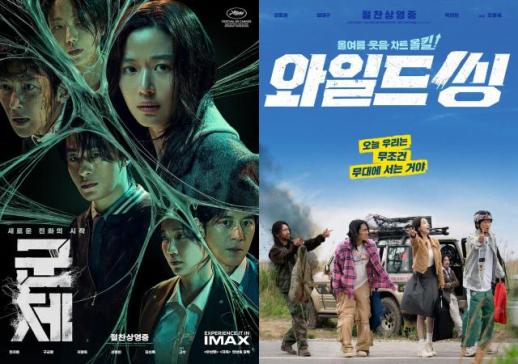 Jeon Ji-hyun's 'Gunchi' Leads Weekend Box Office, 'Wild Thing' Follows The films 'Gunchi' and 'Wild Thing' have showcased the strength of Korean cinema by dominating the weekend box office. 'Gunchi,' marking Jeon Ji-hyun's return to the screen, continues to draw audiences as it approaches 5 million ticket sales. Meanwhile, the comedy 'Wild Thing,' starring Kang Dong-won, Um Tae-goo, and Park Ji-hyun, is also performing well in its early release phase. According to the integrated ticket sales network on June 7, 'Gunchi' attracted 281,926 viewers on June 6, maintaining its position at the top of the box office. The film's cumulative audience now stands at 4,523,309. Released on May 21, 'Gunchi' has consistently ranked among the top films since its debut and is on the verge of surpassing 5 million viewers. 'Gunchi' tells the story of survivors trapped in a building due to an unidentified infection outbreak, facing off against infected individuals who evolve in unpredictable ways. Directed by Yeon Sang-ho, known for expanding the zombie genre with films like 'Train to Busan' and 'Peninsula,' the film features a cast that includes Jeon Ji-hyun, Koo Kyo-hwan, Ji Chang-wook, Shin Hyun-bin, Kim Shin-rok, and Go Soo. Notably, 'Gunchi' marks Jeon Ji-hyun's first return to the big screen in 11 years, generating significant interest. After being invited to the Midnight Screenings section of the 79th Cannes Film Festival, the film quickly gained traction in the domestic market, showcasing the strength of Yeon Sang-ho's K-zombie genre. In second place is 'Wild Thing,' which opened on June 3 and drew 149,040 viewers on June 6, bringing its total audience to 431,987. The film started strong with over 160,000 viewers on its opening day and continues to attract audiences as the weekend approaches. 'Wild Thing' is a comedy about a once-popular mixed-gender dance group called 'Triangle' that, after being embroiled in an unexpected incident, seeks a chance at redemption 20 years later. Kang Dong-won, Um Tae-goo, and Park Ji-hyun portray members of 'Triangle,' with supporting roles from Oh Jung-se and Shin Ha-kyun. Kang Dong-won's comedic transformation, along with the performances of Um Tae-goo and Park Ji-hyun, resonates with audiences, contributing to positive reactions. 'Wild Thing' has also received high ratings from early viewers, generating buzz. Among foreign films, 'Backroom' secured third place with 93,073 viewers, bringing its total to 731,840. 'Michael' attracted 28,968 viewers, with a cumulative total of 1,516,641. As the first weekend of June approaches, the box office is led by two Korean films, with 'Gunchi' entering a phase of long-term success while 'Wild Thing' expands its audience base. The performance of these films raises expectations for the recovery of Korean cinema in June.* This article has been translated by AI. 2026-06-07 10:39:00
 -
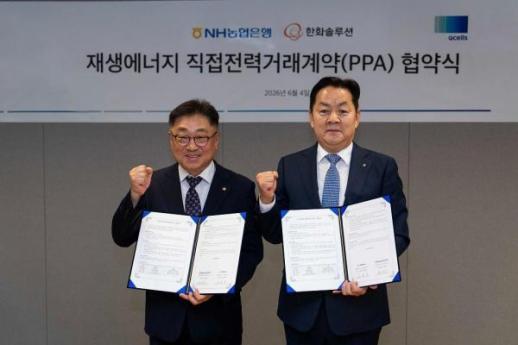 NH Nonghyup Bank Partners with Hanwha Solutions to Address Power Shortages with Renewable Energy NH Nonghyup Bank is accelerating its transition to renewable energy to address the rising demand for electricity. On June 7, the bank announced it has signed a Direct Power Purchase Agreement (PPA) with Hanwha Solutions to achieve carbon neutrality and expedite the shift to renewable energy. A PPA allows companies to directly purchase electricity from eco-friendly power plants. This arrangement is seen as a crucial tool for companies to effectively reduce greenhouse gas emissions and meet their RE100 (100% renewable energy) goals. With this new agreement, NH Nonghyup Bank will secure a total of 8 megawatts (MW) of renewable energy, following an initial contract for 4 MW signed in 2025. This makes it the largest amount of renewable energy secured through a direct PPA by any bank in South Korea. Under the agreement, NH Nonghyup Bank will receive 4 MW of renewable energy produced by Hanwha Solutions' solar power facilities over the next 20 years. This energy will be fully utilized to operate the NH Uiwang Integrated IT Center. Im Se-bin, Senior Vice President of NH Nonghyup Bank, stated, "This agreement is a step towards fulfilling our responsibility as a leading bank actively practicing climate crisis response and ESG (Environmental, Social, and Governance) management. We will continue to work on building a reliable ecosystem for procuring green energy and contribute to the national greenhouse gas reduction targets." 2026-06-07 10:36:00
 -
 Jensen Huang to Throw First Pitch and Meet Game Executives Jensen Huang, CEO of NVIDIA, is continuing his unique activities that bridge sports and gaming during his third day in South Korea. On June 7, Huang is set to make a surprise appearance as the starting pitcher at the Doosan Bears' home game at Jamsil Baseball Stadium in Seoul. He will don a Doosan uniform featuring the number '93' to commemorate the year NVIDIA was founded (1993) as he steps onto the mound in front of local baseball fans. Notably, Doosan Group Chairman Park Jung-won will step up to the plate to catch Huang's pitch, wearing a uniform with the number '96' to symbolize the year Doosan was established (1896). Given that Doosan Group has recently focused on robotics and automation solutions as future growth areas, this meeting between the two executives is expected to foster a closer partnership beyond just a sports event. Before his visit to the baseball stadium, Huang is also scheduled to hold a series of private meetings with executives from major South Korean gaming companies. A meeting with NCSOFT CEO Kim Taek-jin is highly anticipated. NCSOFT has maintained a close relationship with NVIDIA, often showcasing its new titles at NVIDIA's technology events. This meeting is expected to discuss specific collaboration strategies to enhance digital human implementation, simulation technology, and 'physical AI' that interacts with the real world. Huang will also meet separately with Krafton executives, including Chairman Chang Byung-kyu. This meeting is likely to focus on building next-generation gaming environments based on NVIDIA's high-performance AI computing resources, as well as joint strategies for new business areas like humanoid robots. As the South Korean gaming industry is recognized as a hidden powerhouse in generative AI and robotics technology, it is expected to serve as a crucial foothold for NVIDIA's ecosystem expansion.* This article has been translated by AI. 2026-06-07 10:27:00
 -
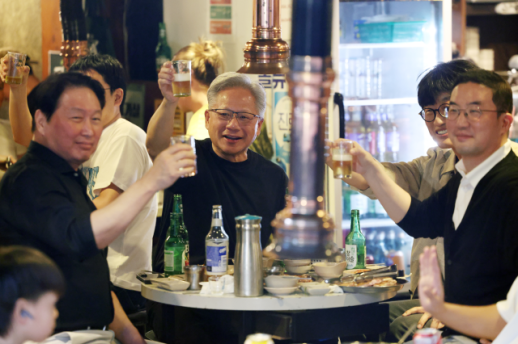 NVIDIA CEO Jensen Huang's Visit Raises Questions About South Korea's Role in AI Industry In the first weekend of June 2026, all eyes in South Korea's semiconductor industry were on NVIDIA CEO Jensen Huang. After presenting his vision for the future of the global AI industry at the Computex event in Taiwan, he quickly traveled to South Korea. The local media covered his every move in real time, including meetings with executives from LG Electronics, Naver, and SK Hynix, as well as a dinner featuring samgyeopsal and soju. However, the global semiconductor industry is a place where cold calculations often lie behind smiling faces. While friendships exist in international business, the direction of the industry is ultimately determined by interests, supply chains, and market logic. In this context, Huang's visit to South Korea was more of a strategic assessment of the global supply chain for the AI era than a friendly visit. During his stay, Huang reportedly focused on discussions with major partners, including Samsung Electronics and SK Hynix, regarding next-generation HBM supply plans, the expansion of AI data centers, and forecasts for future AI server market demand. While the media's attention was drawn to the dinner, the truly significant discussions took place behind closed doors, where the future AI industry's supply chain worth tens of trillions of won was at stake. Many people today understand the AI revolution as a GPU revolution, which is not entirely incorrect. However, within the AI industry, there are already discussions about something even more critical than GPUs: HBM, or high-bandwidth memory. No matter how advanced a GPU is, if it cannot supply data in a timely manner, the overall performance of the AI system will inevitably decline. If the AI industry is a vast highway, the GPU is the engine, and HBM is the essential system supplying fuel to that engine. In this market, South Korean companies have secured world-class competitiveness. SK Hynix currently leads the global HBM market, while Samsung Electronics is launching a major counterattack centered on next-generation HBM4. However, South Korea must be wary of a trap: becoming complacent with its current position as the world's number one in HBM. History shows that the winners of technological revolutions are not necessarily the countries that produce specific components best, but those that dominate the entire ecosystem. The UK invented the steam engine, but the U.S. emerged as the ultimate victor of the Industrial Revolution. Japan dominated the DRAM market, but South Korea took the lead in the memory semiconductor era. Similarly, while South Korea is a powerhouse in HBM, it cannot yet be called an AI powerhouse. Currently, in the global AI ecosystem, design is handled by NVIDIA, cutting-edge production is managed by TSMC, and cloud and platform services are dominated by U.S. tech giants. South Korea stands at a crucial point in the supply chain but does not yet control or design the entire system. Thus, South Korea's goal should not be to remain an HBM powerhouse but to leap to an AI infrastructure powerhouse. The AI industry is no longer just about semiconductors. It is evolving into a massive national infrastructure industry that combines data centers, power grids, cooling systems, communication networks, cloud services, and networks. In the future, global AI competitiveness is likely to be determined not only by semiconductor production capacity but also by how much power can be reliably supplied and how efficient data centers can be built. In fact, the U.S. and China have already entered a competition to build super-sized AI data centers, and some experts predict that the biggest bottleneck in the future AI industry may not be a shortage of semiconductors but a lack of power. South Korea possesses significant potential amid these changes. It has a world-class semiconductor industry, as well as expertise in communication infrastructure, nuclear power technology, battery production, and power grid management. The challenge is that these industries have yet to be integrated into a cohesive national strategy. A comprehensive strategy that connects semiconductors, energy, communications, data centers, manufacturing, and AI is now necessary. Only then can South Korea transcend being a mere semiconductor supplier and become a leader in AI infrastructure. An even more critical concept emerges here: Physical AI. Many still perceive AI as conversational services like ChatGPT, but Huang has recently emphasized areas such as robotics, autonomous driving, smart factories, and humanoid industries. This indicates that the era of AI moving beyond computer screens into the real world has begun. At this juncture, South Korea can position itself more advantageously than any other country. With a world-class manufacturing base in shipbuilding, automobiles, steel, batteries, machinery, and semiconductors, the combination of AI and manufacturing could elevate South Korea from a mere IT powerhouse to a central player in the future industrial revolution. The era of Physical AI, where factories make autonomous decisions, robots move independently, and logistics systems optimize in real time, could provide a stage for South Korea's manufacturing sector to showcase its greatest competitiveness. Another reality we must confront is that South Korea's true competitor in the semiconductor industry is not China but Taiwan. While South Korean society often focuses on U.S.-China competition, the strongest competitor in the semiconductor industry is Taiwan. The semiconductor ecosystem built around TSMC is not just a production facility but a vast industrial platform where design, production, packaging, and supply chains are interconnected. This is why Huang effectively utilizes Taiwan as his second base. Today, the AI supply chain connecting the U.S. and Taiwan is arguably the central axis of the global AI industry. Ultimately, the message Huang's visit sends to South Korea is straightforward: being number one in HBM is just the starting point, not the destination. South Korea must now grow beyond being a memory powerhouse to become an AI infrastructure powerhouse and evolve from a semiconductor supplier to a key player in the AI ecosystem. Furthermore, it needs to establish a national strategy that connects semiconductors, data centers, power grids, robotics, manufacturing, and Physical AI. Only then can South Korea become a co-designer of a new industrial civilization rather than a subcontractor in the AI empire. While the memories of samgyeopsal and soju will remain for a day, the questions raised by this visit could determine the future of South Korea's economy for decades to come. Will South Korea be satisfied with its current success, or will it leap to become a central nation in the AI era? History always offers opportunities to only a few countries at decisive moments. Now is the time for South Korea to seize that opportunity. 2026-06-07 10:15:00