
Journalist

HAN Joon ho
-
 Iran Continues Executions of Prisoners Amid War, Families Report Coercion Iran has been executing prisoners almost daily, according to human rights organizations. Reports indicate that families are often informed of the executions only after they occur, and some have faced pressure to remain silent about the events. On May 7, The Guardian reported that the Norway-based Iranian Human Rights NGO (IHRNGO) stated Iran has executed at least 24 individuals since March, with six of those executions occurring within just two days. Human rights groups believe this trend is expanding to include those involved in anti-government protests from January and prisoners accused of espionage amid the ongoing conflict involving the U.S. and Israel. Concerns have also been raised regarding the methods of execution. Families often receive notification only after the executions are carried out, and some have reported being pressured not to speak publicly. Authorities have allegedly withheld the bodies of the executed or conducted executions in undisclosed locations without informing the public. Specific cases have emerged, including the execution of Mehrab Abdollahzadeh, who was arrested during the 2022 'Women, Life, Freedom' protests. Kurdish prisoners Naser Bakherzadeh and Yagub Karimpoor were reportedly executed on charges of espionage for Israel. In Mashhad, three protesters arrested in connection with the January demonstrations were allegedly hanged in secret locations. Allegations of torture have also surfaced. The Guardian reported that some prisoners left letters and voice messages claiming they were subjected to physical and psychological torture to extract forced confessions before their executions. The Kurdistan Human Rights Network (KHRN) claimed that prisoners were moved to separate facilities and solitary confinement before execution, with families unable to retrieve the bodies. The scale of executions is significant. According to data cited by the UN Special Rapporteur on human rights in Iran, at least 1,600 executions were estimated to have taken place in 2025 alone. While most were related to drug offenses or murder, human rights organizations argue that the government is using the chaos of war to expand its crackdown on dissent.* This article has been translated by AI. 2026-05-08 15:26:16
 -
 Lotte Wellfood Reports 118% Increase in Q1 Operating Profit to 35.8 Billion Won Lotte Wellfood has successfully rebounded in its first-quarter earnings this year through enhanced global competitiveness and improved operational efficiency. The growth of its overseas subsidiaries in countries like India and Kazakhstan has been a key driver of this performance, alongside domestic efforts to streamline low-margin products. On May 8, Lotte Wellfood announced that its consolidated revenue for the first quarter reached 1.0273 trillion won, with an operating profit of 35.8 billion won. Revenue increased by 5.4% compared to the previous year, while operating profit surged by 118%, resulting in an operating profit margin of 3.5%. Sales from overseas subsidiaries amounted to 270.5 billion won, marking an 18% increase year-on-year. Including exports of 66 billion won (an 8% increase), the total share of overseas sales rose to 32%. Notably, strong performances in key global markets such as India and Kazakhstan fueled first-quarter growth. In India, the integration of subsidiaries has led to expanded sales channel coverage and strong sales of core products. The Indian market is a critical strategic focus for Lotte Wellfood, with plans to expand its third line of Choco Pie production and construct a large ice cream factory in the Pune region. In Kazakhstan, the company saw positive results from increased domestic sales and exports. The expansion of trading partners in major export markets like the United States and China has also contributed to improved profitability through fixed cost leverage across its international operations. Domestically, Lotte Wellfood has prioritized profitability over mere growth. In response to slowing consumer demand, the company has aggressively streamlined low-efficiency SKUs (stock-keeping units) and sales channels. The company has expanded its premium offerings for mega brands such as "Mont Blanc," "Pepero," and "World Cone," while also introducing new products that reflect market trends, such as the "Dubai ST Choco Pie." Looking ahead, Lotte Wellfood plans to proactively address fluctuations in raw material prices and exchange rate uncertainties due to geopolitical risks, including conflicts in the Middle East. In South Korea, the company aims to strengthen collaborative marketing with the Korea Baseball Organization (KBO) and secure early inventory for ice cream products to maximize sales during peak season. Internationally, Lotte Wellfood intends to enhance the logistics systems of its integrated Indian subsidiary and increase brand recognition in Kazakhstan to solidify its global competitiveness. A Lotte Wellfood representative stated, "We will continue to accelerate the global expansion of our core brands and strengthen seasonal marketing efforts to maintain a solid trend of profitability improvement."* This article has been translated by AI. 2026-05-08 15:23:54
 -
 Life Insurance Industry to Support Young Victims of Jeonse Fraud with 100 Million Won The life insurance industry will provide 100 million won to support young victims of jeonse fraud in repaying their student loans. On May 8, the Life Insurance Social Contribution Committee announced that it has signed a memorandum of understanding with the Korea Student Aid Foundation. This agreement aims to alleviate the financial burden of student loan repayments for young victims of jeonse fraud, supporting their economic recovery and facilitating their smooth transition into society. Eligible recipients include individuals under 30 who have been identified as victims of jeonse fraud and have a remaining balance of over 1 million won on their general repayment student loans. Each eligible person will receive at least 300,000 won, covering both interest and principal of their student loans. Kim Cheol-joo, chairman of the Life Insurance Social Contribution Committee, stated, "The life insurance industry will continue to show ongoing concern and support for socially vulnerable groups and those in difficult situations." Park Chang-dal, chairman of the Korea Student Aid Foundation, also remarked, "We will continue to promote private sector-linked support initiatives to ease the repayment burden on young people facing economic hardships." Meanwhile, the committee was established in 2007 to coordinate joint social contribution activities among life insurance companies. Since then, it has engaged in various social contribution efforts, including support for vulnerable groups, disaster response, and community coexistence. 2026-05-08 15:21:52
 -
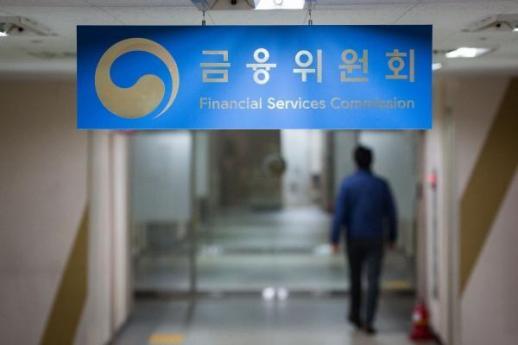 Financial Authorities Launch Inclusive Finance Initiative with $2 Billion Investment As President Lee Jae-myung recently emphasized that "financial institutions are quasi-public entities," South Korea's financial authorities are intensifying their support for social economy organizations. This year, they plan to inject approximately 2 trillion won through public and private financial institutions to promote social economy finance. The Financial Services Commission (FSC) announced on May 8 that it held the first Social Economy Finance Council of 2026 at the Korea Financial Services Agency in Jung-gu, Seoul. Attendees included government officials, policy finance institutions, and representatives from the Mutual Finance Central Association, who reviewed the implementation and achievements of social economy finance initiatives and discussed future plans. President Lee had previously stated during a Cabinet meeting on May 6 that "the notion that financial institutions exist solely to make money is problematic," highlighting the need to enhance the public nature of the financial sector. Shin Jin-chang, Secretary General of the Korea Financial Services Agency, noted in his opening remarks that there is a growing demand for discussions on the public nature of finance and the social responsibilities of financial companies. He emphasized that it is time for fundamental reflection on the uniform practices focused on high credit and collateral. To start, the FSC will increase the annual loan supply from the Korea Financial Services Agency to social economy organizations through the Microfinance program from 6 billion won to 15 billion won. The Korea Credit Guarantee Fund plans to raise the limit for preferential guarantees for social economy organizations from 200 million won and increase the annual guarantee supply from 250 billion won to 350 billion won by 2030. Additionally, mutual finance will expand financial support through the Social Economy Support Fund of the National Credit Union Federation to ensure that cooperative banks fulfill their original functions. The FSC also plans to encourage the establishment of new funds in other mutual finance sectors in consultation with relevant ministries. A revision of the Credit Union Act will be pursued to allow individual credit unions to support investments in other entities. Over the next three years, banks will supply a total of 4.3 trillion won to social economy organizations, marking an 18.3% increase compared to the funding provided from 2023 to 2025. Beyond loans, they will also support 119 billion won through investments, donations, and product purchases over the same period. Furthermore, the evaluation of regional reinvestment by banks and savings banks will place greater weight on the supply of social economy finance, and plans are underway to expand the scale of social investment funds that specifically invest in social economy organizations. In addition, financial institutions will enhance and expand their information infrastructure to comprehensively understand social economy organizations, ensuring efficient and fair supply of social economy finance. The current database maintained by the Korea Credit Information Corporation, which only provides basic information such as corporate registration numbers and names, will be updated to include data on regional contributions and employment rates for vulnerable groups, improving accessibility by posting this information on their website. An FSC official stated, "We will timely implement necessary institutional improvements to ensure that the government's social economy finance activation policies are carried out without any setbacks."* This article has been translated by AI. 2026-05-08 15:19:52
 -
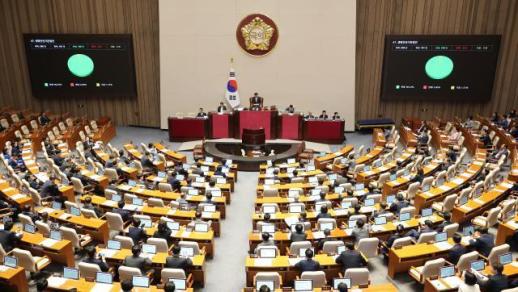 South Korea Passes Special Law to Boost AI Data Center Industry The National Assembly has passed a special law aimed at promoting the artificial intelligence data center industry. While the name is lengthy, its intent is clear: the government is stepping in to ensure South Korea does not fall behind in the competitive landscape of AI infrastructure. This legislation includes provisions for easing facility regulations, establishing special zones, and providing financial support, marking a significant step in redesigning the foundation of the digital economy. Data centers are no longer just collections of servers. In the AI sector, they represent a complex infrastructure that integrates power, semiconductors, networks, and cooling technologies. As AI models grow larger, the demand for computational power and the physical space needed to accommodate this, along with energy requirements, also increase. Ultimately, a nation's AI competitiveness hinges not only on algorithms but also on how quickly and efficiently data centers can be built. The global competition has already begun. The United States is expanding investments in massive data centers led by major tech companies, while Middle Eastern nations are emerging as new hubs by offering cheap electricity. Southeast Asia is also attracting global firms through regulatory easing and tax incentives. Data centers are no longer confined to specific countries; they are moving to regions with favorable power and regulatory conditions. In this context, South Korea faces significant challenges. Electricity costs are high, and regulations on locations in the capital region remain stringent. The environmental permitting process is also complex, making the country less attractive for global investments. The introduction of this special law aims to address these issues by easing regulations and establishing special zones, recognizing that maintaining existing regulatory frameworks would hinder industry growth. The special zone system is particularly significant. Data centers must be concentrated in specific areas due to the simultaneous need for power supply, communication networks, and cooling infrastructure. By easing location regulations and supporting infrastructure development through special zones, it is possible to create clusters centered around certain regions. This could lead to the formation of an industrial ecosystem beyond mere facility expansion. Financial support is also a crucial element. Data centers require substantial initial investments, often amounting to trillions of won, with long payback periods. The structure is such that private capital alone cannot bear the burden. Without the government sharing some of the risks, investments could be delayed. The law's provision for financial support reflects this reality. However, concerns remain. The most pressing issue is electricity. Data centers are known as "power-hungry industries." A single large facility can consume as much electricity as an entire small city. If data centers are expanded without a power supply plan, the burden on the power grid will inevitably increase, potentially leading to higher electricity prices and conflicts over energy policy. Environmental issues cannot be overlooked either. Data centers generate significant heat and consume both water and energy for cooling. Carbon emissions are also a concern. Policies focused solely on industrial promotion could exacerbate environmental burdens in the long run. Conflicts with local residents could further complicate project implementation. Thus, data center policies must not merely focus on regulatory easing but rather on balanced design. It is essential to consider both industrial competitiveness and environmental sustainability. Complementary policies, such as integrating renewable energy, utilizing waste heat, and adopting high-efficiency cooling technologies, must be pursued simultaneously. Otherwise, expanding the industry could lead to new conflicts. Another variable is the reliance on global companies. The data center industry is inherently linked to major global tech firms. Without their investment, the market is unlikely to grow significantly. However, increased dependence on specific companies poses the risk of losing industry leadership. Therefore, strengthening the competitiveness of domestic firms alongside a strategy for technological independence is necessary. The passage of this law alongside the defense semiconductor legislation is also noteworthy. Data centers and semiconductors are not separate industries; AI computations ultimately rely on semiconductors. As the number of data centers increases, so does the demand for high-performance semiconductors. This legislation demonstrates a commitment to simultaneously grow AI infrastructure and core component industries. It is important to note that industrial policies are being designed as interconnected structures rather than isolated sectors. Ultimately, the key to this special law is speed. The global competition has already begun, and falling behind makes it difficult to catch up. However, speed alone is not sufficient. Without clear direction and standards, the industry cannot be sustainable. Four conditions—power, environment, local acceptance, and technological independence—must be met simultaneously. The competition in the AI era will be determined in unseen ways. Algorithms are software, but the physical infrastructure that drives them is crucial. Data centers are at the heart of this. This law is the first step toward building that infrastructure. The challenge begins now. While the law has been enacted, its significance will be lost if implementation does not follow. The success or failure will depend on whether special zones operate effectively, whether power infrastructure is built on time, and how environmental conflicts are managed. Policies do not end with declarations; competitiveness is determined by the details of execution. South Korea possesses capabilities in semiconductors, communications, and IT. If data center infrastructure is integrated, the country can secure significant competitiveness in the AI industry. However, delays in preparation could quickly lead to lost opportunities. This special law opens the door to opportunity. Whether that door can be passed through now depends on the law's completeness.* This article has been translated by AI. 2026-05-08 15:17:32
 -
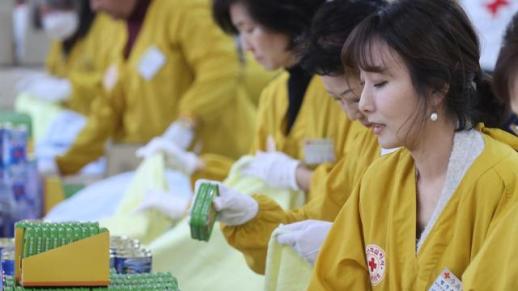 The Role of Spouses in Shaping Election Strategies Similar scenes unfolded in Pyeongtaek and Busan's Buk-gu district. Jeong Kyung-shim, the spouse of candidate Cho Kuk, attended a local event, while Han Dong-hoon, another candidate, visited a senior center with his wife, attorney Jin Eun-jung, to greet residents. These moments symbolize the increasing importance of candidates' spouses in elections. Politics is a personal competition, but voter judgment extends beyond the individual. Factors such as a candidate's lifestyle, relationship-building approach, and family dynamics are all considered. In this context, spouses serve as the closest reflection of a candidate's life, conveying their character more intuitively than official speeches or policies. While political messages are often delivered through words, spouses expand these messages through actions and relationships. In this election, Cho Kuk's campaign strategy is relatively clear. Jeong Kyung-shim's public appearances convey a message of 'shared responsibility in politics.' Her presence at local events following their move to Pyeongtaek emphasizes a commitment to settling as a family rather than just a political maneuver. This approach fosters the perception among local voters that this is a long-term lifestyle choice rather than a short-term political tactic. Notably, the appearance of a well-known figure like Jeong at these events suggests a willingness to confront political challenges head-on. Han Dong-hoon's approach differs somewhat. Jin Eun-jung has not been very active in public political life. Her participation in local events and casual interactions with residents highlights the candidate's image as a relatable individual. This strategy builds trust through everyday contact rather than overt political messaging. It can also be seen as a way for a strong political figure to soften their image through their spouse. Both examples, while differing in approach, illustrate a common trend. Spouses are no longer mere background figures; they play a crucial role in connecting voters and candidates. This role is particularly pronounced in local elections, where establishing familiarity in a short time is essential. The presence of a spouse can effectively reduce distance between candidates and voters. This trend is not unique to South Korea; it has become a standard practice in international politics. In the United States, candidates' spouses are integral to election strategies. During Barack Obama's campaigns, Michelle Obama played a key role in enhancing his public appeal. Her speeches and campaign appearances conveyed independent political messages beyond mere support. Similarly, Hillary Clinton actively participated in Bill Clinton's campaigns, complementing his policy understanding. Her evolution into a political leader illustrates how the role of a spouse can expand. A similar trend is observed in Europe. Brigitte Macron, the spouse of French President Emmanuel Macron, has maintained a public presence that influences political image formation. In Japan, Akie Abe, the wife of former Prime Minister Shinzo Abe, gained attention through her active public engagements. While the systems and cultures differ across countries, the role of spouses in elections and political processes is a common thread. The backdrop of these changes lies in the structural transformation of the political environment. As information dissemination methods diversify and voter evaluation criteria expand, politicians are no longer judged solely on policies. A comprehensive image that includes lifestyle, values, and relationships has become crucial. Spouses serve as the most intuitive window into these elements. As politics increasingly becomes a competition of 'visible lives,' the role of spouses naturally expands. However, this trend carries both positive aspects and clear limitations. Spousal involvement can enhance a candidate's message and broaden voter engagement. Yet, the influence of individuals without public accountability in the political process raises questions. Particularly when a spouse's past or personal controversies become election issues, policy debates may be overshadowed by character-based conflicts. In South Korean politics, the role of spouses is not institutionally defined. There are no official positions or clear accountability structures. Nevertheless, their actual influence is growing. This gap presents a challenge that must be addressed moving forward. Without established social standards for the scope and responsibilities of spouses, unnecessary controversies are likely to recur during elections. Nonetheless, one thing is clear: the presence of spouses is not a temporary phenomenon but part of a structural change. Voters are making decisions based on more information, and politicians must explain themselves through a broader array of factors. In this process, spouses are taking on significant roles. The cases of Cho Kuk and Han Dong-hoon symbolically illustrate this change. While they present their spouses in different ways, both are expanding their candidates' messages. One emphasizes responsibility and unity, while the other highlights everyday life and intimacy. The strategies differ, but the direction is the same: politics is evolving into a more multifaceted competition. Ultimately, the essence of elections remains unchanged. Voters choose based on candidates' abilities and visions. However, the factors influencing that judgment are continually increasing. Spouses are among the most prominent variables in this evolving landscape. Politics is a process of selecting individuals. And individuals exist within relationships. The presence of spouses is one way to showcase those relationships. Whether this has a positive or burdensome effect ultimately depends on voter judgment. The scenes from this election illustrate how the criteria for that judgment are expanding.* This article has been translated by AI. 2026-05-08 15:14:18
 -
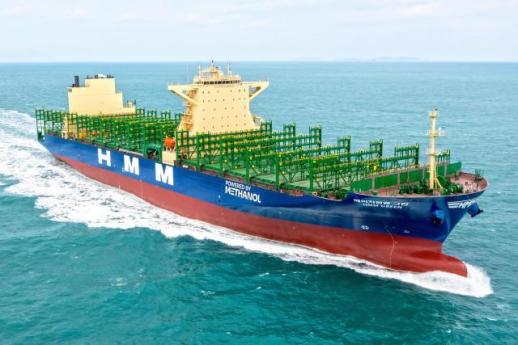 South Korea loses ground in ship orders as China sweeps up new contracts SEOUL, May 8 (AJP) - South Korea's share of global ship orders fell sharply in April despite a rebound in global ship orders, as China swept up a far larger portion of new contracts, according to data released by London-based Clarkson Research Services on Friday. Global ship orders for the month totaled 6.49 million compensated gross tons (CGT) or 204 vessels, up 21 percent from a year earlier. South Korea secured just 16 percent of global orders or 1.05 million CGT across 33 vessels, while China dominated new contracts with 67 percent or 4.37 million CGT across 156 ships, more than four times South Korea's volume. China also maintained its lead in the order backlog. As of the end of April, the global backlog rose 1.12 million CGT from the end of the previous month to 194.18 million CGT. China accounted for 124.25 million CGT or 64 percent, while South Korea held 37.02 million CGT or 19 percent. Vessel prices, however, continued to climb, with Clarksons' index measuring the cost of building new ships rising 1.34 points from the previous month to stand at 183.41. The index tracks prices for newly built ships and serves as a measure of shipbuilders' profitability. The price of a liquefied natural gas (LNG) carrier with a capacity of 174,000 cubic meters or more was US$248.5 million per ship. A very large crude carrier was priced at $130.5 million, while an ultra-large container ship cost $260.5 million. Industry observers said that China has expanded overall volume, while South Korea has focused on high-value vessels such as liquefied natural gas (LNG) carriers and eco-friendly ships. But as China races ahead in volume, the real test for South Korea shipbuilders would be whether they can remain competitive and profitable in the high-value ship market. 2026-05-08 15:12:32
 -
 Chinese robot cleaners sweep Korean homes as data worries linger SEOUL, May 08 (AJP) - "Life is so different that I classify things before and after Roborock came into our lives," said 50-year-old Korean housewife Lee Young-joo. She is far from alone. Chinese robot vacuum maker Roborock has crossed the symbolic 50 percent threshold in South Korea's robot vacuum market, overturning a long-held assumption in one of the world's most brand-conscious appliance markets: that Chinese electronics brands would remain bargain-bin alternatives to Samsung Electronics and LG Electronics. For a growing number of younger Korean consumers, that assumption has already disappeared. "I used Roborock even when I lived with my parents. It was already the best robot cleaner back then," said Heo Je-young, a 29-year-old semiconductor engineer preparing to move into a new home with his wife. "Even friends working at Samsung or LG recommended the Chinese version." Roborock ended 2025 with a market share above 50 percent in South Korea, reaching the majority mark for the first time since entering the country in 2019, according to figures disclosed earlier this year. The milestone marks one of the clearest signs yet of China's rapid ascent in premium consumer electronics — not through low-cost manufacturing, but through technological refinement, software integration and speed in categories where Korean firms once led. Premium robot vacuums have rapidly become staple purchases among newlyweds in apartment-dense South Korea, where long working hours and growing demand for automated home care have fueled explosive market growth. Roborock's Korean revenue has roughly doubled every year since 2020, climbing from 29.1 billion won ($19.8 million) that year to more than 300 billion won by 2024, while the overall Korean robot vacuum market has expanded into a roughly 1 trillion won segment. Globally, the Beijing-based company shipped 5.8 million robot cleaners in 2025 for a 17.7 percent market share, according to IDC, retaining its position as the world's top-selling robot vacuum brand for a third consecutive year. IDC also ranked Roborock first in the United States, Germany and South Korea. "Thanks to active investment in research and development and the expansion of our product portfolio, we have maintained the No. 1 position in the global robot vacuum market," a Roborock spokesperson said. The irony for Korean manufacturers is that robot vacuums were once their category to dominate. LG Electronics led the domestic market between 2017 and 2018, while Samsung maintained a smaller but steady presence. That advantage began to erode between 2022 and 2024 as Chinese manufacturers aggressively rolled out all-in-one docking systems capable of vacuuming, mopping, self-cleaning and self-emptying simultaneously. Korean companies hesitated over integrated mopping systems amid concerns about odor and maintenance problems. The delay proved costly. Roborock seized the premium segment with flagship models such as the S8 MaxV Ultra and this year's Saros 20, featuring upgraded obstacle-recognition software and powerful suction systems. Its share of Korea's premium robot vacuum segment briefly exceeded 60 percent in 2024 before stabilizing in the mid-50 percent range this year. Still, the rapid rise of Chinese appliances inside Korean homes has also triggered unease. "Despite the convenience, I still can't completely shake the feeling of a Chinese big brother looking into our living room," Lee said. Security concerns intensified after a joint probe by the Korea Consumer Agency and the Korea Internet and Security Agency in late 2025 uncovered serious vulnerabilities in several Chinese-made robot vacuums. The investigation found flaws allowing unauthorized access to cameras and stored household images in products from brands including Dreame, Narwal and Ecovacs. Samsung and LG products ranked highest overall in the review. Roborock drew fewer direct warnings in the study but was separately called before a National Assembly committee over concerns that its user data policies could permit transfers of Korean consumer information to China. The company later launched an online "Trust Center" and updated parts of its security policy. Questions have also surfaced over performance marketing by some Chinese appliance makers. A separate Korea Consumer Agency review found that cordless vacuum cleaners advertised with suction power figures ranging from 18,000 to 48,000 pascals delivered significantly lower real-world performance than implied in advertisements. After-sales service remains another weak point. Consumers have complained about lengthy repair delays and limited local service infrastructure relative to Roborock's rapidly growing market share. For some consumers, skepticism toward Chinese products still persists despite their technological edge. Kim Jong-chul, 54, said he purchased a cheaper Ecovacs model rather than a premium Roborock unit because of lingering distrust toward Chinese brands. "The mapping had issues, and it constantly bumped into furniture," Kim said. "Eventually it became more troublesome than simply vacuuming myself." Others were frustrated after smaller Chinese brands withdrew from the Korean market entirely. "We eventually threw ours away," said Lee Jae-hyung, who purchased a non-Roborock Chinese vacuum cleaner. "The product itself worked fine, but once the company pulled out of Korea, the app disappeared from the market too. It didn't last long." Samsung and LG are now scrambling to reclaim lost ground. Samsung Electronics unveiled its 2026 Bespoke AI Steam robot vacuum earlier this year, emphasizing on-device encryption and upgraded obstacle-recognition technology. LG Electronics is also preparing a successor to its RoboKing AI All-in-One lineup. For Heo, however, the next purchase decision remains straightforward. His interest in Roborock's newest model depends on whether its upgraded robotic arm can finally solve the one household obstacle earlier versions failed to overcome: pet waste. "It used to smear everything across the floor," he recalled. "But the new version now has robotic arms attached, so I'm willing to give it another try." 2026-05-08 15:10:04
 -
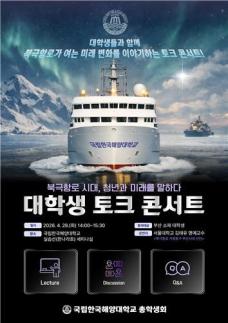 The Arctic Route: A Matter of Time, Not Choice for South Korea's Maritime Strategy The Arctic is opening up. As ice melts, the maritime logistics map is changing rapidly. The administration of Lee Jae-myung has been focusing on the Arctic route as a key project, which is now gaining attention as it secures a legal foundation. The establishment of a new Arctic Route Committee under the Prime Minister, the passage of related special legislation, the training of specialized personnel, and the establishment of a financial support system are all contributing to its emergence as a national strategic project rather than just a policy slogan. The core of the Arctic route is distance. The existing Asia-Europe route, which passes through the Suez Canal, stretches about 20,000 kilometers, while the Arctic Sea route can reduce this distance by up to 30-40%. Shortening transport time leads to cost savings, which is a key element of global logistics competitiveness. Shipping is ultimately a 'time industry.' A reduction of even one day can change competitiveness. This change goes beyond just logistics costs. The Arctic route is a complex strategic space intertwined with energy, resources, military, and environmental issues. Russia has placed the Arctic route at the center of its national strategy, while China is actively participating under the banner of the 'Polar Silk Road.' The United States and Europe are also expanding their influence over Arctic governance. The Arctic is no longer a remote area but is shifting to a new geopolitical axis. In this context, South Korea's options are clear. If it does not participate, it will be excluded. The Arctic route is not a 'market that can be entered when ready,' but rather a market that will be forever late if not prepared now. The significance of the passage of this special law lies here. It secures the legal basis for policy promotion and creates a structure that can integrate functions previously dispersed among various ministries, marking the starting line. The establishment of a committee under the Prime Minister is particularly symbolic. The Arctic route cannot be pursued solely by the Ministry of Oceans and Fisheries. It requires simultaneous action from diplomacy, defense, industry, environment, and science and technology. This is why a cross-ministerial control tower is necessary. Without securing both consistency and speed in policy, South Korea risks falling behind in global competition. However, the Arctic route presents both opportunities and significant risks. The biggest variable is the natural environment. The Arctic Sea still faces unpredictable weather conditions and ice melting situations. An aggressive approach in a situation where the route is not consistently stabilized could lead to increased costs. While the melting speed of ice is accelerating, it also means heightened environmental risks. Political variables cannot be overlooked either. A significant portion of the Arctic route is formed along the Russian coastline. Securing a stable route is challenging amid ongoing international sanctions and geopolitical conflicts. The Arctic route is not merely a logistics issue but is directly linked to diplomatic strategy. Increased dependence on specific countries could introduce new risks. Economic viability must also be carefully evaluated. Shortening distance does not automatically lead to cost savings. Additional cost factors such as insurance premiums, icebreaker costs, and insufficient port infrastructure exist. Currently, economic viability is only assured for specific periods and specific cargo. Therefore, a selective and phased entry strategy is necessary rather than a full-scale expansion. Nevertheless, the direction is clear. The Arctic route is likely to change the global shipping structure in the long term. The question is not 'whether to go' but 'how to go.' South Korea already possesses world-class shipbuilding and shipping capabilities. Redesigning these to fit the Arctic environment is a key task. The inclusion of policies for training specialized personnel is also significant. The Arctic route requires completely different technologies and operational methods from existing shipping. New capabilities such as ice navigation technology, polar weather analysis, and special ship design are needed. If personnel are not prepared, the industry cannot follow. Long-term investment in personnel and technology development must proceed in tandem. Another noteworthy aspect is the related industries. The Arctic route is not just a transportation route but creates a new industrial ecosystem. It connects ports, logistics, shipbuilding, energy, insurance, and finance. The inclusion of financial and fiscal support in this legislation is a measure taken with this expandability in mind. Pioneering the route is just the beginning; the real competition will occur in the surrounding industries. The restructuring of public shipping routes also aligns with this context. A structure where the government compensates for operational losses and public institutions manage operations is an unavoidable choice for initial market formation. The Arctic route, too, will be difficult to approach solely through market logic in the beginning. A public role will be necessary for a certain period. However, in the long run, it must transition to a self-sustaining structure centered on the private sector. Ultimately, the key to the Arctic route strategy is balance. It must consider speed and caution, opportunity and risk, and the roles of public and private sectors simultaneously. If it leans too far in one direction, the policy is likely to fail. An aggressive leading strategy can lead to cost burdens, while excessive caution can result in missed opportunities. We are now at the starting stage. The system has been established, and the direction has been set. What is crucial now is execution. It must translate from slogans to data, from plans to results. The Arctic route is a field where achieving results in the short term is challenging. However, without preparation, the opportunity will be lost forever. The ocean is the backbone of the South Korean economy. In an export-driven country, logistics competitiveness equates to national competitiveness. The Arctic route could become a new pillar of that competitiveness. Change has already begun. What remains is not a choice but the level of preparation.* This article has been translated by AI. 2026-05-08 15:06:44
 -
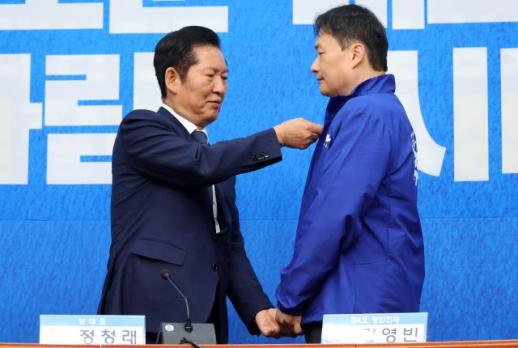 Democratic Party Strategically Nominates Lawyer Kim Young-bin for Local Elections The Democratic Party announced on May 8 that it has strategically nominated lawyer Kim Young-bin for the Gongju, Buyeo, and Cheongyang districts, completing nominations for all 14 by-elections. In a ceremony held at the National Assembly, the party officially welcomed Kim as a new member. Jeong Cheong-rae, the party leader, praised Kim, stating, "He has dedicated nearly a decade to correcting societal injustices and establishing justice. He has made significant contributions to prosecutorial reform while assisting the Minister of Justice. He has shown unwavering support for the underprivileged and has firmly opposed corrupt high-ranking officials. We are grateful for his joining the Democratic Party and hope he will actively contribute to local development." In response, Kim expressed his commitment, saying, "I will dedicate all my abilities to advance the greater future of Gongju, Buyeo, and Cheongyang, the places that nurtured me. I aim to be a capable worker who meets the party's needs and collaborates persistently with the central government to drive substantial support." He specifically mentioned Park Soo-hyun, who resigned from his parliamentary position to run for governor of South Chungcheong Province, stating, "I will push policies forward seamlessly in perfect synergy." Following Kim's recruitment, the Democratic Party convened its Strategic Nomination Management Committee to expedite the nomination process. Chief Spokesperson Kang Jun-hyun told reporters after the committee meeting, "We have decided to strategically nominate Kim, who graduated from all levels of school in Gongju, for the Gongju, Buyeo, and Cheongyang electoral district. He has worked diligently to create a judicial system that meets the public's expectations while assisting the Minister of Justice and has laid the groundwork for the prosecutorial reform bills currently being pursued by the Democratic Party." He added, "With his experience in public office focused on the people's livelihoods and his well-honed expertise, Kim Young-bin is the ideal candidate to overcome the crisis of local extinction and revitalize the economy of Gongju, Buyeo, and Cheongyang. With this, we have completed nominations for the by-elections. The Democratic Party will do its utmost to ensure that candidates with vision and capability receive the people's support."* This article has been translated by AI. 2026-05-08 15:02:46