

As President Lee Jae-myung recently emphasized that "financial institutions are quasi-public entities," South Korea's financial authorities are intensifying their support for social economy organizations. This year, they plan to inject approximately 2 trillion won through public and private financial institutions to promote social economy finance.
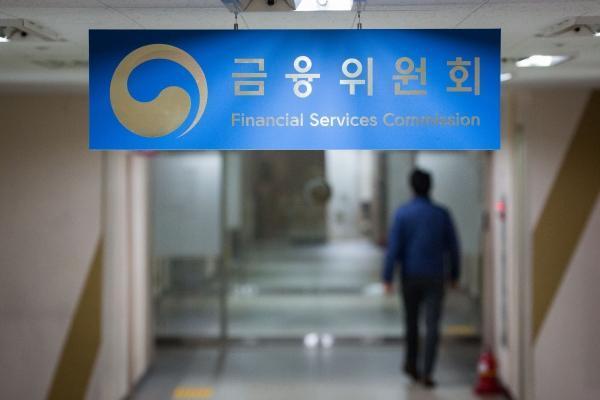
The Financial Services Commission (FSC) announced on May 8 that it held the first Social Economy Finance Council of 2026 at the Korea Financial Services Agency in Jung-gu, Seoul.
Attendees included government officials, policy finance institutions, and representatives from the Mutual Finance Central Association, who reviewed the implementation and achievements of social economy finance initiatives and discussed future plans. President Lee had previously stated during a Cabinet meeting on May 6 that "the notion that financial institutions exist solely to make money is problematic," highlighting the need to enhance the public nature of the financial sector.
Shin Jin-chang, Secretary General of the Korea Financial Services Agency, noted in his opening remarks that there is a growing demand for discussions on the public nature of finance and the social responsibilities of financial companies. He emphasized that it is time for fundamental reflection on the uniform practices focused on high credit and collateral.
To start, the FSC will increase the annual loan supply from the Korea Financial Services Agency to social economy organizations through the Microfinance program from 6 billion won to 15 billion won. The Korea Credit Guarantee Fund plans to raise the limit for preferential guarantees for social economy organizations from 200 million won and increase the annual guarantee supply from 250 billion won to 350 billion won by 2030.
Additionally, mutual finance will expand financial support through the Social Economy Support Fund of the National Credit Union Federation to ensure that cooperative banks fulfill their original functions. The FSC also plans to encourage the establishment of new funds in other mutual finance sectors in consultation with relevant ministries. A revision of the Credit Union Act will be pursued to allow individual credit unions to support investments in other entities.
Over the next three years, banks will supply a total of 4.3 trillion won to social economy organizations, marking an 18.3% increase compared to the funding provided from 2023 to 2025. Beyond loans, they will also support 119 billion won through investments, donations, and product purchases over the same period.
Furthermore, the evaluation of regional reinvestment by banks and savings banks will place greater weight on the supply of social economy finance, and plans are underway to expand the scale of social investment funds that specifically invest in social economy organizations.
In addition, financial institutions will enhance and expand their information infrastructure to comprehensively understand social economy organizations, ensuring efficient and fair supply of social economy finance. The current database maintained by the Korea Credit Information Corporation, which only provides basic information such as corporate registration numbers and names, will be updated to include data on regional contributions and employment rates for vulnerable groups, improving accessibility by posting this information on their website.
An FSC official stated, "We will timely implement necessary institutional improvements to ensure that the government's social economy finance activation policies are carried out without any setbacks."
* This article has been translated by AI.
Copyright ⓒ Aju Press All rights reserved.