
Journalist

HAN Joon ho
-
 Samsung ETFs Surge 93%, LG and Hyundai Stumble Amid Market Rally ◆Ajou Economic Key News ▷Samsung Group ETFs Lead with Over 93% Returns, Others Lag - The KOSPI index continues its rally, with Samsung Group ETFs achieving returns exceeding 93% since the start of the year, dominating the ETF market. - ETFs like 'TIGER Samsung Group' (93.64%) and 'KODEX Samsung Group' (86.15%) significantly outperformed the KOSPI's 77.73% rise, largely due to Samsung Electronics' surge. - In contrast, ETFs for major groups like LG, Hyundai, POSCO, and Hanwha reported returns between 43% and 62%, falling short of the KOSPI's gains. - Fund flows varied, with 'TIGER Hyundai Group Plus' attracting 574.1 billion won, while 'KODEX Samsung Group' saw 72.1 billion won exit due to profit-taking. - Analysts warn that the expansion of the ETF market could increase volatility in the stock market, advising caution amid the ongoing high performance and potential for technical corrections. ◆Key Reports ▷Caution Advised on Middle East Situation, Oil Price Rebound Pauses Market - U.S. markets reached record highs early but reversed course due to a spike in oil prices linked to Iran, with the Dow down 0.63%, S&P 500 down 0.38%, and Nasdaq down 0.13%. - Semiconductor stocks weakened due to profit-taking and ARM's earnings impact, leading the Philadelphia Semiconductor Index to drop 2.7%, with Intel, Micron, and Broadcom falling around 3%. - International oil prices briefly dipped amid U.S.-Iran peace hopes but surged again after concerns about potential Iranian blockades in the Strait of Hormuz, with WTI rising to $97.8 and Brent to $103.6. - U.S. job data showed initial unemployment claims below expectations, indicating a solid labor market, while unit labor cost growth slowed, easing wage inflation concerns. - Rising oil prices and strong economic indicators pushed U.S. Treasury yields higher, while geopolitical risks in the Middle East and tech sector layoffs dampened investor sentiment. ◆Major Announcements After Market Close (May 7) ▷Inbody Reports Q1 Operating Profit of 13 Billion Won, Up 86% Year-on-Year ▷DA Technology Changes Major Shareholder to Jeong Chan-soo ▷XQUR Exercises 500 Million Won Convertible Bond Rights ▷Apten Lifts Trading Suspension on May 8 ▷Barunson Lifts Trading Suspension on May 12 ▷Cafe24 Reports Q1 Operating Profit of 6.2 Billion Won, Up 4.6% Year-on-Year ▷Harim Reports Q1 Operating Profit of 111.66 Billion Won, Up 67.82% Year-on-Year ◆Fund Trends (As of May 6, Excluding ETFs) ▷Domestic Equity: -167 Billion Won ▷Foreign Equity: -23.5 Billion Won ◆Key Schedule for Today (May 8) ▷South Korea: Current Account (March) ▷Germany: Trade Trends (March), Industrial Production (March) ▷UK: House Price Index (April) ▷U.S.: Employment Report (April), Consumer Sentiment Index (May)* This article has been translated by AI. 2026-05-08 08:06:28
 -
 US court strikes down Trump tariffs again as Korea watches next trade front SEOUL, May 08 (AJP) -President Donald Trump’s global tariff regime has been struck down by U.S. courts yet again, marking the fifth consecutive major legal defeat for his second-term inward trade strategy and intensifying uncertainty for export-dependent allies such as South Korea. On Thursday, the U.S. Court of International Trade ruled that Trump illegally imposed a 10 percent blanket tariff on most imports using Section 122 of the Trade Act of 1974, concluding the administration exceeded powers granted by Congress. The ruling represents the latest collapse in a rapidly evolving tariff strategy that has repeatedly shifted legal foundations as earlier measures were invalidated by courts. The newly invalidated tariffs had themselves been introduced only hours after the U.S. Supreme Court struck down Trump’s earlier sweeping “reciprocal tariffs” in February. Those previous tariffs were imposed under emergency executive powers through the International Emergency Economic Powers Act (IEEPA), with Trump arguing that chronic trade deficits and supply-chain vulnerabilities constituted a national emergency. The administration used that authority to impose broad double-digit tariffs affecting nearly every major U.S. trading partner, including South Korea, the European Union, Japan and Canada. But courts increasingly rejected the legal rationale. The tariff regime was first challenged at the U.S. Court of International Trade, then blocked by a federal district court and later rejected again at the Federal Circuit Court of Appeals. The Supreme Court ultimately delivered the decisive blow earlier this year, ruling that Trump had exceeded presidential authority by using emergency powers to impose sweeping trade tariffs without congressional approval. Rather than retreat, the White House moved immediately to preserve the tariffs through a new legal pathway. Within hours of the Supreme Court ruling, Trump unveiled a replacement system using Section 122 of the Trade Act of 1974 — a little-used Cold War-era provision allowing temporary tariffs of up to 15 percent for a maximum of 150 days in response to “large and serious” balance-of-payments deficits or “fundamental international payments problems.” The law was originally written during the Bretton Woods monetary era, when the U.S. dollar remained tied to gold and policymakers feared destabilizing international payment imbalances. The move was largely met with scorns. A coalition of states and small businesses sued, arguing the United States does not face the type of balance-of-payments crisis envisioned by Congress in the 1970s. Economists also noted that modern U.S. trade deficits differ fundamentally from the monetary instability Section 122 was designed to address. The trade court agreed. In a split ruling Thursday, judges found the administration failed to demonstrate the specific economic conditions required under Section 122 and declared the tariffs “invalid” and “unauthorized by law.” The administration is expected to appeal again, potentially setting up another Supreme Court confrontation. But the latest defeat further exposes the increasingly unstable legal architecture behind Trump’s tariff offensive. The repeated setbacks, analysts agree, won't likely humble Trump’s trade agenda. The administration has been migrating toward a more legally durable mechanism: Section 301 of the Trade Act of 1974. Section 301 — the same authority Trump used during the original U.S.-China trade war — allows the U.S. Trade Representative to investigate unfair foreign trade practices and impose retaliatory tariffs following formal reviews and hearings. Unlike emergency powers or Section 122, Section 301 requires a lengthier procedural process. But once tariffs are implemented, they become substantially harder to overturn in court because they rest on clearer statutory authority delegated by Congress. The White House has already signaled that future Section 301 investigations will increasingly target strategic industries tied to economic security and industrial competition, including semiconductors, electric vehicles, batteries, pharmaceuticals and advanced manufacturing supply chains. The U.S. Trade Representative (USTR) in March announced it was launching investigations into Korea and 15 other major manufacturing economies under Section 301, accusing them of "structural excess capacity." The Korean trade minister has been in Washington for an USTR hearing to defend the industry anchored on "market economy principles" and explain how the two countries are in a complementary relationship that is expected to expand based on the Korea-U.S. strategic investment memorandum of understanding where Korea has pledged a combined investment of $350 billion. 2026-05-08 07:58:48
 -
 HMM Namoo Arrives in Dubai After Fire Incident Investigation Begins The HMM Namoo, which caught fire due to an explosion while anchored in the Strait of Hormuz, has arrived in Dubai, UAE, approximately 12 hours after being towed from the incident site. According to HMM, the vessel reached the vicinity of Dubai port at 5:20 a.m. Korean time, towed by a tugboat from near Umm al-Quwain. The Namoo is now docked at Drydocks World Dubai, the largest repair yard in the Middle East, where it will undergo repairs and an investigation into the cause of the fire. This process is expected to take an additional three hours. An HMM official stated, "Since the ship is without power, docking may take considerable time. External personnel, including investigators, are expected to board the vessel later this morning." The investigation will be conducted by a government team comprising three investigators from the Central Maritime Safety Tribunal and four fire department experts. The focus will be to determine whether the fire was caused by external factors, such as an attack from Iran, or internal issues related to the vessel itself. On May 4, at approximately 8:40 p.m. Korean time, the HMM Namoo experienced a fire in the engine room while anchored north of Sharjah in the UAE. The vessel, registered in Panama and operated by South Korea's largest shipping company HMM, had 24 crew members on board, including six South Koreans and 18 foreign nationals. Fortunately, there were no reported injuries from the incident. Currently, five HMM vessels are stranded in the Persian Gulf, including two oil tankers, two bulk carriers, and one container ship. The HMM Namoo is classified as a bulk carrier.* This article has been translated by AI. 2026-05-08 07:48:21
 -
 SK Telecom Recovers 500 Billion Won Operating Profit; LG Uplus Continues Growth Amid Hacking Concerns The three major telecom companies in South Korea—SK Telecom, KT, and LG Uplus—released their Q1 2026 results, with SK Telecom recovering to an operating profit of 500 billion won, moving past the fallout from last year's USIM hacking incident. LG Uplus was the only company to report increases in both revenue and operating profit, demonstrating stable growth. According to SK Telecom, its consolidated revenue for Q1 reached 4.39 trillion won, with an operating profit of 537.6 billion won. Although revenue decreased by 1.4% and operating profit by 5.3% compared to the previous year, the recovery of operating profit above 500 billion won raised expectations for improved performance in the second half of the year. The wireless segment reported a 3% decline in revenue to 2.58 trillion won. However, the proportion of 5G subscribers grew to 81% of total handset subscribers, maintaining a market share of 45.7%. In the wired segment, revenue increased by 2.2% year-over-year to 295.4 billion won, driven by a rise in high-speed internet subscribers and an increase in gigabit internet users. Conversely, revenue from paid broadcasting fell by 1.3% to 471.9 billion won, and enterprise revenue decreased by 1.7% to 274.7 billion won. LG Uplus reported growth in both revenue and operating profit for Q1, with consolidated revenue of 3.80 trillion won, up 1.5%, and operating profit of 272.3 billion won, up 6.6% year-over-year. The mobile segment's total revenue reached 1.65 trillion won, a 3.2% increase from the previous year, attributed to an increase in subscriber lines and enhanced competitiveness in core telecom operations. The total mobile subscriber lines grew by 6.4% year-over-year to approximately 39.03 million. Mobile network operator (MNO) lines increased by 7.1% to about 21.97 million, while mobile virtual network operator (MVNO) lines rose by 4.7% to about 8.96 million. Revenue from the smart form segment, which includes IPTV and internet services, rose by 4.1% year-over-year to 656.3 billion won. IPTV revenue increased by 1.5% to 335.1 billion won, while internet revenue grew by 7.9% to 320 billion won. Both companies' performance was bolstered by their AI businesses. SK Telecom's AI revenue nearly doubled compared to its sluggish telecom segment, with AIDC revenue soaring by 89.3% year-over-year to 131.4 billion won, driven by increased data center utilization and GPU as a Service (GPUaaS) sales. LG Uplus also experienced growth in its AIDC business, with revenue increasing by 31% year-over-year to 114.4 billion won. An Hyung-kyun, head of the Enterprise AI Business Group, stated during the Q1 earnings call that the revenue from contracts secured last year is now being reflected, and he expects continued high growth. He added that the company plans to strategically expand its business in line with market conditions while reliably executing existing projects. KT is set to announce its Q1 results on the 12th. Analysts predict KT's consolidated revenue for the quarter will be around 6.8 trillion to 6.9 trillion won, with operating profit expected between 480 billion and 520 billion won. The market anticipates that the impact of last year's femtocell hacking incident, increased security investments, customer compensation policies, and one-time gains from real estate sales will affect its performance.* This article has been translated by AI. 2026-05-08 07:21:26
 -
 Korea and Japan Stock Markets Surge Amid AI Semiconductor Rally In just a few days, the stock markets in South Korea and Japan have set historic records. The KOSPI index in South Korea surpassed 7,000, while Japan's Nikkei average soared by 3,320 yen to reach an all-time high. The surge is largely driven by the demand for AI semiconductors. Interestingly, the market dynamics in the two countries differ. The South Korean market is primarily influenced by Samsung Electronics and SK Hynix, fueled by expectations of explosive demand for memory semiconductors due to the expansion of AI servers and data centers. Samsung's market capitalization has now exceeded $1 trillion, positioning South Korea as a key player in the 'AI memory supply chain.' Conversely, the Japanese market is also experiencing an AI rally, with Advantest, Tokyo Electron, and SoftBank Group seeing significant gains, and Kioxia hitting its upper limit. The strong performance of U.S. companies like AMD and Micron, along with the Philadelphia Semiconductor Index reaching new heights, has also boosted Japanese stocks. However, there are concerns in Japan regarding the concentration of gains in certain AI and semiconductor stocks. The NT ratio, which quickly gauges market trends, has reached historic highs, prompting experts to caution that the sustainability of this tech-focused rally may be limited. Currently, the market is not merely searching for 'good companies' but is instead seeking supply chains that can thrive in the AI era. In this context, South Korea and Japan find themselves in different positions. South Korea holds the critical component of memory semiconductors, benefiting directly from the increase in AI servers. In contrast, Japan excels in semiconductor equipment, materials, and testing tools. In simple terms, South Korea produces the 'heart,' while Japan manufactures the 'surgical tools.' Both are essential, but the market reacts more strongly to core components. This shift also reflects a reversal in the industrial histories of South Korea and Japan. In the 1980s, Japan was the dominant force in the global semiconductor and electronics industry, while South Korea was learning from Japanese technology. However, the AI era has changed the order. Japan has remained focused on finished products and precision manufacturing, while South Korea has bet on a memory-centric strategy. The greatest anxiety for the Japanese economy lies here. In the past, Japan viewed South Korea as a country within its industrial ecosystem. Now, however, the Japanese market is increasingly following the trends set by Samsung and SK Hynix. The surge in Japanese semiconductor stocks is ultimately underpinned by expectations of an AI boom among South Korean and American memory firms. While the current rally may not last indefinitely, there is a risk of overheating in AI investments, and the semiconductor cycle can be volatile. Japan's market has already begun to signal risks associated with a 'semiconductor concentration.' South Korea faces similar risks due to the overwhelming influence of Samsung and SK Hynix. Nonetheless, it is clear that the global market is shifting from an era dominated by automobiles, steel, and home appliances to one focused on AI infrastructure. In this transformation, the positions of South Korea and Japan are also changing. Japan's recent sensitivity to Samsung and the KOSPI reflects this reality: for the first time in the AI era, South Korea is beginning to take the lead over Japan in industrial order.* This article has been translated by AI. 2026-05-08 07:03:28
 -
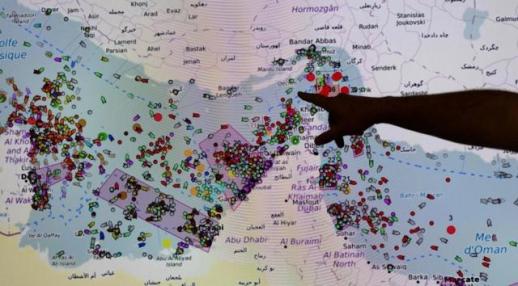 Explosions Reported in Hormuz Strait Amid U.S.-Iran Tensions On May 7, Iranian media reported explosions in the Hormuz Strait linked to U.S. military actions. According to Yonhap News, around 10 p.m. local time, the semi-official Mehr news agency noted that explosions were heard near Qeshm Island, close to Bandar Abbas in southern Iran. A source told Mehr that two drones were shot down near Bandar Abbas, separate from the situation at Qeshm Island. Additionally, the judiciary-run Mizan news agency reported that the Iranian military engaged in combat, targeting the Bahman dock on Qeshm Island. State-run IRIB claimed that U.S. forces attacked an Iranian oil tanker, prompting a missile counterattack from Iran that forced U.S. troops to retreat. The U.S. has not yet commented on these incidents. Just a day earlier, U.S. media, including Axios, reported that the U.S. and Iran were nearing a one-page memorandum of understanding regarding a ceasefire. However, the renewed clashes in the Hormuz Strait have escalated tensions once again. Mohammad Bagher Ghalibaf, the head of Iran's negotiating team, criticized the situation, stating, "We have returned to the typical 'fake Axios' operation," dismissing prospects for progress in negotiations.* This article has been translated by AI. 2026-05-08 06:09:19
 -
 South Korea Moves to Revamp Compensation System for Humidifier Disinfectant Victims South Korea is initiating a process to gather feedback from victims as it prepares to transition to a government-led compensation system for those affected by humidifier disinfectants. This shift is expected to accelerate discussions on compensation standards and support scope.The Ministry of Climate, Energy and Environment announced that it will hold a briefing on the complete revision of the enforcement decree for the "Special Act on Compensation for Humidifier Disinfectant Victims" on May 8 in Seoul. The law is set to take effect on October 8.During the briefing, details regarding the application process for compensation, criteria for determining damages, ongoing treatment costs, and health monitoring procedures will be disclosed. The government plans to incorporate additional feedback from victims before the legislative notice is issued.As the compensation system shifts from a victim-centered approach to a state-led model, key issues such as expanding the scope of compensation and long-term treatment support are expected to be major points of discussion. Some victim advocacy groups are calling for clearer definitions regarding health impacts and support for bereaved families.To facilitate compensation reviews, the government will establish a support organization under the Office for Government Policy Coordination and form a committee to develop detailed compensation standards.The humidifier disinfectant crisis began in 1994 when products linked to lung damage were sold. A 2011 epidemiological study confirmed the connection between these disinfectants and lung injuries. To date, 8,065 individuals have applied for compensation, with 6,011 recognized as victims.In June 2024, 13 years after the causal link was first established, the Supreme Court acknowledged government responsibility in the humidifier disinfectant case. Subsequently, on December 24, the government announced a comprehensive support plan for victims, transitioning to a state-led compensation system.According to the revised law's provisions, individuals already recognized as victims under the previous law will be considered to have applied for compensation as of the new law's effective date. However, new applicants who have not yet been recognized must apply for compensation within six months after the new law takes effect, by April 8, 2027.First Vice Minister of Climate, Kim Han-seung, expressed sincere apologies to victims and their families for their suffering, stating, "We will finalize the subordinate regulations by the law's implementation date and ensure a smooth transition to the new support system for victims."* This article has been translated by AI. 2026-05-08 06:03:25
 -
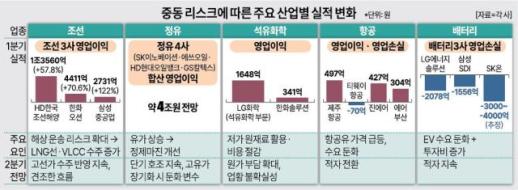 Middle East Conflict Impacts Industries: Shipbuilding and Refining Thrive, Aviation and Battery Sectors Struggle Although the U.S. and Iran have entered negotiations to end hostilities, the domestic industrial sector is expected to feel the impact starting in the second quarter. Industries are experiencing mixed fortunes, with some benefiting while others face challenges. The blockade of the Strait of Hormuz has led to unprecedented logistics disruptions, benefiting the shipbuilding and refining sectors, while the aviation and battery industries are likely to see declines in performance. ◆ Shipbuilding and Refining Benefit from Crisis According to industry reports, shipbuilding has shown the most significant growth due to the Middle East conflict. The blockade has caused a surge in demand for alternative vessels, leading to a substantial increase in high-value ship orders. HD Hyundai's intermediate holding company, HD Korea Shipbuilding & Marine Engineering, reported a 57.8% increase in operating profit for the first quarter, reaching 1.356 trillion won, the highest quarterly profit since its establishment in 2019. Revenue also rose by 20.2% to 8.1409 trillion won, with net profit increasing by 86.6% to 1.1414 trillion won. Hanwha Ocean also saw a 70.6% increase in operating profit to 441.1 billion won, driven by high-value orders for liquefied natural gas (LNG) carriers. Samsung Heavy Industries reported a 16% increase in revenue to 2.9023 trillion won and a 122% rise in operating profit to 273.1 billion won, attributed to increased construction of high-profit vessels amid rising maritime logistics risks. The refining sector has also benefited from sustained high oil prices due to the conflict, improving refining margins as oil product prices rise. Analysts estimate that the combined operating profit of South Korea's four major refiners could reach around 4 trillion won in the first quarter. The petrochemical industry has managed to defend its profits despite soaring raw material costs, leveraging existing low-cost materials to improve performance. LG Chem reported an operating profit of 164.8 billion won in its petrochemical division for the first quarter, while Hanwha Solutions' chemical sector turned a profit of 34.1 billion won, recovering from a loss of 91.2 billion won in the same period last year. Lotte Chemical is also expected to report a profit. ◆ Airlines and Battery Sector Face Challenges Airlines are expected to shift from a brief profit period in the first quarter to significant losses starting in the second quarter. Jeju Air reported an operating profit of 49.7 billion won in the first quarter, but a loss is anticipated in the second quarter. T'way Air's operating loss is expected to widen from 7 billion won in the first quarter to 132 billion won in the second quarter. Jin Air, which posted an operating profit of 42.7 billion won in the first quarter, is projected to incur a loss of 53 billion won in the second quarter. Air Busan is also expected to shift from a profit of 30.4 billion won in the first quarter to a loss of 8 billion won in the second quarter. An airline official stated, "The war has caused international oil prices to soar, directly impacting the cost of aviation fuel, which is based on Dubai crude prices. Aviation fuel is difficult to store in large quantities due to its high risk of deterioration, and refiners are passing on cost increases from the blockade to aviation fuel margins, leading to ongoing losses for airlines since April." The battery sector is also experiencing a downturn. Rising energy prices and prolonged high interest rates due to the conflict have dampened electric vehicle demand, resulting in losses for all three major battery companies. LG Energy Solution reported an operating loss of 207.8 billion won in the first quarter, while Samsung SDI recorded a loss of 155.6 billion won, and SK On is expected to face losses between 300 billion and 400 billion won.* This article has been translated by AI. 2026-05-08 05:03:34
 -
 South Korea's Blue House Responds to North Korea's Constitutional Changes On May 7, the Blue House stated it will conduct a comprehensive review of North Korea's recent constitutional changes, which include the establishment of a territorial clause defining its territory solely as the northern region. A Blue House official emphasized that the government will consistently pursue a policy of peaceful coexistence on the Korean Peninsula based on this review. North Korea recently amended its constitution, removing references to national reunification and the concept of a unified Korea. According to the new constitution disclosed during a press briefing for the Unification Ministry, terms such as 'North Korean Peninsula,' 'national reunification,' and 'complete victory of socialism' were eliminated from the preamble and main text. Additionally, a new territorial clause was added, stating that the territory includes areas bordering the People's Republic of China and the Russian Federation to the north, and the Republic of Korea to the south, along with the associated territorial waters and airspace.* This article has been translated by AI. 2026-05-08 00:51:19
 -
 President Yoon Discusses Semiconductor Cooperation with Dutch Prime Minister President Yoon Suk Yeol spoke with Dutch Prime Minister Rob Jetten on May 7, emphasizing the need to enhance cooperation in advanced industries. This was their first conversation since Jetten took office in February. In a written briefing, Chief Presidential Spokesperson Kang Yu-jeong stated, "President Yoon expressed the desire for both countries to explore practical cooperation in semiconductors, artificial intelligence (AI), and quantum technology." Kang noted that Yoon highlighted the significance of this year, marking the 65th anniversary of diplomatic relations between South Korea and the Netherlands, and praised the mutually beneficial development of their strategic partnership. Jetten responded, expressing hope for continued strong collaboration in the semiconductor sector and expanding cooperation in areas like batteries and offshore wind energy. Kang added that both leaders acknowledged the importance of their partnership amid increasing global uncertainties, particularly due to the situation in the Middle East, and agreed to maintain close communication. In a post on X (formerly Twitter), President Yoon stated, "If South Korea, a semiconductor manufacturing powerhouse, and the Netherlands, strong in advanced semiconductor equipment, continue to collaborate, we can significantly contribute to stabilizing the global semiconductor supply chain." Yoon described the conversation as meaningful, allowing for open discussions on various issues, including the situation in the Middle East, and expressed commitment to deepening cooperation between the two nations. 2026-05-08 00:08:04