
Journalist

HAN Joon ho
-
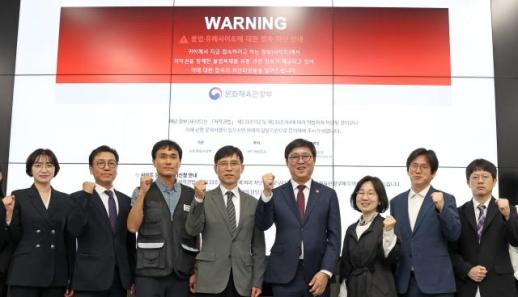 34 Copyright Infringing Sites, Including 'New Toki,' Blocked by Government The government has officially implemented an emergency blocking system for copyright infringement sites, taking its first action on May 11. The Ministry of Culture, Sports and Tourism notified internet service providers of the "first emergency blocking order" for copyright infringement sites. A total of 34 sites are included in this emergency block. The emergency block is a measure that fundamentally prevents users from accessing illegal sites and is considered the fastest and most effective administrative response to copyright infringement. The ministry explained that the 34 sites targeted for blocking meet the criteria of clear illegality as defined by copyright law, the urgency of preventing damage, and the absence of alternative measures. Notably, the site 'New Toki,' which has repeatedly closed and reopened, is among those blocked. New Toki has been illegally distributing webtoons and web novels and announced on April 27 that it had ceased operations, stating, "We have no plans to resume services in the future." However, a site with the same name has since reappeared, complicating efforts to eradicate illegal content distribution. Minister Choi Hwi-young visited the Korea Copyright Protection Agency on the same day to express his commitment to a strong response against illegal sites and to encourage on-site staff. He stated, "We recognize that operators of illegal sites are unlikely to easily give up the profits they have gained illegally, despite the government's firm stance and new response system. Even if it becomes an ongoing battle, we will strive to shorten the lifespan of illegal sites as much as possible through swift blocking measures." Meanwhile, following the closure of illegal webtoon sites, positive changes have been observed, such as improved usage metrics for legal platforms like Naver Webtoon. According to Mobile Index, the average number of new installations for Naver Webtoon from April 27 to May 1 was 15,537, a 31% increase compared to the average of 11,853 installations from April 20 to 26.* This article has been translated by AI. 2026-05-12 04:12:53
 -
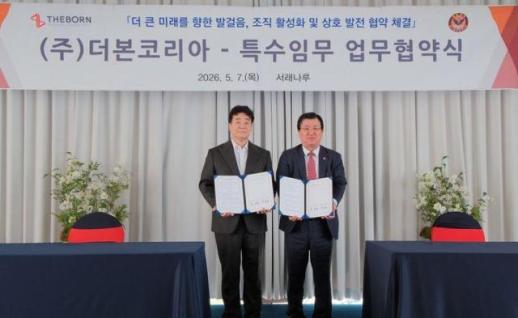 Veterans Group Partners with Daebon Korea for Economic Empowerment The Korea Special Mission Veterans Association and Daebon Korea are embarking on a partnership based on shared social responsibility. The initiative aims to support the economic independence of veterans while expanding corporate social responsibility through a collaborative model. The Korea Special Mission Veterans Association announced that it signed a memorandum of understanding (MOU) with Daebon Korea on May 7 at Seorae Naru in Banpo Hangang Park. The two organizations will focus on a "capital-free startup support program" to assist veterans' families in achieving self-sufficiency. This initiative aims to reduce the financial burden of starting a business and establish a stable foundation for operations. Additionally, they plan to collaborate on public interest projects, including eco-friendly energy and ESG management practices. The partnership is rooted in a connection formed in the past. Baek Jong-won visited the veterans association's training center while obtaining his yacht license. During this visit, he shared homemade kimchi with an instructor who was battling cancer, a gesture that gained attention online as a heartwarming story. Kim Yong-deok, the association's president, stated, "Baek Jong-won's sincere actions toward veterans' families have instilled deep trust among our members. We are now moving beyond a relationship of receiving help to becoming partners in driving corporate growth and realizing social value together."* This article has been translated by AI. 2026-05-12 04:11:15
 -
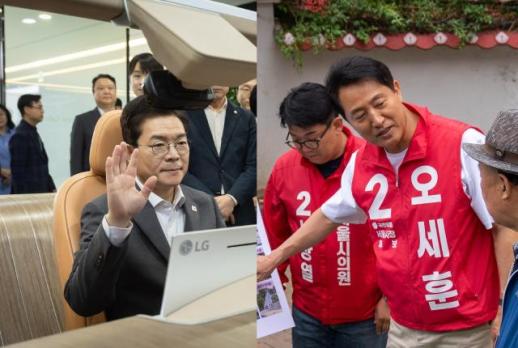 Seoul Mayoral Candidates Focus on AI and Housing Issues In the lead-up to the June 3 Seoul mayoral election, Jung Won-o of the Democratic Party unveiled AI-related policy proposals on May 11, aiming to capture the support of young and moderate voters. Meanwhile, Oh Se-hoon of the People Power Party focused on housing supply, a key issue in the election, to dominate the real estate narrative. Jung announced his 'AI G2 (Global 2nd City) Seoul' initiative on his social media, following a visit to LG's AI research center in Magok-dong, where he observed a demonstration of large-scale AI technology and held a policy meeting. This initiative follows his announcement on May 8 to develop Yongsan into a 'Global AI Governance Hub' for discussions on AI diplomacy, safety, ethics, and international standards. Jung also pledged to transform the relatively underdeveloped Guro and Gasan Digital Complex into a center for physical AI demonstration economies. He aims to connect AI research capabilities in Yangjae with the industrial base in Guro and Gasan to establish a 'Seoul-style physical AI ecosystem' that operates in real-world industrial settings. The city plans to become the first customer for AI companies, expanding projects to develop and test related services. It will also operate a hands-on AI academy for youth and middle-aged individuals to support job creation and industrial transition. AI will also be utilized for citizen safety and administration. Plans include safety AI to address stalking and nighttime risks, disaster AI to predict flooding and fires, and small business AI to assist with sales, inventory, and customer service. The city aims to establish a direct AI complaint system and an AI administrative support platform to better identify and respond to citizen issues. Jung stated, "For South Korea to lead in the global AI competition, the entire city must become an innovation platform. We will set global AI standards in Yongsan and create jobs and business growth in Guro and Gasan to usher in the AI G2 era." Oh, on the other hand, focused on addressing public concerns about real estate. He held a press conference for the 'Citizens' Countermeasure Meeting on Real Estate Hell' in Gaebong-dong, Guro-gu, and later convened a meeting with representatives from various urban planning and redevelopment associations in Jongno-gu. At the press conference, Oh highlighted issues such as the surge in jeonse (long-term lease) prices, rising monthly rents, increased property taxes, and lending restrictions, stating, "Both homeowners and those without homes are deeply concerned. All Seoul citizens are expressing their pain." He attributed the 'real estate hell' to the failures of the Lee Jae-myung administration's housing policies, asserting, "Many voters are desperately seeking solutions, and I will actively listen to the voices of residents across Seoul, especially the youth." Meanwhile, the two candidates continued their back-and-forth over the possibility of a one-on-one debate. Oh pressed Jung, stating, "A multi-candidate debate is scheduled by the election commission, but I propose a one-on-one debate on Seoul's various policies." In response to Jung's criticism that Oh had previously rejected debate proposals during the People Power Party's primary, Oh argued, "At that time, the other candidates had not yet formulated their pledges." He insisted that Jung should not use the past as an excuse to avoid a one-on-one debate, adding, "Now that both of us have put forth our pledges, it is our duty and responsibility to debate." Jung, appearing on CBS Radio's 'Park Seong-tae's News Show,' referenced the earlier primary debate and stated, "Changing one's stance based on the situation leads to a loss of trust," effectively signaling his refusal to participate in a one-on-one debate.* This article has been translated by AI. 2026-05-12 04:08:23
 -
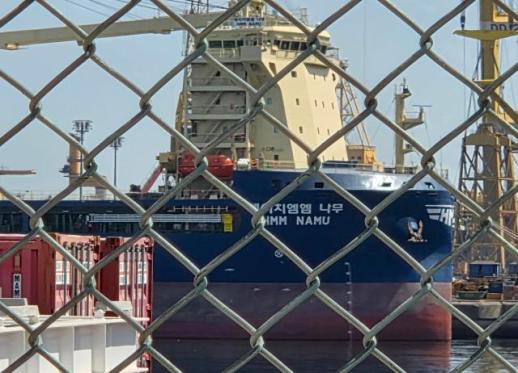
 HMM Cargo Ship Hit by Drone in Hormuz Strait, Impacting Transformer Exports The South Korean government confirmed that the HMM Namoo, a heavy-lift vessel, was struck by what is believed to be a suicide drone on May 4, resulting in a fire onboard. This incident has raised alarms for domestic companies involved in transformer exports to the Middle East and their subsequent engineering, procurement, and construction (EPC) contracts. As HMM's operations face disruption, there are concerns that Chinese shipping companies like COSCO may benefit from this situation. According to the shipping industry on May 11, HMM Namoo has completed an initial site investigation and will now focus on repairs in the Middle East. The impact area from the unidentified flying object resulted in a breach approximately 5 meters wide and 7 meters deep, with the hull bending inward. A significant fire also occurred inside the vessel, completely destroying the engine room. HMM stated, "We plan to establish a repair schedule in consultation with local shipyards." The main concern now is the cost and duration of repairs. It is currently unclear how extensive the repairs will need to be. Experts predict that since repairs will take place at a shipyard in Dubai rather than at the Chinese CSSC shipyard where the vessel was built, significant additional costs and time will be required. Having launched last September, the latest heavy-lift vessel's departure will inevitably disrupt HMM's future business plans. As HMM has played a crucial role in exporting domestic transformers and plant materials to the Middle East, local transformer and EPC companies are closely monitoring the situation. HMM entered the heavy-lift shipping business in 2007 and, last year, added four vessels, including the Namoo, to its fleet, demonstrating a strong commitment to this sector. This decision was made in response to the rapid growth of domestic transformer and EPC businesses, particularly in the Middle East and U.S. markets. While the market situation remains somewhat fluid, HMM has deployed seven of its eleven heavy-lift vessels on routes to the Americas and four to the Middle East, effectively serving as a bridge for domestic and international companies. In fact, both the Namoo and the Narae are currently stranded in the Hormuz Strait after delivering cargo, while the Naru and Masan are waiting outside the strait to deliver their loads. The transformer and EPC sectors predict that the impact on Middle Eastern exports will be limited due to long-term contracts in place. A representative from a transformer company noted, "Contracts for transformer supplies in the Middle East are long-term, so they are not significantly affected by the closure of the Hormuz Strait or the shortage of heavy-lift vessels. However, we may need to consider securing alternative transport networks." An EPC company representative added, "There have been no reported disruptions to ongoing plant construction projects in the region due to the conflict in the Middle East. We plan to focus all efforts on responding to the reconstruction opportunities that may arise following U.S.-Iran ceasefire negotiations." However, HMM is expected to expedite efforts to secure additional heavy-lift vessels through early returns of the Namoo and long-term charter contracts, as there are concerns about losing major clients. Historically, the heavy-lift shipping market was dominated by European companies from Germany and the Netherlands, but the rapid growth of Chinese transformer and EPC firms has strengthened the influence of COSCO, a state-owned shipping company in China. COSCO operates a fleet of over 20 heavy-lift vessels, focusing on serving as a spearhead for Chinese enterprises. A shipping industry insider remarked, "The Middle East, along with routes to the Americas, is a key route for domestic heavy-lift vessels, and container shipping has only recently recovered after the bankruptcy of Hanjin Shipping. Even if the closure of the Hormuz Strait is lifted, the government needs to work closely with countries related to the strait to ensure the safe operation of domestic container and cargo vessels in the region."* This article has been translated by AI. 2026-05-12 04:05:11
 -
 Concerns Rise Among Crew of HMM Namoo After Attack in Middle East The South Korean government has officially announced that the cause of the fire on the HMM Namoo was due to an "external impact," heightening tensions within the domestic shipping industry. Concerns are growing that other vessels waiting near the Strait of Hormuz could also become targets, leading to calls for measures to protect crew members and evacuate ships. As of May 11, crew members of the Namoo are reportedly waiting on-site while investigations and inspections are conducted. Although there have been no requests for collective disembarkation or significant unrest, the prolonged state of tension has resulted in considerable psychological stress and fatigue among the crew. Jeon Jeong-geun, chairman of the HMM Maritime Union, stated, "The crew of the Namoo is waiting calmly, but they appear to be under significant psychological pressure and shock. Disembarking from a war-risk area is a legitimate right for the crew, and we are prepared to facilitate immediate rotations if requested." HMM has also indicated that it will expedite crew rotations for those who wish to disembark. The company noted, "We are currently focused on the ship's repairs and the investigation, and if any crew members wish to rotate, we will proceed immediately." However, the challenge lies in the difficulty of executing crew rotations. Given the uncertainty of potential further attacks, finding replacements willing to enter a conflict zone is proving to be a complex issue. As the ongoing conflict in the Middle East has led to prolonged maritime waiting periods, there is a growing trend among crew members to avoid assignments on Middle Eastern routes. An industry insider remarked, "Initially, many crew members were willing to take on Middle Eastern assignments due to high war-risk allowances and wages, but the atmosphere has changed dramatically since the attack on the Namoo. Recently, families have been urging crew members to disembark or avoid Middle Eastern routes altogether." Currently, there are approximately 26 South Korean vessels and around 160 South Korean crew members in the vicinity of the Strait of Hormuz. The industry and government are monitoring the supply of essentials such as drinking water and food daily, but reports indicate that the psychological fear among crew members has reached critical levels. Shipping companies are also facing escalating financial burdens. The combination of difficulties in crew rotations, rising war insurance premiums, and increased fuel costs has led to soaring operational expenses. According to the Korea Shipping Association, the additional costs incurred by fleets stranded near the Strait of Hormuz are estimated to be around 400 million won per day. Particularly, the industry is closely watching the implications of the government investigation results on the global insurance market. With war insurance premiums and rates already rising for the region, the confirmation of actual attack incidents is expected to further increase the financial burden on shipping companies. Some are even raising concerns about a potential logistics shutdown originating from the Middle East. Kyu-hoon Koo, president of the International Logistics Association, stated, "Even if hostilities cease, supply chain disruptions and logistics delays will persist for some time. Given that the Middle East is a critical hub for global oil and logistics flows, any escalation of anxiety could have a cascading effect on the shipping and logistics markets as a whole."* This article has been translated by AI. 2026-05-12 04:02:39
 -
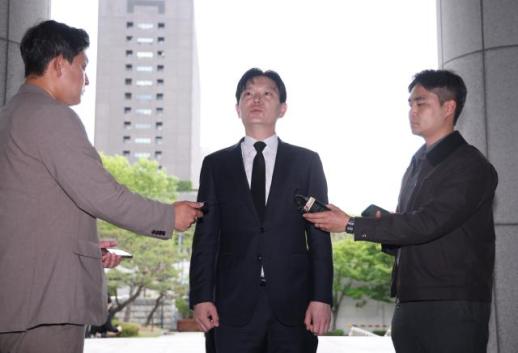 Park Sang-yong Seeks Opportunity to Clarify Allegations Amid Disciplinary Review Park Sang-yong, a deputy chief prosecutor at the Incheon District Prosecutors' Office, is under investigation for allegedly coercing testimony by providing salmon and alcohol during the North Korean remittance investigation involving Ssangbangwool. He has requested an opportunity to clarify the allegations and indicated he would file a lawsuit depending on the outcome of the disciplinary review.According to legal sources, the Supreme Prosecutors' Office held a meeting of its inspection committee on the afternoon of May 11 to deliberate on the disciplinary action against Park.Speaking to reporters around 1:50 PM outside the Supreme Prosecutors' Office, Park stated, "I have not been informed at all about what the allegations are or how many there are against me. I believe that even if there are grounds for disciplinary action, it should not be carried out based on a predetermined conclusion without giving me any procedural rights or opportunities to clarify my position."He added, "If there were proper procedures in place, I would not have to stand before the media or wait indefinitely in the office. I would like to have the opportunity to clarify my case to the external committee members as if I were knocking on the door of a grievance office."Furthermore, Park noted, "After the Supreme Prosecutors' Office's inspection committee, the matter will go to the Ministry of Justice, which also has its own inspection committee, and I understand that the final disciplinary decision will be made by the disciplinary committee. If a disciplinary action is ultimately imposed and I cannot accept it, I plan to file a lawsuit for cancellation."Park is accused of providing salmon and alcohol to suspects, including former Gyeonggi Province Peace Vice Governor Lee Hwa-young and former Ssangbangwool Chairman Kim Sung-tae, while investigating the North Korean remittance case.The task force at the Seoul High Prosecutors' Office, which is investigating the allegations, reported to the Supreme Prosecutors' Office on May 17, 2023, after confirming that such gatherings had taken place.The second comprehensive special investigation team, led by Special Prosecutor Kwon Chang-young, which is investigating remaining allegations following the three major special investigations (Kim Geon-hee, insurrection, and deceased Marines), received the North Korean remittance case from the Seoul High Prosecutors' Office task force last month and is currently conducting an investigation into what has been termed the "Presidential Office's interference in the Suwon District Prosecutors' Office investigation."* This article has been translated by AI. 2026-05-12 03:59:59
 -
 Increased Inclusion, Greater Burden: Rising Costs of Expanded Financial Support As the banking sector expands its inclusive finance initiatives to support vulnerable borrowers, concerns are growing about the financial burden on institutions. While there is consensus within the financial community on the need to assist disadvantaged groups, there are fears that performance metrics for inclusive finance could become a new standard for oversight and evaluation. On May 6, President Lee Jae-myung raised this issue during a Cabinet meeting, asking Financial Services Commission Chairman Lee Ok-keun if there was a way to evaluate how well financial institutions are implementing inclusive finance and to provide incentives or penalties based on that performance. He expressed concern that the current system relies too heavily on the goodwill of financial companies. This comment suggests a potential shift toward incorporating the performance of inclusive finance for low- and medium-credit borrowers into the evaluation and management guidelines for financial institutions. The atmosphere in the financial sector indicates that this could signal a move beyond mere recommendations to a more structured oversight and evaluation system. Banks have already invested significant resources into expanding support for vulnerable borrowers. The trend of increasing the scale of long-term delinquent loan write-offs and policy-based financial support is evident. This year, the total amount of special bonds scheduled for write-off is estimated at 335.1 billion won, with Shinhan Bank accounting for the largest share at 269.4 billion won, followed by KB Kookmin Bank at 33.5 billion won and Woori Bank at 32.2 billion won. There is also a surge in demand for policy financing targeting young people, who often lack sufficient credit history to access traditional financial systems. The 'Youth Future Connection Loan,' a notable public-private partnership in inclusive finance, has seen 4.75 billion won disbursed within a month of its launch in March, achieving 134% of its initial target. The average daily application rate reached about 1,700. The funding for this initiative comes from contributions of 100 billion won each from KB, Shinhan, and Woori Financial. In addition, banks are strengthening their support measures for vulnerable groups. KB Kookmin Bank plans to introduce a program this month that allows low-credit individual business owners to use interest payments on loans exceeding 5% to reduce their principal repayment burden. It is expected that over 10,000 individuals will benefit from this financial relief. Shinhan Bank has also been implementing a program since January 30 that refunds interest exceeding 5% for individual business customers. Additionally, a 'refinancing loan' aimed at helping customers switch from high-interest loans at savings banks to bank loans is set to launch in the first half of the year. However, the expansion of inclusive finance is increasing the financial burden on banks. In addition to their own programs, banks are participating in various public funding initiatives. Contributions to the Korea Inclusive Finance Agency have risen from 434.8 billion won last year to 632.1 billion won this year. The scale of policy-based low-income financial support is also expected to grow from 5.6 trillion won in 2024 to 7.2 trillion won this year, marking a 28.5% increase. The amount supplied in just the first two months of this year reached 2 trillion won. While these measures aim to alleviate the debt burden of vulnerable groups and support credit recovery, some critics argue that the policy burden is becoming excessively concentrated on private financial institutions. There are concerns that inclusive finance could devolve into a mere competition for supply metrics rather than providing genuine support for self-sufficiency. Evaluating success solely based on the scale of supply or debt relief could lead to superficial assistance and increased defaults. A financial sector representative stated, "There is a need for a system that evaluates inclusive finance based on actual self-sufficiency outcomes, such as normal repayment rates, the rate of return to economic activity after credit recovery, and re-delinquency rates. If the expansion of support continues, the burden on financial institutions will accumulate, ultimately passing those costs onto consumers."* This article has been translated by AI. 2026-05-12 03:57:45
 -
 Lotte Chemical Reports 1st Quarter Operating Profit of 73.5 Billion Won Amid Middle East Conflict Lotte Chemical announced on May 11 that it recorded preliminary first-quarter revenues of 4.99 trillion won, an operating profit of 73.5 billion won, and a net profit of 33.5 billion won for 2026. The company achieved a turnaround in its basic materials sector despite the impact of the ongoing conflict in the Middle East, largely due to a lagging effect worth 250 billion won. Lotte Chemical stated, "The expansion of product spreads and the positive inventory valuation effect from rising naphtha prices at the end of the quarter were key factors in the improved performance." They added, "We are currently securing a stable supply of domestic naphtha and expect continued supply in the future," noting that current plant operating rates remain unaffected. To strengthen the domestic petrochemical industry, Lotte Chemical is reviewing a restructuring of its business operations. During a conference call, the company indicated, "Considering the sluggish petrochemical market expected to persist over the next 2-3 years, we are contemplating shutting down one of the two naphtha cracker (NCC) units in Daesan and two of the four units in Yeosu." At the same time, Lotte Chemical plans to expand its functional materials and high-value-added businesses in the long term. The company aims to produce 500,000 tons annually of engineering plastics, a high-value specialty material, at its single largest compounding plant, set to be completed within the year. Future plans include expanding the production lineup to include high-performance products like Super EP. A Lotte Chemical representative stated, "We will continue to closely monitor external conditions and market situations to optimize production operations for stable material supply. Additionally, we will enhance competitiveness through business restructuring in basic chemicals and pursue a balanced portfolio to ensure our long-term growth strategy remains steadfast."* This article has been translated by AI. 2026-05-12 03:55:52
 -
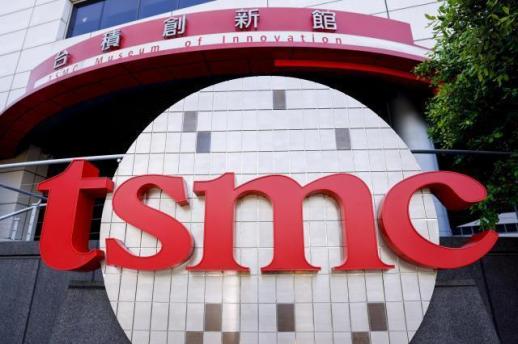 TSMC Faces Pressure as Apple Considers Chip Production Deal with Intel Reports that Apple plans to outsource some of its custom-designed chips to Intel have raised concerns about a potential shift in TSMC's exclusive partnership with Apple. However, experts believe TSMC will likely maintain its status as Apple's key partner for the foreseeable future, given its advantages in yield, power efficiency, and advanced packaging technology. On May 11, Taiwanese media outlets, including Focus Taiwan, reported mixed assessments within the industry regarding the potential collaboration between Apple and Intel. The Wall Street Journal had previously reported on May 8, citing multiple sources, that Apple reached a preliminary agreement to have Intel produce some of its custom-designed chips. Apple and Intel have reportedly been negotiating this partnership for over a year. In this context, Liu Peijian, a researcher at the Taiwan Institute of Economic Research, assessed that TSMC is likely to remain Apple's primary chip manufacturing partner. He noted that TSMC's advanced packaging technologies, including InFO (Integrated Fan-Out) and CoWoS (Chip on Wafer on Substrate), are still critical for the performance of Apple's A-series and M-series chips. Liu pointed out that both Intel and Samsung are currently behind TSMC in terms of yield and power efficiency, making it difficult for Apple to shift its flagship chip orders away from the Taiwanese foundry in the near term. He analyzed that the deep technological collaboration between Apple and TSMC over the years has created a high barrier to entry for competitors. Unless rivals achieve significant breakthroughs in 2-nanometer or Gate-All-Around (GAA) technology, TSMC is expected to remain Apple's preferred manufacturing partner. Intel is advancing its 18A process, while Samsung is exploring opportunities with its 2-nanometer GAA technology. However, Liu noted that both companies have faced issues with unstable yields and excessive power consumption in past large-scale production processes. Considering TSMC's stable delivery performance and extensive research and development capabilities, Liu assessed that the company's leading position remains difficult to challenge. He added that for Apple, moving core chip orders too soon could pose significant supply chain risks. Li Fangguo, chairman of President Capital Management, also told CNA that Apple's push for collaboration with Intel is not due to any technical issues with TSMC. Instead, he suggested that the growing demand for advanced processes from AI chip customers like NVIDIA has strained TSMC's production capacity. Li stated that this situation highlights TSMC's dominant position in the advanced chip manufacturing sector, noting that demand across the industry currently exceeds supply. Concerns About TSMC's Position Conversely, some experts believe that a partnership between Apple and Intel could pose challenges for TSMC. According to the China Times, financial and economic expert Luan Muhua recently expressed on social media that if the collaboration between Apple and Intel is formalized, it could heighten TSMC's sense of crisis. Luan assessed that if the partnership materializes, Apple would gain additional key options related to its supply chain, while Intel would secure a heavyweight customer in its foundry business revival. However, he pointed out that this could signify the practical end of TSMC's exclusive production era for Apple chips. Luan explained that it is currently unclear which Apple products Intel would produce chips for. However, he noted that even a slight adjustment in Apple's supply chain, given its massive annual shipments of iPhones, iPads, and Mac computers, could impact chip production facility allocations and market forecasts. He raised questions about whether Intel has the capacity to share production of Apple orders with TSMC. However, he acknowledged that the backing of the White House could change the dynamics, suggesting that this shift is reflected in the recent stock trends of Intel, Apple, and TSMC.* This article has been translated by AI. 2026-05-12 03:53:25
 -
 Five Major Banks Increase Self-Rescue Efforts by 3.5 Times Amid Debt Management Changes President Lee Jae-myung praised the Financial Services Commission's achievements in inclusive finance as "remarkable" during a Cabinet meeting, highlighting a shift in how banks manage delinquent loans. Instead of selling off delinquent accounts to external collection agencies, banks are now focusing on internal debt adjustments and loan forgiveness to help borrowers recover. Documents obtained from the Cabinet meeting on May 11 reveal that the five major commercial banks—KB Kookmin, Shinhan, Hana, Woori, and NH Nonghyup—saw their internal debt adjustments rise from 989 cases in the first quarter of 2025 to 3,456 cases by the fourth quarter of the same year, a 3.5-fold increase. In contrast, the sale of delinquent loans plummeted from 35,000 cases in 2025 to just 11 in the first quarter of 2026. The Financial Services Commission views this as a transition from a "maximizing recovery" approach to one focused on "recovery and coexistence." Traditionally, the financial sector has relied on selling long-term delinquent loans to external collection agencies. While this allowed financial institutions to remove bad debts from their books, it often left borrowers facing prolonged collection efforts. The management of delinquent loans by banks is evolving. The five major banks have increased their efforts to write off old debts that are difficult to collect. Their performance in terms of debt expiration and write-offs rose from an average of 2,229 cases and 59.8 billion won over the past three years to 7,676 cases and 288.2 billion won in the first quarter of this year. This represents more than a threefold increase in the number of cases and nearly a fivefold increase in the amount, indicating a stronger trend toward internal adjustments rather than transferring delinquent loans externally or leaving them in prolonged collection. During the Cabinet meeting on May 6, President Lee remarked on the report from Financial Services Commission Chairman Lee Ok-won, stating, "The Financial Services Commission is achieving remarkable results. They are doing very well." He emphasized the need for a structural shift in finance, noting that the previous mindset of squeezing every last penny from borrowers was not acceptable. The effects of removing delinquency records are also becoming evident. Approximately 2.928 million individuals who repaid their delinquencies have received credit relief, with 154,000 of them resuming normal financial transactions, such as obtaining new loans or credit cards. Efforts to address old debts are also underway. Financial authorities are working on plans to forgive or write off long-term delinquent loans, specifically targeting 1.13 million individuals with debts under 50 million won that have been overdue for more than seven years, totaling 16.4 trillion won. This initiative aims to reintegrate borrowers who have been excluded from the financial system due to prolonged delinquency. The Financial Services Commission plans to institutionalize these improvements in delinquent loan management to ensure they are not one-time measures. Starting in the second quarter, it will disclose delinquent loan management performance across all sectors and establish incentive systems, including differential fees. This aligns with President Lee's comments regarding the potential for incentives and penalties through evaluations and management guidelines for financial institutions.* This article has been translated by AI. 2026-05-12 03:51:21