
Journalist

Han Ki-ho
-
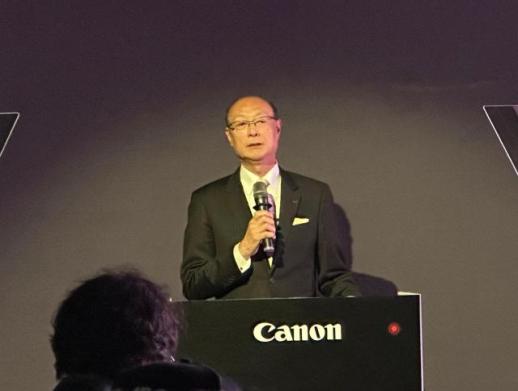 Canon Korea Launches Video-Focused Camera 'EOS R6 V' Canon Korea is accelerating its efforts to target the video creator market. As the one-person video creator market expands, the company is launching a full-frame mirrorless camera and a dedicated power zoom lens tailored for video content.On May 14, Canon Korea held a press conference at Studio 159 in COEX, Seoul, to unveil the video-focused full-frame mirrorless camera 'EOS R6 V' and the power zoom lens 'RF20-50mm F4 L IS USM PZ.' Attendees included Park Jung-woo, CEO of Canon Korea, and Tokuura Ko, Vice President of Canon Imaging Group.The new products reflect the rapid shift in the camera market from photography to video. With the rise of short-form content on platforms like YouTube, TikTok, and Instagram Reels, there is an increasing demand for high-quality video production among everyday consumers.During his visit to Korea, Tokuura Ko noted, "Twelve years ago, when I visited Korea, the presence of mirrorless cameras was limited. Now, with the evolution of smartphone cameras, everyone can enjoy photography and videography. This new product maximizes mobility and usability for video shooting, allowing anyone to capture professional-grade footage."The EOS R6 V is the first model in the EOS R V series to feature a full-frame sensor. Unlike previous mirrorless cameras focused on photography, this model is specifically designed for video production.The camera's design caters to video creators, featuring a box-shaped flat body that minimizes interference when attaching accessories. It supports vertical shooting with a tripod hole and a vertical user interface (UI) to enhance convenience for short-form content creation. Additionally, it includes a front recording button, 12 customizable buttons, and tally lamps to improve usability in real-world video production environments.Notably, the EOS R6 V has improved heat control, addressing a common challenge in video shooting. It is equipped with an internal cooling fan, allowing for continuous recording of up to 120 minutes at 4K 120P and 7K open gate resolutions. This enhancement considers the growing demand for long-duration filming and live streaming among video creators.Performance has also been significantly upgraded. The camera features a 32.5-megapixel full-frame CMOS sensor and DIGIC X engine, enabling internal recording of up to 7K 60P RAW video and supporting 7K oversampling for 4K video capture. It can shoot 4K 120P and 2K 180P without any crop loss.Canon emphasizes the 'Open Gate' feature as a key competitive advantage of this product. This function utilizes the entire 3:2 aspect ratio of the sensor, allowing for flexible cropping and reframing to suit various screen ratios. This capability enables creators to produce content for multiple platforms from a single recording.The autofocus (AF) system has also been enhanced for video shooting. The EOS R6 V features Dual Pixel CMOS AF II, which automatically recognizes people, animals, cars, airplanes, and trains, and includes a 'Review AF' function that prioritizes close-up subjects during product reviews. It also supports focus acceleration control for smooth focus transitions during video shooting.The RF20-50mm F4 L IS USM PZ, launched alongside the camera, is Canon's first power zoom lens for full-frame RF cameras. Weighing approximately 420 grams, it features a lightweight design and inner zoom structure to minimize changes in weight distribution during gimbal and handheld shooting.Notably, it allows for smooth zooming without additional equipment. The zoom speed can be finely adjusted in 15 steps, enabling solo creators to achieve cinematic effects. When paired with the EOS R6 V, it supports electronic zoom control via the body zoom lever.In his welcoming remarks, CEO Park Jung-woo stated, "Canon Korea is strengthening its integrated imaging ecosystem that encompasses photography and video, hardware and software, in response to the changing creative environment. This new product is designed to meet the rapidly evolving video content market, expanding the creative possibilities for creators."* This article has been translated by AI. 2026-05-15 02:34:11
 -
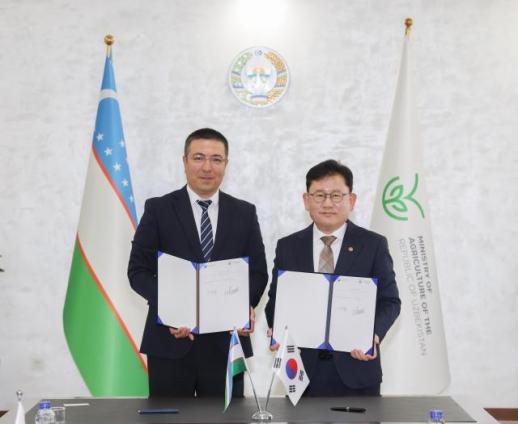 Korea's Rural Development Administration Shares Dairy and Rice Cultivation Techniques in Uzbekistan Lee Seung-don, head of South Korea's Rural Development Administration (RDA), visited Uzbekistan to promote K-dairy technology and rice cultivation techniques. According to the RDA, Lee's visit began on May 13, during which he attended field demonstrations, met with government officials, and signed a memorandum of understanding (MOU). On the first day of his visit, Lee observed a field demonstration at Sultan Farm in the Syrdarya region. During this event, a letter of intent for the export and import of Korean dairy cattle embryos was signed between a Korean embryo export company and Sultan Farm. The pregnancy success rate for implanted Korean dairy embryos is 50%, which is 20 percentage points higher than the 30% rate for foreign embryos, earning positive feedback locally. Lee also met with Shadman Ergashevich Namazov, head of the Agricultural Knowledge Innovation Agency, and Abdullo Marufovich Mansurov, director of the Rice Research Institute, where he attended the KOPIA rice mechanization demonstration. The mechanized rice planting method using Korean agricultural machinery reportedly reduces labor by 70% while increasing productivity by up to 52%. The RDA plans to expand the area for high-quality seed production to 200 hectares next year. On May 14, Lee held high-level talks with Abdujurov Jamshidjon, Uzbekistan's Deputy Minister of Agriculture, and signed an MOU to enhance the capacity of experts in artificial insemination technology. The agreement includes the exchange of livestock genetic resources, joint research on breeding and management techniques, the exchange of agricultural specialists and technical training, and the simplification of animal medicine registration. Lee stated, "This achievement goes beyond mere technology transfer; it represents a virtuous cycle that integrates into the policies of the partner country and leads to export cooperation. I will do my best to expand the overseas presence of agricultural technology and Korean agricultural equipment."* This article has been translated by AI. 2026-05-15 02:31:38
 -
 Adore and Daniel's $431 Million Lawsuit Faces Delays in First Hearing In the first hearing of a $431 million damages lawsuit filed by Adore against former NewJeans member Daniel and former Adore CEO Min Hee-jin, both sides clashed over delays in the proceedings. The court rejected Adore's request to change the hearing date and proceeded as scheduled. The Seoul Central District Court's Civil Division 31, presided over by Judge Nam In-soo, held the initial hearing on May 14. Neither Daniel nor Min attended, with only their legal representatives present in court. Adore recently appointed a new legal representative, Lee Han Law Firm, after the previous firm, Kim & Jang, resigned. Following this change, Adore submitted a request to reschedule the hearing on May 8, which the court denied. During the hearing, a dispute arose regarding whether Adore had submitted its plan for proving damages. The court had previously required Adore to submit evidence by April 30, but the submission was not made by the deadline. Adore's representative apologized for the failure to submit the plan but insisted there was no intention to delay the case. They argued that the plaintiff also seeks a prompt resolution and that the proceedings should not restrict the plaintiff's ability to prove their case. In contrast, Daniel's side argued, "After four months of litigation, they changed their legal representation and are trying to restart the case, which seems to waste Daniel's prime time as an idol on legal disputes." They claimed that Adore is targeting only Daniel among NewJeans members with this substantial lawsuit, suggesting an ulterior motive to intimidate other members into compliance. Min's side also criticized the delay in submitting the proof plan while changing representatives, calling it a malicious act that harms the defendants' lives, and requested sanctions from the court. In response, Adore's representatives stated, "We have never interfered with Daniel's activities or had disagreements regarding them," arguing that it is contradictory to claim interference while filing a lawsuit based on contract termination. Daniel's side requested that the trials be separated for each defendant, noting that the legal responsibilities regarding Daniel involve contract violations, while those concerning Daniel's family and Min relate to joint illegal acts, indicating different legal structures. The court stated it would decide on the separation of trials at a later date and reiterated its request for Adore to submit the proof plan and witness requests by June 2. The next hearing is scheduled for June 11 at 2 PM. One of the key issues in this lawsuit is the concept of "tampering." The court noted that tampering is a term closely related to industry practices and indicated the need to examine whether it can be immediately classified as illegal. Both sides were asked to submit lower court precedents and international cases from similar industries for review. Adore filed the lawsuit in December after notifying Daniel of the termination of his exclusive contract, seeking damages, including penalties, totaling $431 million. Previously, on April 30, the court ruled in favor of Adore in a case confirming the validity of the exclusive contract.* This article has been translated by AI. 2026-05-15 02:29:13
 -
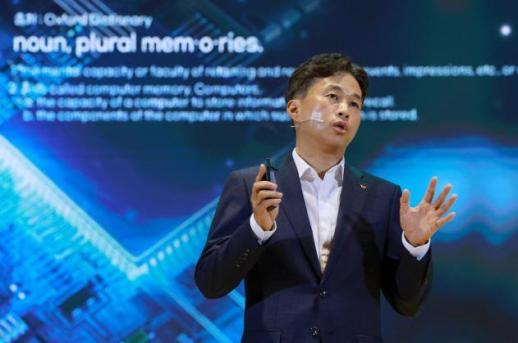 SK Hynix CEO Kwon No-jung Tops Semiconductor Non-Owner Stockholders Kwon No-jung, CEO of SK Hynix, has become the top non-owner stockholder in South Korea's semiconductor industry. This marks the first time that a SK Hynix executive has surpassed Samsung Electronics executives, who have traditionally dominated the semiconductor stock wealth rankings. The recent surge in SK Hynix's stock price, driven by enhanced competitiveness in high-bandwidth memory (HBM), has significantly increased the value of executives' stock holdings.According to a report released on May 14 by the corporate analysis firm Korea CXO Research Institute, Kwon's stock valuation stood at 28.28051 billion won as of May 13.This amount exceeds the 27.9 billion won valuation of Noh Tae-moon, CEO of Samsung Electronics, by approximately 3 billion won.This is the first instance of an SK Hynix executive leading the stock valuation rankings among non-owner executives in the semiconductor sector.Kwon holds 14,312 shares of SK Hynix, based on the closing price of 1,976,000 won on May 13. His stock valuation has increased from about 2.9 billion won last October to over 25.3 billion won in just six months, reflecting a staggering growth rate of 861%.During the same period, SK Hynix's stock price rose from 510,000 won to 1,976,000 won, marking an increase of approximately 287%. Samsung Electronics also saw its stock price rise from 98,800 won to 284,000 won, but the increase was relatively modest.The report highlighted a notable increase in asset values among semiconductor executives. A total of 1,207 executives at Samsung Electronics and SK Hynix hold stocks, with 258 non-owner executives having stock valuations exceeding 1 billion won, accounting for 21.4% of the total. This represents more than an eightfold increase from just 31 executives last October. Compared to the previous month's report, which identified 173 executives, an additional 85 have joined the '1 billion club' in just over a month.By company, 170 Samsung Electronics executives and 88 SK Hynix executives hold stock assets valued at over 1 billion won. While Samsung has a higher absolute number, SK Hynix has demonstrated a faster rate of asset growth.Notably, the asset growth of Choi Seon-yong, another SK Hynix executive, has been remarkable. His stock valuation has surged from about 800 million won last October to 13.5 billion won this month, reflecting an increase of 1,524%. His shareholding has grown from 1,629 shares to 6,834 shares, compounded by the rise in stock price.In contrast, Noh Tae-moon's stock value has increased from approximately 5 billion won last October to the current 27.9 billion won, an increase of over 22.9 billion won, with a growth rate of 459%. However, SK Hynix executives have shown a faster rate of asset growth.Oh Il-seon, head of Korea CXO Research Institute, stated, "Ten years ago, there were no executives at SK Hynix with stock values exceeding 1 billion won. This change in rankings symbolizes how rapidly SK Hynix is growing in the stock market."* This article has been translated by AI. 2026-05-15 02:25:31
 -
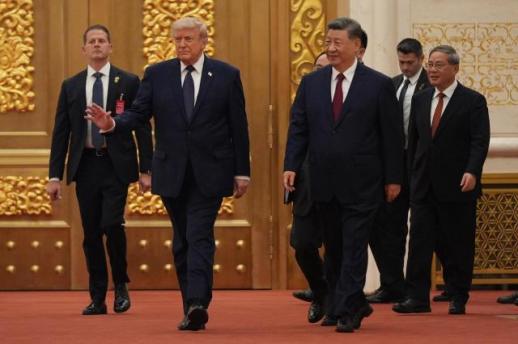 China Insight: Will the historic Beijing summit mark a new milestone in G2 era? The world once again turned its eyes to the rain-soaked paths of the Temple of Heaven. President Donald Trump of the United States and President Xi Jinping of China walked side by side. There were few aides around them. With only interpreters nearby, the two leaders moved slowly between the red walls and wet stone paths of one of China’s most symbolically charged imperial sites. It was not merely a diplomatic scene. It was an image asking a larger question: where is the world order of the 21st century headed? The summit came roughly six months after the two leaders met at the Asia-Pacific Economic Cooperation summit in Busan last October. It also marked Trump’s first visit to Beijing since 2017. Their talks at the Great Hall of the People lasted about 135 minutes. Afterward, the two leaders walked together through the Temple of Heaven, where Chinese emperors once prayed to heaven for legitimacy, order and national fortune. On the surface, the summit was splendid. There was a formal welcome ceremony, an honor guard, national anthems, a red carpet, handshakes and carefully staged gestures. Then came the walk through the Temple of Heaven. But beneath the ceremony lay hard realities. The agenda covered trade and tariffs, artificial intelligence, semiconductors, Taiwan, Iran’s nuclear ambitions, the Strait of Hormuz, the war in Ukraine and the Korean Peninsula. In effect, nearly every major fault line of the global order was on the table. The most important message was this: even in an age of near-confrontational rivalry, the United States and China still need each other. Their relationship is no longer simple hostility, nor simple cooperation. It is structural interdependence under strategic distrust. They compete, but neither can move fully without the other. The Language of Cooperation, the Reality of Rivalry The official language of the summit was cooperation. Xi said the two countries should not be adversaries but partners, helping each other succeed and pursuing shared prosperity. He proposed what Beijing called a “constructive strategic stability relationship” — a formula meant to place cooperation at the center, restrain competition, manage differences and avoid conflict. Trump used similar language. He described the United States and China as the world’s most important and powerful nations. He said that if they cooperated, they could do great things for both countries and the world. He called Xi a “great leader,” expressed respect for the Chinese people and emphasized that leading American business executives had joined the visit to expand cooperation with China. Yet the essence of a summit lies less in its language than in its structure. The United States cannot completely cut itself off from China. China cannot fully give up access to American markets, technology, finance and global corporate networks. Washington needs China’s manufacturing capacity and consumer market. Beijing needs America’s advanced technology, financial system and business ecosystem. That is why the two powers must meet even as they compete. They must shake hands even while applying pressure. They must manage rivalry while preventing a collapse of the world economy. The Beijing summit was a portrait of that cold interdependence. The Azaleas in the Room: China’s Diplomacy of Symbols At the center of the summit table were blooming azaleas. Chinese-language media interpreted them as symbols of prosperity, good fortune and optimism. The combination of pink and white was read as a sign of harmony and a better future. China has long used plants, colors and spaces to send diplomatic messages. During Antony Blinken’s visit to Beijing in 2023, lotus flowers drew attention. In 2024, more ambiguous foliage was interpreted as a sign of uncertainty and complexity in the relationship. Chinese diplomacy often speaks through scenes as much as words. The venue, the flowers, the color, the route, the meal, the walk — all carry meaning. The azaleas at this summit appeared to suggest Beijing’s desire to frame U.S.-China ties as a rivalry that can still be managed through balance and harmony. But flowers do not erase geopolitics. Sometimes the more beautiful the table setting, the harsher the realities beneath it. The azaleas symbolized optimism. The relationship itself still contains both prosperity and distrust. The Thucydides Trap: Xi’s Central Question Xi again raised the idea of the “Thucydides Trap,” the theory that a rising power and an established power can be drawn into conflict when the latter fears the rise of the former. His message was not accidental. For years, China has proposed a “new type of great-power relationship” with the United States. Its core idea is clear: Washington should accept China’s rise, Beijing should avoid direct confrontation with Washington, and the two powers should manage the Pacific and the wider world together. Put simply, China is asking the United States not to contain it, but to recognize it as a G2 power. Yet Washington is unlikely to accept that proposition in full. To recognize China as a co-manager of the global order would require the United States to yield part of its unique postwar status. If America continues to treat China primarily as a threat, however, Beijing will accelerate self-reliance, supply-chain independence, yuan internationalization and military expansion. This is the dangerous crossroads at which the world now stands. Trump’s Realism and a Changed America Trump’s tone in Beijing was notable. In his first term, he pressured China aggressively through tariffs, technology restrictions and supply-chain confrontation. This time, he sounded more pragmatic. He called Xi a great leader and described the United States and China as the world’s most important and powerful countries. Why the change? The answer lies in America’s own constraints. The United States is now managing several fronts at once: the war in Ukraine, the crisis in the Middle East, competition with China, domestic political conflict and mounting fiscal pressure. Washington still speaks the language of strength, but it can no longer dominate every theater with the ease it once assumed. In the race for artificial intelligence, America remains dominant in design, platforms and software. But manufacturing supply chains remain deeply rooted in Asia. The United States may wish to reduce dependence on China, but full decoupling is neither simple nor cost-free. Iran and Hormuz: The Clearest Point of Agreement The most concrete agreement to emerge from the summit concerned Iran and the Strait of Hormuz. According to the White House, the two leaders agreed that Iran must not acquire nuclear weapons. They also agreed that the Strait of Hormuz must remain open to support the free flow of energy, and that attempts to militarize the strait or impose tolls should be opposed. The United States and China clash over Taiwan and semiconductors, but their interests overlap when it comes to energy sea lanes. China is one of the world’s largest energy importers. If Hormuz is blocked, the United States would suffer, but China could be struck even harder. Because China remains heavily dependent on Middle Eastern oil, freedom of navigation through Hormuz is essential to its economic stability. The White House also said Xi expressed interest in buying more American crude oil to reduce China’s dependence on the strait. If that develops, energy trade could become a buffer in the broader U.S.-China rivalry. But this should not be mistaken for strategic reconciliation. It is better understood as selective cooperation. The two sides manage tensions over Taiwan, compete fiercely over semiconductors and confirm common interests over Iran and Hormuz. That may be how the new G2 era actually functions. Taiwan: The Deepest Fault Line Taiwan remained the most dangerous issue. Xi made clear that Taiwan is the most important issue in U.S.-China relations. If handled properly, he said, relations can remain stable. If mishandled, it could drive the two countries toward conflict and place the entire relationship in danger. Trump called the summit “great” afterward, but did not answer when asked whether Taiwan had been discussed. That silence matters. Silence can mean evasion. It can also mean strategic reserve. The United States cannot abandon Taiwan easily. But it also does not want a direct war with China. China can postpone the Taiwan question, but it cannot abandon it indefinitely. In that sense, Taiwan was not resolved at this summit. It was temporarily sealed. If Hormuz is the heart of global energy, the Taiwan Strait is the heart of semiconductors and supply chains. The world’s most advanced chip networks and key Northeast Asian shipping routes are tied to this narrow waterway. A military conflict there would not be a local crisis. It would shake Korean exports, Japanese industry, American technology companies and global financial markets at once. The Semiconductor War That Swallowed the Tariff War Another defining scene of the visit was the presence of American business leaders, including Nvidia chief executive Jensen Huang and Apple chief executive Tim Cook. This was not an ordinary business delegation. It showed that the sharpest front in U.S.-China competition has moved from tariffs to semiconductors and artificial intelligence. During Trump’s first term, the trade war centered on tariffs, deficits and Chinese purchases of American farm goods. Today, the core battlefield is chips: AI processors, graphics processing units, high-bandwidth memory, advanced equipment and data centers. Nvidia represents American technological power. Apple represents the deep interdependence between Chinese manufacturing and American consumption. Their presence suggested that Trump viewed the summit not only as diplomacy, but as a negotiation over technology, markets and supply chains. The United States restricts advanced chips to China, yet it cannot fully cut American companies off from the Chinese market. China wants American chips, yet it is accelerating domestic alternatives. Sanctions and sales, pressure and dependence, controls and markets now move together. Why Jensen Huang Matters China economy analyst Jeon Byung-seo has read the summit through a sharp lens: the semiconductor war has swallowed the tariff war. His question is straightforward. Why did Trump bring Jensen Huang to China? Why was the “emperor of GPUs” present in the shadow of the summit? His diagnosis can be summarized in four points. First, the center of U.S.-China competition is no longer tariffs, but AI chips. Second, the United States wants to sell Nvidia chips to China, but does not want to accelerate China’s military and AI rise. Third, China needs American chips in the short term, but seeks to build a domestic semiconductor ecosystem around companies such as Huawei over the long term. Fourth, even if Washington permits some chip sales, Beijing is likely to use that opening to buy time while accelerating self-reliance. This analysis goes to the heart of the summit. Semiconductors are no longer just an industry. They are the oil of the AI age, the heart of data centers and a strategic asset connecting military power, finance, manufacturing and national security. The United States seeks to manage China through chips. China seeks to escape American control through chip independence. Behind the language of cooperation, the summit was also a sophisticated transaction. Washington wanted market access and profits for American companies. Beijing wanted relief from restrictions and greater technological access. Neither side fully trusts the other. That is why the semiconductor agenda may be wrapped in cooperative language, but its substance remains strategic rivalry. China emphasized cooperation with American companies during the summit. But that does not mean Beijing intends to remain dependent on U.S. technology. China’s strategy is dual-track. In the short term, it uses American chips, equipment and software ecosystems where possible. In the long term, it seeks domestic substitutes. Huawei, Chinese semiconductor firms, AI start-ups, state-backed funds and local governments are all moving in that direction. Beijing sees American export controls not only as pressure, but as a justification for self-reliance. The more Washington restricts, the more China invests. America’s dilemma is equally deep. If it tightens controls too much, it may accelerate Chinese substitution. If it loosens controls too much, it may strengthen China’s AI and military capabilities. The presence of American executives in Beijing was, in part, an attempt to find the narrow space between those two risks. Trump’s Calculation: Can MAGA and China’s Rise Coexist? One of the most striking messages attributed to Xi was the idea that China’s national rejuvenation and Trump’s “Make America Great Again” agenda need not be in conflict. It is a deeply Chinese message, but also a deeply Trumpian one. Beijing is effectively saying: do not interpret China’s rise as America’s decline. The path to making America great again and the path to Chinese rejuvenation do not have to collide. For Trump, this argument has appeal. He is less attached to ideological frameworks than to transactions. If an agreement serves American manufacturers, farmers, energy producers and corporations, he is willing to negotiate. Trump’s diplomacy is often less about values-based alliances than about deals and measurable gains. On May 14, 2026, Beijing left the world with one enduring image: even at the edge of rivalry, the two strongest powers on earth could stop, walk and talk. That fact alone carries historical weight. For much of modern history, great powers often failed precisely because they lost the ability to speak before suspicion hardened into inevitability. The tragedy of the First World War was not simply militarism; it was the collapse of strategic imagination among empires that could no longer distinguish deterrence from destiny. The Cold War endured for decades, yet catastrophe was avoided largely because Washington and Moscow eventually understood that coexistence, however uncomfortable, was less dangerous than absolute confrontation. The challenge facing the United States and China today is even more complex. This is not merely a military rivalry. It is a contest unfolding simultaneously across technology, finance, energy, manufacturing, information systems, artificial intelligence, supply chains and civilizational identity. Previous great-power rivalries were often fought over territory. This one is being fought over operating systems for the future world. The United States still possesses unmatched military reach, the dominant reserve currency and extraordinary innovation capacity. China, meanwhile, commands industrial scale, manufacturing depth, demographic mass and the political ability to mobilize national resources with remarkable speed. Neither side is weak enough to be ignored, and neither side is strong enough to fully dominate the other without immense cost. That reality is reshaping the psychology of global politics. For decades after the Cold War, much of the world operated under the assumption that the United States alone would define the architecture of globalization. That era is fading. What is emerging instead is not a clean bipolar order, but a far more unstable hybrid system: partial decoupling alongside deep interdependence, technological separation alongside financial linkage, strategic distrust alongside economic necessity. The Beijing summit reflected exactly that contradiction. Washington wants to slow China’s ascent in advanced technologies, yet American corporations continue to depend on Chinese manufacturing and markets. Beijing seeks technological sovereignty and national rejuvenation, yet it still requires access to American capital, software ecosystems and portions of the global financial structure shaped by the dollar. Thus the two countries are simultaneously rivals, partners, customers, suppliers and strategic threats to one another. No previous great-power relationship has carried this exact combination of intimacy and suspicion. That is why symbolism mattered so much in Beijing. The Temple of Heaven was not chosen casually. In Chinese political culture, historical spaces are never merely historical. They are instruments of continuity. Xi Jinping’s China constantly frames itself not simply as a modern state, but as the inheritor of an uninterrupted civilization. The message beneath the ceremony was subtle but unmistakable: China does not see itself as a temporary challenger to American power. It sees itself as a civilizational center returning to historical prominence. Trump, for his part, represented a different historical impulse. His political identity is rooted less in abstract global order than in national restoration. “Make America Great Again” is not only a campaign slogan; it is a reaction against the perception that globalization weakened American manufacturing, hollowed out industrial communities and allowed strategic competitors to rise at America’s expense. In that sense, both Trump and Xi are restorationist leaders. One speaks in the language of national revival. The other speaks in the language of civilizational rejuvenation. The danger is obvious. Two powers seeking restoration can easily drift toward collision if each interprets the other’s resurgence as an existential threat. Yet the summit also suggested another possibility. Both leaders appear increasingly aware that absolute confrontation would produce consequences too large for either side to fully control. A military conflict over Taiwan would devastate not only East Asia but the global economy. A complete technological divorce would fracture supply chains built over decades. A financial rupture between the world’s two largest economies would send shock waves through every major market. The Taiwan question remains unresolved. Semiconductor restrictions will likely intensify. Artificial intelligence will deepen the strategic competition. The South China Sea, cyberwarfare, rare earth minerals and digital currencies will all become more contentious arenas. The future relationship between Washington and Beijing may therefore resemble neither the Cold War nor the era of optimistic globalization that followed it. It may instead become a prolonged era of controlled rivalry — an uneasy coexistence in which both sides compete fiercely while trying to prevent the competition from collapsing into direct conflict. For middle powers such as South Korea, Japan and many nations across Southeast Asia, this emerging order will demand extraordinary strategic sophistication. The old logic of choosing one side and rejecting the other may no longer be sufficient. Economic survival, technological resilience and national security will increasingly require multi-layered strategies. Countries that can combine alliance management, industrial policy, technological independence and diplomatic flexibility will possess greater room to maneuver. Those that cannot may find themselves trapped inside the agendas of larger powers. South Korea sits directly at the center of this transformation. Its semiconductors are vital to the AI economy. Its shipyards matter to maritime logistics and naval power. Its batteries are central to the energy transition. Its cultural industries project soft power far beyond its size. And geographically, it stands at the intersection of the U.S.-China rivalry, the Taiwan question, Japanese rearmament and North Korean unpredictability. This gives South Korea both vulnerability and leverage. The task for Seoul is therefore not passive alignment, but strategic maturity. It must strengthen its alliance with Washington while avoiding unnecessary economic self-destruction. It must continue engaging China without slipping into dependency. It must secure technological sovereignty while remaining deeply integrated into global markets. And above all, it must recognize that semiconductors, artificial intelligence, energy systems and supply chains are no longer merely economic sectors. They are instruments of national survival. That broader truth may ultimately become the lasting lesson of the Beijing summit. The meeting between Trump and Xi was not simply about tariffs, oil or diplomacy. It was about the architecture of a new age. It was about how two immense powers — one defending primacy, the other pursuing resurgence — might coexist inside the same century. History rarely announces the birth of a new era in clear language. More often, it reveals itself through images. A rain-soaked stone path. Two leaders walking slowly through an imperial altar. Azaleas blooming between rival powers. And a world watching carefully, uncertain whether it has just witnessed the beginning of a new equilibrium — or merely a pause before a larger storm. *The author is a senior columnist of AJP. 2026-05-14 22:00:35
 -
 Korean Economic Outlook: Kim Yong-beom Discusses AI and Excess Profits Note: This article reinterprets Kim Yong-beom's Facebook post in a Q&A format with a fictional financial expert for easier understanding. Kim Yong-beom, the Blue House Policy Director, poses a critical question in his recent Facebook post: "Is the KOSPI reaching 7,500, and potentially 10,000, merely a sign of stock market overheating, or is it an indication of a structural shift in Korea's industrial landscape in the AI era?" The focus is on the structural excess profits that could arise in the semiconductor and AI infrastructure sectors. If companies like Samsung Electronics and SK Hynix generate profits that exceed historical economic cycles due to demand for AI memory, high-bandwidth memory, and data center infrastructure, the government stands to gain substantial corporate and income tax revenues, along with trade surplus benefits. This is what he refers to as 'excess tax revenue.' The pressing issue is how to utilize this money. Should it be treated as a one-time economic boom and squandered, or should it be institutionalized as part of a new social contract for the AI era? Kim's concerns are not merely optimistic predictions or stock market forecasts. He suggests that we should discuss how to share the benefits of entering a technology-monopolistic industrial state in the AI era through entrepreneurship, culture, education, welfare, regional development, and retirement security. Q&A with Financial Expert ABC and Kim Yong-beom Financial Expert ABC Director, many have said your writing is difficult to understand. What is the simplest way to convey your message? Kim Yong-beom In simple terms, we should not view the current phenomena in the Korean economy solely through the lens of past economic cycles. While it is easy to say that exports are strong, semiconductors are performing well, and the KOSPI is rising, the more important question is, "Is Korea's industrial structure itself changing in the AI era?" If so, we need to reassess taxes, welfare, entrepreneurship, education, and national strategy. Financial Expert ABC So, you are saying that the numbers 7,500 or 10,000 for the KOSPI are not the core issue? Kim Yong-beom Correct. The index is a result. What we need to focus on is corporate profits. Stock prices ultimately depend on profits. If semiconductor companies' profits rise to unprecedented levels, the KOSPI will also change accordingly. The problem is that we are still viewing the current situation through the lens of the past KOSPI levels of 2,000 or 3,000. Financial Expert ABC However, there are counterarguments in the market suggesting, "Isn't this just another semiconductor cycle?" Kim Yong-beom That counterargument is valid. The Korean semiconductor industry has always gone through cycles of boom and bust. However, the current AI demand is different from past smartphone or PC cycles. AI is not just software; it encompasses a vast industrial infrastructure that includes data centers, power grids, cooling systems, memory, batteries, robotics, and industrial automation. Particularly, products like high-bandwidth memory create ongoing upgrade demands rather than being one-time sales. This distinguishes it from previous memory cycles. Financial Expert ABC The expression "AI is not software but industrial infrastructure" seems significant. Kim Yong-beom Indeed. Many people view AI merely as chatbots or apps. However, from a national economic perspective, AI is akin to infrastructure like electricity, railroads, and communication networks. As AI integrates into real industries, what is needed goes beyond models. Countries must possess manufacturing capabilities for memory semiconductors, power equipment, batteries, precision machinery, sensors, and robotics. Few nations have such physical supply chains. Financial Expert ABC What makes Korea special in this regard? Kim Yong-beom Korea is a rare country that possesses capabilities in memory semiconductors, batteries, displays, shipbuilding, power equipment, precision manufacturing, and industrial automation. The U.S. excels in design and platforms but has limited manufacturing capabilities. China has significant manufacturing power but faces geopolitical trust issues. Japan is strong in materials and equipment, while Taiwan excels in foundries. Korea uniquely combines various manufacturing capabilities necessary for AI infrastructure. This is not just about industrial competitiveness but also geopolitical leverage. Financial Expert ABC What exactly is 'excess profit'? Kim Yong-beom Typically, when competition intensifies, profit margins decrease. However, in industries with high technological barriers, limited suppliers, and structurally increasing demand, profits can persist beyond the average. This is what we refer to as excess profit. If Korean companies can position themselves in the AI memory and infrastructure sectors, the Korean economy will enter a different phase. Financial Expert ABC How does this excess profit connect to the state? Kim Yong-beom When companies generate substantial profits, corporate tax revenues increase. Income taxes from high-earning engineers and related industry workers also rise. An increase in exports leads to a larger trade surplus, affecting the value of the won and national purchasing power. The growth in corporate profits does not just end there; it connects to national revenue, citizen income, asset markets, exchange rates, and inflation. Therefore, excess profits can lead to excess tax revenues. Financial Expert ABC But didn't we have excess tax revenues during past semiconductor booms? Kim Yong-beom Yes, there were excess tax revenues in 2021 and 2022. However, at that time, we did not recognize it as a structural change and did not establish principles for their use in advance. Excess tax revenues occurred during booms, followed by revenue shortages during downturns. If this cycle is larger and longer, we cannot respond in the same way. Financial Expert ABC What should the government do then? Kim Yong-beom First, we should not only look at existing GDP statistics but also consider exports, trade balances, corporate operating profits, nominal income, and terms of trade together. Second, we need to establish principles in advance for how to use excess tax revenues when they arise. Third, we must redesign systems for entrepreneurship, education, culture, immigration, and welfare that are necessary for the AI era. Financial Expert ABC Why shouldn't we focus solely on GDP? Kim Yong-beom Industries like semiconductors improve in quality at an extremely rapid pace. When performance, integration, and power efficiency all increase simultaneously, it becomes difficult to distinguish between price increases and actual production growth. Corporate profits may soar, while real GDP appears relatively ordinary. This does not mean the statistics are incorrect; it suggests that they may lag in reflecting reality. Financial Expert ABC The most contentious aspect is the 'national dividend.' Is this akin to basic income? Kim Yong-beom It doesn't have to be defined that way. The key is not the name but the principle. The excess profits of the AI infrastructure era are not solely the result of specific companies' efforts. They arise from the industrial foundation built over decades through the education, taxes, industrial policies, and social patience of the people. Therefore, we should discuss ways to structurally return a portion of those benefits to the citizens. Financial Expert ABC This could be misunderstood as simply giving away money. Kim Yong-beom That’s why more nuanced discussions are necessary. It could be used as assets for youth entrepreneurship, as accounts for AI transition education, or for basic income in rural areas, support for artists, enhancement of pensions, or investments in regional entrepreneurial infrastructure. The important thing is that when excess tax revenues arise, we should not use them politically on a case-by-case basis but rather under national principles and social consensus. Financial Expert ABC Ultimately, is this a discussion about distribution or growth? Kim Yong-beom Both. In the AI era, growth and distribution cannot be viewed separately. Excess profits tend to concentrate. Shareholders, key engineers, and asset holders in metropolitan areas may benefit significantly, while the middle class and rural areas could be left behind. While the nation as a whole may become wealthier, internal disparities could worsen, leading to a K-shaped structure. If left unaddressed, sustaining growth itself will become difficult. Financial Expert ABC Why are entrepreneurship and culture important? Kim Yong-beom As AI replaces repetitive tasks, simply increasing public jobs will have limitations. The areas that remain for humans involve judgment, creativity, relationships, senses, expression, and meaning. Therefore, entrepreneurship and culture are vital. AI tools can provide individuals and small teams with productivity levels comparable to large corporations. The government must lower the risks of entrepreneurial failure and create an environment where entrepreneurship can thrive in local areas. Culture is not just leisure; it is a strategic industry for preserving humanity in the AI era. Financial Expert ABC You also mentioned immigration issues. Kim Yong-beom Low birth rates and an aging population are Korea's most significant structural constraints. We need to attract high-skilled talent and ensure a stable influx of essential labor. This is not merely about labor supply; it is a matter of redesigning the national structure. If Korea becomes a stronghold for AI infrastructure, it will also create opportunities to attract global talent. Financial Expert ABC Ultimately, what kind of country should Korea become? Kim Yong-beom Korea should aim to be the first country to return excess profits from the AI era to human lives, beyond just being a supplier of AI infrastructure. While technology is created by companies, civilization is built by society. If Korea designs this opportunity well, it can present a national model for the AI era, transcending mere export power. Conclusion and Insights from the Q&A Kim Yong-beom's writing may seem somewhat unfamiliar at first, as it combines terms like KOSPI 7,500, KOSPI 10,000, semiconductor profits of 700 trillion won, national dividends, and the redesign of the state in the AI era. However, when unpacked sentence by sentence, the logic is surprisingly straightforward. First, in the AI era, memory semiconductors, data centers, power grids, batteries, robotics, and precision manufacturing will be integrated into a single industrial infrastructure. Second, Korea is a rare country capable of supplying this infrastructure. Third, if this position is structurally strengthened, Korean companies can achieve excess profits on a scale different from the past. Fourth, excess profits can lead to increased corporate taxes, income taxes, and trade surpluses, resulting in excess tax revenues for the state. Fifth, we must establish principles now for how to utilize that money. The core of this discussion is not about "giving away money" but rather about "how to manage new wealth within a national system." During the industrialization era, the state built roads, ports, industrial complexes, and schools. In the information age, it established high-speed internet and digital infrastructure. In the AI era, safety nets for entrepreneurship, transition education, cultural ecosystems, regional regeneration, retirement security, and skilled talent immigration policies can become the new national infrastructure. The two main dangers to be wary of are excessive optimism and excessive cynicism. We should not assume that AI demand will last forever, that Korean companies will always win, or that excess tax revenues will automatically accumulate. Technology evolves rapidly, and competitors always emerge. On the other hand, dismissing structural changes with statements like, "Semiconductors always go through cycles," or "National dividends are populism" is also risky. National strategy is born between optimism and cynicism. We should recognize possibilities while designing institutions with a cool head. When excess tax revenues arise, some should be reserved for managing national debt and future funds, while some should be used to reduce the costs of transitioning to the AI era. We must create opportunities for youth entrepreneurship and re-challenges, provide retraining and career transition pathways for the middle-aged, ensure stable living conditions for the elderly, and establish new industrial and cultural hubs in rural areas. The real question posed by Kim Yong-beom's writing is not, "Can Korea make a lot of money again?" but rather, "When we make a lot of money this time, can we use it wisely?" South Korea has seized opportunities during the industrialization and information eras. Now, it stands at the threshold of the AI infrastructure era. Crossing this threshold could lead Korea back to a typical cyclical export economy or elevate it to a new level as a technologically advanced civilization. Ultimately, while excess profits stem from corporate capabilities, how excess tax revenues are utilized reflects the nation's character. If the process ends with collecting taxes from corporate profits, it remains mere finance. However, if that money is reinvested in people, regions, and the future, it becomes civilization. The path Korea must choose now lies precisely at this intersection.* This article has been translated by AI. 2026-05-14 20:40:58
 -
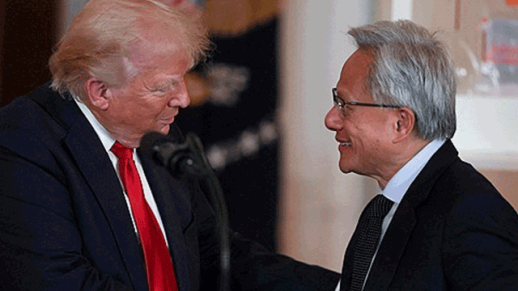 U.S. Approves Nvidia H200 Sales to China, But No Deliveries Yet The U.S. government has granted permission for Nvidia to sell its high-performance artificial intelligence (AI) semiconductor, the H200, to Chinese companies. However, no actual deliveries have been reported so far, indicating that the approved transactions are still affected by the ongoing U.S.-China tech rivalry. According to Reuters on May 14, the U.S. Department of Commerce has approved Nvidia H200 purchases for about ten Chinese companies, including Alibaba, Tencent, ByteDance, and JD.com. Some distributors, such as Lenovo and Foxconn, are also included in the list of approved sellers. Approved companies can purchase the chips either directly from Nvidia or through authorized distributors. Under U.S. regulations, each approved customer can buy up to 75,000 units. The challenge lies in the aftermath of the approval. Sources familiar with the matter told Reuters that not a single delivery has occurred despite the U.S. authorization, as Chinese companies are delaying purchases following directives from Beijing. There is increasing pressure within China to block orders or impose strict scrutiny. Chinese authorities view the import of Nvidia chips as a potential threat to their domestic AI semiconductor development strategy. This concern is further amplified by trends among Chinese AI firms, such as DeepMind, that emphasize the use of domestic semiconductors like those from Huawei. U.S. conditions are also complicating transactions. Regulations introduced in January require Chinese buyers to demonstrate adequate security measures and confirm that the chips will not be used for military purposes. Nvidia must also verify that there is sufficient stock available in the U.S. Former President Donald Trump has established a separate arrangement, whereby the U.S. will receive 25% of the revenue from H200 sales to China. Due to legal restrictions on directly imposing export fees, this arrangement requires the chips to pass through U.S. territory before reaching China. This structure has heightened concerns in China, where fears persist that the chips could be damaged or embedded with hidden vulnerabilities during transit. Following the recent introduction of supply chain security regulations by the Chinese government, there has been a stronger push to reduce reliance on foreign technology in critical infrastructure. For Nvidia, which is eager to recover its position in the Chinese market, this situation poses a significant challenge. Before the tightening of U.S. export regulations, Nvidia held approximately 95% of the advanced semiconductor market in China. At one point, China accounted for 13% of Nvidia's revenue, and CEO Jensen Huang has estimated that the Chinese AI market could reach $50 billion this year. Huang joined President Trump's delegation for his upcoming visit to China, despite not being initially listed among the representatives. Market observers speculate that Huang's presence in Beijing could be crucial in finding a breakthrough for the stalled H200 transactions.* This article has been translated by AI. 2026-05-14 20:38:26
 -
 Lotte Tour Development Reports Record Q1 Operating Profit of 28.8 Billion Won Lotte Tour Development achieved a record operating profit of 28.8 billion won in the first quarter of this year, more than doubling its profit from the previous year, thanks to strong performances in its casino and hotel sectors. The company reported consolidated revenues of 156.2 billion won and an operating profit of 28.8 billion won for the first quarter, as announced on May 14. Revenue increased by 28.1% compared to the same period last year, surpassing 150 billion won for the first time in a first quarter. Operating profit surged by 121%, significantly exceeding last year's figures for the same period. Profitability indicators also showed substantial improvement. The operating profit margin rose sharply to 18.4%, up from 8.3% in the first quarter of 2024 and 10.7% in 2025. The net loss for the period decreased significantly to 7.5 billion won, down from a loss of 23.7 billion won in the same quarter last year. This strong performance is attributed to the simultaneous growth of the Jeju Dream Tower casino and the Grand Hyatt Jeju Hotel. The casino sector reported revenues of 118.6 billion won, a 40.3% increase year-on-year. The number of casino visitors rose by 37.3% to 150,553, and the table drop amount (the amount exchanged for chips) increased by 36.7% to 573.8 billion won. The casino's table hold rate was recorded at 19.7%. The hotel sector also saw a revenue increase of 20.2% year-on-year, reaching 38.1 billion won. Despite the first quarter typically being a low season for the tourism industry, the proportion of foreign guests expanded to 73.5%, resulting in an occupancy rate of 75.9%. A Lotte Tour Development official stated, "While first-quarter revenue grew by 28.1% year-on-year, operating costs only increased by 17%, allowing for a larger operating profit margin. We expect the operating leverage effect, where profits increase at a faster rate as revenue grows, to become more pronounced this year." The outlook for the second quarter is also positive. In April, casino revenue reached 48.8 billion won, a 48.5% increase compared to the same period last year, continuing a clear upward trend. The strong performance in April is attributed to the expansion of direct international flights from Jeju, coinciding with major holidays in China and Japan, which significantly boosted the influx of foreign tourists. Additionally, both VIP casino customers and general foreign guests have been steadily increasing. The Lotte Tour Development official added, "Despite concerns over the situation in the Middle East and the challenges of the low season, we have already demonstrated record revenue and explosive profit generation in the first quarter. As the peak tourist season approaches, we expect this year's annual performance to show a significant quantum leap."* This article has been translated by AI. 2026-05-14 20:36:32
 -
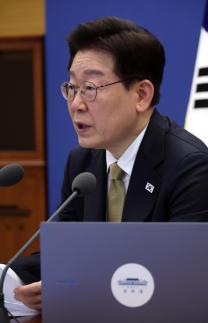 President Lee Calls for Reform of Agricultural Cooperatives Amid Corruption Issues President Lee Jae-myung on May 14 criticized the opaque decision-making structure and corruption issues within agricultural cooperatives, urging swift reforms including direct elections for members.During a senior advisors meeting at the Blue House, President Lee stated, "The transformation of rural areas and agriculture must begin with correcting the structural ailments present in our agricultural sector."He identified the normalization of agricultural cooperatives as a prerequisite for this transformation."Normalizing agricultural cooperatives, which support the foundation of agriculture, is of utmost importance," President Lee emphasized. "Agricultural cooperatives have a significant responsibility to protect farmers' rights and promote sustainable rural development."He acknowledged, however, that the current situation is lacking. "Due to the opaque decision-making structure and corruption among some employees, we have continuously faced criticism for not fulfilling our fundamental roles," he noted.President Lee called for a return to a farmer-centered organization. He stated, "We must quickly return the agricultural cooperatives, built by the sweat and dedication of farmers, back to the farmers themselves."He also stressed the need for rapid improvements in governance from the perspective of member sovereignty and the swift implementation of normalization measures, including strengthening democratic oversight.President Lee urged, "Please accelerate reforms such as direct elections for members, so that agricultural cooperatives can truly become leaders in agricultural development and improving the quality of life for farmers."Additionally, President Lee expressed condolences regarding the recent murder of a high school student in Gwangju, saying, "I pray for the victim and extend my deepest sympathies to the bereaved family."He also wished for the quick recovery of another student who was injured, emphasizing the need for a comprehensive response to crimes targeting vulnerable groups, including youth and women. "We must declare a war on such crimes and significantly strengthen our prevention and response systems," he asserted.President Lee stated, "Until public anxiety is alleviated, we will continue thorough special security operations in areas of crime concern, and we will take strict action against online harassment targeting victims." He added, "I once again pray for the victim's soul, and I hope all public officials will commit themselves to ensuring the safety of the nation, which is our primary duty."Earlier, on May 5, at around 12:11 a.m., a suspect named Jang Yoon-ki was arrested for fatally stabbing a 17-year-old high school student, identified as A, near a university in Gwangju's Gwangsan District. Jang also seriously injured another 17-year-old student, B, who came to A's aid upon hearing her screams.The Gwangju Police Agency announced that starting at 7 a.m. that day and continuing for 30 days until June 12, they would post Jang's name, age, and mugshot on their website.* This article has been translated by AI. 2026-05-14 20:34:31
 -
 Iran Displays 'Five Key Conditions for Ending War' in Tehran, Excluding Nuclear Issues A large sign outlining Iran's key conditions for ending the war has appeared in the capital city of Tehran. According to local media, including Eghtesad News, the sign, installed on major roads and overpasses in Tehran, lists the "Five Key Conditions for Ending the War" under its title. The conditions proposed by Iran include: 1) Lifting all sanctions, 2) Payment of war reparations by adversaries, 3) Establishing Iran's control over the Strait of Hormuz, 4) Release of frozen funds, and 5) Ending conflicts on all fronts. These demands align with the consistent assertions made by Iranian leadership in negotiations with the United States regarding ending the war. The public display of these conditions on a large sign can be seen as a confirmation of Iran's commitment to uphold these demands in negotiations with the U.S. Notably, the five key demands do not include any references to Iran's nuclear program. Previously, Iran suggested prioritizing immediately actionable issues, such as the reopening of the Strait of Hormuz and a ceasefire in Lebanon, while postponing the more complex negotiations regarding its nuclear program until after the war is concluded. In contrast, the United States views the nuclear issue as a central point in the negotiations. U.S. Vice President JD Vance stated at a White House press briefing that while he believes progress is being made in negotiations with Iran, the fundamental question remains whether sufficient advancements can be made to satisfy the red lines set by President Donald Trump.* This article has been translated by AI. 2026-05-14 20:32:54