
Journalist

Han Ki-ho
-
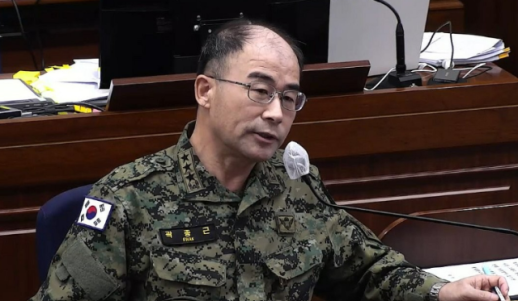 Special Prosecutor Summons Kwak Jong-geun as First Suspect in Military Coup Investigation The second Comprehensive Special Investigation Team, led by Special Prosecutor Kwon Chang-young, summoned former Special Warfare Commander Kwak Jong-geun on May 14 as a suspect in connection with the state of emergency declared on December 3. This marks the first time the special prosecutor has summoned Kwak as a suspect.The special prosecutor's team is currently investigating Kwak regarding charges of rebellion under the Military Criminal Act, having called him in for questioning at 2 p.m. On March 3, Kwak appeared before the Comprehensive Special Investigation as a witness.Kwak is accused of sending subordinate soldiers to the National Assembly and the National Election Commission to incite riots during the declaration of the state of emergency.The special prosecutor has also implicated former President Yoon Suk Yeol, former Defense Minister Kim Yong-hyun, and former Director of the Defense Intelligence Command Noh Sang-won in rebellion charges. This is interpreted as the special prosecutor's view that deploying military personnel to state institutions such as the National Assembly constitutes rebellion against the state.However, it remains uncertain whether the special prosecutor can bring these charges to trial.Previously, the Prosecutor's Special Investigation Unit had considered applying rebellion charges against former President Yoon but ultimately decided against it, citing difficulties in prosecution. It was reported that the rationale was that 'it is difficult to apply rebellion charges since the incident involved Yoon, the military commander, as the leader of the insurrection.'Both Yoon and Kim have refused to comply with the special prosecutor's summons, arguing that it constitutes a double investigation of the same case for which they are already facing insurrection charges.* This article has been translated by AI. 2026-05-14 20:07:33
 -
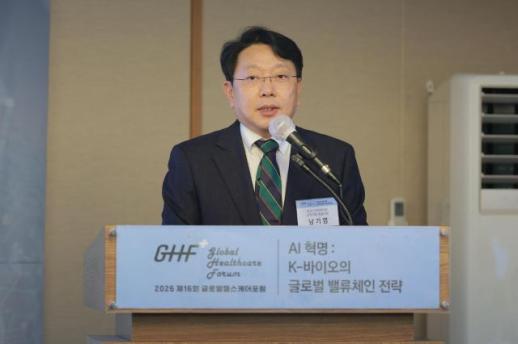 Pharos AI Bio CEO Nam Ki-yeob: AI Era in Drug Development Enhances K-New Drug Success Rates Artificial intelligence (AI) is transforming drug development from a race for speed to a competition for success rates. The technology has evolved to not only identify candidate substances more quickly but also to filter out toxic risks in advance and derive optimal drug candidates. South Korea's AI drug development company, Pharos AI Bio, is accelerating the development of treatments for rare and intractable diseases and expanding into next-generation modalities with its proprietary platform.Nam Ki-yeob, CEO of Pharos AI Bio, explained at the 16th Global Healthcare Forum (2026 GHF) held on May 14 at the Korea Press Center in Seoul, that "AI drug development has entered the era of 'agent AI,' where it can now formulate hypotheses and make decisions after going through computer-based drug design, machine learning, and deep learning stages."Major domestic bio companies are actively responding to this global change based on their own platforms in the AI era. Pharos AI Bio's core competitive advantage lies in its self-developed AI platform, Chemiverse.Chemiverse is a platform that supports the entire drug development cycle by combining proteomics AI with generative model-based candidate substance design technology, based on multi-omics big data. It addresses the inefficiencies and high costs associated with drug development, covering everything from target discovery to candidate substance design, lead optimization, and the establishment of preclinical and clinical strategies.Nam stated, "The success rate of our pipeline using the AI platform from Phase 1 to Phase 2 clinical trials reaches 87.5%." This reflects a reduction in the high failure rate, a fundamental challenge in drug development, through data and predictive technology. He added, "By combining a strategy focused on rare and intractable diseases with biomarker-based patient selection and open innovation, we are enhancing the likelihood of success in drug development."A notable example of the company's AI application is the acute myeloid leukemia (AML) treatment, Rasmotinib (PHI-101). This candidate substance is a FLT3 inhibitor developed for patients who do not respond to or are resistant to existing treatments. Nam remarked, "Rasmotinib has achieved a 50% complete response rate in global Phase 1 clinical trials, emerging as a new hope for patients resistant to standard therapies." He added that they are pushing for early commercialization through entry into Phase 2 trials, conditional sales approval, and technology transfers.Additionally, the company plans to expand into next-generation modalities such as antibody-drug conjugates (ADCs) and targeted protein degraders (TPDs) based on Chemiverse. They aim to broaden the scope of drug development by combining structure-based chemical design capabilities with specialized experience in rare and intractable targets and core structural big data.Nam emphasized the importance of building competitiveness through in-house drug development, stating, "AI has evolved from a simple tool to an intelligent partner that supports decision-making throughout the entire drug development process." He further stressed that in the AI era, K-bio's success will depend not just on identifying good drug candidates but also on how well data is accumulated and interpreted to connect with the global value chain. A full value chain strategy that supports technology validation, capital acquisition, and global expansion is essential for the competitiveness of K-new drugs to become a reality.Finally, Nam reiterated, "Pharos AI Bio will continue to strengthen its research and development competitiveness in innovative drugs for rare and intractable diseases and in various modality areas such as ADCs and TPDs based on Chemiverse."* This article has been translated by AI. 2026-05-14 20:05:28
 -
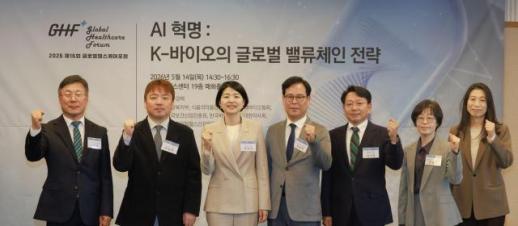 K-Bio's Global Value Chain Strategy: Harnessing AI and Big Data The use of artificial intelligence (AI) in drug development is rapidly expanding, enhancing research and development (R&D) efficiency while reducing risks of failure. This shift is also reshaping the industry structure, with global pharmaceutical giants increasingly engaging in licensing and mergers and acquisitions (M&A). K-Bio is at a pivotal moment, needing to establish a full value chain that connects technology validation, capital acquisition, and global expansion. The ability to secure and utilize AI-driven big data has emerged as a critical factor for global competitiveness. Experts suggest that companies need to integrate data across the entire cycle, from candidate substance discovery to clinical design, patient data analysis, and production optimization. Aju Economy held the 16th Global Healthcare Forum on May 14 at the Korea Press Center in Jung-gu, Seoul. The forum focused on the theme of "AI Revolution: K-Bio's Global Value Chain Strategy," discussing the structural changes AI has brought to the pharmaceutical and bio industries and the necessary responses moving forward. Attendees included lawmakers such as Han Ji-a from the People Power Party and Park Hee-seung from the Democratic Party, as well as Ahn Young-jin, Director of the Bio and Pharmaceutical Safety Bureau, and Lee Jae-guk, Vice President of the Korea Pharmaceutical and Bio Association, who participated in person or via written messages to celebrate the event. During the expert presentations, Nam Gi-yeop, CEO of Pharos I-Bio; Jeong Yoon-taek, Director of the Pharmaceutical Industry Strategy Research Institute; and Park Hyun-jung, Head of the Bio Pharmaceutical Approval Division at the Ministry of Food and Drug Safety, spoke on topics including "AI Drug Development Platform Chemiverse: Present and Future," "Securing Big Data to Capture New Drugs: AI 'Pharma 5.0'," and "Policies to Support Globalization of K-Bio." Nam noted, "AI drug development has entered an era of 'AI agents' that can formulate hypotheses and make decisions autonomously, evolving into intelligent partners that support decision-making throughout the entire drug development process." Jeong emphasized, "The pharmaceutical and bio industries are entering the 'Pharma 5.0' era. Without high-quality, vast data, AI models cannot learn or predict effectively, so capturing data is essential to capture new drugs." As companies actively pursue drug development using AI, the government is also focusing on reducing the time required for drug development and approval. Park stated, "Shortening the drug development and approval process will alleviate the burden on companies and bolster the global market entry and export expansion of domestic firms."* This article has been translated by AI. 2026-05-14 20:03:10
 -
 Ministry of SMEs Introduces Disclosure System for Fund Transparency South Korea's Ministry of SMEs and Startups has announced the introduction of a new disclosure system aimed at enhancing transparency in the management of its fund of funds. This initiative is designed to boost confidence in the venture investment market and attract private capital that has been hesitant to enter.On May 14, the ministry, in collaboration with Korea Venture Investment Corp., discussed the "2027 Fund of Funds Investment Strategy and Disclosure System Implementation Plan," presenting a detailed roadmap.The key to this innovation is "information transparency." The ministry plans to publicly disclose major operational indicators of the fund of funds to enhance trust in its policy fund management.Previously, metrics such as liquidation returns and success stories of invested companies were shared only within the industry. Now, these will be visualized and made accessible to the public in an easily understandable format. This aims to demonstrate to private investors that the fund of funds is generating substantial returns and achievements beyond mere financial support, thereby encouraging private capital inflow into venture funds.Since its inception in 2005, the fund of funds has invested 17 trillion won (approximately $15 billion), creating a total of 50 trillion won (about $38 billion) in sub-funds and investing in over 110,700 innovative startups. As of last year, the funds that have completed liquidation recorded an average annual return of 8%. According to the ministry, about 87% of domestic unicorn companies have received investments from the fund of funds, and in the past five years, 82% of companies listed on the KOSDAQ through technology special listings were funded by it.The size of the fund of funds has been steadily increasing. Last year, Korea Venture Investment Corp. contributed 2.22 trillion won, leading to the establishment of 4.47 trillion won in venture funds, which resulted in a total investment of 3.99 trillion won. This year, the ministry plans to invest a record 2.6 trillion won to support the growth of next-generation unicorns, regional businesses, cultural and tourism ventures, intellectual property, and biotechnology startups.Additionally, the ministry has taken the lead in expanding the regional venture investment ecosystem. It has established a dedicated regional investment fund worth 1.8 trillion won and invested in over 600 regional innovative companies. Funds that have been liquidated in the past five years have shown a respectable return of over 11%.Moving forward, the ministry aims to accelerate the establishment of the newly created "LP Growth Fund" to encourage participation from institutional investors, including pension funds, financial institutions, and industry players. Together with around 25 institutions, it plans to create a total of 850 billion won in sub-funds.Han Seong-sook, Minister of SMEs and Startups, stated, "Over the past 20 years, the fund of funds has played a crucial role in discovering promising startups and nurturing them into unicorn companies, significantly contributing to the growth and development of the venture investment market. We will strengthen our role as a catalyst for venture investment by promoting collaborations with relevant ministries to create big tech companies, expand the regional investment ecosystem, and attract private investment."* This article has been translated by AI. 2026-05-14 20:01:03
 -
 Insurance Payments Required for Driver's Liability Even Without Prosecution Financial authorities have determined that if a traffic accident victim suffers serious injuries, the driver's insurance must cover the criminal settlement amount, even if the perpetrator is not prosecuted. This decision aims to ensure that insurance companies provide coverage when settlements are made to reduce the likelihood of criminal charges. On May 14, the Financial Supervisory Service reported that its Financial Dispute Resolution Committee ruled in favor of three cases related to driver’s insurance claims, stating that insurance companies must pay out amounts equivalent to the criminal settlement. This insurance product covers criminal settlement amounts when the insured causes serious injuries classified as injury grades 1 to 3 under the Automobile Damage Compensation Act. The victims in these cases sustained significant injuries classified as grades 1 to 2 from a typical traffic accident. After reaching a criminal settlement with the perpetrator, they filed claims for traffic accident support payments with their insurance company. However, the insurer denied the claims, arguing that since the perpetrator was not prosecuted due to a lack of grounds for prosecution, “this was not a case requiring a criminal settlement.” The committee disagreed with this assessment, stating that the terms of the insurance policy clearly indicate that injury grades 1 to 3 are sufficient grounds for compensation. The ruling emphasized that the determination of whether the victim ultimately received a serious injury classification or whether the prosecution was initiated is irrelevant; what matters is the severity of the injuries. Furthermore, the committee concluded that a criminal settlement is not only necessary after a criminal conviction. The potential for criminal liability can change based on the victim's recovery status or the possibility of long-term injuries immediately following the accident. Therefore, if the perpetrator reached a settlement to mitigate the risk of criminal charges, the insurance company must recognize this as a valid criminal settlement. The Financial Supervisory Service explained that this decision holds significance for both drivers and victims of traffic accidents. It allows perpetrators to lessen their financial burden from settlements and return to their daily lives, while victims can receive timely and meaningful compensation. The agency plans to continue promoting reasonable insurance payouts in driver’s insurance and other essential insurance products.* This article has been translated by AI. 2026-05-14 19:59:19
 -
 Demand for Premium Family Dining Surges During Family Month As Family Month unfolds, the dining industry is witnessing a notable increase in demand for premium family dining experiences. Consumers are increasingly seeking special outings with parents or family members, leading to significant growth in high-end Korean beef dining and family restaurant performance. According to data from Naver Data Lab on May 14, the search volume for the keyword "dining" peaked at 100 on Children's Day, May 5, and recorded 94 on Parents' Day, May 8. This metric reflects the highest search volume during the observation period, normalized to a scale of 100. In fact, Dining Brands Group's premium Korean beef dining brand, Warehouse 43, reported a 152% increase in sales during the Parents' Day holiday from May 8 to 10 compared to the same period last year. The number of customers also rose by 139%. Notably, locations in residential areas with a high proportion of family households, such as Mokdong, Pangyo, and Jamsil, showed remarkable growth. Among the popular menu items were the "Warehouse Special," featuring tenderloin and sirloin, the rare cut "Special Tenderloin," and the "Korean Beef Masterpiece Set" aimed at family customers. The sales share of course menus, including the five-course "Midam" and the seven-course "Four Seasons," also expanded compared to last year. This trend is attributed to the growing demand for premium dining experiences as a way to treat parents. Family restaurants have shown a similar trend. Outback Steakhouse reported approximately a 20% increase in sales during the Golden Holiday period from May 1 to 5 compared to the same time last year. The highest number of visitors was recorded on Children's Day, May 5. The boost in performance is attributed to menu items that enhance the dining experience. The signature "Black Label Sizzling Edition" features steaks served on a 230-degree hot plate, emphasizing sound, aroma, and visual effects. Outback Steakhouse explained that this approach not only focuses on taste but also creates an engaging dining experience that resonates with family customers. The semi-course structure, which includes salad, main dishes, and desserts, is also cited as a factor in its popularity. Industry experts note that dining consumption is shifting from a focus on food alone to an emphasis on the overall experience, making ambiance, presentation, and experiential elements increasingly important. An industry insider stated, "During Family Month, even if there is a price burden, consumers are definitely looking to gift special experiences to their parents or families. The demand for premium dining that includes ambiance, service, and menu composition is continuing to grow."* This article has been translated by AI. 2026-05-14 19:57:14
 -
 Song Eon-seok: Jung Won-oh Unfit for Seoul Mayor Due to Assault Allegations On May 14, Song Eon-seok, the floor leader of the People Power Party, criticized Jung Won-oh, the Democratic Party's candidate for Seoul mayor, for failing to directly address allegations of assault. He urged the Democratic Party to replace Jung, stating, "A candidate with such allegations is unfit for the position of Seoul mayor." In a Facebook post, Song, who also serves as a co-chair of the party's election committee, remarked, "While Busan mayoral candidate Jeon Jae-soo could not deny receiving a Cartier watch, Jung also fails to clearly state that he did not coerce a female employee into an overnight stay or threaten a cafe owner." He emphasized the seriousness of the allegations, describing them as involving violence, coercion, intimidation, and deceit. "Without a clear explanation from Jung, we will consider this an admission of guilt regarding the criminal allegations," he stated. Song accused Jung of exploiting the May 18 Democratic Movement to glamorize violence. He questioned, "Did Jung assault police officers and civilians unrelated to the May 18 movement? Using the May 18 movement to embellish his crimes is an affront to its legacy." He further pointed out that Democratic Party candidates Woo Sang-ho and Song Young-gil had previously engaged in inappropriate behavior during the May 18 commemorative events, with Woo allegedly grabbing former lawmaker Im Soo-kyung and hurling insults at her. "From Woo to Jung, violence and assault seem to be part of the Democratic Party's DNA," he concluded. * This article has been translated by AI. 2026-05-14 19:55:16
 -
 K-Beauty Drives Record Online Exports for South Korean SMEs in Q1 Domestic small and medium-sized enterprises (SMEs) achieved record online export figures in the first quarter, driven by the strong performance of the K-beauty industry, according to a report released on May 14 by the Ministry of SMEs and Startups. The report, titled "2026 Q1 Online Export Trends for SMEs (Preliminary)," revealed that online exports from SMEs surpassed $300 million for the first time in the first quarter. SMEs accounted for 70.0% of total online exports, with the number of SMEs engaged in online exports increasing by 14.4% year-on-year to 2,735, marking the highest number recorded for the first quarter. Cosmetics, which represent the largest share at 65.8%, saw a remarkable 74.2% increase compared to the previous year, totaling $200 million and achieving the highest quarterly performance ever. Analysts attribute this success to the growing popularity of K-beauty and the effects of the "K-beauty Support Measures" announced last year. Export figures by country showed significant growth, with the United States at $90 million (+60.8%), China at $19 million (+90.8%), the United Kingdom at $18 million (+282.8%), Japan at $16 million (+25.3%), and the Netherlands at $15 million (+133.8%). The strong performance of cosmetics, a key product for SMEs, is also reflected in offline sales. In a report released on April 29, the Ministry of SMEs and Startups noted that cosmetics exports reached $2.18 billion in the first quarter, setting a new record for quarterly performance. Shim Jae-yoon, Director of Global Growth Policy at the Ministry of SMEs and Startups, stated, "The online market is a sector where SMEs have strengths, and the effects of policy support are leading to successful overseas expansion for domestic companies. We will actively support domestic businesses to expand into overseas markets and move beyond online sales to establish a local presence."* This article has been translated by AI. 2026-05-14 19:54:25
 -
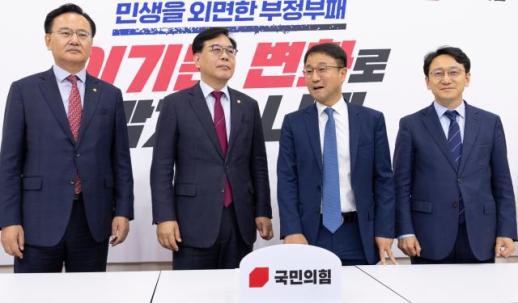 Korean Parties Discuss Legislative Agenda After Han Byeong-do's Election The Democratic Party and the People Power Party met on May 14 for their first official meeting since the election of Han Byeong-do as floor leader. They discussed the timing for a plenary session to elect the next leadership but did not reach an agreement. Han stated, "We agreed to continue meeting to reach a consensus." During the meeting held in the National Assembly, representatives from both parties discussed various legislative schedules and current issues for the month. Attendees included Han Byeong-do and Cheon Jun-ho from the Democratic Party, and Song Eon-seok and Yoo Sang-beom from the People Power Party. Before the formal discussions began, Han explained, "With local elections approaching, I hope we can cooperate to ensure the National Assembly operates smoothly. Today is a courtesy visit." Song also congratulated Han on his election, saying, "I hope that even if there are disagreements during the local election period, we can work together to ensure the National Assembly runs smoothly. I will do my best to facilitate this during the remaining term until June 16." Following their discussions on the overall legislative agenda for May, including the schedule for the upcoming leadership elections, the two parties were unable to reach a consensus. After the meeting, Han told reporters, "We discussed the May legislative schedule with Song, but we have not yet reached an agreement. We will continue to meet to finalize the agenda."* This article has been translated by AI. 2026-05-14 19:50:20
 -
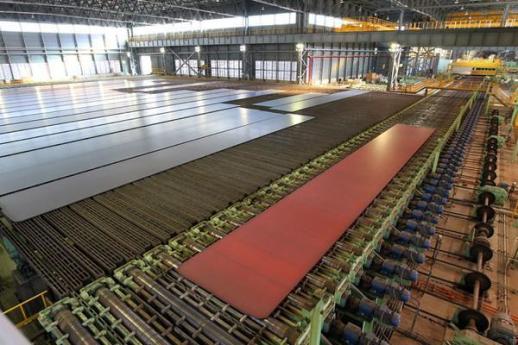 Steel and Shipbuilding Industries Agree on Mid-2026 Plate Prices The steel and shipbuilding industries have reached a final agreement on the supply price of thick plates for the first half of 2026, settling at a mid-800,000 won per ton level. This marks a slight increase from the low 800,000s recorded in the fourth quarter of last year. According to a report by Aju Economy on May 14, the negotiations for the first half of 2026 have recently concluded. The discussions typically proceed with POSCO finalizing agreements with the three major shipbuilders, after which other steel companies, including Hyundai Steel, complete their negotiations. While negotiations are usually held quarterly, this year’s talks extended over a longer period, culminating in a price agreement that encompasses both the first and second quarters. Thick plates, which are steel products with a thickness of 6 mm or more, play a significant role in ship manufacturing, accounting for 20% to 30% of shipbuilding costs. This round of negotiations was prolonged due to the opposing stances of the steel and shipbuilding sectors. Heightened global uncertainties, stemming from conflicts in the Middle East and tariff risks from the U.S., made it difficult for both sides to concede. The steel industry has maintained that, considering the rising costs of raw materials, industrial electricity rates, and logistics, a price increase was unavoidable. In fact, recent surges in iron ore prices, oil prices, and shipping costs have exacerbated cost pressures each year. Conversely, the shipbuilding industry has expressed concerns over rising costs, advocating for price freezes or reductions. Although profitability has significantly improved due to a recent surge in orders, they argue that increases in plate prices directly impact shipbuilding costs, necessitating minimal price hikes. Industry analysts view this agreement as a realistic compromise given the significant burdens faced by both sides. While the steel industry has succeeded in defending prices to a certain extent, it did not achieve the expected level of increases, and the shipbuilding sector could not completely avoid rising cost pressures. Following the conclusion of the first half negotiations, the steel and shipbuilding industries are reportedly set to begin discussions for the second half of 2026 immediately. With ongoing external variables such as fluctuations in iron ore prices, exchange rates, and global trade uncertainties, the outlook for the second half negotiations is expected to be challenging.* This article has been translated by AI. 2026-05-14 19:48:20