
Journalist

Hassan Vally
-
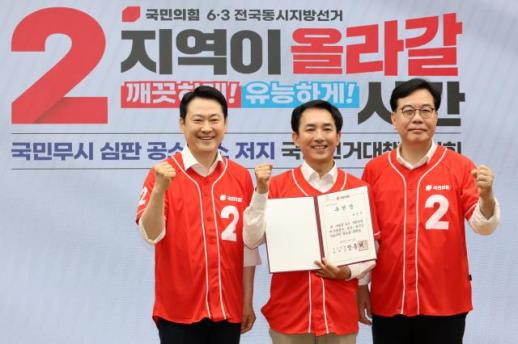 Calls for Candidate Unification in Busan North District Amid Tensions Jang Dong-hyuk, leader of the People Power Party, dismissed calls for candidate unification in the Busan North District by-election on May 15, stating, "It is not the behavior of a general preparing for battle to discuss unification before candidate registration is even complete." His comments come amid demands for unification between Park Min-sik, the party's candidate, and independent candidate Han Dong-hoon.In a post on Facebook, Jang emphasized that "a mere calculation of votes does not align with conservative values." He asserted, "The People Power Party must win this local election, as we are the last bastion protecting South Korea's liberal democracy and the lives of our citizens. However, victory cannot be the sole objective. It cannot be the path to unification or victory itself."He added, "Candidates nominated by the party must remember this. The issue of unification should follow the will of the party members and the party. If any conditions are attached to unification, it must be left to the party's decision in accordance with the members' wishes."Earlier, Jin Jong-oh, a lawmaker aligned with Han Dong-hoon, urged the party leadership to pursue unification among opposition candidates in Busan North District. Jin stated on Facebook, "Unification is the only way to initiate conservative integration and rebuilding, responding to the demands of the public. If we stubbornly cling to meaningless competition without addressing the public's needs, we will inevitably be rejected by the people."He pointed out that recent polls indicate about 65% of conservative voters in Busan North District support unification, yet the party leadership is ignoring this. Jin argued that unification is not a choice for a specific individual but a minimal responsibility to consolidate supporters' wishes and reduce political confusion.He insisted, "We must start the first step toward a new conservatism in Busan North District to halt the reckless governance of the Lee Jae-myung administration. What is needed now is not silence but a decisive action. I urge the party leadership to actively pursue unification for conservative integration and rebuilding."Tensions regarding candidate unification continue within and outside the party. Party member Cho Kwang-han stated on YTN Radio the previous day, "Han should yield to Park and quickly return to Seoul; that is the right answer." He suggested that if Han were to withdraw from the race to unify with Park, he would consider reinstating Han's party membership positively.In response, former party member Kim Jong-hyuk remarked, "It seems the Yoon Again faction is flustered by Han's surprising performance in a three-way race in North District. After this local election, regardless of the outcome, the Yoon Again faction will politically collapse." He added, addressing Cho, "The one leading that collapse should be more concerned about their own future after the local elections rather than who to reinstate."* This article has been translated by AI. 2026-05-15 14:49:53
 -
 Asia's next harvest held hostage by the drawn-out Hormuz disruption SEOUL, May 15 (AJP) - The Middle East war that began with oil is now squeezing Asia's soil. Nearly three months into the closure of the Strait of Hormuz, the disruption that first hit refineries and shipping desks is migrating into rice paddies, urea silos and government budgets across a continent that feeds more than half the world's population. About one-third of global seaborne fertilizer trade and roughly 35 to 45 percent of world urea exports normally pass through the narrow Gulf corridor, according to the U.N. Food and Agriculture Organization. Daily tanker transits have collapsed by more than 90 percent since hostilities erupted on Feb. 28, effectively severing Asia's most important agricultural lifeline. The result is a slow-burning crisis with a long tail. Energy prices spiked first. The deeper damage is now reaching the inputs that determine next season's harvest — and the harvest after that. "Agriculture operates within a crop calendar that cannot be postponed," FAO Director-General Qu Dongyu said on May 7 at a ministerial meeting in Rome. "Fertilizers must be applied at specific moments in the crop cycle. If they do not arrive on time, yields are reduced, regardless of what happens later." The FAO estimates that between 1.5 million and 3 million tons of fertilizer trade per month have been delayed since the war began. Middle Eastern granular urea jumped nearly 20 percent in a single week after the initial strikes; by mid-April, urea prices had risen around 52 percent in the United States and 60 percent in Brazil. The World Bank now expects overall fertilizer prices to climb 31 percent this year, with urea potentially up 60 percent against 2025 levels. For Asia, the geography of the shock is unforgiving. The Gulf is not merely an oil supplier but the engine of the region's nitrogen fertilizer supply, with Saudi Arabia ranked as the world's largest urea exporter and Oman among the top five. India, the world's second-largest fertilizer consumer, has felt the squeeze first and hardest. Urea import bids surged from around $510 per ton in February to nearly $950 by April, while domestic production fell from a typical 2.5 million tons a month to roughly 1.5 million tons in March as LNG supplies from Qatar were rerouted, according to government and industry data. New Delhi avoided an outright shortage only by paying premium spot prices — at a cost. The country's fertilizer subsidy bill is now expected to exceed 2 trillion rupees, well above the budgeted level. Prime Minister Narendra Modi has urged farmers to reduce fertilizer use as part of a broader austerity drive to defend the rupee. Bangladesh, where roughly 53 percent of fertilizer imports originate in the Gulf, has shut four of its five domestic fertilizer plants for lack of natural gas feedstock, leaving the country dangerously exposed ahead of its monsoon planting season. The damage extends across Southeast Asia, the world's rice basket. The Philippine Department of Agriculture has warned that rice output could fall by as much as 20 to 50 percent owing to soaring fertilizer and fuel costs, compounded by looming El Niño conditions, with the country now forced to import a potentially record 6.9 million tons of rice this year. "We are currently facing an energy crisis, but we believe that this energy crisis can eventually lead to a food crisis," Senator Francis Pangilinan told a Senate hearing in Manila in April. "And therefore we have to prepare." Rice farmers in Thailand and Vietnam — the world's two largest rice exporters — are scaling back fertilizer use as costs collide with stagnant paddy prices. Indonesia, already heavily reliant on imported urea, has tendered for emergency phosphate cargoes through state-owned Pupuk Indonesia to stabilize domestic supply. The chain reaction reaches into Northeast Asia. About 40 percent of South Korea's urea and ammonia imports — critical raw materials for nitrogen fertilizer — pass through the Strait of Hormuz, according to the Korea International Trade Association. Major Gulf suppliers including Industries Qatar and Saudi Arabia's SABIC Agri-Nutrients have declared force majeure on shipments to Asia. Seoul's Ministry of Agriculture, Food and Rural Affairs convened an emergency review in March and has since extended freight and war-risk subsidies for fertilizer importers — limited relief for a country whose grain self-sufficiency hovers near 20 percent, with wheat self-sufficiency at roughly 2 percent. The second-order effects are now coming into focus. Fertilizer applied in narrow planting windows means even a delay of weeks translates directly into smaller harvests. Removing nitrogen can cut wheat yields by more than half; inadequate phosphorus can reduce rice yields by around 30 percent, the FAO has warned. What alarms agronomists most is the lag. Higher food prices grab headlines, but the structural damage accumulates quietly — thinner farmer margins, depleted soil fertility, sliding productivity and a multi-year drag on output. The FAO projects tightened global food supplies through the second half of 2026 and into 2027. The U.N. Development Programme estimates that a prolonged disruption could push 8.8 million people across Asia-Pacific into poverty and subtract between $97 billion and $299 billion from regional output. The shock spreads beyond food. Gulf shipments also carry sulfur — vital for phosphate fertilizers, mining and metallurgy — along with methanol and monoethylene glycol, key feedstocks for the plastics, textiles and packaging that anchor Asian manufacturing supply chains. China has responded by expanding export controls on nitrogen and phosphate fertilizers to protect domestic supply. Others have fewer options. For now, Asia's grain silos remain comparatively full, cushioned by last year's strong harvests and FAO food price readings that have risen only modestly. That buffer will not last if the war drags into the autumn planting season. "This is not only a geopolitical crisis," Qu said in Rome. "It is a disruption at the core of the global agri-food system." 2026-05-15 14:47:27
 -
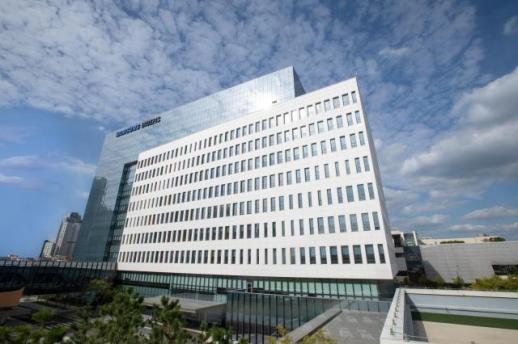 Samsung Bioepis Expands Open Innovation for Obesity and ADC Drug Development Samsung Bioepis is accelerating its drug development efforts by collaborating with external biotech ventures. The company is emphasizing open innovation as it expands from biopharmaceutical research into new drug areas. According to industry sources, Samsung Bioepis signed a memorandum of understanding (MOU) last month with the Atlas Innovation Center, a Chinese biotech growth support organization, to enhance global open innovation collaboration. This marks the company's first partnership with an overseas open innovation institution, aimed at proactively securing promising early-stage technologies. Atlas provides research infrastructure and clinical trial services in major biotech hubs such as Beijing, Shanghai, and Singapore, facilitating collaboration between global pharmaceutical companies and biotech ventures. The company plans to utilize this network to identify promising biotech firms from the initial research stage and expand its collaboration scope by leading the design and operation during clinical development. By sharing the financial and regulatory burdens that biotech ventures face during clinical trials, Samsung Bioepis aims to secure high-potential technologies early on. Recently, the company has also initiated the "2026 Seoul Biohub-Samsung Bioepis Open Innovation Program" in partnership with the Seoul Biohub, focusing on discovering domestic biotech startups capable of linking technologies such as antibody and peptide-based therapies and artificial intelligence (AI) drug development platforms. The new drug pipeline is expanding, focusing on peptide-based obesity treatments and antibody-drug conjugates (ADCs). Samsung Bioepis is developing an obesity treatment that combines glucagon-like peptide-1 (GLP-1) technology with long-lasting efficacy, aiming for a single administration to maintain effects for several months. In March, the company entered into a joint research and licensing agreement with domestic biotech firm G2G Bio in collaboration with the biotech platform company Episenex Lab. This approach is seen as a strategy to differentiate itself in the obesity treatment market, currently dominated by major pharmaceutical companies. The focus is on improving dosing convenience while reducing development risks based on proven technologies and gradually seeking market entry. In the ADC sector, the first drug candidate, SBE303, has begun global Phase 1 clinical trials, with preclinical results recently presented at AACR 2026. This candidate combines the company's antibody with linker technology from domestic firm Intecelle and payload from Chinese company Frontline, developed through open innovation. A second drug candidate, SBE313, is also under joint research and development with Frontline. Samsung Bioepis aims to secure at least one clinical-stage drug candidate each year. Kim Kyung-a, CEO of Samsung Bioepis, confirmed the company's focus on expanding its business around new drug development during the first regular shareholders' meeting of the year. The company plans to reinvest profits generated from its biosimilar business into new drug development while strengthening its strategy to quickly connect external candidates to new drug development based on accumulated analytical and processing capabilities. A Samsung Bioepis representative stated, "We plan to accelerate the acquisition and development of various drug candidates targeting unmet medical needs through open innovation."* This article has been translated by AI. 2026-05-15 14:46:02
 -
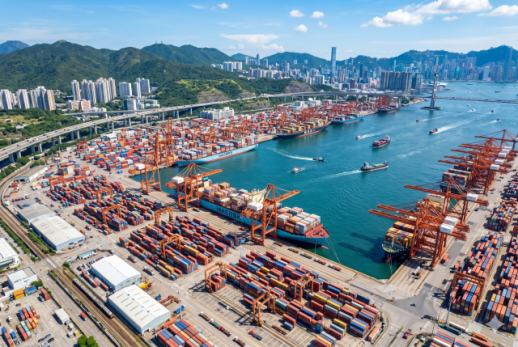 ASIA INSIGHT: While Hormuz burns, Hong Kong ships AI revolution As conflict turns the Middle East into a maritime graveyard, the Pearl River Delta is quietly monopolizing the world's most valuable supply chain. At the Kwai Tsing Container Terminals, the air carries the scent of ozone and hydraulic fluid. There are no bulk carriers of iron ore or massive tankers of crude lining the piers today. Instead, the focus is on a single, climate-controlled container being winched onto a freighter bound for the Port of Long Beach. Inside are high-density server racks and neural processing units manufactured less than thirty miles away in Shenzhen. This is the new architecture of Hong Kong’s economy—a pivot from the generalist trade of the past to the high-stakes hardware of the future. The geopolitical landscape of 2026 is defined by a brutal contraction. As the conflict involving Iran escalates, the Strait of Hormuz has essentially closed to commercial traffic, causing global energy prices to breach 120 dollars per barrel. While this has paralyzed industrial hubs in Europe and threatened the energy security of Northeast Asia, it has paradoxically accelerated a shift in Hong Kong’s economic utility. The city is no longer merely a financial outpost; it has become the primary physical gateway for the artificial intelligence supercycle, leveraging its proximity to Shenzhen to monopolize the global supply chain for advanced computing components. The numbers reveal a stark divergence from the global trend. According to the latest quarterly report from the Census and Statistics Department of Hong Kong, the territory’s gross domestic product expanded by 5.9 percent in the first quarter of 2026. This represents the fastest growth rate in five years. The engine of this expansion is a 24 percent real-term increase in the export of goods, a figure recently verified by the World Trade Organization’s regional monitor. This surge relies entirely on the relentless global demand for the semiconductors, precision components, and specialized circuitry produced in Shenzhen, the undisputed Silicon Valley of China. The structural importance of this regional axis becomes clear when compared to neighboring maritime giants. The Port of Shanghai remains the world’s largest by volume, handling roughly 47 million twenty-foot equivalent units annually, but its operations are heavily weighted toward bulk manufacturing and heavy industrial output. Similarly, the Port of Busan in South Korea has seen its growth stagnate at less than two percent this year, grappling with severe won-dollar currency pressure and a sharp decline in traditional automotive exports. Hong Kong has opted to cede the battle for sheer tonnage to focus on value density. Electronic components now account for 70 percent of Hong Kong’s total export value, according to data from the Hong Kong Trade Development Council. This specialization provides a unique insulation against the current Middle Eastern crisis. While the closure of Hormuz has forced global shipping to reroute and caused maritime insurance premiums to spike, the astronomical margins of AI hardware absorb these logistical costs far more effectively than the low-margin commodities handled by other Asian ports. A single container of high-end graphics processing units carries a market value thousands of times greater than a container of steel or textiles. By acting as the premier outlet for Shenzhen’s technology sector, Hong Kong effectively decouples its growth from the traditional vulnerabilities currently hobbling global trade. The persistent narrative of Hong Kong’s irrelevance fundamentally misunderstands the mechanics of modern commerce. The city offers the legal, operational, and financial infrastructure required to move sensitive, high-value technology across borders during a period of intense global scrutiny, acting as a sophisticated translation layer that turns Chinese engineering into liquid capital. As long as the global arms race for computing power continues, the path to the future will lead directly through the Kwai Tsing terminals. The world order may be fracturing, but the desperate demand for the next intelligence age ensures that Victoria Harbour remains the most valuable stretch of water in Asia. 2026-05-15 14:44:00
 -
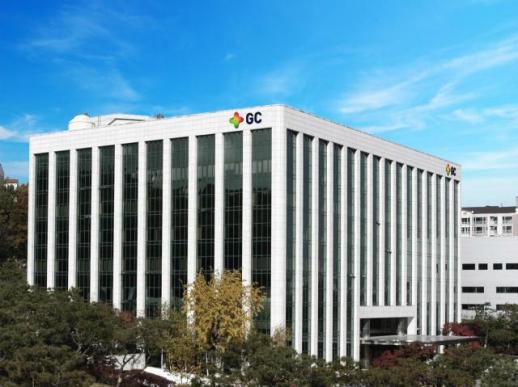 GC Green Cross Joins AI Drug Development Platform Project GC Green Cross announced on May 15 that it has been selected as a key research institution for the "AI-Medicine Drug Development Full Cycle Multi-Agent AI Platform Construction and Demonstration" project, led by the Ministry of Science and ICT. This initiative is a national project with a total government funding of approximately 17.7 billion won over 57 months. It aims to establish a system where large language model (LLM)-based specialized AI agents collaborate to carry out the entire drug development process, from target discovery to preclinical candidate selection. GC Green Cross will be responsible for the "platform demonstration," which involves validating and optimizing the candidate substances identified by the AI platform through actual experiments. The company expects this will enhance the predictive accuracy of AI models and reduce the time required for discovering new drug candidates. The company possesses the capability to conduct the entire drug development process, from small molecule synthesis to drug activity and efficacy evaluation, as well as non-clinical research. Its prior experience in implementing and utilizing various AI platforms was also a factor in its selection for this project. The domestic pharmaceutical industry currently faces a shortage of professionals capable of understanding statistics and handling diverse pharmaceutical data. Since 2020, the company has operated an AI Data Center to disseminate AI big data across its research and development efforts. The project is overseen by Yonsei University, with Aizen, Hitz, Mokam Life Science Research Institute, and the Korea Biotechnology Research Institute responsible for AI platform development, while GC Green Cross, Daewoong Pharmaceutical, and Yonsei University will handle platform validation. Jae-wook Jeong, head of R&D at GC Green Cross, stated, "We will enhance the completeness of the AI platform based on our accumulated drug development experience and contribute to strengthening the global competitiveness of the domestic bio industry."* This article has been translated by AI. 2026-05-15 14:42:51
 -
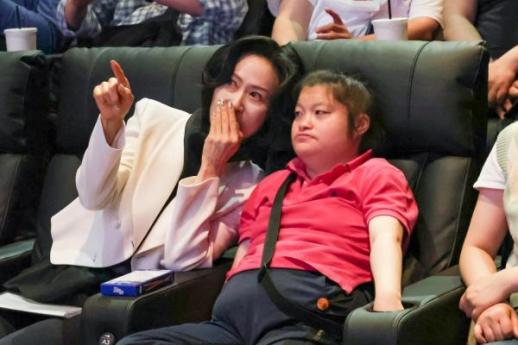 Lotte Foundation Supports Movie Screening for 160 Individuals with Developmental Disabilities and Their Families The Lotte Foundation hosted a movie screening event for individuals with developmental disabilities and their families. On May 14, the Lotte Foundation announced that it held the "Shin Kyuk-ho Lotte Open Film Festival" at Lotte Cinema Cheongnyangni in Seoul. The event was attended by 160 individuals, including those with developmental disabilities, their families, and accompanying teachers, who watched two films. The Shin Kyuk-ho Lotte Open Film Festival was established this year to provide a comfortable environment for individuals with developmental disabilities and their families to enjoy movies. People with developmental disabilities can be sensitive to sudden lights and sounds, making it difficult for them to use regular movie theaters. To address this, the foundation arranged special screenings for individuals with developmental disabilities. Attendees were allowed to move freely and make noise during the screening, while sound levels were lowered and backlighting was kept on to reduce sensory overload. Jang Hye-seon, chairperson of the Lotte Foundation, stated, "Individuals with developmental disabilities and their families often worry about being restricted in their movements inside theaters and about causing inconvenience to other viewers due to unexpected behaviors. I hope that today, everyone can enjoy the movie comfortably and without concern for those around them." According to the Ministry of Health and Welfare, 71% of individuals with developmental disabilities require assistance in basic daily living activities. In response, the foundation has been supporting initiatives for individuals with disabilities, including a 100 million won program for daily living education launched in September of last year.* This article has been translated by AI. 2026-05-15 14:40:14
 -
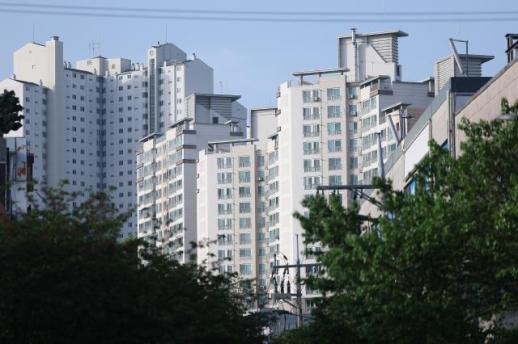 Seoul Housing Prices Rise After End of Capital Gains Tax Exemption Seoul's housing prices have resumed their upward trend following the end of the capital gains tax exemption. Even Gangnam has turned positive, while areas like Seongbuk and Jongno have recorded their highest growth rates since statistics began, reflecting significant increases in mid-priced apartment clusters. According to the Korea Real Estate Agency's April national housing price trend survey released on May 15, the comprehensive housing price index for Seoul rose by 0.55%. The overall demand in mid-priced areas has driven this increase. Among the districts, Gwangjin recorded the highest growth rate at 0.96%, primarily in major complexes in Junggok and Guui-dong. Seongbuk followed with a 0.92% increase, focusing on smaller units in Seongbuk and Gileum-dong, while Nowon saw a 0.79% rise centered around large complexes in Wolgye and Junggye-dong. Seodaemun and Dongdaemun also reported increases of 0.78% and 0.77%, respectively, mainly in Bukgajwa-Hongun-dong and Dapsimni-Hwigyeong-dong. Gangseo (0.87%) benefited from redevelopment projects in Gayang and Yeomchang-dong, while Yeongdeungpo (0.83%) saw growth in the station areas of Sin-gil and Yangpyeong-dong. Gwanak (0.74%) and Guro (0.72%) also experienced increases, particularly in Sinlim and Bongcheon-dong, and Gaebong and Gocheok-dong, respectively. However, Gangnam recorded a decline of -0.22% in April, particularly in high-priced areas like Apgujeong and Gaepo-dong. However, the mood shifted dramatically this month following the end of the capital gains tax exemption. According to the Korea Real Estate Agency, in the second week of May, apartment prices in Gangnam rose by 0.19%, marking a turnaround after 12 weeks of decline. Major areas such as Songpa (0.35%), Seocho (0.17%), and Yongsan (0.21%) also increased their growth rates. The upward trend in the outer regions, where mid-priced apartments are concentrated, is also accelerating. In the second week of May, Seongbuk (0.54%) and Jongno (0.36%) recorded their highest growth rates since statistics began. Areas with strong real demand, such as Seodaemun, Gangseo, Dongdaemun, and Nowon, continued to see upward momentum, contributing to the overall increase in the market. Consequently, Seoul's apartment prices rose by 0.28% in the same week, significantly up from the previous week's 0.15%. This marks the largest increase since the fourth week of January this year. Analysts suggest that the surge in urgent sales aimed at tax savings, which occurred after the announcement of the end of the capital gains tax exemption, has led to a simultaneous decrease in listings and an increase in prices. The Ministry of Land, Infrastructure and Transport is encouraging listings by expanding the exemption from residency obligations in designated land transaction areas from certain multi-homeowners to all homes with tenants. Yoon Soo-min, a real estate expert at NH Nonghyup Financial Group, noted, "Price impacts vary by region. Areas with many mid-priced apartments have steady demand, making price stabilization challenging, while high-priced apartments have limited demand, suggesting a more stable trend may continue." Nam Hyuk-woo of Woori Bank's real estate research institute stated, "The upward trend has resumed, particularly in so-called 'value-for-money areas' that offer less price burden and good living conditions. Areas like Seodaemun, Dongdaemun, and Gangseo have a small gap between actual transaction prices and listing prices, resulting in lower buyer resistance, and there appears to be an influx of demand from lower-tier to higher-tier areas." * This article has been translated by AI. 2026-05-15 14:37:48
 -
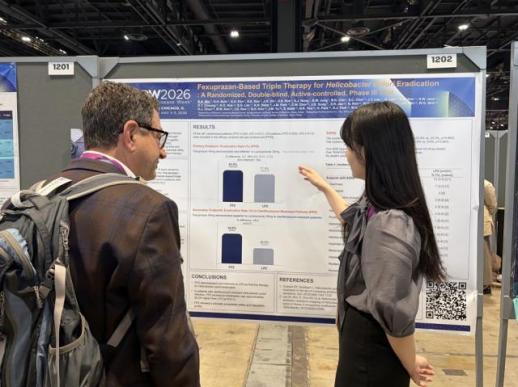 Daewoong Pharmaceutical Announces Phase 3 Results for Pexuclu in Helicobacter Pylori Treatment Daewoong Pharmaceutical announced on May 15 that it presented the Phase 3 results of its Helicobacter pylori eradication therapy, Pexuclu (ingredient name: Pexuprazan hydrochloride), at the 2026 Digestive Disease Week (DDW 2026). Pexuclu, a third-generation gastroesophageal reflux disease (GERD) treatment, was launched by Daewoong Pharmaceutical in 2022. It is a potassium-competitive acid blocker (P-CAB) designed to address the slow onset and short half-life issues associated with traditional proton pump inhibitors (PPIs). Recently, the company received approval from the Ministry of Food and Drug Safety to expand the indications for Pexuclu 40mg to include Helicobacter pylori eradication. Clinical results showed that Pexuclu demonstrated a higher eradication rate compared to the control group in patients with antibiotic resistance to clarithromycin, suggesting it as a potential new treatment option. Pexuclu's treatment scope has expanded to include not only the treatment of erosive gastroesophageal reflux disease, improvement of gastric mucosal lesions in acute and chronic gastritis, and prevention of NSAID-induced peptic ulcers (gastric and duodenal ulcers), but also the area of Helicobacter pylori eradication therapy. The clinical trial was conducted as a multicenter, randomized, double-blind study involving 461 patients. The participants received either Pexuprazan (40mg) or lansoprazole (30mg) in combination with two antibiotics (amoxicillin and clarithromycin) for 14 days to evaluate the eradication efficacy. Detailed analysis revealed that the eradication rate for the Pexuclu-based therapy in the clarithromycin-resistant patient group was 54.76%, approximately 26 percentage points higher than the control group (28.57%), achieving statistical superiority. In the primary efficacy evaluation for all participants, the Pexuclu group showed an eradication rate of 83.64%, demonstrating non-inferiority compared to the control group (77.93%). The incidence of adverse events did not differ significantly between the two groups. The company aims to enhance Pexuclu's market competitiveness in the gastrointestinal disease sector through continuous expansion of its indications. Na Jae-jin, head of Daewoong Pharmaceutical's Clinical Medicine Center, stated, "We have confirmed the potential for new options in an environment where antibiotic resistance makes treatment challenging. We will continue research to expand indications."* This article has been translated by AI. 2026-05-15 14:36:00
 -
 Hanwha Solutions Reschedules Rights Offering Amid Ongoing Debt Repayment Controversy Hanwha Solutions, which had postponed its rights offering schedule due to two correction requests from the Financial Supervisory Service, has confirmed a new schedule just two days later. However, the structure remains unchanged, with about half of the raised funds still allocated for debt repayment, leading to ongoing controversy over using shareholder money to pay off debts. According to industry sources on May 15, Hanwha Solutions announced in a correction disclosure that it has changed the date for determining the new stock issuance price from early June to July 7. The subscription period for existing shareholders will run from July 10 to 13, with the new shares expected to be listed on July 31. The scale of the rights offering and the purpose of the funds remain the same. The company plans to issue 600,000 new shares, representing a 32.10% increase. The total amount to be raised is 1.8 trillion won, with an expected issuance price of 32,400 won per share. Of this, approximately 907.7 billion won will be used for facility funds, while the remaining 906.7 billion won will go toward debt repayment. Initially, Hanwha Solutions aimed for a rights offering of 2.4 trillion won. The company explained that improving its financial structure was essential to avoid a credit rating downgrade due to the deteriorating global solar and chemical market. However, regulatory intervention forced the company to reduce the offering size to 1.8144 trillion won. During the rights offering process, financial authorities have repeatedly questioned whether there are alternative funding methods aside from the rights offering. On May 11, Hwang Seon-o, deputy director of the Financial Supervisory Service, stated, "There was insufficient explanation regarding whether Hanwha Solutions truly has no other means of raising funds apart from the rights offering." In the first review of the rights offering, the Financial Supervisory Service raised concerns about why Hanwha Solutions was pursuing a rights offering despite holding a significant amount of non-operational assets. Subsequently, the company revised the offering size down to approximately 1.8 trillion won from the previous amount. However, similar criticisms arose during the second review. The Financial Supervisory Service assessed that the company lacked sufficient disclosure. They also questioned the 5 trillion won worth of non-operational assets, including real estate and shares in other companies, held by Hanwha Solutions. Hanwha Solutions stated, "This revised disclosure includes plans for selling non-core assets, capital raising strategies, anticipated benefits from the Advanced Manufacturing Production Tax Credit (AMPC), and long-term profit and loss estimates." With the additional explanations in the revised disclosure, attention is focused on whether the rights offering will pass this time. Some analysts suggest that Hanwha Group, the parent company, may need to participate in the rights offering with an amount larger than the debt repayment amount to ensure its success. Hanwha Group is expected to participate in the rights offering with about 843.9 billion won, which is less than the 906.7 billion won needed for debt repayment. This has fueled the narrative of using shareholder money to pay off debts. In contrast, SKC recently confirmed its final issuance price, with its parent company, SK, investing 6.295 trillion won, exceeding the 5.775 trillion won debt repayment amount. Industry analysts warn that if Hanwha Solutions' newly submitted revised disclosure is rejected again, the entire rights offering could be jeopardized. A representative from Hanwha Solutions remarked, "We have made every effort to address the concerns raised by shareholders, the media, and the Financial Supervisory Service regarding the issues they identified."* This article has been translated by AI. 2026-05-15 14:33:00
 -
 Yannick Sinner Sets New ATP Masters 1000 Record with 32 Consecutive Wins Yannick Sinner, the world No. 1 in men's tennis, has set a new record for the most consecutive wins at ATP Masters 1000 events, surpassing Novak Djokovic with 32 victories. On May 14, during the quarterfinals of the Italian Open in Rome, Sinner defeated Andrey Rublev, ranked 14th, with a score of 2-0 (6-2, 6-4). Since winning the Paris tournament last November, Sinner has continued his winning streak through Indian Wells, Miami, Monte Carlo, and Madrid, achieving 32 consecutive wins in this category of tournaments. This achievement breaks Djokovic's previous record of 31 consecutive wins set 15 years ago in 2011. After the match, Sinner stated, "I don’t step onto the court to break records. I just try to write my own history," while acknowledging the significance of this record in tennis history. He expressed pride in achieving it in front of his home fans. Sinner is also eyeing another record held solely by Djokovic, the 'Career Golden Masters,' which requires winning at least once at all nine Masters 1000 tournaments. The Italian Open is the only Masters event where Sinner has yet to claim victory. If he wins this tournament, he would become the second player in history to achieve this milestone after Djokovic. Sinner's next opponent in the semifinals will be Daniil Medvedev, ranked 9th. Sinner holds a 9-7 career advantage over Medvedev, including a recent four-match winning streak against him.* This article has been translated by AI. 2026-05-15 14:30:36