
Journalist

Huan Xiang
-
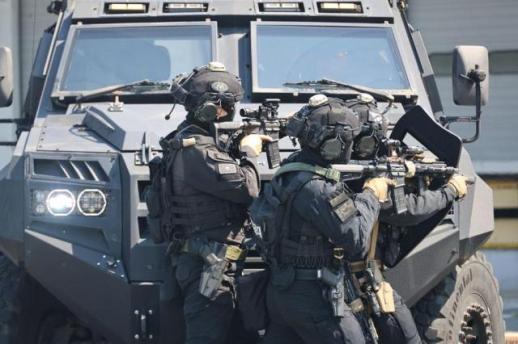 Military to conduct annual computer-based simulation exercise next week SEOUL, May 15 (AJP) - The military will stage a five-day computer-based simulation exercise next week to strengthen readiness against North Korean threats, the Joint Chiefs of Staff (JCS) said on Friday. According to the JCS, the annual command post exercise, known as Taegeuk, is scheduled to begin on Monday. The exercise is conducted based on scenarios that reflect changes in the security environment and the evolving landscape of modern warfare. The military aims to strengthen its crisis management and response capabilities against a wide range of North Korean threats. But there will be no counterattack or live-fire field drills against the North, given the exercise's defensive nature. First launched in the mid-1990s, the exercise has since undergone several changes in name and format. At one point, it was combined with a larger nationwide civil defense exercise, but it was not held in 2020 due to the coronavirus pandemic and other disruptions. It resumed the following year in a combined format before being separated again and has since been conducted independently. 2026-05-15 11:10:15
 -
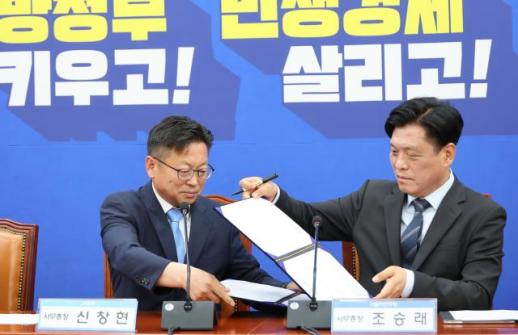 Kim Sang-wook and Kim Jong-hoon Agree to Unite as Candidates for Ulsan Mayor The Democratic Party and the Progressive Party agreed on May 15 to unify their candidates for the Ulsan mayoral election in the upcoming June 3 local elections. They plan to select a single candidate through a primary that fully reflects public opinion polls. This agreement follows the withdrawal of Hwang Myung-pil, the candidate from the Justice Reform Party, the previous day, effectively concluding the unification process among progressive candidates. Jo Seung-rae, Secretary-General of the Democratic Party, stated at a press conference held at the National Assembly, "This is a choice to increase the chances of victory, even if it is just by 1%, to revive the heart of the industrial capital of South Korea." Shin Chang-hyun, Secretary-General of the Progressive Party, added, "We have decided to join forces to eliminate the forces of insurrection in Ulsan, the heart of South Korean labor." The two parties began negotiations for unification last month and reached an agreement after focused discussions in May. However, they acknowledged that it would be difficult to finalize the unification by the candidate registration deadline on this day, given the agreement on the primary method. Jo mentioned, "We aim to complete this before the official campaign begins." The official campaign is set to start on May 21. Meanwhile, the unified progressive candidate will compete against Kim Du-gyeom of the People Power Party and independent candidate Park Maeng-woo. Although Kim and Park have declared a halt to their unification efforts within the conservative camp, there are discussions about the possibility of resuming those efforts given the rapidly changing situation.* This article has been translated by AI. 2026-05-15 11:05:55
 -
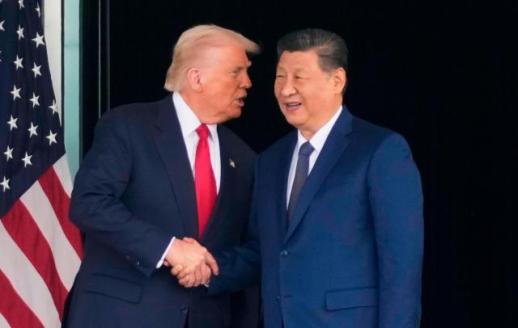 U.S.-China Summit Addresses Iran Nuclear Freeze and Hormuz Strait Navigation The recent U.S.-China summit in Beijing in May 2026 held significance beyond merely managing bilateral relations. Underlying the discussions were complex calculations aimed at stabilizing the Middle East order, global energy flows, and international financial markets. Particularly noteworthy was the focus on the Iran nuclear issue and the stability of the Hormuz Strait. Although the official statements were crafted in relatively restrained diplomatic language, they reflected a consensus between the U.S. and China on the need to manage the explosive crises in the Middle East. Currently, the global economy is precariously positioned atop three major powder kegs: the protracted war in Ukraine, the U.S.-China technological rivalry over artificial intelligence and semiconductors, and the Iran nuclear issue coupled with risks in the Hormuz Strait. The Hormuz Strait is not just a maritime route; it is a critical energy artery through which approximately one-third of the world's seaborne oil trade passes. Oil and liquefied natural gas from Saudi Arabia, the United Arab Emirates, Kuwait, Qatar, Iraq, and Iran traverse this narrow strait en route to Asia and Europe. Should this route be blocked or military conflicts arise, international oil prices, shipping rates, and insurance costs could skyrocket. The U.S. and Iran have been engaged in a prolonged tug-of-war over nuclear development. The U.S. has maintained a firm stance against allowing Iran to approach the capability to manufacture nuclear weapons, while Iran has argued that its nuclear development is a sovereign right for peaceful purposes. The crux of the issue lies in uranium enrichment levels and the scope of nuclear facility operations. The West suspects that Iran has approached the final stages of nuclear weapon production, while Iran contends that U.S. unilateral sanctions and pressure have exacerbated tensions. The situation is further complicated by Israel's concerns. Israel views Iran's nuclear armament as a direct threat to its national survival, leading to ongoing discussions within Israel about the possibility of preemptive strikes if necessary. In fact, military tensions in the Middle East have largely revolved around Iran's nuclear facilities and Israel's security issues. However, the atmosphere following the Beijing summit suggests a shift in diplomatic dynamics. Both the U.S. and China recognize the current reality that neither can afford a full-scale conflict in the Middle East. The U.S. is already burdened by significant financial obligations, the political calendar leading up to elections, and support for Ukraine. Meanwhile, China is grappling with economic slowdown, declining exports, and real estate risks, making stable energy supplies crucial. Consequently, analysts suggest that both countries are beginning to prioritize a management system to prevent dangerous escalations over the complete resolution of the Iran nuclear issue. This implies a shift toward a realistic compromise that favors a freeze on nuclear weapons development, enhanced international monitoring, and guaranteed safe passage through the Hormuz Strait. China's role is becoming increasingly significant. Over the past decade, relations between China and Iran have strengthened rapidly. China is now one of Iran's largest oil importers and plays a vital role in the Iranian economy. The two countries have signed long-term economic cooperation agreements, expanding collaboration across energy, infrastructure, railways, ports, and telecommunications. Iran is a key hub in China's Belt and Road Initiative, connecting Central Asia, the Middle East, and Europe. Geopolitically, Iran has historically been a strategic point linking the Silk Road and the Hormuz Strait since the days of the Persian Empire. From China's perspective, Iran is not merely an oil-producing nation; it serves as a strategic buffer against the U.S.-led maritime order and is crucial for maintaining energy security. Despite international sanctions, China has continued to import Iranian oil through various means, with Chinese refineries consistently securing discounted Iranian crude, which has played a significant role in stabilizing China's industrial economy. Conversely, Iran also finds itself in dire need of China. With limited access to international financial networks due to U.S. and Western sanctions, China has effectively become Iran's largest trading partner. Investments from Chinese companies and their participation in infrastructure projects have become essential pillars of the Iranian economy. However, China cannot unconditionally support Iran. The Chinese economy remains deeply intertwined with the U.S. and European markets, and prolonged instability in the Middle East could lead to soaring energy prices and disruptions in maritime logistics, adversely affecting China's own economy. This is where the significance of the recent U.S.-China summit emerges. The U.S. seeks China's cooperation in managing Iran to a certain extent, while China hopes the U.S. will avoid excessively escalating tensions in the Middle East. In other words, both countries, while competing, find common ground in managing risks in the region. As for when the joint statement on the stability of navigation through the Hormuz Strait and the freeze on Iran's nuclear program will take effect, diplomats are paying attention to the possibility of a phased approach. In the short term, there is a strong likelihood of reaching an informal agreement on military restraint and ensuring safe passage through the strait. Following that, discussions may include enhanced monitoring by the International Atomic Energy Agency, some limitations on uranium enrichment, and conditional easing of sanctions. Of course, many variables remain. The differing positions of hardliners within Israel and Iran's Revolutionary Guard, the U.S. election landscape, and proxy conflicts in the Middle East could disrupt negotiations at any moment. Particularly, even a minor military clash could lead to a sharp spike in international oil prices. Nevertheless, the world is currently opting for 'risk management' over 'complete victory.' This reflects a harsh realism. The U.S., China, Iran, and even Israel are all acutely aware of the costs of full-scale war. If a large-scale conflict erupts in the Middle East, the global economy would inevitably plunge back into inflation and supply chain shocks. For South Korea, this issue is even more urgent. The country has a high dependency on energy imports. If supplies of oil and liquefied natural gas from the Middle East are disrupted, the manufacturing, logistics, and electricity costs would all face simultaneous pressure. In particular, if the Hormuz Strait becomes unstable, the South Korean economy would be hard-hit. Conversely, if stability in the strait and a reduction in tensions in the Middle East continue, it could provide relief for the South Korean economy. Stabilizing international oil prices would likely lead to improvements in inflation, exchange rates, and trade balances. Ultimately, the U.S.-China summit in Beijing is not merely a diplomatic event between the two nations. It represents a shared understanding that the energy order, which serves as the last safety net for the global economy amidst the competition for supremacy in artificial intelligence and semiconductors, must not be disrupted. The oil tankers traversing the deserts of the Middle East and the diplomatic discussions in Beijing may seem like entirely different worlds on the surface. However, they are fundamentally interconnected. In an era of global hegemony, it is ultimately energy that drives civilization, and that energy still flows through the Hormuz Strait.* This article has been translated by AI. 2026-05-15 10:58:38
 -
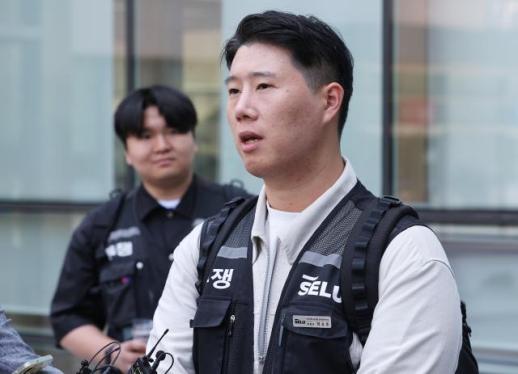 Samsung Union Plans to Continue Strike Until June 7, Rejects Dialogue Despite repeated calls from Samsung Electronics management and the government to resume dialogue, the union has refused to negotiate and plans to proceed with a general strike as previously announced.On May 15, the largest union at Samsung Electronics, the Korean Metal Workers' Union Samsung Electronics branch, stated in response to a letter from the company urging a resumption of talks, "We are willing to negotiate after June 7," emphasizing their commitment to exercising their constitutionally guaranteed rights and indicating their intent to continue the strike.June 7 is the date the union has set for the end of the strike, suggesting that they are preparing to carry out their planned actions. With the union rejecting the call for dialogue, the anticipated general strike set to begin on May 21 for 18 days is expected to become a reality.On the same day, Samsung management sent a letter titled "Response to the Korean Metal Workers' Union Samsung Electronics Branch 26-11" stating, "In the mediation by the Central Labor Relations Commission in March, the company proposed a transparent plan for the existing performance bonus (OPI) system, allowing for a choice between 10% of operating profit and 20% EVA." They also mentioned that regarding the demands for institutionalization and the removal of caps, they proposed maintaining the existing OPI system while establishing a new special compensation system without caps for more flexible institutionalization.The company reiterated its commitment to meet without conditions to facilitate negotiations, stating, "To respond to the wishes of employees, shareholders, and the public for a resolution, we once again propose to meet and discuss openly."In response, the Korean Metal Workers' Union stated, "We do not consider the letter sent to us as a genuine communication," adding, "Negotiations can happen at any time, and we can do it in June."Previously, on May 14, the union emphasized its key demands for "transparency in performance bonuses, removal of caps, and institutionalization," and conveyed to management that they would engage in talks only if a clear willingness to negotiate was demonstrated. They requested a direct response from the CEO by 10 a.m. that day.* This article has been translated by AI. 2026-05-15 10:57:26
 -
 Doosan Robotics Shares Surge 25% on Physical AI Growth Expectations Doosan Robotics experienced a significant surge of over 25% in its stock price, reaching an all-time high, driven by optimism surrounding the growth of the physical AI industry. According to the Korea Exchange, as of 10:26 a.m. on May 15, Doosan Robotics shares rose by 27,400 won (25.66%) to 134,200 won. At one point during the trading session, the stock peaked at 138,800 won, setting a new record. At the same time, Rainbow Robotics saw a 3.57% increase, while iRobotics surged by 29.66%. Other robotics stocks also showed strong performance, including Haesung Aerobotics (6.71%), Cosmo Robotics (11.76%), Yuil Robotics (7.65%), and CSM Robotics (5.49%). Market analysts suggest that foreign investment is increasingly flowing into domestic robotics stocks, raising expectations for the next leading stocks. From May 4 to 14, foreign investors purchased a net 261 billion won worth of Doosan Robotics shares and 228 billion won of Rainbow Robotics, making them the top two net buyers. The recent positive sentiment surrounding physical AI investments has spread from Hyundai Motor Group affiliates to the broader robotics sector. Notable events, such as Hyundai's participation in the JP Morgan conference with Boston Dynamics, news of collaboration between Fanuc and Google on physical AI, and advancements in humanoid development by U.S. AI robotics firm Figure AI, have fueled optimism in the global robotics industry. Kim Seon-bong, a researcher at KB Securities, stated, "Doosan Robotics is a specialist in collaborative robots, and its expansion in North America and collaboration with NVIDIA are expected to gain momentum. The company plans to develop intelligent solutions by 2027 and unveil industrial humanoids by 2028." In the first quarter of this year, Doosan Robotics reported consolidated revenues of 15.3 billion won and an operating loss of 12.1 billion won. Analysts attribute revenue growth to the acquisition of ONExia and the expansion of European clients. The company acquired an 89.6% stake in the U.S. automation solutions firm ONExia for 37.4 billion won last year to enhance its North American network and turnkey delivery capabilities. Additionally, Doosan Robotics unveiled its collaboration roadmap with NVIDIA in April. The plan aims to enhance its AI robot operating system based on NVIDIA's simulation and learning infrastructure to develop intelligent robotic solutions for industrial applications.* This article has been translated by AI. 2026-05-15 10:55:01
 -
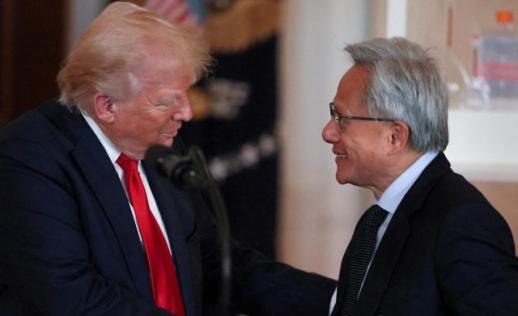 US-China Summit Highlights Shift from Tariff Wars to AI and Semiconductor Dominance In May 2026, Beijing was not a city of Cold War tensions, but neither was it a place of complete reconciliation. The red carpet of the Great Hall of the People and the serene pathways of Tiananmen Park reflected a significant tension and restraint surrounding the 21st-century global order. The summit between U.S. President Donald Trump and Chinese President Xi Jinping projected messages of stability and cooperation. However, the real focus of the talks was not tariffs but rather artificial intelligence (AI) and semiconductors. The global power dynamic has already shifted from oil, steel, and automobiles to data, computational power, and advanced semiconductors. A notable moment during the visit was the presence of Jensen Huang, CEO of NVIDIA. After completing his schedule in Alaska, President Trump effectively brought Huang directly to Beijing. This was not merely a business leader's visit; it symbolized the U.S. beginning to manage AI semiconductors as a strategic national asset. At one time, the center of U.S.-China tensions was the tariff war. High tariffs imposed during Trump's first term shook both Chinese manufacturing and the U.S. consumer market. The U.S. cited trade deficit reduction and the correction of China's unfair trade practices, while China retaliated with counter-tariffs. The world became accustomed to the term 'tariff war.' However, in just a few years, global attention has shifted dramatically. The key question is no longer “who can sell cheaper goods?” but rather “who can design the future civilization?” At the heart of this is AI and semiconductors. Semiconductors are no longer just electronic components; in the AI era, they represent national power. A nation's military strength, financial systems, cloud industries, autonomous vehicles, robotics, aerospace, and biotechnology all rely on high-performance semiconductors. Notably, NVIDIA's GPUs are now referred to as the 'oil of the AI era.' The area where the U.S. is applying the most pressure on China is advanced AI semiconductors. The U.S. has restricted exports of top-tier AI chips like the H100 and H200 and has tightened controls on advanced semiconductor equipment and software. Additionally, companies like ASML from the Netherlands and Japanese semiconductor equipment firms have partially joined the U.S. strategy, putting significant pressure on China’s access to advanced processes. However, China has not retreated easily. Instead, it has elevated semiconductor self-sufficiency to a national survival strategy in response to U.S. pressure. Development of AI chips centered around Huawei, the establishment of a domestic GPU ecosystem, memory independence, and the nurturing of Chinese semiconductor equipment are all progressing simultaneously. Recently, the rise of Chinese AI company DeepSeek has sent shockwaves through the global industry. DeepSeek has achieved significant AI performance through its own optimization technology and efficient computational structure, even with limited access to U.S. advanced chips. This challenges the assumption that “without American chips, Chinese AI cannot grow.” This situation deepens the dilemma for the U.S. While excessive pressure on China may yield short-term advantages for the U.S., it risks accelerating China's self-sufficiency in the long run. Historically, technology blockades have often led to the growth of independent ecosystems in the targeted countries. The cautious handling of AI and semiconductor issues during the Beijing summit reflects this reality. The U.S. is wary of China's military AI ambitions while also seeking to avoid a complete loss of its companies' access to the Chinese market. For U.S. firms like NVIDIA, Apple, and Tesla, China remains one of the largest markets globally. Conversely, China understands that it is challenging to grow without completely excluding U.S. advanced technologies and the global financial system. Thus, the atmosphere of this summit differed significantly from past tariff conflicts. Previously, both sides raised tariffs and fought over trade surpluses and deficits. Now, a much deeper competition has begun over AI hegemony and leadership in future civilization. While they may smile and shake hands on the surface, a quiet war is underway over “who will control the operating system of the AI era.” In fact, competition for AI data centers and GPU acquisition is intensifying in the U.S. Microsoft, Google, Amazon, Meta, and even Wall Street financial firms are pouring astronomical amounts into AI infrastructure investments. The U.S. still maintains its position as the global leader in design, software, and advanced GPU technology. Meanwhile, China is accelerating its pursuit, leveraging its vast domestic market, state-led investments, and manufacturing base. Local governments in China are pouring significant funds into AI industrial parks, and aggressive efforts are underway to secure semiconductor talent and develop domestic equipment. Numerous AI startups and semiconductor companies are already clustered in Beijing, Shanghai, and Shenzhen. The competition in AI and semiconductors is not merely an industrial rivalry; it is a contest for the future national system and global order. In this context, the tariff wars have receded into the background. Tariffs remain important, but they are a relic of the industrial age. The core of the AI era lies in data, computational power, and semiconductor supply chains. Ultimately, the world is transitioning from an era defined by “who can produce cheaper” to one defined by “who can control more computational power and algorithms.” The global economy is also likely to be significantly shaken by this trend. If the U.S. and China can maintain a certain level of cooperation and trade in AI and semiconductors, the global semiconductor market may stabilize. Conversely, if tensions escalate again, supply chain fragmentation and technological blockades will deepen, potentially dividing the world into U.S.-led and China-led technological spheres. South Korea's concerns are even more profound. While South Korea is one of the world's leading memory semiconductor nations, it is also required to maintain a strategic balance between the U.S. security alliance and the Chinese market. Samsung Electronics and SK Hynix must comply with U.S. advanced semiconductor regulations but cannot afford to abandon their production bases and markets in China. Ultimately, South Korea must rise to become a key technology nation in the AI era, not just a production base. It needs to expand its competitiveness beyond memory-centric structures to include AI semiconductor design, software, power semiconductors, and advanced packaging. At the same time, a strategic diplomatic sense that does not allow itself to be swept away by either the U.S. or China is essential. The 2026 Beijing summit clearly demonstrated this shift. The axis of global hegemony is now moving from tariffs to AI and semiconductors. And this quiet war has already begun.* This article has been translated by AI. 2026-05-15 10:49:39
 -
 LG Electronics Shares Surge, Boosting LG Group Stocks LG Group stocks are showing strong gains in early trading, driven by optimism surrounding LG Electronics' robotics business, which is boosting buying interest across the holding company and its major affiliates. According to the Korea Exchange, as of 10:07 a.m., LG shares were trading at 137,800 won, up 20,800 won (17.78%) from the previous trading day. The rapid rise triggered a volatility interruption mechanism shortly after the market opened. At the same time, LG Electronics saw its stock rise by 38,000 won (17.51%) to 255,000 won. This follows five consecutive days of gains leading up to today, indicating a strong upward trend. Other major affiliates also experienced increases, including LG CNS (7.90%), LG Innotek (5.92%), LG Display (5.28%), LG HelloVision (3.19%), and LG Energy Solution (1.13%). Market analysts believe that the recent excitement surrounding LG Electronics' robotics business is spreading throughout the group, attracting investment in related stocks. Earlier, Hana Financial Investment raised its target price for LG Electronics to 230,000 won, citing improvements in cost structure and marketing efficiency that bolster profit resilience, along with aggressive expansion into robotics-related new businesses. The report noted that during the March shareholders' meeting, plans were announced to establish a production system for humanoid robot actuators within the year and to advance the proof of concept (PoC) for next year. The acceleration of the PoC plan to the first half of this year suggests an active push in the robotics sector. Additionally, analysts pointed out that the recent surge in stock prices for semiconductor giants Samsung Electronics and SK Hynix has positively influenced investor sentiment, leading to similar gains for holding companies like Samsung C&T and SK Square. As of the last trading day, Samsung C&T and SK Square closed at 442,000 won and 1,171,000 won, respectively. Notably, SK Square's stock surpassed 1 million won on June 6, driven by a surge in the corporate value of its key subsidiary, SK Hynix.* This article has been translated by AI. 2026-05-15 10:46:21
 -
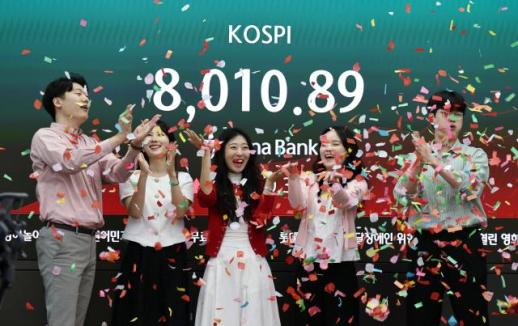 Korean Stock Market Surpasses 8000 Points, Eyes Global Top 5 The KOSPI index has crossed the 8000-point mark for the first time in history, marking a significant milestone for the South Korean stock market. Once labeled as 'Parkspi' due to its undervaluation, the market is now gaining recognition as a key player globally, driven by the semiconductor and artificial intelligence (AI) boom, along with an influx of foreign capital. According to the Korea Exchange, the KOSPI reached an intraday high of 8002.62 at 9:13 a.m. on May 15. The index opened at 7951.75, down 0.37% from the previous day, but managed to turn positive and surpass the 8000-point threshold. Historically, the South Korean stock market has been viewed as undervalued, trapped in a 'Korea Discount' structure. However, recent developments in the AI sector and expectations of a semiconductor supercycle have shifted the market's sentiment dramatically. Strong foreign buying, particularly in major companies like Samsung Electronics and SK Hynix, has propelled the index upward. Improvements in corporate earnings and a trend toward increased shareholder returns have also supported the market's reassessment. Analysts note that major listed companies are enhancing dividends and engaging in stock buybacks, boosting global investor confidence. The financial investment sector is now focusing on the potential for the South Korean stock market to join the ranks of global core markets following the KOSPI's breakthrough of 8000 points. There are expectations that it could rise to become one of the top five markets globally in terms of market capitalization and trading volume, alongside the U.S., China, and Japan. Recently, the market capitalization of the South Korean stock market surpassed that of Taiwan. As of May 11, the Korea Exchange reported a market capitalization of 7084 trillion won, which translates to approximately $4.81 trillion when using an exchange rate of 1472 won to the dollar. In contrast, Taiwan's market capitalization was about $4.34 trillion. However, concerns remain regarding valuation pressures due to the rapid rise, U.S. interest rate policies, and fears of a global economic slowdown. Despite these challenges, there is a prevailing sentiment that global investors are viewing the South Korean stock market more favorably than in the past. A financial industry insider stated, "The KOSPI's breakthrough of 8000 points signifies more than just a record; it indicates that the South Korean stock market is being re-evaluated as a global center rather than just an emerging market."* This article has been translated by AI. 2026-05-15 10:44:16
 -
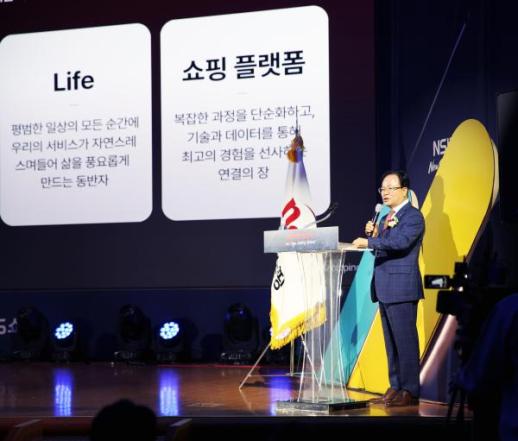 NS Home Shopping Celebrates 25th Anniversary, Aims for Food & Life Platform Growth NS Home Shopping announced on May 15 that it held a vision declaration ceremony on May 8 at the Saemaul Undong Central Training Center in Seongnam, Gyeonggi Province, to celebrate its 25th anniversary. The event was attended by Kim Hong-guk, Chairman of Harim Group, along with representatives from major affiliates and NS Home Shopping employees. The company declared its new vision as the "No. 1 Food & Life Shopping Platform," aiming to provide substantial value to customers' lives across food and lifestyle sectors. The core values for realizing this vision include trust, challenge, communication, and customer focus. In his commemorative speech, Jo Hang-mok, CEO of NS Home Shopping, stated, "This vision declaration is not just an announcement of a slogan; it is a clear declaration of our direction and standards for how we should work and where we are headed." He emphasized that NS Home Shopping will grow into a Food & Life shopping platform that delivers real value to customers, adding, "When our choices centered around customers accumulate, the future of NS Home Shopping will be realized." Kim Hong-guk, in his encouraging remarks, noted, "NS Home Shopping's vision for 2050 is not merely a declaration to be number one in the market, but a commitment to provide the top value to customers." He stressed the importance of focusing on customer value as the essence of business, even in a changing market environment. He further stated, "In an era where data and AI redefine industrial competitiveness, retail competition is shifting from channel competition to experience competition. We must create a platform where customers can naturally connect their experiences across online and offline channels." Meanwhile, NS Shopping, the operator of NS Home Shopping, has acquired Homeplus Express, the supermarket division of Homeplus. This acquisition marks Harim Group's re-entry into the domestic offline retail market in the form of a corporate supermarket (SSM) after 14 years, following the sale of NS Mart to E-Mart in 2012.* This article has been translated by AI. 2026-05-15 10:42:48
 -
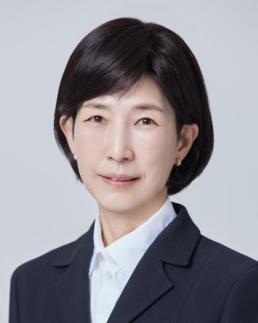 Kim Jeong-soo Appointed Chairman of Samyang Foods Amid Global Expansion Samyang Foods has appointed Kim Jeong-soo as chairman to accelerate its global business expansion. On May 15, the company announced that its board of directors approved Kim's promotion during a meeting held on May 12. He will officially take office on June 1. This marks a significant milestone for Kim, who was promoted from general manager to vice chairman in December 2021. The company stated that this decision aims to enhance accountability and respond to the growth of its global operations. Kim is credited with transforming Samyang Foods from a domestic-focused company into a thriving export business. Following the international success of Buldak Bokkeumyeon, which gained popularity through YouTube in 2016, the company expanded its market reach to over 80 countries within two years. As a result, the company’s financial performance has significantly improved. When Kim took office in 2021, the revenue was 642 billion won, which surged to 2.3517 trillion won last year. During the same period, the operating profit margin rose from 10% to 22%. With Kim's promotion, the transition to a global management system is expected to accelerate. Currently, overseas sales account for 80% of Samyang Foods' revenue. The company is rapidly expanding its international business by establishing sales subsidiaries and production facilities in key markets, including the United States, China, and Europe. This year, Samyang Foods plans to strengthen its business foundation to enhance regional and country-specific strategies. In addition to the ongoing construction of a factory in Jiaxing, China, the company is considering the establishment of additional regional offices. Meanwhile, Samyang Foods reported record-breaking results for the first quarter of this year. Consolidated revenue reached 714.4 billion won, and operating profit was 177.1 billion won, marking increases of 35% and 32%, respectively, compared to the same period last year. Overseas sales also grew by 38% to 585 billion won, driving overall performance.* This article has been translated by AI. 2026-05-15 10:39:27