

Journalist

Imran Khalid
-
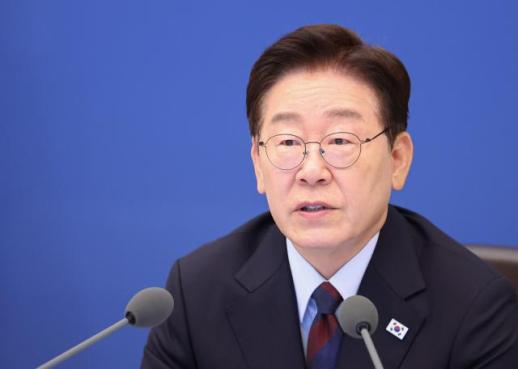 Korean Stock Market Surges Amid Legal Reforms and Global Trends Over the past year, South Korea's economy has faced significant external pressures, including U.S. tariff pressures, conflicts in the Middle East, high exchange rates, and supply chain uncertainties. However, the market has reacted unexpectedly. Once dubbed 'Parkspi,' the Korean stock market has emerged as one of the hottest markets globally, attracting renewed foreign investment. According to the financial investment industry on May 31, the KOSPI index, which stood at around 2,700 when President Lee Jae-myung's administration began last June, has surpassed 8,000 within a year. This nearly threefold increase is unmatched among major global stock markets. During his presidential campaign, Lee promised a 'KOSPI 5,000 era' as a key economic pledge. Since then, his administration has strengthened the fiduciary duties of directors and expanded cumulative voting through amendments to the Commercial Act. Other measures include mandating the buyback of treasury shares, promoting separate taxation on dividend income, and pressuring low PBR companies to improve. The Korea Exchange has also accelerated efforts to enhance market quality by tightening delisting criteria and expelling underperforming companies. In September of last year, President Lee visited the New York Stock Exchange to communicate his commitment to reforming South Korea's capital markets to foreign investors. The government has also intensified penalties for stock manipulation and insider trading. President Lee stated publicly, "I will show stock manipulators what it means to face ruin," emphasizing a tough stance against such practices. These policy changes have translated into market performance. Foreign investors have shown strong buying interest amid expectations of resolving the Korea discount. Another driving force behind the stock market's rebound has been the sectors of AI and semiconductors. As global competition in AI investment heats up, demand for high-bandwidth memory (HBM) has surged, leading to a rapid recovery in the semiconductor industry, particularly for Samsung Electronics and SK Hynix. While shipbuilding, defense, and nuclear power stocks led the market in the first half of the year, AI and semiconductors have taken the lead in the latter half. The government is also pushing for a special law to strengthen and support the semiconductor industry, alongside initiatives like the National Growth Fund to foster the AI sector. As the market's status evolves, the financial landscape is also changing. Once dominated by banks, the financial industry is seeing securities firms emerge as key players. With a surge in trading volumes and investment banking revenues, major securities firms are accelerating efforts to enhance their competitiveness to match global investment banks. Industry experts suggest that domestic securities firms are at a turning point, evolving beyond simple brokerage services to become global investment banks. Concerns remain, however. The rapid rise in stock prices has sparked fears of an AI bubble and discussions about overheating. Additionally, U.S. interest rate policies, geopolitical risks in the Middle East, and fluctuations in the semiconductor cycle continue to pose uncertainties. Nonetheless, the market is increasingly focused on the fact that this upward trend signifies a fundamental shift in the structure of South Korea's capital markets. An industry insider remarked, "Historically, the Korean stock market has always been discounted in the global arena, but now, policies, industries, and capital flows are changing simultaneously. The Korean stock market is rising to the ranks of global central markets."* This article has been translated by AI. 2026-05-31 16:24:00
 -
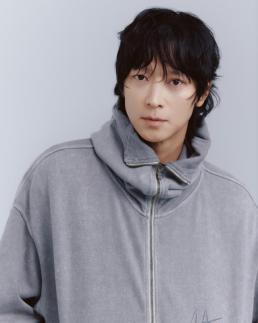 Kang Dong-won Discusses His Role in 'Wild Thing' and the Challenges of Dance Kang Dong-won returns in an unexpected role. The film 'Wild Thing' is a comedy about a mixed-gender dance group called 'Triangle,' which once dominated the music scene but disbanded due to unforeseen circumstances. Now, 20 years later, they attempt a comeback. Kang plays Hyun-woo, a former breakdancer turned struggling broadcaster, navigating the gap between past glory and current reality. His earnest portrayal of Hyun-woo brings both poignant and humorous moments to the film."After the trailer and music video were released, a close friend reached out to me, joking, 'What’s up? Are you short on cash these days?' Ha ha. I thought that comment carried a lot of meaning. I expected reactions like that. I thought, 'Oh, this is going to be fun.' There were a few projects I chose thinking people would be surprised, but I think this one will surprise them the most. It feels like a pleasant betrayal," Kang said.To convincingly portray Hyun-woo, Kang learned to dance. Although he is accustomed to action roles, dancing required a completely different skill set. He practiced late into the night even after filming wrapped."I was really satisfied with how I looked dancing. By the time we filmed the final stage, I thought, 'Wow, I’m actually good at this.' I worked really hard. Even after filming, I kept practicing and would go to the studio at night. As I continued to film the dance scenes, I gained stage experience. At first, I was overwhelmed with singing, dancing, looking at the camera, and engaging the audience, but later, as the choreography became second nature, I focused more on enhancing my lines. My dance lines improved over time," he said.While action and dance both involve physical movement, Kang found the training for each to be entirely different. He had a background in martial arts from a young age, but hip-hop dance required rhythms and attitudes he had rarely encountered."Learning something is similar, but this felt like a completely new sport with no foundation. I had a bit of a base from practicing taekwondo as a child, but hip-hop was different from dance. Matching the beat felt very unfamiliar. At first, I was learning the moves and thought, 'This isn’t working. I need to start with my steps,' so I spent about 30 minutes just walking. I played music and walked with a friend who was teaching me," he explained.He immersed himself in hip-hop culture to better understand Hyun-woo. Although Kang typically does not favor method acting, he felt it was necessary to change his wardrobe for this role. It was not just about mimicking a culture that felt foreign to him but understanding the gestures and movements that came from it."I had to use a lot of swagger in my gestures, but for those who don’t listen to hip-hop, it can seem confusing. It took me a while to adapt. Eventually, I bought clothes that fit the style. I’m not a fan of method acting, but I felt I needed to wear those clothes to understand the culture. I didn’t get why they walked or moved that way, but later I realized it was all about the beat," he said.Kang also took the time to study hip-hop history. He admitted he was almost completely ignorant about the genre. By watching documentaries and following the trends of music and culture, he began to understand the environment in which Hyun-woo grew up."I didn’t listen to hip-hop much. The only thing I knew was Limp Bizkit. I didn’t even know Tupac was a person’s name. Ha ha. I was so uninformed that I had to start studying hip-hop history from scratch. I watched documentaries, and that’s when I started to understand the character of Hyun-woo. I thought, 'He must have been exposed to this kind of music and lived like this during that time,'" he said.Kang was particularly focused on the performances of Triangle during their first album. He did not want to trivialize the stage in a comedy film. Instead, he aimed to perform well enough that even actual dancers from that era would not feel embarrassed watching it."For the first album stage, my goal was to perform well enough to be funny. I wanted to ensure that those who transitioned from being dancers to singers wouldn’t feel embarrassed watching it. I wanted them to think, 'Yeah, I used to do that,' rather than 'I never did that.' I hoped the audience would feel, 'Why is this so good? Why is it funny because it’s good?'"'Wild Thing' does not aim for precise historical accuracy but rather blends the cultural sensibilities of the late 1990s and early 2000s into a cinematic experience. Kang expressed a desire to revive the authentic 'coolness' of that era without mocking it."I wanted to recreate what I saw on TV when I was in high school. It was genuinely cool back then. I never thought about becoming a dance singer, but I wanted to capture that feeling I had as a child. I wanted to incorporate the essence of first-generation idols. I didn’t want to approach it in a purely humorous way. The hairstyles and styles that might seem excessive now were cool back then. I wore my hair and clothes like that too," he said.Hyun-woo once enjoyed a glamorous peak but now lives as a lesser-known broadcaster. Although Kang has maintained his status as a top star, he understands the feeling of being forgotten. He has carried the thought of potentially being forgotten since his debut."I’ve always been on an upward trajectory, but I’ve fluctuated within that. However, I don’t think I’ve ever fallen below the 2012 average. I might have fluctuated around the 50-day average. Ha ha. I’ve always thought about being forgotten since my debut. I felt that way since 'The Temptation of Wolves' did well. I’ve always thought I would eventually be forgotten. I’ve lasted longer than I expected, but someday I will be forgotten. There will come a time when my work decreases, and as a person, I will eventually be forgotten too. People will think, 'Was there someone like that?'">Kang is now considering projects beyond South Korea. However, he is no longer waiting for someone to recognize him and cast him. He has shifted towards creating and taking initiative in his work."In the past, I hoped someone would want to work with me, recognize me, and cast me. But now I think, 'Forget it. I’ll just create it myself.' It doesn’t have to be limited to Korea. To put it simply, I want to work with truly talented people from around the world."* This article has been translated by AI. 2026-05-31 16:24:00
 -
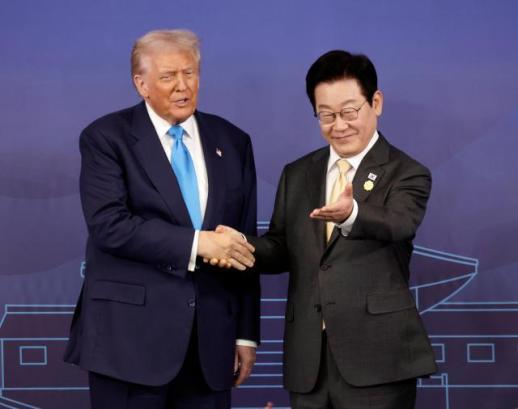 Lee Jae-myung's First Year: Pragmatic Diplomacy Focused on National Interests The Lee Jae-myung administration has pursued a pragmatic diplomacy centered on national interests over the past year, seeking a diversified diplomatic strategy. The government has made progress in discussions regarding nuclear-powered submarines and nuclear cooperation with the United States, while also improving relations with China and Japan. However, finding a way to restore inter-Korean relations remains a challenge amid North Korea's declaration of a 'hostile two-state' policy. During his first year in office, President Lee made nine overseas trips, visited 14 countries, and signed 126 memoranda of understanding (MOUs) as part of his diplomatic efforts. One of the administration's significant achievements was the mutual visit between the leaders of South Korea and the United States, which occurred just 147 days after Lee took office, marking the fastest such exchange in history. Following a summit with President Donald Trump in Washington, D.C., in August, a second summit was held at the Asia-Pacific Economic Cooperation (APEC) meeting in Gyeongju at the end of October. In the security sector, the administration secured U.S. support for the introduction of nuclear-powered submarines and expanded rights for uranium enrichment and the reprocessing of spent nuclear fuel for nuclear power plants. These agreements were outlined in the 'Joint Fact Sheet' from the Korea-U.S. summit held on October 29 in Gyeongju. Relations with China were accelerated following the visit of Chinese President Xi Jinping to South Korea in November and President Lee's state visit to China in January. The relocation of Chinese structures from the Korea-China provisional measures zone in the Yellow Sea was noted as a significant achievement. Despite changes in Japanese leadership, with the resignation of Prime Minister Shigeru Ishiba and the inauguration of Prime Minister Sanae Takaichi, the focus remained on cooperation rather than conflict, maintaining security and economic collaboration. Seven summits and meetings between South Korean and Japanese leaders helped restore 'shuttle diplomacy' and strengthen a forward-looking bilateral relationship. In multilateral diplomacy, the administration began by participating in the G7 summit, restoring comprehensive diplomatic engagement, and marking the first time a South Korean president presided over a United Nations Security Council meeting, showcasing leadership as a responsible global power. The Middle East crisis stemming from the U.S.-Iran conflict posed a significant test for the government. Amid the blockade of the Strait of Hormuz, a South Korean vessel, the HMM Namoo, was attacked while docked in the strait on May 4. The government supported the evacuation of citizens by deploying military transport and chartered aircraft from the onset of the conflict, engaging in negotiations with Iran and the U.S. to ensure the safety of vessels and the resumption of navigation. An investigation into the Namoo incident concluded that the weapon used in the attack was likely a Nour-class anti-ship missile developed in Iran. The South Korean government summoned Iranian Ambassador to South Korea, Saeed Koozechi, to lodge a protest and demand measures to prevent recurrence. Additionally, the Israeli government released South Korean nationals who had been detained after being captured by Israeli forces while aboard a humanitarian vessel bound for Gaza. The administration's North Korea policy aims to shift the relationship from 'hostility and confrontation' to 'peaceful coexistence and mutual growth' through the 'Korean Peninsula Peace Coexistence Policy.' Shortly after taking office in June, the government implemented measures to restore trust with North Korea. The military authorities abruptly halted loudspeaker broadcasts to North Korea after a year of resuming them. The issue of leaflet distribution by civilian organizations, which had drawn sharp reactions from North Korea, was resolved through persuasion and the passage of related legislation by the Ministry of Unification. North Korea has institutionalized its 'hostile two-state' stance as articulated by Kim Jong-un in December 2023. In his Liberation Day speech in August, President Lee outlined three principles for North Korea policy: respect for North Korea's regime, no pursuit of absorption unification, and a commitment to refrain from hostile actions. He also indicated plans for the proactive and phased restoration of the military agreement that the Yoon Suk-yeol administration had suspended. Furthermore, the administration has made diplomatic efforts to facilitate dialogue between North Korea and the U.S. President Lee proposed the roles of 'peacemaker' and 'pacemaker' in achieving peace on the Korean Peninsula during his meeting with President Trump. On September 3, 2023, Chinese President Xi Jinping, Russian President Vladimir Putin, and North Korean leader Kim Jong-un stood together at the 80th anniversary parade of China's victory in World War II in Tiananmen Square, marking the first time the leaders of North Korea, China, and Russia gathered since the end of the Cold War. With a clear alignment of an 'anti-Western and anti-American coalition' centered around China, the Lee administration's pragmatic diplomacy focused on national interests faces another significant test.* This article has been translated by AI. 2026-05-31 16:18:00
 -
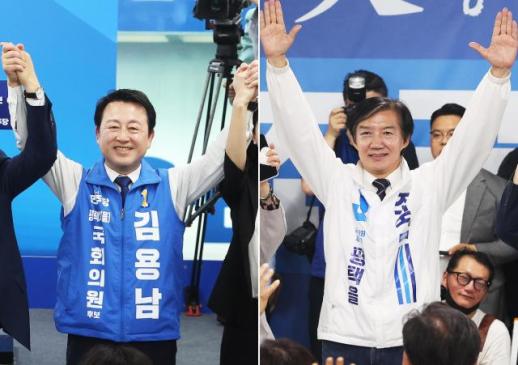 Democratic Party and Justice Party Intensify Campaign in Pyeongtaek The Democratic Party and the Justice Party are ramping up their campaigns for the Pyeongtaek by-election. Following a heated exchange between Democratic candidate Kim Yong-nam and Justice Party leader Cho Kuk, the parties' secretaries-general have also joined the fray. The Democratic Party labeled Cho as a "fake Democratic candidate," while the Justice Party described Kim as a "ticking time bomb of division" for the progressive camp. Lee Hae-min, secretary-general of the Justice Party, issued a statement from Cho's campaign office, criticizing the Democratic leadership's claim that "the suspicions have been resolved" based on Kim's bank account records. He argued that the allegations surrounding Kim's alleged involvement in a loan shark operation remain unresolved. Lee stated, "They have simply copied the arrogant 'apology season 2' habits of Yoon Seok-yeol and Kim Gun-hee. Kim's true nature as a deceptive prosecutor is now evident, misleading voters." Democratic secretary-general Cho Seung-rae did not hide his displeasure regarding the "fake Democratic candidate" remark. He noted, "A few days ago, we met and agreed to refrain from emotional criticisms between secretaries-general, despite individual remarks from lawmakers. Yet, when the situation became unfavorable, they disregarded that promise and resorted to inflammatory language like 'fake candidate.'" He emphasized that the citizens of Pyeongtaek should not bear the burden of a candidate like Kim, who is unfit for office, and that the Democratic camp cannot accommodate a divisive figure like him. Cho continued his criticism of Cho Kuk and the Justice Party during a press briefing at the National Assembly, stating, "The Justice Party candidate should compete under the Justice Party name, not wear a Democratic mask. We hope they will run under their own banner." He added, "Cho claims to represent the Democratic camp, but even Kim Jae-yeon, the chair of the Progressive Party, would disagree with that assertion." He further remarked, "Politics in South Korea does not revolve around the Justice Party or the Democratic Party. It is centered on the supporters of the Democratic Party and the progressive camp. The argument that 'if I win, unification will proceed smoothly; if not, it will be difficult' is absurd logic." Meanwhile, Kim, who was previously known as a "sharpshooter" targeting Cho's private equity fund allegations during his time in the conservative camp, has engaged in a back-and-forth with Cho throughout this election cycle. The two candidates failed to reach an agreement on a potential unification by the start of early voting on May 29, effectively rendering it unfeasible. Observers suggest that the escalating conflict between the two candidates could pose challenges for party unification after the election.* This article has been translated by AI. 2026-05-31 16:18:00
 -
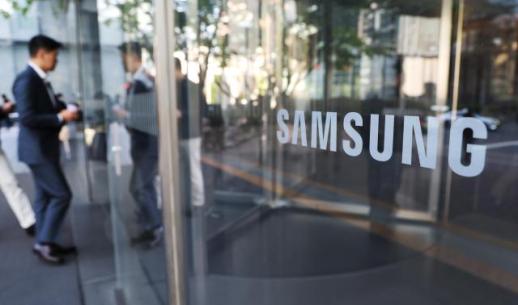 Samsung Electronics Becomes World Leader in Automotive Memory, Surpassing Micron Samsung Electronics has achieved the number one position in the global automotive memory semiconductor market for the first time.According to a report released on May 31 by S&P Global Mobility, a specialized automotive industry analysis firm, Samsung's market share in automotive memory rose from 35% in 2024 to 40% last year, securing the top spot.This marks the first time Samsung has surpassed Micron, which saw its market share decline from 40% to 36%, dropping to second place.Analysts attribute this success to Samsung's expansion of its customer base, particularly in the Chinese market. The company significantly increased its market share in China, a high-growth area, beyond traditional automotive markets in Europe, South Korea, and Japan.The demand for high-capacity and high-performance memory semiconductors has surged, driven by the growth of autonomous driving systems and advancements in in-vehicle infotainment (IVI) systems. Samsung's advanced products, including low-power DRAM and Universal Flash Storage (UFS), have received strong responses from customers.Samsung is known to supply automotive memory to companies such as Qualcomm, Bosch, Tesla, and Denso.Historically, the automotive memory market has been considered low-value due to its long replacement cycle of 7 to 8 years and a focus on stability over cutting-edge technology. Additionally, automakers prioritize durability and reliability, maintaining conservative supply chain management, which creates high barriers to entry for new players.Since entering the automotive semiconductor market in 2015 with low-power memory solutions like LPDDR and UFS, Samsung has expanded into automotive solid-state drives (SSDs) and graphics DRAM (GDDR), targeting the premium automotive sector.As a result, Samsung has reportedly achieved an average annual revenue growth of over 40% in the automotive memory market from 2020 to 2025.* This article has been translated by AI. 2026-05-31 16:12:00
 -
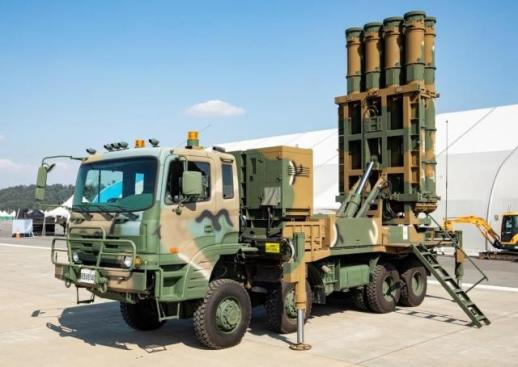 Hanwha Aerospace Discusses New Weapon Exports with Germany and the UK Hanwha Aerospace is in discussions with European countries, including Germany and the UK, regarding new weapon export contracts amid a global increase in military spending triggered by the Ukraine and Iran conflicts. On May 30, during an interview with Bloomberg TV at the 23rd Asia Security Summit (Shangri-La Dialogue) in Singapore, Alex Wong, Chief Strategy Officer of Hanwha Aerospace, shared these insights. "Demand is outpacing supply," Wong stated, adding that the recent conflicts in Ukraine and currently in Iran have highlighted the necessity for global militaries to enhance their production capabilities and ammunition stockpiles. Wong noted that Hanwha is engaging in discussions not only with existing clients like Poland and Romania but also with potential customers in Germany and the UK. He elaborated that the talks encompass not just the procurement of defense systems but also considerations on where to establish new production capabilities and how to utilize local workforce resources. "To protect citizens, a multi-layered and integrated missile defense system is essential," Wong explained. "We cannot afford to wait; we want to secure these systems immediately and hope to localize supply chains to build resilience and rapidly increase production during conflicts." In this context, Wong mentioned that Hanwha Aerospace is increasing domestic production to meet the surging demand for ammunition, missiles, and various weapon systems while also expanding manufacturing bases in Europe and the United States. "Our customers need more ammunition and more intercept missiles," he said. "We have been shifting production to meet that demand." Bloomberg reported that Europe is considered a key growth market for Hanwha Aerospace. Following a commitment from most NATO member countries to raise defense spending to around 5% of GDP last year, European militaries are expanding their acquisition of ground weapon systems, long-range strike capabilities, artillery, and advanced missile defense systems. Hanwha Aerospace is accelerating its efforts in the European market by opening a new office in Berlin this year. After securing a missile contract with Poland last year, the company also won a contract worth 1.3 trillion won to supply Chunmoo multiple launch rocket systems to Norway in February.* This article has been translated by AI. 2026-05-31 16:09:00
 -
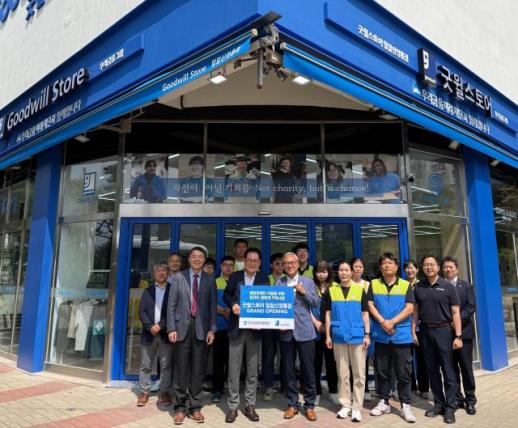 Woori Financial Opens 14th Goodwill Store for Individuals with Developmental Disabilities Woori Financial Group announced on May 31 that its Woori Future Foundation has opened a new Goodwill Store in Hwaseong City, dedicated to supporting the independence of individuals with developmental disabilities. The Goodwill Store operates as a workplace for individuals with disabilities, funded by the sale of donated items from businesses and individuals. The newly opened Goodwill Store in Hwaseong is the 14th location established in collaboration with the Milal Welfare Foundation. It aims to provide stable employment opportunities for individuals with developmental disabilities in the Gyeonggi region and to expand the community's support base. To enhance employment opportunities for individuals with developmental disabilities in local areas, Woori Financial opened Goodwill Stores in Ulsan, Daegu, and Cheongju last year. Additionally, the company introduced a social contribution branch called Goodwill Branch, which combines Woori Bank services with Goodwill Store operations, in Yeoju. This year, the expansion will continue from Hwaseong to other locations, including Hanam and Jeonju. Woori Financial has set a goal to invest a total of 30 billion won by 2034 to establish 100 Goodwill Stores nationwide, providing stable jobs for 1,500 individuals with developmental disabilities. Furthermore, the Woori Future Foundation signed a memorandum of understanding with the Milal Welfare Foundation in 2023 to build an ecosystem for employment for individuals with developmental disabilities, committing to invest 30 billion won over ten years to support the establishment of 100 stores. The foundation aims to open at least six new stores each year and provide first-year salary support to help establish a foundation for independence for individuals with developmental disabilities.* This article has been translated by AI. 2026-05-31 16:09:00
 -
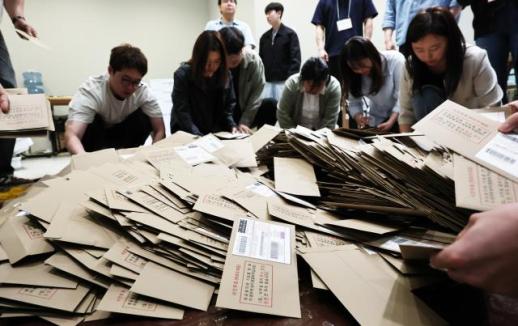 Record Early Voting Rate Complicates Strategies for Parties Ahead of Local Elections As early voting for the June 3 local elections and National Assembly by-elections reached a record high, both ruling and opposition parties are recalibrating their strategies. The Democratic Party and the People Power Party are expected to analyze regional early voting rates to adjust their campaign tactics in the remaining days before the election. According to the National Election Commission on May 31, 10,498,411 out of 44,649,908 eligible voters participated in early voting held on May 29 and 30, resulting in a preliminary turnout rate of 23.51%. This figure is 2.89 percentage points higher than the previous record of 20.62% from four years ago. In Seoul, a key battleground, 23.84% of voters cast their ballots early, an increase of 2.64 percentage points from 21.20% four years ago. The highest early voting rate in the country was recorded in Jeollanam-do at 38.95%, while Daegu had the lowest at 18.65%. With the high early voting turnout, both parties are busy calculating their potential advantages and strategizing for the future. The Democratic Party believes the increased participation will work in their favor. Democratic Party spokesperson Kang Jun-hyun stated to reporters, "This reflects a political judgment against the insurrectionist forces and a willingness to support the Lee administration's governance." Conversely, the People Power Party is taking a more cautious approach. Party leader Jang Dong-hyuk emphasized during a press conference that they need to examine which regions had higher early voting rates and analyze age-specific turnout rates that have not yet been disclosed. He added, "It is difficult to determine the advantages or disadvantages for each party based solely on the fact that early voting rates have slightly increased compared to the last local elections." Political analysts predict that both parties will focus their efforts on developing election strategies based on early voting analysis. There is a significant possibility that undecided voters and those disappointed with the political landscape did not participate in early voting, prompting parties to target the center and encourage potential supporters who may have abstained to head to the polls. Democratic Party Secretary General Cho Seung-rae stated at a press conference, "The foundation of our election strategy remains the same in the remaining period. This election is fundamentally about voting to encourage, support, and cheer for President Lee Jae-myung, and judging the incompetence of the People Power Party in regions like Seoul and Busan, where they have been in charge for four years." On the other hand, Leader Jang emphasized, "We will focus on ensuring that the public, especially the younger generation in their 20s and 30s, come out to vote. It is crucial to motivate voters who have decided to support the People Power Party, as well as those disappointed with the ruling party and the Lee administration, to participate in the election." 2026-05-31 16:06:00
 -
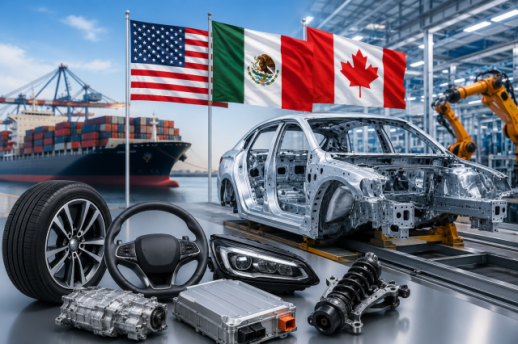 USMCA Negotiations Loom as U.S. Proposes 50% Domestic Content for Auto Parts North American automotive manufacturers are on high alert as the decision on whether to extend the United States-Mexico-Canada Agreement (USMCA) approaches in a month. Reports indicate that the U.S. has proposed increasing the domestic content requirement for auto parts and materials to over 50%, raising concerns among companies operating production facilities in Mexico. As of May 31, industry sources report that the U.S. and Mexico-Canada are conducting a joint review ahead of the USMCA extension decision scheduled for July 1. The USMCA, which took effect in July 2020, includes a sunset clause that mandates a review of the agreement every six years. During recent bilateral talks between the U.S. and Mexico, key issues included reducing the trade deficit with Mexico and strengthening U.S. supply chains. Discussions also covered automotive origin regulations, as well as critical matters related to steel, aluminum, and economic security. According to reports from outlets such as The Wall Street Journal, the U.S. negotiating team is considering a plan to raise the domestic content requirement for auto parts and materials to over 50%. Additionally, there is a proposal to increase the threshold for receiving tariff-free benefits from sourcing over 75% of parts from the U.S., Mexico, and Canada to 82%. This proposal reflects the initial stance of the Trump administration and may change during negotiations. Domestic automakers and parts suppliers are closely monitoring the USMCA negotiations. If the domestic content requirement is implemented, companies like Hyundai Mobis, SL, and Sambo Motors, which operate production bases in Mexico, will likely need to overhaul their entire production and sourcing systems. An industry insider expressed concern, stating, "We have established production bases in Mexico based on relatively low labor costs, and we are worried. If the domestic content requirement is strengthened, we may need to explore partnerships with U.S. suppliers and expand local production." Hyundai Mobis, for instance, supplies parts to Kia's Pesquería plant in Mexico from its Nuevo León facility. SL has established a new factory in San Luis Potosí, capable of producing up to 1 million headlamp modules annually. Complete vehicle manufacturers receiving parts are also expected to be affected. Global automakers, including Hyundai, Kia, Toyota, and Nissan, have previously expressed concerns about potential cost increases due to stricter origin regulations. There are worries that rising costs could negatively impact the profitability of some lower-priced models. The industry leans toward the likelihood of U.S. demands being reflected in the negotiations. The Korea Automotive Technology Institute, in a report published in February titled 'USMCA Joint Review: Trends in the Automotive and Parts Sector,' analyzed that the U.S. holds a structural advantage in negotiations as it is the largest market among the three countries and the top exporter of automobiles to Canada and Mexico. The institute projected, "If the U.S. government strengthens origin regulations in the desired direction, the burden on automakers will vary based on production scale in the U.S. and the share of U.S. parts procurement."* This article has been translated by AI. 2026-05-31 16:03:00
 -
 Savings Banks See Rising Delinquency Rates in Real Estate Loans As the real estate market continues to stagnate, the delinquency rates for real estate loans at mid-sized and large savings banks have risen. While the resolution of troubled real estate project financing (PF) has improved asset quality indicators, concerns are growing over the management of delinquencies in other areas, such as real estate loans.According to disclosures from the top five savings banks—SBI, Korea Investment, Welcome, OK, and Accuon—on May 31, SBI, Korea Investment, and OK Savings Banks have seen increases in delinquency rates despite reducing their real estate loan volumes.SBI Savings Bank reported a delinquency rate of 17.88%, up 10.5 percentage points from 7.38% in the same period last year. Although its real estate loan amount decreased from 1.2035 trillion won to 671.3 billion won, the delinquent amount rose from 88.8 billion won to 120 billion won.Korea Investment Savings Bank and OK Savings Bank also experienced increases in delinquency rates, rising from 13.87% to 17.54% and from 14.10% to 17.03%, respectively. Despite reductions in loan amounts of 370.2 billion won and 180.8 billion won, their delinquent amounts increased by 7.7 billion won to 281.6 billion won and by 17.8 billion won to 251.7 billion won.Welcome Savings Bank saw a slight decrease in its delinquency rate from 44.39% in the first quarter of last year to 43.61% this year, maintaining the highest rate among the top five banks. In contrast, Accuon Savings Bank improved its delinquency rate from 14.01% to 1.35%, with delinquent amounts dropping from 29 billion won to 3.7 billion won.In contrast, the delinquency rates for construction loans fell during the same period: OK from 19.22% to 5.25%, Korea Investment from 18.20% to 7.51%, Accuon from 9.76% to 2.09%, Welcome from 18.06% to 13.35%, and SBI from 8.63% to 7.83%. All five banks reported improvements in delinquency rates for real estate PF loans, except for SBI.Industry analysts note that while the resolution of non-performing loans in real estate PF has eased issues related to PF and construction, the burden of soundness has increased for real estate loans to rental and development companies due to a sluggish rental market and delays in development projects.A similar trend is emerging in credit loans, raising concerns that savings banks, having resolved PF issues, now face new challenges in maintaining soundness. According to data submitted to lawmaker Yang Soo from the People Power Party by the Financial Supervisory Service, the balance of credit loans at 31 domestic mid-sized and large savings banks was 25.63 trillion won in the first quarter of this year, a decrease of 1.76 trillion won compared to the same period last year. Meanwhile, the number of borrowers increased by 88,000, and the average delinquency rate rose to 6.93%, up 0.54 percentage points, indicating a decline in the repayment capacity of multiple debtors due to the economic downturn.* This article has been translated by AI. 2026-05-31 16:03:00