

Journalist

Imran Khalid
-
 Foreign Investors Purchase 22.7 Trillion Won in Korean Government Bonds Post WGBI Inclusion Foreign investors have purchased a net total of 22.7 trillion won in Korean government bonds based on transaction standards and 18 trillion won based on settlement standards since the country's inclusion in the World Government Bond Index (WGBI). On May 29, the Ministry of Economy and Finance held the seventh meeting of the "WGBI Regular Monitoring and Investment Promotion Task Force" at the Government Seoul Complex, chaired by Hwang Soon-kwan, head of the National Treasury. The task force, which includes representatives from the Ministry of Finance, Financial Services Commission, Bank of Korea, Financial Supervisory Service, and Korea Securities Depository, discussed trends in foreign capital inflows since the WGBI inclusion began. The WGBI is a major index for advanced bonds managed by the UK-based Financial Times Stock Exchange (FTSE) Russell. It is considered the largest bond index globally due to its stringent criteria, which include government bond issuance balance, credit ratings, and market accessibility. South Korea was confirmed for WGBI inclusion in April of last year, with the process starting last month and set to continue in phases until November. According to the Ministry of Finance, net foreign purchases of Korean government bonds since the WGBI inclusion began are 22.7 trillion won based on transaction standards (from March 30 to May 27) and 18 trillion won based on settlement standards (from April 1 to May 27). Despite increased market volatility due to external factors such as the recent Middle East conflict and tightening monetary policies in major economies, foreign net purchases have continued in both April and May. Notably, the inclusion in the WGBI has attracted new investors, including Japanese investors, who accounted for 6 trillion won based on settlement standards. Consequently, net foreign purchases of Korean government bonds from January to May reached 36.3 trillion won, an increase from 32.8 trillion won during the same period last year. Additionally, investments from pension funds and central banks, which tend to hold assets long-term, have made up a significant portion of this total. The government plans to regularly monitor the inflow of foreign capital through the task force and continue holding investment briefings for foreign investors. Hwang Soon-kwan, head of the National Treasury, stated, "In April and May, foreign capital has flowed in at a significant scale. The influx of new investors, including those from Japan, will contribute to expanding the investor base and stabilizing the market in the medium to long term." He added, "Given the recent volatility in government bond rates, we must remain vigilant in June and closely monitor foreign capital inflow trends. Despite the challenging market conditions, we should strive to enhance foreign investment in our bond market through various efforts."* This article has been translated by AI. 2026-05-29 14:02:00
 -
 CNN Sues AI Startup Perplexity for Unauthorized Use of 17,000 Articles and Videos CNN has filed a copyright lawsuit against the AI search startup Perplexity, claiming it used CNN's articles, videos, and images without permission in its AI responses. On May 28, local time, Reuters and Bloomberg reported that CNN filed the lawsuit in the U.S. District Court for the Southern District of New York. The complaint alleges that Perplexity unlawfully copied over 17,000 pieces of CNN content for its service. CNN contends that Perplexity provided answers to user queries that were either identical to or substantially similar to the original content, allowing users to access key information from CNN without visiting its website. The two parties had previously discussed a content licensing agreement but failed to reach a consensus. According to The Verge, negotiations stalled late last year due to disagreements over the scope of use. CNN subsequently requested that Perplexity cease using its materials, but the startup continued to do so. Specifically, CNN claims that Perplexity's AI search engine and AI browser, Comet, continued to collect data even after access was blocked. The lawsuit cites instances where users entered CNN article titles and received nearly identical sentences in response. Perplexity has denied the allegations. A company spokesperson stated, "The facts are not copyright protected." Perplexity has previously argued in other lawsuits that AI-generated responses do not constitute copyright infringement and that building a searchable database falls under fair use. CNN is seeking damages and an injunction against further copyright infringement, asserting that Perplexity utilized its materials for AI service operations without covering the costs of original reporting. This lawsuit adds to the growing legal disputes surrounding Perplexity with media and content companies. The startup is also facing lawsuits from The New York Times, Dow Jones, New York Post, and Reddit over copyright infringement and unauthorized data use.* This article has been translated by AI. 2026-05-29 14:02:00
 -
 Labor Ministry Orders Top 20 Construction Firms to Strengthen Heat Response Measures The government has convened representatives from the top 20 construction firms to discuss measures for preventing heat-related illnesses at construction sites this summer. The Ministry of Employment and Labor has mandated strict adherence to heat response guidelines, including halting outdoor work when the perceived temperature exceeds 35 degrees Celsius and stopping all outdoor work, except for emergency tasks, when it exceeds 38 degrees Celsius.On the afternoon of May 29, Minister Kim Young-hoon led a meeting at the Government Sejong Center with executives from the top 20 construction firms to discuss strategies for preventing heat-related illnesses and expanding safety investments. This meeting follows a directive from the President during a Cabinet meeting to protect vulnerable populations from extreme heat.During the meeting, major construction companies, including Samsung C&T, Daewoo Engineering & Construction, and GS Engineering & Construction, shared their implementation status of the 'Five Basic Safety Rules for Heat Waves' and their summer safety management plans.The construction firms explained that they are incorporating measures into their project schedules to stop outdoor work during heat waves when the perceived temperature exceeds 35 degrees Celsius and to cease all outdoor work, except for emergency tasks, when a severe heat warning is issued at 38 degrees Celsius.They also reported enhancing their efforts to prevent heat-related illnesses by providing real-time safety information in workers' native languages through AI translation programs and mobile applications, as well as conducting health monitoring using smart safety equipment.Additionally, they stated that processes exposed to high temperatures, such as concrete pouring, are being managed with two teams alternating shifts to balance work and rest, and that they are implementing early start times and adjusting work hours to minimize exposure during peak heat hours.The Ministry has been operating a 'Special Task Force for Heat Safety' since May 15, which will continue until September 30, urging strict compliance with phased work stoppage measures at construction sites nationwide.The government recommends adjusting work hours or shortening outdoor work during heat advisories when the perceived temperature exceeds 33 degrees Celsius, halting outdoor work from 2 PM to 5 PM during heat warnings at 35 degrees Celsius, and stopping all outdoor work, except for emergency tasks, during severe heat warnings at 38 degrees Celsius.Furthermore, the Ministry plans to conduct thorough inspections of the implementation of the 'Five Basic Safety Rules for Heat Waves,' which were legislated last year, including providing cool water, installing cooling devices, ensuring adequate rest, supplying cooling gear, and establishing a system for reporting heat-related illnesses to emergency services.Minister Kim Young-hoon emphasized, "I urge construction sites to prioritize the lives of workers by extending deadlines to ensure the faithful implementation of the Five Basic Safety Rules for Heat Waves." He added, "Recognize that the losses from accidents far exceed the costs of prevention and strengthen investments in safety at construction sites. I ask that the CEOs of the top 20 construction firms personally oversee efforts to prevent heat-related fatalities and falls."* This article has been translated by AI. 2026-05-29 14:02:00
 -
 Singer So Yu Addresses Rumors of 13 Million Won Monthly Rent 가수 소유가 '월세 1300만원설'에 대해 해명했다. On May 28, So Yu appeared on the YouTube channel 'Lipman Yeol Myeon' to clarify rumors regarding her monthly rent of 13 million won. The video was titled "Addressing Plastic Surgery, Monthly Rent, Dating Rumors, Male Friends, and Drunken Women." So Yu discussed a dating rumor that surfaced while she was living in Hannam-dong, stating, "I thought about getting married after living here for about five years. But when I mentioned that I was considering moving because I no longer thought about marriage, people reacted with, 'So there was a man she thought about marrying.'" She added, "I naturally thought about marriage because of my age. I even moved when I didn't have a boyfriend." When MC Lee Yong-jin asked if she had been without a boyfriend during that time, she replied, "Not at all." So Yu confirmed the rumor about her monthly rent being 13 million won, saying, "That's true. People think I'm wealthy, but I didn't pay that amount entirely. I didn't clarify it because I thought it was better to appear well-off than to look like a beggar." This comment elicited laughter. Earlier, on May 19, So Yu appeared on the web entertainment show 'Desperate Lip' on the YouTube channel 'Studio Suje.' She revealed, "Ten years ago, I invested 100 million won in Samsung Electronics and SK Hynix to study stocks. The profits from those investments significantly helped me purchase my new home and move."* This article has been translated by AI. 2026-05-29 14:02:00
 -
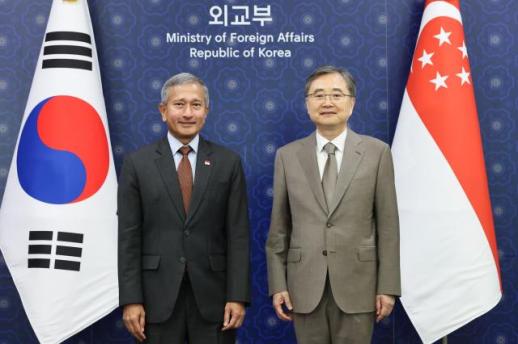 South Korean Foreign Minister Cho Hyun says Seoul to press Iran over vessel strike SEOUL, May 29 (AJP) - South Korean Foreign Minister Cho Hyun said Thursday that Seoul will urge Iran to prevent any recurrence of the recent strike on the South Korean vessel Namu, though he added that Tehran is unlikely to acknowledge responsibility or issue an apology. In an interview with a South Korean media outlet, Cho suggested that he could soon hold another phone call with Iranian Foreign Minister Abbas Araghchi following South Korea’s investigation into the attack. “We will tell the Iranian side through other channels that we reached this conclusion and that such an incident must never happen again,” Cho said. Asked whether he planned to directly raise the issue with Araghchi, Cho said the two ministers had agreed during a previous conversation to speak again soon. “We said during the last call that we should talk again soon, so we will likely do so,” he said. South Korea’s government announced findings Wednesday that the Namu had been struck by a missile of Iranian origin, but stopped short of directly blaming Tehran for the attack. Cho defended the government’s cautious response, citing the presence of South Korean nationals and vessels in the region. “There are 25 South Korean ships in the Strait of Hormuz, as well as diplomatic staff and Korean nationals in Iran,” he said. “Taking various factors into account, we chose an appropriate level of response.” Cho added that South Korea also has long-term economic interests tied to possible reconstruction projects in the region if tensions between the United States and Iran ease. “Still, this is not the end of it,” he said. “We will continue conveying to Iran that such an incident should never happen again.” Cho also addressed comments by President Lee Jae Myung regarding Israeli Prime Minister Benjamin Netanyahu and an International Criminal Court warrant against him. “What Israel did by detaining activists on the high seas was a violation of international law,” Cho said. “But the ICC is where international law and international politics intersect. The realities of international politics must also be taken into consideration.” On North Korea, Cho said Pyongyang currently shows “no sign” of returning to dialogue with Seoul, but expressed hope that the North would eventually respond to the Lee government’s outreach efforts. “Our basic position is peaceful coexistence through dialogue,” he said. “Sending drones to North Korea would be wrong. The point is to come to the dialogue table.” Cho’s remarks came after Singaporean Foreign Minister Vivian Balakrishnan visited North Korea earlier this week before traveling to Seoul for talks Thursday. South Korea’s Foreign Ministry said Cho and Balakrishnan discussed efforts to create conditions for dialogue with North Korea and exchanged views on regional security issues. Balakrishnan visited Pyongyang on Tuesday and Wednesday, where he met North Korean Foreign Minister Choe Son Hui and senior official Jo Yong Won. It marked the first visit to North Korea by a Singaporean foreign minister since 2018, when Singapore hosted the first summit between then-U.S. President Donald Trump and North Korean leader Kim Jong-un. Balakrishnan also said he invited North Korea to attend the ASEAN Regional Forum scheduled for July in Manila. North Korea had participated in the annual security forum since 2000 but skipped last year’s meeting in Kuala Lumpur. 2026-05-29 13:56:52
 -
 Spiritual Asia: Encountering Korean people's spirit of heaven in era of AI This is the fifth installment of AJP’s “Spiritual Asia” series exploring the religious traditions and philosophical foundations that have shaped Asia’s spiritual consciousness. This chapter turns to the ancient texts of Hinduism — the Vedas and Upanishads — and their enduring ideas on cosmos, consciousness and the nature of existence in the emerging AI era. In the 21st century, humanity once again stands before its oldest questions. Artificial Intelligence (AI) is learning human language, robots are replacing human labor, and algorithms are encroaching upon the realm of human judgment. Yet, as technology advances, humans find themselves asking even more fundamental questions. Who are we? Where did we come from? What do we live for? And where are we going? Over the past three installments, we examined the massive roots of Asian spirituality through Indian Hinduism. The Vedas sang of the origins of the universe, the Upanishads explored the divinity within humans, and the Bhagavad Gita presented a path to practicing truth in everyday life. What answer, then, did the Korean people provide? For thousands of years, the Korean people have asked these same questions. And the answers remain within Korea's unique spiritual tradition, passed down through the Cheonbugyeong (The Heavenly Code), Samil Singo (The Teachings of the Three-in-One God), and Chamjeongyegyeong (The Classic of the Heavenly Way). The religion that revived this spirit in the modern era is Daejonggyo. Today, Daejonggyo is often understood merely as a religion, but in truth, it was a cultural and national spiritual movement aimed at restoring the primordial spirit of the Korean people. On January 15, 1909 (lunar calendar), patriot Na Cheol revived Dangungyo and renamed it Daejonggyo. At the time, the Korean Empire was on the brink of losing its national sovereignty, and Japanese imperialism was attempting to obliterate the history and spirit of the Korean people. Na Cheol believed that a nation's soul collapses even before it falls to guns and swords. He believed that spiritual independence was necessary before political independence. Thus, he reestablished Dangun not merely as the founding father of the nation, but as the symbol of the Korean people's spirit. He sought to give back the answer to the question "Who are we?" to a people who had lost their country. The central scriptures of Daejonggyo are the Cheonbugyeong, Samil Singo, and Chamjeongyegyeong. Among them, the Cheonbugyeong is a short scripture consisting of only 81 characters. However, it is considered to encapsulate the creation of the universe, the meaning of human existence, and the principles of nature and life. While various academic opinions exist regarding the exact date of its creation, Daejonggyo and the national religious community have long respected it as a spiritual heritage passed down through the ages. The first sentence of the Cheonbugyeong is highly famous. "Il-si-mu-si-il (一始無始一)" It means that One is the beginning, yet it is a beginningless One. It implies that all existence in the universe originates from One and ultimately returns to One. Interestingly, this bears a certain resemblance to the concept of Brahman in the Hindu Upanishads. The Upanishads explain that all beings in the universe emerge from a single source and ultimately return to it. The Cheonbugyeong goes on to say: "Il-seok-sam-geuk-mu-jin-bon (一析三極無盡本)" This means that One divides into three, and those three become the inexhaustible root of all things. This also connects to the Korean cosmic view that flows through Hwanin, Hwanung, and Dangun. Hwanin symbolizes the foundational existence of heaven (God). Hwanung is a being who descended to the human world carrying the will of heaven—similar to a figure like Jesus. And Dangun is the figure who connected heaven and humanity, establishing a nation based on the ideal of Hongik Ingan. To put it simply, seeing as the title was passed down through 47 generations of Danguns, one could compare this role to that of the Pope in Catholicism. The story connecting Hwanin, Hwanung, and Dangun is not mere mythology. Within it lies the unique worldview of the Korean people, wherein heaven, nature, and humanity are interconnected in a single order. This leads to the belief—much like the Indian concepts of Brahman and Atman—that the nature of heaven resides within humans as well. However, Korean spirituality takes this one step further. While Indian spirituality placed a major emphasis on individual enlightenment and liberation (Moksha), Korean spirituality placed greater emphasis on a life that benefits the community and the world. The core of this is Hongik Ingan (弘益人間). To broadly benefit humanity. This short phrase can be considered the essence of the Korean people's spiritual culture. Humans are not beings who reach perfection in isolation. Only when individuals fulfill their roles within a community and benefit the world do they truly complete the meaning of their existence. The Samil Singo states that divinity exists within humans. The Chamjeongyegyeong details the ethics and virtues people must uphold in life. And Hongik Ingan explains the ultimate purpose behind all these teachings. In short, Korean spirituality is a spirit that looks toward heaven without turning its back on the world. In fact, Daejonggyo became one of the spiritual centers of the independence movement during the Japanese colonial period. During the March 1st Movement in 1919, while Cheondogyo, Christianity, and Buddhism played central roles within the religious community, Daejonggyo also actively participated in declarations of independence and anti-Japanese movements nationwide and in Manchuria. Notably, independence army organizations in Manchuria and North Gando maintained extremely close ties with Daejonggyo. General Kim Jwa-jin, the hero of the Battle of Qingshanli, worked closely with Daejonggyo leaders to train the independence army and lead armed anti-Japanese struggles. General Hong Beom-do also interacted with Daejonggyo factions, sharing in this national spirit. To the independence fighters, Daejonggyo was not simply a religion. It was the answer to the question, "Who are we?" It served as the spiritual foundation that, before they even picked up their guns to fight, reminded them that they were the descendants of Dangun and a free people. Kim Gu also interacted extensively with Daejonggyo figures during the independence movement, highly evaluating the importance of a national spirit centered on Dangun. Baekbeom (Kim Gu's pen name) emphasized the nation's soul and historical consciousness, forming a deep consensus with the spiritual world pursued by Daejonggyo in this regard. Looking back, Daejonggyo was not just a religion. It was a spiritual movement meant to protect the nation's soul in an era when the country was lost. The heavenly origin symbolized by Hwanin, the harmony of heaven, earth, and humanity symbolized by Hwanung, and the ideal of Hongik Ingan symbolized by Dangun became a spiritual power stronger than guns and swords for the independence activists. Today, we are once again living in an era of massive civilizational transition. AI is imitating human intelligence. However, it cannot completely replace human conscience, love, responsibility, and sacrifice. It is precisely at this juncture that the Cheonbugyeong, Samil Singo, Chamjeongyegyeong, and the spirit of Daejonggyo come alive once more. They are not relics of the past. They are questions directed toward the future. The questions posed by Indian sages through the Vedas 5,000 years ago and those posed by Korean ancestors through the Cheonbugyeong are ultimately the same. Who are we? Why do we exist? And what does it mean to be human? As the AI era deepens, ancient wisdom that questions the human soul will become even more precious. That is exactly why today, we must read the Cheonbugyeong again, look back on Daejonggyo, and reflect on the Korean people's spirit of heaven. Truth, justice, and freedom always outlast technology. And that pursuit of truth, which began thousands of years ago in the Vedas and the Cheonbugyeong, continues once again in our lives today. 2026-05-29 13:52:07
 -
 Small Businesses Face Talent Shortages Amid Competition for Skilled Workers "There are no people." Currently, small businesses are grappling with a significant labor shortage. They have the technology and workload but lack the workforce to carry out their tasks. The shortage of research and development (R&D) personnel has emerged as a critical issue that could determine the future of small enterprises. Han Seong-sook, Minister of SMEs and Startups, noted during a government meeting on May 28, marking the first anniversary of the administration, that large companies' substantial performance bonuses are exacerbating the concentration of talent in these firms. She emphasized the need for policy support to help small businesses secure skilled researchers. Her remarks reflect the concerns voiced by those in the field. In a market economy, it is natural for talented individuals to seek better compensation and working conditions. Companies achieving good results and rewarding employees with bonuses should not be criticized; rather, rewarding performance is a fundamental principle of a market economy. The problem lies in the widening gap that threatens the balance of the industrial ecosystem. Recently, some large corporations announced performance bonuses ranging from millions to tens of millions of won, while many small businesses are struggling to survive amid high interest rates and economic downturns. As a result, talented individuals gravitate toward large companies, leaving small businesses unable to find workers. Even researchers hired with difficulty tend to leave for better conditions after gaining a few years of experience. For small businesses, this means losing both the investment in talent development and technical know-how. If this trend continues, it could signal a decline in national industrial competitiveness. The South Korean economy does not operate solely on the strength of large corporations. Numerous small and medium-sized enterprises support the industrial ecosystem in areas such as parts, materials, equipment, software, and research and development. This is especially true in sectors like semiconductors, biotechnology, artificial intelligence (AI), and future mobility, where the role of small but strong companies is crucial. However, if the current trend of talent concentration in large companies persists, the technological innovation capabilities of small businesses will inevitably weaken. Reduced investment in R&D and declining productivity will further diminish wage competitiveness, creating a vicious cycle that leads to talent outflow. The issue is that this phenomenon is not temporary. Due to low birth rates and an aging population, the working-age population is rapidly declining. The preference of young people for metropolitan areas and large companies is also intensifying. The National Statistical Office projects that the decline in the working-age population will accelerate over the next decade, suggesting that labor shortages in the industrial sector are likely to worsen. A recent survey by the Korea Small Business Agency provides meaningful insights. About 78.4% of domestic small businesses expressed a willingness to hire foreign students and job seekers. Additionally, 63.7% believe that foreign workers can significantly help alleviate labor shortages. Notably, 78.8% of foreign students and job seekers indicated their intention to work in South Korea. While many global talents are already studying at domestic universities and are familiar with Korean culture, they are not being connected with companies. Companies cited the difficulty of finding suitable candidates as their biggest challenge in the hiring process. Foreign job seekers pointed to a lack of job information, language and cultural barriers, and the complexity of visa procedures as significant obstacles. This mismatch indicates that while there are individuals willing to work, companies are struggling to find them. Strengthening 'talent matching' through the establishment of a national platform to systematically connect small businesses with foreign students and job seekers is crucial for the government. Moreover, it is essential to enhance support for small businesses in securing research personnel through incentives and to establish a more robust industry-academia cooperation system linking universities, research institutions, and companies. The competitiveness of the South Korean economy is not solely built on the achievements of a few large corporations. Sustainable competitiveness can only be achieved when numerous small businesses, strong companies, and startups grow together. The future of industry lies where talent is found. Thus, creating an environment where small businesses can secure skilled workers is vital for revitalizing the industrial ecosystem and safeguarding South Korea's future competitiveness.* This article has been translated by AI. 2026-05-29 13:52:00
 -
 Samsung Electro-Mechanics Surges 10%, Hits Record High and Becomes 4th in KOSPI Market Cap Samsung Electro-Mechanics is reaching new heights, driven by expectations of strong performance due to rising prices of multilayer ceramic capacitors (MLCC) for artificial intelligence applications. According to the Korea Exchange, as of 10:25 a.m. on May 29, Samsung Electro-Mechanics shares rose by 189,000 won (10.22%) to 2,038,000 won, marking an all-time high. The company's market capitalization now stands at 152.1511 trillion won, placing it fourth in the KOSPI rankings, surpassing Hyundai Motor. Analysts attribute the surge in buying interest to upgraded target prices in response to anticipated strong earnings from the rising prices of MLCCs for AI. On the same day, Hyundai Motor Securities raised its target price for Samsung Electro-Mechanics from 1,030,000 won to 2,300,000 won, citing sustained positive market conditions. Kim Jong-bae, a researcher at Hyundai Motor Securities, stated, "It is important to pay attention to the rising trend in MLCC prices due to increased overall utilization rates and the accelerating market cycle. The company's market cycle is expected to continue in the long term." He added, "The key triggers for the stock price increase are the market conditions, technological capabilities, market position, and performance, all of which Samsung Electro-Mechanics possesses." The previous day, Daol Investment & Securities also raised its target price for Samsung Electro-Mechanics to 2,300,000 won, noting that the company stands to benefit from simultaneous booms in MLCCs and flip-chip ball grid arrays (FC-BGA), indicating potential for further performance improvement.* This article has been translated by AI. 2026-05-29 13:52:00
 -
 NVIDIA's Jensen Huang Strengthens Ties in Taiwan and South Korea Jensen Huang, CEO of NVIDIA, is set to visit South Korea following a trip to Taiwan, as he directly engages in managing the semiconductor supply chain in Asia. In Taiwan, he aims to solidify ties with the local semiconductor ecosystem, known as the "brotherhood room," through significant investments and the establishment of a local headquarters. He will then head to South Korea to arrange a second "Kangbu meeting" with major business leaders in the country. According to industry sources on May 28, Huang plans to visit South Korea after concluding his schedule at the GTC event in Taiwan. If the visit occurs, he is expected to meet with prominent figures such as Chey Tae-won, chairman of SK Group; Chung Eui-sun, chairman of Hyundai Motor Group; Koo Kwang-mo, chairman of LG Group; and Lee Hae-jin, founder of Naver. This meeting is anticipated to revisit discussions on AI collaboration following their initial gathering at a chicken restaurant in Gangnam, Seoul, last October. The main agenda for this visit is expected to focus on physical AI. NVIDIA is expanding its AI ecosystem beyond generative AI to include robotics, autonomous driving, smart factories, and manufacturing automation. SK Group is involved in high-bandwidth memory (HBM), Hyundai Motor Group in robotics and autonomous driving, LG Group in automotive and manufacturing AI, and Naver in cloud and AI platforms, all of which intersect with NVIDIA's interests. Despite the emphasis on Taiwan in Huang's Asian strategy, South Korea's strategic importance is not diminished. South Korea boasts capabilities in HBM, memory semiconductors, automotive, batteries, robotics, and internet platforms. For NVIDIA, while Taiwan's TSMC-centered supply chain is critical for AI semiconductor manufacturing, South Korea provides essential partners for expanding AI infrastructure and implementing physical AI. Notably, SK Hynix and Samsung Electronics are competing for the HBM supply chain, which is vital for NVIDIA's next-generation GPU performance. Analysts suggest that Huang will need to maintain ongoing relationships with South Korean semiconductor firms. Although Samsung Electronics Chairman Lee Jae-yong is likely to miss this meeting due to overseas commitments, the company remains a key player in NVIDIA's supply chain. Industry insiders interpret Huang's movements as establishing Taiwan as a manufacturing ally and South Korea as an expansion ally. While Taiwan serves as a core hub for AI semiconductor manufacturing and assembly, South Korea is seen as a partner for broadening AI applications in industries such as HBM, automotive, robotics, and cloud computing. An industry source stated, "It is clear that NVIDIA views Taiwan as its most reliable manufacturing partner, but South Korea is also an indispensable country for expanding the AI ecosystem. Jensen Huang's visit will demonstrate that South Korean companies still hold an important position in NVIDIA's future AI plans."* This article has been translated by AI. 2026-05-29 13:40:00
 -
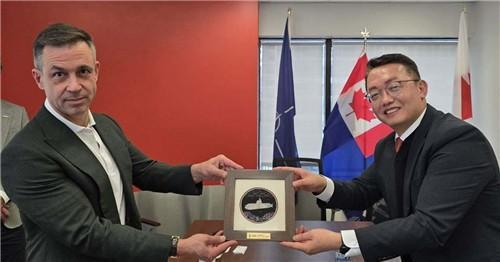 HD Hyundai Heavy strengthens Davie ties in push for Canada submarine deal SEOUL, May 29 (AJP) - HD Hyundai Heavy Industries is stepping up its campaign to win Canada’s submarine procurement project by strengthening ties with Davie Shipbuilding, Canada’s largest shipyard. The company said Thursday that its executives met with senior officials from Davie Shipbuilding at the Canadian shipbuilder’s Ottawa office on May 26 to discuss ways to strengthen strategic cooperation across shipbuilding and naval vessel projects. The meeting was attended by Park Yong-yeol, head of HD Hyundai Heavy Industries’ naval ship business division, and James Davies, chief executive officer of Davie Shipbuilding. During the meeting, HD Hyundai Heavy Industries highlighted its shipbuilding technologies as the world’s largest shipbuilder and promoted the strengths of South Korea’s K-submarine platform. The two sides also exchanged views on possible cooperation to contribute to the development of Canada’s shipbuilding industry. Davie Shipbuilding, based in Quebec, is Canada’s largest shipyard and has a long history dating back to the early 19th century. It has experience building a wide range of vessels, including icebreakers, offshore plants and naval support ships. As Davie also owns Helsinki Shipyard in Finland, cooperation between the two companies is expected to develop into a long-term strategic partnership combining HD Hyundai Heavy Industries’ technology with Davie’s local infrastructure, potentially extending into the Arctic market. HD Hyundai Heavy Industries executives, including HD Hyundai Heavy Industries President Joo Won-ho, also attended a welcoming ceremony for the ROKS Dosan Ahn Chang-ho at Esquimalt naval base in Victoria, British Columbia, on May 23, as well as a reception hosted by South Korea’s ambassador to Canada. At the events, the company promoted the strengths of South Korea’s submarine technology to key local figures, adding momentum to its final push for the contract. “Together with Canada’s leading shipyards, including Davie Shipbuilding and Irving Shipbuilding, we are working to share capabilities and expand business areas in shipbuilding and naval vessel projects,” Joo said. “We will do our utmost to help South Korean companies work together to win Canada’s submarine project by taking the lead in shipbuilding cooperation with Canada.” In January, HD Hyundai proposed a multitrillion-won cooperation package for Canada’s submarine project, including plans for HD Hyundai Oilbank to import Canadian crude oil and for the group to share shipbuilding know-how with local shipyards while offering consulting on submarine operation and maintenance. 2026-05-29 13:39:19