

Journalist

Imran Khalid
-
 South Korea joins OpenAI's trusted cyber access program SEOUL, May 27 (AJP) - South Korea has become one of the first two countries in Asia, together with Japan, to join OpenAI's Trusted Access for Cyber program, securing government-level access to the U.S. firm's most advanced artificial intelligence models for cybersecurity research and defense. The Ministry of Science and ICT announced Wednesday that Vice Minister Ryu Je-myung met OpenAI Chief Strategy Officer Jason Kwon in Seoul on Tuesday to formalize Seoul's participation in the program, which grants vetted governments and institutions-controlled access to OpenAI's frontier models for defensive cyber work. The Korea Internet & Security Agency will serve as the implementing body, the ministry said, adding that the two sides agreed to continue talks on broader applications of AI in cybersecurity. The arrangement is expected to give Seoul a window into how rapidly advancing AI systems could be weaponized, and how to blunt that threat. "Through this cooperation with OpenAI, Korea has laid the groundwork to get ahead of AI-driven cyber threats," Ryu said, pledging to deepen engagement with global AI companies to sharpen the country's defensive capabilities. The two sides also discussed building a working framework between Seoul's AI Safety Institute and OpenAI for joint safety evaluations and research on increasingly capable models. OpenAI said it would actively review the proposal. Separately, the Korean government is exploring participation in Project Glasswing, a rival coalition led by Anthropic that pairs its unreleased Claude Mythos Preview model with about a dozen launch partners — including Amazon, Apple, Google, Microsoft and Nvidia — and some 40 additional organizations to hunt down software vulnerabilities. No Korean entity has yet joined the initiative. 2026-05-27 10:43:49
 -
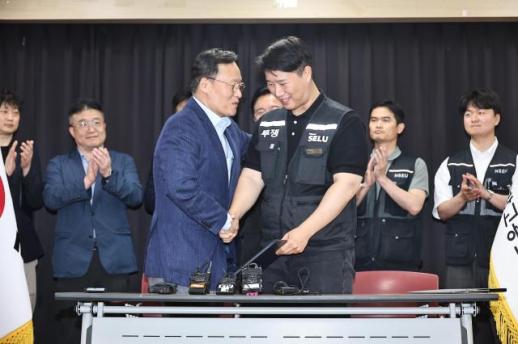 Samsung Live: Union approves wage deal, averting immediate strike SEOUL, May 27 (AJP) - Samsung Electronics’ representative union approved a tentative wage agreement Wednesday, averting an immediate strike at the world’s largest memory chipmaker and easing concerns over potential disruption to AI supply chains and South Korea’s stock market. Electronic voting ran from May 22 to 10 a.m. Wednesday for the 57,302 eligible members. The deal, reached urgently on May 20 just a day before the planned strike deadline, passed with 73.7 percent in favor. It includes an average 6.2 percent wage increase and a newly created special performance bonus. The agreement, however, still faces a legal hurdle. A day before the voting deadline, the Samsung Electronics Co. Union (SECU), a minority union representing mainly the Device eXperience (DX) division, filed for an injunction, accusing the majority union of abruptly stripping its 12,000 members of voting rights. If the court grants the injunction or a later lawsuit invalidates the vote over procedural flaws, Samsung management could be forced to restart negotiations from scratch. As of 10:30 a.m. Wednesday, Samsung Electronics shares have hit new heights, surging 6.7 percent to 319,000 won ($212). 2026-05-27 10:31:38
 -
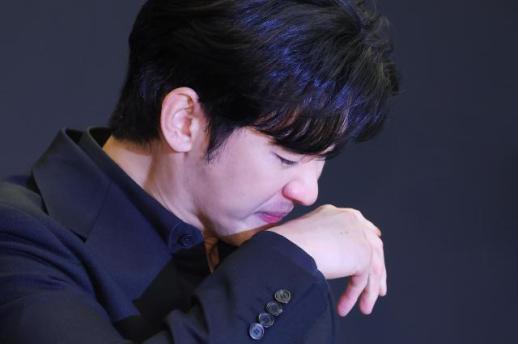 Kim Soo-hyun's agency welcomes YouTuber's arrest in defamation case SEOUL, May 27 (AJP) - Korean Actor Kim Soo-hyun's management agency, Gold Medalist, said Wednesday that the arrest of the head of a controversial YouTube channel marked a turning point in the actor's yearlong effort to counter allegations linking him to the death of late Korean actress Kim Sae-ron. The agency said in a statement that it was grateful to investigators for their efforts to uncover the truth based on objective evidence, adding that the case had now entered a stage in which the facts could be verified through legal procedures and a thorough investigation. "Kim Soo-hyun said at a press conference a year ago, 'I will not ask you to believe me. I will prove it,'" the agency said. " The past year has been a time spent solely to keep that promise." Kim Se-ui, head of the YouTube channel Garosero Research Institute, was arrested Tuesday after the Seoul Central District Court issued a warrant, citing concerns that he could destroy evidence or flee. Garosero Research Institute, often referred to as Gaseyeon in Korea, is a YouTube-based outlet known for publishing allegations and commentary about celebrities, politicians and other public figures. Kim Se-ui is accused of spreading allegedly false claims through YouTube and other online channels, including allegations that Kim Soo-hyun dated Kim Sae-ron when she was a minor and that pressure from Kim Soo-hyun's side over debt repayment was directly linked to her death. Kim Se-ui is also suspected of using artificial intelligence to manipulate Kim Sae-ron's voice in a way that allegedly damaged Kim Soo-hyun's reputation. Gold Medalist said it viewed the arrest as a sign that authorities were treating the case seriously, while maintaining that the allegations and materials presented by Garosero Research Institute against Kim Soo-hyun were false. The agency also said the court had recognized the seriousness of the case, including allegations of defamation and coercion. Kim Soo-hyun held a press conference in March last year to address the allegations. He acknowledged that he had been in a relationship with Kim Sae-ron but denied that the relationship took place when she was a minor. Kim Sae-ron, a former child actress who appeared in films and television dramas, had largely withdrawn from public view following a drunk-driving incident in 2022. Her death later triggered intense online speculation and renewed scrutiny of her private life. Kim Soo-hyun and his agency later filed complaints against Kim Se-ui and members of Kim Sae-ron's family, accusing them of spreading false information and damaging his reputation. The arrest does not amount to a conviction or a final determination of guilt, but it represents a significant procedural development in one of South Korea's most closely watched celebrity defamation cases. 2026-05-27 10:22:27
 -
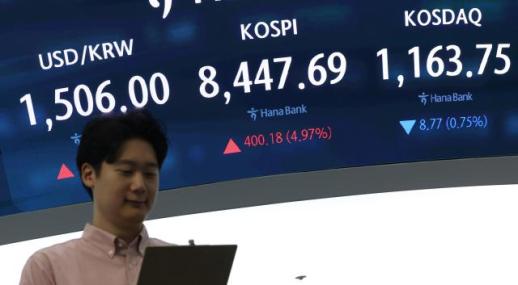 KOSPI extends record-setting rally, fueled by memory stocks SEOUL, May 27 (AJP) - South Korea’s main bourse briefly halted Wednesday after the benchmark index tracking the top 200 listed companies surged 5 percent, propelling the KOSPI past the 8,400 mark just a day after breaking into unprecedented four-digit territory. As of 9:30 a.m., the KOSPI had risen 3.63 percent to 8,355.81 after briefly testing above 8,400 shortly after the opening bell, as memory chip giants continued to shatter record highs. Samsung Electronics surged more than 6 percent to 318,000 won, while SK hynix jumped more than 9 percent to 2.24 million won on strong institutional and foreign buying. The KOSDAQ, however, fell 1.52 percent, to 1,154.68. 2026-05-27 09:47:50
 -
 Overpass collapse in Seoul disrupts over 120 KTX trains SEOUL, May 27 (AJP) - More than 120 KTX bullet trains have been suspended or had their routes adjusted after a collapse at a demolition site in Seosomun, western Seoul, according to the state-run rail operator. The disruptions, affecting multiple lines from the first trains on Wednesday, came after an overpass under demolition collapsed the previous day, killing three workers and injuring three others. KORAIL said a power outage on overhead railway lines between Seoul Station and Sinchon Station halted some KTX services and suspended commuter train operations, as restoration work could take considerable time. Among the dead were two men in their 60s who worked as site supervisors and a man in his 50s who was an outside engineering expert. They are believed to have died after falling or being struck by collapsing debris. The three injured men suffered cuts and injuries to the head, waist and ribs. They included Seoul city officials and a district official who was reportedly passing beneath the overpass and was not involved in the construction work. The dismantling of the old overpass had been underway since last summer as part of the city's broader effort to remove aging infrastructure, and the structure was scheduled to be fully demolished by early next month. Workers were reportedly conducting a safety inspection after discovering cracks in the overpass early in the morning, several hours before it collapsed at around 2:30 p.m. 2026-05-27 09:47:18
 -
 Anthropic opens Seoul office, names veteran tech executive to lead Korea push SEOUL, May 27 (AJP) - Anthropic, the U.S. artificial intelligence company behind the Claude chatbot, is to officially open a Seoul office and named industry veteran Choi Ki-young as its first country manager for South Korea, deepening its push into one of Asia's most lucrative AI markets. Senior Anthropic executives are scheduled to visit Seoul in the coming weeks to formally inaugurate the office and meet with major enterprise clients, the company said Wednesday. Choi joins from Snowflake, where he served as Korea country manager, and brings more than three decades of experience steering global technology firms in the Asia-Pacific region. He previously led Korean operations for Google Cloud, Adobe, Autodesk and Microsoft. "Korea ranks among the world's most mature AI markets in terms of hardware innovation, developer talent and corporate adoption," Choi said. "Domestic companies combine strong technical capabilities with a genuine commitment to responsible AI, and we are building our Korea business for the long term." The Seoul team is to pursue tailored go-to-market strategies and forge partnerships across enterprises, developers and research institutions. According to Anthropic's Economic Index report published in March, Claude usage in South Korea runs at about 3.5 times the level expected for its population size, with particularly strong adoption in technology and creative sectors. Domestic users already include legal tech startup Law&Company, which has built a Claude-powered legal assistant, and SK Telecom, which has deployed the model in customer service operations. Anthropic enters a Korean market where global rivals have moved quickly. OpenAI launched its Korean subsidiary in May 2025 and formally opened a Seoul office last September, naming former Google Korea chief Kim Kyoung-hoon as country manager — its third Asian base after Tokyo and Singapore. Google has been pushing its Gemini models in Korea through existing Google Cloud and Android channels, including a high-profile partnership with Samsung Electronics that has embedded Gemini in flagship Galaxy devices and the Ballie home robot. The rush reflects South Korea's strategic weight in the global AI value chain. The country dominates high-bandwidth memory chip production through Samsung Electronics and SK hynix — critical inputs for AI training infrastructure — and houses some of the world's heaviest enterprise AI adopters in semiconductors, automotive, shipbuilding and consumer electronics, giving foreign model developers both a supply base and a high-value customer pool to court. 2026-05-27 09:46:32
 -
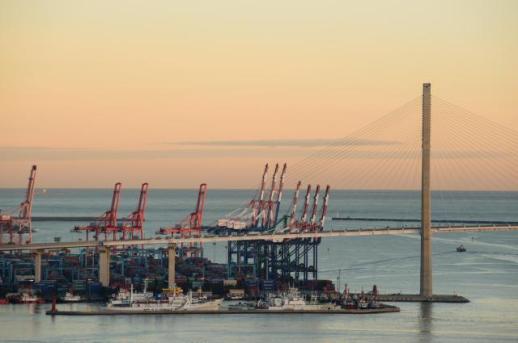 Korea's May business sentiment rebounds sharply as fears over external shocks ease SEOUL, May 27 (AJP) - South Korea’s business sentiment improved sharply in May as still-strong exports and a record-setting stock market outweighed lingering concerns over oil prices, exchange rates and Middle East tensions, data showed Wednesday. According to the Bank of Korea, the composite business sentiment index (CBSI) for all industries rose to 98.9 in May from 94.9 in April, marking a 4.0-point increase and the highest level in nearly two years. While the index remained just below the benchmark level of 100, the latest reading suggested that corporate sentiment was approaching its long-term average. The rebound followed a turbulent spring in which businesses were rattled by the Middle East conflict, surging oil prices, fears over the Strait of Hormuz and a sharp weakening of the Korean won. In March, corporate sentiment deteriorated as companies grappled with soaring energy costs, logistics disruptions and stagflation concerns tied to the Gulf conflict. April then saw a partial rebound, though much of that improvement stemmed from falling inventories rather than a genuine recovery in demand. The latest data suggest May marked a shift away from that inventory-driven rebound toward broader-based improvement in actual business conditions. Manufacturing CBSI rose to 100.8 in May from 99.1 in April, turning positive for the first time this year, while non-manufacturing CBSI jumped to 97.5 from 92.1. Service-sector sentiment also rebounded sharply to 97.3 from 92.9. Unlike April, when falling inventories accounted for a large share of the improvement in manufacturing sentiment, May’s rebound was driven primarily by business conditions and funding environments. The BOK said manufacturing sentiment was lifted mainly by business conditions, which contributed 1.4 points, and funding conditions, which added 1.3 points. Product inventories, by contrast, exerted a negative contribution of 1.8 points. The shift was significant because April’s rebound had relied heavily on inventory effects, raising concerns that headline improvements overstated the actual state of demand. Underlying manufacturing indicators also strengthened in May. The manufacturing business conditions BSI rose to 80 from 74, while sales climbed to 93 from 87. Production increased to 90 from 88, and new orders rose to 87 from 85. Profitability and funding conditions also recovered after weakening sharply in April. Manufacturers’ profitability BSI rose to 74 from 68, while funding conditions improved to 79 from 76. Cost pressures, while still elevated, showed tentative signs of easing. Manufacturers’ raw material purchase price BSI fell to 143 from 149 the previous month, while the product selling price BSI rose further to 112 from 110, suggesting some firms were beginning to pass higher costs on to customers after months of margin compression. The rebound was even more pronounced in the non-manufacturing sector. The non-manufacturing CBSI rose 5.4 points, driven by gains in profitability, sales and business conditions. Transportation and storage firms posted especially strong improvements, with their business conditions BSI jumping to 84 from 67, while accommodation businesses rose to 85 from 72. Exporters continued to outperform domestic-oriented firms, though the gap narrowed somewhat as domestic businesses also improved. Exporters’ CBSI rose to 105.3 from 103.4, while domestic-oriented firms climbed to 98.4 from 96.4. Large firms improved to 103.4, but small and medium-sized enterprises edged down slightly to 96.2, underscoring that the recovery remained uneven across company sizes. The latest survey also indicated that some of the acute fears surrounding exchange rates and geopolitical uncertainty seen earlier this spring had begun to ease. Lee Heung-hoo, head of the BOK’s economic sentiment survey team, said the improvement was driven by robust IT exports in manufacturing and improving conditions in wholesale and warehousing-related businesses despite the prolonged Iran conflict. “Media reports earlier this month regarding possible negotiations involving Iran appeared to raise expectations for a de-escalation of the conflict,” Lee said. “That likely affected responses related to exchange rates and rising raw material prices.” Among manufacturers, the share of firms citing exchange rates as their biggest management difficulty fell to 5.0 percent in May from 6.5 percent in April, while the share citing uncertain economic conditions dropped to 17.7 percent from 19.3 percent. The proportion citing rising raw material prices also eased slightly to 32.8 percent from 34.2 percent. Instead, concerns over weak domestic demand became more prominent. The share of manufacturers citing sluggish domestic demand rose to 15.5 percent from 13.8 percent, while among non-manufacturers the corresponding figure increased to 17.0 percent from 16.7 percent. The data suggest businesses are gradually shifting their focus away from external shocks such as oil prices and exchange rates toward more structural concerns surrounding domestic consumption and demand recovery. The economic sentiment index (ESI), which combines corporate and consumer sentiment, rose sharply to 97.5 in May from 91.7 in April. However, its cyclical component remained unchanged at 95.2, indicating that the broader economic recovery has yet to establish a sustained upward trend. Companies also became more optimistic about the near-term outlook. The June all-industry CBSI outlook rose to 97.6 from 93.9, while manufacturing and non-manufacturing outlooks climbed to 100.3 and 95.9, respectively. 2026-05-27 09:00:53
 -
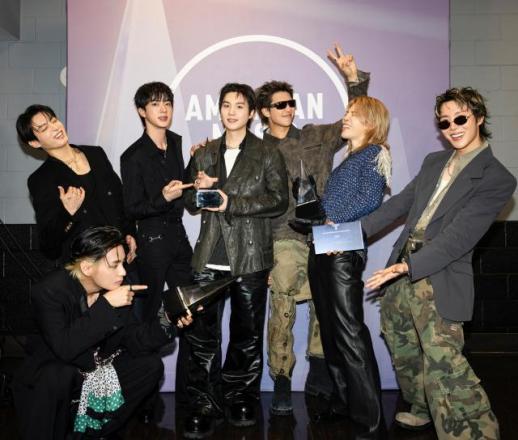 BTS opens comeback awards year with three-trophy sweep at 2026 AMAs SEOUL, May 26 (AJP) - BTS launched their comeback awards run in style on Monday, claiming three trophies at the 2026 American Music Awards in Las Vegas — including a second Artist of the Year win — in their first major awards showing since returning from a nearly four-year hiatus. The haul arrived less than a year after all seven members completed South Korea's mandatory military service, an obligation that effectively suspended full-group activity for roughly two years. Monday's result underscored that the group's global fanbase, known as ARMY, had remained mobilized through the pause. All seven members attended the ceremony at the MGM Grand Garden Arena, marking their first full-group appearance at the AMAs since 2021. "ARMYs, we made it once again," leader RM said in his acceptance speech. "Because this award is decided by fan votes, I sincerely express my gratitude and respect to ARMY, who have stood by us for 13 years." Busta Rhymes presented the top prize, with BTS edging a stacked field that included Bad Bunny, Bruno Mars, Harry Styles, Justin Bieber, Kendrick Lamar, Lady Gaga, Morgan Wallen and Sabrina Carpenter. Taylor Swift, the most-decorated artist in AMA history with 40 trophies, walked into the night with eight nominations and left empty-handed. J-Hope thanked fans around the world, while Jimin acknowledged the supporters who had joined the group's ongoing tour, switching to Korean to tell ARMY he was "truly grateful and full of love." BTS also won Song of the Summer for "Swim," the Billboard Hot 100-topping lead single from their comeback album ARIRANG. The group opened the broadcast with a pre-recorded performance of "Hooligan," filmed at Allegiant Stadium during their world tour. A third honor, Best Male K-Pop Artist, was announced after the main broadcast, bringing the night's tally to three. Accepting Song of the Summer, the members said they had spent the hiatus reflecting on what kind of music felt most authentic at this stage of their career. "The only thing we believed in was that we had to keep challenging ourselves and moving forward," they said. "To everyone who keeps swimming forward no matter the circumstances — we send our love and support." The AMA showing arrives amid sustained commercial momentum. ARIRANG debuted at No. 1 on the Billboard 200 in March with 641,000 equivalent album units in its first week, according to Luminate, giving BTS its seventh chart-topper on the U.S. albums chart. The record held the top spot for three weeks — the longest run for a group album since Mumford & Sons' Babel in 2012 — pointing to demand that has extended well beyond the initial wave of comeback interest. The accompanying ARIRANG World Tour has amplified that trajectory. Billed as the group's largest tour to date, the run spans 85 dates in 34 cities across 23 countries, having opened at Goyang Stadium on April 9 and completing 18 of its 85 shows to date, all to sold-out crowds, with the tour scheduled to continue through March 2027. The current Las Vegas residency at Allegiant Stadium overlapped with awards week, allowing the group to attend the ceremony mid-tour. Asia and Oceania legs are slated to follow later this year and into early 2027, with stops in Melbourne, Sydney, Kaohsiung, Bangkok, Kuala Lumpur, Singapore, Jakarta, Hong Kong and Manila. BTS's 2021 Artist of the Year win had marked the group's arrival as the first Asian act to claim the AMAs' top fan-voted honor. Introducing the band earlier in the evening, host Queen Latifah described them as "not just a big group — a global group," drawing a roar from the arena. Seven acts tied for the night's lead with three trophies each: Bruno Mars, BTS, Cardi B, KATSEYE, Sabrina Carpenter, HUNTR/X and Sombr. BTS was not the only Korean-linked act to make an impact. KATSEYE, the group formed through a HYBE–Geffen Records partnership, also took home three awards including New Artist of the Year, adding to a broader showing for K-pop and K-pop-adjacent acts at a ceremony where fan engagement carries unusual weight. The AMAs rank among the major U.S. music honors, with nominees determined by commercial metrics such as streaming, sales, radio airplay and touring, while winners — including Artist of the Year — are chosen through fan voting, a format that has historically favored acts with highly organized global fanbases. BTS first won at the show in 2018 with Favorite Social Artist, and later expanded their footprint into major categories including Tour of the Year and Favorite Pop Duo or Group. 2026-05-26 17:47:58
 -
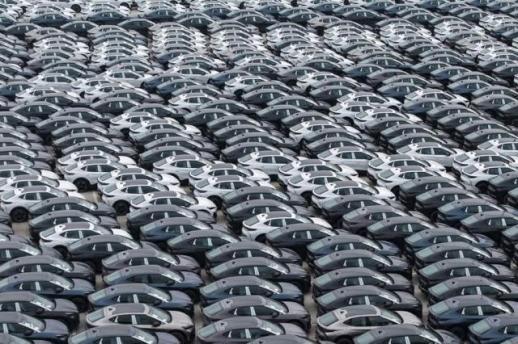 ASIA INSIGHT: China takes wheel in EV era while Japan and South Korea feel pinch SEOUL, May 26 (AJP) - There was a time when the global automobile world felt almost immutable. Germany stood for engineering precision. Japan perfected reliability. America sold aspiration. And China simply assembled parts. That no longer holds. Electric vehicles are not simply a new kind of car. They are a new kind of industrial system. In that shift, China has done something few expected, moving from the margins of manufacturing to the center of technological competition. Chinese automakers like BYD and CATL are no longer imitators chasing established leaders. They are setting the pace. China is now the world's largest auto exporter, and in electric vehicles it is not just competing. It is shaping the market itself. The old assumption that Chinese cars were "cheap but inferior" is increasingly outdated. In many segments, the price advantage is so sharp that rivals in Europe, Japan, and South Korea are left competing on fundamentally unequal terms. What makes China's rise different is not just cheaper prices. Behind those prices is an entire system working in China's favor, an ecosystem of battery supply chains, heavy government support, sophisticated software, and enormous domestic demand that allows automakers to adapt rapidly. In some cases, Chinese EVs are priced at nearly half the cost of comparable Western or Japanese models. And it is no longer contained within China. In Europe, Chinese EV brands are steadily gaining market share. In Seoul, imports of Chinese electric vehicles have surged at a striking pace. The expansion is now visible not only in showrooms but also in factory contracts. Japan's long dominance of hybrid technology, once a major strength, has become a form of strategic inertia. The shift to fully electric cars exposed a gap that rivals quickly took advantage of. In China, Japanese carmakers are losing ground not only to local brands but also to consumers who now care more about software and connected systems than traditional mechanical quality. South Korea is in a more complicated position. Hyundai and Kia have done well in the EV shift, investing early in design, new platforms, and building strong global brands. But they now face intense pressure from Chinese companies that can produce at much larger scale and lower prices. The bigger concern is batteries. Chinese companies are gaining more control over key materials and production. As a result, it is becoming harder for South Korea to hold on to one of its most important export industries. But the bigger change is not about individual companies. It is about what a car has become. An electric vehicle is no longer mainly about engine performance. It is now shaped by software, computer chips, batteries, and control over supply chains. It is closer to a moving computer than a traditional machine. China understood this earlier and moved faster to build it at a national scale. But that does not mean its EV industry has no weaknesses. Price wars are intense. And in an overcrowded domestic market, many companies struggle to make profits. For some, going overseas is no longer just about growth. It is about survival. But even China's weaknesses do not change the bigger picture. The uncomfortable reality for Japan and South Korea is that past glory in internal combustion engines does not guarantee success in the electric age. This is not a gradual shift but a fundamental break from everything that came before. And history is often unkind in moments like these. Dominant players in one era often fail to recognize how quickly the rules have changed in the next. There is a familiar precedent. In smartphones, once-dominant players like Nokia were swept aside by platform-driven ecosystems they underestimated. The auto industry may not move as fast as consumer tech, but the direction of change is similar, and the stakes are far higher. Cars are not just products. They are part of a country's industrial backbone, connected to exports, jobs, and national identity all at once. That is what makes China's EV surge more than a market story. It is a reordering of industrial power in Asia. For Japan and South Korea, the question is no longer whether competition will intensify. It already has. The real question is whether Japan and South Korea can take what they are good at, building reliable, well-engineered, trusted cars, and remake themselves for a world where the car is essentially a software product on wheels. A world where vehicles are not just sold, but constantly updated and improved long after they leave the factory. The shift is already underway. The hard part is accepting how much has already changed. 2026-05-26 17:47:13
 -
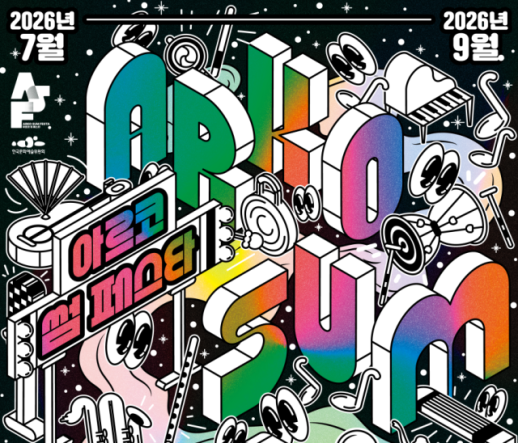 ARKO connects 15 performing arts festivals under summer series SEOUL, May 26 (AJP) - The Arts Council Korea will launch the 2026 ARKO SUM FESTA in July, bringing together 15 performing arts festivals across the country under a single brand, the council said Tuesday. ARKO SUM FESTA was introduced last year as an integrated brand for festivals selected under the council's national performing arts festival support program. This year's edition will focus on strengthening links among participating festivals and expanding audience access to local performing arts events. The festival series will run from July to September in cities and regions including Seoul, Busan, Jeju, Chuncheon, Miryang, Gwangmyeong, Hwaseong and Eumseong. Participating festivals span theater, dance, music and traditional arts. Theater events include the Korea Theater Festival in Busan, while dance programs include the Busan Ballet Festival and the Chuncheon Performing Arts Festival. Music events include the July Festival and the Seoul International Computer Music Festival, and traditional arts festivals include the Dongnae Folk Arts Festival in Busan's Dongnae-gu district. Ahead of the main festival period, ARKO will hold Preview Week programs in two rounds, from June 19 to 20 and from July 25 to 26. The preview programs will introduce participating festivals through showcases, workshops, exhibitions and hands-on programs. All Preview Week events will be free of charge, though some indoor performances and workshops will require advance reservations through Naver Booking. Advance registrants will receive ARKO SUM FESTA merchandise and a coupon book for participating festivals. The first Preview Week will begin with an opening event at the main hall of ARKO Arts Theater on June 19, featuring theater, dance, traditional arts and music performances from programs highlighted in last year's festival series. On June 20, additional showcases, workshops, exhibitions and public participation programs will be held at ARKO Arts Theater and around Marronnier Park in Seoul. Lee Beom-heon, chair of the Arts Council Korea, said expanding contact points with audiences is as important as developing strong festival programs. "Through ARKO SUM FESTA, we will strengthen the promotional foundation for participating festivals and helps audiences more easily discover and enjoy performing arts festivals across the country," Lee said. 2026-05-26 17:35:23