

Journalist

Imran Khalid
-
 Singer-Actor Im Chang-jung Says Raising Five Sons Makes Dining Out Costly Singer and actor Im Chang-jung has spoken about what it is like raising five sons. On the April 6 episode of tvN STORY's "Namgyeoseo Mwohage," Lee Young-ja, Jung Sun-hee, Im and Kim Yong-gun appeared together under the theme "People of Geumchon House." Asked by Lee how much he spends on food with five boys, Im said he had planned to stop at two children if he had a daughter. "So we had a third, but it was a son, and the fourth was a son, and the fifth was a son," he said. "So with the sixth, we just tied it off." He added that the family travels in two cars when they go out. "If we go to eat beef, it's not a meal bill — they keep asking me for rent," he said. Im said he cannot easily go to expensive restaurants, adding that acquaintances who distribute foods such as beef and eggs sometimes chip in and send supplies. "Since I have the chance to say it, please send a little more," he said, drawing laughter. * This article has been translated by AI. 2026-04-07 08:48:15
 -
 Korea to Offer Up to 290 Million Won for AI, XR-Linked Music Content Projects The Ministry of Culture, Sports and Tourism and the Korea Creative Content Agency, known as KOCCA, said Monday they will back production of content that combines popular music intellectual property with new technologies such as artificial intelligence and extended reality. KOCCA announced the “2026 Support for Development of Music Content Converging New Technologies” program and will accept applications through April 14. The program totals 2.949 billion won and will select 12 projects. Support will be offered in two areas: AI-based music performance production and music video production using new technologies. For AI-based performances, the program targets content that applies AI across the full production process, providing up to 290 million won per project for about three projects. For music video production, the program supports video content using technologies such as XR, virtual reality and augmented reality. It will provide up to 220 million won per project for about nine projects. Domestic popular music agencies and production companies planning performances, music videos or other video content using new technologies may apply. KOCCA said it expects the program to expand production of technology-based music content and strengthen the competitiveness of South Korea’s music industry. Details are available on KOCCA’s website, and applicants must apply through the online system by April 14. * This article has been translated by AI. 2026-04-07 08:39:15
 -
 Samsung Electronics Q1 income eclipses full 2025, nears full 2018 peak SEOUL, April 07 (AJP) - Samsung Electronics on Tuesday estimated its operating profit reached a whopping 57.2 trillion won ($42.3 billion) in the January–March period on a surge in memory prices from legacy to AI-supporting high-performance chips, beating not just full-year 2025 earnings but nearing the annual income of the last chip boom year in 2018. In its first-quarter earnings guidance, the South Korean tech giant — spanning chips, smartphones and home appliances — said operating profit jumped 755.0 percent from 6.6 trillion won a year earlier and nearly tripled from 20.1 trillion won in the previous quarter. The figure far exceeded the market consensus of 40.5 trillion won compiled by FnGuide, as investors had been closely watching whether the company could surpass the 50 trillion won milestone. The result also came close to its record annual profit of 58.9 trillion won in 2018. The second straight record-setting quarter was fueled by a sharp rebound in memory prices, with DRAM contract prices surging 90–95 percent on-quarter in the first quarter and NAND prices rising about 60 percent, according to TrendForce. Revenue jumped 41.73 percent on quarter and 68.06 percent on year to 133 trillion won, the first quarterly milestone above 100 trillion won. Samsung will release its detailed earnings report later this month. 2026-04-07 08:13:37
 -
 OPINION: America's wars — and the strategy it never had President Donald Trump’s decision to launch a war with Iran looks less like strategy than reflex — the latest in a long line of interventions driven by misjudgment rather than necessity. Wars, by definition, should be rare instruments of policy, deployed only when anchored in a clear global strategy. Yet recent history suggests the opposite: they are easy to start, and exceedingly hard to finish. The war in Ukraine already proved that point. Even so, Washington has opened another front. The United States has offered various justifications, but the historical record is less forgiving. Since World War II, few American wars have produced decisive success. Even the Korean War — often framed as a qualified victory — ended where it began, after three years of destruction. More often, U.S. interventions have followed a familiar arc: rapid entry, prolonged entanglement, and ambiguous or humiliating exits. Vietnam remains the defining case. What began with limited deliberation escalated into a decade-long conflict that drained national resources, fractured domestic consensus and ended without victory. The images of evacuation from Saigon still define the cost of strategic overreach. The pattern repeated after Sept. 11. Afghanistan and Iraq were entered with confidence and exited with fatigue. Despite overwhelming military superiority, the United States failed to achieve its political objectives, spending trillions of dollars over two decades only to leave both countries unstable. There was one exception: the 1991 Gulf War. It was limited in scope, backed by a broad coalition and aligned with a clear objective. It ended quickly — precisely because it was not unilateral. That distinction matters. When Washington acts alone, strategy often blurs into ideology. The deeper cost of these wars lies not only in their outcomes but in their opportunity cost. While the United States was consumed by the “war on terror,” China — now its principal rival — expanded its economic and strategic power. A more disciplined strategy might have curtailed Middle East entanglements early and redirected focus toward Beijing. That window has now closed. The Ukraine war has compounded the problem. Rather than isolating Russia, it has tightened alignment between Moscow, Beijing and Pyongyang. Russia’s ability to supply China with energy and food via land routes has reduced Beijing’s vulnerability to U.S. naval dominance — a strategic shift that arguably benefits China more than it weakens Russia. The Iran conflict risks repeating — and accelerating — that dynamic. If the war drags on, it is likely to strengthen China and Russia while weakening the United States and its allies. Tehran is already experimenting with non-dollar oil transactions, raising the prospect of a gradual shift toward a “petroyuan” system that could erode the dollar’s reserve status — one of the foundations of American power. At the same time, fractures within alliances are becoming more visible. Washington’s call for allies to secure the Strait of Hormuz has been met with hesitation, exposing the limits of U.S. leadership in a more multipolar world. This is not simply a series of tactical errors. It reflects a deeper structural failure in American strategic thinking. Realist scholars such as John Mearsheimer have described this as a “great delusion” — the belief that the United States can remake the world in its own image. That belief rests on several pillars: American exceptionalism, an enduring faith in the universality of liberal democracy, and a persistent overconfidence in the durability of U.S. primacy. That overconfidence has been costly. Even as economic competitiveness eroded, Washington continued to expand military commitments, assuming its dominance would persist indefinitely. The result has been a widening gap between ambition and capability. China was the most consequential miscalculation. The United States treated it as a partner rather than a peer competitor, enabling its rise through trade and integration while underestimating its strategic intent. By the time Washington recalibrated, the balance had already shifted. History offers a warning. Hegemonic dominance rarely lasts beyond a century. The United States has already crossed that threshold, yet continues to act as if the world remains unipolar. The result is a foreign policy that accelerates the very multipolarity it seeks to resist. The Iran war may prove to be another turning point. If it ends without a clear outcome, it will deepen perceptions of strategic drift. If it escalates, it risks overextension. Either scenario points to the same conclusion: the absence of a coherent grand strategy is no longer sustainable. For allies such as South Korea, the implications are immediate. The era of relying on a single stabilizing power is fading. What comes next is a world defined less by order than by adjustment — and by the need for greater strategic autonomy. The United States is not simply fighting another war. It is confronting the limits of its own power — and the cost of failing to recognize them. *The author is an adviser to law firm Yulchon. About the author: △Seoul National University, German literature △Ambassador to Myanmar △Special envoy for foreign affairs to the National Assembly speaker △Ambassador to Australia 2026-04-07 07:24:56
 -
 Samchundang Pharm CEO says results will address doubts after $100 million U.S. deal "We will prove it through management and results." Jeon In-seok, CEO of Samchundang Pharm, said at a news briefing Monday at the company’s Seoul headquarters that he would restore trust by delivering business results amid controversy over a recent technology export agreement. The company disclosed March 30 that it had signed a $100 million (about 1.5 trillion won) technology export deal with a U.S. partner for an oral diabetes and obesity treatment. Market doubts spread over the profit-sharing structure and contract terms, and the controversy intensified after Jeon’s plan to sell a 2.5 trillion won stake in a block deal became public. Samchundang Pharm said it scrapped the block deal plan Monday morning and pushed back against suspicions. Jeon said, "We decided to eliminate the block deal itself, which became the basis for the rumors," adding, "I judged that protecting the company’s value and shareholder trust comes before my personal tax issues." Attention has shifted to whether the company’s technology and business case can be verified. At the briefing, the company focused on its platform technology, S-PASS, which it says converts injectable drugs into oral formulations. Samchundang Pharm said the technology delivers efficacy equivalent to the original product while avoiding existing formulation patents. Jeon said, "Malicious rumors about S-PASS are not true," adding that materials submitted to the U.S. Food and Drug Administration include the drug mechanism, stability data and the applied technology. "You cannot proceed through regulatory procedures with false technology or data," he said. The company said it uses an S-PASS-based substance (SNAC Free) to avoid formulation patents without existing excipients and to improve cost competitiveness. It said the biopolymer used instead of SNAC costs about one-tenth as much, and that it has secured competitiveness at what it called a global low of about $20 per gram.The company said it is developing oral semaglutide (Rybelsus and Wegovy oral generics) based on the technology and has signed an exclusive supply agreement with its U.S. partner. Addressing the structure under which it receives 90% of sales revenue, Jeon said it is possible because Samchundang Pharm develops and produces products with its own technology and supplies them to global markets. He described it not as a technology transfer deal but as a revenue-sharing supply agreement in which the partner sells the product and pays sales proceeds over 10 to 15 years. On milestones, he said the core of the contract is not one-time milestone payments but revenue generated from long-term product supply. Responding to criticism of its R&D capabilities, Jeon said the company has used a "strategically distributed innovation" structure from the start, with each team focused only on its project to minimize information leaks. Jeon apologized, saying communication with shareholders had been insufficient, and said the company would rebuild trust by proving global results in the second half of the year with numbers and outcomes. According to the Korea Exchange, Samchundang Pharm shares surged intraday to as high as 706,000 won but gave up gains to close down 4.63% at 618,000 won from the previous session. The stock has jumped 400% this year, overtaking EcoPro to rank No. 1 by market capitalization on the KOSDAQ and earning the nickname "imperial stock" for trading above 1 million won, but a recent sharp decline has jolted the market.* This article has been translated by AI. 2026-04-06 18:15:00
 -
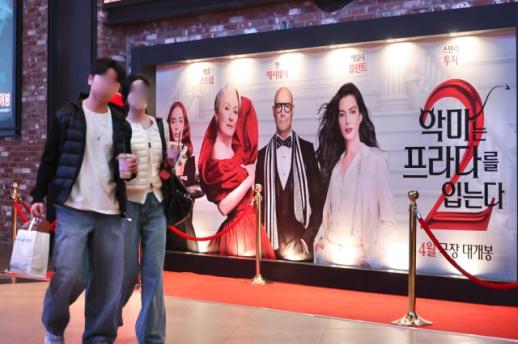 Main cast of 'The Devil Wears Prada' sequel to visit Seoul ahead of release SEOUL, April 6 (AJP) - Hollywood stars Meryl Streep and Anne Hathaway are set to visit Seoul this week, just weeks ahead of the release of a sequel to their 2006 hit "The Devil Wears Prada." According to the film's distributor, the two stars are scheduled to meet fans here at a red carpet event in Yeongdeungpo on Wednesday and also take part in other promotional activities. They are also set to appear on cable channel tvN's show "You Quiz on the Block." The long-awaited sequel, slated for release here on April 29, reunites the original cast in new roles, as they face new challenges and evolving careers in the fashion industry. 2026-04-06 17:52:24
 -
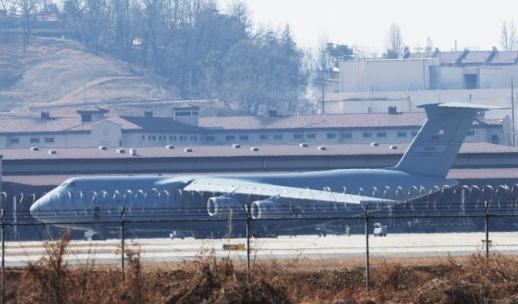 Chinese AI role in Iran war flags lessons for Seoul SEOUL, April 6 (AJP) — The war in the Gulf is underscoring a critical lesson for South Korea, which faces its own security risks on the Korean Peninsula: the growing role of Chinese AI and satellite technologies in tracking and exposing military movements. Chinese firms are increasingly using publicly available data — including commercial satellite imagery, Automatic Dependent Surveillance-Broadcast (ADS-B) and Automatic Identification System (AIS) signals — and applying AI to integrate and analyze them to track military activity. By combining multiple datasets, these systems can infer troop movements, carrier routes and force deployments without relying on classified intelligence. China-based geospatial analytics firm MizarVision has released analyses tracking U.S. carrier strike group movements and troop deployments in the Iran conflict, highlighting how AI is evolving beyond data processing into a tool capable of reconstructing military intelligence. China is also accelerating efforts to integrate domestically developed AI models into military systems, including autonomous drones, simulation platforms and battlefield automation. The U.S. House Select Committee on China has described such applications as an “imminent threat,” while U.S. Defense Secretary Pete Hegseth said Washington is aware of the developments and is taking steps to respond. While Seoul aims to rank among the world’s top three AI powers, analysts say it still trails the United States and China, with constraints in skilled labor and private investment limiting its ability to respond to AI-driven security risks. The implications extend beyond technology competition, pointing to structural shifts in the security environment. Lee Shin-wha, a professor of Political Science and Diplomacy at Korea University, said advances in AI and data are rapidly blurring the boundary between the economy and national security. “Security is no longer defined solely by military power,” she said. “It is evolving into a new domain that integrates data, AI and cyber capabilities, placing South Korea in a more exposed position between China and North Korea.” She warned that long-standing asymmetric capabilities developed by China and North Korea in cyber domains are now expanding through the use of commercial technologies and data. Lee also raised concerns over data security, saying potential data flows and leakages in key industries such as semiconductors and advanced manufacturing should be treated as national security issues, calling for stronger legal and institutional safeguards. As information approaches real-time availability, she said, warfare is likely to shift further into information and cognitive domains, warning that failure to secure information superiority could leave countries at a strategic disadvantage. Kang Jun-young, a professor at the Graduate School of International and Area Studies at Hankuk University of Foreign Studies, said the use of commercial resources for military purposes has already become unavoidable. He added that governments should strengthen legal frameworks and clearly define policy responses to address the issue at the national level. Lee also stressed the need for a broader security strategy that extends beyond traditional military power to include cyber and cognitive domains, requiring coordination across government and closer collaboration between technical experts and policymakers. She noted that key institutions such as the National Intelligence Service already treat cyber capabilities as a core pillar, but said further efforts are needed to strengthen expertise and institutional capacity. Lee also pointed to the growing role of asymmetric technologies such as drones, noting that lessons from the Russia–Ukraine war demonstrate how they can reshape the battlefield. She warned that advances in AI and data technologies have “opened a Pandora’s box,” calling for an integrated national strategy that aligns technological development with security policy. Concerns are also rising over how these trends could apply to the Korean Peninsula. Rep. Yu Yong-weon of the People Power Party said “China is helping Iran by analyzing commercial satellite data to disclose U.S. aircraft deployments and carrier movements,” warning that similar exposure could occur in Korea. He said key facilities — including Osan Air Base and Camp Humphreys in Pyeongtaek, as well as Gyeryongdae and Cheongju Air Base — could be vulnerable to detection through high-resolution satellite imagery and data analysis. Yu urged the government to treat the issue as an immediate security concern, calling for measures such as hardened aircraft shelters and stronger monitoring of Chinese commercial satellite activity. 2026-04-06 17:51:26
 -
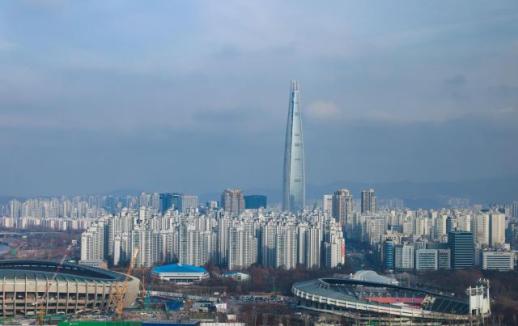 BOK to stay on hold this week, but faces looming inflation test SEOUL, April 6 (AJP) — There is little doubt the Bank of Korea will hold its base rate at 2.5 percent at Thursday’s rate-setting meeting, but how long the pause lasts will be closely watched as Gulf-driven import inflation builds the case for at least one hike down the line. The post-meeting narrative is also unlikely to surprise, as this will be the last meeting under Governor Rhee Chang-yong before his four-year term ends on April 20. Markets are instead looking ahead to the May 28 meeting, to be chaired by incoming governor Shin Hyun-song, a U.K.-educated former Bank for International Settlements economist, when the central bank is expected to update its growth and inflation outlook to reflect the war’s impact. Government bond yields, which have risen 60 to 70 basis points this year, have eased from recent highs on expectations that Gulf tensions may stabilize. The three-year government bond yield on Monday fell 1.6 basis points to 3.451 percent, retreating from a recent peak of 3.617 percent. The 10-year yield dropped 2.2 basis points to 3.725 percent, also down from 3.915 percent. “The BOK is expected to keep the base rate unchanged at the April meeting,” said Baek Yoon-min, a senior research fellow at Kyobo Securities. “We expect the blockade of the Strait of Hormuz to ease or conclude within the second quarter.” Baek pointed to elevated U.S. inflation ahead of the November midterm elections as a key variable. Average gasoline prices have risen above $4 per gallon, the highest since August 2022. According to the Federal Reserve Bank of Cleveland, headline inflation in early April accelerated to 3.7 percent from 3.25 percent in March. Baek said U.S. inflation may paradoxically ease pressure on South Korea to tighten policy. Yoon Yeo-sam, a researcher at Meritz Securities, also expects the BOK to remain on hold for now, citing weak domestic conditions. “In 2022, core domestic indicators were robust. Now, the situation is different,” Yoon said. Economists expect rate hikes later in the year as import price pressures feed through. Consumer prices in Korea rose 2.2 percent in March from a year earlier, accelerating from 2.0 percent in the previous two months. While still within the BOK’s target range, the composition signals rising pressure. Energy has re-emerged as the dominant driver, compounded by a structurally weaker won, with the full impact only beginning to filter through. The won has extended its slide, weakening a further 6 percent this year amid capital outflows. The dollar has also sharply eased from recent peak of 1,530 won to 1,500 won Monday, but still remains at the levels of March 2009 during the global financial crisis, Petroleum prices surged 9.9 percent, contributing 0.39 percentage point to headline inflation. Diesel jumped 17 percent and gasoline 8 percent, marking the strongest energy impulse since the early phase of the Ukraine war. March likely captures only the initial shock. The key transmission channels — oil, the dollar and the exchange rate — have yet to fully feed into domestic prices. Despite his near-term hold view, Baek warned the impact of oil on inflation could be “longer and stickier” than expected, with spillovers into petrochemicals such as plastics and asphalt. He added that Shin’s appointment raises the likelihood of a shift toward tighter policy, noting the incoming governor’s preference for preemptive rate hikes. Cho Yong-gu, a research fellow at Shinyoung Securities, expects consumer inflation to approach 3 percent between May and August, with gradual tightening potentially beginning as early as July. "The central bank lacks the tools to stabilize prices quickly without a rate hike," Cho added. Some academics argue that tightening may be needed to address broader imbalances. “Given the quadruple high phenomenon of exchange rates, prices, housing costs, and interest rates, a modest rate hike is advisable,” said Kim Jung-sik, a professor emeritus at Yonsei University. “The benefits of absorbing excess liquidity to stabilize these four factors outweigh the costs.” As of Monday, the upper bound for mixed-rate mortgage loans at major banks has exceeded 7 percent. The M2 money supply rose 5.8 percent year-on-year in January, continuing to outpace the OECD average of 3 to 4 percent. 2026-04-06 17:46:38
 -
 JW Pharmaceutical: Hemlibra Study Shows Lower Bleeding Risk in Children With Hemophilia A JW Pharmaceutical said on 6 that a study published in the international journal TH Open found children and adolescents with hemophilia A who received Hemlibra (emicizumab) maintained a low risk of bleeding even while taking part in a range of physical activities. Hemlibra is a novel drug designed to mimic the function of clotting factor VIII, which is lacking in people with hemophilia. The company said it is the only hemophilia A treatment that can be used in both patients who have developed antibodies that make standard factor VIII products ineffective and those who have not. It is given by subcutaneous injection, with preventive effects lasting up to once every four weeks. The study was conducted at 50 medical institutions in Japan over about 97 weeks. Researchers analyzed physical activity, bleeding, safety and changes in quality of life after patients switched to Hemlibra prophylaxis. Before Hemlibra, patients experienced an average of 1.5 to 2.0 bleeding episodes over the most recent 12 or 24 weeks. After switching treatment, the median annualized bleeding rate was 0.53. During the study, researchers recorded 172 physical activities: 44 high-risk, 70 moderate-risk and 42 low-risk. One traumatic bleed related to physical activity was reported, and no significant link was found between activity intensity and bleeding. Quality-of-life measures also improved. In caregiver surveys, 43.8% reported their child was more active, and 56.3% reported less anxiety about bleeding. On safety, no intracranial hemorrhage (ICH) or thromboembolism — concerns in infants and toddlers — were reported.* This article has been translated by AI. 2026-04-06 17:42:00
 -
 3 Audience Members Injured After Safety Barrier Collapses at Super Junior Concert, SM Says Three audience members were injured at a Super Junior concert after a safety barrier in the seating area collapsed, SM Entertainment said. SM said on the 6th that the incident happened the previous day during Super Junior’s 20th anniversary world tour concert, “Super Show 10,” at KSPO Dome in Seoul’s Songpa district. The barrier gave way during the encore, and three people fell and were hurt. “The injured were immediately taken to a hospital for necessary tests and treatment,” SM said. Medical staff advised that they need about two weeks of rest and treatment for sprains and bruises, the company said. SM apologized to those affected and their families, saying it would support treatment and “do our best” until the injured fully recover. The company said it “deeply feels the heavy responsibility” as the concert organizer and would strengthen facility safety checks and crowd safety management to prevent a recurrence.* This article has been translated by AI. 2026-04-06 17:39:15