

Journalist

Imran Khalid
-
 Hyundai Motor, Kia expand Nvidia partnership for autonomous driving tech Hyundai Motor and Kia have joined hands with Nvidia to cooperate on autonomous mobility technology, with Nvidia capabilities set to be used in Hyundai vehicles offering Level 2 or higher automated driving. Industry officials said the expanded cooperation follows a recent meeting between Hyundai Motor Chairman Chung Euisun and Nvidia CEO Jensen Huang, and now extends to autonomous driving, a key future growth area for automakers. According to the industry on March 17, the two sides began jointly developing next-generation autonomous driving solutions on March 16 (local time), combining Hyundai Motor and Kia’s in-house software-defined vehicle, or SDV, capabilities with Nvidia’s autonomous driving technology. Hyundai Motor and Kia, which are developing SDVs based on their quality and safety philosophy, plan to apply some of Nvidia’s Level 2-plus autonomous driving technology first to select models. Hyundai Motor said it will use Nvidia’s autonomous driving integrated architecture, “Drive Hyperion,” to build its own solution that can scale from Level 2 to Level 4. Nvidia Hyperion is a reference architecture that bundles hardware essential for autonomous driving, including high-performance central processing units, graphics processing units, sensors and cameras. It is designed to integrate platforms across vehicle models. Hyundai Motor plans to make active use of Nvidia’s broad data and AI technologies, while integrating data gathered across the group into a single training pipeline. Hyundai Motor Group said adopting Hyperion will help it build a virtuous data cycle spanning data collection — including video, language and behavior — AI training and performance improvements, deployment in real vehicles, and upgrades in data quality. The group also said it will step up wide-ranging talks centered on its U.S.-based autonomous driving joint venture, Motional, to advance Level 4 robotaxi technology, while strengthening competitiveness in technology and services. The company said combining a standardized architecture with Hyundai Motor Group’s accumulated experience as a global top-three automaker would enable it to develop an optimized SDV architecture in-house. Over the longer term, the group expects its autonomous driving competitiveness to improve as high-performance AI collects, learns from and structures high-quality real-world road data on its own. The cooperation is also tied to the Chung-Huang meeting, the company said. Hyundai Motor plans to allocate some of the 50,000 Blackwell GPUs it is set to receive from Nvidia to Saemangeum in North Jeolla Province for use in developing autonomous vehicles and an AI data center. Kim Heung-soo, vice president in charge of Hyundai Motor Group’s global strategy organization, said, “Expanding the partnership with Nvidia will be an important momentum for realizing the safe and reliable autonomous driving technology Hyundai Motor Group is pursuing.” He added, “Based on a one-team collaboration system across the group, we will secure differentiated technological competitiveness from Level 2-plus autonomous driving technology to Level 4 robotaxi services.” Rishi Dhall, vice president of Nvidia’s automotive division, said, “By combining Hyundai Motor Group’s vehicle engineering capabilities with Nvidia’s computing and AI technology, we are building safe and intelligent autonomous driving systems.” He added, “We will continue collaboration between the two companies from Level 2-plus advanced driver assistance features to robotaxis.” 2026-03-17 08:18:26
 -
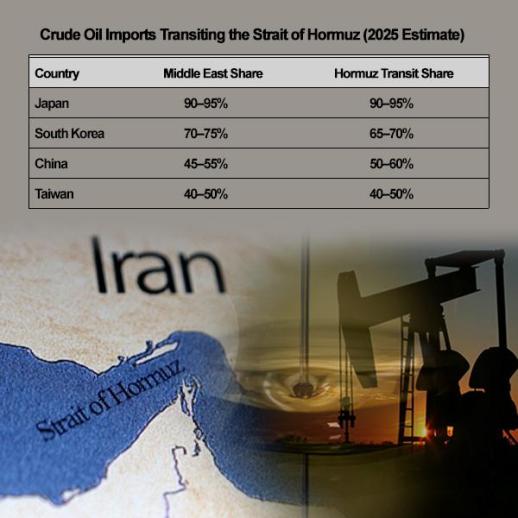 US mounts more pressure on allies for maritime coalition in Strait of Hormuz SEOUL, March 17 (AJP) -South Korea and Japan — both heavily dependent on Middle Eastern energy supplies passing through the Strait of Hormuz — have been repeatedly singled out by U.S. President Donald Trump as Washington seeks international support for reopening the vital shipping lane amid the ongoing U.S.–Israeli war with Iran. Speaking at the White House on Monday during a meeting with trustees of the John F. Kennedy Center for the Performing Arts, Trump renewed his call for allies to join a coalition to secure the strait — though responses from partner countries have so far ranged from cautious non-commitment to outright reluctance. “We strongly encourage other nations whose economies depend on this strait far more than ours,” Trump said. “We get less than 1 percent of our oil from the strait and some countries get much more.” “Japan gets 95 percent. China gets 90 percent. Many of the Europeans get quite a bit. South Korea gets 35 percent. So we want them to come and help us with the strait,” he added, without providing the basis for the numbers. According to petroleum association postings of each countries, Japan depends 90 to 95 percent on Hormuz transit and South Korea around 65 to 70 percent. The share for China is lower at 50 to 60 percent. Trump expressed frustration at what he described as a lack of enthusiasm from countries that benefit from U.S. military protection. “We’ve protected them from horrible outside sources, and they weren’t that enthusiastic — and the level of enthusiasm matters to me,” he said. "We have some countries where we have 45,000 soldiers, great soldiers, protecting them from harm's way, and we have done a great job," he added, declining to name them. The United States maintains roughly 50,000 troops in Japan and about 28,500 troops in South Korea, two of Washington’s closest security partners in Asia. Seoul has signaled that it is weighing the request carefully. The South Korean government said it remains in consultations with Washington and will address the issue only after “careful deliberation.” Japan has issued a similar response, emphasizing the complexity of any military involvement in the conflict. Pressure on Seoul has already intensified at the diplomatic level. South Korean Foreign Minister Cho Hyun held a phone call Monday with U.S. Secretary of State Marco Rubio, according to the foreign ministry. Rubio briefed Cho on the situation in the Middle East and called for cooperation to restore stability in the region. He also emphasized the importance of global coordination to secure maritime traffic through the Strait of Hormuz and stabilize oil prices. Cho thanked Washington for assisting with the evacuation of Korean nationals from the region and requested continued support. The two officials agreed to meet soon for further discussions on bilateral and global security cooperation. The diplomatic push underscores Washington’s growing concern that the war — now entering its third week — could turn into a prolonged disruption to global energy markets. The Strait of Hormuz normally carries about one-fifth of the world’s oil shipments, making it one of the most strategically sensitive maritime chokepoints in global trade. The suspension has spiked oil prices to $100 a barrel and other commodities, causing disruptions across the board. The standoff is also becoming politically sensitive in the United States. Although the U.S. military’s superiority over Iran has never been seriously questioned, the conflict has proven more resilient than some policymakers initially expected. Iran’s most effective retaliation has been targeting regional oil infrastructure and effectively blocking commercial shipping through the strait. Rising crude prices have already pushed up gasoline costs in the United States — a development that could complicate domestic politics as congressional midterm elections approach. Trump has responded with a mix of defiance and reassurance. He said some countries have privately expressed willingness to support the U.S. effort but declined to identify them. “We don’t need anybody,” Trump said. “We’re the strongest nation in the world.” At the same time, he warned that any Iranian attempt to mine the strait would be “a form of suicide.” Across the Atlantic, the response from European capitals has been markedly cautious. European Union foreign ministers meeting in Brussels stressed that they had little appetite for becoming directly involved in a conflict that many leaders view as a U.S.-initiated war. “This is not our war. We have not started it,” said Boris Pistorius. EU foreign policy chief Kaja Kallas said there was no consensus among member states to extend the EU’s existing Red Sea naval mission — known as Aspides — to the Strait of Hormuz. “There was a clear wish to strengthen our operation, but for the time being there was no appetite to change the mandate,” she told reporters after talks with EU foreign ministers. Germany and Italy both opposed expanding the mission’s scope, arguing that shifting naval assets into the strait could risk escalating the conflict. British Prime Minister Keir Starmer also declined to commit to a full naval escort operation. “We will not be drawn into the wider war,” Starmer said at a press conference in London, though he noted that Britain would continue exploring options with allies to restore freedom of navigation. Several European leaders also emphasized that the Strait of Hormuz crisis does not fall under the mandate of NATO’s collective defense framework, which is triggered only when member states themselves are attacked. Luxembourg Foreign Minister Xavier Bettel put the point bluntly: “Blackmail is not what I wish for.” Regardless of the broad reluctance among allies, the pressure on energy-dependent economies in Asia and Europe is likely to grow if the blockade continues. The surge in oil prices has already raised fears of renewed inflation and disruptions across global manufacturing and food supply chains and capital flight in Asian markets. 2026-03-17 08:13:14
 -
 Seoul to Boost Public Delivery App Budget as Shinhan’s Ttaenggyeoyo Expands Seoul and other local governments are stepping up support for public food-delivery platforms, with the city planning to expand next year’s related budget to 3.5 billion won. The push comes as concerns grow that domestic demand could weaken amid global wars and rising oil prices, and officials look to public delivery apps as a way to boost small-business sales and local economies. According to the financial sector on March 16, Seoul drafted a 2026 public delivery app budget totaling 3.5 billion won: 300 million won for promotion and 3.2 billion won for district-level delivery vouchers. That is sharply higher than 108 million won in 2024 and 2.5 billion won in 2025. Ttaenggyeoyo has effectively become the sole operator in Seoul’s public delivery app market, making it a joint project that requires close coordination between the city and Shinhan Bank. Seoul and Shinhan Bank plan to closely analyze accumulated public delivery app data and expand targeted marketing. They aim to issue about 64.4 billion won worth of delivery vouchers through discounts and payback programs, roll out quarterly franchise-linked promotions, and broaden use of digital Onnuri gift certificates. They also plan to widen partnerships for delivery operations beyond a single provider, working with Kakao Mobility, GS Retail and Vroong to strengthen service competitiveness. Other local governments are also allocating funds this year. Gwangju Metropolitan City and Busan set aside 100 million won and 50 million won, respectively. The Ministry of SMEs and Startups earmarked 300 million won for research services related to revitalizing public delivery apps. Such budget support is helping Ttaenggyeoyo expand. Unlike private delivery apps, public platforms can lower their cost structure with local government backing. Ttaenggyeoyo has maintained a low brokerage fee of about 2% under that model. As a result, Seoul Delivery+Ttaenggyeoyo’s market share stood at 7.7% last year, nearly tripling from 2.64% a year earlier. Shinhan Bank has sought to broaden the platform ecosystem by linking policies such as free advertising and onboarding fees with financial support for small merchants. Cooperation is also widening beyond Seoul in areas that have put budget money into public delivery apps. By service usage share, Seoul accounts for 25%, followed by Gyeonggi (19.6%), South Chungcheong (7.1%), South Gyeongsang (6.8%), Gangwon (6.6%), North Chungcheong (5.8%), Gwangju (4.6%) and Busan (4.6%). Shinhan Bank said it plans to rapidly expand its local-government network this year. It has agreements with 51 local governments nationwide and has broadened cooperation with basic local governments such as Busan’s Dongnae District and Gijang County. It also plans a promotion this month in Gyeonggi Province offering discounts when purchasing local currency. Officials are also reviewing ways to combine public delivery apps with small-business support programs tied to supplementary budgets and with policies aimed at revitalizing local economies. “With global wars and rising oil prices, the government’s 고민 about stimulating domestic demand is growing,” a financial industry official said. “There is direct support such as help with electricity bills, but if public delivery apps increase small merchants’ sales, it can lead to broader consumption.”* This article has been translated by AI. 2026-03-17 06:06:00
 -
 BTS Comeback Concert Spurs ARMY ‘Pilgrimage’ Tours Across Seoul and Beyond As BTS’ “BTS Comeback Live: Arirang” concert at Seoul’s Gwanghwamun Square on March 21 approaches, fans from the global ARMY fandom are increasingly traveling to South Korea. Online communities and social media are rapidly sharing “pilgrimage” routes that trace the group’s footsteps, prompting domestic tourism platforms and local governments to roll out fan-focused itineraries. On Reddit, one of the largest English-language online communities, a five-day map titled “ARMY Seoul Guide” has drawn attention by listing BTS-related locations across the capital. On social media, more fans are posting about their trips under the hashtag “BTS Pilgrimage.” A top stop for many visitors is HYBE’s headquarters in Yongsan, where fans routinely take photos and post them online. Major heritage sites are also central to many itineraries, including Gyeongbokgung Palace, which drew global notice in 2020 when BTS performed there in hanbok on NBC’s “The Tonight Show Starring Jimmy Fallon.” Nearby palaces — Changdeokgung, Deoksugung and Changgyeonggung — are also popular. The National Museum of Korea is another frequent destination, known among fans as a place associated with leader RM, who is known for visiting exhibitions. The museum plans to offer a special product at its shop in collaboration with the National Museum Foundation of Korea to mark the group’s new release. Seoul Forest, a large park in the city, has also become a must-visit as fans have created bench gardens named for members, including “RM Forest,” “SUGA Forest” and, more recently, “j-hope Forest,” set up to mark j-hope’s military discharge. With more fans arriving, searches for BTS-related travel products have surged. Travel platform Klook said searches for BTS travel products rose 61% in January–February 2026 compared with November–December 2025. Klook is selling tailored packages including a Pyeongchang tour of “In the SOOP” filming locations, a Gangneung Jumunjin tour tied to the jacket shoot for the group’s 2017 second album, and a Seoul ARMY walking tour. Local governments are also moving to capture what they call a “BTS tourism boom.” Pohang, in North Gyeongsang Province, is promoting stay-type tourism built around mulhoe mentioned by member Jin and a local cafe known as a filming site for the “Spring Day” music video. The city plans to link travel routes to Pohang with messages such as “a Pohang trip after the concert.” Seoul plans BTS-related events for foreign visitors, including ARMY, during the “2026 Seoul Spring Festa,” set for April 10 across 11 areas along the Han River, including Yeouido, Ttukseom, Banpo and Nanji. The city also plans street performances, a random dance festival and participatory events at major sites for fans from around the world. Yoon Hye-jin, a professor in the Department of Tourism Development and Management at Kyonggi University, said K-content fandoms are a core tourism segment with strong spending power. She urged officials to systematize “pilgrimage” content to maximize tourism synergy, adding that local governments should foster a culture in which fandoms and regions resonate and design detailed, customized products that reflect each fandom’s characteristics.* This article has been translated by AI. 2026-03-17 06:04:26
 -
 Shinhan Bank’s Ddaenggyeoyo delivery app tops 8.5 million users, fueled by low fees Shinhan Bank’s food delivery platform Ddaenggyeoyo, once known as “a delivery app made by a bank,” has grown into a nationwide service, drawing 8.5 million users in four years. Analysts attribute the growth to a “shared-growth” model that pairs low brokerage fees with a no-ad-fee structure, appealing to both customers and small merchants. Shinhan Bank said March 16 that Ddaenggyeoyo surpassed 8.5 million cumulative users as of the end of February, four years after its official launch. The total rose by 500,000 in two months after topping 8 million at the end of last year. The number of affiliated merchants has also expanded rapidly, increasing by about 120,000 in a year from fewer than 200,000 at the end of 2024. Order volume has climbed even faster. Annual orders were under 100 billion won in 2023, rose to 113.6 billion won in 2024, and surged to 669.8 billion won in 2025. Orders totaled 143.2 billion won in the first two months of this year. Some forecasts say annual orders could exceed 1 trillion won if the pace continues. More than two-thirds of users — 72% — place repeat orders, suggesting the service has built stable customer satisfaction, the bank said. Ddaenggyeoyo entered a fiercely competitive market dominated by a handful of large platforms, where high brokerage fees and advertising costs have been a major complaint among self-employed business owners. Positioning itself as a public-minded delivery app, Ddaenggyeoyo has focused on local small businesses. While some apps charge brokerage fees of about 9% to 10% plus advertising fees, Ddaenggyeoyo keeps its brokerage fee at about 2% and does not charge advertising fees, the bank said. In the financial sector, Ddaenggyeoyo’s growth is also being viewed as an example of a bank expanding into everyday financial services. The “Ddaenggyeoyo interest-subsidy loan,” linked to the platform, is aimed at reducing financing costs for affiliated small merchants. The program began in Seoul in July 2025 and, as of February, had issued 2 billion won in Seoul and 3.4 billion won nationwide that month, pushing cumulative lending past 50 billion won. Shinhan Bank has also expanded related services, including Ddaenggyeoyo savings products, a rider-only check card and promotions such as discount coupons to connect merchants, riders and users. Lee Eun-hee, a professor of consumer science at Inha University, said Ddaenggyeoyo reduces fee burdens for store owners while offering incentives such as coupons to encourage use. She said the key to sustained growth will be whether the platform can maintain market share boosted by public delivery-app consumer coupons and convert it into a self-sustaining user base.* This article has been translated by AI. 2026-03-17 06:03:00
 -
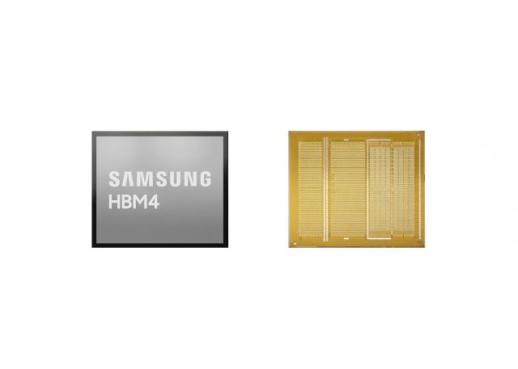 Samsung challenges SK hynix HBM dominance with HBM4E debut via NVIDIA alliance SEOUL, March 17 (AJP) - Samsung Electronics Co., Ltd. announced on Tuesday at NVIDIA GTC 2026 the first public showcase of its next-generation High Bandwidth Memory 4E (HBM4E) and its role as a provider of a comprehensive memory and storage total solution for NVIDIA’s Vera Rubin platform. The South Korean chip giant presented physical HBM4E chips and core die wafers, detailing a product that supports speeds of 16 gigabits-per-second per pin and a total bandwidth of 4.0 terabytes-per-second. Samsung confirmed it aims to complete sample shipments of HBM4E within the year to align with customer production schedules. Leveraging its position as an integrated device manufacturer, Samsung highlighted its ability to integrate its sixth-generation 10-nanometer-class (1c) DRAM process, 4-nanometer foundry logic dies, and advanced packaging technologies. This vertical integration allows the company to supply a full suite of memory and storage required for NVIDIA’s next-generation Vera Rubin AI superchip platform, including HBM4 memory, which is currently in mass production with speeds up to 13 gigabits-per-second. The company also displayed its SOCAMM2, an industry-first server memory module based on low-power LPDDR5X, and the PM1763 enterprise SSD utilizing the PCIe 6.0 interface. These solutions were demonstrated through NVIDIA SCADA workloads to showcase their performance in AI infrastructure. During the event, Samsung introduced its Hybrid Copper Bonding (HCB) technology, which the company claims improves thermal resistance by more than 20 percent compared to traditional thermal compression bonding. This technology is intended to enable the vertical stacking of 16 or more layers for future HBM generations, with implementation expected to begin with 16-layer HBM4E products. Samsung is also collaborating with NVIDIA to implement accelerated computing and Omniverse libraries to create digital twins of its manufacturing facilities. Samsung executives stated that HBM revenue in 2026 is projected to more than triple compared to 2025 levels as the company expands production capacity to meet global demand for AI infrastructure. 2026-03-17 05:45:27
 -
 Some South Korea Highway Gas Stations Cap Fuel Purchases Amid Supply Strain Middle East war fallout is deepening concerns about South Korea’s supply of petroleum products, with some gas stations now limiting how much customers can buy. The restrictions follow refiners’ cuts to fuel deliveries to discount stations in cities and at highway rest stops. Industry officials said Sunday that many EX-OIL discount stations on expressways, operated by the Korea Expressway Corp., have begun posting notices capping purchases at 30,000 won per person for gasoline and 100,000 won per person for diesel. A government price cap introduced March 13 has pushed down the national average price at gas stations, but customers are increasingly unable to buy as much fuel as they want. The Korea Expressway Corp. said March 12 it would work with joint-purchasing refiners such as SK Energy and GS Caltex to ensure stable supply. On the ground, however, EX-OIL stations say shortages are worsening. An EX-OIL station official said stations had been receiving contracted joint-purchase volumes from SK Energy and GS Caltex and, when short, signed separate deals with other refiners such as HD Hyundai Oilbank and S-Oil for additional supply. That extra supply has recently been cut off, officials said. Another station official said, “As it has become harder to secure volumes, we can’t sell as much fuel as customers want,” adding that “it’s not easy to keep operating.” The official said one refiner that had provided additional supply sent an email notice saying it “cannot supply oil this month.” Some in the industry say the government’s price cap may have affected the supply structure for highway stations. With profitability squeezed by price controls, refiners may have less incentive to provide volumes beyond joint-purchase contracts, reducing supply to highway stations. If disruption tied to a blockade of the Strait of Hormuz drags on, the purchase limits now seen at some stations could spread across highway stations. Similar limits could also appear at discount stations in cities, not just those tied to major refiner brands. Because it typically takes about a month to ship crude from the Middle East to South Korea, industry officials warned a gap could emerge in Middle Eastern crude arriving from late March or early April. As a result, consumers may be unable to buy as much gasoline and diesel as they want regardless of the price cap. A refining industry official said refiners are struggling to secure supply even for their own branded stations and are therefore reducing volumes sold into the spot market, including to discount stations. The Korea Expressway Corp. said it is discussing with the government and refiners ways to secure additional joint-purchase volumes to stabilize supply. 2026-03-17 05:03:00
 -
 Kakao Mobility Launches Late-Night Self-Driving Taxi Service in Seoul’s Gangnam Self-driving late-night taxis have begun service in Seoul’s Gangnam area, widening the rollout of autonomous mobility services beyond buses. As commercialization advances mainly through public transportation, Hyundai Motor Co., which has said it will develop independent autonomous driving technology next year, is increasingly seen as facing a major test this year. According to industry officials on the 16th, Kakao Mobility began operating a self-driving taxi service in parts of Gangnam starting that day. The late-night service uses Kia EV6 vehicles, but the autonomous driving system is Kakao Mobility’s in-house “AI Planner.” The company said it has built end-to-end (E2E) autonomous driving technology that allows AI to perceive and make decisions, based on complex urban driving data collected in areas such as Pangyo and Gangnam. The taxis operate in a designated autonomous driving pilot zone on weekdays from 10 p.m. to 5 a.m. the next day. In South Korea, autonomous driving is expanding largely through public transportation. Companies such as Autonomous A2Z and RideFlux have worked with local governments in Seoul, Busan and Daegu to deploy autonomous solutions and build real-world testing experience. Hyundai Motor was selected for the Ministry of Land, Infrastructure and Transport’s “K-Autonomous Driving Cooperation Model” project and plans to deploy 200 Ioniq 5-based self-driving vehicles in phases in Gwangju starting in the second half of this year. Motional, Hyundai Motor’s autonomous driving joint venture, is pushing to fully commercialize unmanned robotaxis in Las Vegas by year’s end. Interest is also growing in autonomous features for privately owned vehicles. A survey last month by Chabot Mobility of 450 prospective new-car buyers found 76.5% were interested in subscribing to autonomous driving functions. Tesla and General Motors have introduced autonomous driving features in South Korea, but broader adoption remains limited. Hyundai Motor last year said it would use its autonomous driving technology “Atria AI” to deliver Level 2+ capabilities comparable to Tesla’s FSD (Full Self-Driving) by 2027. Hyundai Motor autonomous driving affiliate 42dot has been developing an E2E model based on cameras and radar and began large-scale hiring in January. Still, profitability remains uncertain given heavy investment. 42dot posted an operating loss of 349.7 billion won last year, about doubling the size of its loss from a year earlier. Motional, which is responsible for the robotaxi business, also faces continued large investment burdens until commercialization. Attention is focused on whether Park Min-woo, recently appointed CEO of 42dot and head of Hyundai Motor’s Advanced Vehicle Platform (AVP) division, can shift the momentum. A Hyundai Motor official said, “The direction of the autonomous driving business could be flexible depending on the new CEO’s perspective,” adding, “There is a possibility that a concrete plan related to autonomous driving will be presented at this year’s investor day.” 2026-03-16 18:21:20
 -
 BYD Rises From China’s Auto Backwater to Global EV Leader, Expands in South Korea BYD has become a symbol of China’s rapid rise in electric vehicles. The company sold about 4.55 million vehicles globally last year, taking roughly 20% of the overall EV market and ranking No. 1. China, once a minor player in autos through the late 1990s, has moved to the front of the global EV race in about three decades, controlling more than 70% of the global EV market. Dozens of EV brands launch in China each year, and more than 80% eventually disappear. BYD has survived that shakeout and, in 26 years, climbed to the top. ◆ 6.4% share in February; reaches top tier in a year According to the Korea Automobile Importers & Distributors Association on the 13th, BYD sold 957 vehicles last month, ranking seventh behind Tesla (7,868), BMW (6,313), Mercedes-Benz (5,322), Lexus (1,113), Volvo (1,095) and Audi (991). Its cumulative sales for January and February totaled 1,347, giving it a 6.43% share and placing it in the top five by market share. The result is notable for a brand that launched in March last year. BYD’s best-known model is the compact electric SUV Atto 3, credited by some with ushering in a “20 million won EV” era. It has sold 753 units this year. Other models include the compact hatchback Dolphin (81), the midsize SUV Sealion 7 (1,277) and the Seal (193). The company’s appeal is pricing relative to performance: its lineup is priced from 25 million won to 46.9 million won, excluding subsidies. Battery technology remains central to EV competitiveness. BYD uses its proprietary lithium iron phosphate (LFP) Blade Battery, which it says improves safety and charging convenience. It has also unveiled a second-generation Blade Battery and FLASH charging technology aimed at addressing charging-speed limits and cold-weather performance drops. After six years of development, the second-generation battery can charge from 10% to 70% state of charge in five minutes and to 97% in nine minutes, the company says. A Denza Z9GT equipped with the battery has a driving range of 1,036 kilometers per charge. BYD is expected to reach cumulative sales of 10,000 units in South Korea within the first quarter. That would be the fastest pace among imported-car brands entering the Korean market, the article said. BMW Korea, which entered in 1995, took seven years to reach 10,000; Mercedes-Benz took three years; Tesla took four. ◆ Learning by rebuilding cars; from an auto backwater to No. 1 BYD stands for “Build Your Dreams,” a slogan tied to the entrepreneurial story of founder and Chairman Wang Chuanfu. Wang, who worked as a nickel-cadmium battery researcher at a Chinese government-affiliated institute, argued that batteries — not engines — would define the future of cars, and that whoever led battery technology would become a key player in the EV era. He started the company in Shenzhen in 1995 with 2.5 million yuan (540 million won). The article describes his approach as buying premium products, taking them apart and reassembling them — a method applied to EVs to accelerate learning. A widely cited anecdote says he bought one of the first 10 Teslas imported into China by Elon Musk, dismantled it and rebuilt it to study EV design. The article says he continued to buy competitors’ vehicles in bulk, disassemble and reassemble them, and build design know-how that helped propel BYD to the top. The company’s success has also been attributed to vertical integration — producing batteries, semiconductors and vehicles in-house — which supports price competitiveness and faster production. Investor Charlie Munger once described Wang as someone with “Thomas Edison’s ability to invent and Jack Welch’s ability to manage.” BYD ranks third in market capitalization among global automakers, behind Tesla in the United States and Toyota in Japan. BYD’s expansion continues. Beyond battery-electric vehicles, it has built out plug-in hybrid lineups and launched premium brands including Denza, Yangwang and Fangchengbao. Yangwang, launched in 2023 and positioned around ultra-high-end hypercar concepts, has been dubbed a “Chinese Rolls-Royce,” the article said, and showcases technologies such as the U8 luxury off-road SUV and the U9 electric supercar. The U8 features amphibious technology that can float for about 30 minutes and a “tank turn” enabled by four independent electric motors controlling each wheel. The U9 is known for movements likened to jumping in place. The company is increasingly viewed as a global technology player for the EV era, and Wang’s story has become an inspiration for young Chinese entrepreneurs. Still, controversies remain, including allegations of design copying and battery patent infringement. The article says early BYD models resembled key products from Toyota and Mercedes-Benz, prompting complaints. Tesla CEO Elon Musk also mocked BYD in an interview when asked whether he saw it as a competitor, saying, “I’ve never seen their cars.” An industry official said BYD built its formula by “copying, revising and developing independently” competitors’ products hundreds of times, but added that to fulfill its “Build Your Dreams” philosophy, it now needs a success story based on originality rather than imitation. * This article has been translated by AI. 2026-03-16 18:15:26
 -
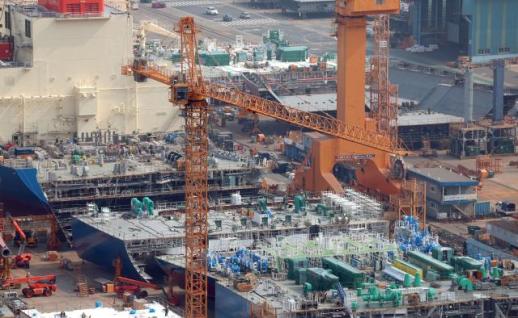 Korean Shipbuilders Warn Ethylene Shortage Could Disrupt Production if It Lasts Past March The war in the Middle East and the closure of the Strait of Hormuz are jolting South Korea’s shipbuilding industry, which has been running at near full capacity on a recent boom in orders. The immediate concern is an unstable supply of ethylene, an essential gas used in ship construction, raising the risk of production disruptions if the shortage persists. Multiple shipbuilding industry officials told Aju Business on the 16th that yards are holding out on inventories for now, but prolonged supply problems could first hit steel-cutting operations. “This month is the deadline,” they said. Officials pointed to the biggest pressure point: most shipyards are in a “full capacity” situation with docks filled by increased orders. With schedules tightly packed, any disruption in raw materials could delay processes and ripple through overall build timelines. At shipyards, ethylene is used to cut steel plates. Because shipbuilding steel is typically thick and difficult to process with standard cutting methods, builders use ethylene to raise flame temperatures from about 1,000 degrees to as high as 1,500 degrees before cutting plates to drawings. Since cutting steel to specification is a basic step in ship construction, ethylene is considered indispensable. The supply instability stems from the Middle East conflict, which has shaken feedstock flows. South Korea relies heavily on imports for ethylene, and more than half of those imports pass through the Strait of Hormuz. The industry also warns that if the situation drags on, it could affect “Masga,” a South Korea-U.S. shipbuilding cooperation project that includes ship construction and maintenance, repair and overhaul work. One industry official said most yards are already operating at full tilt, so a prolonged raw-materials problem could weigh on major project schedules. “How long the supply instability lasts is the key,” the official said. The government is monitoring the situation and has begun responding. The Ministry of Trade, Industry and Energy is checking supply conditions after receiving a request from the Korea Offshore & Shipbuilding Association to urgently secure ethylene volumes needed for shipbuilding cutting work. Baek Jeom-gi, a professor of naval architecture and ocean engineering at Pusan National University, said stockpiles are helping for now, but there is little cushion. With shipbuilding increasingly viewed as a strategic cooperation industry with the United States, he said, raw-material supply issues also require a national-level response. Industry officials also say a prolonged ethylene shortage could spread beyond shipbuilding to other manufacturing. Ethylene is a key basic feedstock used to produce plastics and synthetic resins and is widely used in products ranging from automobiles and construction materials to home appliances, smartphones, food, detergents and cosmetics.* This article has been translated by AI. 2026-03-16 18:03:18