

Journalist

Imran Khalid
-
 BLACKPINK Tops 3.6 Billion Streams on Melon Across Group and Solo Tracks BLACKPINK has logged about 3.6 billion streams on Melon, South Korea’s major music platform, combining group and solo releases. The tally highlights results built over the past decade through both team and individual activities, as the group recently returned as a full lineup after 3 years and 5 months. Kakao Entertainment’s music platform Melon said March 16, citing its Melon Data Lab big-data analysis, that BLACKPINK’s group songs have reached 2,567,050,000 streams, while members’ solo songs have totaled 1,031,690,000. Combined, that is 3,598,680,000 streams. Among group tracks, “As If It’s Your Last” led with 260,900,000 streams. “DDU-DU DDU-DU” and “Playing With Fire” each surpassed 200 million. Other songs with more than 100 million plays were “Lovesick Girls,” “How You Like That,” “Forever Young,” “Whistle,” “Kill This Love,” “Pink Venom,” “Shut Down” and “Boombayah.” Melon noted that the list includes non-title tracks such as “Forever Young.” “BLACKPINK is a leading K-pop act that continues to be loved not only for group releases but also for members’ solo songs,” Melon said, adding that the group has 10 songs that have exceeded 100 million streams on Melon through group activities alone. Album performance was also strong. For releases with at least two tracks, “SQUARE UP” recorded 500,300,000 streams, “THE ALBUM” 336,200,000, “SQUARE TWO” 303,700,000, “BORN PINK” 288,200,000, “SQUARE ONE” 259,200,000 and “Kill This Love” 253,200,000. Melon said every track on the full-length album “BORN PINK” entered Melon’s Top 100 chart. Chart results showed similar momentum. BLACKPINK placed 12 songs in Melon’s daily Top 10, and those songs spent a combined 916 days in the Top 10. “Lovesick Girls” stayed in the Top 10 the longest at 159 days. “JUMP,” released last year, logged 142 days, followed by “How You Like That” with 109 and “DDU-DU DDU-DU” with 108. Those four were the only songs to remain in the daily Top 10 for more than 100 days. Members’ solo streaming totals were led by Jennie with 437,060,000, followed by Rosé with 418,590,000, Jisoo with 119,330,000 and Lisa with 56,720,000, for a combined 1,031,690,000. Among solo tracks, Jennie’s “SOLO” was the most-streamed at 179,590,000. Rosé’s collaboration with Bruno Mars, “APT.,” recorded 133,150,000. Melon said “APT.”, released in October 2024, surpassed 100 million streams quickly despite being a relatively recent release. Solo chart presence was also notable. By days in Melon’s daily Top 10, Rosé’s “APT.” recorded 200 days and Jennie’s “like JENNIE” logged 122. By member, Rosé spent a total of 329 days in the daily Top 10, Jennie 322 and Jisoo 98, for a combined 1,071 days. Catalog listening extended beyond title tracks. Among group B-sides, “Forever Young” recorded 180,510,000 streams and “Pink Venom” 123,760,000, while “Don’t Know What To Do” had 69,360,000 and “Pretty Savage” 53,830,000. Among solo B-sides, Rosé’s “Gone” led with 43,690,000 streams. Lisa’s solo track “MONEY” drew attention for a seasonal listening pattern. Melon said the song is known as a “New Year’s Day money-attracting song,” and that on Jan. 1 this year, streams rose 306% from the previous day while listeners increased 267%. “MONEY” has accumulated 22,440,000 streams, Melon said. BLACKPINK recently returned with its third mini album, “DEADLINE.” Melon said the full Data Lab feature on BLACKPINK is available through the Melon app’s magazine section and Melon’s official social media channels. 2026-03-16 14:00:20
 -
 Airline Fuel Surcharges to Jump in April on Middle East Risks, Biggest Rise in a Decade Geopolitical risks tied to the Middle East are set to sharply raise fuel surcharges on international airline tickets issued in April. According to the aviation industry on the 16th, the Singapore jet fuel average price (MOPS) for Feb. 16 to March 15—the benchmark for April surcharges—corresponds to level 18 out of 33. That is a jump of 12 levels from level 6 applied this month, the biggest increase since the current surcharge system was introduced in 2016. It is also the highest level since October 2022 (level 17), when the Russia-Ukraine war was at its peak, marking the highest in three years and six months. Domestic airlines plan to raise April fuel surcharges by as much as more than threefold. Asiana Airlines charged 14,600 won to 78,600 won per one-way ticket this month, but will apply 43,900 won to 251,900 won next month. The shortest routes—including Fukuoka, Yantai, Kumamoto and Qingdao—will be charged 43,900 won, while the longest routes—including Los Angeles, New York, Paris and London—will carry a 251,900 won surcharge. Korean Air is also set to announce its April fuel surcharge later on the 16th. The increase is expected to exceed 100,000 won on the longest routes compared with this month’s 13,500 won to 99,000 won range. International oil prices have climbed sharply since the Middle East situation that began late last month, while the won-dollar exchange rate has remained elevated, topping 1,500 won intraday. Fuel surcharges are added to fares to offset airline losses from higher oil prices. Under the Transport Ministry’s distance-based system, each carrier sets monthly charges after making its own adjustments. * This article has been translated by AI. 2026-03-16 13:45:21
 -
 Netflix’s ‘K-Pop Demon Hunters’ wins Oscars for animated feature and original song Netflix’s animated film “K-Pop Demon Hunters” swept two awards at the 98th Academy Awards, winning animated feature and original song. At the ceremony at the Dolby Theatre in Hollywood, Los Angeles, the film was first announced as the winner of the animated feature prize. Director Maggie Kang, who beat out nominees including “Arco,” “Elio” and “Zootopia 2,” said, “I’m sorry it took so long to make a movie with a protagonist who looks like me,” adding, “The next generation won’t have to long for movies like this. This award is for Korea and Koreans around the world.” Co-director Chris Appelhans added, “Music and stories connect us across borders,” offering encouragement to artists. The film’s momentum continued when its soundtrack song “Golden” won the original song Oscar. The song’s creators — Lee Jae, Mark Sonnenblick, Kwak Jung-gyu and Lee Yu-han — became emotional onstage after beating nominees including “Dream of a Train” and “Sinners: Sinners.” Lee Jae, who also sang and wrote lyrics for the track, said, “When I was young, I was teased for liking K-pop, but now everyone is singing along to Korean lyrics,” adding, “This award isn’t about success. It’s about the strength to endure and recover.” The show’s highlight was the celebratory performance of “Golden.” For what the article described as the first K-pop performance in Oscar history, a pansori singer and percussionists opened with traditional Korean dance alongside 24 dancers. Lee Jae, Audrey Nuna and Rei Ami, dressed in white, then took the stage. The article said Hollywood stars waved light sticks and joined in a Korean-language singalong. “K-Pop Demon Hunters” is an action fantasy about girls who are K-pop singers by day and heroes who fight evil spirits by night. Since its release last June, the film surpassed 300 million views on Netflix, and “Golden” reached No. 1 on Billboard’s Hot 100, the article said. Other major awards were also announced. Best picture went to Paul Thomas Anderson’s “One Battle After Another,” and Anderson also won best director. Michael B. Jordan won best actor for “Sinners: Sinners,” and Jessie Buckley won best actress for “Hamnet.” 2026-03-16 13:33:24
 -
 Asian markets open the third Gulf war week lower SEOUL, March 16 (AJP) — Asian stock markets traded lower Monday as investor sentiment remained fragile with the Iran war entering a third week and the Strait of Hormuz still effectively cut off, keeping energy and security risks at the center of regional trading. Reports that President Donald Trump is pressing U.S. allies and major Asian importers to help reopen the waterway added to the sense of unease. South Korea’s KOSPI swung from early gains into negative territory as bargain hunting in semiconductor heavyweights gave way to profit-taking, underscoring how quickly risk appetite can fade in a market dominated by a handful of large-cap names. At the open, Samsung Electronics rose 0.93 percent and SK hynix gained 2.31 percent, helping lift the benchmark. Defense contractor Hanwha Aerospace and nuclear-related Doosan Enerbility also traded higher in early dealings, reflecting continued investor interest in sectors seen as beneficiaries of geopolitical tension and energy security concerns. The Middle East remained the main external driver. In an interview reported Monday, Trump said countries that depend heavily on oil and gas shipments through Hormuz — including South Korea, Japan, China, Britain and France — should contribute to efforts to secure the strait, while also warning that further action against Iran’s Kharg Island export hub remained possible. Reuters and AP both reported that Washington is pushing partners to take a greater role in reopening the passage. China, meanwhile, has called for a ceasefire and renewed diplomacy. U.S. Treasury Secretary Scott Bessent and Chinese Vice Premier He Lifeng began talks in Paris over the weekend, with the broader geopolitical backdrop likely to weigh on those discussions. Japan is also coming under pressure ahead of Prime Minister Sanae Takaichi’s planned Washington trip this week, though Tokyo has said it is not currently planning an escort mission and that no formal U.S. request has yet been made. Takaichi said Japan is still reviewing its options within its legal framework. The uncertainty weighed on regional equities. In Tokyo, the Nikkei 225 traded at 53,777.47, down 0.08 percent. Hong Kong’s Hang Seng Index slipped 0.10 percent to 25,439.22, China’s Shanghai Composite fell 0.21 percent to 4,086.86, and Taiwan’s TAIEX lost 0.22 percent to 33,327.10. As of 10:49 a.m., the KOSPI was down 0.03 percent at 5,485.74, while the tech-heavy KOSDAQ dropped 1.71 percent to 1,133.24. Earlier in the session, the KOSPI had climbed as much as 1.11 percent to 5,548.04, lifted by gains in Samsung Electronics and SK hynix. Their growing dominance has become increasingly evident. Samsung Electronics and SK hynix accounted for 38.3 percent of the KOSPI’s total market capitalization as of March 13, according to Korea Exchange data cited in local reporting, nearing the 40 percent threshold. That compares with 23.7 percent a year earlier, highlighting the benchmark’s growing concentration in semiconductor leaders. The combined weight of the top 10 listed companies also rose to 51.7 percent from 41.1 percent over the same period. Analysts say the trend reflects expectations for a prolonged AI-driven semiconductor upcycle, as well as a defensive preference for large-cap exporters during periods of geopolitical stress. FnGuide data show the three-month consensus target price for Samsung Electronics at around 251,720 won, implying significant upside from recent trading levels. FnGuide’s company guide also shows broker targets clustered well above current market prices. In early trading, SK hynix rose 3.19 percent to 939,000 won and Samsung Electronics advanced 1.53 percent to 186,300 won. The semiconductor sector’s prominence is also being reflected in the labor market. A Saramin survey of 2,304 adults released Monday showed SK hynix ranked as the most desirable large company to work for, overtaking Samsung Electronics for the first time since the survey began. Local reports said respondents cited the AI-led chip boom and strong compensation as key draws. Defense and energy-linked names outperformed, with Hanwha Aerospace up 0.34 percent at 1,493,000 won and Doosan Enerbility rising 2.35 percent to 109,000 won. Financial stocks were mixed. KB Financial added 1.81 percent to 151,600 won and Mirae Asset Securities gained 3.32 percent to 71,500 won, while Shinhan Financial edged down 0.11 percent to 90,700 won. Among automakers, Kia was flat, Hyundai Motor fell 1.35 percent to 510,000 won, and Hyundai Mobis was little changed. Biotech and platform shares were weaker, with Samsung Biologics down 1.19 percent to 1,573,000 won, Celltrion off 1.70 percent at 202,000 won, and NAVER losing 1.35 percent to 220,000 won. Shipbuilding and heavy industry shares were mostly lower, with HD Hyundai Heavy Industries down 3.02 percent at 578,000 won, HD Hyundai Electric falling 1.51 percent to 915,000 won, and Hanwha Ocean retreating 2.19 percent to 133,900 won as core gas for shipbuilding cut off from Strait Hormuz suspension is expected to disrupt production activities. Currency markets also reflected the nervous tone. The won opened at 1,501.0 per dollar, marking the first breach of the 1,500 level in daytime trading since March 12, 2009, during the global financial crisis. It later pared some of those losses and was trading at 1,496.30 per dollar, compared with the previous session’s close of 1,493.40. 2026-03-16 11:57:43
 -
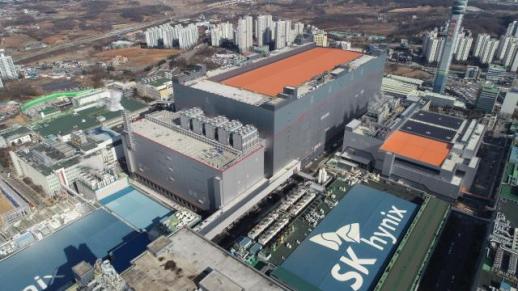 SK hynix now most favorite workplace among jobseekers, overtaking Samsung SEOUL, March 16 (AJP) - SK hynix has surpassed Samsung Electronics as the most preferred employer among job seekers in South Korea. Online job-search site Saramin said on Monday that it conducted a survey of over 2,000 job seekers and found that about 20 percent of them named SK hynix as their most sought-after employer. It marks the first time Samsung Electronics has lost the top spot since similar surveys began in 2009. The electronics giant, which had long held a dominant lead, slipped to second place with 18.9 percent. Automaker Hyundai Motor came in third at 7.9 percent, followed by Naver at 4 percent and Samsung C&T at 3 percent. Saramin attributed the shift to the chipmaker's lucrative salary packages and record-breaking performance bonuses. High salaries and other perks have recently emerged as the decisive factor for job seekers. Among respondents hoping to land jobs at major conglomerates and tech and digital companies like Naver, "high salary" was cited as the most important reason for their preference. Disparities in bonuses have become particularly stark. In 2025, SK hynix employees received bonuses equivalent to 150 percent of their annual salary. For an employee earning 100 million won ($68,212) annually, this meant an additional 150 million won in performance-related payments. In contrast, Samsung Electronics' mobile division capped bonuses at 50 percent of annual salaries, while even its semiconductor division had a 100 percent bonus ceiling, despite strong sales performance. The survey comes as both top rivals are in the midst of their first-half recruitment drives. Samsung affiliates are accepting job applications until Tuesday, while SK hynix is receiving applications for new hires next Monday. 2026-03-16 11:53:53
 -
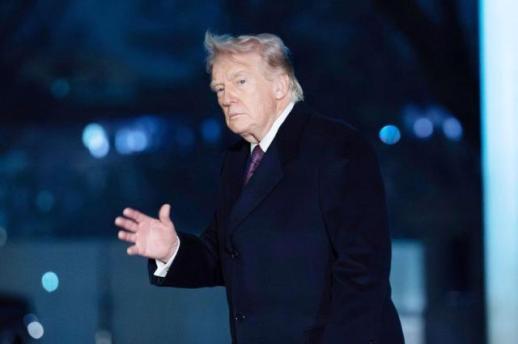 Trump hints at possible delay of upcoming Beijing trip, presses allies to send warships SEOUL, March 16 (AJP) - U.S. President Donald Trump Sunday hinted that his upcoming trip to China later this month might be delayed, while repeating his call for allies to send warships to the Strait of Hormuz to help keep it open and safe amid the escalating conflict in the Middle East. In an interview with the Financial Times, just a day after he urged five countries including China, France, Japan, South Korea and the U.K., which are "affected" by the closure of the strategically important waterway, a critical chokepoint for roughly one-fifth of the world's oil supply, to send warships. "I think China should help too because China gets 90% of its oil from the Straits," he was quoted as saying. Saying "waiting until the summit would be too late," he pressed Beijing, adding, "We'd like to know before that. It's a long time." He also said, "We may delay." Trump is scheduled to visit China from March 31 to April 2 for a summit with Chinese President Xi Jinping. Trump also warned that the North Atlantic Treaty Organization (NATO) would face a "very bad" future if U.S. allies fail to assist in reopening the strait. "It's only appropriate that people who are the beneficiaries of the strait will help to make sure that nothing bad happens there," he said. Meanwhile, in an op-ed published the previous day, China's state-run Global Times questioned, "Is this really about 'sharing responsibility' - or is it about sharing the risk of a war that Washington started and can't finish?" It argued, "The cause of the tension in the Strait of Hormuz is not a shortage of naval vessels, but rather an ongoing war," asking "Who ignited the crisis in the Strait of Hormuz in the first place? Who is still bombing Iran?" It also quoted China's Foreign Minister Wang Yi as saying, "This is a war that should not have happened - it is a war that does no one any good." He pointed out, "The U.S. and Israel attacked Iran during the ongoing U.S.-Iran negotiations, which clearly violates international law. In other words, someone set the fire. Now they're asking the world to help put it out - and split the bill." 2026-03-16 11:25:31
 -
 ‘Golden’ From ‘K-Pop Demon Hunters’ Wins Oscar for Best Original Song, Lee Jae Says ‘Everyone Sings in Korean’ Netflix’s animated film ‘K-Pop Demon Hunters’ won the Oscar for best original song for its soundtrack track ‘Golden,’ giving the film two Academy Awards on the night. The 98th Academy Awards were held at the Dolby Theatre in Hollywood, Los Angeles, at 7 p.m. local time on March 15. ‘Golden’ beat other nominees including ‘Dream of a Train,’ ‘Viva Verdi!’ and ‘Sinners: Xenus’ to take the prize. Lee Jae, Mark Sonnenblick, Kwak Jung-gyu and Lee Yu-han went onstage together to accept the trophy for ‘Golden.’ Holding the award and tearing up, Lee Jae said, “Growing up, people teased me if I said I liked K-pop, but now everyone is singing lyrics in Korean.” Lee added, “Like this song, this award isn’t just about success — it’s about the strength to endure and recover.” The film had earlier won the Oscar for best animated feature, adding best original song to cap a standout night. ‘K-Pop Demon Hunters’ is an action-fantasy animation about a K-pop idol group that uses music to defeat evil spirits and protect the world. Since its release last June, it has drawn more than 300 million views — a first for Netflix — and ‘Golden’ reached No. 1 on Billboard’s Hot 100, fueling a global craze. * This article has been translated by AI. 2026-03-16 11:21:18
 -
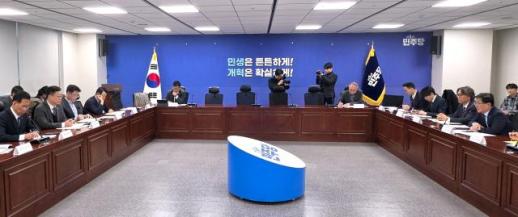 GULF CRISIS: South Korea to release 22.46 million barrels from strategic reserve SEOUL, March 16 (AJP) -South Korea will release 22.46 million barrels of crude oil from its strategic reserves over the next three months as part of coordinated international efforts to stabilize global energy markets following supply disruptions caused by Iran’s blockade of the Strait of Hormuz. The decision was announced Monday after a meeting between the government and the ruling party, which agreed to gradually release the oil stockpile in line with a collective action plan led by the International Energy Agency (IEA). According to the briefing, the release corresponds to the volume allocated to Korea under the IEA’s emergency response framework. The drawdown will be implemented in stages over the next three months to cushion the impact of surging oil prices triggered by escalating conflict in the Middle East. The IEA said member nations have agreed to release a total of 400 million barrels from strategic reserves. Of that amount, 271.7 million barrels will come from government-held stocks, while 116.6 million barrels will be supplied from obligated industry reserves and another 23.6 million barrels from other sources. The agency said about 72 percent of the planned release will consist of crude oil, with the remaining 28 percent made up of refined petroleum products. Supplies held in Asia–Oceania countries will be made available immediately, while reserves from Europe and the Americas are expected to enter the market later this month. The IEA has deployed coordinated reserve releases during previous energy crises. In 2022, member countries released about 182 million barrels after the outbreak of the Russian invasion of Ukraine triggered a surge in global oil prices. The ruling Democratic Party of Korea and government officials said the oil release forms part of a broader package aimed at stabilizing energy supply, controlling fuel prices and supporting businesses affected by the Middle East conflict. The government reported its plan of proposing a supplementary budget bill by the end of March to mitigate the economic impact of the conflict, including energy price support and assistance for affected exporters. South Korea currently holds crude reserves equivalent to about 208 days of imports, while liquefied natural gas stockpiles cover roughly nine days of consumption, according to the briefing. To secure additional crude supplies, the government is also considering bringing home oil produced overseas by the state-run Korea National Oil Corporation, with about 3.35 million barrels expected to be imported by June. Authorities said they will strengthen energy supply management by increasing electricity generation from coal and nuclear plants to offset potential shortages of liquefied natural gas. The government plans to temporarily lift the cap limiting coal-fired power plants to 80 percent of installed capacity and accelerate maintenance work on nuclear reactors currently under repair, with the goal of raising the nuclear power utilization rate from the high-60 percent range to around 80 percent by mid-May. Officials are also reviewing whether to designate the Yeosu petrochemical industrial complex as a special industrial crisis response zone as petrochemical producers face shortages of key raw materials including aluminum, sulfur and naphtha. The relief measures have helped little to alleviate oil prices flirting around $100 per barrel as the market suspects reflecting market concerns that the conflict could lead to prolonged disruption of energy flows through the Strait of Hormuz — one of the world’s most critical oil transit chokepoints. Iran has intensified attacks on commercial vessels in the region and warned it would block oil shipments benefiting the United States and its allies, raising fears that a sustained closure of the waterway could severely disrupt global energy supply. 2026-03-16 11:13:46
 -
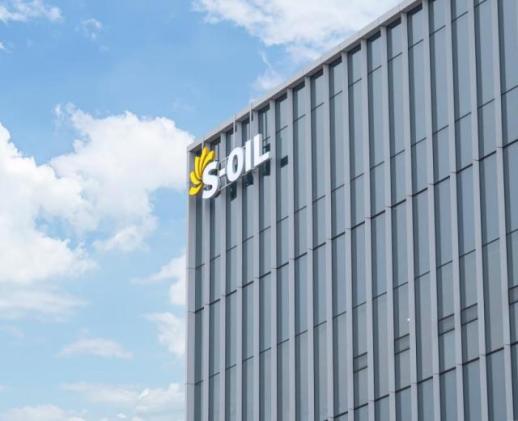 S-Oil Ties for No. 2 in South Korea Gas Station Market Share, Data Show S-Oil has climbed to second place for the first time in nationwide gas station brand share. According to the Korea Petroleum Quality & Distribution Authority on Monday, S-Oil had 2,270 registered gas stations nationwide as of last month, tying for No. 2 with HD Hyundai Oilbank. SK Energy ranked first with 2,645 stations, while GS Caltex was fourth with 1,997. South Korea had 10,646 gas stations in total as of last month. By brand, SK Energy led with a 24.8% share, followed by S-Oil and HD Hyundai Oilbank at 21.3% each, and GS Caltex at 18.8%. S-Oil entered the gas station business in 2000, later than the country’s other major refiners. Industry officials cite support from its largest shareholder, Saudi Arabia’s state oil company Aramco, as a key factor behind its expansion, as it can secure a stable supply of Middle Eastern crude from the world’s largest crude producer. S-Oil’s Middle Eastern crude import share stands at 94%, higher than GS Caltex at 70%, SK Innovation at 65% and HD Hyundai Oilbank at 50%. S-Oil said it plans to broaden its domestic distribution network by expanding support not only for agency-run, company-operated outlets but also for independently operated gas station owners.* This article has been translated by AI. 2026-03-16 11:09:18
 -
 Jin Air Unveils 12 In-Flight Meal Options, Adds 7 New Menu Items Jin Air passengers will soon be able to order new in-flight dishes such as braised beef short ribs over rice and deodeok bibimbap. Jin Air said it will revamp its in-flight meals starting on the 16th, shifting from 15 items to 12 and introducing seven new options. Items previously sold as single dishes will be offered as set meals that include snacks and dessert. The new menu items are braised beef short ribs over rice, deodeok bibimbap, beef porridge, garlic shrimp poke, jambon-butter bagel, shrimp-and-taco chirashi sushi, and chamnamul bulgogi pasta. The airline said it selected items that scored highly in internal reviews. Existing offerings such as bibimbap, spicy pork wraps, kimchi fried rice, sausage omelet rice and a bulgogi sandwich were also upgraded, the airline said. Bibimbap now comes with more toppings, and the spicy pork wrap set adds fresh wrap vegetables and ssamjang to improve the overall dish. Jin Air also redesigned its tableware packaging. For items such as bibimbap and poke, it introduced pulp-based bowl containers for easier use, and added Jin Air illustrations to the packaging to reinforce its brand image. The airline moved up the cutoff for purchasing in-flight meals to 48 hours before departure, from 72 hours, giving passengers more flexibility in choosing menus. To mark the revamp, Jin Air will run an online members-only promotion from the 18th through April 17, offering a 2,000-won discount coupon for pre-ordered in-flight meals. * This article has been translated by AI. 2026-03-16 10:30:15