
Journalist

JEONG SE HEE
-
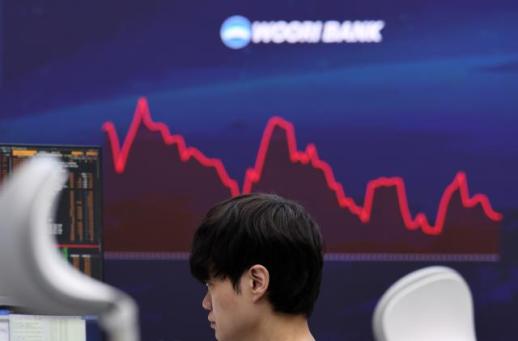 South Korea opens AI-era national growth fund to retail investors SEOUL, May 22 (AJP) -South Korea began selling a retail slice of its flagship strategic-industry fund on Friday, inviting ordinary investors to back semiconductors, batteries, mobility and artificial intelligence alongside the government in exchange for income-tax breaks and a state-funded loss buffer under a mandatory five-year lockup. The retail tranche of the Public Growth Fund targets 600 billion won ($396 million) this year, with KB Asset Management raising 200 billion won as one of 10 selected managers. The vehicle is the public-facing piece of one of President Lee Jae Myung’s signature economic initiatives. Overseen by the Financial Services Commission, the Public Growth Fund aims to channel 150 trillion won into 12 advanced strategic industries over five years, including 30 trillion won in 2026. It anchors the administration’s “productive finance” agenda — redirecting household savings out of deposits and real estate into the real economy. Lee has described the retail fund as “priming water” for future industries and household asset formation. The retail fund combines 600 billion won from the public with 120 billion won in government money earmarked to absorb losses, repeating annually for five years to build a cumulative 3 trillion won pool. Capital is funneled into a master fund-of-funds structure allocating across sub-funds managed by 10 firms, with investors sharing returns equally regardless of which manager they subscribe through. Each sub-fund must invest at least 60 percent of assets in strategic sectors and at least 30 percent in new funding for unlisted companies and firms on the tech-heavy KOSDAQ market. The structure targets growth-stage companies rather than large KOSPI names, aiming to bridge the “death valley” many deep-tech firms face when scaling commercially. The tax benefit is the centerpiece of the offering. Investors holding the fund for at least three years can claim income-tax deductions based on investment size — 40 percent up to 30 million won, 20 percent between 30 million won and 50 million won, and 10 percent between 50 million won and 70 million won — allowing a maximum 18 million won deduction on a 70 million won investment. Dividend income will be taxed separately at 9.9 percent, below the standard 15.4 percent rate. Regulators set a benchmark annual return target of 6 percent, while cautioning that actual returns remain uncertain. Eligibility requires a dedicated account open to residents aged 19 or older, or wage earners aged 15 and older, with a five-year investment cap of 200 million won. Individuals subject to comprehensive financial income taxation during the previous three years are excluded. The fund is structured as a closed-end vehicle with a mandatory five-year lockup and no early redemption. Units are expected to list within 90 days after the fund’s June 12 establishment date, although regulators warned secondary-market liquidity could remain thin. Selling within three years would also void the tax benefits. The government and fund managers will absorb losses of up to roughly 20 percent at the sub-fund level, though authorities stressed the buffer applies only to the public-investment portion rather than fully protecting investor principal. The design reflects lessons from the disappointing performance of the previous Moon Jae-in administration’s New Deal Fund, which struggled with rigid investment rules, weak returns and limited exit opportunities. Authorities extended the investment horizon to five years and diversified sub-funds by size in an effort to improve flexibility and performance. The fund is being sold on a first-come, first-served basis through 10 banks and 15 brokerages. A priority subscription window for wage earners making 50 million won or less annually runs through June 4 before general subscriptions close June 11. Applications for the broader 150 trillion won strategic-industry program have already exceeded targets by roughly 20 trillion won, leaving regulators to watch whether retail demand can match the institutional rush. 2026-05-22 11:03:39
 -
 Samyang to court Southeast Asia at Bangkok food fair SEOUL, May 22 (AJP) - Samyang Foods will showcase its spicy noodle lineup at THAIFEX-Anuga Asia 2026, Asia's largest food and beverage trade fair, as the Korean instant ramen maker pushes deeper into Southeast Asia's fast-growing snack market. The five-day exhibition runs from May 26 to 30 at IMPACT Muang Thong Thani in Bangkok. Now in its 21st year, the fair last year drew about 88,000 visitors from 143 countries and 3,231 exhibitors from 57 nations, according to organizers. Samyang announced Friday that it will operate an experiential booth themed "Samyang Crave Lab," staging its flagship Buldak alongside newer brands MEP and Tangle in separate "brand labs" designed to walk visitors through each line's identity and flavor profile. Sampling sessions throughout the day will feature staples such as the original Buldak, Buldak Carbonara and the newly launched Buldak Swicy, and localized offerings including a chili-chicken-cilantro ramen and grilled garlic shrimp ramen tailored to Southeast Asian palates. Canapés made with Buldak sauce will also be served. "We focused on designing a space where visitors can taste, enjoy and immerse themselves in Samyang's brands rather than simply view products on display," said a Samyang Foods spokesperson, adding that the company will keep widening its Southeast Asian footprint through differentiated brands including MEP and Tangle on top of Buldak. 2026-05-22 10:54:30
 -
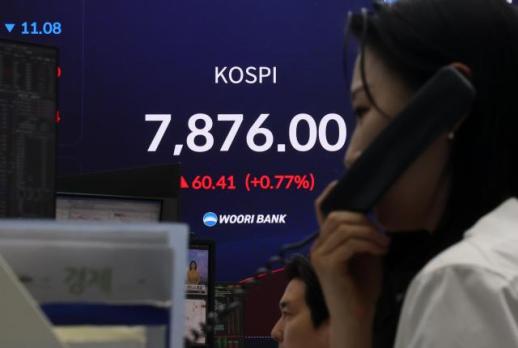 KOSDAQ triggers buy-side sidecar, Samsung Elec briefly tests 300,000 SEOUL, May 22 (AJP) - South Korean stocks erased early gains and turned lower Friday morning as foreign investors took profits after earlier record-breaking rally, while biotech and secondary-battery shares powered rally on the KOSDAQ. The benchmark KOSPI rose 0.62 percent to 7,863.71 at the opening bell, after surging 8.42 percent Thursday in its biggest single-day point gain on record. However, the index later turned lower as foreign investors extended heavy selling. As of 9:57 a.m., the benchmark index slipped 0.20 percent to 7,800.19, while the KOSDAQ jumped 5.09 percent to 1,162.25, triggering a sidecar trading curb for a second straight session. Retail investors remained aggressive buyers, purchasing a net 1.05 trillion won worth of KOSPI shares, while foreign investors sold a net 1.16 trillion won. The South Korean won remained stable, trading at 1,507.90 won against the greenback, compared with the previous session’s close of 1,506.10 won. Investor sentiment improved overnight after U.S. stocks ended higher on growing expectations of progress in negotiations involving Iran, easing concerns over a broader Middle East conflict and helping push oil prices and Treasury yields lower. The Dow Jones Industrial Average rose 0.55 percent to a record close of 50,285.66, while the S&P 500 added 0.17 percent and the Nasdaq Composite gained 0.09 percent. Chip-related shares remained a key driver of market sentiment. While Nvidia fell 1.77 percent on profit-taking despite strong earnings, memory-related stocks rallied after the company highlighted rising demand for high-capacity storage and memory products in AI data centers during its conference call. Micron Technology jumped 4.11 percent and SanDisk soared 10.75 percent, lifting sentiment toward South Korea’s semiconductor market. Samsung Electronics erased early gains after briefly touching the 300,000-won mark for the first time in intraday trading, falling 1.84 percent to 294,000 won after profit-taking accelerated following the previous session’s sharp rally. The stock also remained in focus as the company’s labor union began a six-day vote Friday on a tentative wage agreement reached earlier this week. Semiconductor equipment maker Jusung Engineering also surged 9.88 percent. The fellow chipmaker SK hynix slipped 0.46 percent to 1,931,000 won and SK Square declined 0.59 percent to 1,172,000 won. Among auto shares, Hyundai Motor dropped 2.55 percent to 649,000 won and Kia fell 2.20 percent to 164,200 won. Battery and industrial shares traded higher, with LG Energy Solution rising 2.49 percent to 411,000 won, Samsung Electro-Mechanics gaining 4.07 percent to 1,253,000 won and HD Hyundai Heavy Industries advancing 2.38 percent to 688,000 won. Doosan Enerbility also climbed 3.69 percent to 112,400 won. Financial and defense-related shares were mixed. Samsung Life Insurance rose 1.13 percent to 359,000 won, KB Financial gained 2.25 percent to 159,300 won and Hanwha Aerospace edged up 0.88 percent to 1,259,000 won, while Samsung C&T added 0.36 percent to 420,000 won. Samsung Biologics also rose 2.72 percent to 1,433,000 won. The junior KOSDAQ traded broadly higher, led by gains in biotech and secondary-battery shares. EcoPro BM surged 11.79 percent to 218,000 won, and EcoPro jumped 16.72 percent to 151,500 won. Biopharmaceutical shares were also strong, with Alteogen rising 7.68 percent to 378,500 won, Samchundang Pharm gaining 6.76 percent to 379,000 won and HLB climbing 11.54 percent to 52,200 won. Among other KOSDAQ heavyweights, Rainbow Robotics advanced 2.29 percent to 760,000 won, Leeno Industrial rose 1.54 percent to 105,600 won and EO Technics added 3.46 percent to 568,000 won. EcoPro Materials climbed 7.96 percent to 111,200 won, while JUSUNG Engineering gained 2.38 percent to 189,600 won. Oil prices also eased with Brent crude futures falling 2.32 percent to settle at $102.58 a barrel, and West Texas Intermediate crude dropped 1.94 percent to $96.35. The yield on the benchmark 10-year U.S. Treasury note slipped 0.8 basis point to 4.575 percent. Treasury yields nevertheless remained elevated as investors braced for a more hawkish Fed. Although the benchmark 10-year Treasury yield slipped 0.8 basis point overnight, it remained at 4.57 percent, while the two-year yield traded near 4.07 percent. 2026-05-22 10:41:42
 -
 Samsung Electronics union start vote on strike-risk wage proposal SEOUL, May 22 (AJP) - Unionized members of Samsung Electronics on Friday begin vote on whether to accept a tentative wage settlement agreed last week that would create a profit-linked special bonus system and remove the risk of a disruptive strike. The six-day electronic voting window opened at 2 p.m. Friday and will run through 10 a.m. Wednesday. The electorate consists of the 70,850 union members registered as of 2 p.m. on Thursday — a figure that has decreased significantly from a peak of around 77,000 amid recent internal discord. The landmark agreement will be finalized and become legally binding if a majority of eligible members participate and more than half vote in favor. Otherwise, both sides must return to the negotiating table. The tentative 2026 wage agreement, reached Wednesday after marathon government-mediated negotiations, introduces a “Special Management Bonus” funded by 10.5 percent of the semiconductor division’s business performance. It also includes a new housing loan program offering up to 500 million won ($365,000) and an average wage increase of 6.2 percent, consisting of a 4.1 percent base-pay hike and a 2.1 percent performance-based increase. Local securities firms project Samsung Electronics to post operating profit of around 300 trillion won this year amid the AI-driven semiconductor boom. Based on those forecasts, approximately 31.5 trillion won would be allocated for the special management bonus pool. Employees in the memory division — the company’s main earnings engine — are estimated to receive up to 600 million won in combined bonuses this year, including the existing Overall Performance Incentive (OPI). Under the agreement, the special management bonus will be paid entirely in treasury shares after taxes, effectively turning the payout into a large-scale stock compensation scheme. Employees in non-memory businesses such as System LSI and Foundry, which are expected to remain loss-making this year, are also projected to receive at least 160 million won in special bonuses under a rule allocating 40 percent of the semiconductor division’s common performance pool across all DS units. “This tentative agreement is the result of the utmost efforts by the Enterprise Union and the joint struggle committee,” said Choi Seung-ho, head of the Samsung Electronics branch of the Enterprise Union, in a message to members Thursday. “We will consider the outcome of this vote as the report card our members give to the union.” 2026-05-22 10:09:17
 -
 South Korean student filmmaker wins award at Cannes SEOUL, May 22 (AJP) - Filmmaker Jin Mi-song has won a gong at this year's Cannes Film Festival which wraps up this weekend, organizers said on Friday. Jin took home second prize with her short film "Silent Voices" in the La Cinef section, the prestigious festival's student film competition featuring short live-action and animated works by emerging filmmakers from universities around the world. This year's lineup included 14 live-action and five animated short films selected from about 2,750 submissions from film schools around the world. Jin's 17-minute short film follows a day in the life of a South Korean immigrant family living in New York. It portrays how they quietly deal with their personal struggles and emotions. Jin said she was surprised by the award and thanked the jury for recognizing her work, as well as the cast and crew of "Silent Voices." She graduated from Sungkyunkwan University in Seoul and is currently studying at Columbia University in New York. Meanwhile, the top prize went to New York University film school student Lucas Acher for "Laser-Cat," which tells the story of a teenager's one-night journey to find and rescue his crush's severely wounded cat. 2026-05-22 09:48:07
 -
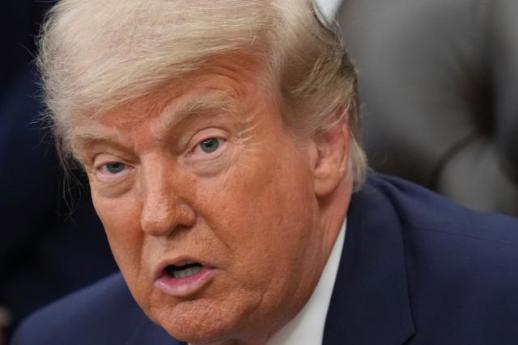 ASIA DEEP INSIGHT: Enriched uranium, shadow of Hormuz and Search for "Noah Accord" A 5,000-Year-Old Persian Civilization and a 250-Year-Old American Superpower Stand at the Edge of History The Middle East in May 2026 speaks outwardly of cease-fires and endgame negotiations. Yet beneath the language of diplomacy, the region still stands atop an enormous powder keg. President Donald Trump repeatedly declares that “the war will end very soon.” But beneath the negotiating table, the most dangerous fault lines are becoming sharper, not weaker. At the center of the confrontation lies a single issue: Iran’s stockpile of highly enriched uranium. At the White House on May 21, Trump stated bluntly, “We will take it.” He reaffirmed Washington’s position that the United States must secure and ultimately destroy Iran’s estimated 440 kilograms of uranium enriched to 60 percent purity. This is no mere technical dispute over nuclear verification procedures. It is the symbolic heart of the war itself — and, politically, the visible victory Trump believes he must bring home. For Trump, this conflict has been framed as a war to halt Iran at the threshold of nuclear weapons capability. The image of American authorities physically removing Iran’s highly enriched uranium and destroying it would represent a historic spectacle of strategic triumph. In Trump’s eyes, it would surpass the 2015 Iran nuclear agreement reached under President Barack Obama and become the defining diplomatic achievement of his presidency. Yet that very demand has become Iran’s absolute red line. Iran’s leadership has reportedly hardened its position against any overseas transfer of enriched uranium. From Washington’s perspective, the issue concerns nuclear nonproliferation and regional security. From Tehran’s perspective, it concerns national dignity, regime survival, and civilizational pride. Inside Iran, moreover, a dangerous new psychology has begun to emerge after the war. “North Korea possessed nuclear weapons and was not attacked. Iran did not possess them — and was.” That perception is rapidly hardening attitudes inside the Revolutionary Guard and among Iran’s hard-line factions. Increasingly, the argument is not necessarily that Iran must immediately build a bomb, but that it must preserve the capacity to do so. Thus, the gap between Washington’s demand for total removal and Tehran’s insistence on domestic retention or dilution remains immense. Trump, meanwhile, is eager to conclude the conflict quickly. The reasons are not merely diplomatic. They are deeply economic and political. The American economy continues to struggle under the weight of inflation and elevated interest rates. Prolonged instability in the Middle East threatens oil prices, shipping costs, and ultimately gasoline prices for American consumers. That is why Trump repeatedly emphasizes that “gas prices will fall when the war ends.” Ahead of November’s midterm elections, inflation represents a potentially lethal political vulnerability. American voters often react more immediately to fuel prices and household costs than to geopolitical abstractions. Trump understands this instinctively. Yet the war has already evolved beyond a simple bilateral confrontation between the United States and Iran. The Strait of Hormuz now stands at the center of the crisis. Iran has begun openly signaling the possibility of imposing transit fees or other restrictions in Hormuz — the narrow maritime artery through which roughly one-fifth of the world’s oil and LNG supplies pass each day. Should Tehran move from rhetoric to action, the consequences for the global economy could be immediate and severe. Secretary of State Marco Rubio responded with an unusually direct warning, declaring that any attempt by Iran to impose transit charges would render diplomatic agreement “impossible.” Washington is already considering bringing the matter before the United Nations Security Council. But Hormuz is not merely a shipping dispute. It is a question of world order itself. For thousands of years, the Persian Empire stood astride the trade and civilizational routes linking Mesopotamia, Central Asia, India, and the Mediterranean. Iran’s leadership remains deeply conscious of that geopolitical inheritance. The United States, by contrast, views freedom of navigation as a foundational principle of the postwar international system. Thus both sides confront the same waters while carrying entirely different historical memories. More troubling still is the growing strain upon America’s military resources. According to reports in The Washington Post, the United States has expended more than 200 THAAD interceptor missiles during the conflict — nearly half its stockpile. American naval forces in the eastern Mediterranean have also launched large numbers of SM-3 and SM-6 interceptors. The problem is increasingly clear: Production cannot keep pace with consumption. America’s missile defense architecture was originally designed primarily for deterrence in the Indo-Pacific, especially against China and North Korea. Yet the Middle East war is rapidly consuming those strategic reserves. Naturally, this has unsettled both South Korea and Japan. Discussions regarding the possible redeployment or depletion of THAAD systems have already begun to raise concerns across Northeast Asia. Ironically, Trump’s “America First” doctrine is now confronting its own contradiction. The United States is expending enormous strategic assets to defend Israel, while growing voices inside America question why U.S. military stockpiles should be depleted in Middle Eastern conflicts. Even American think tanks have begun warning that the Middle East is undermining Washington’s Indo-Pacific strategy. This helps explain Trump’s oscillation between escalation and conciliation. His rhetoric swings almost daily between threats and diplomacy because the strategic contradictions are becoming increasingly difficult to manage. Another major variable is Russia. President Vladimir Putin has revived the idea of transferring Iran’s enriched uranium to Russia — echoing arrangements proposed during the 2015 nuclear negotiations. On the surface, it appears to be a mediation effort. In reality, it is also a geopolitical maneuver. Putin understands that involvement in resolving the Iran crisis could provide Moscow with leverage in broader negotiations with Washington, particularly over Ukraine and sanctions policy. Trump’s dismissive response — effectively telling Putin to focus on Ukraine instead — reflected precisely that suspicion. The Middle East today is therefore no longer a regional war alone. It is a condensed battlefield of 21st-century geopolitics, where the interests of the United States, Iran, Israel, Russia, Europe, and China intersect simultaneously. Negotiations continue outwardly. Yet the negotiations remain extraordinarily fragile. Trump needs a victory. Iran cannot afford the image of surrender. Israel seeks the complete dismantling of Iran’s nuclear potential. Russia hopes to expand its diplomatic influence through mediation. And the global economy trembles at every shift in the winds of Hormuz. The war may pause temporarily. But the geopolitics of the Middle East are far from over. And here the world confronts a deeper truth. This conflict is not merely a dispute over uranium enrichment. It is a collision between two historical consciousnesses — and between two civilizations. On one side stands the United States, a 250-year-old superpower that shaped the modern global order through military strength, financial dominance, technological innovation, and the architecture of globalization itself. On the other stands Iran, heir to a Persian civilization stretching back more than 5,000 years. Modern Iran is not simply another Middle Eastern state. Behind it stand the memories of Cyrus the Great, Darius, and the Achaemenid Empire — a civilization that once connected Mesopotamia, Central Asia, India, and the Mediterranean into one vast imperial network. The West often views Iran merely as a “problem state.” But within the Iranian historical imagination, they are not a minor power. They see themselves as descendants of an ancient civilization. That difference in historical consciousness shapes everything. Washington approaches the nuclear issue as a matter of international security and nonproliferation. Tehran approaches it as a matter of national survival and civilizational dignity. For that very reason, brute force alone cannot resolve this crisis. What is needed instead is a new civilizational imagination. Perhaps what the Middle East now requires is something resembling a “Noah Accord.” The region has already witnessed one historic breakthrough in the form of the Abraham Accords between Israel and several Arab states. Those agreements drew symbolic power from the shared Abrahamic heritage of Judaism, Christianity, and Islam. But perhaps the next step requires an even broader vision. Before Abraham came Noah — the ancestral figure of humanity itself in the traditions of Judaism, Christianity, and Islam alike. Noah represents survival, reconciliation, and the rebirth of civilization after catastrophe. The Middle East today needs more than another technical nuclear agreement. It needs a renewed framework for coexistence. Neither America nor Iran can fully destroy the other’s historical identity. The United States may pressure the Iranian regime, but it cannot erase Persian civilization. Iran, meanwhile, cannot overturn the American-led international order through direct confrontation. Eventually, both sides will have to compromise. And that compromise must become more than a transactional bargain. It must allow both civilizations to preserve dignity while stepping back from catastrophe. East Asia has long carried philosophical traditions emphasizing coexistence rather than annihilation. Confucianism, Buddhism, and Taoism all contain variations of the idea that absolute victory achieved through destruction rarely endures. Korea, in particular, understands this deeply. For centuries, Korea survived between great powers — China, Japan, Russia, and later the United States. Korean historical consciousness therefore places enormous value not only on balances of power, but on balances of relationship. That perspective may hold an important lesson for Washington and Tehran alike. The United States must leave space for Iran’s dignity. Iran, in turn, must move beyond a posture of total rejection toward the international system. Creative compromise remains possible. Highly enriched uranium could be placed under multinational management involving neutral states, Russia, or the International Atomic Energy Agency rather than becoming a direct symbol of Iranian surrender to Washington. Ultimately, the central question is not who wins. It is whether humanity can step back from the edge of another prolonged civilizational conflict. Because the global economy is already approaching dangerous limits. Hormuz is one of the central arteries of the world economy. If it is destabilized, oil prices, shipping, insurance, financial markets, and supply chains will all experience shockwaves. For South Korea, the implications are especially serious. South Korea depends heavily upon imported energy from the Middle East. The industrial foundations of companies such as Samsung and SKhynix, as well as the manufacturing systems of Hyundai Motor, ultimately rely upon stable flows of oil and LNG. A prolonged Hormuz crisis could simultaneously weaken the Korean won, intensify inflationary pressures, and destabilize maritime logistics. The security implications may be even greater. America’s depletion of missile defense inventories during the war has already exposed the limitations of U.S. strategic capacity. Washington cannot indefinitely sustain simultaneous pressures in the Middle East, Ukraine, the Taiwan Strait, and the Korean Peninsula without difficult trade-offs. For Seoul, this reality demands increasingly sophisticated strategic thinking. The U.S.–Korea alliance remains indispensable. But South Korea must also preserve diplomatic flexibility with the Middle East, China, and even Russia where necessary. Energy security, supply-chain resilience, semiconductors, AI infrastructure, and strategic autonomy are no longer merely economic concerns. They are becoming matters of national survival. The world speaks constantly of the AI revolution. Yet humanity finds itself once again confronting its oldest questions. How can civilizations coexist? How far should great powers exercise force? Can humanity move beyond cycles of war? A 5,000-year-old Persian civilization and a 250-year-old American superpower now stand before those questions together. And the world waits for their answer. 2026-05-22 09:36:24
 -
![[AJP Spiritual Asia ②] Hinduism and civilization of the soul](https://image.ajunews.com//content/image/2026/05/22/20260522090106973830_518_323.png) [[AJP Spiritual Asia ②]] Hinduism and civilization of the soul How an Ancient Indian Faith Became One of Humanity’s Great Spiritual Rivers Humanity in the 21st century is once again confronting its oldest and most enduring questions. Artificial intelligence now learns human language. Robots are increasingly replacing human labor. Algorithms not only predict consumption patterns but also begin to anticipate human judgment itself. Material civilization has achieved unprecedented abundance, yet the inner life of humanity appears more restless, fragmented, and spiritually anxious than ever before. Why do human beings exist? Where did we come from, and where are we going? Technology has advanced at an astonishing speed, yet the fundamental questions of human existence remain unresolved. At precisely this moment, humanity is turning its gaze once more toward Asia. And at the center of that spiritual reawakening stands Hinduism — one of the oldest and most enduring civilizational traditions in human history. Hinduism is not merely a religion. It is a vast spiritual universe, a philosophical civilization, and a profound attempt to understand the relationship between humanity, nature, consciousness, and the cosmos itself. Today, more than one billion people live within the cultural sphere shaped by Hindu thought, while nearly every layer of Indian civilization — philosophy, literature, art, ethics, politics, and social life — bears its imprint. Yet the influence of Hinduism extends far beyond the Indian subcontinent. Buddhism and Jainism emerged from the wider Hindu civilizational world. Hindu philosophical ideas traveled across Southeast Asia, Central Asia, and eventually East Asia through trade routes, pilgrimage networks, and centuries of intellectual exchange. Concepts such as karma, reincarnation, meditation, liberation, and cosmic harmony have deeply influenced the spiritual imagination of humanity. Even in the modern West, Hindu ideas have quietly entered mainstream culture through yoga, meditation, mindfulness, and holistic approaches to human consciousness. The renewed global interest in Hinduism during the age of artificial intelligence is therefore no accident. Hinduism views the human being not merely as a producer, consumer, or biological mechanism, but as a spiritual existence intimately connected to the universe itself. The origins of Hinduism reach deep into antiquity. Most historians trace its formation to around 1500 BCE, when Indo-Aryan peoples entered the Indian subcontinent and gradually merged their Vedic traditions with the older cultural foundations of the Indus Valley Civilization. That civilization, centered in what is now Pakistan and northwestern India, possessed sophisticated urban planning, advanced drainage systems, and remarkably organized cities. Some scholars even argue that early forms of meditation and yogic symbolism may already have existed there. The Aryan peoples who followed regarded nature and the cosmos as sacred realities. Their hymns, prayers, and rituals were eventually compiled into the Vedas — among the oldest surviving sacred texts in human history. The word “Veda” itself means “knowledge” or “wisdom.” The Vedas were never merely religious manuals. They contained poetry, cosmology, philosophy, ritual practice, ethical reflection, and meditations on the relationship between humanity and the divine order of the universe. Unlike many major religions, Hinduism has no single founder. No solitary prophet established its doctrines, and no single historical event marks its birth. Rather, Hinduism evolved gradually over thousands of years as diverse philosophies, rituals, myths, folk traditions, and spiritual disciplines converged into one vast civilizational current. In this sense, Hinduism is simultaneously a religion, philosophy, culture, and a way of life. Among its most profound philosophical foundations are the concepts of Brahman and Atman. Brahman refers to the ultimate cosmic reality — the eternal and infinite ground of all existence. Atman refers to the deepest essence of the individual self or soul. Hindu philosophy ultimately teaches that the human soul and the cosmic reality are fundamentally one. Humanity, nature, and the universe are therefore not separate entities but interconnected dimensions within a single cosmic order. This spiritual vision matured further in the Upanishads, the philosophical texts that form the later layer of Vedic thought. The Upanishads shifted attention inward, asking not merely how the universe functions, but what the true nature of consciousness itself might be. In this worldview, the human being is far more than flesh and material existence. Each person carries within them a spark of universal reality. True wisdom is attained not through external conquest, but through inner awakening and self-realization. Hinduism also places extraordinary emphasis on karma and reincarnation. Human life does not end with death. The soul moves through countless cycles of birth, death, and rebirth. Every human action leaves consequences. Compassionate actions generate harmony; destructive actions produce suffering. This moral and spiritual law is known as karma. The ultimate purpose of human life, therefore, is not merely wealth, status, or worldly achievement. It is liberation — moksha — freedom from ignorance, attachment, and the endless cycle of rebirth. Through spiritual discipline, ethical living, meditation, and self-knowledge, the individual seeks union with ultimate reality. Such ideas resonate powerfully in the age of artificial intelligence. Modern technological civilization increasingly defines human value through efficiency, productivity, speed, and data. Hindu thought, by contrast, insists that the essence of humanity lies in consciousness, soul, and spiritual awareness. Human beings are not machines that merely calculate. They are living participants in a cosmic order. Hinduism is also deeply pluralistic in spirit. Its pantheon contains countless deities, among them Brahma, Vishnu, and Shiva. Yet beneath this diversity lies a profound philosophical unity. The many gods are often understood as different manifestations of a single transcendent truth. This spiritual flexibility allowed Hindu civilization to absorb and coexist with remarkably diverse traditions across centuries. To be sure, Hindu society also produced grave historical contradictions, most notably the caste system, which imposed rigid social hierarchies and enduring inequalities. Yet alongside these injustices, Hindu philosophy continued to nurture traditions emphasizing inner freedom, spiritual equality, and the universality of the soul. The influence of Hinduism upon world history has been immense. The clearest example is Buddhism itself. Siddhartha Gautama, the Buddha, emerged from the Hindu cultural world. Many foundational Buddhist concepts — karma, rebirth, meditation, spiritual discipline, and liberation — evolved within that broader intellectual environment, even as Buddhism later challenged aspects of Vedic ritualism and caste hierarchy. Across Southeast Asia, Hindu civilization also left enduring marks upon architecture, kingship, literature, and culture. The temples of Angkor Wat in Cambodia, the Hindu traditions of Bali, and aspects of Thai royal culture all bear witness to this historical influence. Through Central Asia and the Silk Road, Hindu philosophical ideas also interacted indirectly with other religious and intellectual traditions. In this sense, Hinduism became one of the great unseen currents flowing beneath the spiritual history of Eurasia. In the modern era, Hindu spirituality has entered global consciousness in entirely new forms. Yoga and meditation are now practiced across continents. Major corporations in the United States and Europe increasingly embrace mindfulness and contemplative practices as responses to stress, fragmentation, and emotional exhaustion within technological society. The reason is becoming increasingly clear: human beings cannot survive on technology alone. Perhaps this is the deepest message Hinduism offers humanity. Human beings do not exist in isolation. We are connected to one another, to nature, and to the cosmos itself. Thousands of years ago, Indian sages looked inward and sought the hidden structure of reality within the human soul. Today, humanity once again stands before those same questions. How far can technology carry humanity? And after technology transforms civilization, can humanity still remain truly human? Across the silence of millennia, Hinduism seems to answer: “Human beings are not merely creatures that calculate. They are souls that carry the universe within them.” 2026-05-22 09:03:10
[[AJP Spiritual Asia ②]] Hinduism and civilization of the soul How an Ancient Indian Faith Became One of Humanity’s Great Spiritual Rivers Humanity in the 21st century is once again confronting its oldest and most enduring questions. Artificial intelligence now learns human language. Robots are increasingly replacing human labor. Algorithms not only predict consumption patterns but also begin to anticipate human judgment itself. Material civilization has achieved unprecedented abundance, yet the inner life of humanity appears more restless, fragmented, and spiritually anxious than ever before. Why do human beings exist? Where did we come from, and where are we going? Technology has advanced at an astonishing speed, yet the fundamental questions of human existence remain unresolved. At precisely this moment, humanity is turning its gaze once more toward Asia. And at the center of that spiritual reawakening stands Hinduism — one of the oldest and most enduring civilizational traditions in human history. Hinduism is not merely a religion. It is a vast spiritual universe, a philosophical civilization, and a profound attempt to understand the relationship between humanity, nature, consciousness, and the cosmos itself. Today, more than one billion people live within the cultural sphere shaped by Hindu thought, while nearly every layer of Indian civilization — philosophy, literature, art, ethics, politics, and social life — bears its imprint. Yet the influence of Hinduism extends far beyond the Indian subcontinent. Buddhism and Jainism emerged from the wider Hindu civilizational world. Hindu philosophical ideas traveled across Southeast Asia, Central Asia, and eventually East Asia through trade routes, pilgrimage networks, and centuries of intellectual exchange. Concepts such as karma, reincarnation, meditation, liberation, and cosmic harmony have deeply influenced the spiritual imagination of humanity. Even in the modern West, Hindu ideas have quietly entered mainstream culture through yoga, meditation, mindfulness, and holistic approaches to human consciousness. The renewed global interest in Hinduism during the age of artificial intelligence is therefore no accident. Hinduism views the human being not merely as a producer, consumer, or biological mechanism, but as a spiritual existence intimately connected to the universe itself. The origins of Hinduism reach deep into antiquity. Most historians trace its formation to around 1500 BCE, when Indo-Aryan peoples entered the Indian subcontinent and gradually merged their Vedic traditions with the older cultural foundations of the Indus Valley Civilization. That civilization, centered in what is now Pakistan and northwestern India, possessed sophisticated urban planning, advanced drainage systems, and remarkably organized cities. Some scholars even argue that early forms of meditation and yogic symbolism may already have existed there. The Aryan peoples who followed regarded nature and the cosmos as sacred realities. Their hymns, prayers, and rituals were eventually compiled into the Vedas — among the oldest surviving sacred texts in human history. The word “Veda” itself means “knowledge” or “wisdom.” The Vedas were never merely religious manuals. They contained poetry, cosmology, philosophy, ritual practice, ethical reflection, and meditations on the relationship between humanity and the divine order of the universe. Unlike many major religions, Hinduism has no single founder. No solitary prophet established its doctrines, and no single historical event marks its birth. Rather, Hinduism evolved gradually over thousands of years as diverse philosophies, rituals, myths, folk traditions, and spiritual disciplines converged into one vast civilizational current. In this sense, Hinduism is simultaneously a religion, philosophy, culture, and a way of life. Among its most profound philosophical foundations are the concepts of Brahman and Atman. Brahman refers to the ultimate cosmic reality — the eternal and infinite ground of all existence. Atman refers to the deepest essence of the individual self or soul. Hindu philosophy ultimately teaches that the human soul and the cosmic reality are fundamentally one. Humanity, nature, and the universe are therefore not separate entities but interconnected dimensions within a single cosmic order. This spiritual vision matured further in the Upanishads, the philosophical texts that form the later layer of Vedic thought. The Upanishads shifted attention inward, asking not merely how the universe functions, but what the true nature of consciousness itself might be. In this worldview, the human being is far more than flesh and material existence. Each person carries within them a spark of universal reality. True wisdom is attained not through external conquest, but through inner awakening and self-realization. Hinduism also places extraordinary emphasis on karma and reincarnation. Human life does not end with death. The soul moves through countless cycles of birth, death, and rebirth. Every human action leaves consequences. Compassionate actions generate harmony; destructive actions produce suffering. This moral and spiritual law is known as karma. The ultimate purpose of human life, therefore, is not merely wealth, status, or worldly achievement. It is liberation — moksha — freedom from ignorance, attachment, and the endless cycle of rebirth. Through spiritual discipline, ethical living, meditation, and self-knowledge, the individual seeks union with ultimate reality. Such ideas resonate powerfully in the age of artificial intelligence. Modern technological civilization increasingly defines human value through efficiency, productivity, speed, and data. Hindu thought, by contrast, insists that the essence of humanity lies in consciousness, soul, and spiritual awareness. Human beings are not machines that merely calculate. They are living participants in a cosmic order. Hinduism is also deeply pluralistic in spirit. Its pantheon contains countless deities, among them Brahma, Vishnu, and Shiva. Yet beneath this diversity lies a profound philosophical unity. The many gods are often understood as different manifestations of a single transcendent truth. This spiritual flexibility allowed Hindu civilization to absorb and coexist with remarkably diverse traditions across centuries. To be sure, Hindu society also produced grave historical contradictions, most notably the caste system, which imposed rigid social hierarchies and enduring inequalities. Yet alongside these injustices, Hindu philosophy continued to nurture traditions emphasizing inner freedom, spiritual equality, and the universality of the soul. The influence of Hinduism upon world history has been immense. The clearest example is Buddhism itself. Siddhartha Gautama, the Buddha, emerged from the Hindu cultural world. Many foundational Buddhist concepts — karma, rebirth, meditation, spiritual discipline, and liberation — evolved within that broader intellectual environment, even as Buddhism later challenged aspects of Vedic ritualism and caste hierarchy. Across Southeast Asia, Hindu civilization also left enduring marks upon architecture, kingship, literature, and culture. The temples of Angkor Wat in Cambodia, the Hindu traditions of Bali, and aspects of Thai royal culture all bear witness to this historical influence. Through Central Asia and the Silk Road, Hindu philosophical ideas also interacted indirectly with other religious and intellectual traditions. In this sense, Hinduism became one of the great unseen currents flowing beneath the spiritual history of Eurasia. In the modern era, Hindu spirituality has entered global consciousness in entirely new forms. Yoga and meditation are now practiced across continents. Major corporations in the United States and Europe increasingly embrace mindfulness and contemplative practices as responses to stress, fragmentation, and emotional exhaustion within technological society. The reason is becoming increasingly clear: human beings cannot survive on technology alone. Perhaps this is the deepest message Hinduism offers humanity. Human beings do not exist in isolation. We are connected to one another, to nature, and to the cosmos itself. Thousands of years ago, Indian sages looked inward and sought the hidden structure of reality within the human soul. Today, humanity once again stands before those same questions. How far can technology carry humanity? And after technology transforms civilization, can humanity still remain truly human? Across the silence of millennia, Hinduism seems to answer: “Human beings are not merely creatures that calculate. They are souls that carry the universe within them.” 2026-05-22 09:03:10 -
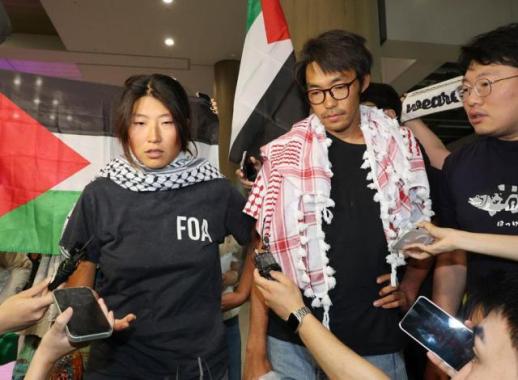 Two South Koreans return home after release from Israeli seizure of Gaza-bound vessels SEOUL, May 22 (AJP) - Two South Koreans detained after Israeli forces seized vessels bound for the Gaza Strip returned home on Friday following their release. They were Kim Dong-hyeon, who was aboard the Gaza-bound humanitarian aid vessel Kyriakos X when it was seized by the Israeli navy in international waters in the Mediterranean Sea near Cyprus last Thursday, and Kim Ah-hyun, who was aboard another vessel, Rina al Nabulsi, which was seized by Israeli forces in waters near the Gaza Strip two days later. The two Kims flew home together, arriving at Incheon International Airport at around 6:30 a.m. after being released and deported along with a larger group of foreign activists earlier in the week. Their release came as several countries including Brazil, Indonesia, Spain and Turkey condemned Israel's interceptions as illegal under international law and several summoned Israeli envoys in protest. The two said their ultimate goal is "the liberation of Palestine," vowing that their voyage will continue until then. They also plan to hold a rally later in the day near the Israeli Embassy in central Seoul to denounce Israel. 2026-05-22 08:58:41
 -
 Korea's May consumer sentiment sharply rebounds on strong exports and equities SEOUL, May 22 (AJP) -South Korea’s consumer sentiment rebounded sharply in May, returning to optimistic territory after briefly slipping below the long-term average a month earlier, as robust exports and a record-setting stock rally outweighed concerns over prolonged Middle East tensions and rising energy prices, central bank data showed Friday. Sentiment about current economic conditions and future prospects improved even as inflation expectations hovered near 3 percent, reinforcing the case for maintaining a monetary tightening bias to contain inflationary pressures from imports and wage increases. The Bank of Korea said the Composite Consumer Sentiment Index (CCSI) rose to 106.1 in May from 99.2 in April, marking the strongest monthly increase since the post-pandemic rebound period and pushing sentiment back above the long-term average benchmark of 100. The recovery was broad-based across nearly all major categories. Consumers’ assessment of current economic conditions jumped 15 points — the strongest gain since October 2020 — to 83, while expectations for future conditions also surged 14 points to 93. Expectations for living standards climbed five points to 97, while household income expectations rose two points to 100. Consumer spending outlook also improved two points to 110, supported by strong stock-market returns and generous bonus payouts from high-performing technology companies. Housing sentiment strengthened notably as expectations for home prices surged eight points to 112, reversing part of the weakness seen earlier this year. Wage outlook sentiment also edged up two points to 122. Expectations for interest rates eased slightly, with the interest-rate outlook index slipping one point to 114, though it remained historically elevated. Consumers also appeared somewhat more optimistic about employment conditions. The employment outlook index rose six points to 88 after falling sharply in April, reflecting hopes that the export-driven recovery would generate broader spillover effects across the economy despite ongoing conflicts in the Middle East. Inflation concerns, however, remained elevated. Consumers’ perceived inflation rate over the past year rose to 3.0 percent in May from 2.9 percent in April, while one-year-ahead inflation expectations eased only slightly to 2.8 percent after hitting 2.9 percent the previous month. Longer-term inflation expectations for three and five years ahead remained anchored at 2.6 percent. The survey showed petroleum products remained the dominant driver of inflation concerns, with 85.2 percent of respondents citing oil-related products as a key factor behind expected price increases over the next year. Public utility charges and industrial goods followed. The inflation outlook follows Thursday’s producer price data, which pointed to mounting upstream cost pressures across the economy. The Bank of Korea said the producer price index rose 2.5 percent in April from the previous month and 6.9 percent from a year earlier, led by a surge in petroleum and chemical products. Prices of coal and petroleum products jumped 31.9 percent on-month, while overall energy prices rose 7.9 percent. The broader domestic supply price index, which measures prices of goods and services supplied to the domestic market, climbed 5.2 percent on month in April, while the total output price index surged 3.9 percent. The debt market has increasingly priced in a higher-for-longer rate environment as inflationary pressure persists alongside a stubbornly weak currency. The five-year government bond yield has neared 4 percent and the 20-year paper topped 4.2 percent, while even the one-year note traded at 3.165 percent, sharply above the benchmark policy rate of 2.5 percent. The Bank of Korea is scheduled to hold its rate-setting meeting next Thursday. 2026-05-22 08:46:16
 -
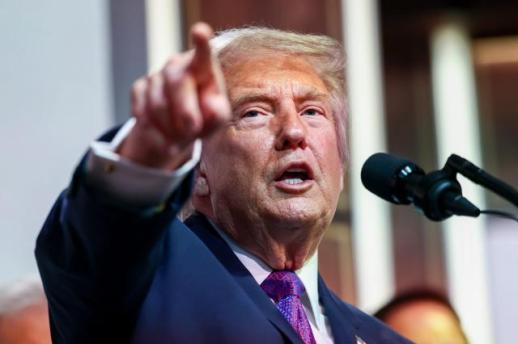 Trump's Red Line: Iran's Enriched Uranium and the Shadow of Hormuz 2026 May has seen the Middle East publicly discussing ceasefires and peace negotiations, yet it remains precariously positioned atop a massive powder keg. President Donald Trump has repeatedly stated that "the war will soon end." However, beneath the negotiation table, the most dangerous flashpoints are becoming increasingly evident. At the center of this tension is a single issue: Iran's enriched uranium. On May 21, Trump asserted at the White House, "We will secure it." He reaffirmed the U.S. intention to acquire and dispose of 440 kilograms of 60% enriched uranium held by Iran. This is not merely a technical issue in nuclear negotiations; it symbolizes the entire conflict and represents a "visible victory" that Trump needs for domestic political reasons. Trump has characterized this war as one aimed at stopping Iran from reaching the brink of nuclear weapons capability. For Trump, the act of securing enriched uranium and transporting it back to the U.S. or a third country could serve as a historic achievement, surpassing the Iran nuclear deal (JCPOA) established under former President Barack Obama in 2015. However, this point also represents an absolute red line for Iran. The Iranian leadership has reportedly solidified its stance against the export of enriched uranium. While this is a matter of eliminating potential nuclear weapon capabilities from the U.S. perspective, for Iran, it is a question of national pride and regime survival. Moreover, a dangerous collective psychology is forming within Iran as a result of this war. The sentiment that "North Korea, which possesses nuclear weapons, has not been attacked, while Iran, which does not, has been" is gaining traction. This perception is likely to harden the Iranian regime's stance. Analysts suggest that a strategic mindset emphasizing the need to maintain the "potential" to develop nuclear weapons is taking root within Iran's military and Revolutionary Guard. Thus, a significant gap remains between the U.S. demand for "complete removal" and Iran's desire for "domestic preservation and dilution." Trump is eager to expedite a resolution to the negotiations, driven not only by diplomatic concerns but also by domestic political and economic pressures. The U.S. economy continues to grapple with high inflation and interest rates. The prolonged conflict in the Middle East is exacerbating international oil prices and logistics costs, directly impacting American consumers through rising gasoline prices. Trump's repeated assertion that "gas prices will drop once the war ends" reflects this reality. With the midterm elections approaching in November, inflation poses a critical threat. American voters are more sensitive to immediate issues like gas prices and living costs than to democracy or geopolitics. Trump is acutely aware of this political landscape. However, the conflict has already escalated beyond a simple U.S.-Iran confrontation. The situation in the Strait of Hormuz exemplifies this escalation. Iran has effectively begun to leverage the "Hormuz toll" card. The Strait of Hormuz is a vital artery for global energy, with approximately 20 million barrels of oil and LNG passing through daily. Should Iran impose tolls or military pressure in this region, the global economy would face immediate repercussions. In response, U.S. Secretary of State Marco Rubio publicly warned that "if such actions materialize, diplomatic agreements will be impossible." The U.S. is already considering responses at the United Nations Security Council level. The Hormuz issue transcends mere maritime navigation rights. It is intrinsically linked to global hegemony. The Persian Empire has historically been at the center of civilization and trade through the Strait of Hormuz and the Silk Road for thousands of years. The Iranian leadership remains acutely aware of this geopolitical legacy. Conversely, the U.S. views "freedom of navigation in international waters" as an absolute principle. Ultimately, both sides are clashing over the same body of water with vastly different historical memories and strategic concepts. An even more pressing issue is the rapid escalation of U.S. military fatigue, which is occurring faster than anticipated. According to reports from The Washington Post, the U.S. has utilized over 200 THAAD interceptors during this conflict, nearing half of its total stockpile. Naval vessels in the Eastern Mediterranean have also deployed significant numbers of SM-3 and SM-6 interceptors. The problem lies in the production rate not keeping pace with consumption. The U.S. missile defense system was originally designed as a key component of its Indo-Pacific strategy to deter both China and North Korea. However, the ongoing conflict in the Middle East is rapidly depleting these reserves. Consequently, South Korea and Japan are also left on edge. In fact, discussions about the potential redeployment of THAAD in South Korea have begun to shake the security structure in Northeast Asia. Interestingly, Trump's "America First" policy appears to be caught in a paradox at this juncture. The U.S. is exhausting significant strategic assets and intercept systems to defend Israel. However, dissatisfaction is growing domestically over why U.S. weapon stockpiles are being depleted in the Middle East. Even American think tanks are beginning to express concerns that the Middle East is encroaching on the Indo-Pacific strategy. This is precisely why Trump continues to oscillate between war and negotiation. The mix of hardline rhetoric and conciliatory messages is a daily occurrence. Another intriguing variable is Russia. President Vladimir Putin has already reintroduced the "Russia export" card, suggesting a plan to send enriched uranium to Russia for compromise, similar to the 2015 Iran nuclear deal. On the surface, this appears to be a mediation proposal. However, it conceals a completely different calculation. Putin aims to secure leverage in negotiations with Trump by intervening in the resolution of the Iran conflict. This strategy seeks to create negotiation space with the U.S. regarding the Ukraine war and sanctions against Russia. Trump's irritation at Putin's suggestion to "focus on the Ukraine issue" stems from this dynamic. Ultimately, the current situation in the Middle East is not merely a regional war. It is a microcosm of 21st-century complex geopolitics involving the U.S., Iran, Israel, Russia, Europe, and China. While negotiations appear to be underway, they remain precarious. Trump needs a victory, Iran must avoid the image of capitulation, Israel aims to eliminate Iran's nuclear potential entirely, and Russia seeks to expand its influence through mediation. The global economy is also sensitive to even the slightest shifts in the winds of the Strait of Hormuz. While the war may pause temporarily, the geopolitics of the Middle East are far from resolved. This situation raises profound questions for the world. This conflict is not merely about nuclear negotiations; it represents a direct clash between two histories and two civilizations. On one side is the United States, a superpower with a 250-year history. On the other is Iran, inheritor of a 5,000-year-old Persian civilization. The U.S. has shaped the modern world order. From the dollar and military power to technology and finance, much of today's global system operates around the U.S. In just 250 years since its independence in 1776, the U.S. has become the most powerful nation in human history. Conversely, Iran is not merely a Middle Eastern country. Its roots trace back to the Persian Empire of Cyrus the Great and Darius the Great. The Achaemenid dynasty managed a vast multi-ethnic empire as early as the 6th century BC, creating a network of civilizations connecting Mesopotamia, Central Asia, India, and the Mediterranean. While the Western world often views Iran as a "rogue state," Iranians do not see themselves as a small nation. They consider themselves the "heirs of civilization." This fundamental difference in perception shapes how the U.S. and Iran interpret each other. The U.S. views the Iranian nuclear issue as a matter of international security and non-proliferation, while Iran perceives it as a question of national regime and civilizational pride. This is precisely why what is needed now is not merely a logic of power. Instead, a new imagination at the level of human civilization is required. This could embody the spirit of the 'Noah Accord.' The Middle East has already undergone a significant transformation with the Abraham Accords, established between Israel, the UAE, and Bahrain. This agreement, which recognizes Abraham as a common ancestor for Judaism, Christianity, and Islam, has become a symbol of civilizational reconciliation beyond a mere diplomatic document. Now, a greater imagination is necessary. Noah is a common ancestor of humanity predating Abraham. In the traditions of Judaism, Christianity, and Islam, Noah symbolizes "human survival and reconciliation." What the Middle East needs now is not just nuclear negotiations. It is about establishing an order where humanity can survive together. Neither the U.S. nor Iran can fully subjugate the other. The U.S. can shake the Iranian regime with military power, but it cannot erase the pride of Persian civilization. Conversely, Iran cannot completely dismantle the U.S.-centric world order. Ultimately, both sides will have to compromise at some point. This compromise must not merely be a transaction but a peace that acknowledges each other's dignity, history, and civilizational pride. In the East, there has long been a philosophy of "coexistence." The belief is that a victory that completely defeats the opponent does not last long. Within the traditions of Confucianism, Buddhism, and Taoism, East Asia has sought harmony amidst conflict. South Korea also shares such historical experiences. It has had to survive among powerful nations like China, Japan, the U.S., and Russia. Thus, Koreans value not only the balance of power but also the balance of relationships. This mindset is now needed in the U.S. and Iran. The U.S. must allow Iran to maintain at least a semblance of dignity. Iran, in turn, must move away from outright rejection of the U.S. international order. For instance, instead of directly exporting enriched uranium to the U.S., a compromise could involve transitioning to an internationally managed system or a joint management approach involving Russia, neutral countries, and the International Atomic Energy Agency (IAEA). Ultimately, the key is not about winning or losing. It is about whether humanity can take a step back from the brink of war. This is especially critical as the global economy is nearing a breaking point. The Strait of Hormuz is the lifeblood of global energy. If it is disrupted, international oil prices will soar, and the entire logistics, shipping, insurance, and financial markets will be shaken. This is particularly fatal for countries like South Korea. South Korea has a very high dependency on energy imports. Oil and LNG from the Middle East are lifelines for its industries. The semiconductor factories of Samsung Electronics and SK Hynix, as well as Hyundai Motor's production lines, ultimately rely on stable energy supplies. If the Hormuz crisis deepens, the won may weaken, and inflationary pressures could rise simultaneously. As an export-driven economy, South Korea would also be directly impacted by global maritime logistics instability. The larger issue is security. The U.S. has significantly depleted its THAAD interceptor stockpile during this conflict. Some reports indicate that nearly half of the stockpile has been used for Middle Eastern defense. This could have implications for security in Northeast Asia. U.S. strategic assets are not infinite. The limitations of managing conflicts in the Middle East, Ukraine, the Taiwan Strait, and the Korean Peninsula simultaneously have become evident in this war. Ultimately, South Korea must consider a more complex strategy moving forward. The U.S.-South Korea alliance remains crucial. However, South Korea must also maintain a certain level of diplomatic space with the Middle East, China, and Russia. Energy security, supply chain stability, and the reliability of the semiconductor and AI industries are now matters of national survival strategy, not just economic issues. The world is now discussing the era of the AI revolution. Yet paradoxically, humanity stands once again before the oldest questions. How will civilizations coexist? How far will great powers go in using force? And can humanity transcend war? The 5,000-year-old Persian civilization and the 250-year-old United States now face these questions. The world awaits their answers.* This article has been translated by AI. 2026-05-22 07:45:00